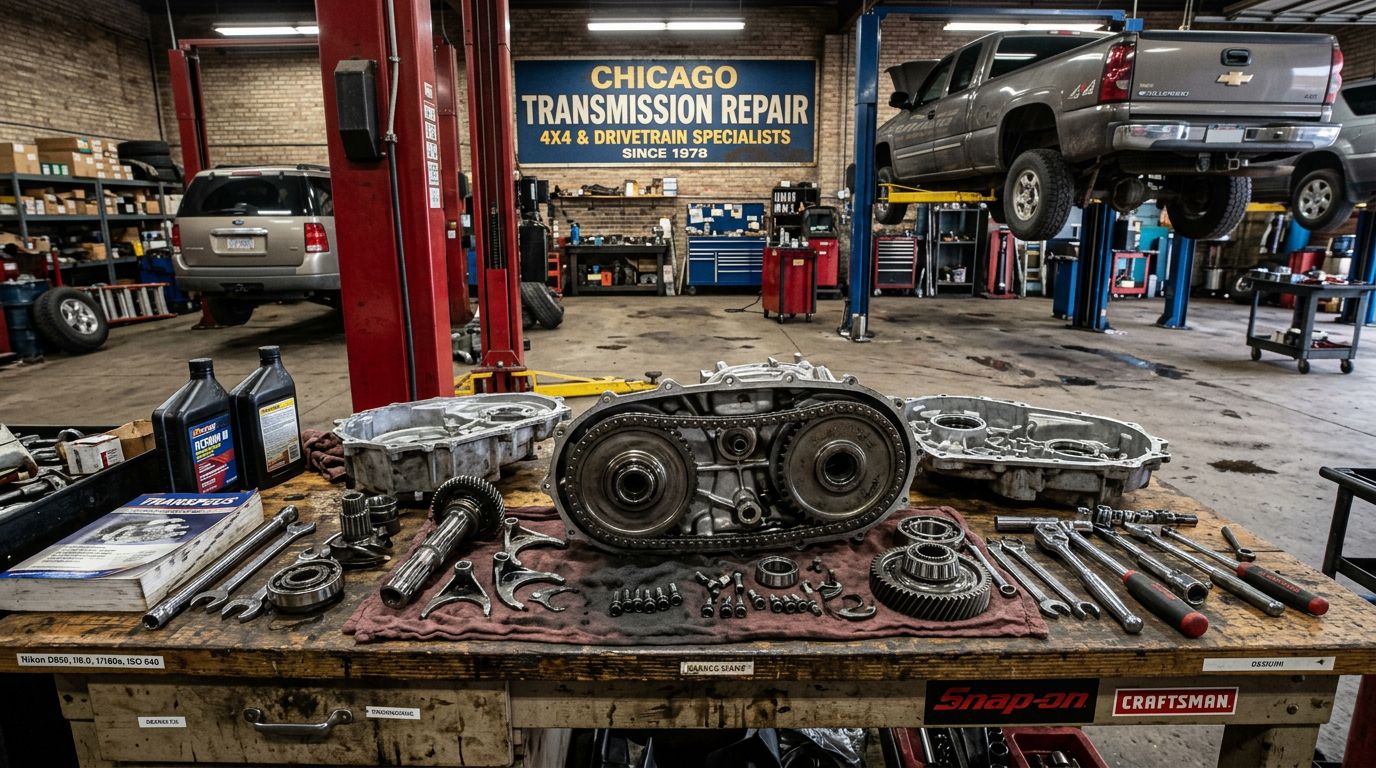
P0700 means your transmission control system detected a fault. Learn what triggers this code, common symptoms, whether it's safe to drive, and what Chicago drivers should expect to pay for repairs.
What Does the P0700 Code Mean?
The P0700 diagnostic trouble code stands for "Transmission Control System Malfunction." It is one of the most frequently searched and most commonly misunderstood OBD-II codes that vehicle owners encounter. When your check engine light illuminates and a scan reveals P0700, it means your vehicle's Transmission Control Module (TCM) has detected a fault somewhere within the transmission control system and has sent a signal to the Engine Control Module (ECM) to alert you that something needs attention.
What makes P0700 unique among transmission codes is that it is not a specific diagnosis on its own. It functions as a "master alert" or gateway code - essentially your vehicle's way of saying, "There is a problem in the transmission system, and you need to look deeper to find out what it is." Think of it as a fire alarm going off in a large building. The alarm tells you there is a problem, but it does not tell you which room the fire is in. The companion codes stored in the TCM are the ones that point you to the exact source of the trouble.
This distinction matters enormously, especially for drivers in Chicago who may be dealing with harsh winter conditions, stop-and-go traffic on the Kennedy Expressway, or long commutes through the western suburbs. Understanding that P0700 is a starting point for diagnosis - not an endpoint - can save you hundreds or even thousands of dollars by preventing unnecessary repairs.
How the Transmission Control Module Works
To fully understand why P0700 appears, it helps to know what the Transmission Control Module does and why it is so critical to your vehicle's operation. The TCM is the computer brain that manages every aspect of your automatic transmission's shifting behavior. Depending on your vehicle's make and model, the TCM may be a standalone module or it may be integrated into the Powertrain Control Module (PCM).
The TCM constantly monitors and controls several vital functions. It determines exactly when to upshift and downshift based on real-time inputs from throttle position, vehicle speed, engine load, and transmission fluid temperature. It manages hydraulic pressure through a network of electronic solenoids, directing the precise amount of fluid pressure needed to engage and release clutch packs and bands during every gear change. It controls torque converter lockup, deciding when to engage and disengage the lockup clutch to maximize fuel efficiency at highway speeds. It also reads speed sensors on both the input shaft (coming from the engine) and the output shaft (going to the wheels) to calculate gear ratios and detect any slippage.
A modern automatic transmission contains between six and ten electronic solenoids, at least four speed sensors, temperature sensors, pressure switches, and internal wiring harnesses with dozens of individual circuits. The TCM processes all of this data in real time, making adjustments hundreds of times per second. When any one of these components reports a reading that falls outside the acceptable range, the TCM logs a specific fault code identifying the exact circuit or condition that triggered the fault. It then separately sets P0700 as a flag to the engine computer, effectively saying, "I found a problem over here in the transmission system." That notification to the ECM is what turns on your check engine light.

Why P0700 Is Almost Never the Only Code
P0700 is almost always accompanied by one or more specific companion codes stored in the TCM. These companion codes are where the real diagnostic information lives, and they typically fall within the P0700 through P0799 range, which covers the full spectrum of transmission control system faults.
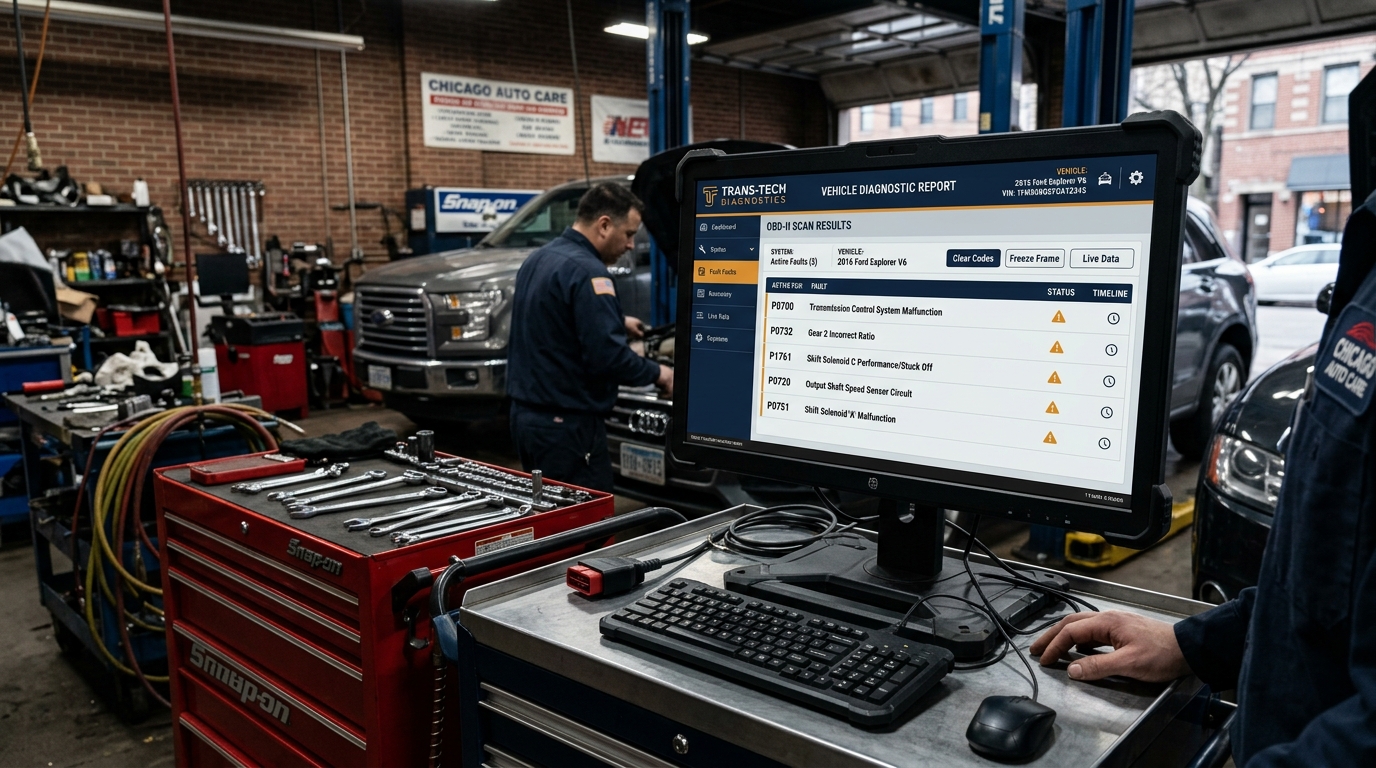
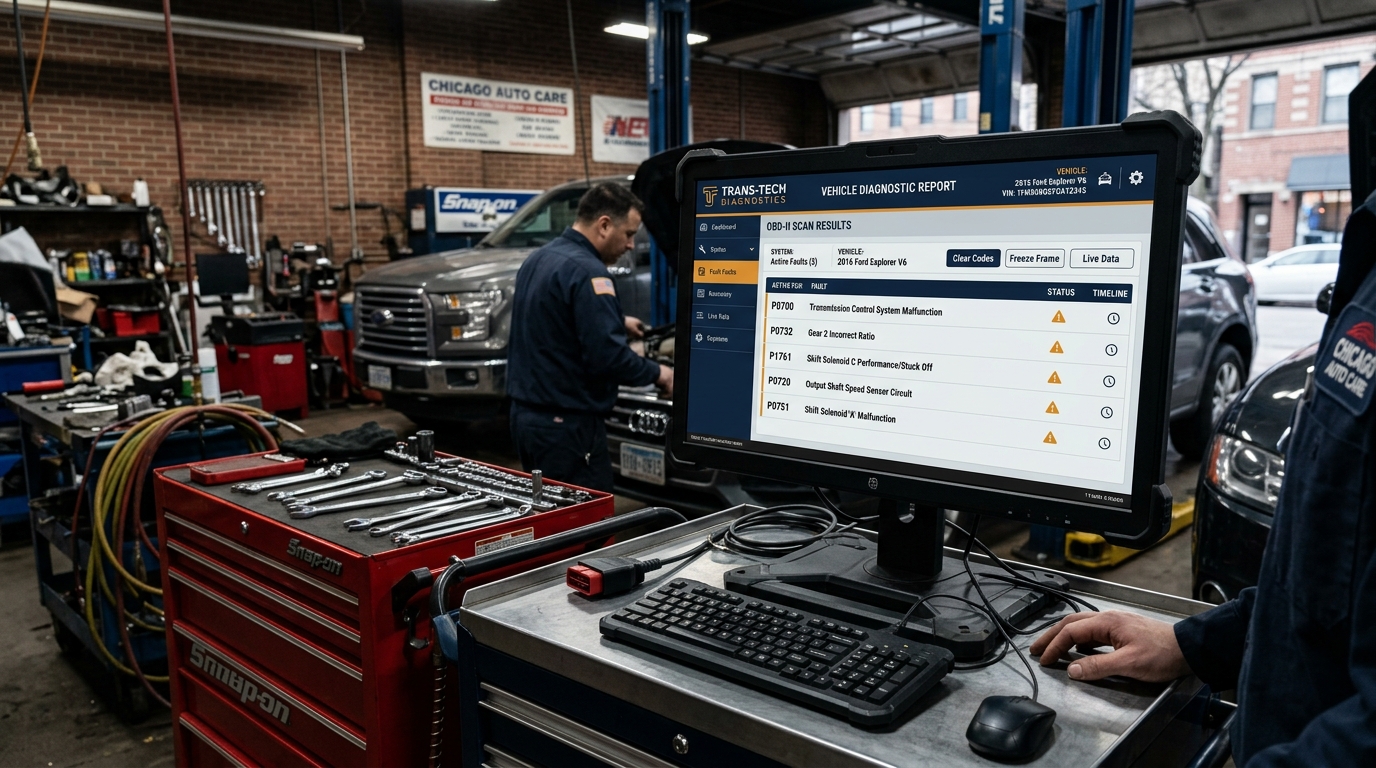
The most common companion codes that appear alongside P0700 include P0715 through P0722 (input and output speed sensor issues), P0730 through P0736 (incorrect gear ratio codes), P0740 through P0744 (torque converter clutch circuit problems), and P0750 through P0770 (shift solenoid malfunctions). Without reading these companion codes directly from the TCM, a P0700 reading alone tells you almost nothing actionable about what specifically is failing inside your transmission.
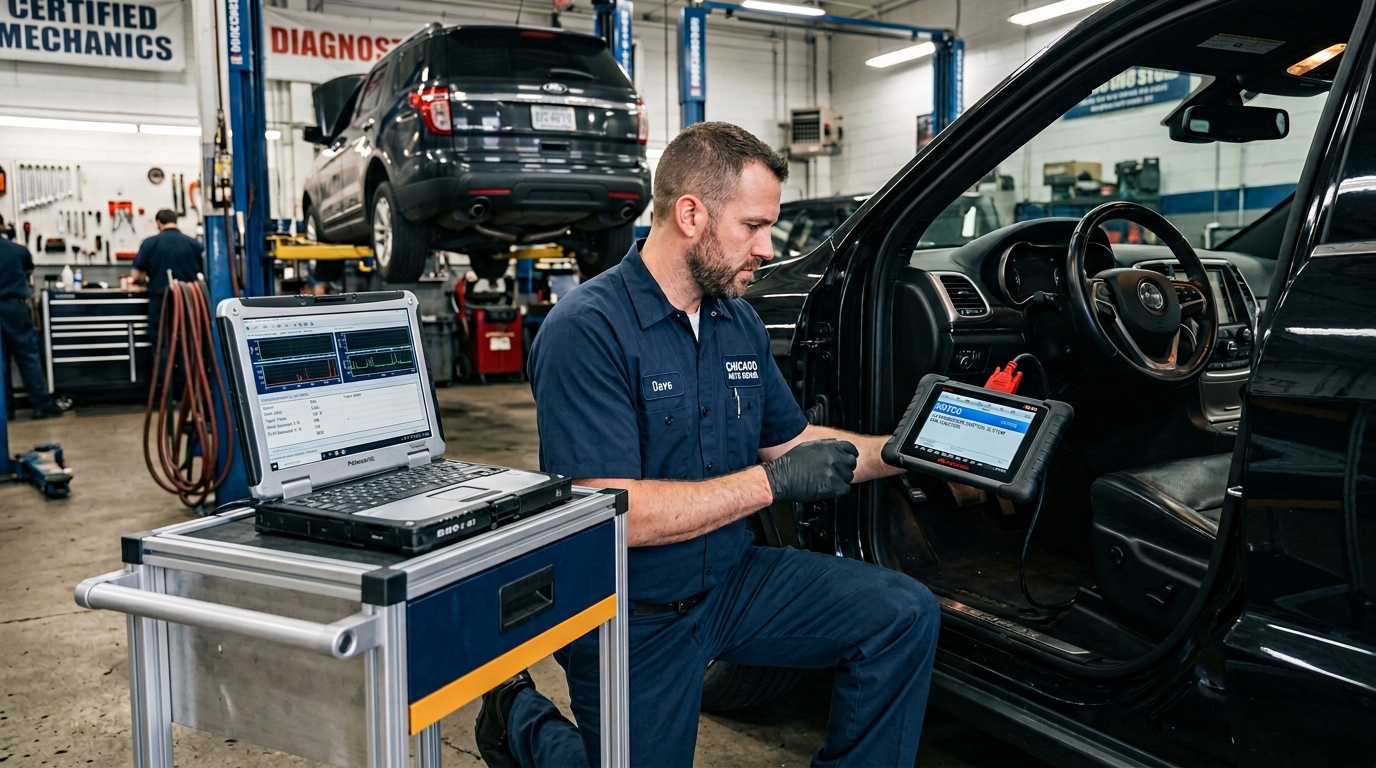
This is an important point for Chicago vehicle owners who may be tempted to use a basic code reader from an auto parts store. Most inexpensive OBD-II scanners only communicate with the engine control module, which is where P0700 is stored. They often cannot access the TCM directly, which means they will miss the specific companion codes that identify the actual problem. A professional-grade scan tool with enhanced transmission diagnostic capability is needed to pull every stored code, pending code, and freeze frame data from the TCM. This is one of the key reasons a visit to a qualified transmission specialist is so important when P0700 appears.
Common Causes of the P0700 Code
The P0700 code can be triggered by a wide range of underlying issues. Because it is a general alert rather than a specific diagnosis, the root cause could be something relatively simple and inexpensive to fix, or it could indicate a serious internal transmission problem. Here are the most common causes that technicians encounter.
Low or Contaminated Transmission Fluid is one of the most frequent culprits. Your transmission depends on clean, properly filled fluid to operate correctly. Low fluid levels reduce hydraulic pressure, which prevents clutch packs from fully engaging and causes the transmission to slip or shift erratically. Contaminated fluid - fluid that has broken down from heat exposure, absorbed moisture, or become filled with metallic debris from internal wear - can clog solenoid screens, interfere with valve body operation, and cause sensor readings to fall outside acceptable parameters. Chicago drivers should pay particular attention to fluid condition because the extreme temperature swings between brutal winter cold and humid summer heat place additional stress on transmission fluid. Cold weather causes fluid to thicken, which can slow solenoid response and increase shift harshness, especially during those first few minutes of driving on a frigid January morning.
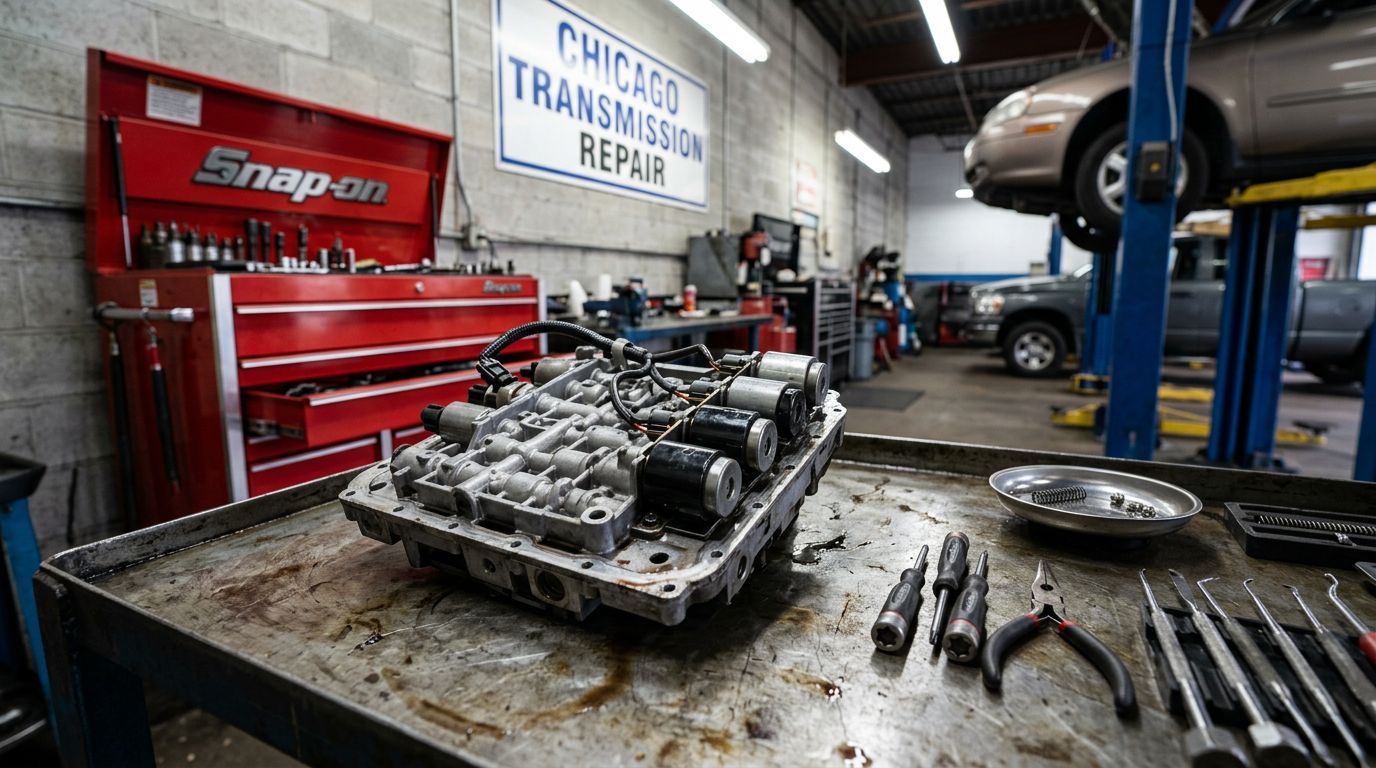
Faulty Shift Solenoids are another leading cause. Shift solenoids are electronically controlled hydraulic valves that direct fluid flow to engage and release specific gear sets. Over time, solenoid coils can burn out, internal plungers can seize due to varnish and debris buildup, and connector pins can corrode. When a solenoid fails or operates outside its specified parameters, the TCM logs a solenoid-specific code and sets P0700 as the accompanying alert. Chicago's road salt exposure can accelerate connector corrosion on external transmission components, making solenoid wiring issues somewhat more common in vehicles driven through multiple Midwest winters.
Defective Speed Sensors on the input or output shaft can also trigger P0700. The TCM relies on accurate speed data from both sensors to calculate gear ratios, determine shift points, and detect slippage. If a sensor fails, sends an erratic signal, or loses signal entirely, the TCM cannot manage shifts safely and will log the appropriate sensor code alongside P0700.
Wiring and Connector Problems throughout the transmission control circuit can cause intermittent or permanent faults. Shorts, opens, corroded connectors, and damaged wiring harnesses prevent the TCM from communicating reliably with its sensors and solenoids. These electrical issues can be particularly stubborn to diagnose because they may only manifest under specific conditions, such as when the vehicle hits a pothole - something Chicago drivers encounter with frustrating regularity on streets battered by freeze-thaw cycles.
A Faulty Transmission Control Module itself, while less common than the causes listed above, can trigger P0700. If the TCM's internal circuitry fails or its programming becomes corrupted, it may be unable to properly monitor or control the transmission. TCM replacement is typically a last-resort diagnosis after all other possibilities have been ruled out.
Internal Mechanical Transmission Failure is the most serious potential cause. Worn clutch packs, damaged planetary gear sets, broken bands, or a failing transmission pump can all produce symptoms and companion codes that trigger P0700. When metal shavings and burnt friction material contaminate the fluid, the resulting debris can cascade through the system, affecting solenoids, sensors, and the valve body simultaneously, which may result in multiple companion codes appearing alongside P0700.
Symptoms You May Notice with P0700
When P0700 is active, the symptoms you experience will depend on which specific companion code is present and what underlying condition triggered the fault. However, several symptoms are commonly reported across most P0700 scenarios.
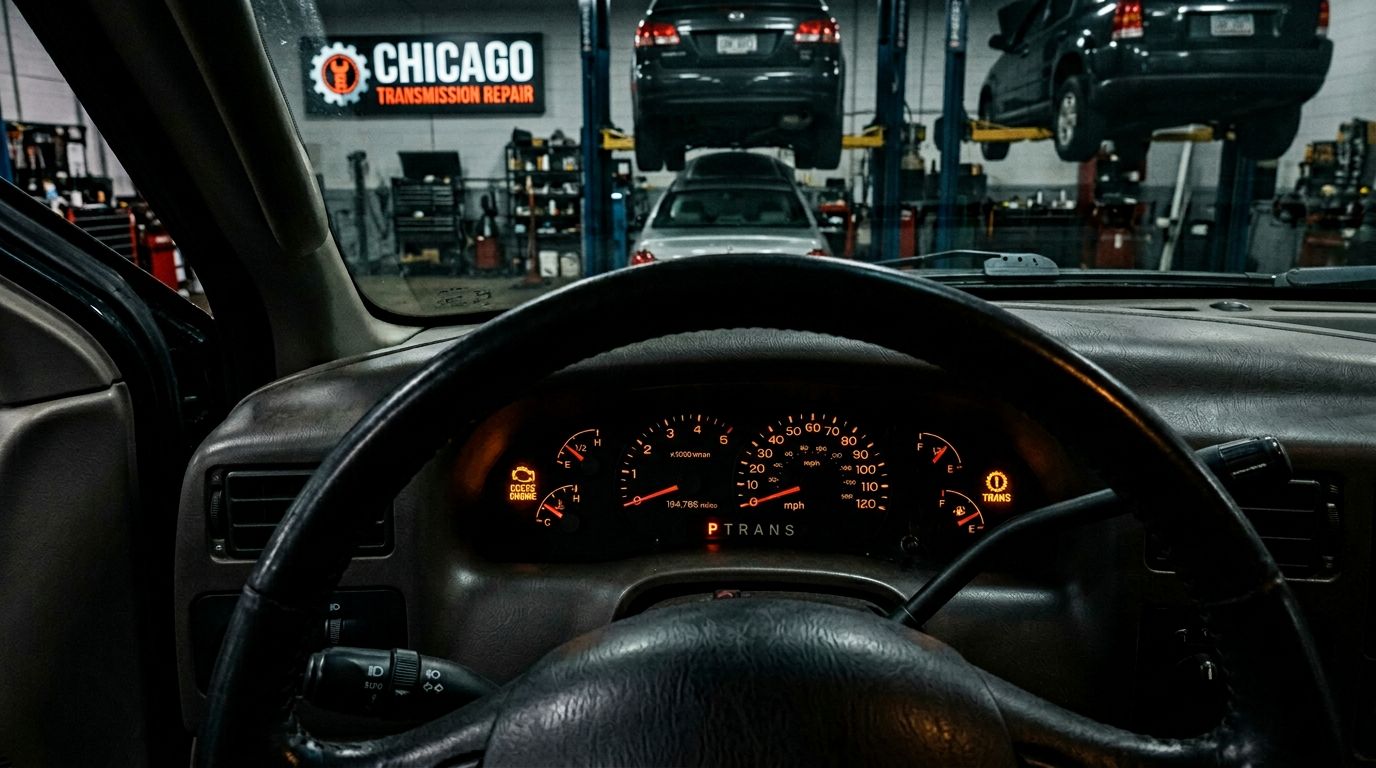
The check engine light illuminating on your dashboard is the most obvious sign. This is the TCM's way of getting your attention through the ECM, and it should never be ignored. Some vehicles may also display a separate transmission warning light or a message on the driver information center indicating a transmission fault.
Transmission slipping is one of the more alarming symptoms. You press the accelerator and the engine RPMs climb, but the vehicle does not accelerate proportionally. It feels as though the engine and wheels are partially disconnected. Slipping indicates that internal friction components are not engaging fully, and every moment of slippage generates heat that accelerates further damage. If you notice slipping while navigating Chicago's dense traffic on Lake Shore Drive or merging onto I-90/94, get the vehicle to a specialist promptly because continued driving will make the problem significantly worse.
Harsh or delayed shifting is another common complaint. Gear changes may feel like a noticeable jolt or thump rather than a smooth transition, or there may be a distinct pause between when you press the accelerator and when the transmission actually completes the shift. These symptoms are especially noticeable during cold starts in Chicago's winter months when thickened fluid compounds existing hydraulic pressure issues.
Erratic or unpredictable shifting can occur when the TCM receives bad data from failing sensors or when solenoids are operating intermittently. The transmission may shift at the wrong RPM, hunt between gears, skip gears entirely, or behave differently under the same driving conditions from one moment to the next.
The vehicle entering "limp mode" is a protective response the TCM initiates when it detects a fault severe enough that continued normal shifting could cause catastrophic damage. In limp mode, the transmission locks into a single gear - usually second or third - limiting your speed to roughly 25 to 35 miles per hour. This is enough to get you off the expressway and to a repair shop, but it is not intended for extended driving. If your vehicle enters limp mode on the Dan Ryan during rush hour, safely work your way to the right lane and exit at the nearest opportunity.
Decreased fuel efficiency often accompanies P0700 because the transmission is not shifting optimally. If the torque converter clutch is not engaging properly at highway speeds, or if the transmission is failing to reach higher gears, the engine runs at higher RPMs than necessary, burning more fuel. Chicago commuters dealing with long daily drives may notice this symptom reflected at the pump before they notice any drivability issues.
Is It Safe to Drive with P0700?
The short answer is that you should get your vehicle to a qualified transmission specialist as soon as possible. The longer answer depends on your specific symptoms. If the transmission is in limp mode, the TCM has already determined that a critical fault exists, and you should drive directly to a shop or have the vehicle towed. If the transmission is slipping, you should stop driving as soon as you can safely do so because every mile on a slipping transmission converts a repairable problem into a more expensive one.
If your only symptom is the check engine light with no noticeable drivability issues, you have a bit more time, but you should still schedule a diagnostic appointment promptly. Transmission problems tend to escalate. What starts as a minor electrical fault or low fluid level can cascade into internal damage if left unaddressed, and the cost difference between early and late intervention can be measured in thousands of dollars.
For Chicago drivers specifically, temperature extremes add urgency. A marginally low fluid level that barely causes issues in mild weather can produce significant shifting problems when that fluid thickens in sub-zero temperatures. A solenoid that sticks intermittently in summer may fail completely when exposed to Chicago's January wind chills. Addressing P0700 before the weather turns harsh is always the smarter financial decision.
How P0700 Is Diagnosed
Proper diagnosis of P0700 follows a systematic process that goes well beyond simply reading the code. A qualified transmission technician will start with an enhanced transmission scan using professional-grade diagnostic equipment that communicates directly with the TCM. This scan retrieves all stored codes, pending codes, and freeze frame data - the snapshot of exact operating conditions at the moment each fault was detected. Freeze frame data reveals the vehicle speed, engine RPM, transmission fluid temperature, commanded gear, actual gear ratio, and throttle position at the instant the problem occurred, providing critical context that guides the rest of the diagnosis.
The next step is a thorough inspection of the transmission fluid. Fluid condition communicates a tremendous amount about internal transmission health. Healthy fluid is bright red or light pink with a slightly sweet smell. Dark brown or black fluid indicates severe heat exposure. A burnt or acrid smell means clutch material has been burning internally. Metallic particles or glitter in the fluid indicate hard part wear from bearings, thrust washers, or gear surfaces. A milky or frothy pink appearance indicates coolant contamination from a failed internal transmission cooler - a condition that requires immediate attention to prevent total transmission failure.
A road test with the diagnostic equipment connected and streaming live data in real time is one of the most informative parts of the diagnostic process. The technician monitors actual shift points, shift quality, slip ratio between input and output speeds, line pressure, and torque converter lockup engagement while simultaneously feeling for symptoms behind the wheel. Reproducing the exact conditions recorded in the freeze frame data helps isolate the fault under controlled driving conditions.
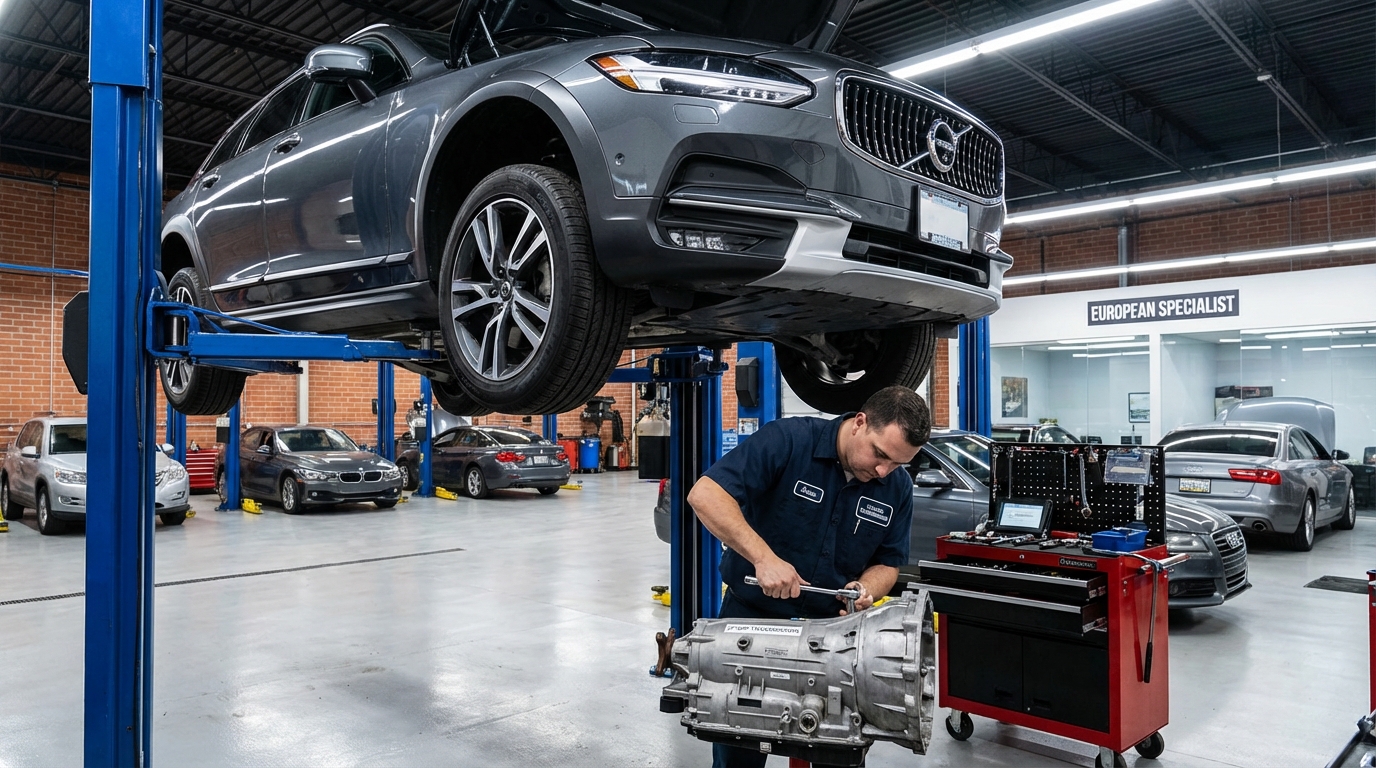
Hydraulic pressure testing may also be performed by connecting calibrated pressure gauges to the transmission's test ports and measuring line pressure at idle and under load in each gear range. Comparing these readings to manufacturer specifications reveals whether the transmission pump is producing adequate pressure, whether the pressure regulator is functioning correctly, and whether any specific gear circuit has an internal hydraulic leak.
If solenoid problems are suspected, electrical testing verifies each solenoid's internal coil resistance against manufacturer specifications and confirms that commanding the solenoid through the scan tool produces the expected mechanical and hydraulic response.
P0700 Repair Costs: What to Expect
P0700 is a master transmission fault, so the price is not knowable from that code alone. The real estimate depends on the companion codes stored in the transmission control module, the fluid condition, live-data readings, and whether the problem is electrical, hydraulic, or internal.
A simple service, sensor, wiring, or solenoid repair is very different from a valve-body problem, torque-converter issue, control-module failure, rebuild, or replacement. A good shop should scan the full system, inspect the fluid and pan when needed, confirm the failure path, and give you a written estimate before any repair work starts.
If the vehicle is slipping badly, stuck in limp mode, overheating, or not moving normally, towing is usually safer than trying to drive it across Chicago. Bring the full list of codes, recent service history, and symptoms so the diagnostic conversation starts with real information instead of guesswork.
How to Prevent P0700 and Transmission Problems
Preventive maintenance is the most effective way to avoid P0700 and the expensive repairs it can lead to. The single most important thing you can do for your transmission is change the fluid on a regular schedule - every 30,000 to 60,000 miles - regardless of whether your owner's manual claims the fluid is "lifetime." No transmission fluid lasts forever. Its additives break down, it absorbs moisture, it collects microscopic wear particles, and it gradually loses its friction modification properties. The concept of "lifetime" fluid really means it is expected to last through the warranty period, not the entire life of the vehicle.
Chicago drivers face additional stressors on their transmission fluid that make regular service even more important. The extreme cold of winter thickens fluid and increases shift harshness during warmup, while summer heat and stop-and-go traffic on congested expressways push fluid temperatures higher. Road salt and moisture exposure accelerate corrosion on external connectors and wiring. Potholes and rough road surfaces - an ever-present reality on Chicago's streets after every harsh winter - can damage transmission mounts, stress wiring harnesses, and jar internal components. Having your transmission fluid inspected and serviced regularly at a qualified shop is the best insurance against unexpected P0700 codes and the costly repairs they signal.
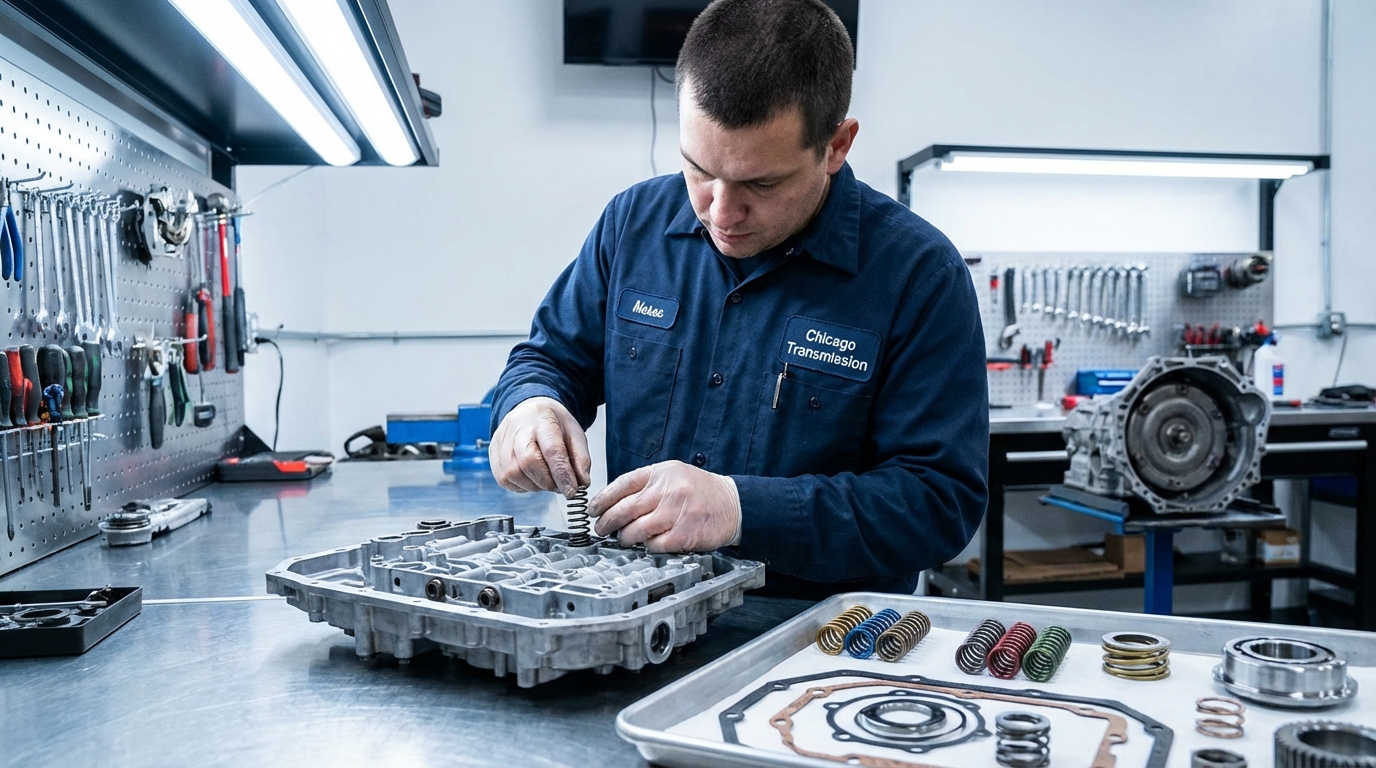
Beyond fluid maintenance, having any check engine light diagnosed promptly rather than ignoring it prevents small problems from cascading into large ones. A shift solenoid that sticks intermittently can be replaced for a few hundred dollars. Left unaddressed for months, that same sticking solenoid can cause repeated harsh shifting that eventually damages clutch packs and drums, turning a minor repair into a multi-thousand-dollar rebuild.
Frequently Asked Questions About P0700
What does P0700 mean on my car?
P0700 stands for "Transmission Control System Malfunction." It indicates that your vehicle's Transmission Control Module has detected a fault in the transmission system and has flagged the Engine Control Module to turn on the check engine light. It is a general alert code that is almost always accompanied by more specific companion codes in the TCM that identify the actual source of the problem.
Can I drive with a P0700 code?
It depends on your symptoms. If the transmission feels normal and your only indication is the check engine light, you can carefully drive to a repair shop. If the transmission is slipping, shifting harshly, stuck in one gear, or in limp mode, you should minimize driving and get the vehicle to a specialist as soon as possible. Continued driving with active transmission faults risks turning a minor repair into a major one.
Why does my scanner only show P0700 and nothing else?
Basic OBD-II code readers typically only communicate with the Engine Control Module, which stores P0700 as a notification. The specific companion codes that identify the actual fault are stored in the Transmission Control Module, which requires an enhanced scan tool to access. If your scanner only shows P0700, it almost certainly means there are additional codes in the TCM that your scanner cannot read.
How much does it cost to fix P0700?
Repair scope can range from a fluid and filter service to a full transmission rebuild, depending on what specific fault the companion codes reveal. The only way to get an accurate repair estimate is through a proper diagnostic evaluation by a qualified transmission technician.
Does P0700 always mean I need a new transmission?
No. In many cases, P0700 is triggered by issues that do not require a full transmission replacement, such as low or dirty fluid, a faulty solenoid, a bad speed sensor, or a wiring problem. A thorough diagnosis determines whether the issue can be resolved with a targeted repair or whether more extensive work is needed.
Is P0700 worse in cold weather?
Cold temperatures can aggravate existing transmission issues. Thickened fluid increases shift harshness, marginal solenoids may fail completely in extreme cold, and electrical connections stressed by corrosion from road salt may lose contact. Chicago drivers often notice that transmission symptoms that were mild in warmer months become noticeably worse once temperatures drop, making fall the ideal time to address any pending transmission concerns before winter sets in.
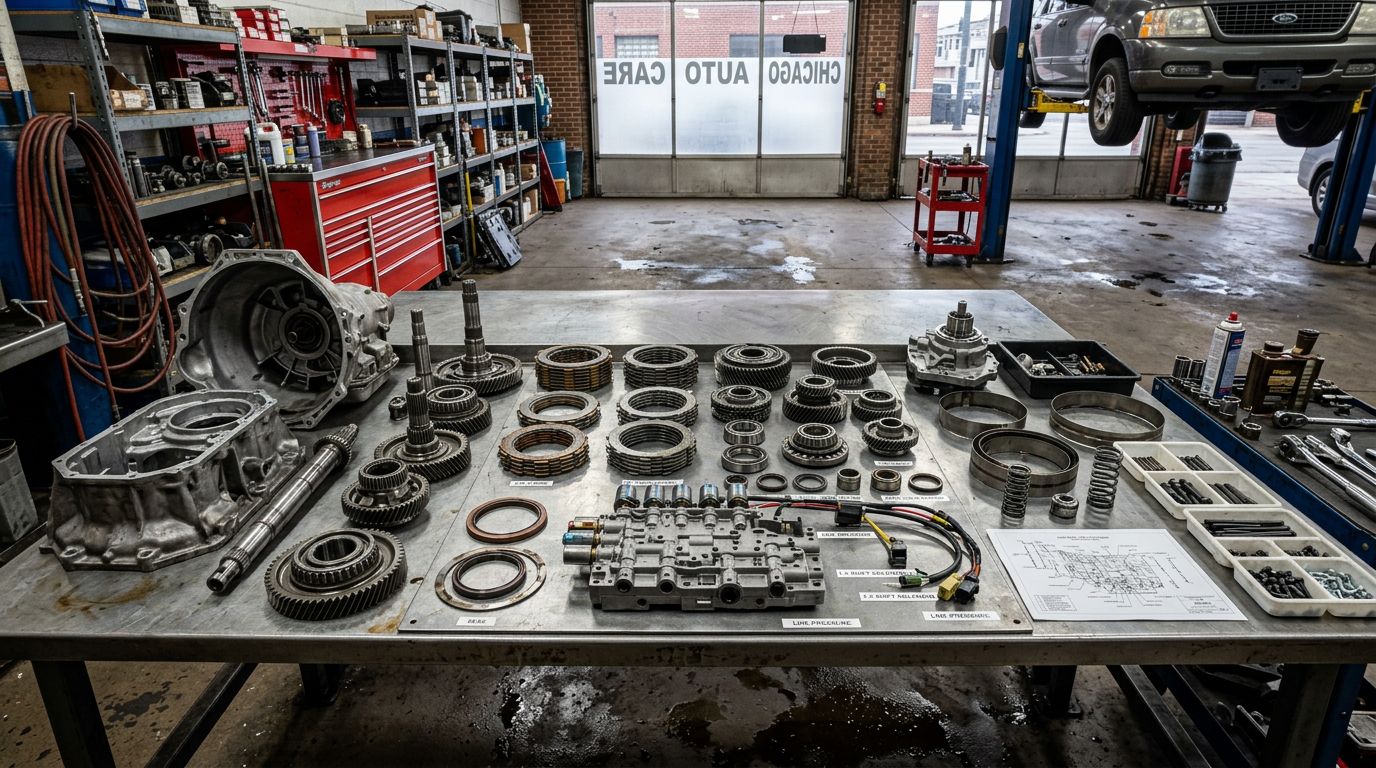
Have a Transmission Problem?
Get a Diagnosis-first inspection from Chicago transmission repair support.