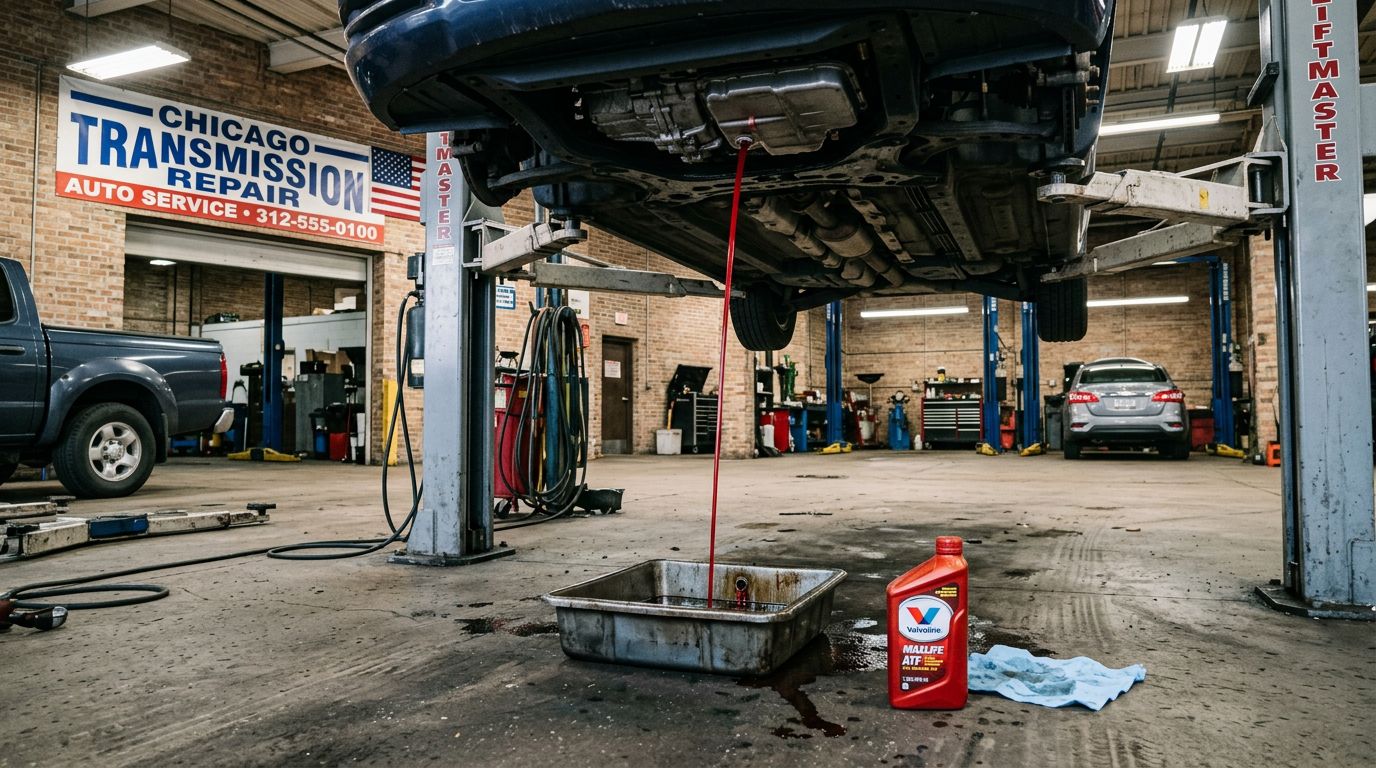
P0705 means your transmission range sensor isn't telling the computer what gear you're in. Learn causes (bad TRS, wiring, linkage), diagnosis steps, and Chicago repair costs.
What Does the P0705 Code Mean?
P0705 is a generic OBD-II diagnostic trouble code defined as "Transmission Range Sensor 'A' Circuit Malfunction (PRNDL Input)." It is stored when the Powertrain Control Module (PCM) or Transmission Control Module (TCM) receives no signal, an erratic signal, or an out-of-range signal from the Transmission Range Sensor (TRS) - the component that tells the computer which gear position the shift lever is in: Park, Reverse, Neutral, Drive, or Low.
The TRS goes by several names depending on the manufacturer. GM calls it the "neutral safety switch" or "range selector switch." Honda and Kia refer to it as the "inhibitor switch." Ford labels it the "transmission range sensor" or "digital TR sensor." Regardless of the name, the function is identical: it converts the physical position of the shift lever into an electrical signal that the PCM/TCM uses to determine which gear is commanded. This information is critical for three reasons. First, it controls the starter circuit - the engine should only crank when the lever is in Park or Neutral. Second, it tells the TCM which shift solenoids to energize for the commanded gear. Third, it activates the backup lights when Reverse is selected.
When the TRS circuit fails, the PCM/TCM essentially loses its ability to know what gear the driver has selected. The consequences range from mildly annoying (incorrect gear-position indicator on the dashboard) to completely disabling (the vehicle refuses to start, enters limp mode, or gets stuck in a single gear).
For Chicago drivers, P0705 is an especially frustrating code. A vehicle that intermittently refuses to start on a sub-zero January morning, or one that unpredictably enters limp mode on the Kennedy Expressway, creates both a reliability problem and a safety hazard. The good news: P0705 is often caused by relatively inexpensive components - the sensor itself, the wiring, or the shift linkage - rather than the expensive internal transmission failures associated with gear-ratio codes.
Where P0705 Fits in the Code Family
P0705 belongs to a small family of Transmission Range Sensor codes that describe different types of faults with the same component.
P0705 indicates a general circuit malfunction - the PCM/TCM is receiving no signal or an unrecognizable signal. P0706 indicates a "Range/Performance" issue - the sensor is sending a signal, but the value doesn't match the expected range for the lever's physical position, suggesting the sensor is drifting, miscalibrated, or the linkage is misadjusted. P0707 indicates the sensor signal is stuck low. P0708 indicates the sensor signal is stuck high. P0709 indicates an intermittent circuit fault.
When P0705 appears alone, the problem is usually a complete signal loss - a dead sensor, a disconnected connector, or a broken wire. When P0705 appears alongside P0706, both the circuit integrity and the signal quality are compromised, pointing to a partially failed sensor or a corroded connector that is making intermittent contact. When P0705 appears with P0700 (Transmission Control System Malfunction), the TCM has flagged the range-sensor failure as a broader transmission-control issue. When P0705 is accompanied by shift-solenoid codes (P0750, P0751, P0755, P0756), it may indicate that the TCM is commanding incorrect solenoid patterns because it doesn't know what gear the driver wants - fixing the TRS often resolves the accompanying solenoid codes as well.
How the Transmission Range Sensor Works
The TRS is mounted on the outside of the transmission case (external type) or inside the transmission on the valve body (internal type). It is mechanically linked to the manual valve - the spool valve inside the valve body that the shift linkage physically moves when the driver changes gear positions.
External TRS sensors are the most common type and are found on most GM, Ford, Chrysler, and many Asian vehicles. They are typically rotary switches or potentiometers that change resistance or voltage as the manual shaft rotates. The sensor has multiple pins, each corresponding to a gear position. As the shaft rotates from Park through Reverse, Neutral, Drive, and Low, different combinations of pins are connected or different voltages are produced, creating a unique signal pattern for each position. The PCM/TCM reads this pattern and determines the commanded gear.
Internal TRS sensors are sealed inside the transmission, often integrated into the valve body or the TEHCM (on GM 6L80 transmissions) or the solenoid/TRS assembly (on Chrysler transmissions). These require dropping the transmission pan to access and, in some cases, a complete valve-body removal.
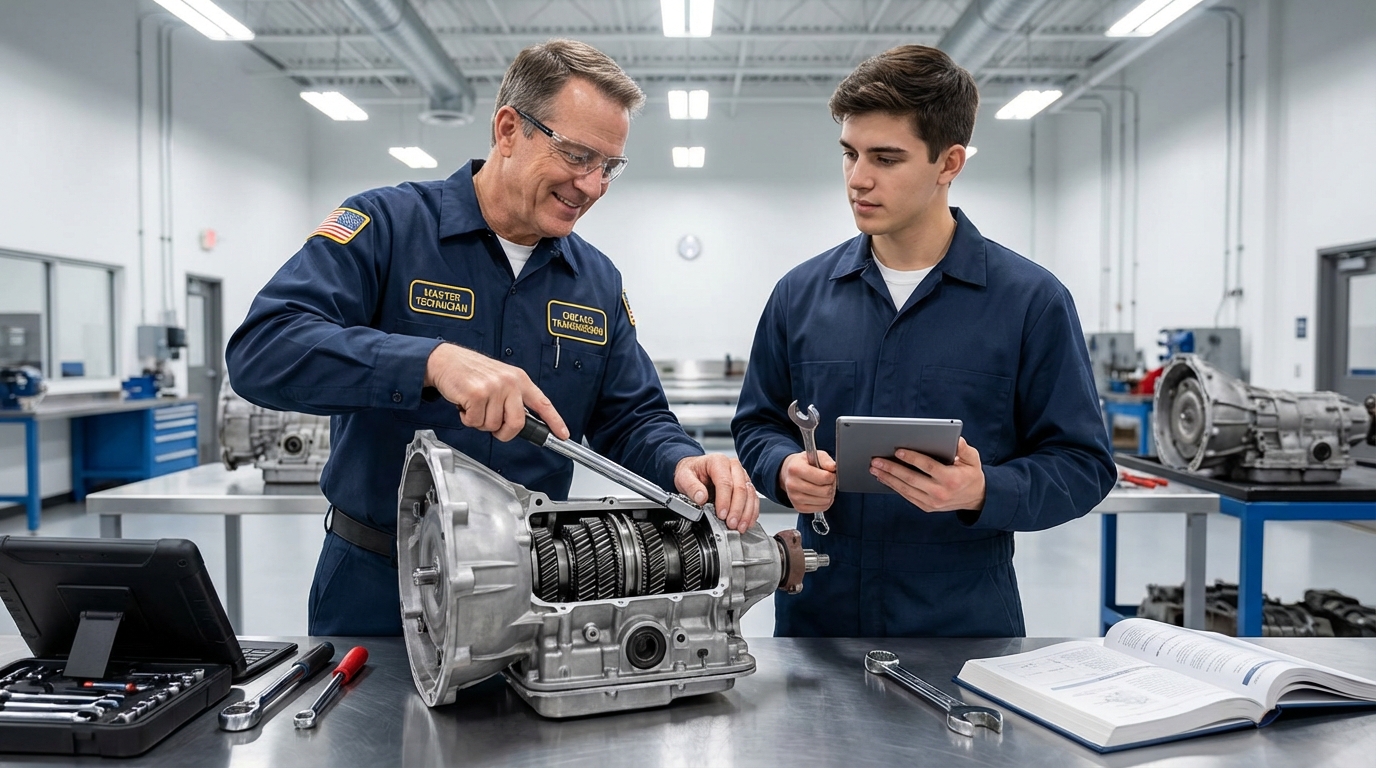
The sensor typically receives a 5-volt reference signal from the PCM/TCM and returns a variable voltage signal. In Park, the return voltage might be near 0V; in Drive, it might be approximately 4V. The exact values vary by manufacturer, but the principle is consistent: each gear position produces a distinct, predictable voltage. When the PCM/TCM receives a voltage that doesn't match any programmed position - or receives no voltage at all - it stores P0705.
Common Causes of P0705
The causes of P0705 are predominantly electrical and mechanical (external to the transmission's internal clutch packs and gears), making this code significantly less expensive to repair than most gear-ratio codes.
Failed Transmission Range Sensor. The sensor itself is the most common cause. Over time, the internal contacts or potentiometer elements wear from constant use. Contamination from road grime, moisture, or transmission fluid leaking past seals degrades the sensor's electrical connections. Heat cycling (repeated expansion and contraction) cracks solder joints or plastic housings. When the sensor fails, it either sends no signal or sends an erratic signal that the PCM/TCM cannot interpret. Replacement - contact us for a written estimate.
Corroded, Loose, or Damaged Wiring and Connectors. The wiring harness between the TRS and the PCM/TCM runs along the underside of the vehicle, exposed to road spray, salt, moisture, and heat. Corroded connector pins are an extremely common cause - particularly in northern climates like Chicago where road salt attacks electrical connections aggressively. A single corroded pin can interrupt the signal circuit entirely. Loose connectors that vibrate apart over rough roads (another Chicago specialty) produce intermittent faults. Wiring repair is typically straightforward once testing confirms the affected connector or circuit.
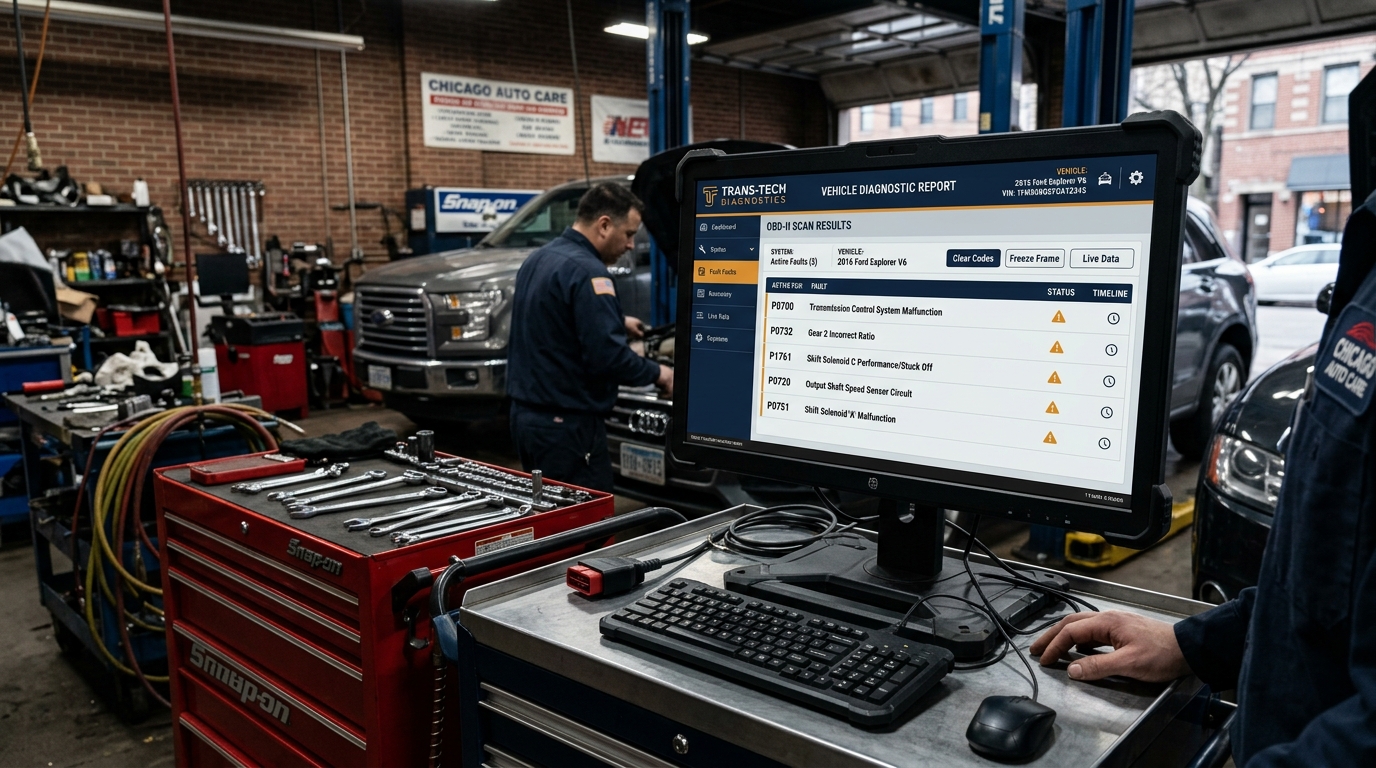
Misadjusted or Worn Shift Linkage. The shift linkage is the mechanical connection between the cabin's shift lever and the transmission's manual shaft. If the linkage stretches, bends, or is improperly adjusted - so that the physical position of the lever doesn't precisely correspond to the position of the manual valve - the TRS will report a position that doesn't match what the PCM/TCM expects. This is a frequently overlooked cause. A Sun Transmissions guide emphasizes: "A misaligned linkage can mimic TRS failure. If not corrected first, costly parts may be replaced unnecessarily." Linkage adjustment is typically free or minimal cost during a diagnostic visit; linkage replacement for parts.
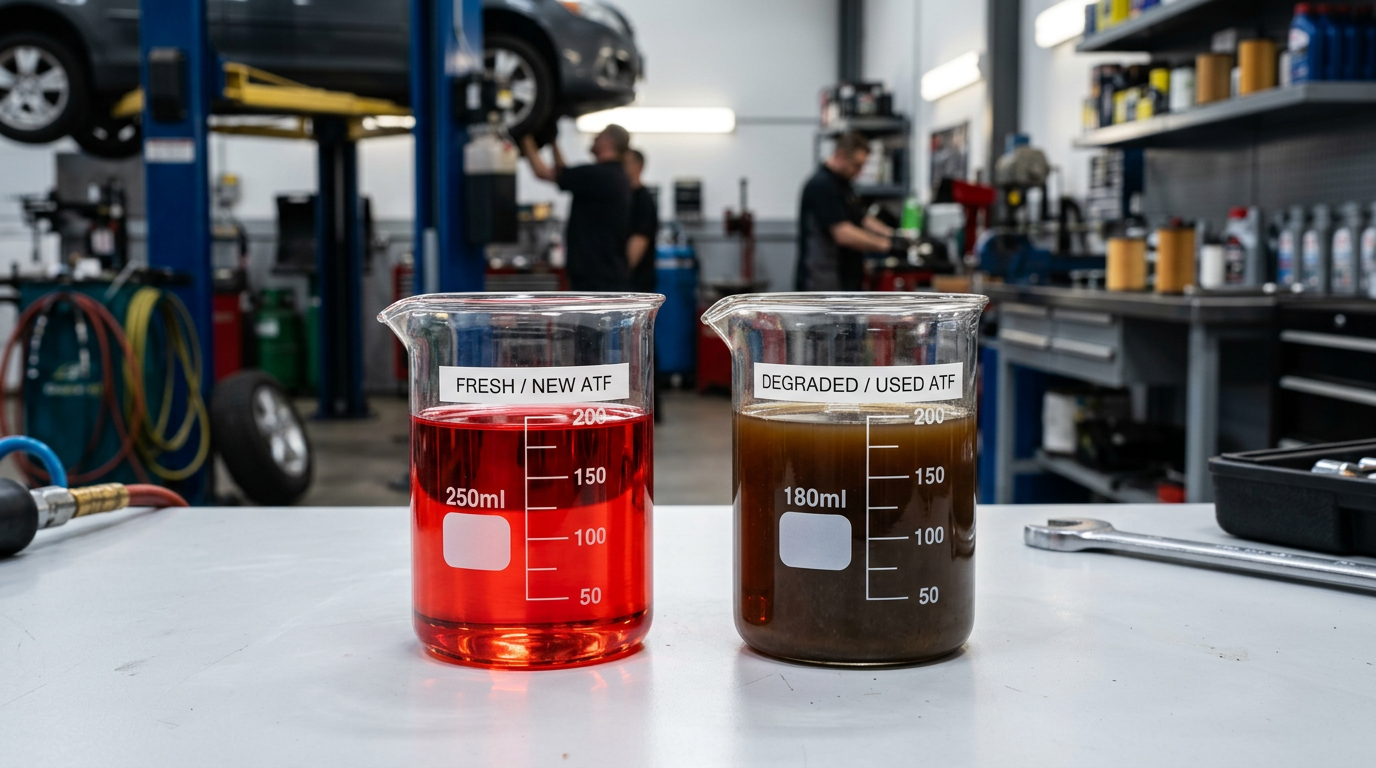
Low or Contaminated Transmission Fluid. While P0705 is primarily an electrical/sensor code, fluid condition can affect internal TRS sensors and the hydraulic environment of the manual valve. Contaminated fluid can foul the sensor's contacts or cause the manual valve to stick, producing a position mismatch. A fluid and filter service.
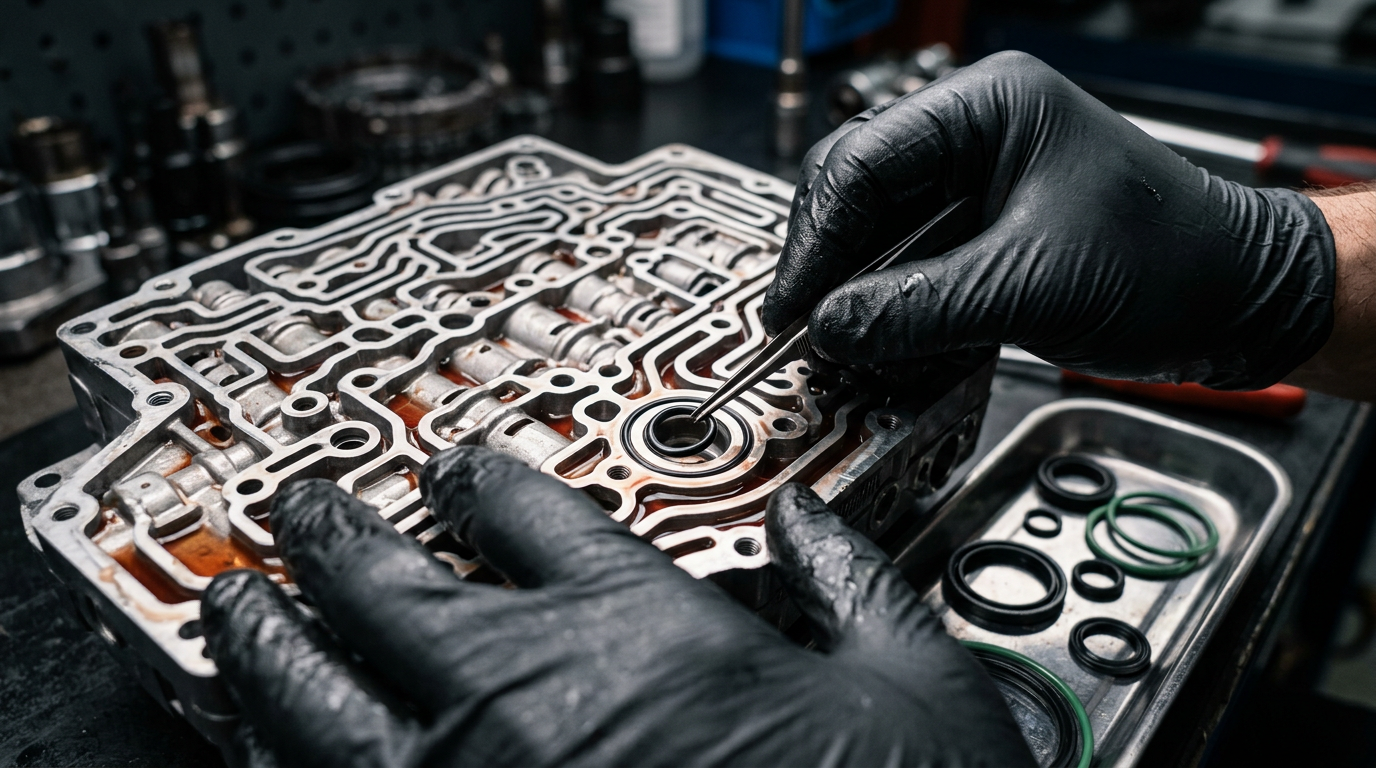
Bad O-Ring Seal on Internal TRS. For transmissions with internal range sensors, a deteriorated O-ring on the sensor housing can allow fluid to leak into the electrical connector or the sensor's internal components, shorting the circuit. This is a common failure on certain Honda and Kia models where the sensor is sealed inside the transmission.
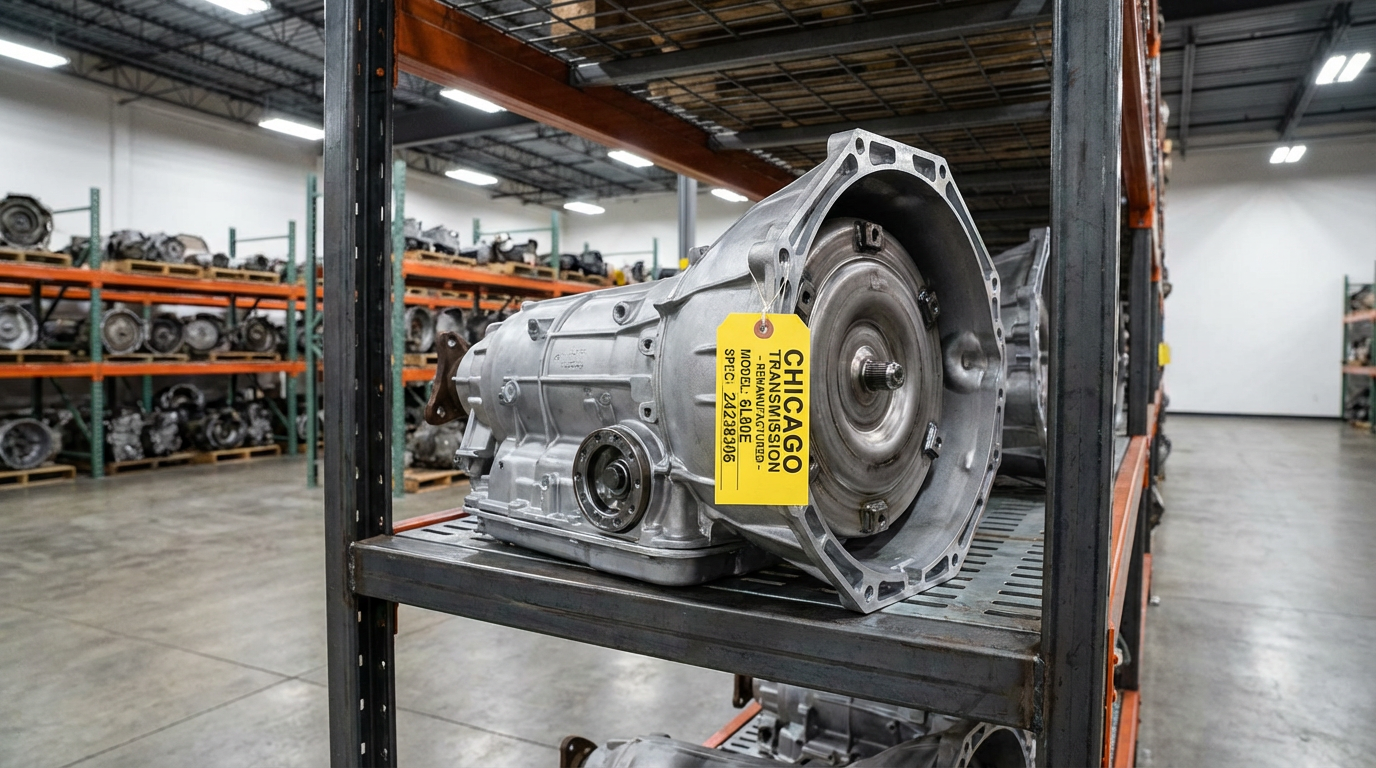
PCM/TCM Fault. Rarely, the control module itself may have a failed input circuit - a burned trace, a corroded pin on the module's connector, or a software glitch that prevents it from reading the TRS signal. This should only be suspected after the sensor, wiring, and linkage have been verified as functional. TCM replacement plus programming.
Symptoms Chicago Drivers Will Notice
The most alarming symptom is the vehicle refusing to start. Because the TRS also serves as the neutral safety switch, a failed sensor can prevent the starter from engaging - the PCM doesn't recognize that the lever is in Park or Neutral, so it refuses to allow cranking. On a sub-zero Chicago morning when you're already running late, a no-start condition caused by a sensor is deeply frustrating. A workaround that some drivers discover by accident: jiggling the shift lever between Park and Neutral sometimes momentarily restores the signal contact and allows the engine to start - a classic sign of a worn TRS.
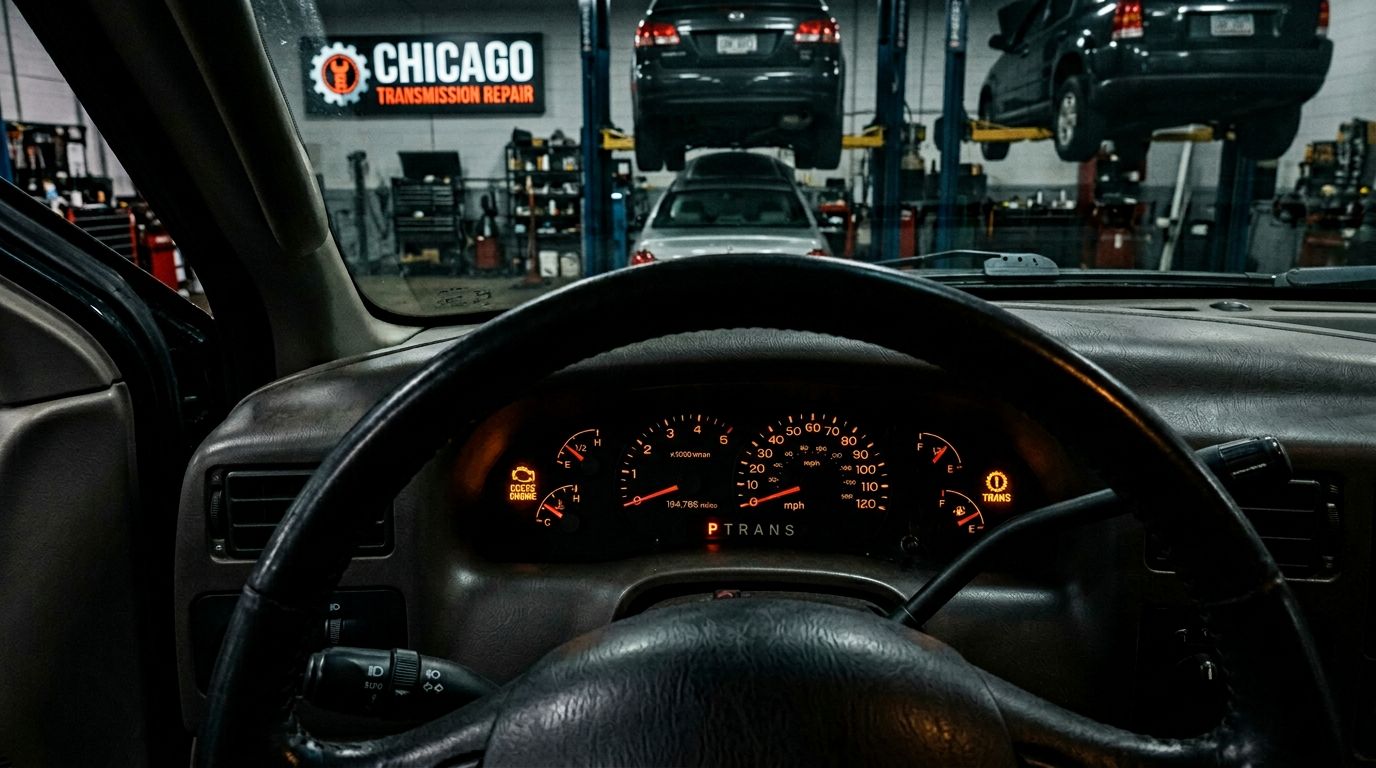
An incorrect gear-position indicator on the dashboard is another common symptom. The instrument cluster may show "D" when the lever is in "R," display a blank position, or show a flashing "PRNDL" indicator. On some vehicles, the gear-position display disappears entirely, replaced by dashes or an error message.
Erratic or harsh shifting occurs because the TCM doesn't know what gear the driver has commanded. It may default to a "safe" strategy - engaging a single gear (limp mode) - or it may attempt to guess the gear position and shift accordingly, producing unexpected gear changes, harsh engagements, or delayed responses.
Limp mode activation limits the vehicle to a single gear (usually second or third) and a maximum speed of 25-40 mph. While functional for surface streets, it renders expressway driving impossible and is a safety concern in fast-moving traffic.
Backup lights may fail to illuminate when Reverse is selected, creating a safety hazard in parking lots and driveways. Conversely, the backup lights may stay on continuously or illuminate in the wrong gear position.
The vehicle may start in a gear other than Park or Neutral - a dangerous condition that can cause the vehicle to lurch forward or backward when the engine cranks.
Can You Drive With P0705?
If the vehicle starts, shifts, and drives normally despite the check-engine light, you can drive to a shop - the code may be caused by an intermittent contact issue that is not currently affecting operation. However, because P0705 can cause the vehicle to suddenly enter limp mode, refuse to shift, or lose the gear-position signal without warning, it should be diagnosed promptly. The unpredictability is the primary risk.

If the vehicle is in limp mode (stuck in one gear), you can limp to a nearby shop on surface streets. Do not drive on the expressway at 30 mph.
If the vehicle refuses to start, the issue must be resolved before driving. Jiggling the shift lever may temporarily restore the TRS signal, but this is not a reliable long-term solution.
Step-by-Step Diagnosis

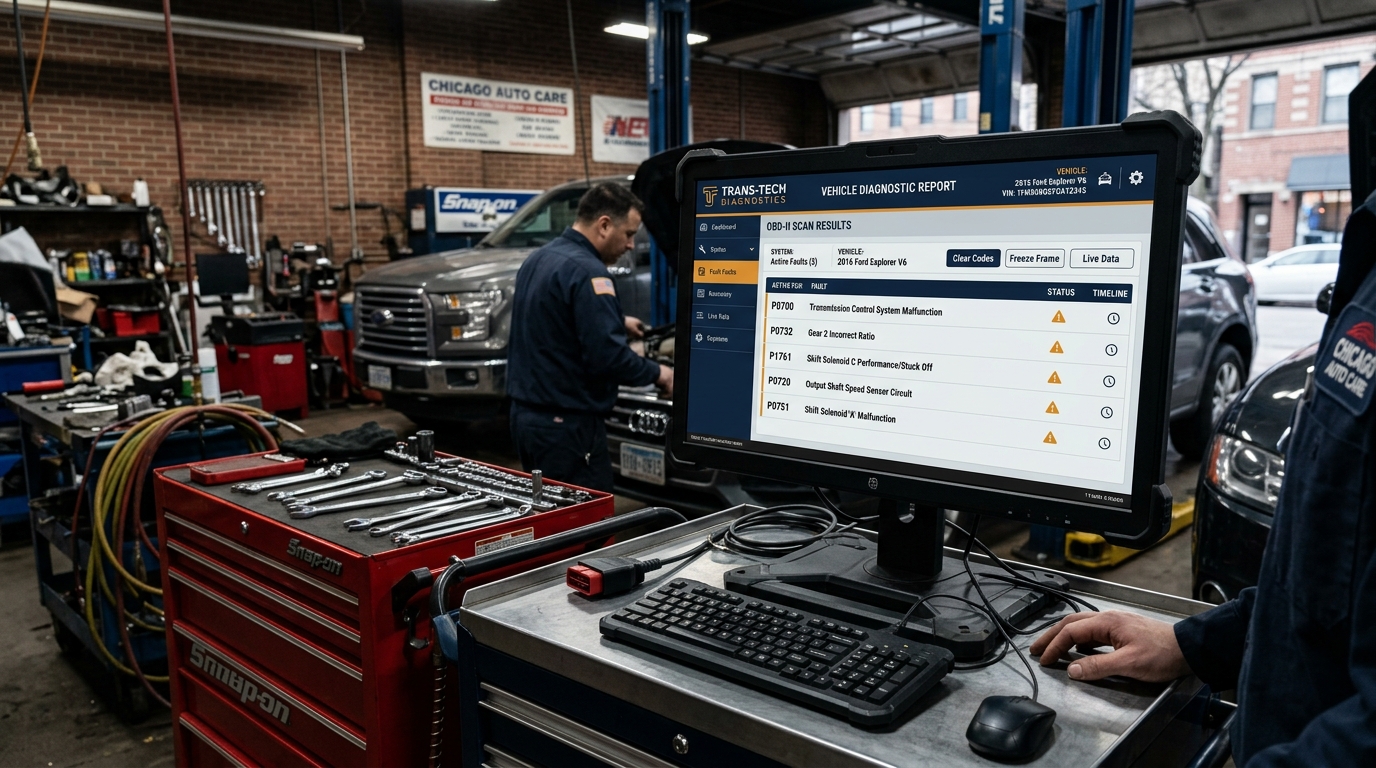
Connect an OBD-II scanner and retrieve all stored and pending codes. Note whether P0705 appears alone or alongside P0706-P0709, P0700, or shift-solenoid codes. Freeze-frame data showing the gear position at the time of the fault is particularly useful.
Locate the TRS on the transmission. On most vehicles with external sensors, the TRS is mounted on the driver's side or passenger side of the transmission case, connected to the manual shaft via a lever. It has an electrical connector with 3-8 pins depending on the manufacturer.
Inspect the electrical connector first. Disconnect it and examine the pins for corrosion (green or white deposits), bent contacts, fluid contamination (ATF inside the connector indicates a leaking sensor or O-ring), or loose terminal retention. Clean corroded pins with electrical contact cleaner and a small brush. Reconnect firmly and retest. Many P0705 cases are resolved at this step.

With the connector disconnected, measure the sensor's resistance or voltage output. Using a multimeter, check resistance between the signal pin and ground while slowly rotating the manual shaft through each gear position. Each position should produce a distinct, stable resistance value per the manufacturer's specification. If the resistance does not change, is erratic, or reads open/shorted, the sensor is faulty.
With the connector reconnected and the ignition on (engine off), use a multimeter or scan tool to verify that the TRS is receiving the 5V reference signal from the PCM/TCM. If no reference voltage is present at the sensor, the problem is in the wiring between the PCM/TCM and the sensor, or in the PCM/TCM itself.
Check the shift linkage adjustment. With the shift lever in each position, verify that the manual shaft on the transmission moves to the corresponding detent. If the lever is in "Park" but the manual shaft is between positions, the linkage needs adjustment. Most vehicles have an adjustment mechanism at the transmission end of the linkage cable.

If the sensor, wiring, and linkage all check out, perform a PCM/TCM communication test. Using a bidirectional scan tool, verify that the module can read the TRS input. If it cannot read a confirmed-good sensor signal, the module's input circuit is faulty.
Repair Cost Summary - Chicago Rates
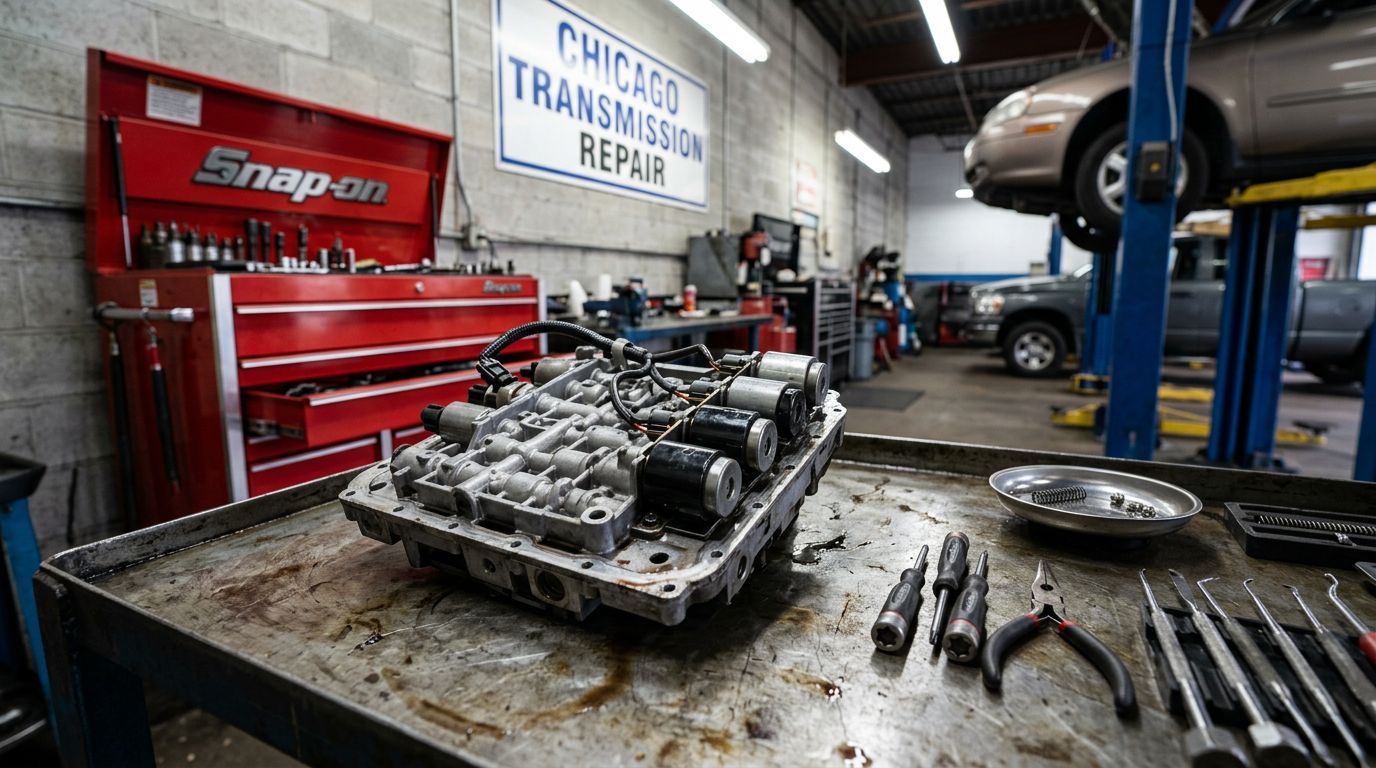
The TRS sensor repair depends on the vehicle and whether the sensor is external or internal. Labor for external sensor replacement ranges from 0.5 to 1.5 hours. For internal sensors (Honda, some Kia, GM 6L80 TEHCM), the labor involves dropping the transmission pan and possibly removing the valve body, adding 2-4 hours.
Independent estimates for neutral safety switch or inhibitor switch replacement vary widely by vehicle because some sensors are external and others require pan or valve-body access. On Ford vehicles, a YouTube video demonstrated TRS replacement without special tools as a moderate DIY job.
Wiring and connector repair is usually the most direct fix when testing finds corrosion or an open circuit. Shift linkage adjustment may be included with the diagnostic visit when it is minor. Transmission fluid and filter service only applies if contaminated fluid is affecting an internal sensor. PCM or TCM replacement should be quoted after module testing and must include programming.
The total scope to resolve P0705 ranges from connector cleaning to internal sensor replacement with fluid service. Compared with gear-ratio codes that can point to internal transmission damage, P0705 is usually one of the more straightforward transmission trouble codes to fix.
Vehicles Most Commonly Affected
Sun Transmissions identifies the following models as having higher P0705 incidence: Toyota Camry, Honda Accord, Nissan Altima, Ford Focus, Chevrolet Malibu, Hyundai Elantra, and Kia Optima. However, the code can appear on any automatic-transmission vehicle.
GM trucks and SUVs with 4L60E transmissions use an external neutral safety switch mounted on the transmission case. The switch is accessible from underneath without dropping the pan, making replacement a moderate DIY job. Facebook discussions note that the two 13mm mounting bolts should be loosened, the key turned on (engine off), the shifter placed in Neutral, and the switch aligned until the engine cranks.
Ford F-150 and Explorer models use either an external digital TR sensor on the transmission case or, on newer models with the 10R80, an internal range sensor integrated into the valve body lead frame. An F150Forum post describes the internal replacement as requiring "the molded lead frame above the valve body, roughly 7 quarts of Mercon LV, a pan gasket, a filter" - a substantially more involved job.
Honda Accord and Civic models use the "inhibitor switch," typically mounted externally on the transmission. A YouTube tutorial for Acura/Honda models demonstrates the replacement process. Some Honda owners report P0705 appearing after a transmission replacement when the new switch is installed incorrectly or its internal contacts are misaligned.
Kia and Hyundai models (Optima, Elantra, Niro, Sorento) use an inhibitor switch that is a documented failure point. A Kia Optima Forums post describes a code reader identifying P0705, followed by a DIY TRS replacement that resolved the missing gear display.
Chrysler/Dodge/Jeep vehicles with 42RLE, 45RFE, and 68RFE transmissions integrate the range sensor into the solenoid/TRS assembly inside the transmission, making replacement more labor-intensive.
Chicago-Specific Factors That Contribute to P0705
Cold weather is a significant aggravator for TRS-circuit faults. Metal connector pins contract in extreme cold, and if corrosion has already reduced the contact surface area, the contraction can break the remaining electrical connection entirely. Chicago drivers frequently report P0705-related no-start conditions specifically on the coldest mornings - the sensor worked yesterday at 30 degrees F but fails today at -5 degrees F. Thermal cycling (warm days followed by cold nights, repeated throughout a Chicago winter) accelerates the fatigue cracking of solder joints inside the sensor and the deterioration of O-ring seals.
Road salt is the primary driver of connector corrosion. The TRS connector is mounted low on the transmission case, directly in the spray zone of road brine. A season's worth of salt exposure can corrode the pins enough to cause intermittent signal loss. Annual inspection and dielectric-grease application after winter is the single most effective preventive measure.
Potholes and rough roads can vibrate loose a connector that is not fully latched or accelerate wear on a linkage cable that is already stretched. The combined effect of vibration and corrosion produces the intermittent version of P0705 - the code appears and disappears unpredictably, often correlating with hitting a bump.

Moisture intrusion from rain, snow melt, or pressure-washing the undercarriage can flood the TRS connector if its weather seal is degraded, causing a temporary or permanent short.
Prevention Tips for Chicago Drivers
Inspect and clean the TRS connector annually, ideally in spring after the last salt application of the season. Disconnect the connector, spray both sides with electrical contact cleaner, allow to dry, apply a thin layer of dielectric grease to the pins, and reconnect firmly. This five-minute task prevents the most common cause of P0705 in northern climates.
Verify full connector engagement. After any underbody work - oil changes, exhaust repairs, transmission service - physically check that the TRS connector is fully seated and the locking tab is engaged. A connector that is 90% seated can work fine until a pothole vibrates it loose.
Address shift-linkage play promptly. If the gear-position indicator on the dashboard doesn't perfectly match the lever's detent, or if you need to jiggle the lever to get the engine to start, the linkage may need adjustment before the misalignment worsens and triggers P0705.
Keep transmission fluid at the correct level and condition. While P0705 is primarily an electrical code, contaminated fluid can foul internal range sensors. Follow the manufacturer's specified service interval, shortened for Chicago severe-service driving.

If replacing the TRS, use an OEM-specification sensor. Aftermarket sensors sometimes have slightly different resistance values or mounting dimensions that can cause fitment issues or intermittent signal problems.
Frequently Asked Questions
What exactly is P0705 in plain language? The sensor that tells your car's computer what gear you're in (Park, Reverse, Neutral, Drive, Low) isn't working properly. The computer either can't read the sensor's signal at all or is getting a garbled signal.
How serious is P0705? Moderately serious. The code itself doesn't indicate internal transmission damage, but it can prevent your vehicle from starting, cause unexpected limp-mode activation on the expressway, or allow the engine to start in a gear other than Park or Neutral - all of which are safety concerns. It should be diagnosed within a few days.
Can P0705 prevent my car from starting? Yes. The TRS doubles as the neutral safety switch. If the PCM cannot confirm that the lever is in Park or Neutral, it will block the starter circuit. Jiggling the lever between Park and Neutral sometimes restores the signal temporarily, but this is a symptom of a failing sensor that needs replacement.
What is the difference between P0705 and P0706? P0705 indicates a complete circuit malfunction - no signal or an unrecognizable signal from the TRS. P0706 indicates a "Range/Performance" issue - the sensor is sending a signal, but the value doesn't match the expected range for the lever's position, suggesting the sensor is drifting, the linkage is misadjusted, or the sensor is partially failed.
How much does it cost to fix P0705? The most common fix is replacing the transmission range sensor, but pricing depends on whether the sensor is external, inside the pan, or tied into a module that needs programming. Connector cleaning alone can resolve some cases. We confirm the source before quoting parts.
Is P0705 a DIY repair? For vehicles with external TRS sensors, yes - it is one of the more accessible transmission-related repairs. The sensor is typically mounted with 2-3 bolts on the outside of the transmission case. An alignment procedure (shifting to Neutral before tightening the sensor) is required on most vehicles. For vehicles with internal sensors, the repair involves dropping the transmission pan and is a moderate-to-advanced DIY job.
Which vehicles are most affected by P0705? Toyota Camry, Honda Accord, Nissan Altima, Ford Focus/F-150, Chevrolet Malibu/Silverado, Hyundai Elantra, and Kia Optima are among the most frequently reported, but any automatic-transmission vehicle can experience this code.
Can a bad TRS cause my transmission to shift erratically? Yes. Without a valid gear-position signal, the TCM cannot determine which shift solenoids to energize. It may default to a single-gear limp mode, guess incorrectly and command the wrong gear, or delay shifts while waiting for a valid signal. Fixing the TRS often resolves accompanying shift-solenoid codes (P0750, P0751, etc.) that were secondary to the missing position signal.
SEO & Content Notes
Long-tail keywords: P0705 car won't start, P0705 wrong gear display, P0705 Ford F150 range sensor, P0705 Honda Accord inhibitor switch, P0705 GM neutral safety switch, P0705 limp mode

Internal link targets: P0700, P0706, P0715, P0720, P0730, P0750, P0751
Schema markup: FAQPage (8 Q&A pairs), HowTo (diagnosis steps), Article
H2 sections: 12

Series Progress - 20 of 50 Articles Complete
| # | Code | Title | Status |
|---|------|-------|--------|
| 1 | P0700 | Transmission Control System Malfunction | Done |
| 2 | P0730 | Incorrect Gear Ratio | Done |
| 3 | P0740 | Torque Converter Clutch Circuit Malfunction | Done |

| 4 | P0741 | TCC Circuit Performance / Stuck Off | Done |
| 5 | P0715 | Input/Turbine Speed Sensor Circuit Malfunction | Done |
| 6 | P0720 | Output Speed Sensor Circuit Malfunction | Done |
| 7 | P0750 | Shift Solenoid "A" Malfunction | Done |
| 8 | P0755 | Shift Solenoid "B" Malfunction | Done |
| 9 | P0218 | Transmission Over-Temperature | Done |

| 10 | P0780 | Shift Malfunction | Done |
| 11 | P0706 | Transmission Range Sensor Circuit Range/Performance | Done |
| 12 | P0613 | TCM Processor Error | Done |

| 13 | P0742 | TCC Circuit Stuck On | Done |
| 14 | P0751 | Shift Solenoid "A" Performance / Stuck Off | Done |
| 15 | P0756 | Shift Solenoid "B" Performance / Stuck Off | Done |
| 16 | P0733 | Gear 3 Incorrect Ratio | Done |
| 17 | P0732 | Gear 2 Incorrect Ratio | Done |
| 18 | P0731 | Gear 1 Incorrect Ratio | Done |
| 19 | P0734 | Gear 4 Incorrect Ratio | Done |
| 20 | P0705 | Transmission Range Sensor Circuit Malfunction | Done |
| 21 | P0744 | TCC Circuit Intermittent | Next |
| 22 | P0614 | ECM/TCM Incompatibility | Queued |
| 23-50 | - | Remaining Tier 3-5 codes | Queued |
Milestone: 20 of 50 articles complete - 40% of the series is done.
Next up: P0744 - Torque Converter Clutch Circuit Intermittent. Ready on your signal.
Have a Transmission Problem?
Get a Diagnosis-first inspection from Chicago transmission repair support.