P0730 means your transmission has detected an incorrect gear ratio. Learn what causes this serious code, the symptoms to watch for, and what Chicago drivers should expect for diagnosis and repair cost
What Does the P0730 Code Mean?
The P0730 diagnostic trouble code stands for "Incorrect Gear Ratio," and it is one of the more concerning transmission codes a vehicle owner can encounter. Unlike the general alert nature of P0700, which simply tells you that something is wrong in the transmission system, P0730 communicates something far more specific: your vehicle's Transmission Control Module (TCM) or Powertrain Control Module (PCM) has detected a measurable mismatch between the expected gear ratio and the actual gear ratio being produced by the transmission.
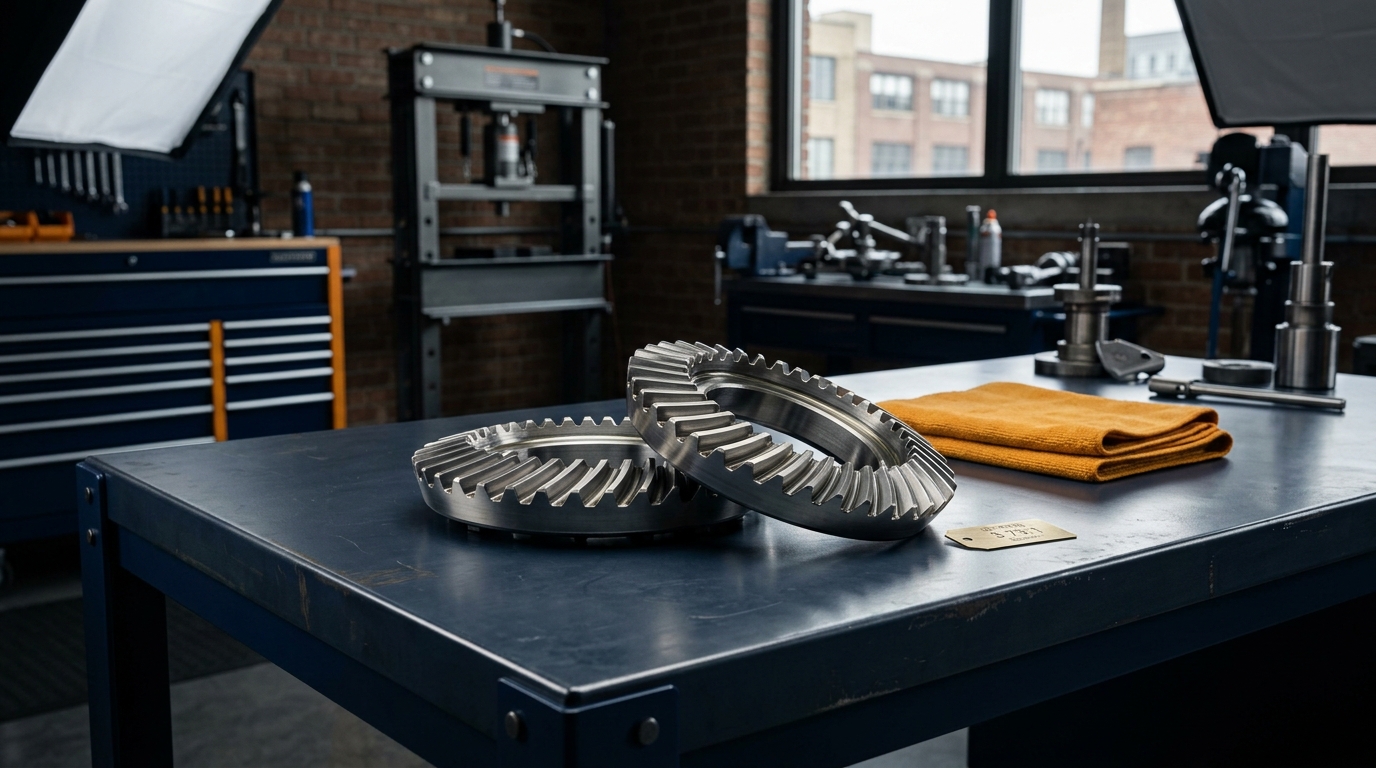
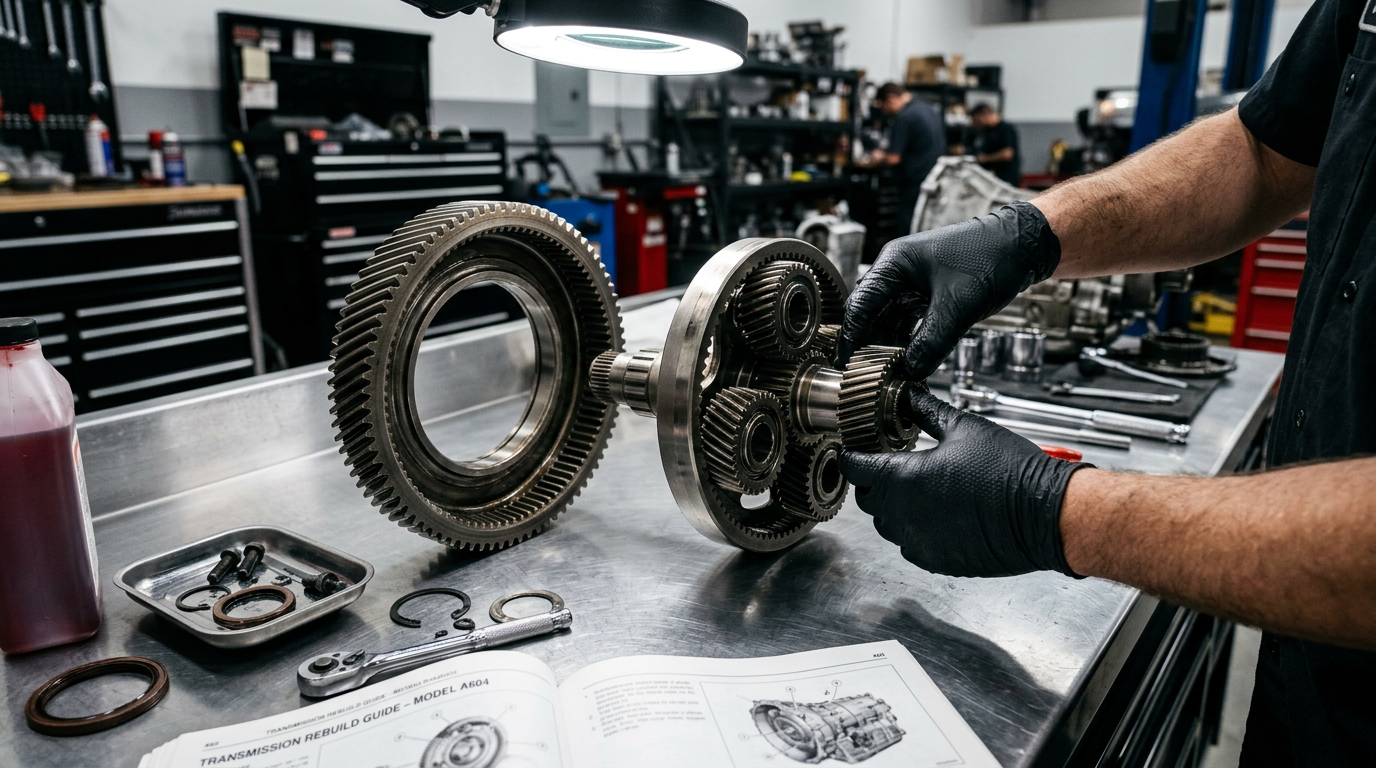
To understand what that means in practical terms, it helps to know how gear ratios work inside an automatic transmission. Your transmission contains sets of planetary gears that mesh together in different combinations to produce different gear ratios. Each gear ratio defines the relationship between how fast the input shaft is spinning (powered by the engine through the torque converter) and how fast the output shaft is spinning (sending power to the wheels). When the TCM commands the transmission into third gear, for example, it expects to see a very specific mathematical ratio between input RPM and output RPM. If the actual ratio does not match what the TCM expects - if it falls outside a tolerance window that typically allows for no more than a five percent deviation - the TCM logs P0730.
In everyday driving, this translates to a transmission that is not delivering power to the wheels the way it should. The engine may rev higher than normal without producing the expected acceleration. Shifts may feel harsh, delayed, or incomplete. For Chicago drivers dealing with demanding conditions - merging onto the Eisenhower Expressway, climbing the ramps of multi-level parking garages in the Loop, or navigating stop-and-go congestion on the Stevenson - a transmission that cannot reliably hold its gear ratios is not just an inconvenience. It is a safety concern that demands prompt attention.
How P0730 Differs from Gear-Specific Ratio Codes
One important distinction to understand is the relationship between P0730 and its gear-specific companion codes: P0731 (Gear 1 Incorrect Ratio), P0732 (Gear 2 Incorrect Ratio), P0733 (Gear 3 Incorrect Ratio), P0734 (Gear 4 Incorrect Ratio), P0735 (Gear 5 Incorrect Ratio), and P0736 (Reverse Incorrect Gear Ratio). These codes are closely related and often appear together, but they carry different diagnostic implications.
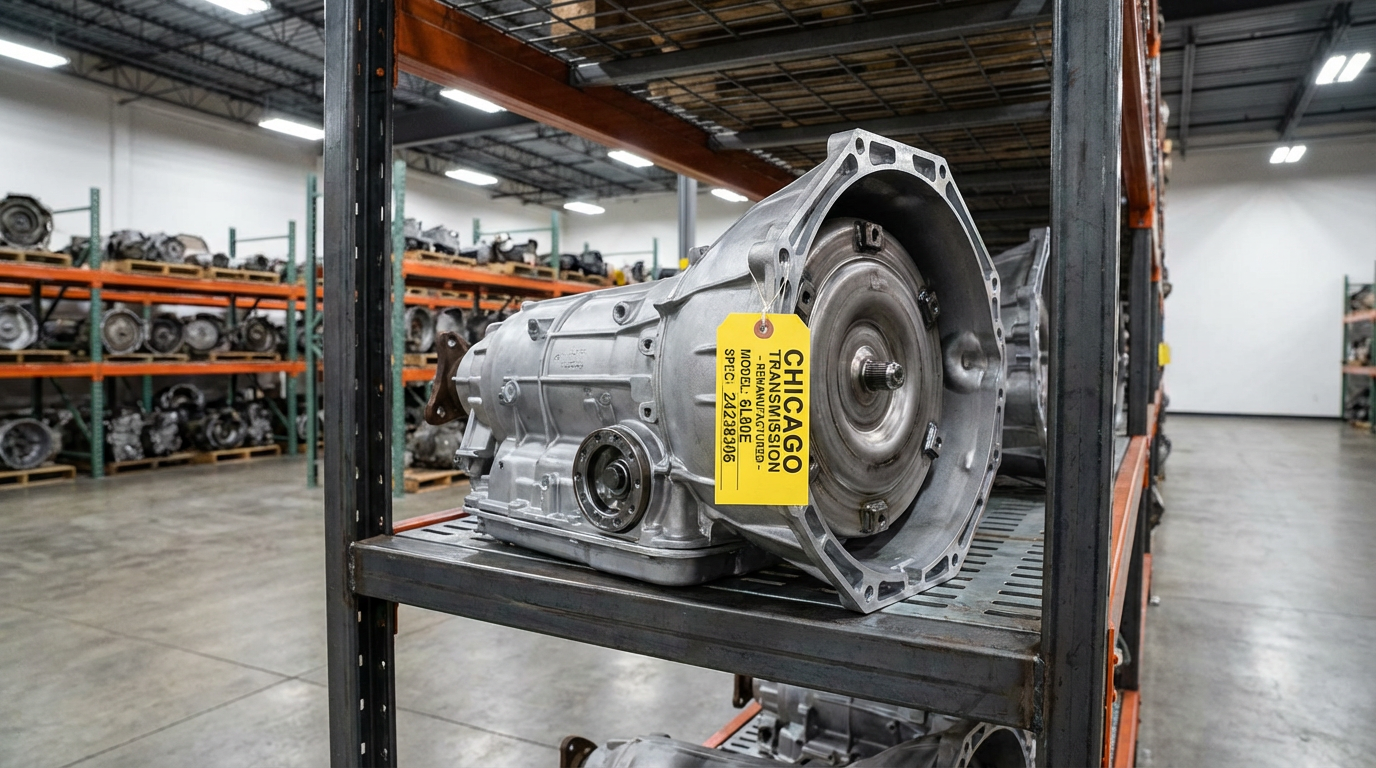
P0730 is the general incorrect gear ratio code. It tells you that the TCM has detected a ratio problem but does not specify which gear is affected. It may appear on its own or alongside one or more of the gear-specific codes. When P0730 appears alone, it typically means the ratio discrepancy was detected across multiple gears or under conditions where the TCM could not isolate the problem to a single gear. This pattern often points to systemic causes - low fluid, a failing transmission pump, widespread clutch wear, or a speed sensor problem that affects the TCM's ratio calculations across the board.
When gear-specific codes appear alongside P0730, they narrow the diagnosis considerably. A P0730 combined with only P0733, for example, tells the technician that the ratio problem is isolated to third gear, which directs attention to the specific clutch pack, band, or solenoid circuit that controls third gear engagement. Multiple gear-specific codes appearing simultaneously - say P0731, P0733, and P0734 together - suggest a broader problem, such as severely degraded fluid, a worn valve body, or internal mechanical failure affecting multiple gear sets.
For Chicago vehicle owners trying to make sense of a diagnostic printout, the key takeaway is this: seeing P0730 alone does not tell you which gear is in trouble, but it does tell you the transmission as a whole is not performing to specification. Gear-specific companion codes, when present, help a qualified technician focus the diagnosis on the components responsible for those specific gears.
Common Causes of the P0730 Code
P0730 can be triggered by a range of issues, from relatively simple fluid problems to serious internal mechanical failure. Understanding the most common causes helps set realistic expectations about what the diagnosis might reveal.
Low or Degraded Transmission Fluid is the most common - and most hopeful - cause of P0730. Automatic transmissions are hydraulic machines, and every shift depends on precise fluid pressure being delivered to the right clutch pack at the right time. When fluid levels drop too low, the transmission pump cannot generate sufficient pressure to fully engage clutch packs, which results in slippage. Even a quart low can make the difference between a clean gear engagement and a ratio error. Degraded fluid compounds the problem because fluid that has broken down from heat and age loses its viscosity and friction modification properties, both of which are critical for firm clutch application. Chicago's climate adds a layer of complexity here. During the winter months when temperatures routinely plunge below zero, transmission fluid thickens significantly. Fluid that is already marginal in level or condition may perform adequately in summer but fail to deliver sufficient pressure during a cold January morning start, causing ratio errors that may not appear again once the vehicle warms up. This intermittent pattern can make diagnosis frustrating for drivers who experience problems only during their first few miles of driving on bitter cold mornings in neighborhoods like Lakeview, Lincoln Park, or out in the western suburbs like Naperville and Aurora.
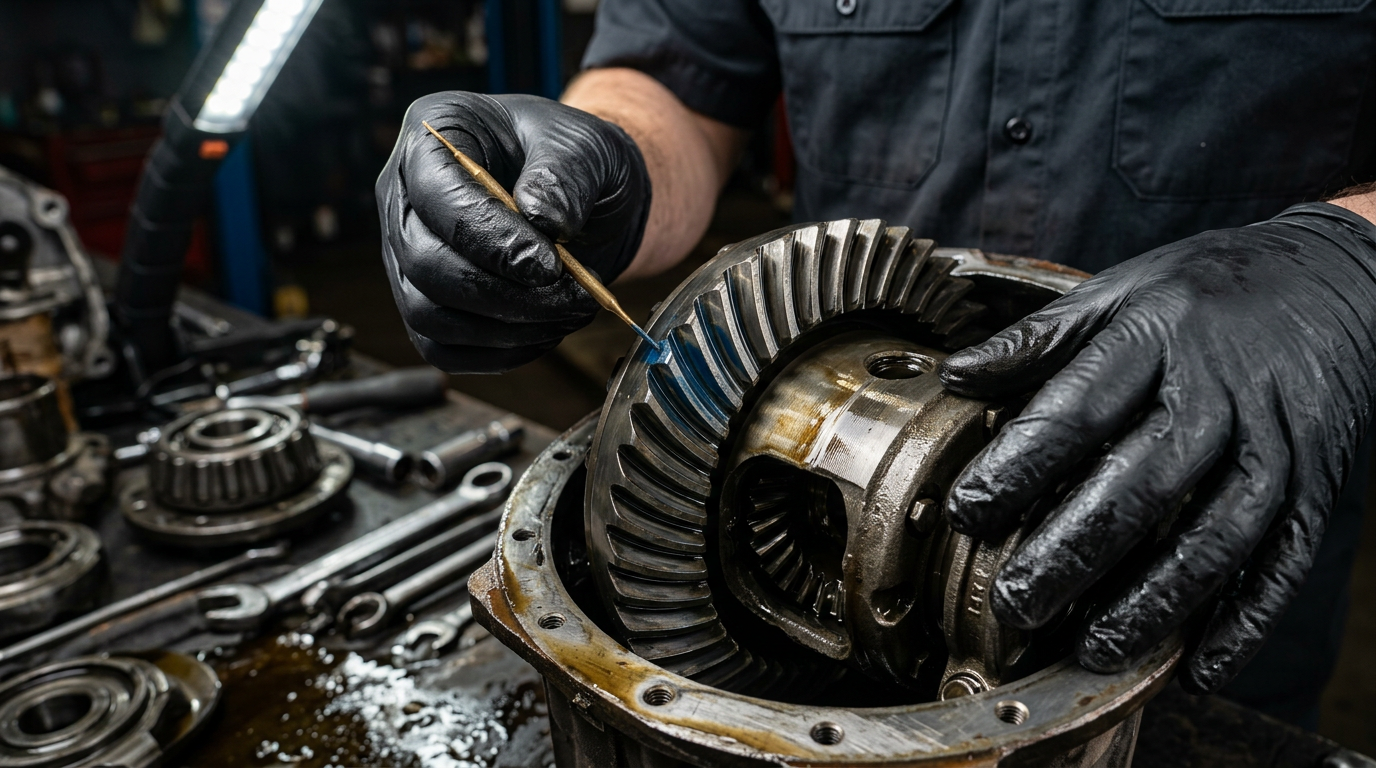
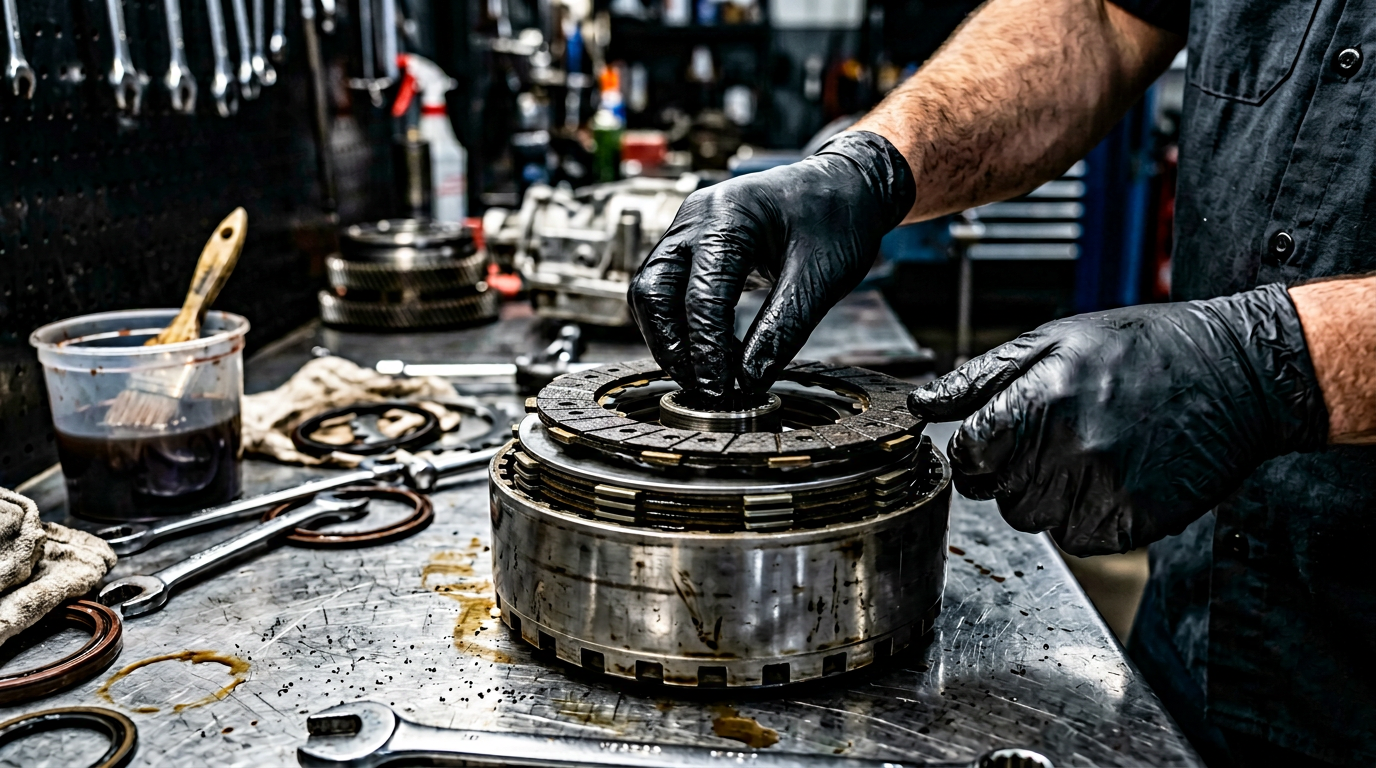
Worn Clutch Packs and Bands represent the most serious mechanical cause of P0730. Inside an automatic transmission, clutch packs are stacks of friction plates and steel plates that are hydraulically pressed together to engage a specific gear. Bands are brake-like friction elements wrapped around drums that hold certain gear components stationary. Over time and mileage, the friction material on these components wears down, just like brake pads wear down on your wheels. When clutch packs or bands wear thin enough that they can no longer hold firmly under load, the transmission slips - the engine RPMs climb but the output shaft does not spin at the expected rate, and the TCM registers an incorrect gear ratio. This type of wear is gradual and progressive, and by the time P0730 appears from clutch wear, the problem has usually been developing for thousands of miles. Early signs often include a slight flare in RPMs during shifts, particularly under moderate to heavy throttle, before the code eventually sets.
Faulty Shift Solenoids can trigger P0730 when a solenoid fails to fully open or close, resulting in incorrect fluid routing. Each shift solenoid controls the hydraulic circuit for a specific gear change. A solenoid that is stuck partially open due to varnish buildup, debris contamination, or a weak internal spring may allow enough fluid flow to partially engage a clutch pack but not enough to achieve full, firm engagement. The result is a "soft" gear engagement that the TCM interprets as a ratio error. Solenoid-related P0730 codes are particularly common in vehicles with high mileage where transmission fluid has not been changed regularly, because the accumulated debris and varnish from neglected fluid is the primary cause of solenoid sticking.
Defective Input or Output Speed Sensors can produce P0730 even when the transmission itself is mechanically sound. The TCM calculates gear ratios by comparing the rotational speed of the input shaft (measured by the input speed sensor) to the rotational speed of the output shaft (measured by the output speed sensor). If either sensor sends an inaccurate signal - due to internal failure, magnetic debris accumulation on the sensor tip, a damaged reluctor ring, or wiring problems - the TCM will calculate a gear ratio that does not match expectations, even though the actual mechanical ratio may be perfectly correct. This is one of the more optimistic diagnostic outcomes because sensor replacement is significantly less expensive than internal transmission work. Chicago's road salt and moisture exposure can accelerate corrosion on sensor connectors, making electrical faults at the sensor connection points more common in vehicles that have endured several Midwest winters.

Torque Converter Problems can manifest as P0730 when the torque converter clutch (TCC) fails to lock up properly or slips during lockup. When the TCC engages at highway speed, it creates a direct mechanical link between the engine and transmission. If the lockup clutch is worn or contaminated, it may slip, creating a discrepancy between input and output speeds that the TCM interprets as a ratio error. Torque converter shudder - a vibration felt at highway speeds between 40 and 60 miles per hour that feels like driving over a rumble strip - is often a precursor to torque converter-related P0730 codes.
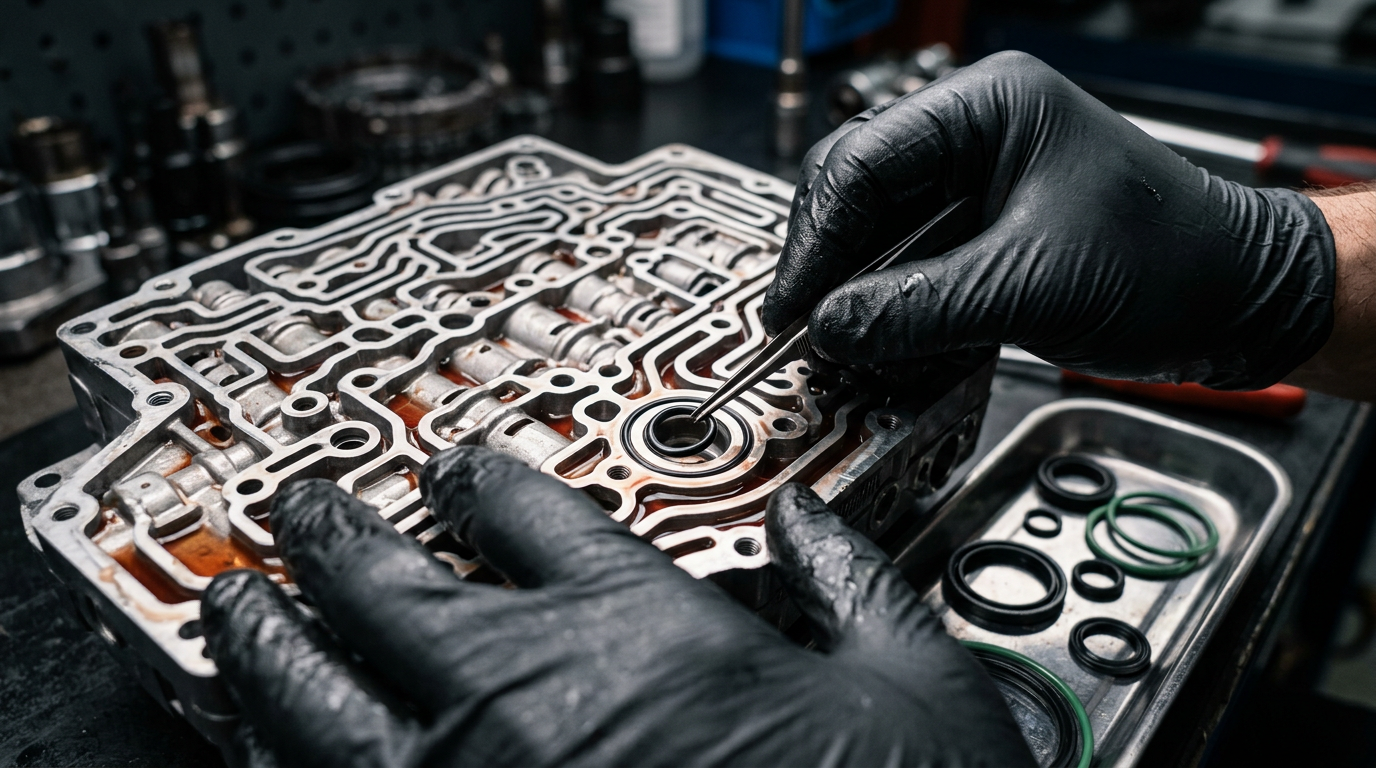
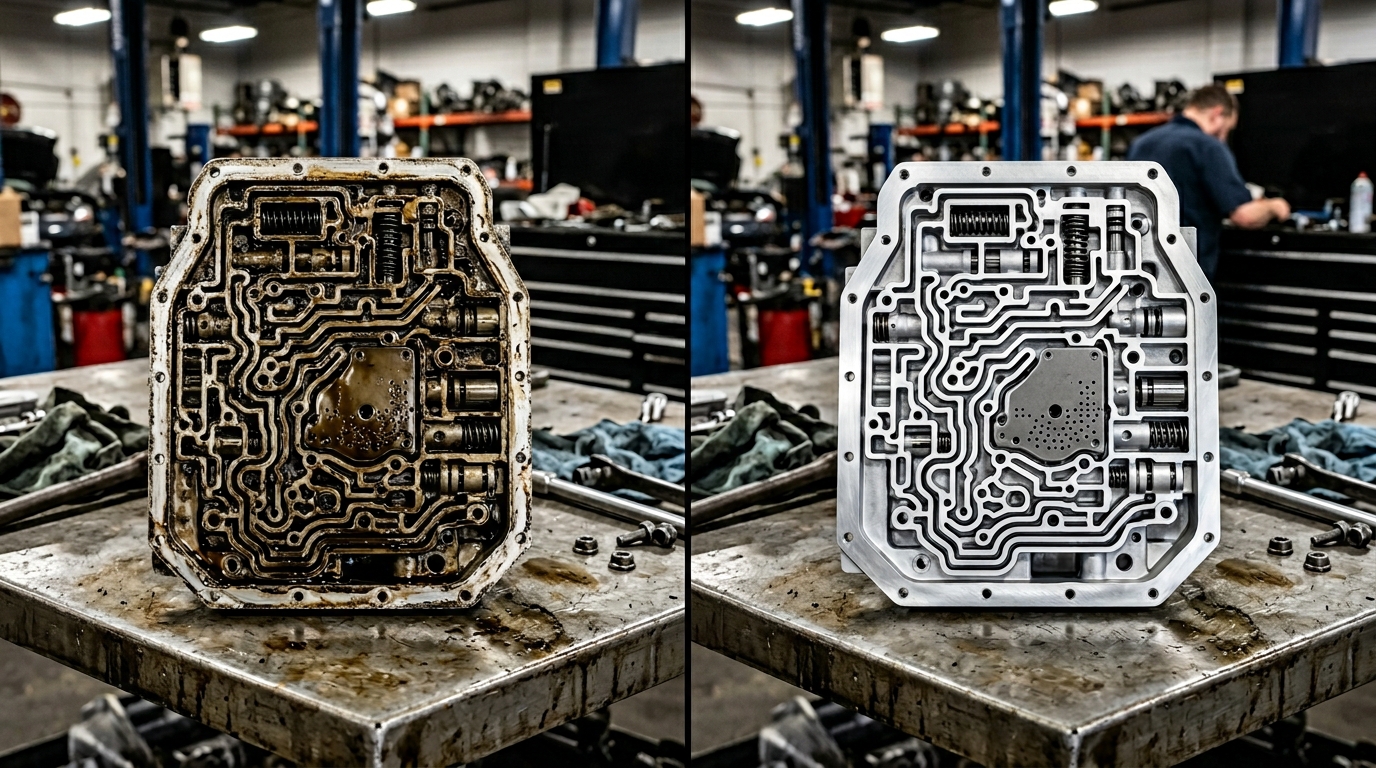
Valve Body Wear or Damage affects the hydraulic control center of the transmission. The valve body is an intricate maze of channels, check balls, and spring-loaded valves that directs fluid pressure to the correct clutch pack for each gear. Over hundreds of thousands of shift cycles, the bores and valve surfaces wear, causing fluid to leak between circuits or valves to stick in incorrect positions. A worn valve body can produce inconsistent clutch application pressure that results in ratio errors across one or multiple gears.
TCM Software Errors or Internal Failure can also cause P0730. The TCM stores gear ratio reference tables that define the expected ratio for each gear. If the software becomes corrupted, if an incomplete flash or update occurs, or if internal circuit board components fail due to heat cycling and moisture exposure, the TCM may compare live data against incorrect reference values and incorrectly flag a ratio error. Some manufacturers have released technical service bulletins specifically addressing TCM software calibration issues that trigger P0730, making a software reflash a potential fix on certain vehicles.
Symptoms Associated with P0730
The symptoms of P0730 tend to be among the most noticeable and unsettling of any transmission code, because they directly affect how the vehicle accelerates, shifts, and responds to driver input.
Transmission Slipping is the hallmark symptom. You press the accelerator and the engine RPMs climb - sometimes sharply - but the vehicle does not accelerate proportionally. It feels as though the engine and the wheels are partially disconnected, like trying to accelerate on an icy road except the sensation is coming from within the drivetrain rather than from the tire-to-road interface. Slipping may occur in one specific gear or across multiple gears depending on the underlying cause. It is often most noticeable under moderate to heavy acceleration, such as when merging onto I-290 or passing slower traffic on I-94, because these situations demand the most from clutch engagement pressure. Light throttle city driving may mask the symptoms initially, which is why some Chicago drivers first notice P0730-related slipping only during highway driving and assume the problem is minor because it does not appear in stop-and-go traffic.
Harsh or Jerky Shifts frequently accompany P0730. Rather than the smooth, barely perceptible gear changes that a healthy transmission produces, you feel a distinct lurch, thud, or jolt when the transmission shifts. This harshness occurs because the clutch packs are not engaging smoothly - they may be chattering, grabbing unevenly, or engaging abruptly after a delay. The sensation is most pronounced during the first-to-second and second-to-third upshifts, which involve the highest torque loads and require the most precise fluid pressure control. In some cases, the harshness is inconsistent - one shift may feel normal while the next feels like the vehicle has been rear-ended - which often points to a sticking solenoid or a valve body with intermittent internal leaks.
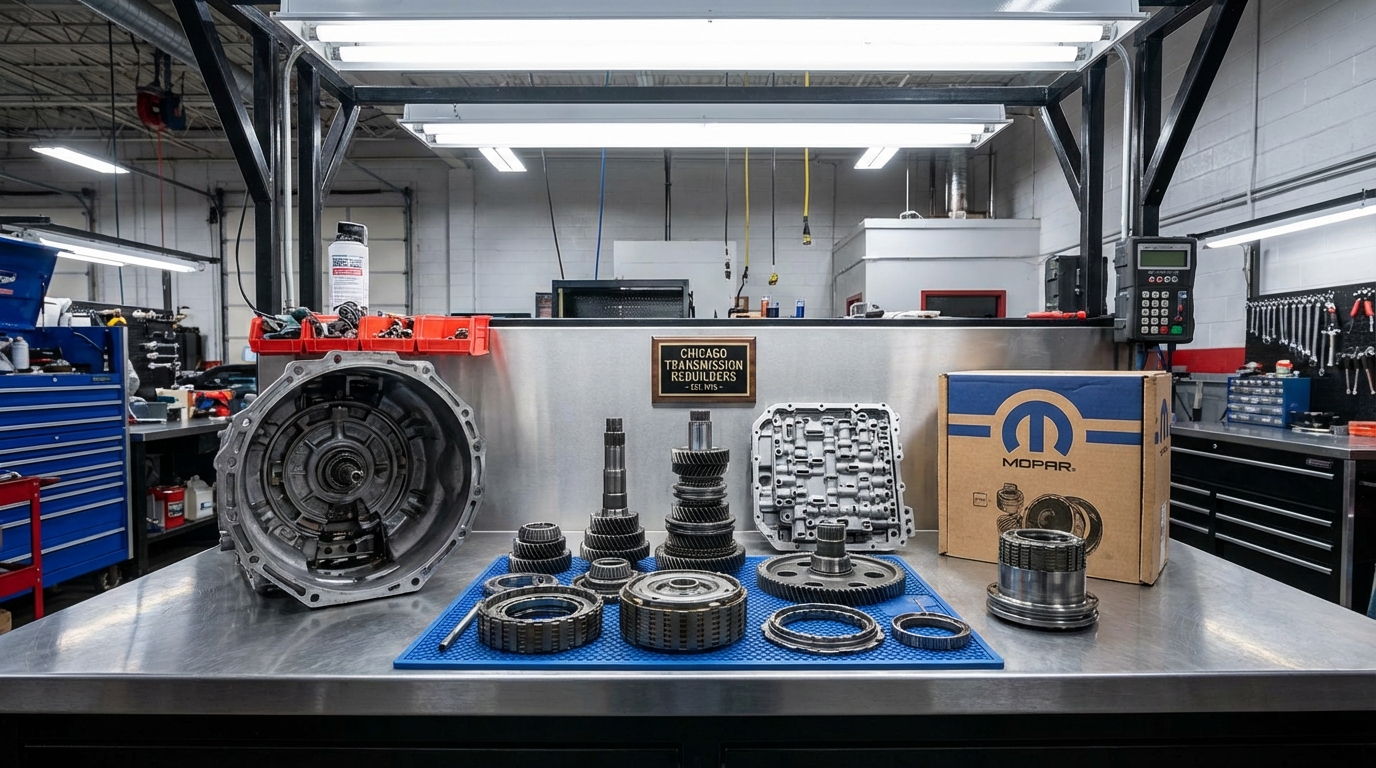
Delayed Acceleration manifests as a noticeable lag between pressing the accelerator and the vehicle actually gaining speed. The engine responds by revving up, but the transmission takes a beat to catch up, as though it is deciding whether to fully engage the next gear. This delay can feel alarming in traffic situations that demand quick response - pulling out from a side street onto a busy arterial road, turning left across oncoming traffic, or accelerating from a tollbooth on the Illinois Tollway. The delay occurs because the clutch pack for the commanded gear is not receiving sufficient pressure to engage promptly, or because a solenoid is sluggish in responding to the TCM's shift command.
Limp Mode Activation is the TCM's last resort when it determines that the ratio error is severe enough to risk transmission damage if normal shifting continues. When limp mode engages, the transmission locks into a single gear - typically second or third - and will not shift regardless of vehicle speed or throttle input. Your speed is limited to roughly 25 to 35 miles per hour, which is enough to get you safely off the road but creates an obviously dangerous situation if it activates at highway speed. If limp mode engages while you are driving on Lake Shore Drive or the Kennedy Expressway, stay calm, activate your hazard lights, move to the right lane as soon as it is safe to do so, and exit at the nearest opportunity. Do not attempt to clear the code and continue driving at highway speed. The TCM activated limp mode for a reason, and overriding it risks catastrophic transmission failure.
Abnormally High RPMs at Cruising Speed may indicate that the transmission is failing to achieve its highest gear or that the torque converter clutch is not locking up. Under normal operation, a vehicle cruising at 60 miles per hour typically holds the engine at 1,500 to 2,200 RPMs depending on the vehicle. If the transmission is stuck in a lower gear due to a ratio error preventing the upshift, or if the TCC is slipping rather than locking, the engine may run at 3,000 RPMs or higher at the same speed. This produces noticeably increased engine noise, reduced fuel economy, and excessive heat generation in both the engine and transmission. Chicago commuters who drive long stretches of highway daily - the Tri-State Tollway, the Edens, or I-55 down to Joliet - will notice this symptom in their fuel consumption before they may notice it behind the wheel, as the difference between normal RPMs and elevated RPMs at highway speed can cost several miles per gallon.

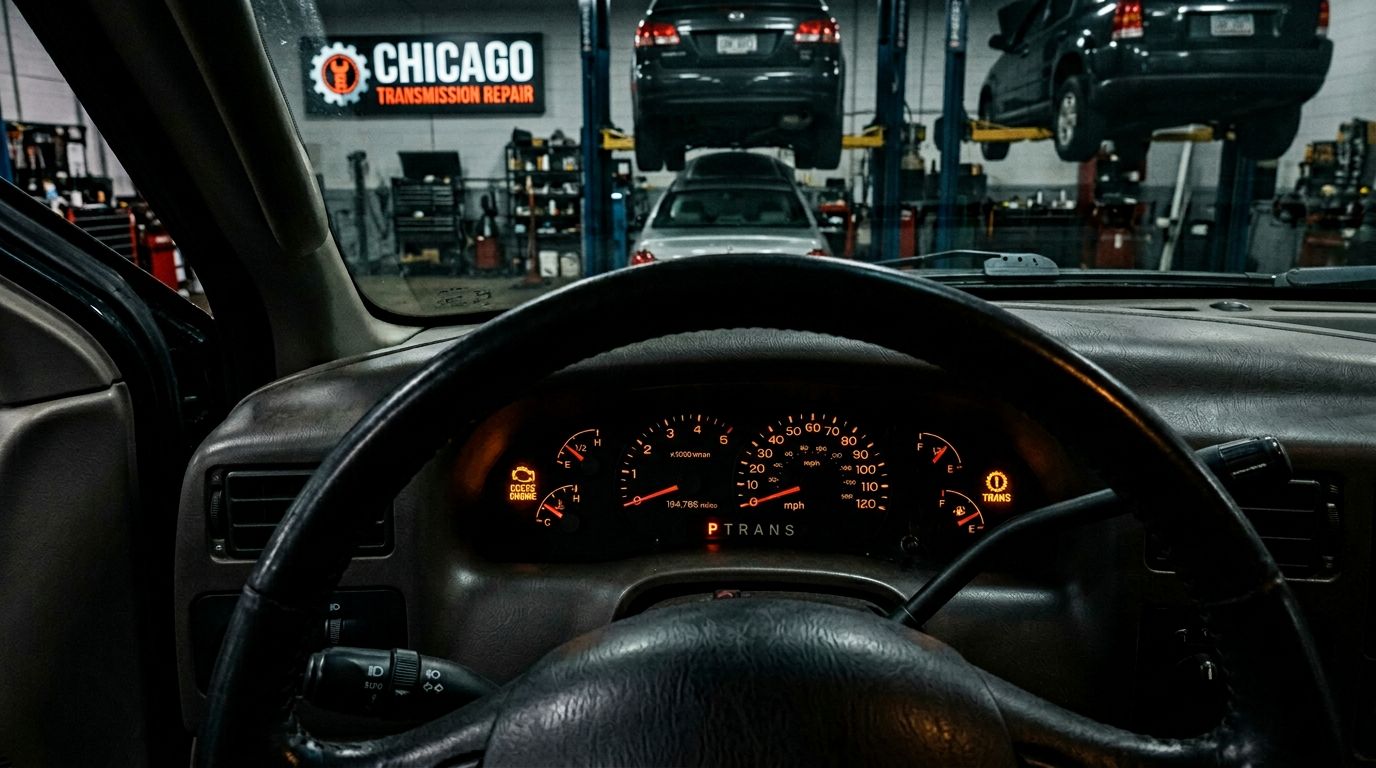
Check Engine Light Illumination will accompany P0730 in virtually all cases. The light may appear steadily or flash. A flashing check engine light generally indicates a more severe condition and warrants immediately reducing speed and getting the vehicle to a shop as quickly as possible. On some vehicles equipped with a dedicated transmission temperature or fault indicator, that warning may also illuminate alongside the check engine light.
Decreased Fuel Economy is a secondary symptom that results from the transmission's inability to operate efficiently. When gears slip, the engine wastes energy that never reaches the wheels. When the transmission fails to upshift properly, the engine runs at higher RPMs than necessary. When the torque converter does not lock up, the inherent slippage of the fluid coupling wastes five to ten percent of the engine's power as heat. All of these conditions burn more fuel, and the decrease may be noticeable enough - often a 15 to 25 percent reduction - that it appears clearly in your fuel tracking.
Is It Safe to Drive with P0730?
P0730 is classified as an urgent severity code by most diagnostic references, and for good reason. Unlike some transmission codes that indicate minor sensor faults or intermittent electrical glitches, P0730 signals that the fundamental mechanical function of the transmission - engaging gears at the correct ratio - is compromised.
If the transmission is actively slipping, continued driving accelerates damage with every mile. Slipping clutch packs generate intense heat and shed friction material debris into the fluid. That contaminated fluid circulates through the entire transmission, clogging solenoid screens, scoring valve body passages, and damaging bearings and bushings. What might have started as a single worn clutch pack in one gear circuit can contaminate and damage components throughout the entire transmission within a few hundred miles of continued driving. A repair that might have if addressed promptly can escalate to a rebuild if the contamination is allowed to spread.
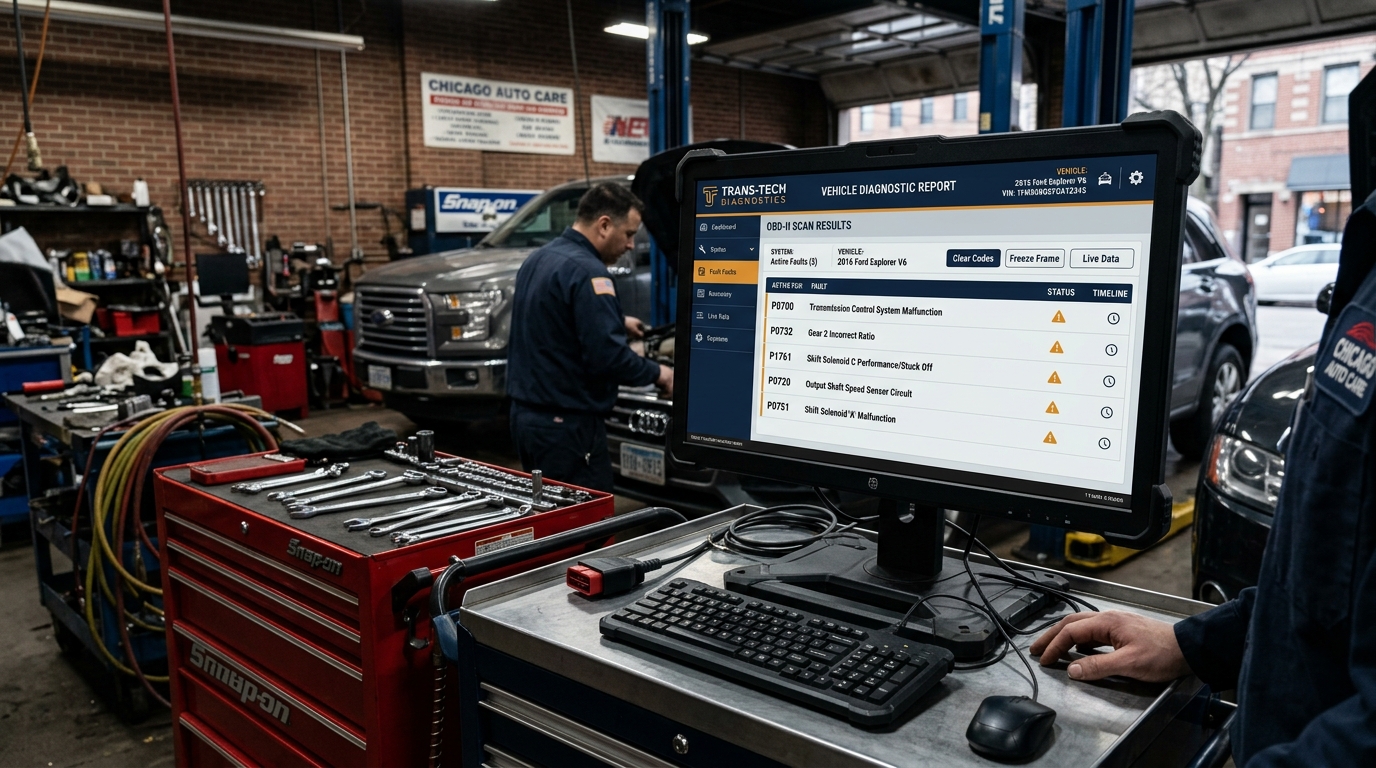
If the vehicle has entered limp mode, the TCM has already determined that continuing normal operation poses a serious risk of catastrophic failure. Drive directly to a qualified transmission shop or have the vehicle towed. Clearing the code and resuming normal driving will typically result in limp mode reactivating within minutes, and the brief period of unprotected shifting between the code clear and the re-engagement of limp mode is when the greatest damage risk exists.
If your only symptom is the check engine light with P0730 stored but no noticeable drivability issues, you have slightly more time - but not much. Schedule a diagnostic appointment within the next few days. Transmission problems rarely stabilize on their own; they almost always progress. For Chicago drivers, the additional stress of winter cold, potholes, and aggressive stop-and-go traffic patterns means that a transmission operating on the edge of acceptable performance can cross into failure territory faster than it might in milder driving environments.
The bottom line: P0730 is not a code to monitor or live with. It is a code that requires professional diagnosis and repair, and the sooner it is addressed, the less the repair is likely to cost.
How P0730 Is Diagnosed
Accurate diagnosis of P0730 is critical because the repair cost difference between the best-case scenario (a fluid change) and the worst-case scenario (a full rebuild) can be several thousand dollars. A qualified transmission technician follows a systematic process to identify exactly what is causing the ratio error before recommending any repairs.
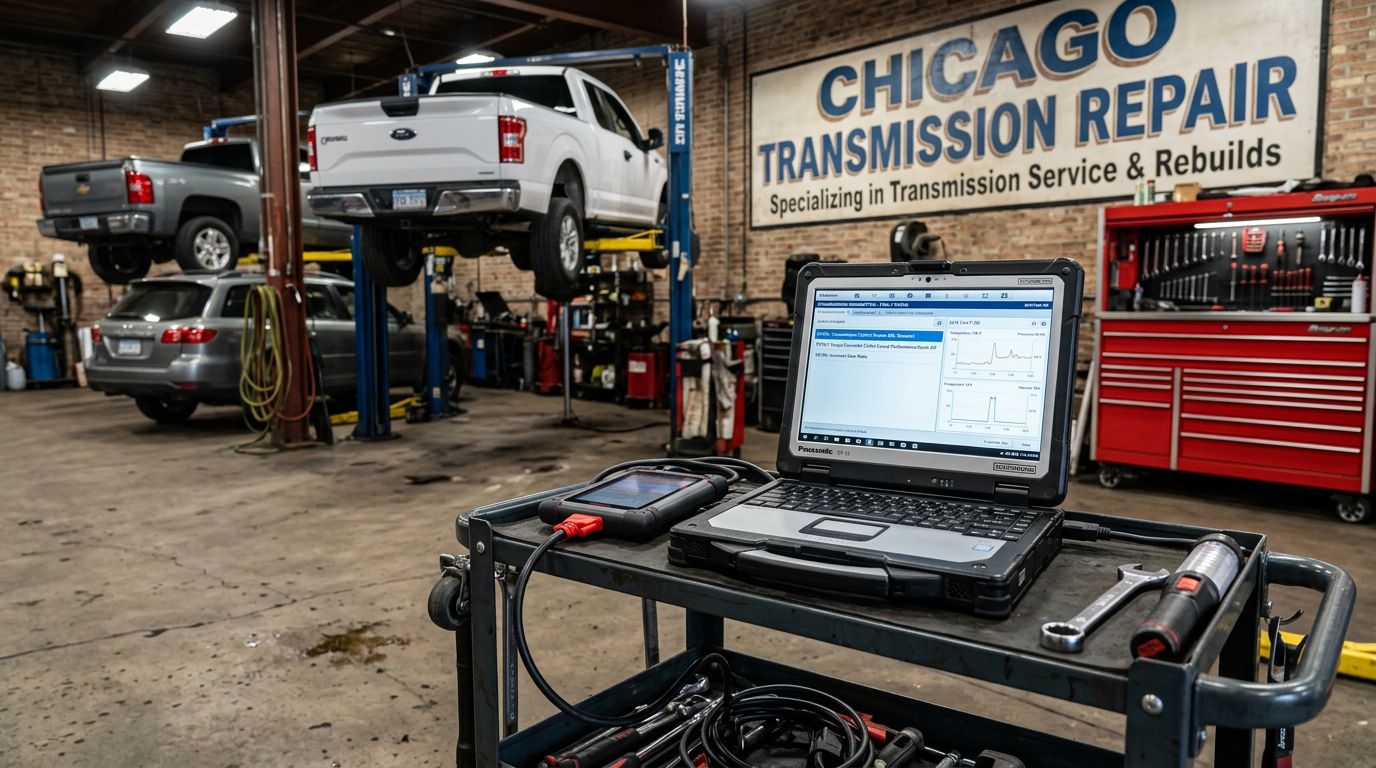
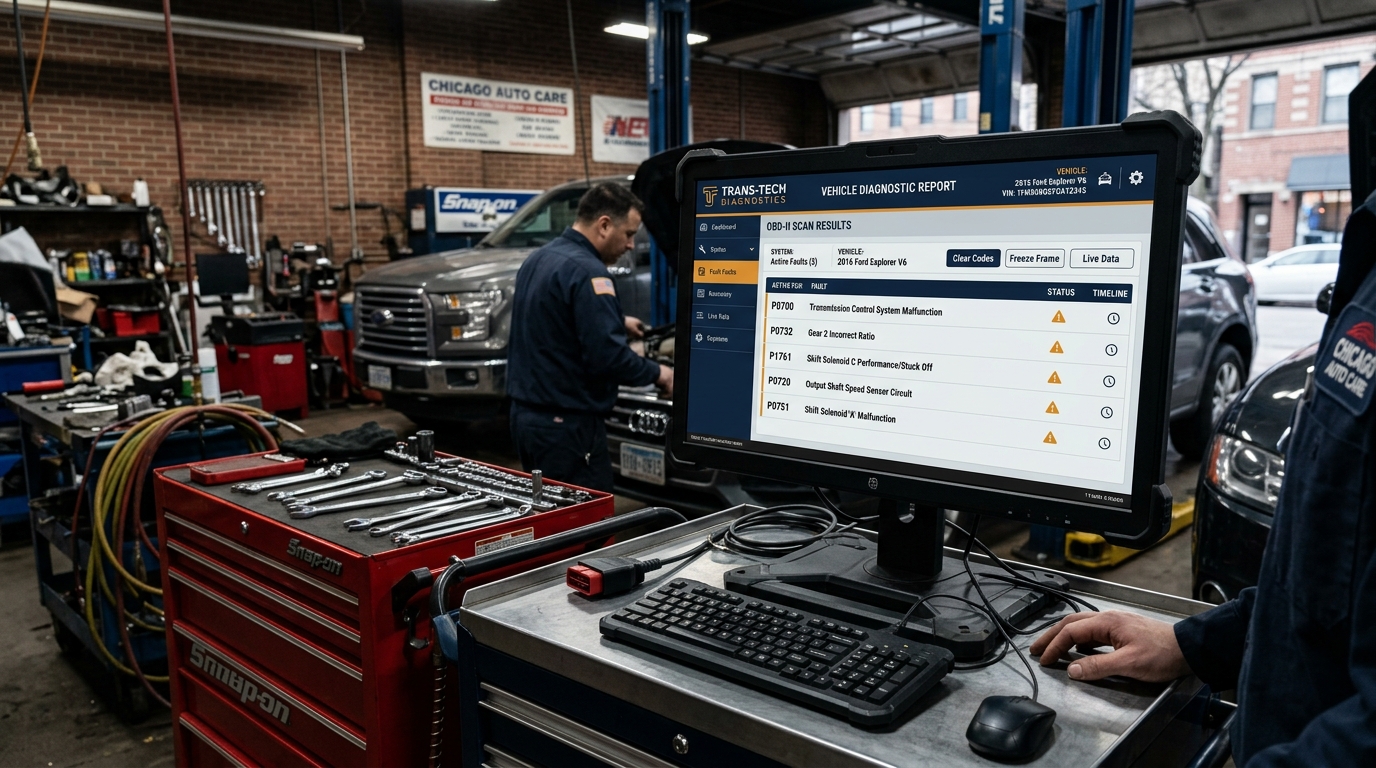
The process begins with a comprehensive scan using a professional-grade diagnostic tool that communicates directly with the TCM. The technician retrieves all stored codes, pending codes, and freeze frame data. The freeze frame captures exact operating conditions at the moment P0730 was triggered - vehicle speed, engine RPM, transmission fluid temperature, commanded gear, actual gear ratio, throttle position, and other parameters. This data provides invaluable context. A ratio error that occurs only in third gear under heavy acceleration points to different components than one that occurs across all gears at light throttle. A ratio error that triggered when the fluid temperature was extremely cold (during a Chicago winter morning startup) suggests different root causes than one that triggered at normal operating temperature.
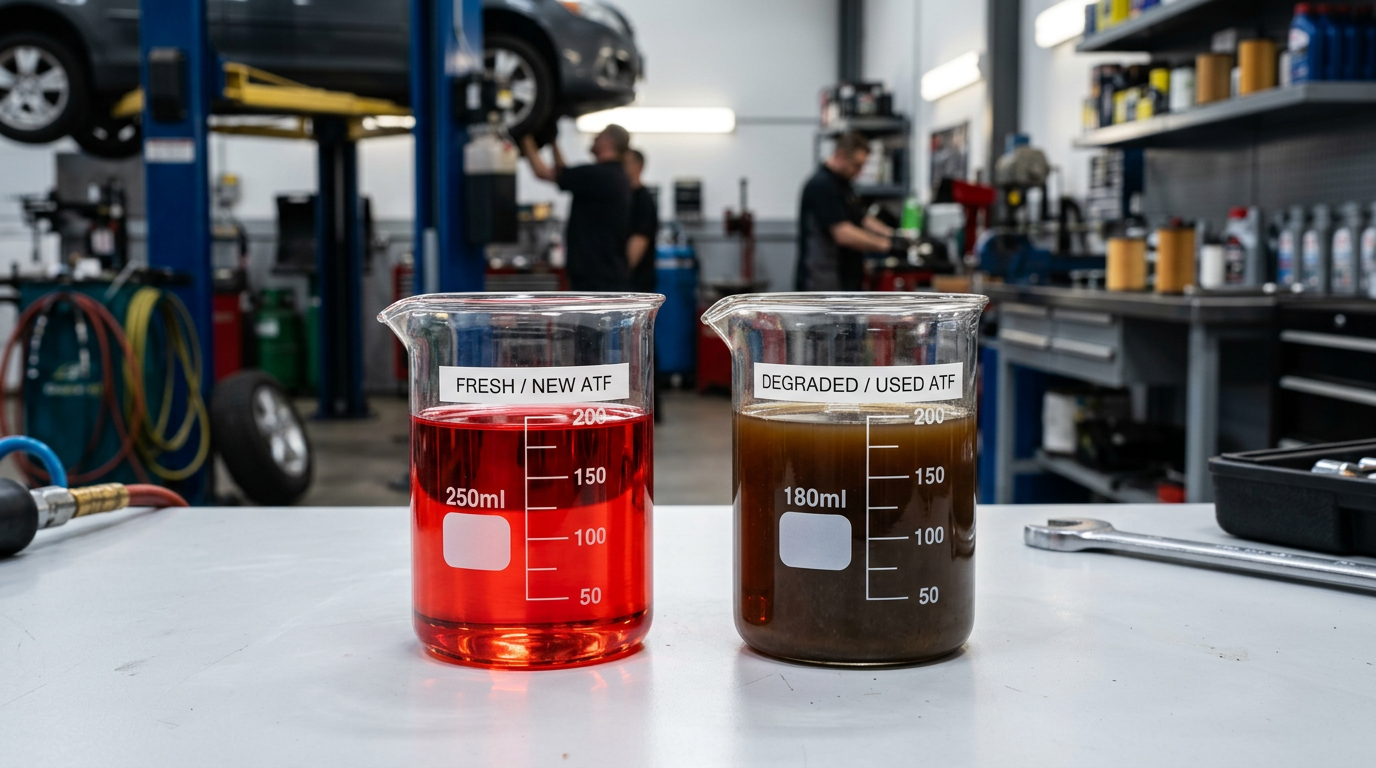
Transmission fluid inspection comes next. The technician checks fluid level first, because low fluid is one of the most common and least expensive causes of P0730. Fluid condition is then evaluated for color (bright red is healthy, dark brown or black indicates degradation), smell (burnt or acrid indicates clutch material burning), clarity (cloudy or opaque indicates contamination), and the presence of particulates (metallic flakes indicate hard part wear, black particles indicate clutch friction material breakdown). A drop of fluid on a white paper towel reveals details about contamination that are not visible on the dipstick alone. If the fluid is milky pink or frothy, it indicates coolant contamination from a failed radiator-internal transmission cooler, which is an emergency condition requiring immediate attention.
A road test with live diagnostic data streaming is one of the most revealing diagnostic steps. The technician drives the vehicle while monitoring real-time data from the TCM, including input shaft speed, output shaft speed, calculated gear ratio for each gear, commanded versus actual gear, line pressure, and slip percentage. By driving through all gears under various load conditions - light throttle, moderate acceleration, heavy acceleration, and steady-state cruising - the technician can observe exactly when and where the ratio error occurs. If the live data shows the ratio is correct in every gear except third, the diagnosis is focused. If the ratio is off in all gears by a consistent percentage, a speed sensor problem becomes the primary suspect. If the ratio error only appears under heavy load, pressure-related clutch slippage is the likely cause.
Hydraulic pressure testing may follow if the road test suggests a pressure-related problem. The technician connects calibrated gauges to the transmission's diagnostic ports and measures line pressure at idle, under stall conditions (full throttle with brakes applied), and in each gear range. Comparing these readings to manufacturer specifications reveals whether the pump is producing adequate pressure, whether the pressure regulator is functioning correctly, and whether specific gear circuits have internal leaks that prevent full clutch application. Low pressure in one specific gear strongly suggests an internal seal leak or worn servo in that gear's clutch apply circuit. Low pressure across all gears suggests pump wear or a pressure regulator fault.
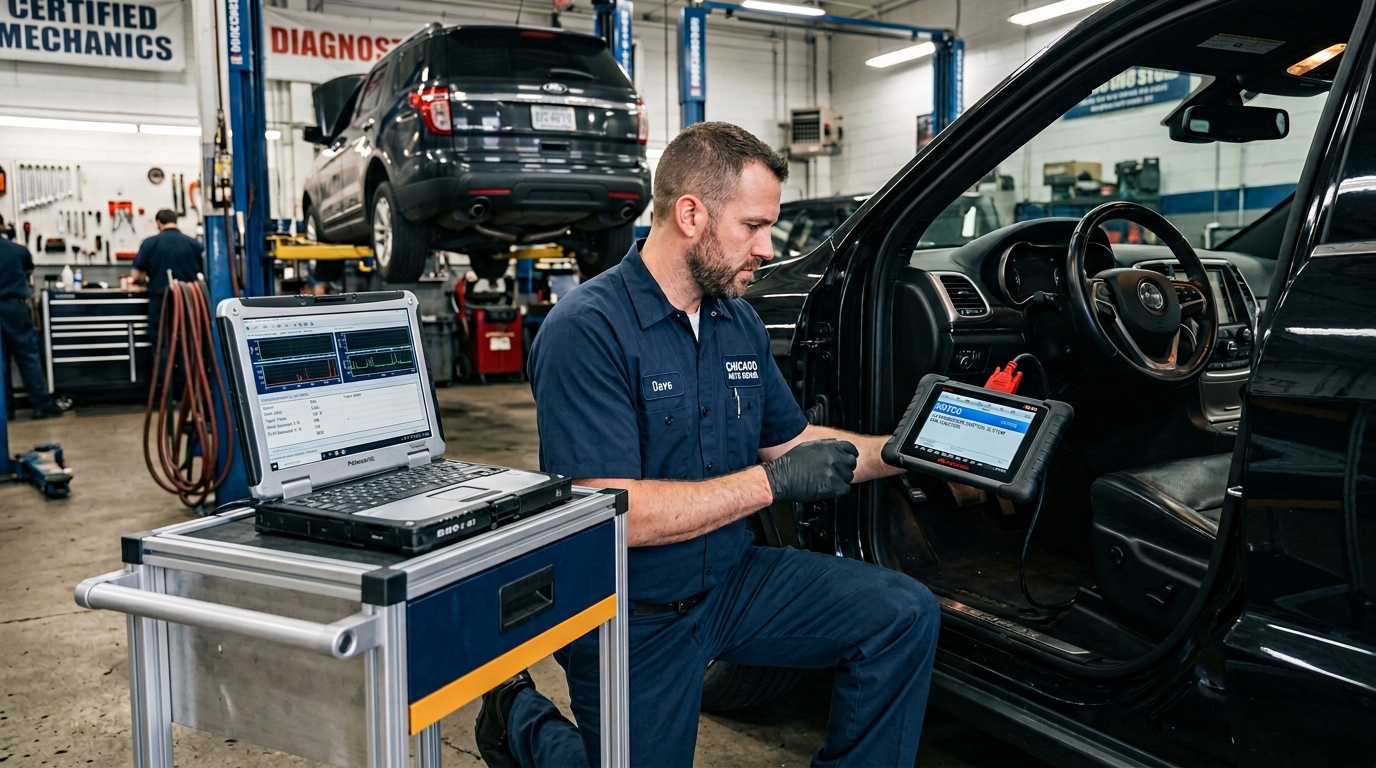
Speed sensor verification confirms whether the input and output speed sensors are providing accurate data. The technician checks each sensor's resistance with a multimeter, verifies signal quality with the engine running, and inspects wiring and connectors for corrosion or damage. On some vehicles, swapping a suspect sensor with a known good unit provides a definitive answer. Because the TCM calculates gear ratios entirely from speed sensor data, a sensor that reads ten percent too fast or too slow will cause the calculated ratio to appear incorrect even when the mechanical ratio is perfect. Ruling out sensor problems early in the diagnostic process prevents unnecessary and expensive internal transmission work.
Solenoid testing assesses the electrical and mechanical condition of each shift solenoid. The technician measures coil resistance and uses the scan tool's bi-directional control feature to command each solenoid on and off, listening for the click of actuation and verifying the expected hydraulic response. A solenoid that tests within electrical specifications but fails to actuate mechanically - common when varnish or debris locks the plunger - requires replacement even though its ohm reading appears normal.
This systematic approach ensures that the root cause is identified before any repair work begins. A technician who recommends a transmission rebuild based on P0730 alone, without performing pressure tests, live data analysis, and sensor verification, may be skipping the diagnostic steps that could reveal a far less expensive solution.
P0730 Repair Costs: What to Expect
P0730 means the control module sees an incorrect gear ratio, but it does not name the failed part by itself. Low or degraded fluid, speed-sensor data problems, solenoid or valve-body issues, converter problems, and internal clutch wear can all lead to the same code.
That is why a responsible estimate starts with diagnosis: scan all stored transmission codes, compare input and output speed data, inspect fluid level and condition, check for metal or clutch material, and verify hydraulic pressure or solenoid operation when the symptoms point that direction.
If the problem is caught early, the fix may be targeted. If the transmission has been slipping, overheating, or driving on contaminated fluid, the repair path can become much larger. Ask for a written estimate that explains what was tested, what failed, and why that repair path makes sense for your vehicle.
The Relationship Between P0730 and P0700
P0730 and P0700 are frequently seen together, and understanding their relationship helps clarify the diagnostic picture. As discussed in our previous article on the P0700 code, P0700 is a master alert - a notification from the TCM to the ECM that a transmission fault has been detected. P0730 is one of the specific faults that triggers that master alert.
When you scan your vehicle and see both P0700 and P0730, the P0700 is simply the messenger announcing that a transmission problem exists, while P0730 is the actual diagnosis identifying that the problem is an incorrect gear ratio. In many cases, additional codes beyond P0730 may also be stored - solenoid codes, speed sensor codes, or pressure-related codes - and each provides another piece of the diagnostic puzzle. A complete picture requires reading every code stored in both the ECM and the TCM, along with the associated freeze frame data.
For Chicago drivers who previously read our P0700 article and are now seeing P0730 as a companion code, this is useful information for your technician. Providing the full list of stored codes when you schedule your diagnostic appointment helps the shop prepare the right equipment and allocate appropriate time for the evaluation.
How Chicago's Driving Conditions Affect Transmission Health
Chicago presents a particularly demanding environment for automatic transmissions, and understanding these stressors can help local drivers take preventive action before codes like P0730 appear.
Extreme temperature swings are one of the most significant factors. Chicago winters routinely bring stretches of sub-zero temperatures, while summers can produce heat indices above 100 degrees. Transmission fluid that is engineered to operate within a specific viscosity range is pushed to its limits at both extremes. Cold-thickened fluid delays clutch engagement during winter startups, increases shift harshness, and reduces the precision of solenoid response. Heat-thinned fluid in summer provides less hydraulic clamping force on clutch packs and accelerates chemical degradation. Vehicles that sit outside overnight in neighborhoods across the city - from Rogers Park to Beverly, from Pilsen to Edison Park - experience more thermal stress on their transmission fluid than garaged vehicles, and they benefit even more from adherence to regular fluid change intervals.
Stop-and-go traffic generates far more transmission wear than highway cruising. Every time the transmission shifts from first through the higher gears during acceleration, and then downshifts during deceleration, the clutch packs engage and release under load. A typical 30-minute highway cruise at a constant 60 miles per hour might produce only a handful of shift events. The same 30 minutes crawling through rush hour on the Kennedy or the Dan Ryan can produce hundreds of individual shift cycles, each one generating heat and incrementally wearing friction material. Chicagoans who commute through the urban core daily are subjecting their transmissions to significantly more wear per mile than highway-only drivers, which means their fluid degrades faster and their internal components wear sooner.
Pothole damage is an often-overlooked transmission stressor. Chicago's freeze-thaw cycles are legendary for producing potholes, and the city's streets can be brutally rough after a hard winter. While most drivers think of pothole damage in terms of tires, wheels, and suspension, severe impacts can also stress transmission mounts, jar internal components, damage wiring harnesses running along the undercarriage, and even crack transmission cases in extreme scenarios. A pothole impact that shifts the transmission on its mounts can strain electrical connectors and cause intermittent faults in solenoid or sensor circuits.
Road salt and moisture accelerate corrosion on exposed electrical connectors, sensor housings, and wiring harness attachment points. Transmission speed sensors and their connectors, typically mounted low on the transmission case where they are exposed to road spray, are particularly vulnerable to salt-induced corrosion over multiple winter seasons. A corroded connector with high electrical resistance can produce the kind of inaccurate speed sensor signals that cause the TCM to register an incorrect gear ratio and set P0730 without any internal mechanical fault existing at all.
Preventing P0730 and Protecting Your Transmission
Prevention is always more cost-effective than repair, and the steps that protect against P0730 are straightforward and well within any driver's ability to follow.
Change your transmission fluid every 30,000 to 60,000 miles regardless of manufacturer claims about "lifetime" fluid. Fresh fluid maintains proper viscosity, preserves friction modification properties critical for smooth clutch engagement, and flushes out the microscopic wear particles that accumulate during normal operation. For Chicago drivers who endure severe driving conditions - extreme temperatures, heavy stop-and-go traffic, and frequent short trips - erring toward the 30,000-mile end of that interval is prudent.
Use the correct factory-specified fluid for your vehicle. Not all automatic transmission fluids are interchangeable. Using a generic ATF in a transmission designed for a specific synthetic formulation can cause shift quality problems, accelerate clutch wear, and trigger ratio codes. Your owner's manual or the information printed on the transmission dipstick specifies the correct fluid type.
Address minor symptoms early rather than waiting for a code to set. If you notice that shifts have become slightly harsher than they used to be, that there is a brief RPM flare during upshifts, or that the transmission hesitates momentarily before engaging, these are early warning signs of developing problems. Having the fluid checked and the system scanned at the first sign of unusual behavior can catch issues when they are still inexpensive to fix.
Have your vehicle inspected after harsh winter seasons. A spring inspection that includes checking transmission fluid level and condition, examining undercarriage wiring for salt damage, and verifying that no warning lights are pending can catch winter-related damage before it progresses into warmer weather driving.

Frequently Asked Questions About P0730
What does the P0730 code mean?
P0730 stands for "Incorrect Gear Ratio." It means your transmission control module has detected that the actual gear ratio - the mathematical relationship between input shaft speed and output shaft speed - does not match the expected ratio for the gear the transmission is commanded to be in. This indicates the transmission is not transferring power correctly, whether from mechanical slippage, sensor error, solenoid malfunction, or hydraulic pressure issues.
Is P0730 serious?
Yes. P0730 is rated as urgent severity because it indicates that the core function of the transmission - engaging gears at the correct ratio - is compromised. Continued driving with an active P0730 can rapidly escalate damage, turning a moderate repair into a full transmission rebuild. If the vehicle enters limp mode, the TCM has already determined that continuing normal operation risks catastrophic failure.
Can low transmission fluid cause P0730?
Absolutely. Low fluid is one of the most common causes of P0730. Insufficient fluid reduces the hydraulic pressure available to fully engage clutch packs, resulting in slippage that the TCM detects as an incorrect gear ratio. Checking and correcting your fluid level is always the first diagnostic step.
Why do Honda and Acura vehicles seem to get P0730 more often?
Honda and Acura automatic transmissions are known for being particularly sensitive to fluid condition and type. Using non-Honda ATF, neglecting fluid change intervals, or operating with even slightly low fluid levels can trigger P0730 in these vehicles more readily than in some other makes. Using genuine Honda ATF and adhering to 30,000-mile fluid change intervals significantly reduces the likelihood of this code.
Can a bad speed sensor cause P0730?
Yes. The TCM calculates gear ratios by comparing input and output speed sensor readings. A faulty sensor that sends inaccurate data will cause the TCM to calculate an incorrect ratio, even when the actual mechanical gear ratio is perfectly fine. Speed sensor replacement is one of the less expensive repairs associated with P0730, typically costing.
Will P0730 go away on its own?
In rare cases, a P0730 that was triggered by an intermittent condition - such as a one-time cold-start fluid pressure issue or a sensor glitch - may not immediately return after the code is cleared. However, if the underlying condition still exists, the code will return, usually sooner rather than later. Clearing the code without addressing the root cause is not a repair; it is simply delaying the inevitable.
How much does it cost to fix P0730?
Repair scope ranges from a fluid and filter service to a complete transmission rebuild, depending on the underlying cause. The most common repairs include solenoid replacement, speed sensor replacement, and valve body work. Only a thorough professional diagnosis can determine which repair your specific vehicle needs.
Have a Transmission Problem?
Get a Diagnosis-first inspection from Chicago transmission repair support.