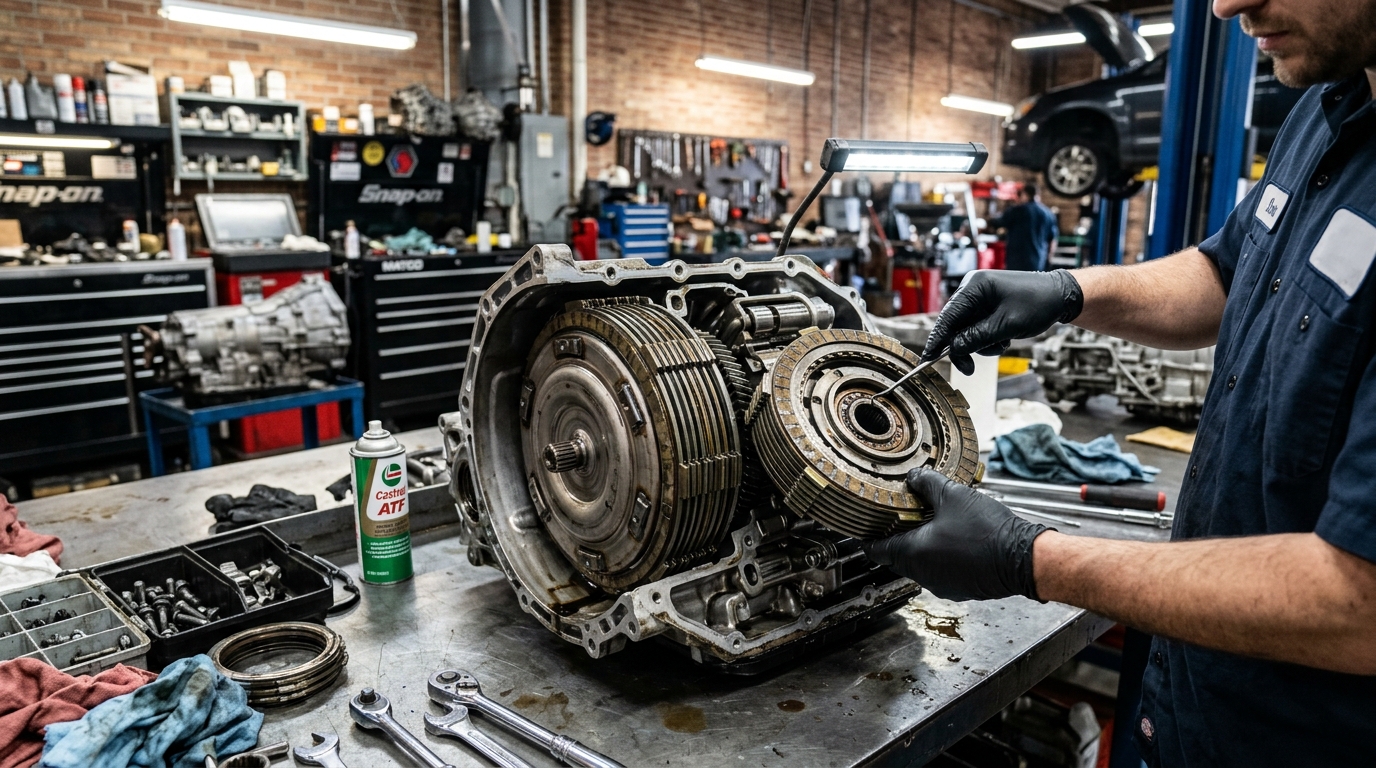
P0740 indicates a torque converter clutch circuit malfunction. Discover what triggers this code, the telltale symptoms like highway shudder and stalling, and what Chicago drivers can expect for diagno
What Does the P0740 Code Mean?
The P0740 diagnostic trouble code stands for "Torque Converter Clutch Solenoid Circuit/Open Circuit Malfunction," and it points to one of the most critical systems in your automatic transmission - the torque converter clutch (TCC) system. When your vehicle's Engine Control Module (ECM) or Transmission Control Module (TCM) sets P0740, it has detected that the electrical circuit controlling the torque converter's lockup clutch is not operating within expected parameters. The system is either failing to engage when commanded, failing to disengage when it should, or responding erratically in a way that falls outside the computer's acceptable range.
To understand why this matters, you need to understand what the torque converter does and why its lockup clutch exists. In an automatic transmission, the torque converter is a sealed, fluid-filled unit that sits between the engine and the transmission. It replaces the manual clutch pedal - using hydraulic fluid to transfer the engine's rotational energy to the transmission's input shaft. This fluid coupling allows the engine to keep spinning even when the vehicle is stopped (which is why an automatic does not stall at a red light the way a manual would if you forgot the clutch). The design works beautifully at low speeds, but it has an inherent weakness: because the connection between engine and transmission is through fluid rather than a solid mechanical link, there is always some degree of slippage. At highway cruising speed, that slippage wastes fuel and generates heat.
The torque converter lockup clutch was engineered to solve that problem. Inside the torque converter is a friction clutch disc that can mechanically lock the converter housing to the transmission input shaft, creating a direct one-to-one connection - no more fluid slip. When the lockup clutch engages (typically at highway cruise speed in the transmission's highest gear), the engine drives the transmission directly, just like a manual transmission in gear with the clutch pedal fully released. This improves fuel economy by five to fifteen percent at steady highway speed and dramatically reduces heat generation in the transmission fluid.
The TCC solenoid is the electromechanical valve that controls when this lockup clutch engages and releases. It is an electrically operated valve, usually mounted inside the valve body of the transmission, that opens and closes a fluid passage. When the computer determines conditions are right for lockup - adequate speed, appropriate gear, suitable engine load and throttle position, transmission fluid at operating temperature - it sends an electrical signal to the solenoid. The solenoid opens, transmission fluid pressure routes to the lockup clutch, and the clutch engages. When the driver slows down, accelerates aggressively, or the transmission needs to downshift, the computer cuts the signal, the solenoid closes, fluid pressure releases the clutch, and the converter returns to its normal fluid-coupling mode.
P0740 tells you that something in this circuit - the solenoid itself, the wiring between the computer and the solenoid, the connector, or potentially the TCM - is malfunctioning. For Chicago drivers who rely on their vehicles for long highway commutes on the Kennedy, the Eisenhower, or the Tri-State Tollway, this code has direct implications for fuel economy, transmission longevity, and in some failure scenarios, basic driving safety.
How P0740 Relates to Other Torque Converter Codes
P0740 is part of a family of five torque converter clutch codes, each identifying a different aspect of the TCC system failure. Understanding which code you have - or which combination - helps narrow the diagnosis and guides the repair.
P0740 - Torque Converter Clutch Solenoid Circuit Malfunction is the general catch-all code for TCC circuit problems. It indicates that the circuit is not operating within expected parameters but does not specify whether the solenoid is stuck on, stuck off, or intermittent. This is the most commonly searched of the five codes and serves as the starting point for TCC diagnosis.
P0741 - Torque Converter Clutch System Stuck Off means the computer is commanding the solenoid to lock the converter, but the system is not responding. The converter never locks at highway speed. The solenoid either does not open or does not open enough, so the lockup clutch never engages. The primary symptom is reduced fuel economy because the converter continues to slip at all speeds. The hidden danger is that continuous slip generates continuous heat, slowly cooking the transmission fluid and accelerating wear on every internal component - even when the vehicle seems to drive normally in every other respect.
P0742 - Torque Converter Clutch System Stuck On is the most immediately dangerous code in this family. It means the TCC is engaged and will not release - the converter stays locked even at low speeds and at stops. The practical effect is identical to what happens in a manual transmission if you come to a stop without pressing the clutch pedal: the engine stalls. If your vehicle is stalling when you slow down or stop, particularly at intersections or in heavy traffic on Chicago's congested surface streets, this code is likely present and warrants immediate attention. Stalling means losing power steering assist and power brake assist, which creates a genuine safety hazard.
P0743 - Torque Converter Clutch Solenoid Circuit Electrical points specifically to an electrical fault in the TCC circuit rather than a performance issue. This code directs the diagnosis toward wiring, connectors, and circuit integrity rather than the mechanical operation of the solenoid or converter. Corroded connectors, damaged wiring harnesses, internal transmission harness failures, and short circuits are the primary suspects. Chicago vehicles that have endured years of road salt spray are particularly susceptible to the connector corrosion that triggers P0743.
P0744 - Torque Converter Clutch Solenoid Circuit Intermittent indicates the TCC system works sometimes but not reliably. The solenoid responds on some drive cycles and fails on others, or cuts in and out during a single trip. Intermittent codes are among the trickiest to diagnose because the system may test perfectly normal in the shop. The failure often manifests only under specific conditions - a particular speed, load, or temperature - making road-test diagnosis with live data streaming essential. Temperature-related intermittent failures are especially common: the solenoid works fine when the transmission is cold but fails after it reaches operating temperature, often due to degraded coil insulation that allows resistance to increase as the solenoid heats up.
Any of these codes may appear alongside P0700, the general transmission control system malfunction alert discussed in our P0700 article. When P0700 appears with a P0740-series code, the P0740-series code is the one that identifies what is actually wrong; P0700 is simply the notification that a transmission fault exists.
Common Causes of the P0740 Code

P0740 can originate from several different component failures within the TCC circuit and related systems. Identifying the actual root cause is essential because the repair for a failed solenoid is dramatically different in scope and cost from the repair for a worn-out torque converter.
A Failed TCC Solenoid is the most common cause. The solenoid is an electromechanical device with a wire coil and a mechanical plunger, and both elements can fail. The coil can burn out from years of heat cycling, creating an open circuit that prevents the solenoid from operating at all. The plunger can seize in position due to varnish and debris accumulation - a condition almost always linked to neglected transmission fluid maintenance. A seized solenoid may be stuck open (keeping the converter locked), stuck closed (preventing lockup entirely), or partially stuck (allowing only intermittent or partial engagement). Solenoid coil insulation can also degrade over time, particularly in high-heat environments, leading to intermittent failures where the solenoid works when cold but fails when hot.
Damaged Wiring or Corroded Connectors between the TCM and the solenoid can prevent the electrical signal from reaching the solenoid reliably. The external transmission harness connector - where the vehicle's wiring plugs into the transmission case - is a common failure point because it is exposed to road spray, moisture, and temperature extremes. Inside the transmission, a ribbon-style internal wiring harness connects the solenoids to the external connector, and these internal harnesses can degrade from heat and fluid exposure over high mileage. For vehicles driven on Chicago's salt-treated winter roads year after year, external connector corrosion is a particularly frequent finding. The salt and moisture mixture that coats the undercarriage during winter months is aggressively corrosive to electrical contacts, and the transmission connector sits squarely in the spray zone.
Low, Contaminated, or Burnt Transmission Fluid affects the TCC system in multiple ways. Low fluid reduces the hydraulic pressure available to engage the lockup clutch, causing partial engagement or slippage that the TCM interprets as a circuit malfunction. Contaminated fluid - filled with microscopic wear particles from aging clutch packs and bands - can clog the solenoid's internal screen or jam its plunger. Burnt fluid, which has broken down from excessive heat exposure, loses its friction modification properties, preventing the lockup clutch from engaging smoothly even when the solenoid and hydraulic pressure are functioning correctly.
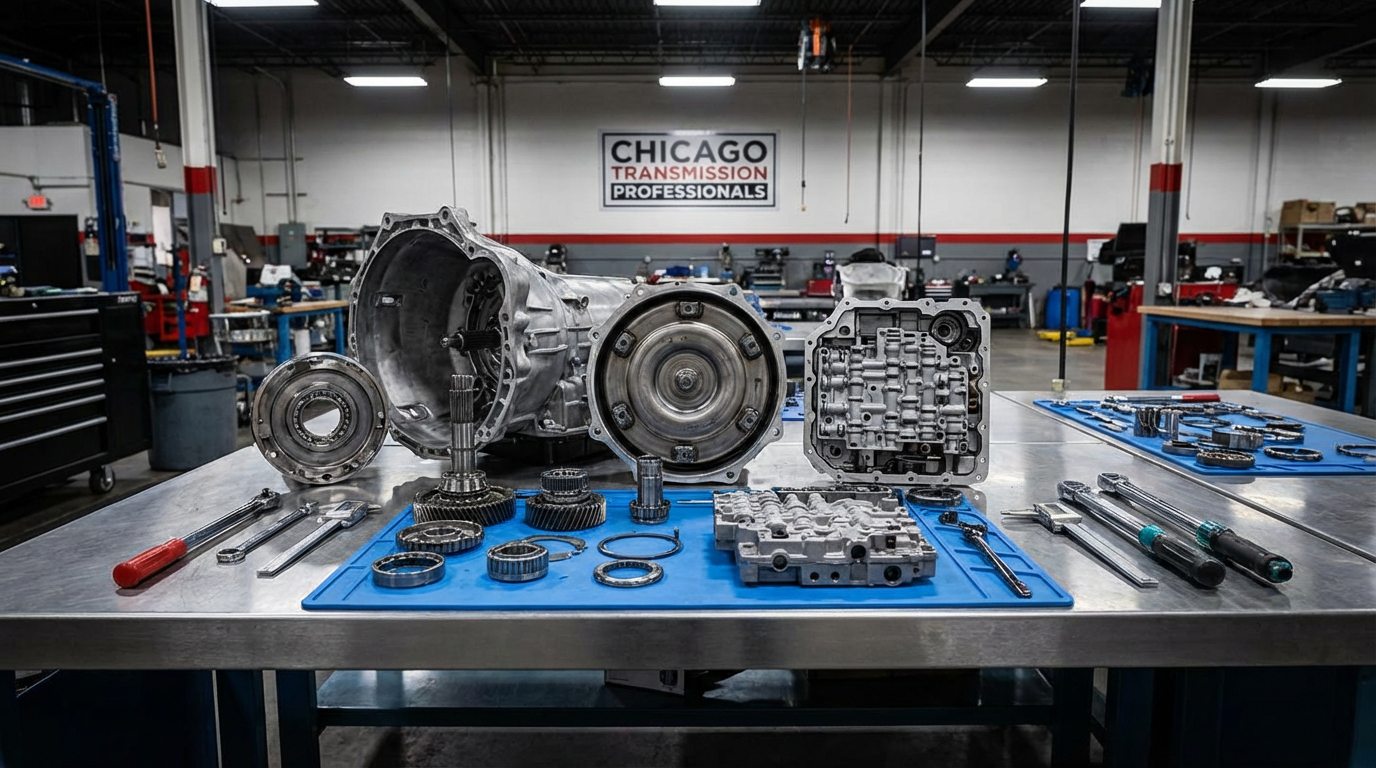
Mechanical Failure Inside the Torque Converter can trigger P0740 when the lockup clutch friction disc itself has worn through, delaminated, or glazed to the point where it cannot grip properly. The solenoid may be working perfectly, the hydraulic pressure may be adequate, but the clutch simply cannot engage because the friction material is spent. This condition typically develops gradually over tens of thousands of miles and is accelerated by anything that causes the clutch to slip rather than lock cleanly - including the other causes listed above. A torque converter with a worn lockup clutch cannot be repaired in place; the converter must be replaced, which requires removing the transmission from the vehicle.
Valve Body Issues can affect the fluid pathway between the solenoid and the torque converter clutch. Even when the solenoid opens correctly, worn passages or stuck valves in the valve body can prevent adequate fluid pressure from reaching the lockup clutch. The valve body is a complex hydraulic control center with dozens of precision-machined channels, and after hundreds of thousands of shift cycles, wear in the passages that route TCC apply pressure can cause lockup engagement problems that set P0740.
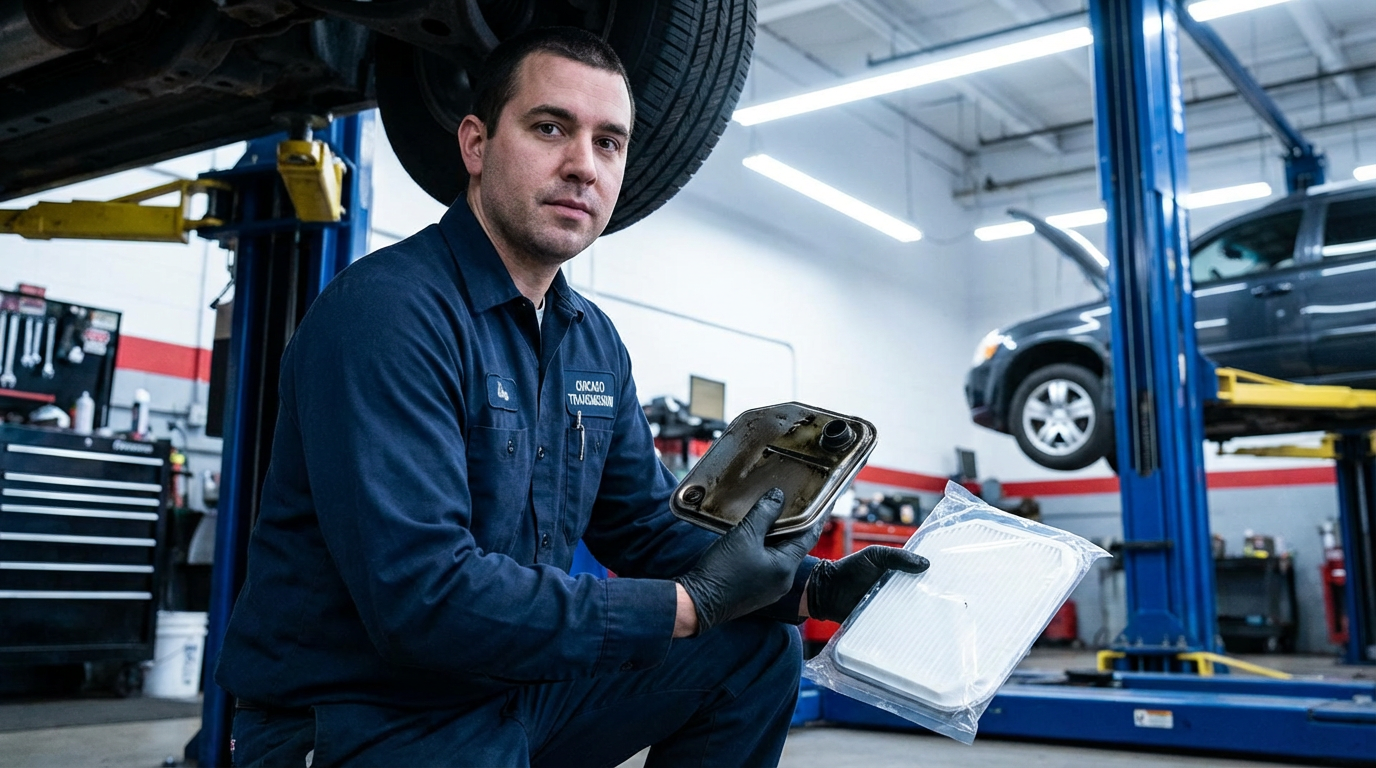
A Clogged Transmission Filter can restrict overall fluid flow enough to affect TCC operation. If the filter is severely clogged - common in transmissions that have gone well past their recommended fluid service interval - the transmission pump cannot draw enough fluid to maintain adequate system pressure, and the TCC circuit may be the first system to show symptoms because lockup engagement is sensitive to pressure drops.
TCM or ECM Failure is the least common cause but worth mentioning. If the computer itself has a faulty driver circuit for the TCC solenoid, it may not send the proper voltage signal to engage the solenoid. This is typically a diagnosis of exclusion - investigated only after the solenoid, wiring, fluid, and converter have been ruled out.
Symptoms of P0740
The symptoms produced by P0740 depend on the specific nature of the failure - whether the TCC is stuck off, stuck on, or intermittent. Some symptoms are subtle enough that drivers live with them for months before seeking diagnosis, while others are alarming enough to send you straight to the shop.
The Highway Shudder is the signature symptom that transmission specialists associate with TCC problems, and it is the single most common complaint that leads to P0740 diagnosis. At highway speed - typically between 40 and 55 miles per hour depending on the vehicle - you feel a vibration, shudder, or rhythmic surging that feels unmistakably like driving over a rumble strip. The shudder occurs because the lockup clutch is not engaging cleanly. Instead of locking fully and firmly in a single smooth motion, the worn or improperly controlled clutch slips and grabs in rapid alternation - locking, slipping, locking, slipping - dozens of times per second. The resulting vibration transmits through the drivetrain and into the cabin.
The shudder is most noticeable under light throttle at a steady cruising speed. It often diminishes or disappears if you accelerate firmly (because the increased load causes the computer to unlock the converter) or decelerate (because the converter unlocks at lower speed). Many Chicago drivers first notice this symptom during their daily commute on I-90/94, I-290, or the Tri-State Tollway, precisely because these stretches involve sustained highway-speed cruising where the converter should be locked. Some initially mistake the vibration for a tire balance problem, a bad motor mount, or an engine misfire. The distinguishing feature is that TCC shudder occurs specifically at the speed where the converter locks and goes away outside that speed range, whereas tire balance issues worsen progressively with speed and engine misfires are typically present across all speeds.
Engine Stalling at Stops is the hallmark of a TCC solenoid stuck in the open position (P0742). When the lockup clutch stays engaged as you decelerate and stop, the direct mechanical link between engine and transmission drags the engine RPM down below idle speed, and the engine stalls - exactly as it would in a manual transmission car if you came to a stop in gear without pressing the clutch. You may notice the RPM gauge dropping abnormally low as you approach a stop, the engine lugging or bucking, and then either stalling completely or recovering at the last moment with a rough, shaky idle. This symptom presents a real safety concern on Chicago's busy streets. Stalling at an intersection on Western Avenue, at a stoplight on Ashland, or while merging through the Kennedy-Edens junction means losing power steering assist and power brake assist at the worst possible moment. If your vehicle is stalling at stops and a TCC code is present, have the vehicle towed rather than driving it through traffic.
Reduced Fuel Economy is the most common symptom of a TCC solenoid stuck off (P0741) and is often the only drivability symptom for weeks or months before the problem progresses. When the converter cannot lock at highway speed, it continues to slip, and that slip wastes energy as heat rather than transferring it to the wheels. The fuel economy penalty is typically five to fifteen percent, depending on how much highway driving you do. On a vehicle that normally achieves 28 miles per gallon on the highway, a stuck-off TCC can drop that to 24 or 25 mpg. For Chicago commuters who drive 40 to 60 miles round trip daily - the Metra parking lot to the office and back, or a suburban commute from Schaumburg to the Loop - that can turn into a noticeable monthly fuel penalty. Over a year of ignoring the code, the wasted fuel alone may approach or exceed the cost of the solenoid repair.
Transmission Overheating is the hidden consequence of a converter that cannot lock. Continuous slip at highway speed generates substantial heat in the transmission fluid. Transmission fluid is engineered to operate within a range of 175 to 200 degrees Fahrenheit. Continuous converter slip can push fluid temperatures well above 220 degrees, where the fluid begins to oxidize and break down chemically. For every 20 degrees above the optimal range, fluid life is cut in half. You may see a dedicated transmission temperature warning on vehicles equipped with one, or you may notice the transmission shifting differently after extended highway driving - delayed shifts, harsh shifts, or momentary slipping that resolves after the vehicle sits and cools. The long-term consequence of chronic overheating is accelerated wear throughout the entire transmission, turning what started as a solenoid problem into a system-wide deterioration.
Harsh or Abrupt Lockup Engagement occurs when the solenoid loses its ability to modulate fluid pressure gradually. Modern vehicles use pulse-width-modulated (PWM) TCC solenoids that ramp up clutch apply pressure smoothly over a fraction of a second, producing the seamless, nearly imperceptible lockup that a healthy system delivers. When a PWM solenoid degrades, it may default to crude on/off behavior - snapping the lockup clutch on all at once rather than easing it in. The result is a distinct thud or jolt at highway speed that feels like a firm gear shift, which can be startling and is often mistaken for a shift-related problem.
Check Engine Light Illumination accompanies P0740 in virtually all cases. The light may be steady (indicating a confirmed fault) or may flash intermittently in cases where the code is setting and then clearing on different drive cycles. A P0700 code (transmission control system malfunction) will typically be stored alongside P0740, as discussed in our P0700 article.
Vehicles Most Commonly Affected by P0740
While any vehicle with an automatic transmission and a lockup torque converter can develop P0740, certain makes and transmission types are significantly more prone to TCC solenoid failures.
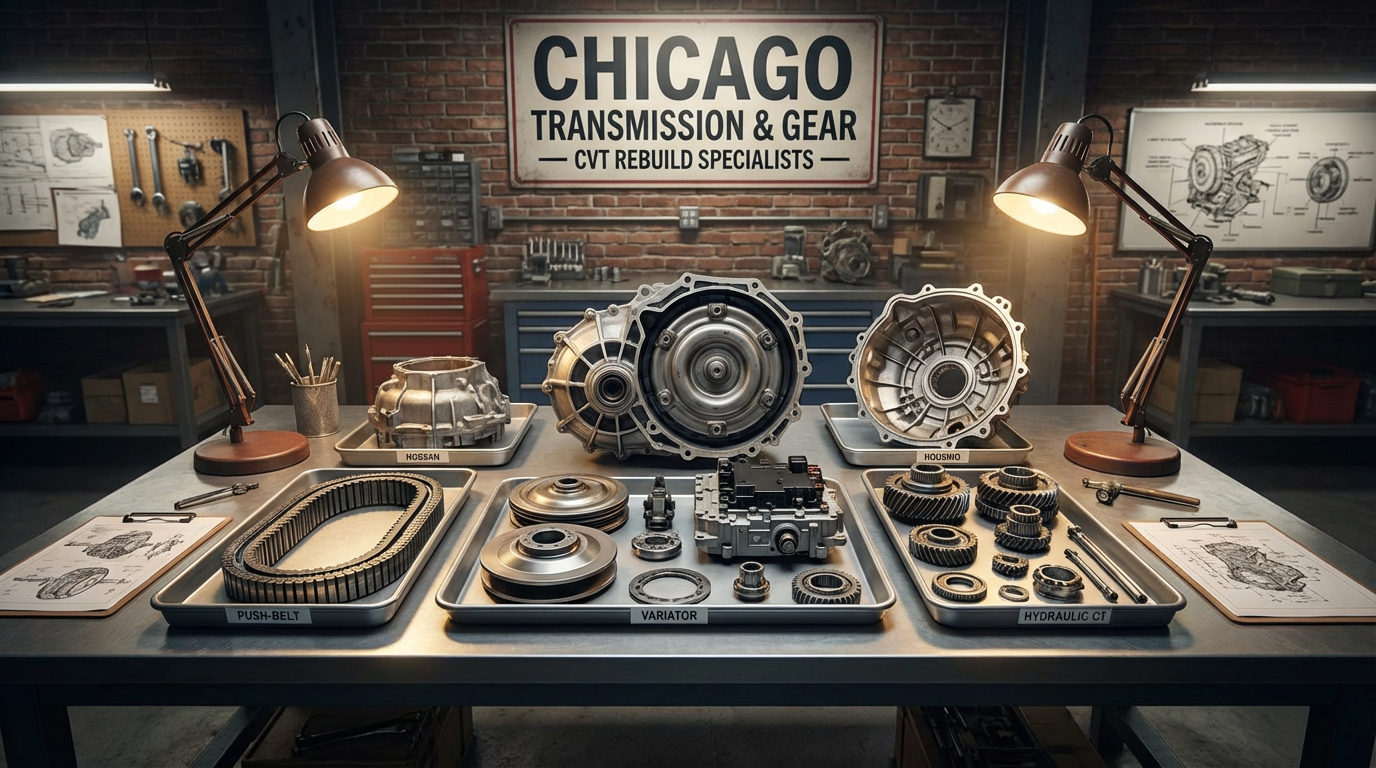
GM vehicles equipped with the 4L60E and 4L80E transmissions represent the single most common population for P0740 codes. The 4L60E was installed in millions of Chevrolet Silverados, Tahoes, Suburbans, Camaros, and Impalas, as well as GMC Sierras and Yukons, Pontiac Grand Prix models, and Buick Regals. TCC solenoid failure on the 4L60E is so prevalent that it is considered a known wear item in the transmission industry. The solenoid is located in the valve body beneath the transmission pan, making it relatively accessible for replacement, and aftermarket parts are widely available. These are some of the most popular vehicles on Chicago roads, and given the city's large population of GM trucks and SUVs used for construction, trades, and family hauling through the suburbs, P0740 on a 4L60E is something Chicago transmission shops encounter on a near-daily basis.
Honda and Acura vehicles, particularly the Accord, Civic, Odyssey, and TL models from the 2000 through 2015 era, are well known for TCC solenoid issues. Honda automatic transmissions are especially sensitive to fluid condition, and skipped or delayed fluid service accelerates solenoid failure significantly.
Toyota and Lexus models, particularly the Camry, Corolla, and Sienna, develop P0740 at higher mileages. Toyota TCC problems tend to present more as a shudder or vibration rather than hard failures or stalling.
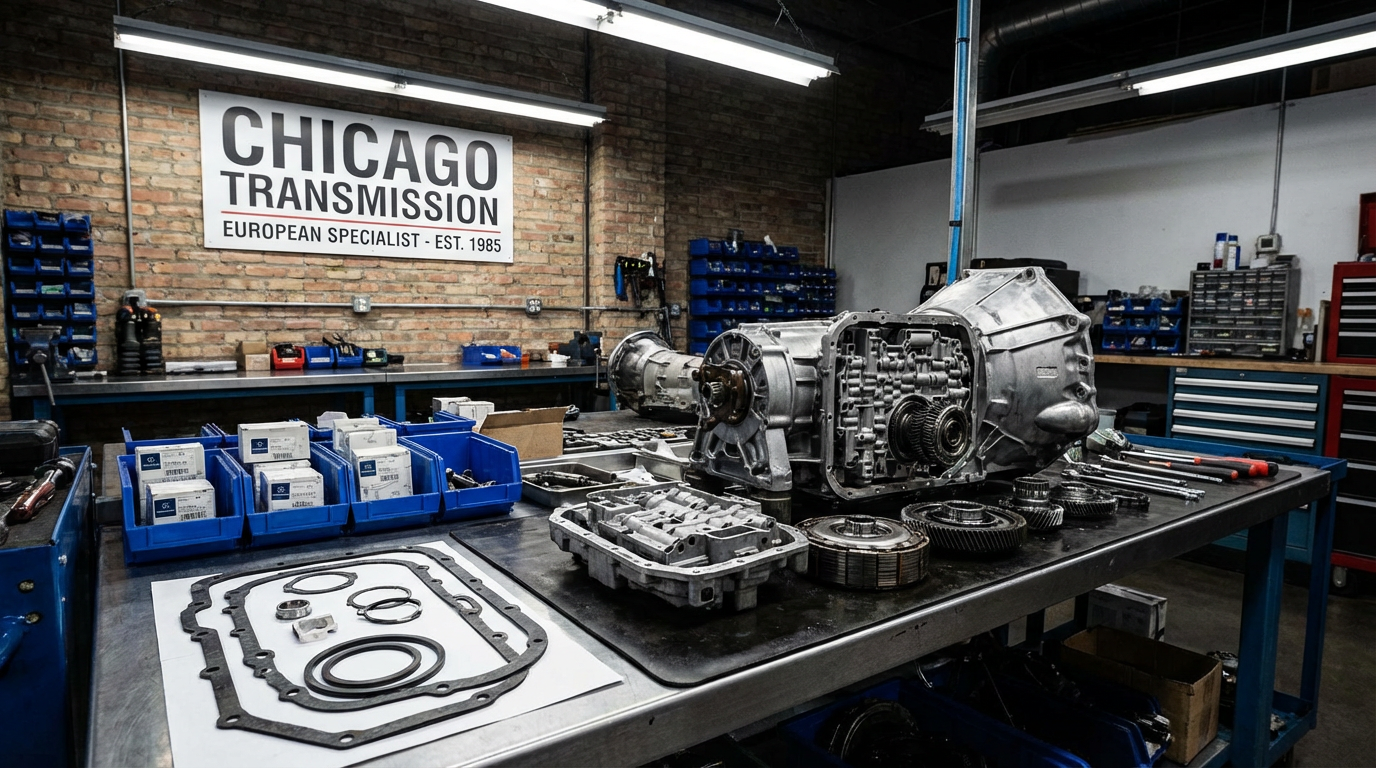
Chrysler, Dodge, and Jeep vehicles with the 62TE transmission - including the Chrysler 200, Town and Country, Dodge Grand Caravan, Dodge Journey, and Jeep Cherokee - have known TCC solenoid issues. The 62TE uses a solenoid pack that controls multiple functions including the lockup clutch, and addressing the TCC solenoid often requires replacing the entire solenoid pack rather than a single component.
Ford vehicles with the 6R80 transmission, commonly found in the F-150, Mustang, and Explorer, can develop TCC solenoid problems at higher mileages. Ford's design uses a solenoid body assembly, and like the Chrysler 62TE, repair often involves replacing the complete solenoid body.
Is It Safe to Drive with P0740?
The answer depends on which specific failure mode is present, but in all cases, continued driving with P0740 accelerates damage and increases eventual repair cost.
If the TCC is stuck off (P0741 pattern), the vehicle may seem to drive normally - shifts are fine, acceleration is fine - but the converter never locks at highway speed. This is the most deceptive failure mode because the absence of lockup feels like nothing at all to most drivers. The transmission simply runs hotter and burns more fuel. You can drive to a shop safely, but do not ignore the code for weeks or months. The continuous heat from converter slip degrades the fluid, and degraded fluid contaminates the solenoid screens, valve body, and internal components in a cascade of escalating damage.
If the TCC is stuck on (P0742 pattern), the vehicle may stall at stops. This is a safety concern that warrants having the vehicle towed rather than driven through Chicago traffic. Stalling at a busy intersection on Michigan Avenue, at a light on Cicero, or while navigating the merge points of the Circle Interchange creates a dangerous situation for you and the vehicles around you.
If the TCC is intermittent (P0744 pattern), symptoms may come and go - shuddering on some trips but not others, or only after the transmission warms up. The unpredictability makes it tempting to ignore, but intermittent problems always progress toward constant failure. The solenoid that sticks occasionally will eventually stick permanently.
The overarching principle with P0740 is the same as with P0700 and P0730: the earlier the diagnosis, the less expensive the repair. A TCC solenoid replacement caught early, before the lockup clutch contaminates the fluid, typically costs a fraction of the torque converter replacement or transmission rebuild that becomes necessary if the problem is allowed to progress through its predictable stages of escalation.
How P0740 Is Diagnosed
Proper diagnosis of P0740 follows a layered approach that distinguishes between electrical faults, mechanical failures, and fluid-related issues before any parts are replaced.
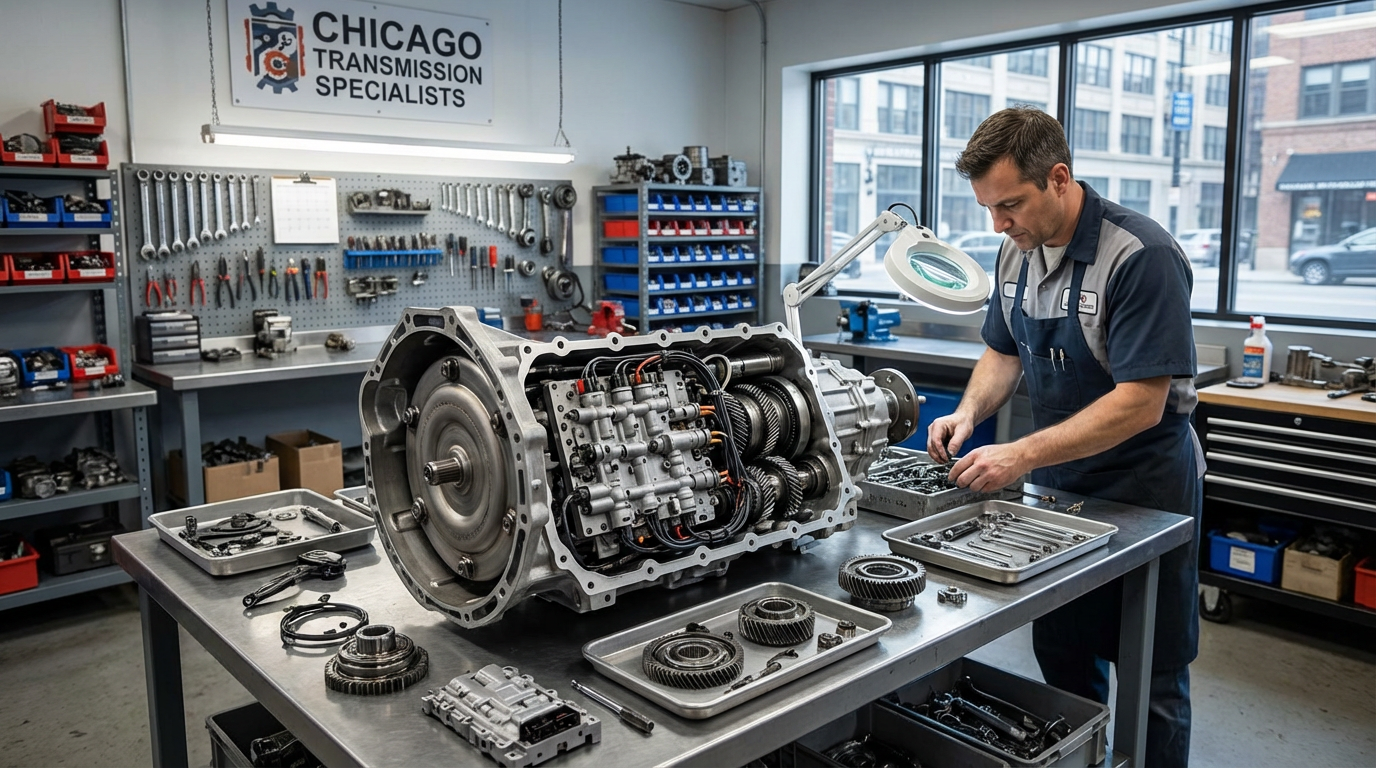
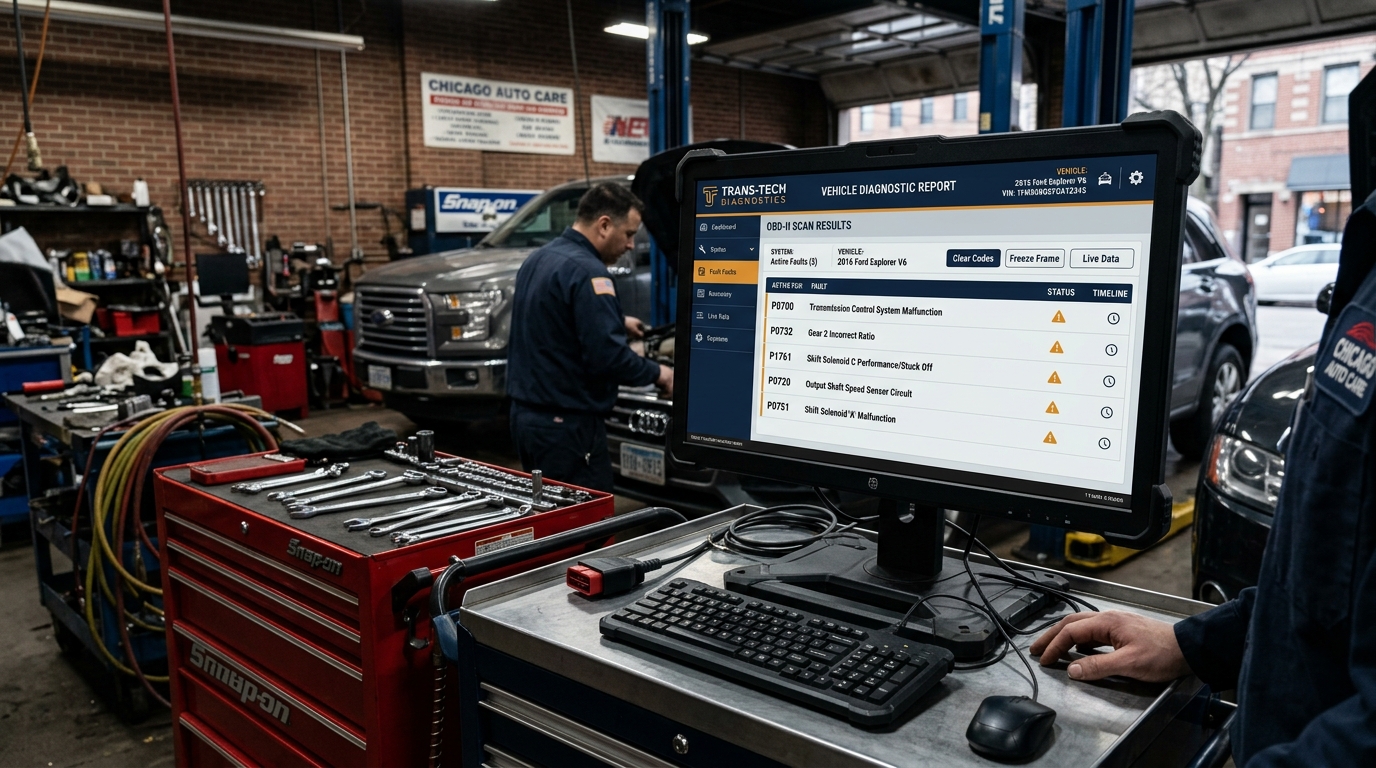
The process begins with a professional-grade scan that retrieves all codes from both the ECM and TCM, along with freeze frame data. The freeze frame snapshot captures the exact conditions when P0740 was triggered - vehicle speed, engine RPM, throttle position, transmission fluid temperature, commanded TCC state, and actual converter slip rate. This data tells the technician whether the fault occurred at highway cruise (where lockup should be engaged), at low speed (where lockup should be released), during acceleration, or during deceleration. That context dramatically narrows the diagnostic focus.
Transmission fluid inspection is performed before any electrical testing. The condition of the fluid communicates critical information about the health of the torque converter's lockup clutch and the transmission's internal components. Clean, red fluid with no burnt smell indicates that the lockup clutch material is likely still intact, and the problem is probably electrical (solenoid or wiring) or hydraulic (valve body or fluid level). This is the best-case scenario because it means the damage has not yet spread beyond the original fault. Dark or brown fluid with a burnt odor indicates the lockup clutch has been slipping and the friction material is degrading - the contamination process has begun, and the repair scope may need to extend beyond the solenoid alone. Fluid with visible metallic particles or debris indicates significant internal wear that requires further investigation to determine its source.
TCC solenoid resistance testing uses a multimeter to measure the solenoid's internal coil resistance. Each solenoid has a manufacturer-specified resistance range - typically between 10 and 30 ohms depending on the transmission. A reading that falls outside this range confirms the solenoid has failed electrically. An open circuit reading (infinite resistance) means the coil wire has burned through. A shorted reading (near-zero resistance) means the insulation between coil windings has failed. A reading within specification means the coil is intact, but the solenoid could still have a mechanical failure - a seized plunger - that prevents it from operating correctly despite healthy electrical measurements. For intermittent codes (P0744), testing the solenoid both cold and at operating temperature can reveal temperature-dependent resistance changes that cause intermittent failures.
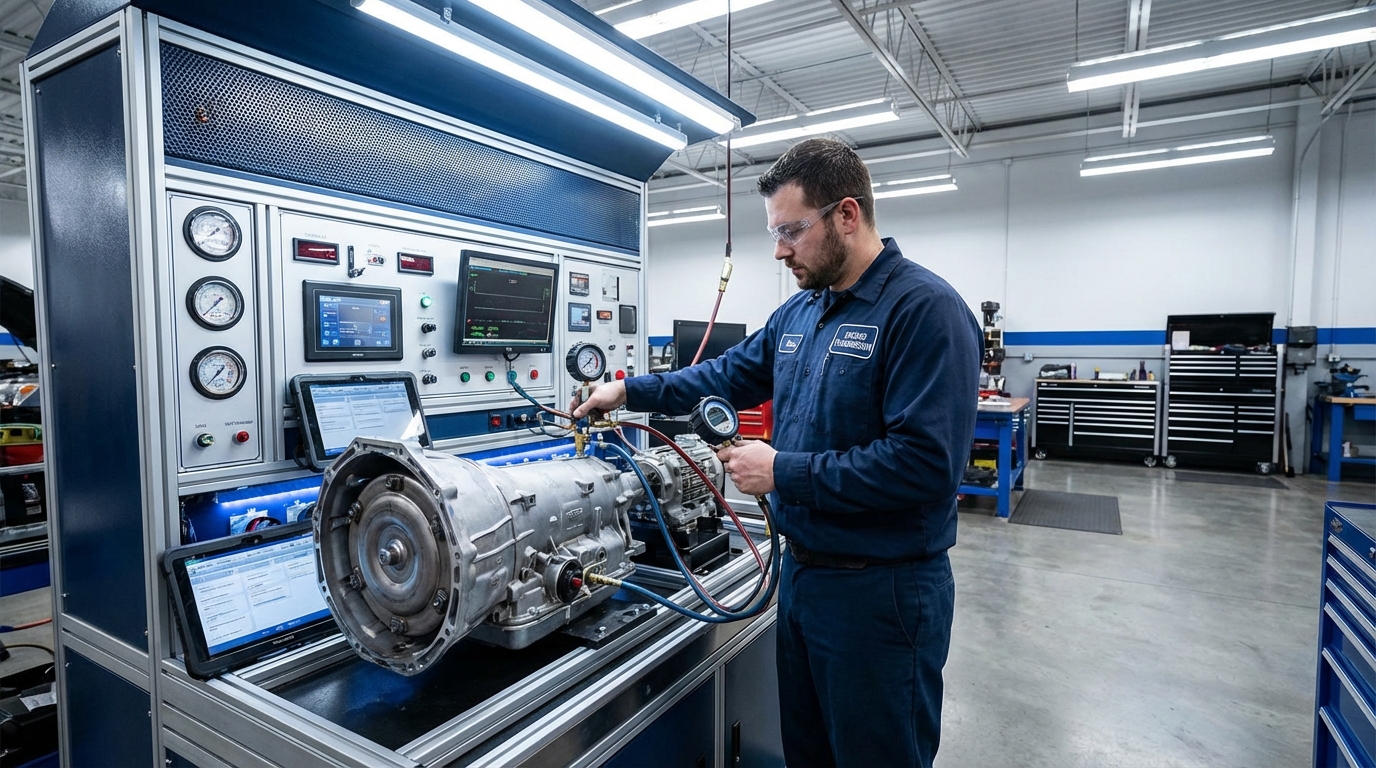
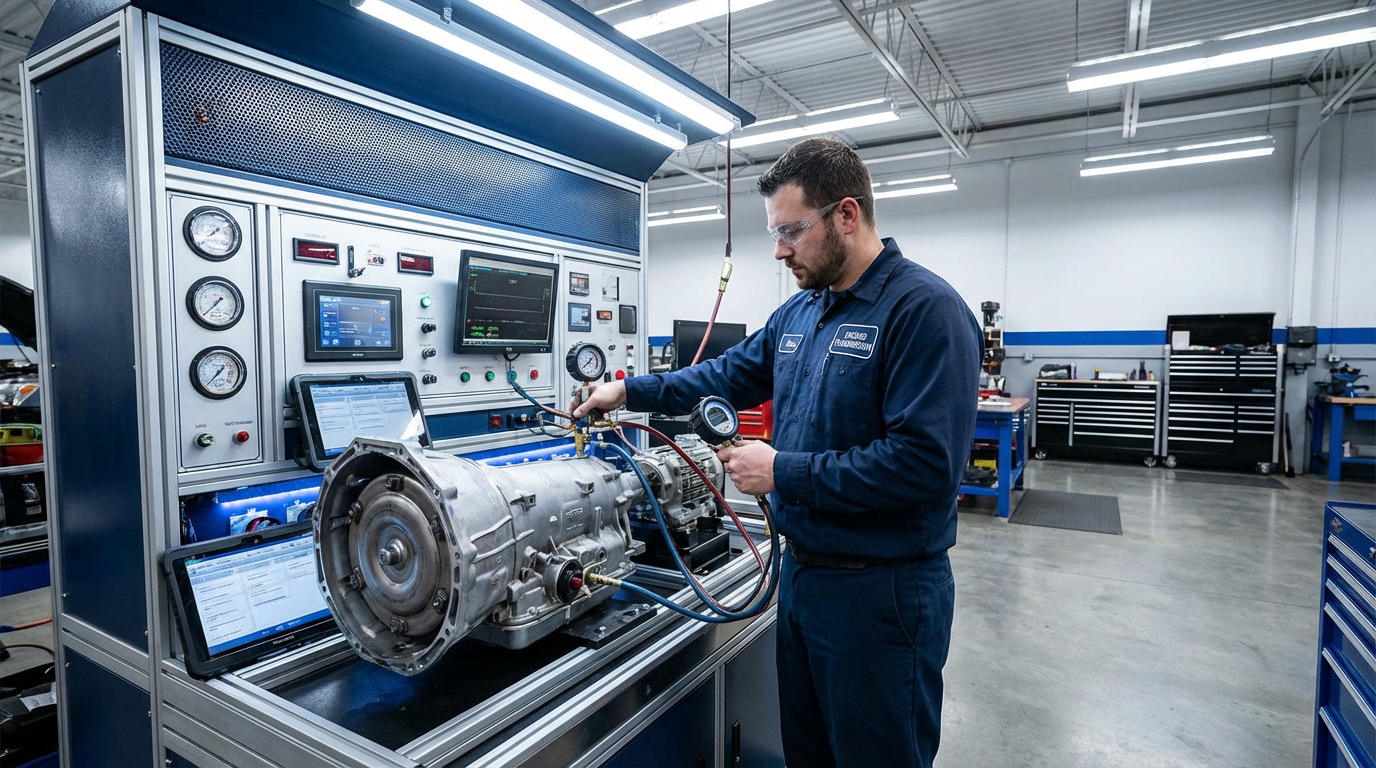
Wiring and connector inspection examines the entire electrical path from the TCM to the solenoid. The technician checks the external transmission connector for corrosion, moisture intrusion, and pin damage. The harness is inspected for chafing, heat damage, and broken conductors. Continuity testing verifies that the circuit is complete from the TCM connector through the harness to the solenoid pins. Resistance testing identifies high-resistance connections that may cause voltage drops insufficient to fully energize the solenoid. For Chicago vehicles, the external connector receives particular scrutiny because years of road salt exposure can create a thin layer of corrosion on the pins that increases resistance just enough to prevent reliable solenoid operation without creating an outright open circuit.
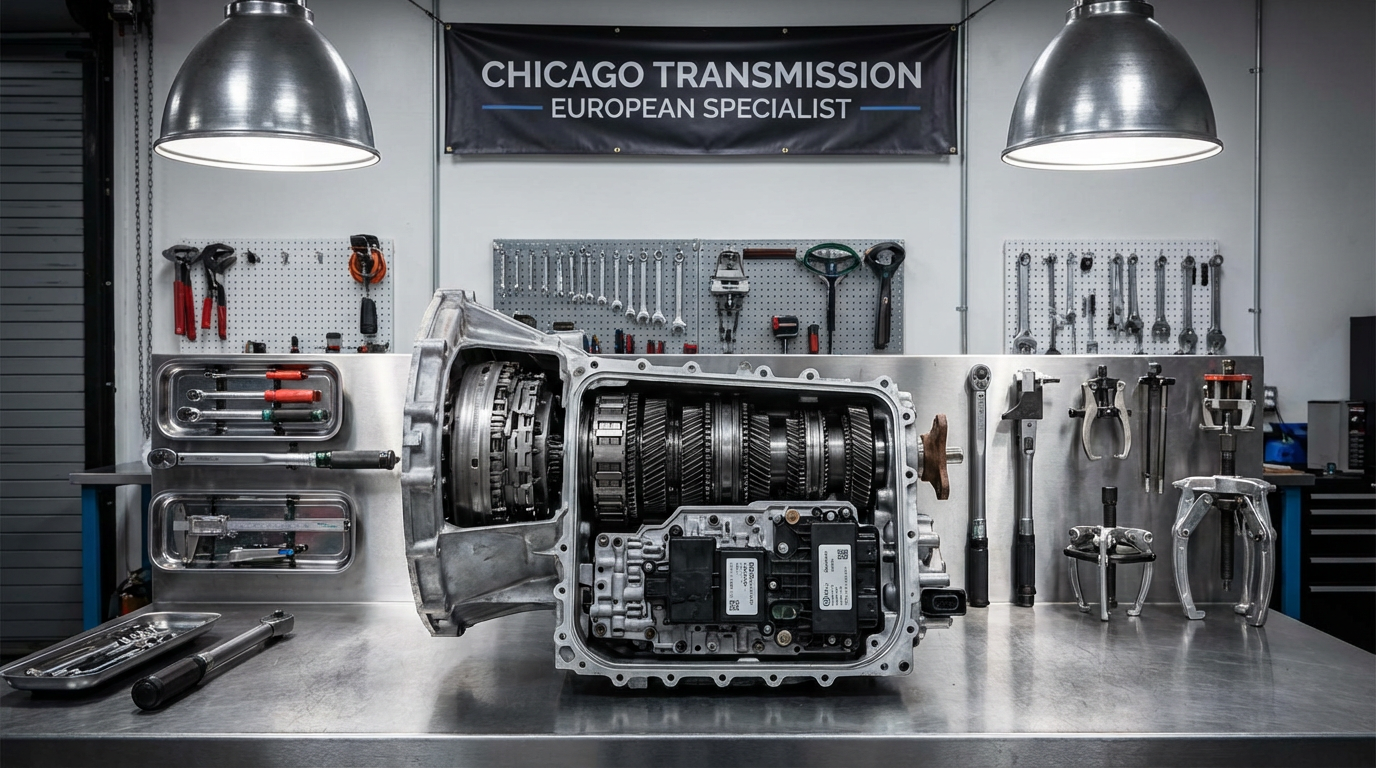
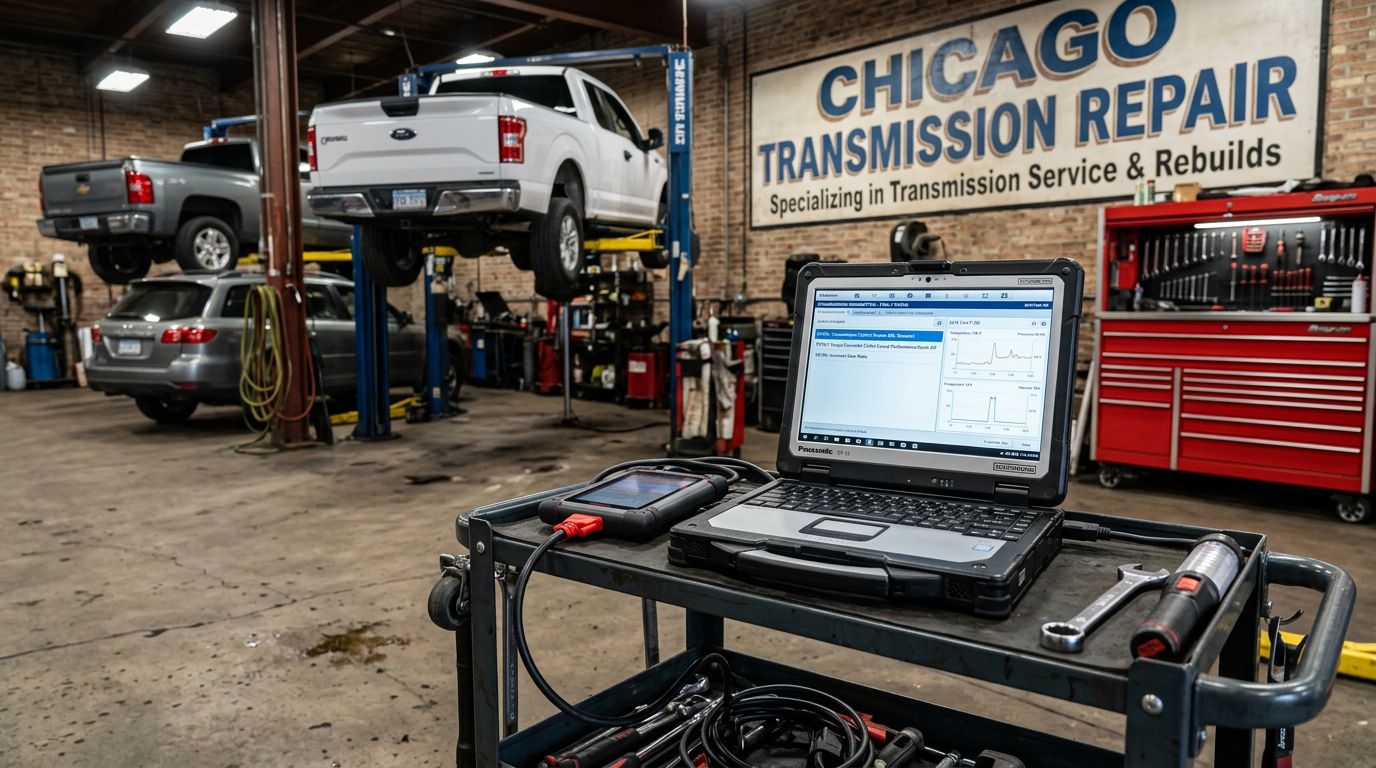
A road test with live data streaming confirms the diagnosis under real-world driving conditions. The technician monitors the TCM's commanded TCC state (is the computer asking for lockup?), the actual converter slip rate (is the clutch engaging?), transmission fluid temperature, and vehicle speed. By driving through the speed range where lockup should occur and observing whether the solenoid responds to the computer's commands, the technician can see in real time whether the electrical command produces the expected mechanical result. If the computer commands lockup and the slip rate drops to near zero, the system is working. If the computer commands lockup and the slip rate remains high, the lockup clutch is not engaging - and the solenoid test and fluid condition determine whether the fault is in the solenoid, the hydraulic circuit, or the converter itself.
Fluid pressure testing at the TCC circuit test port (on transmissions equipped with one) measures the hydraulic pressure being delivered to the lockup clutch. This test distinguishes between solenoid problems (pressure is low because the solenoid is not opening fully), valve body problems (pressure is low because worn passages are leaking), and converter problems (pressure is adequate but the clutch still does not engage because the friction material is worn). Adequate pressure with no lockup engagement strongly indicates a worn converter that requires replacement.
P0740 Repair Costs: What Chicago Drivers Should Expect
P0740 points to the torque-converter clutch circuit, but the repair can range from a fluid or wiring issue to a TCC solenoid, valve-body concern, converter replacement, or internal transmission damage. The code needs testing before anyone quotes a real repair path.
The shop should check fluid condition, stored companion codes, converter clutch slip data, electrical continuity, connector corrosion, and apply pressure where the transmission design allows it. That separates a control problem from a worn converter clutch or a broader internal failure.
Do not treat an additive or fluid change as a covered in writing fix for P0740. It may help in limited maintenance or mild shudder situations, but a slipping lockup clutch, metal contamination, or limp-mode behavior needs proper diagnostics and a written estimate before the vehicle is driven much farther.
The Damage Cascade: Why Ignoring P0740 Gets Expensive
This progression is so consistent and so commonly seen by transmission specialists that it deserves its own section. Understanding the stages of P0740 damage escalation is the most effective motivator for timely repair.
Stage 1 is the initial solenoid failure. The check engine light may come on with a mild highway shudder or a subtle fuel-economy change. At this point the transmission may still be clean internally, but the circuit should be tested before the lockup clutch keeps slipping.
Stage 2 is converter clutch wear. Continued slipping sheds friction material into the fluid, makes the shudder more obvious, and can turn a targeted electrical or hydraulic repair into a converter-related repair.
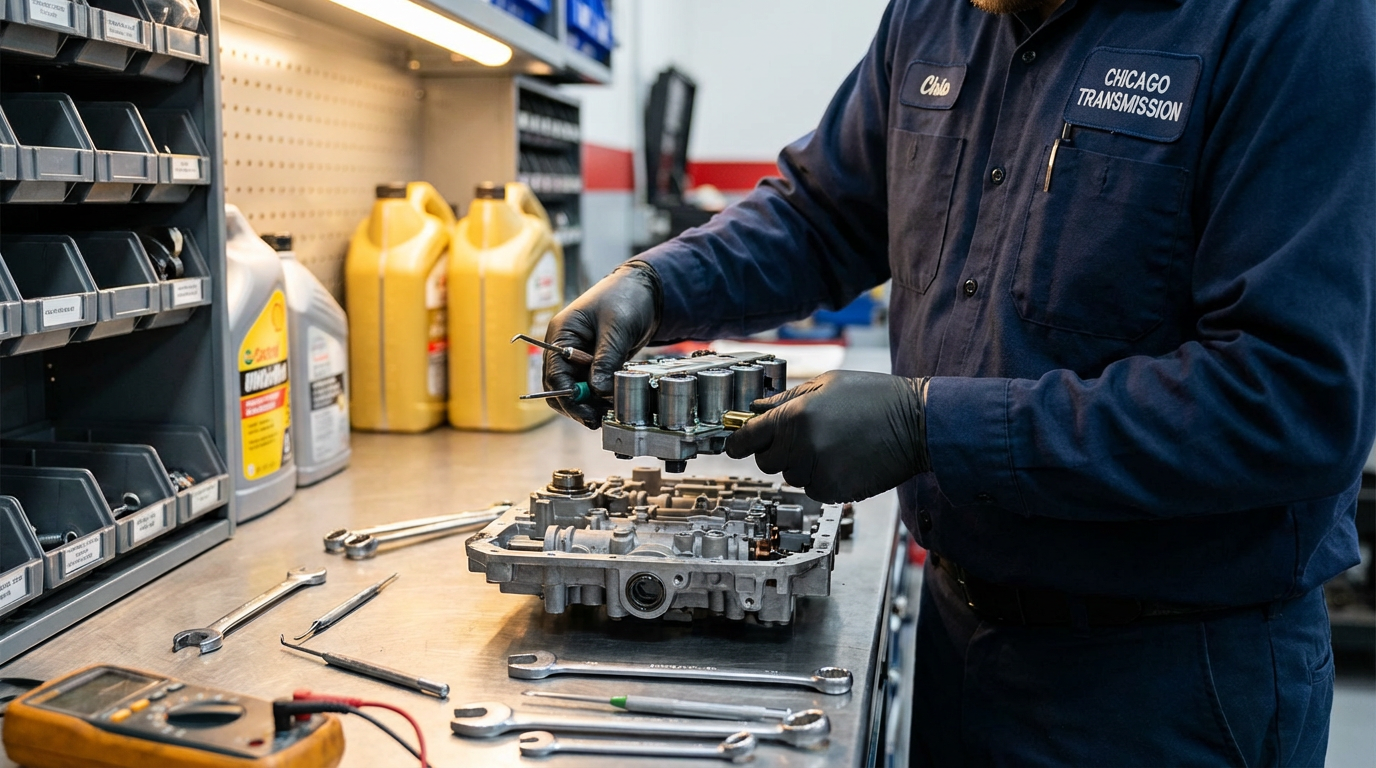
Stage 3 is fluid contamination. The fluid darkens, may smell burnt, and carries material through the valve body and solenoid screens. At this point the shop should check for broader hydraulic and internal damage instead of treating the code as a simple solenoid issue.
Stage 4 is valve body and solenoid cascade. The contaminated fluid has clogged solenoid screens beyond the TCC circuit. Other shift solenoids begin malfunctioning because their screens are blocked or their internal plungers are sticking on debris. You start receiving additional transmission codes - P0750, P0755, P0760 - alongside the original TCC code. Shift quality deteriorates noticeably across multiple gears.
Stage 5 is internal transmission damage. If the transmission slips under acceleration, shifts harshly or not at all, or enters limp mode, a rebuild or replacement conversation may be unavoidable. That is why early diagnosis matters.
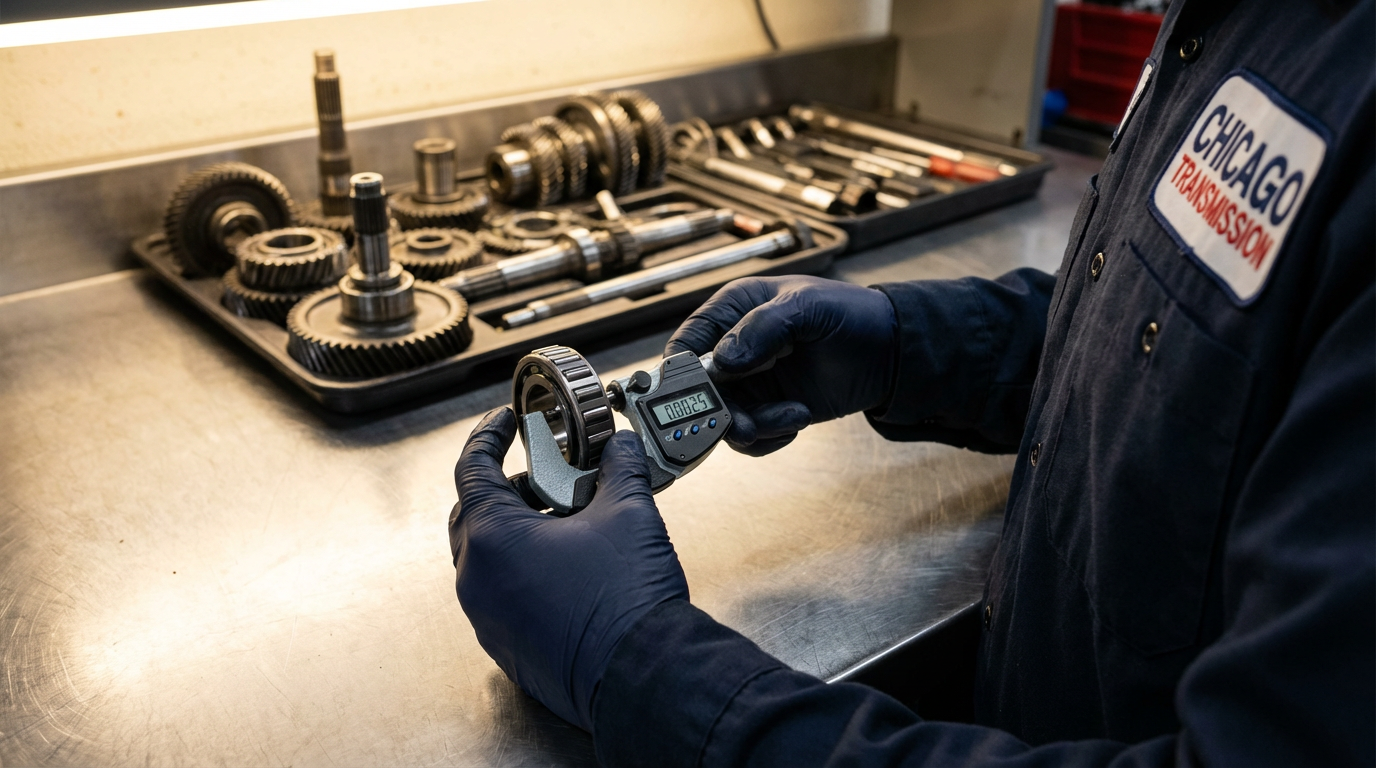
The entire progression from Stage 1 to Stage 5 can take as little as a few thousand miles of city driving or a few months of highway commuting. Every mile driven with a malfunctioning TCC system shortens the time between stages. For Chicago drivers dealing with the thermal stresses of winter cold starts and summer heat, with the mechanical demands of stop-and-go expressway traffic, and with the corrosive effects of road salt on electrical connections, this progression can move faster than it might in milder environments.
How Chicago's Driving Conditions Affect the TCC System
Several aspects of Chicago's driving environment place specific demands on the torque converter clutch system that are worth understanding for preventive purposes.
Highway commuting patterns in the Chicago area involve a distinctive mix of sustained highway speed and frequent slowdowns that cycles the TCC lockup and release repeatedly. A commute from Naperville to downtown on I-88 and I-290 might involve a dozen lockup-unlock cycles in each direction as traffic flow alternates between open highway and congestion zones. Each cycle engages and releases the lockup clutch, and over hundreds of thousands of these cycles across years of commuting, the friction material wears. Drivers who commute long distances on Chicago expressways accumulate TCC lockup cycles faster than drivers in less congested metro areas where highway cruising is more consistent.
Cold weather startup stress is significant for TCC components. When transmission fluid is cold - and Chicago sees extended stretches where overnight temperatures fall well below zero - it thickens substantially. Thick fluid flows through solenoid passages more slowly and applies clutch pressure less precisely. The TCC solenoid must work harder to open against thicker fluid, and the lockup clutch receives less precise apply pressure during the first several minutes of driving before the fluid reaches operating temperature. This cold-start stress, repeated daily from November through March, accumulates over the years and contributes to both solenoid wear and clutch material fatigue.
Road salt and undercarriage corrosion attack the external transmission connector and exposed wiring with particular aggressiveness. The mixture of calcium chloride and sodium chloride used on Chicago streets and expressways creates a corrosive slurry that coats the undercarriage throughout winter. The transmission connector, speed sensor connections, and any exposed harness sections absorb this corrosive mixture, and even with periodic underbody washing, the long-term effect is progressive corrosion of electrical contacts. A connector that functions perfectly in its first five years of service may develop enough pin corrosion by year eight or ten to increase circuit resistance to the point where the TCC solenoid receives insufficient voltage to operate reliably - triggering P0740 or P0743 without any failure in the solenoid itself.
Stop-and-go traffic heat cycling is particularly relevant to TCC solenoid longevity. The solenoid lives inside the transmission, bathed in fluid that cycles between cold-start temperatures and operating temperatures of 180 to 200 degrees - or higher in heavy traffic. This constant thermal cycling stresses the solenoid's coil insulation and connector materials. Chicago's congested corridors - the Dan Ryan, the Kennedy through the junction, Lake Shore Drive during event traffic - produce extended periods of elevated transmission temperatures that accelerate this degradation.
Preventing P0740 and Protecting the TCC System
Preventive maintenance for the TCC system is straightforward and entirely within any driver's ability to follow.
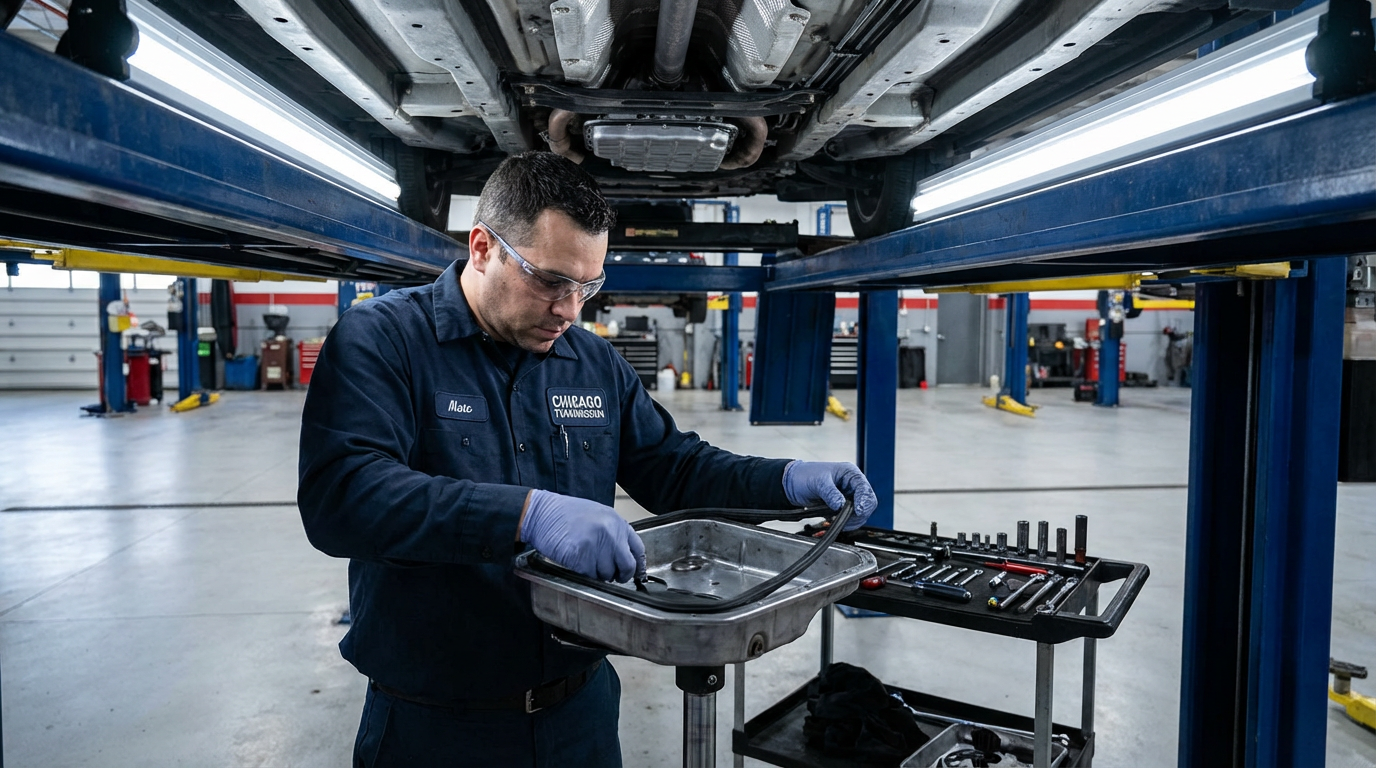
Regular transmission fluid service is the single most effective preventive measure. Clean, fresh fluid keeps the TCC solenoid operating freely by preventing varnish and debris buildup on the plunger and screen. It maintains proper friction modification properties that allow the lockup clutch to engage smoothly rather than shuddering. It keeps the valve body passages clean and the fluid's viscosity within the range the system was designed for. Change your transmission fluid every 30,000 to 60,000 miles, using the exact factory-specified fluid for your vehicle. For Chicago driving conditions - with their temperature extremes, heavy stop-and-go cycles, and the additional thermal stress of congested expressway commuting - erring toward the shorter end of that interval is wise money.
Use the correct fluid specification for your vehicle. This cannot be overemphasized for TCC system health. The lockup clutch friction material is engineered to operate with a specific fluid chemistry, and using a generic ATF that does not meet the manufacturer's specification can cause the clutch to shudder or slip even when the solenoid and hydraulics are functioning perfectly. Honda vehicles require Honda ATF. GM vehicles with newer transmissions require Dexron VI. Ford vehicles require Mercon specifications. The correct specification is printed on your transmission dipstick or listed in the owner's manual.
Do not ignore the first appearance of a highway shudder. If you feel a vibration at 40 to 55 miles per hour that goes away when you accelerate or decelerate, have the TCC system checked promptly. That shudder is the earliest and most affordable stage of TCC failure. A fluid service or solenoid replacement at the shudder stage is a fraction of the cost of the converter replacement or rebuild that becomes necessary if the shudder is ignored for months.
Consider an annual underbody inspection after winter, particularly for vehicles with more than five years of Chicago winters behind them. Having a technician check the transmission connector and undercarriage wiring for salt corrosion in the spring can catch electrical degradation before it triggers a code.
Frequently Asked Questions About P0740
What does P0740 mean?
P0740 stands for "Torque Converter Clutch Solenoid Circuit/Open Circuit Malfunction." It means the computer has detected that the electrical circuit controlling your transmission's torque converter lockup clutch is not operating within specifications. The fault could be in the TCC solenoid, the wiring, the connector, or less commonly, the transmission control module itself.
What is the most common symptom of P0740?
A shudder or vibration at highway speed - typically between 40 and 55 miles per hour - that feels like driving over a rumble strip. This occurs because the lockup clutch inside the torque converter is not engaging smoothly. Other common symptoms include reduced fuel economy, engine stalling at stops, transmission overheating, and a harsh jolt when the converter locks.
Can P0740 cause my engine to stall?
Yes, if the TCC solenoid is stuck in the open position (P0742 pattern). When the lockup clutch stays engaged at low speeds and stops, it creates a direct mechanical link between the engine and transmission that drags the engine RPM below idle speed, causing it to stall. This is a safety concern that warrants immediate repair.
How much does it cost to fix P0740?
The cost depends on what testing finds. Fluid condition, TCC solenoid control, wiring, converter clutch slip, valve-body condition, and internal debris all change the repair path. Ask for a written estimate after diagnosis rather than relying on a code-only price.
Which vehicles are most affected by P0740?
GM vehicles with the 4L60E and 4L80E transmissions (Chevy Silverado, Tahoe, Suburban, GMC Sierra, Yukon) are the most commonly affected. Honda Accords and Civics, Toyota Camrys, Chrysler/Dodge vehicles with the 62TE transmission, and Ford trucks with the 6R80 are also frequently affected.
Does P0740 affect fuel economy?
Yes. When the torque converter cannot lock at highway speed, it continues to slip, wasting energy as heat instead of transferring it to the wheels. A stuck-off TCC typically reduces highway fuel economy by five to fifteen percent. Over months of driving, this wasted fuel can cost more than the solenoid repair itself.
What is the difference between P0740 and P0741?
P0740 is the general TCC circuit malfunction code - it indicates a problem but does not specify the failure mode. P0741 specifically means the TCC system is stuck off - the converter will not lock when commanded. Both codes point to TCC system problems, but P0741 provides more specific diagnostic information.
Can I fix P0740 by just changing the transmission fluid?
In some cases, particularly when the code was triggered by degraded fluid affecting solenoid operation and the lockup clutch is still in good condition, a fluid service can resolve the code. However, if the solenoid has failed electrically or mechanically, or if the lockup clutch friction material is worn, a fluid change alone will not fix the problem. A proper diagnosis determines which scenario applies to your vehicle.
Will P0740 cause transmission damage if I keep driving?

Yes. The damage follows a predictable escalation: solenoid failure leads to lockup clutch wear, which contaminates the fluid, which damages the valve body and other solenoids, which eventually causes broader internal transmission damage. A solenoid repair caught early costs a fraction of the rebuild that becomes necessary after months of driving with the problem.
Is P0740 worse in cold weather?
Cold temperatures can aggravate TCC problems. Thickened fluid makes the solenoid work harder to open, reduces the precision of lockup clutch apply pressure, and can turn an intermittent problem into a constant one. Road salt corrosion on electrical connectors - a particular concern for Chicago vehicles - can also trigger or worsen P0740. Addressing TCC symptoms before winter sets in is always the most cost-effective approach.

Have a Transmission Problem?
Get a Diagnosis-first inspection from Chicago transmission repair support.