P0741 means your torque converter clutch is not engaging when commanded. Learn what causes this performance code, the subtle symptoms that cost you fuel and money, and what Chicago drivers should know
What Does the P0741 Code Mean?
The P0741 diagnostic trouble code stands for "Torque Converter Clutch Circuit Performance or Stuck Off." It is a specific and more precisely defined cousin of the broader P0740 code covered in our previous article, and it tells you something very particular: your vehicle's Powertrain Control Module (PCM) or Transmission Control Module (TCM) has commanded the torque converter lockup clutch to engage, but the system is not responding. The converter clutch is staying disengaged - stuck off - when it should be locking.
To detect this condition, the TCM continuously monitors two critical speed readings while the vehicle is in motion: the rotational speed of the torque converter (measured indirectly through the engine RPM or a dedicated sensor) and the rotational speed of the transmission input shaft (measured by the input speed sensor, also called the turbine speed sensor). When the torque converter lockup clutch is fully engaged, these two speeds should be virtually identical - the engine and the transmission input shaft are mechanically locked together, spinning as one unit. The difference between these two speeds is called "slip speed," and in a properly locked converter, slip speed should be close to zero.
When the TCM commands the TCC solenoid to engage the lockup clutch and the slip speed remains above the acceptable threshold - typically more than 100 to 200 RPM depending on the manufacturer - it means the clutch is not locking. If this condition persists for a calibrated duration (usually several seconds to a full minute depending on the vehicle), the TCM logs P0741 and illuminates the check engine light.
What makes P0741 particularly insidious is that many drivers never notice the primary symptom. The torque converter lockup clutch engages at highway cruising speed to improve fuel efficiency and reduce transmission heat. When it fails to engage, the vehicle often drives perfectly normally in every other respect - it shifts through all gears without issue, accelerates fine, and stops fine. The only tangible effects are slightly worse fuel economy and a transmission that runs hotter than designed. These are easy to overlook in daily driving, which is exactly why P0741 often goes unaddressed for months, silently causing escalating damage that eventually demands a far more expensive repair. For Chicago drivers covering long daily commutes on the expressway system - where the converter should be locked for the majority of the drive - this code's cumulative impact on fuel cost and transmission health is especially significant.
How P0741 Differs from P0740
Understanding the distinction between P0741 and its parent code P0740 helps clarify what the diagnostic system is communicating.
P0740, as discussed in our P0740 article, is the general torque converter clutch circuit malfunction code. It tells you that the TCC circuit is not operating within expected parameters but does not specify the nature of the failure. The problem could be that the clutch is not engaging (stuck off), not disengaging (stuck on), engaging intermittently, or experiencing an electrical fault. P0740 is the catch-all that says "something is wrong with the TCC system."
P0741 is more specific. It definitively identifies the failure mode as "stuck off" or "performance" - meaning the lockup clutch is not engaging when the computer commands it to. This specificity narrows the diagnostic focus considerably. When a technician sees P0741, they know the converter is not locking. The remaining question is why: is the solenoid not opening, is the wiring preventing the signal from reaching the solenoid, is the hydraulic pathway blocked, is the lockup clutch friction material worn beyond the point of engagement, or is the TCM not sending the correct command?
In some cases, P0740 and P0741 appear together. This simply means the TCM has flagged both the general circuit malfunction and the specific stuck-off condition. When they appear alongside P0700 (the master transmission alert code discussed in our P0700 article), the P0741 is the code that carries the specific diagnostic value. The forum wisdom that "a P0740 that becomes a P0741 means the transmission is already shot" is an oversimplification - but it does reflect a real pattern where the general circuit fault (P0740) progresses to a confirmed performance failure (P0741) as the underlying condition worsens.
The Science of Slip Speed: How the TCM Detects P0741
Understanding how the TCM determines that the lockup clutch is stuck off helps illuminate why certain diagnostic steps are necessary and why some repairs work while others do not.
The TCM's decision to set P0741 is based on a simple mathematical comparison performed continuously in real time. It takes the engine RPM (or torque converter speed, depending on the vehicle's sensor configuration) and subtracts the transmission input shaft RPM (turbine speed). The difference is the slip speed. In a fully locked torque converter, slip speed is essentially zero - both components spin at the same rate because they are mechanically connected by the lockup clutch. In an unlocked converter operating normally at low speed, slip speed is expected - the fluid coupling inherently involves some speed differential between the pump (engine side) and the turbine (transmission side).
The TCM knows when it has commanded lockup by tracking its own output signal to the TCC solenoid. When it sends voltage to the solenoid and expects the clutch to engage, it monitors the slip speed to verify that lockup actually occurred. If the slip speed remains above the calibrated threshold after the solenoid has been commanded on for a specified duration, the TCM concludes that the clutch did not engage - it is stuck off - and logs P0741.
This slip speed calculation is why input speed sensor accuracy is critical to P0741 diagnosis. If the input speed sensor is sending an inaccurate reading - reporting a turbine speed that is lower than actual - the calculated slip speed will appear higher than reality, and the TCM may set P0741 even though the clutch is actually engaging normally. This is one reason why sensor testing is a standard part of the diagnostic process: ruling out a misleading signal before pursuing more expensive solenoid, valve body, or converter repairs.
The specific slip speed thresholds and timing parameters that trigger P0741 vary by manufacturer. GM vehicles with the 6L80 and 6L90 transmissions, for example, monitor for excessive slip at specific speed and gear combinations and must see the condition persist for a defined number of seconds before setting the code. Honda vehicles tend to have tighter slip tolerances, which is one reason Honda transmissions appear to trigger TCC codes more readily than some other makes. These calibration differences mean that the same physical degree of clutch wear might trigger P0741 on a Honda Accord at 80,000 miles but not yet on a Chevy Silverado until 100,000 miles - even though the underlying mechanical wear is comparable.
Common Causes of P0741
The causes of P0741 overlap significantly with those of P0740 but are specifically limited to conditions that prevent the lockup clutch from engaging. Anything that disrupts the electrical signal, hydraulic pressure, or mechanical ability to lock the converter falls within the P0741 diagnostic scope.
A Worn or Damaged Torque Converter Lockup Clutch is among the most common causes of P0741, particularly in higher-mileage vehicles. The lockup clutch inside the torque converter is a friction disc that operates in transmission fluid, similar in concept to the wet clutch packs that control gear selection inside the transmission. Over tens of thousands of lockup engagement cycles, the friction material wears thinner, just as brake pads wear down. Eventually, the remaining friction material becomes too thin to generate the clamping force needed to fully lock the converter. The clutch may partially engage - reducing slip speed somewhat - but not enough to meet the TCM's zero-slip threshold, resulting in P0741.
GM issued a notable technical service bulletin (PI1393B) for 2015 Chevrolet and GMC trucks equipped with the 6L80 and 6L90 transmissions specifically addressing P0741 caused by damaged torque converter clutch friction material. The bulletin warns that loose friction material can pass through the transmission pump, causing scoring and low line pressure that leads to further clutch damage throughout the transmission. This documented pattern from a major manufacturer underscores how a torque converter clutch problem can cascade into broader transmission damage if not addressed.
A Faulty or Stuck TCC Solenoid that will not open prevents hydraulic pressure from reaching the lockup clutch. The solenoid may have a burned-out coil (open circuit), a mechanically seized plunger stuck in the closed position, or a partially blocked internal screen that restricts fluid flow even when the solenoid opens. Solenoid sticking is overwhelmingly linked to transmission fluid neglect - varnish and debris from aged, degraded fluid accumulate on the plunger and screen, progressively restricting the solenoid's ability to open cleanly.
Wiring or Connector Problems in the TCC circuit can prevent the TCM's electrical command from reaching the solenoid. The external transmission connector - where the vehicle's wiring harness plugs into the transmission case - is a frequent failure point. Corrosion on the connector pins increases electrical resistance, reducing the voltage that reaches the solenoid coil. If the voltage drops below the threshold needed to fully energize the coil and pull the plunger open, the solenoid does not open and the clutch does not engage. This is a particularly relevant cause for Chicago vehicles. Years of road salt spray - the aggressive brine mixture applied to expressways, arterials, and residential streets alike from November through April - corrodes these exposed electrical connections with cumulative, progressive damage that may not manifest as a code for several years.
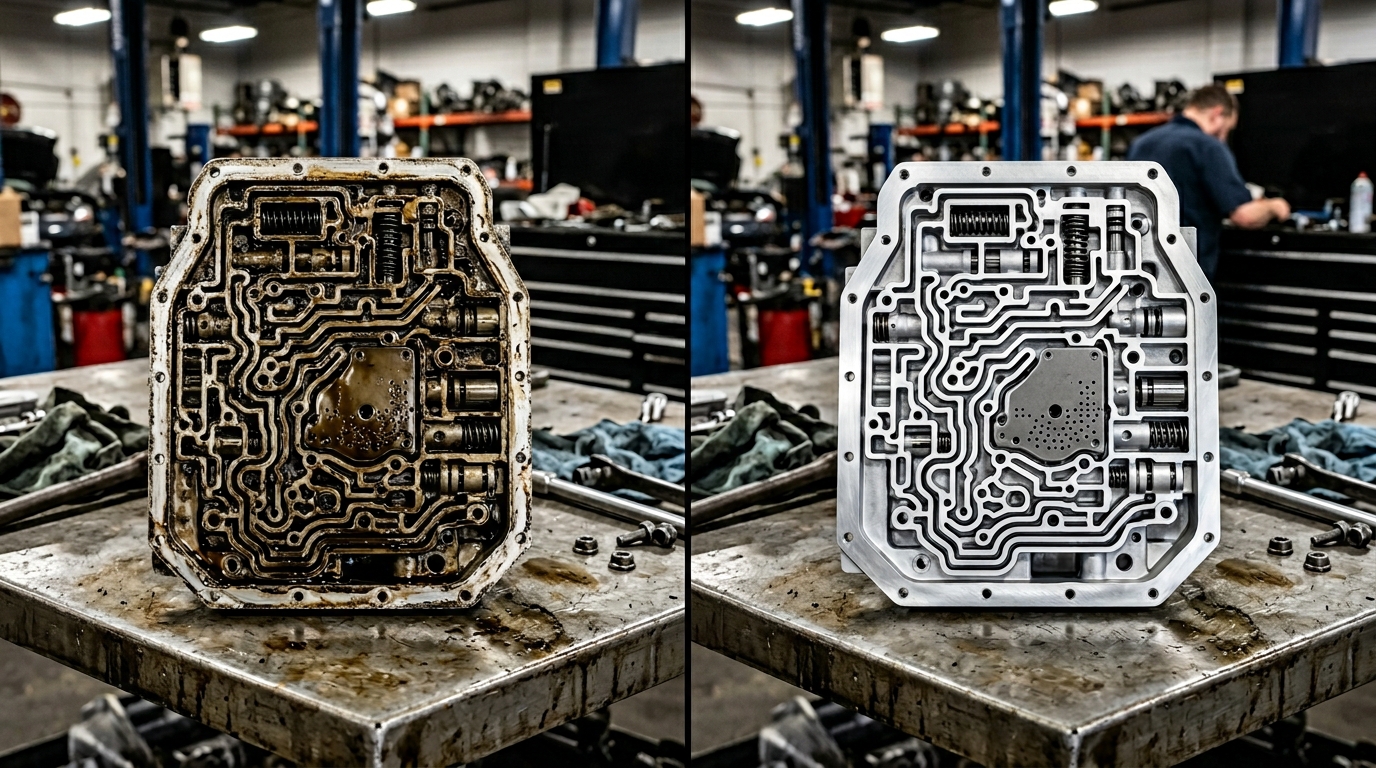
Valve Body Wear in the TCC apply circuit can prevent adequate hydraulic pressure from reaching the lockup clutch even when the solenoid opens correctly. The valve body contains the precision-machined passages that route fluid from the solenoid to the torque converter's lockup clutch apply piston. If these passages are worn, scored, or partially blocked by debris, the pressure delivered to the clutch may be insufficient for full engagement. The solenoid does its job, but the hydraulic system downstream of the solenoid cannot deliver the pressure to the clutch.
Low or Degraded Transmission Fluid reduces overall system pressure and compromises the fluid's ability to engage the lockup clutch smoothly. Low fluid means the pump cannot generate adequate pressure; degraded fluid means the friction modification additives that allow the clutch to engage smoothly have broken down, causing the clutch to slip rather than lock even when pressure is adequate. Chicago's temperature extremes compound fluid degradation - severe cold thickens fluid and slows hydraulic response, while summer heat and congested traffic push fluid temperatures higher and accelerate chemical breakdown.
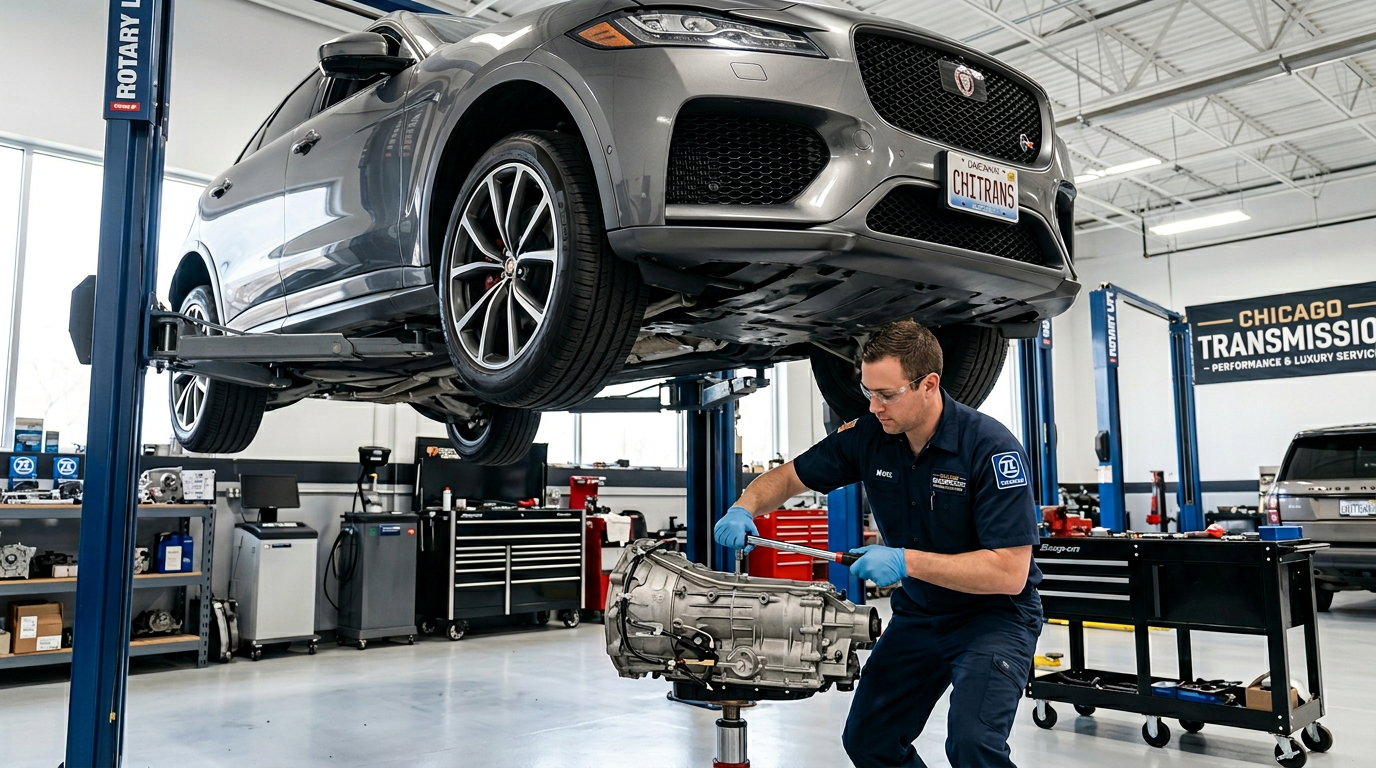
TCM Software or Hardware Issues can prevent the lockup command from being sent correctly or at all. Some manufacturers have released software calibrations that adjust the TCC engagement strategy to prevent false P0741 triggers or to compensate for known hardware characteristics. A TCM with outdated software may command lockup under conditions where the clutch cannot engage cleanly, repeatedly triggering P0741. In rarer cases, a failed driver circuit inside the TCM itself prevents the solenoid from receiving voltage even though the software commands it.
A Faulty Input Speed Sensor can cause P0741 without any actual TCC malfunction. Because the TCM calculates slip speed from the difference between engine RPM and turbine speed, an input speed sensor that reads low (reporting a turbine speed lower than actual) will inflate the calculated slip speed, making it appear that the clutch is not engaging when it actually is. This is one of the more optimistic diagnostic outcomes because sensor replacement is far less expensive than solenoid, valve body, or converter work.
Symptoms of P0741
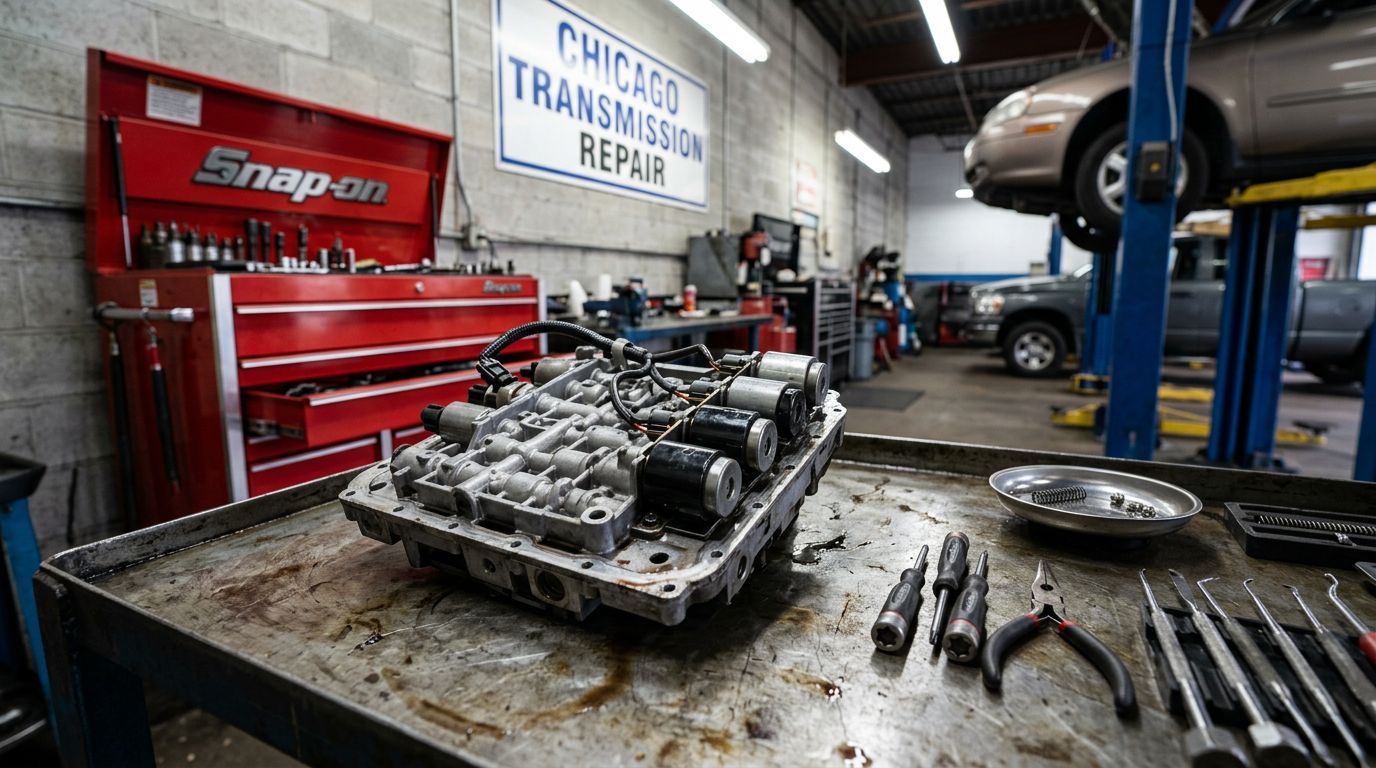
P0741 produces a characteristic set of symptoms that are distinct from other transmission codes. The defining feature of P0741 is that the vehicle often drives seemingly normally through all gears - the problem only manifests in the specific operating range where the lockup clutch should engage.
Reduced Fuel Economy is the most common and most frequently overlooked symptom. When the torque converter cannot lock at highway speed, it continues to slip - the engine spins the converter pump, the pump pushes fluid to the turbine, and the turbine spins the input shaft, but there is always some energy lost in that fluid transfer. That lost energy becomes heat rather than forward motion. The fuel economy penalty is typically five to fifteen percent on highway driving, depending on the vehicle and driving conditions. On a vehicle rated at 28 miles per gallon on the highway, this translates to 24 to 26 mpg - a drop that may not alarm a driver looking at a single tank of gas but becomes expensive over time.
For Chicago commuters, the math is stark. A driver commuting 50 miles round trip daily on the expressway system - say from Arlington Heights to the Loop and back - drives roughly 12,500 highway miles per year. At 28 mpg, that requires approximately 446 gallons of fuel annually. At 24 mpg with a stuck-off TCC, the same distance requires 521 gallons - 75 additional gallons per year. At current fuel prices, that is roughly per year in wasted fuel, paid incrementally at every fill-up and rarely noticed unless you are tracking your mileage religiously. Over two years of ignoring P0741, the wasted fuel alone may exceed the cost of the solenoid repair that would have fixed the problem.
Higher Than Expected RPMs at Cruising Speed is the observable manifestation of the converter not locking. At steady highway speed - 55 to 70 miles per hour in the transmission's highest gear - the engine RPM should drop noticeably when the converter locks. On most vehicles, the difference between locked and unlocked RPM at highway cruise is 200 to 400 RPM. If you have a tachometer and notice that your engine runs at 2,200 RPM at 65 mph when it used to sit at 1,800, the converter is not locking. This symptom is easiest to spot on vehicles with prominent, easily readable tachometers. On vehicles without a tachometer, you may simply notice that the engine sounds slightly busier than expected at highway speed.
Transmission Running Hotter Than Normal is the hidden danger that makes P0741 far more consequential than a simple fuel economy issue. The continuous slip that occurs when the converter does not lock generates heat - every bit of energy that should be transferring mechanically from engine to transmission is instead being converted to thermal energy in the fluid. Transmission fluid is designed to operate at 175 to 200 degrees Fahrenheit. Continuous converter slip at highway speed can push fluid temperatures 20 to 40 degrees above normal, into the range where fluid breakdown accelerates exponentially. Vehicles equipped with a transmission temperature gauge or warning light may show persistently elevated readings. Vehicles without dedicated transmission temperature indicators give no warning until the consequences of overheating - fluid degradation, clutch wear, solenoid damage - produce additional symptoms.
Torque Converter Shudder may accompany P0741 in cases where the lockup clutch is partially engaging rather than completely failing. If the clutch friction material is worn enough that it can no longer achieve full lockup but still makes intermittent contact, the result is a vibration or shudder at the speed where lockup is attempted - typically 40 to 55 miles per hour. This shudder feels like driving over a rumble strip and is felt through the floorboard and steering wheel. It appears specifically at the lockup engagement speed and disappears when you accelerate past it or decelerate below it. Not all P0741 codes produce shudder - the symptom depends on whether the clutch is making partial contact or no contact at all.
Delayed or Harsh Shifts can occur in some vehicles with P0741, particularly when the transmission enters an adapted shift strategy in response to the TCC failure. Some TCMs adjust shift timing and pressure when they detect that the converter is not locking, which can change the way other shifts feel. Additionally, if the underlying cause of P0741 is fluid contamination or valve body wear, those conditions may affect shift solenoid operation in other gear circuits, producing harsh or delayed shifts that are related to the same root cause even though they manifest as separate symptoms.
Check Engine Light illumination accompanies P0741 in all cases. In some vehicles, a separate transmission warning indicator or a driver information center message such as "Transmission System Problem" may also appear. P0700 (the general transmission malfunction alert) is typically stored alongside P0741.
Is It Safe to Drive with P0741?
P0741 is often described as a code you can drive with - and technically, for short distances, this is true. The vehicle will shift through all gears, accelerate, and stop normally. The immediate safety risk is lower than codes like P0742 (stuck on, which causes stalling) or P0730 (incorrect gear ratio, which causes slipping). However, calling P0741 "safe to drive with" obscures the very real and very expensive consequences of leaving it unaddressed.
The core problem is heat. Every mile of highway driving with a stuck-off TCC subjects the transmission to elevated fluid temperatures. Over weeks and months, this chronic overheating degrades the fluid, which in turn damages every component the fluid touches. The progression is the same damage cascade described in our P0740 article - solenoid failure leads to clutch wear, clutch wear contaminates the fluid, contaminated fluid damages the valve body and other solenoids, and eventually the damage reaches the transmission's internal clutch packs and hard parts. The deceptive nature of P0741 is that the vehicle feels fine during this entire progression, right up until the point where it suddenly does not.
For Chicago drivers, the math favors prompt repair. A TCC solenoid replacement. A torque converter replacement. A full transmission rebuild. The solenoid repair at Stage 1 prevents the need for the converter or rebuild at Stages 3 through 5. Add in the cumulative fuel economy penalty - per year for a typical highway commuter - and the financial case for early repair is overwhelming. You can drive with P0741 to reach a repair shop, but you should not drive with it for weeks, months, or longer.
How P0741 Is Diagnosed
Accurate diagnosis of P0741 follows a systematic process that identifies whether the failure is electrical (solenoid or wiring), hydraulic (valve body or fluid), mechanical (converter clutch), or electronic (TCM).
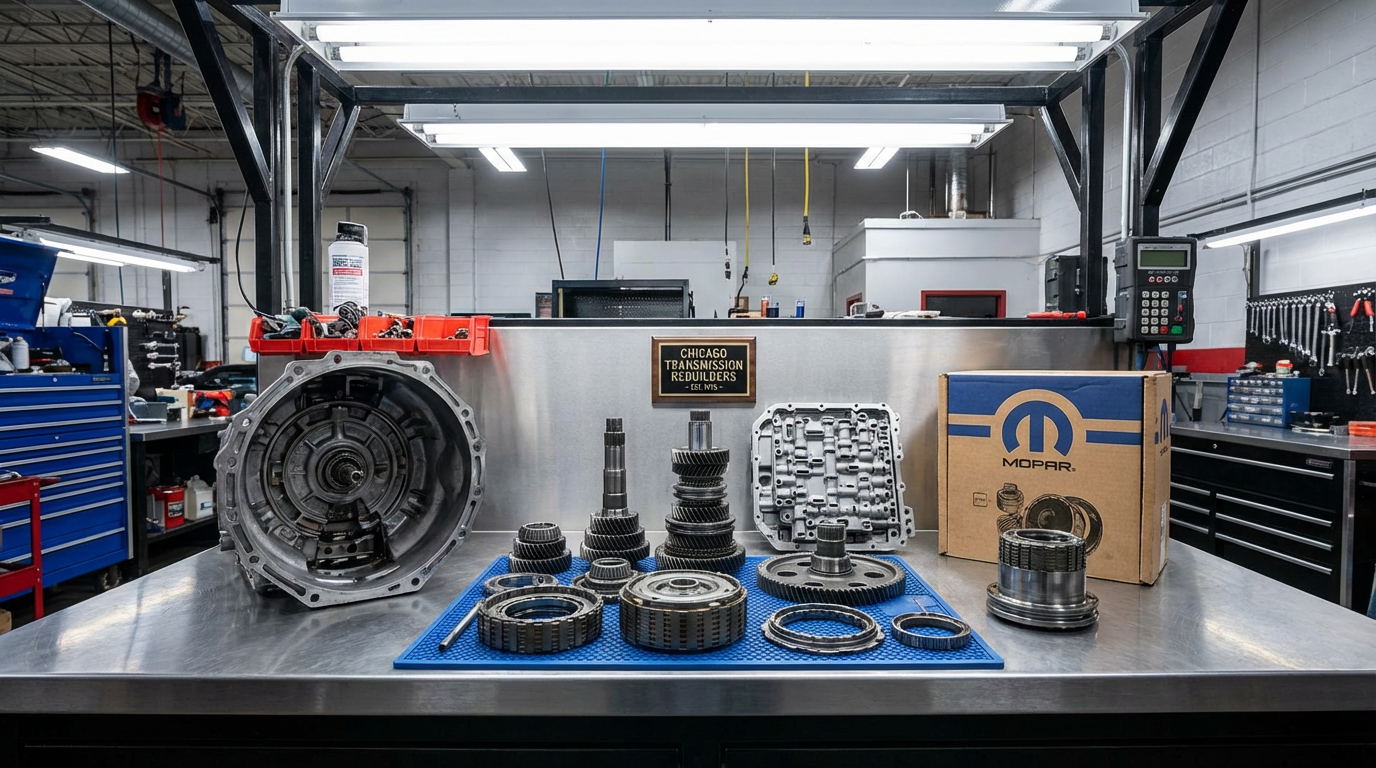
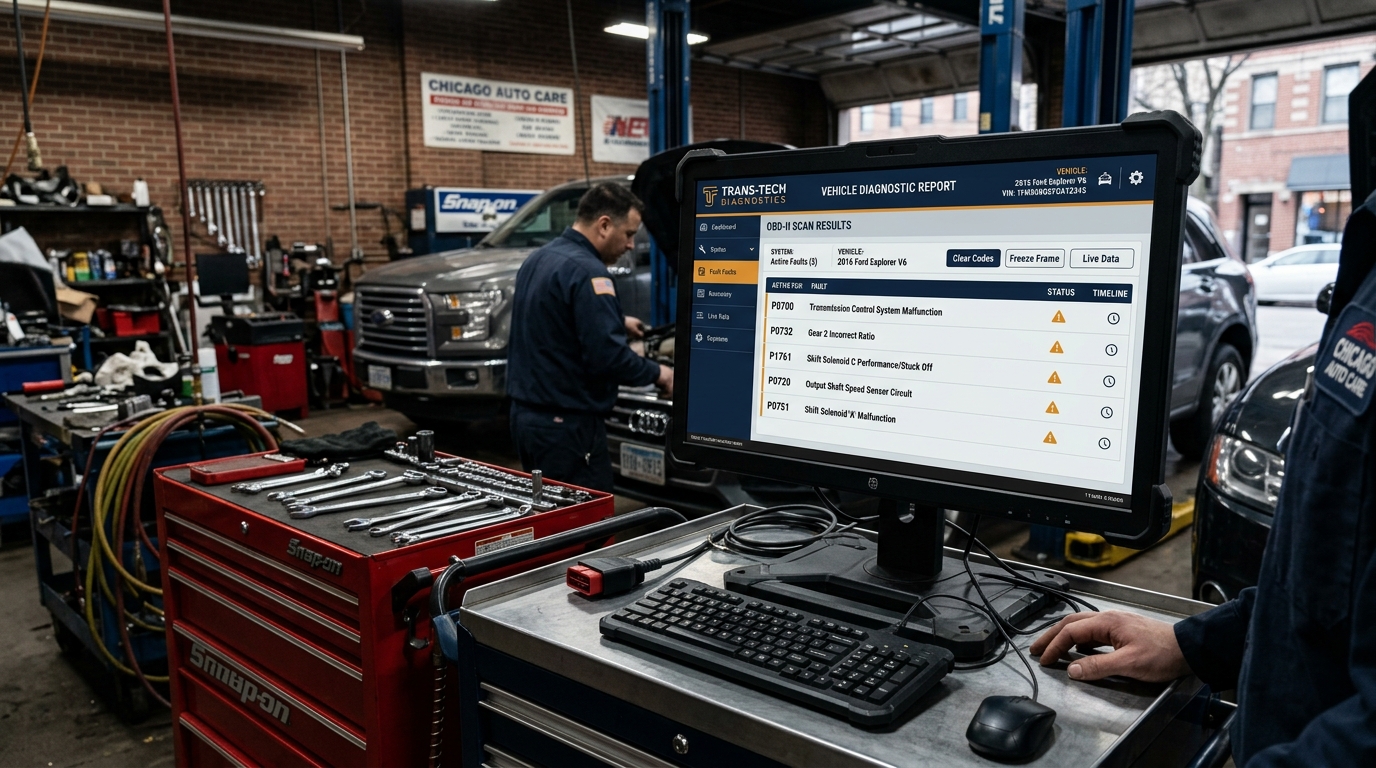
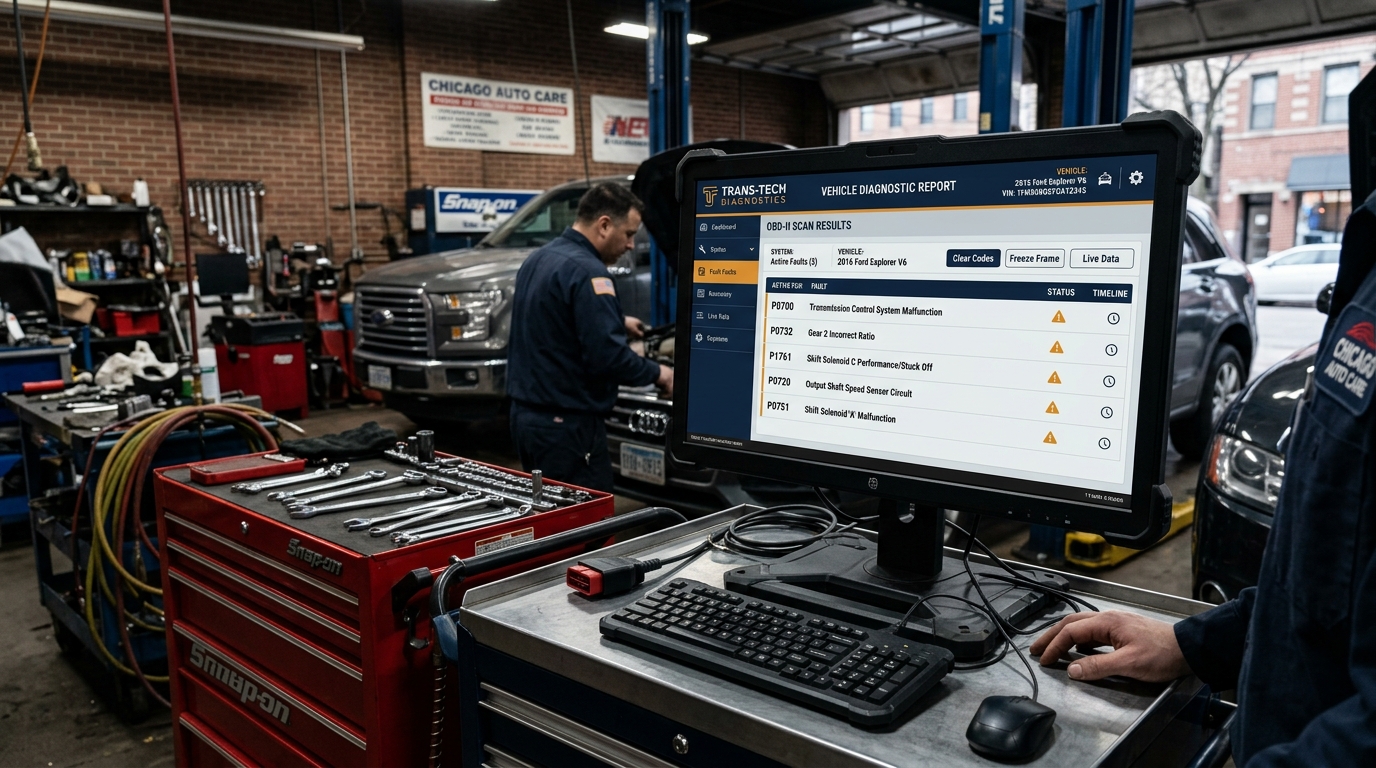
The process begins with a comprehensive code scan using a professional-grade tool that reads the TCM directly. The technician retrieves all stored and pending codes along with freeze frame data. For P0741 specifically, the freeze frame reveals the vehicle speed, engine RPM, transmission input shaft RPM (turbine speed), calculated slip speed, commanded TCC state, transmission fluid temperature, and throttle position at the moment the code set. If the freeze frame shows that the slip speed was, say, 350 RPM with the TCC commanded on at 60 mph in top gear with normal fluid temperature, that confirms a genuine lockup failure. If the data shows unusual turbine speed readings or implausible speed relationships, a sensor problem becomes a primary suspect.
Transmission fluid inspection provides critical context about the converter clutch's condition. Clean red fluid with no burnt smell strongly suggests the lockup clutch friction material is still intact, pointing the diagnosis toward the solenoid, wiring, or valve body as the likely cause. Dark fluid with a burnt odor indicates the friction material has been degrading from slippage - the lockup clutch has been trying to engage but slipping, generating heat and shedding material. Fluid with visible debris or a gritty texture on the dipstick indicates the contamination process is well underway. The GM technical service bulletin PI1393B specifically warns that loose torque converter clutch friction material can pass through the pump and cause scoring, low line pressure, and damage to the 4-5-6 clutch - making fluid condition a critical early indicator of how far the damage has progressed.
A road test with live data streaming is essential for P0741 because the lockup engagement only occurs under specific driving conditions that cannot be replicated on a shop lift. The technician drives the vehicle to highway speed while monitoring the TCC solenoid command signal, actual slip speed, and converter slip percentage in real time. The critical observation is whether the TCM commands lockup (confirmed by the solenoid duty cycle changing from zero to a commanded value) and whether the slip speed responds. If the TCM commands lockup and slip speed drops to near zero, the system is working and the stored code may have been set by a transient condition. If the TCM commands lockup and slip speed remains high, the lockup clutch is confirmed as not engaging, and the remaining diagnostic steps determine why.
TCC solenoid electrical testing verifies the solenoid's coil condition. Resistance is measured with a multimeter and compared to manufacturer specifications (typically 10 to 30 ohms). An open circuit reading confirms a burned-out coil. A reading within specification means the coil is intact. A bidirectional control test through the scan tool commands the solenoid on and off while monitoring the circuit response - if the scan tool commands the solenoid and the duty cycle output from the TCM changes but the solenoid does not respond, the solenoid or its immediate wiring is at fault. If the TCM itself fails to change the duty cycle output when commanded through the scan tool, the TCM's internal driver circuit may be the issue.
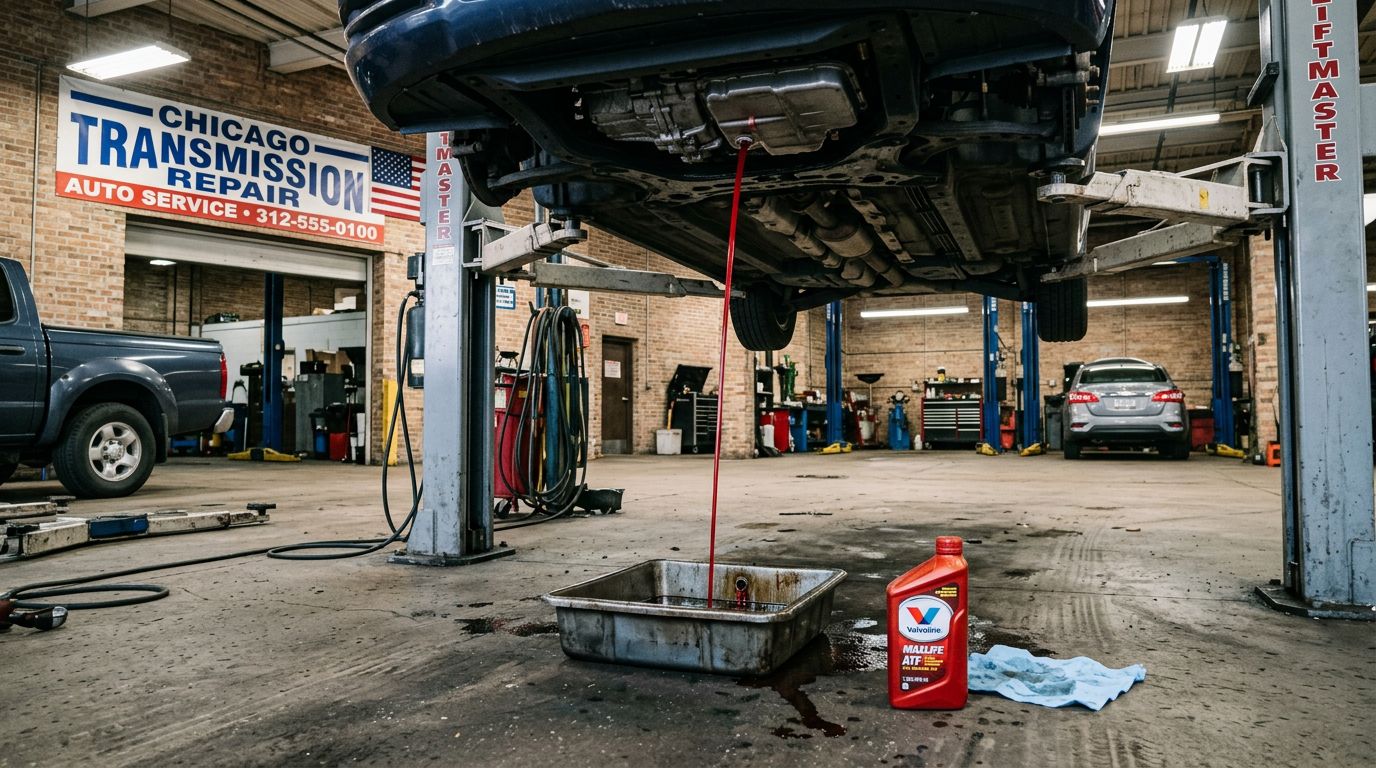
Hydraulic pressure testing at the TCC circuit test port measures the actual apply pressure being delivered to the lockup clutch. This distinguishes between solenoid problems (the solenoid opens but not enough pressure reaches the clutch due to a restriction or a weak solenoid), valve body problems (adequate solenoid opening but worn passages leak pressure before it reaches the converter), and mechanical converter problems (full pressure reaches the converter but the clutch cannot engage because the friction material is gone). This test is the most definitive way to determine whether the converter itself needs replacement versus a less expensive solenoid or valve body repair.
Wiring and connector inspection checks the entire electrical path for corrosion, damage, and resistance. The external transmission connector is examined closely for corroded pins, moisture intrusion, and degraded seals. For vehicles that have spent multiple winters on Chicago streets, salt corrosion at the connector is a common finding. A connector cleaning with electrical contact cleaner, application of dielectric grease, and possibly replacement of corroded terminal pins can resolve P0741 in cases where the solenoid and converter are healthy but the electrical signal is degraded.
P0741 Repair Costs: What Chicago Drivers Should Expect
The cost to repair P0741 depends on which component in the TCC system has failed and how far the damage has progressed. Here is what each common scenario typically costs.
Transmission Fluid and Filter Service at is the starting point if the fluid is degraded but not yet contaminated with clutch material, and the solenoid tests within specification. Some vehicles - particularly GM trucks with known TCC shudder issues - respond to a complete fluid exchange with the correct factory-specification ATF, sometimes combined with a friction modifier additive. GM has published technical service bulletins authorizing this approach for specific models and model years. If the fluid exchange resolves the slip speed issue on subsequent road testing, no further repair is needed. This is the best-case outcome.
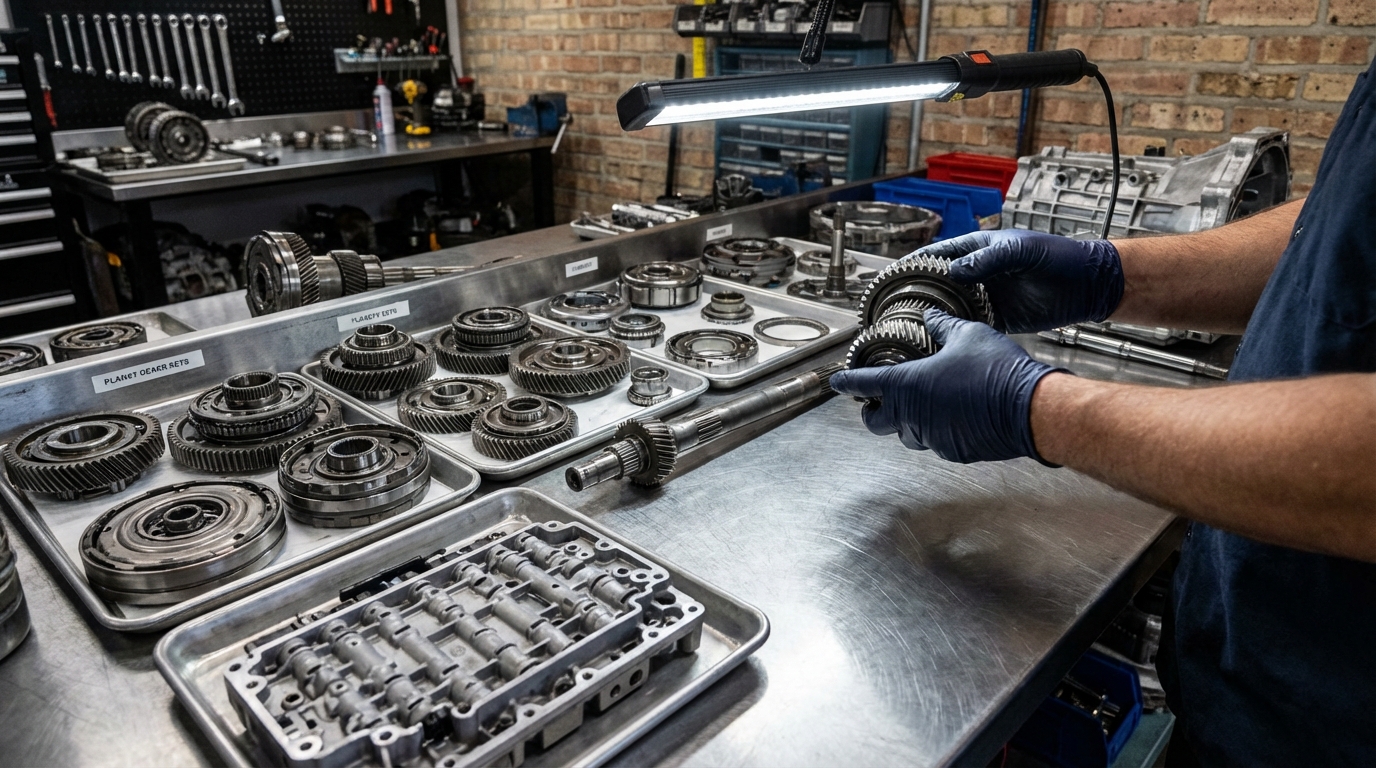
TCC Solenoid Replacement at is the most common repair when the solenoid has failed electrically (burned-out coil) or mechanically (stuck plunger). On transmissions where the solenoid is accessible by removing the transmission pan - such as the GM 4L60E, one of the most common transmissions in vehicles on Chicago roads - the repair involves dropping the pan, draining and disposing of the old fluid, removing the valve body or solenoid assembly to access the TCC solenoid, replacing the solenoid, reinstalling the valve body with a new gasket, installing a new transmission filter, refilling with factory-specification fluid, and verifying the repair with a road test and live data confirmation. The solenoid part itself typically depending on the application, with the balance of the cost in labor and materials.
Wiring or Connector Repair at addresses electrical pathway faults between the TCM and the solenoid. A corroded connector may only require cleaning, dielectric grease, and pin replacement. A damaged section of external harness requires splicing or partial harness replacement. Internal transmission harness replacement is more involved, requiring pan and valve body removal to access the harness, with parts running plus associated labor.
TCM Software Reflash at applies when a manufacturer has released an updated calibration that addresses TCC engagement strategy or slip speed threshold calculations. The technician connects factory-level programming equipment to the vehicle's diagnostic port and uploads the latest software to the TCM. This repair is only applicable when a relevant technical service bulletin exists for the specific vehicle and model year.
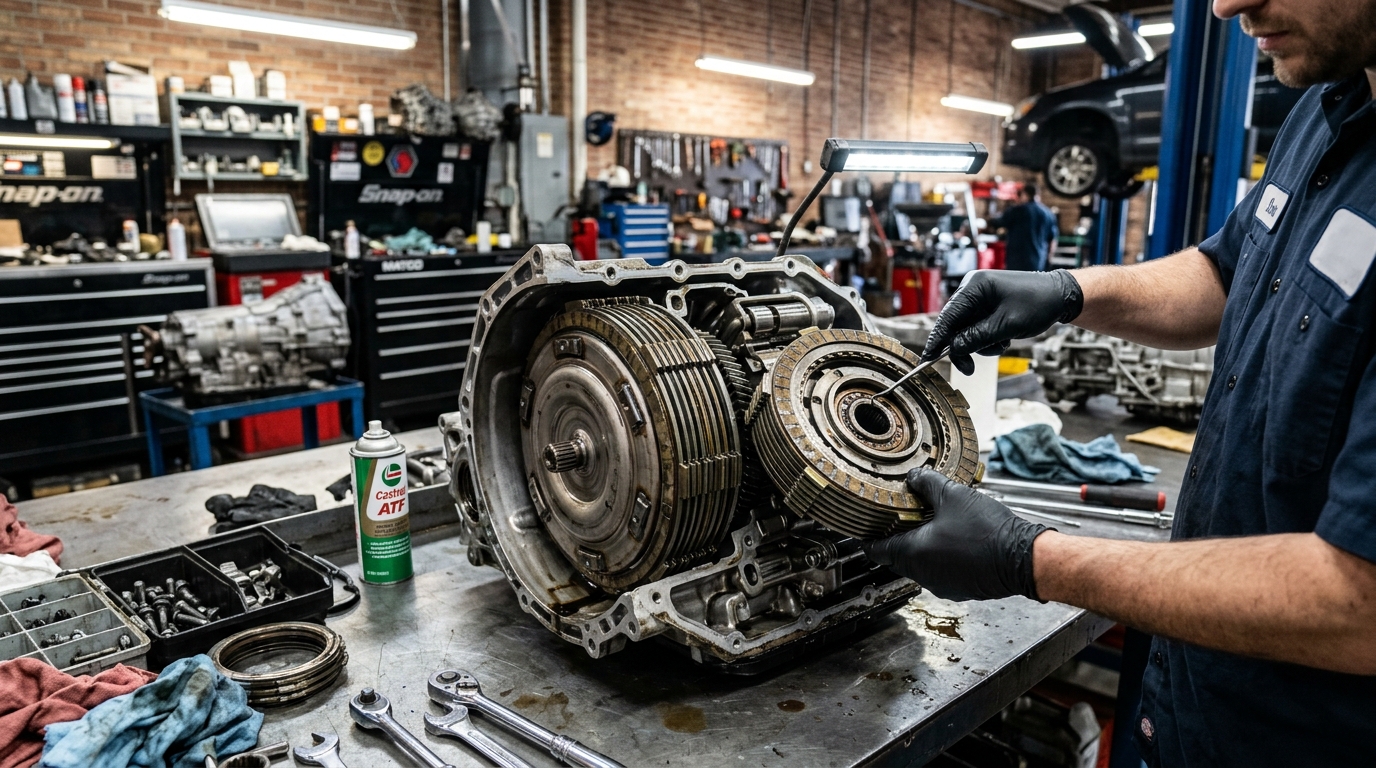
Valve Body Repair or Replacement at becomes necessary when worn passages in the TCC apply circuit prevent adequate pressure from reaching the lockup clutch. The valve body is removed, either reconditioned with aftermarket repair kits or replaced with a new or remanufactured unit, and reinstalled with fresh fluid and a new filter.
Torque converter replacement is required when the lockup clutch friction material inside the converter is worn, delaminated, or damaged beyond the point where it can engage. The transmission must be separated from the engine to access the converter - a labor-intensive process that accounts for the majority of the cost. A remanufactured converter is only part of the job; R&R (remove and replace) labor varies significantly by vehicle. When the converter is replaced, the solenoid, fluid, filter, and front seal should all be replaced simultaneously since the transmission is already out. Flushing the transmission cooler lines is also essential to prevent contaminated old fluid from damaging the new converter.
Full Transmission Rebuild at represents the worst-case outcome when P0741 has been ignored long enough for the damage cascade to run its full course - converter clutch contamination has spread through the fluid to the valve body, solenoids, and internal clutch packs. A rebuild involves removing the transmission, completely disassembling it, inspecting every component, replacing all friction materials, seals, gaskets, bushings, and worn hard parts, installing a new or rebuilt torque converter and solenoids, and reassembling to factory tolerances. The GM technical service bulletin PI1393B specifically warns that loose converter clutch friction material can cause pump damage and low line pressure that destroys the 4-5-6 clutch - a clear example of how a converter-origin P0741 can cascade into a full rebuild if not caught early.
The Deceptive Nature of P0741: Why This Code Gets Ignored
P0741 is, statistically, one of the most frequently ignored transmission codes. The reason is simple: the vehicle drives normally. Unlike P0730 (where the transmission slips and lurches), P0742 (where the engine stalls at stops), or P0750 (where the transmission cannot shift out of first gear), P0741 produces no dramatic, attention-grabbing symptom. The check engine light comes on, the driver scans it, reads "torque converter clutch stuck off," searches online, finds reassurances that it is "not immediately dangerous," and continues driving.
This pattern is understandable but financially disastrous. The code exists because the TCM has detected a measurable failure in a system designed to protect the transmission from overheating. Ignoring that failure is equivalent to ignoring a low coolant warning on your engine - the car still drives, the temperature gauge may still look okay, but the protection margin is gone and every mile accumulates stress that the system was not designed to sustain.
The damage timeline varies by driving pattern. A Chicago driver who commutes primarily on surface streets - stop-and-go driving through neighborhoods at 25 to 35 mph - may see slower progression because the converter lockup is only engaged at highway speeds, and surface-street driving does not involve extended lockup engagement. But a driver commuting 30 miles each way on I-90, I-294, or I-355 at 65 mph is running the converter unlocked for a full hour every day, generating continuous excess heat through the fluid. For that driver, the progression from Stage 1 (solenoid failure) through Stage 5 (internal transmission damage) can complete in a matter of months.
The takeaway is straightforward: P0741 feels like a code you can live with, but the math says otherwise. The repair cost at the first symptom is a fraction of the repair cost after six months of driving, and the cumulative fuel waste during that six months may rival or exceed the early repair cost.
How Chicago's Driving Environment Affects P0741
Chicago's specific driving conditions interact with P0741 in ways that are worth understanding for both prevention and repair timing.
Expressway commuting dominance means the TCC lockup system gets heavy use - and heavy consequences when it fails. The Chicago metropolitan area's expressway system is the primary commuting infrastructure for millions of residents, and distances are substantial. A commute from the South Side to O'Hare, from Evanston to the Loop, from Orland Park to Schaumburg, or from Waukegan to downtown involves extended stretches at highway speed where the converter should be locked. When P0741 prevents lockup on these commutes, the thermal penalty accumulates across miles that other metro areas - where commutes are shorter or involve more surface-street driving - would not produce.
Winter cold starts stress the TCC system because thickened cold fluid makes the solenoid work harder to open and delivers lockup clutch apply pressure less precisely. In Chicago's coldest stretches - January and February, when overnight lows frequently drop below zero and morning commute temperatures may still be in single digits - the first 10 to 15 minutes of driving occur with fluid that is far below its optimal viscosity range. A solenoid that is marginally sticky in warm weather may fail completely in extreme cold, causing P0741 to set during the first highway drive of the day but potentially not on the afternoon return when the fluid has been warmed by hours of idling and operation. This intermittent cold-weather pattern can make P0741 particularly confusing for drivers who see the light come on during the morning commute but find the vehicle seems fine by afternoon.
Road salt accumulation on the external transmission connector is a slow-acting contributor to P0741. The calcium chloride and sodium chloride brine applied to Chicago roads from November through April coats every undercarriage component, and the transmission connector - mounted low on the transmission case where it catches direct road spray - absorbs this corrosive mixture season after season. Even with occasional underbody washing, the cumulative effect over five to ten Chicago winters is progressive pin corrosion that increases circuit resistance. A connector with 50 ohms of corrosion-induced resistance added to the circuit may still pass enough voltage to operate the solenoid in warm weather (when the solenoid coil resistance is at its lowest) but fail to energize it in cold weather (when coil resistance rises slightly with temperature changes), creating the kind of intermittent cold-weather failure described above.
Summer heat and congestion compound the damage from P0741 in the opposite season. Stop-and-go traffic on the Dan Ryan, the Kennedy through the Junction, or Lake Shore Drive during Cubs or Sox games pushes transmission fluid temperatures higher even when the converter should be locked. When the converter is not locking because of P0741, the additional heat from unlocked highway driving on top of already-elevated congestion temperatures can push the fluid well past its design limits. A particularly brutal combination is a long highway commute in 95-degree summer heat with heavy traffic - conditions that generate the highest fluid temperatures and the fastest rate of fluid degradation.
Preventing P0741
Prevention for P0741 follows the same principles outlined in our previous articles, with emphasis on the factors most relevant to the TCC system.
Transmission fluid service every 30,000 to 60,000 miles is the most effective preventive measure. Clean fluid keeps the TCC solenoid operating freely, maintains the friction modification properties essential for smooth lockup clutch engagement, and prevents the varnish and debris accumulation that causes solenoid sticking. For Chicago driving conditions - with their temperature extremes and heavy commuting patterns - the 30,000-mile interval is recommended.
Use the exact factory-specified fluid. The lockup clutch friction material is engineered to work with a specific fluid chemistry. Using a generic ATF that does not match the manufacturer's specification can cause the clutch to shudder, slip, or fail to engage even when the solenoid and hydraulics are functioning perfectly. Honda requires Honda ATF. GM requires Dexron VI for newer transmissions. Each manufacturer specifies the exact formulation for a reason.
Pay attention to the check engine light. This seems obvious, but the most common P0741 story in any transmission shop is a customer who says the light came on "a few months ago" and they "just haven't had time to get it checked." Those few months of driving with an unlocked converter cost fuel, generated excess heat, and may have advanced the damage to the point where a solenoid replacement is no longer sufficient. Having the code scanned and diagnosed within the first week of the light appearing gives you the best chance of the least expensive repair.
Track your fuel economy. Even a rough awareness of your typical miles-per-tank helps you notice the five to fifteen percent decline that accompanies a stuck-off TCC. If your vehicle normally goes 380 miles on a tank and you notice it consistently needing fuel at 320 to 340 miles with no change in driving pattern, that is worth investigating.
Frequently Asked Questions About P0741
What does P0741 mean?
P0741 stands for "Torque Converter Clutch Circuit Performance or Stuck Off." It means your vehicle's computer has commanded the torque converter lockup clutch to engage, but the clutch is not responding. The converter continues to slip at highway speed instead of locking into a direct mechanical connection.
What is the difference between P0740 and P0741?
P0740 is the general torque converter clutch circuit malfunction code - it says something is wrong with the TCC system but does not specify the failure mode. P0741 is more specific: it tells you the clutch is stuck off, meaning it will not engage when commanded. P0741 provides more targeted diagnostic information than P0740.
Can I drive with P0741?
You can drive short distances to a repair shop, but extended driving with P0741 is not advisable. The vehicle may seem normal, but the converter is not locking at highway speed, which wastes fuel and generates excess heat in the transmission fluid. Over weeks and months, this chronic overheating degrades the fluid and progressively damages internal transmission components. The longer you drive with P0741, the more the eventual repair will cost.
Why does my car drive normally but the check engine light is on for P0741?
Because the torque converter lockup clutch only affects operation at highway cruising speed, and its absence does not change how the transmission shifts through gears, accelerates, or stops. The only effects are slightly reduced fuel economy and increased transmission fluid temperature - neither of which produces an obvious drivability symptom. This is precisely what makes P0741 deceptive: the vehicle feels fine while damage accumulates silently.
How much does it cost to fix P0741?
Repair scope ranges from a fluid service to a full transmission rebuild. The most common repair is TCC solenoid replacement when testing confirms the circuit and hydraulic command issue. Torque converter replacement is needed when the converter clutch itself has failed. The final cost depends on the root cause and how far the damage has progressed before diagnosis.
Does P0741 affect fuel economy?
Yes, significantly. When the converter cannot lock at highway speed, it slips continuously, wasting five to fifteen percent of highway fuel economy. For Chicago commuters with long expressway drives, this can additional fuel expense - money that could have been spent on the solenoid repair that fixes the problem.
Which vehicles get P0741 most often?
GM vehicles with the 4L60E, 4L80E, 6L80, and 6L90 transmissions (Chevy Silverado, Tahoe, Suburban, Camaro, GMC Sierra, Yukon) are the most common. Honda Accords, Civics, and Odysseys are also frequently affected, as are Toyota Camrys at higher mileages and Chrysler/Dodge vehicles with the 62TE transmission.
Can a fluid change fix P0741?
In some cases, particularly when the code was triggered by degraded fluid affecting solenoid operation and the lockup clutch friction material is still healthy. GM has issued technical service bulletins authorizing fluid exchange with specific additives as a first-line repair for TCC shudder on certain models. However, if the solenoid has failed electrically, the converter clutch is mechanically worn, or the wiring is corroded, a fluid change alone will not resolve the code.
Is P0741 an emergency?
It is not an immediate emergency in the way that P0742 (stalling at stops) is, but it is a code that demands prompt attention. The damage it causes is cumulative and progressive rather than sudden, but the financial consequences of ignoring it for months can be severe - turning a solenoid repair into a rebuild.
Does cold weather make P0741 worse?
Yes. Cold-thickened fluid makes the TCC solenoid work harder to open and delivers lockup clutch apply pressure less precisely. Corroded connectors - common on vehicles exposed to Chicago road salt - may pass sufficient voltage in warm weather but fail in cold temperatures when coil resistance increases. Some drivers first notice P0741 during winter because the marginal condition that existed in warmer months crosses the failure threshold when the fluid thickens.
Have a Transmission Problem?
Get a Diagnosis-first inspection from Chicago transmission repair support.