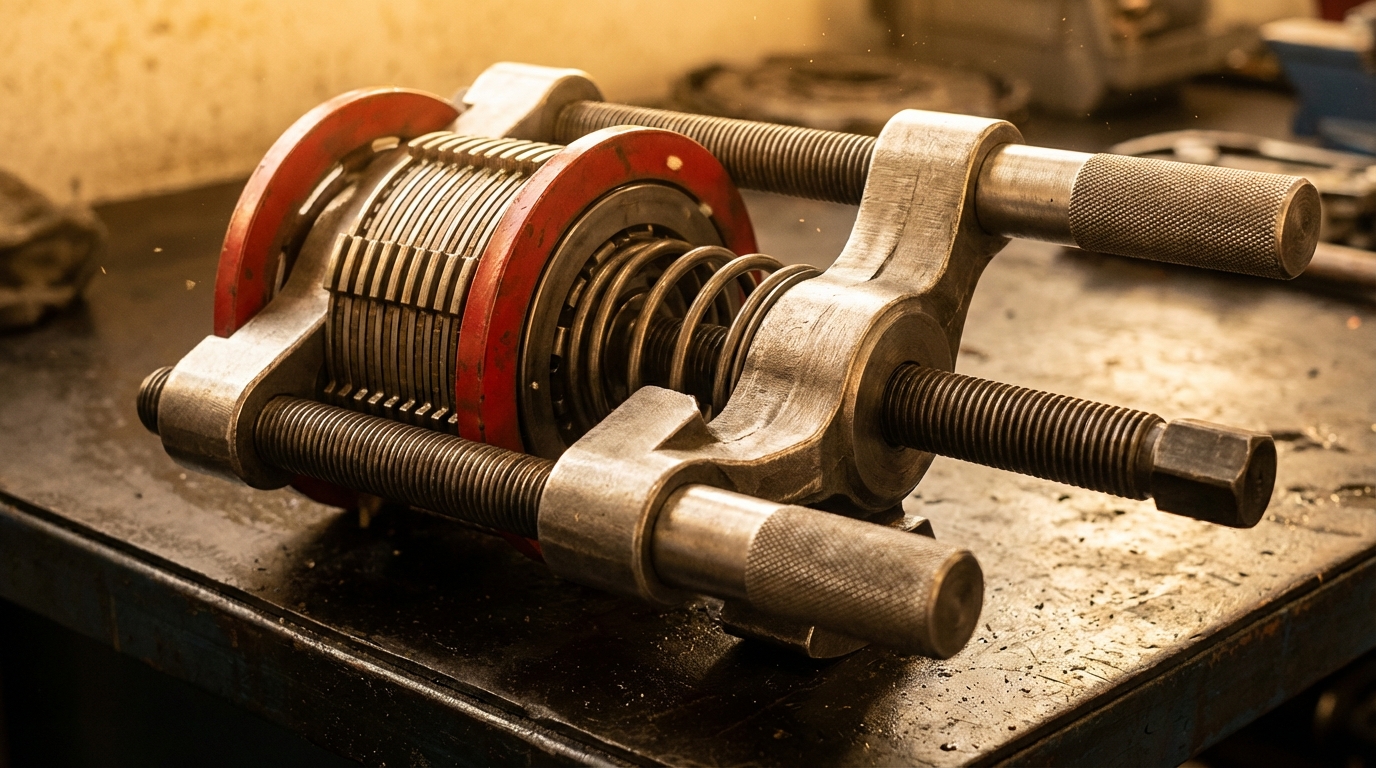
P0744 means your torque converter clutch is engaging intermittently. Learn causes, symptoms, diagnostic steps, and Chicago-area repair costs quoted after diagnosis.
Schema: FAQPage, HowTo, Article
What Does the P0744 Code Mean?
P0744 is a generic OBD-II diagnostic trouble code defined as "Torque Converter Clutch (TCC) Circuit Intermittent." The powertrain control module (PCM) or transmission control module (TCM) sets this code when it detects sporadic, inconsistent electrical behavior in the circuit that controls the torque converter clutch solenoid. Unlike P0740, which flags a general circuit malfunction, or P0741, which indicates the TCC is stuck off, P0744 specifically targets an on-again-off-again pattern - the solenoid responds correctly during some driving cycles and fails during others.
The torque converter clutch serves a critical role in automatic transmissions. At highway speeds - typically above 40 to 50 mph depending on the vehicle - the TCM commands the TCC solenoid to lock the converter, creating a direct mechanical link between the engine and transmission input shaft. This eliminates the fluid coupling's inherent slip, improving fuel economy by 5 to 15 percent and reducing transmission fluid temperature by 30 to 50 degrees Fahrenheit. When the circuit operates intermittently, the lock-up clutch engages and disengages unpredictably, producing a noticeable shudder, RPM fluctuation, or surge that many Chicago-area drivers first notice on long stretches of I-90, I-94, or the Eisenhower Expressway where sustained highway speeds make lock-up behavior most apparent.
The "intermittent" designation is what makes P0744 particularly frustrating for both drivers and technicians. The fault may appear only under certain conditions - cold starts, sustained highway cruising, high ambient temperatures, or specific RPM and throttle-position combinations - and disappear entirely during a shop test drive, making freeze-frame data and pattern recognition essential to proper diagnosis.
Where P0744 Fits in the TCC Code Family
P0744 belongs to a closely related group of torque converter clutch codes, each pointing to a different failure mode within the same circuit. Understanding the family helps technicians and informed vehicle owners narrow down the root cause more efficiently.
P0740 is the broadest code in the group and indicates a general malfunction in the TCC solenoid circuit - the PCM cannot command or verify lock-up at all. P0741 means the system performance is off or the clutch is stuck in the "off" position, so lock-up never occurs; drivers typically notice elevated RPMs at highway speed and a measurable drop in fuel economy. P0742 is the inverse: the clutch is stuck "on," which can cause the engine to stall or lug when the vehicle comes to a stop because the converter remains locked. P0743 points to an electrical fault - an open or short circuit in the solenoid wiring, a more definitive and often easier-to-trace failure. P0744 sits at the intersection of electrical and mechanical concerns: the circuit works sometimes and fails other times, suggesting a marginal connection, a thermally sensitive component, or early-stage degradation that hasn't yet progressed to a hard failure.
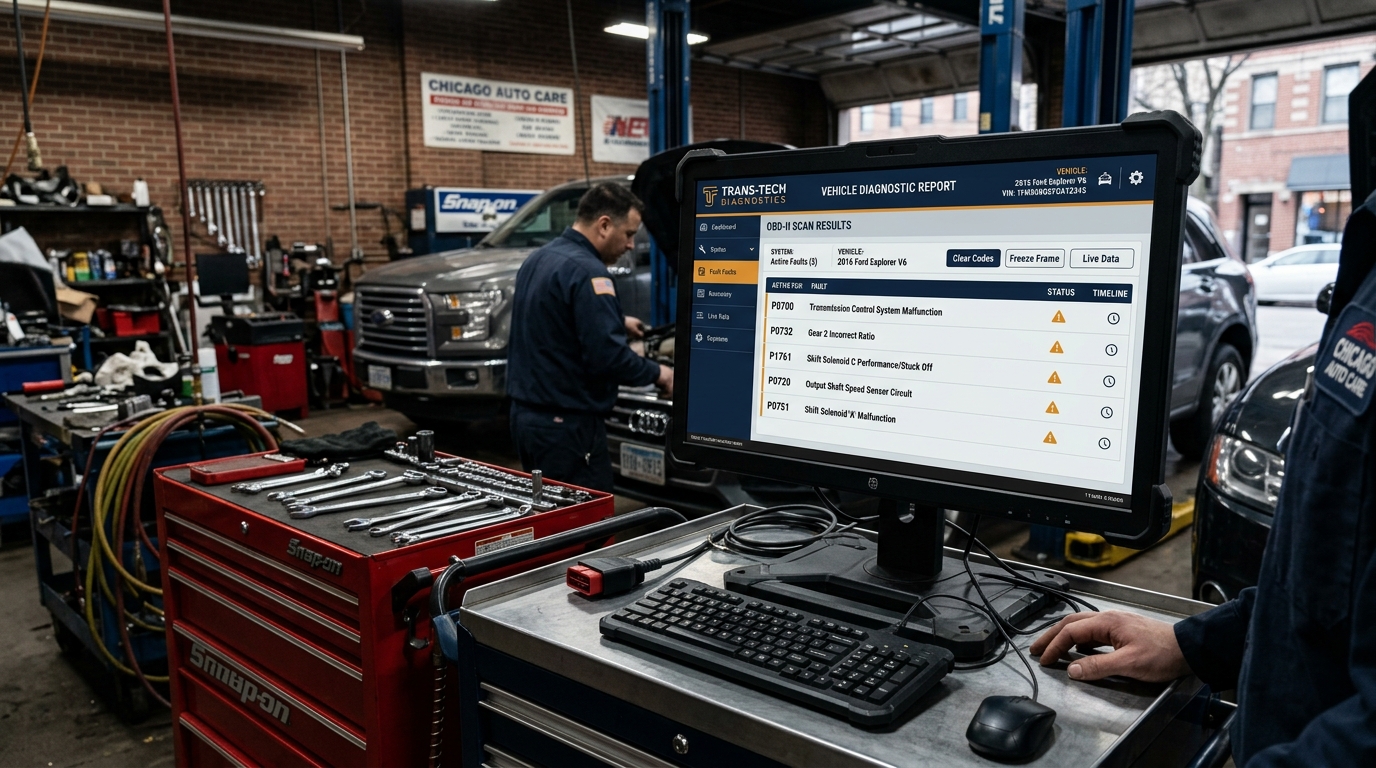
When P0744 appears alongside P0700 (the generic transmission-control-system code that illuminates the malfunction indicator lamp), it typically confirms the issue originated in the transmission control system rather than the engine. If P0741 or P0743 stores simultaneously with P0744, the intermittent fault is progressing toward a permanent one, and repair urgency increases.
How the Torque Converter Clutch Circuit Works
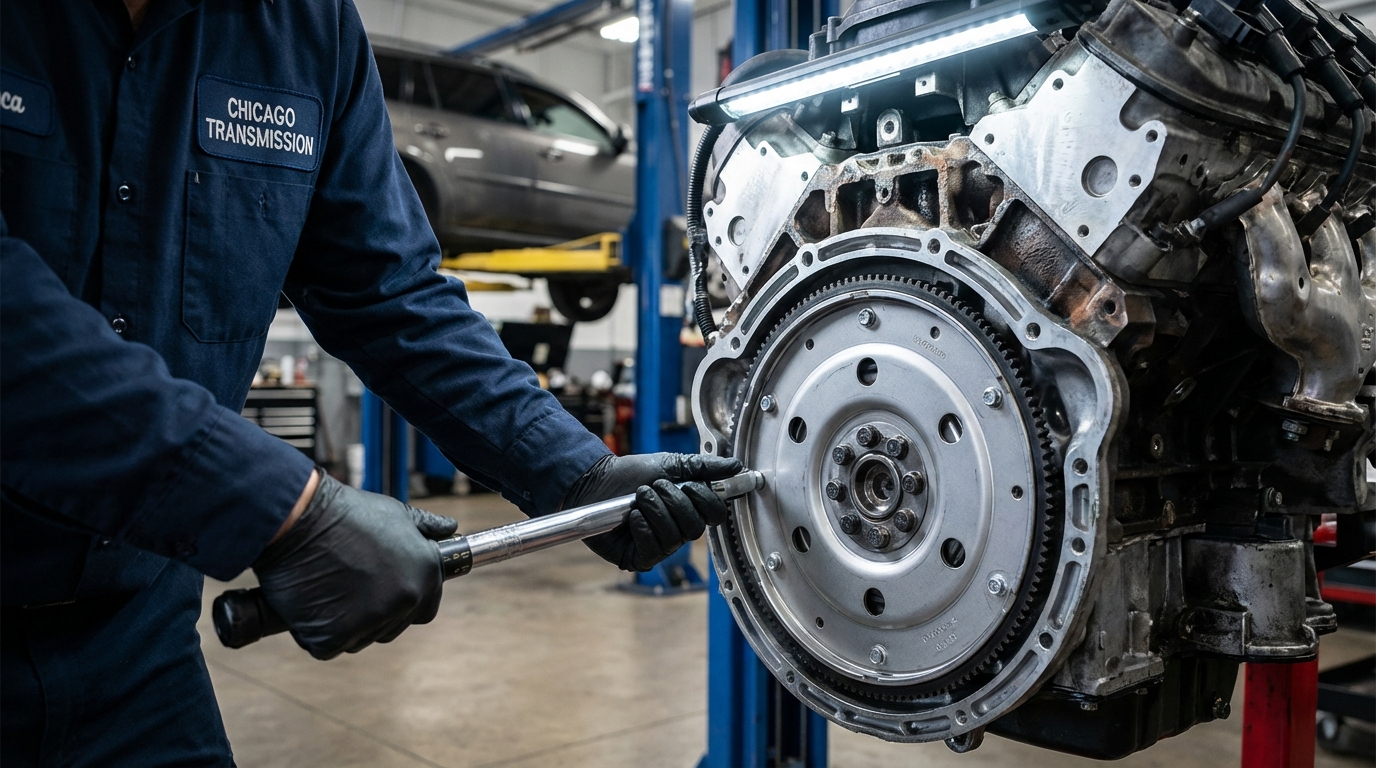
To appreciate why intermittent faults occur, it helps to understand the circuit's components. The torque converter clutch solenoid is an electronically controlled valve, usually mounted inside the transmission valve body or on the solenoid pack. When the TCM sends a ground signal, the solenoid opens a hydraulic passage that routes fluid pressure to the converter clutch piston. That piston presses a friction disc against the converter housing, mechanically locking the turbine to the impeller.
The circuit path starts at the TCM, travels through the transmission case connector (also called the external harness plug), through the internal wiring harness to the solenoid coil, and returns to ground through the case or a dedicated ground wire. The TCM monitors current flow to verify the solenoid is responding: if current draw is correct when the solenoid is commanded on, the system is functioning. If the current drops to zero (open circuit) or spikes unexpectedly (short), the TCM logs a fault. For P0744, the current behaves normally during some command cycles and falls outside specification during others.
The solenoid coil typically measures between 10 and 30 ohms of resistance depending on the manufacturer. GM TCC solenoids in the 4L60E and 4L80E families generally fall between 20 and 40 ohms. Ford units (6R80, 5R55) tend toward 11 to 15 ohms. Honda and Nissan solenoids often measure 12 to 25 ohms. A reading within spec at room temperature that drifts out of spec when heated with a heat gun is a classic indicator of an intermittent coil failure - exactly the kind of condition that sets P0744.
Common Causes of P0744

The causes of P0744 span from simple electrical connections to complex mechanical wear, and understanding their relative frequency helps prioritize the diagnostic path.
Corroded or loose wiring and connectors account for an estimated 30 to 40 percent of P0744 cases. The transmission case connector is exposed to road spray, salt (a significant factor in the Chicago metropolitan area where municipalities apply thousands of tons of road salt each winter), and heat cycling. Over time, connector pins develop a film of corrosion that increases resistance. At room temperature, the increased resistance may not be enough to trigger a fault, but as the connector heats up during driving or contracts in sub-zero cold, resistance crosses the threshold and the TCM registers an intermittent open circuit. The repair is often as simple as cleaning the pins with electrical contact cleaner, applying dielectric grease, and ensuring the locking tab is fully engaged. Parts cost is negligible; labor.
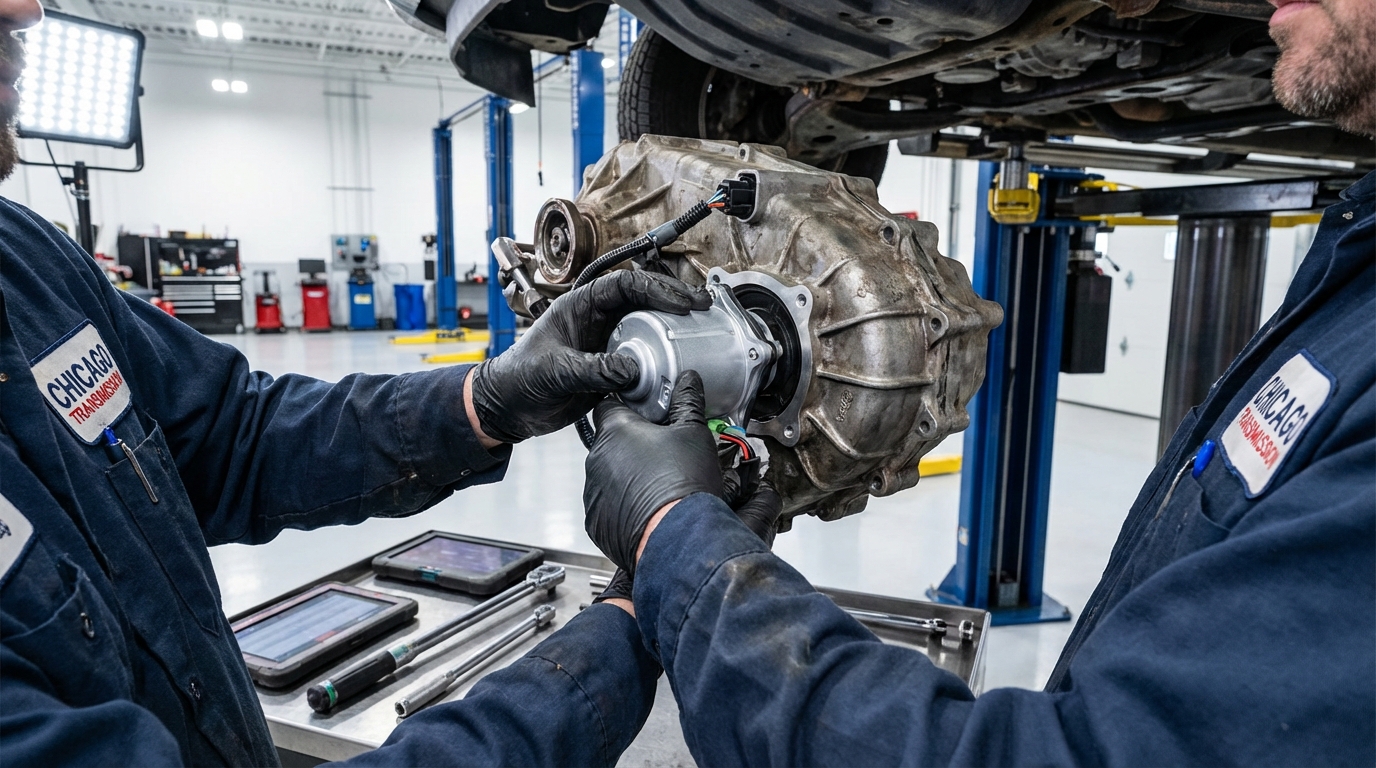
A failing TCC solenoid is the next most common cause, responsible for roughly 25 to 35 percent of cases. Solenoid coils degrade over time as insulation on the copper windings breaks down from heat and fluid contamination. The coil's resistance drifts - often only when hot - causing the TCM to lose the solenoid intermittently. Replacement scope depends on the vehicle. On transmissions where the solenoid is accessible through the valve body without a full teardown (like many GM 4L60E applications), the job is more direct. On units where the solenoid is integrated into a sealed solenoid pack or the Transmission Electro-Hydraulic Control Module (TEHCM), the assembly and programming path is more involved.
Contaminated or degraded transmission fluid contributes to about 15 to 25 percent of intermittent TCC faults. Fluid that has darkened beyond a translucent red, smells burnt, or contains fine metallic particles can cause varnish deposits on solenoid valve bores, restricting movement. The solenoid may respond cleanly when fluid is warm and thin, then stick when cold and viscous - or vice versa. A complete fluid and filter service and, when the fluid is degraded but not yet carrying heavy debris, can resolve the intermittent condition.
Valve-body wear or contamination is implicated in roughly 10 to 15 percent of P0744 diagnoses. The TCC apply and release circuits route through specific bores and check balls within the valve body. Wear or debris in these passages causes erratic pressure to the converter clutch, and the TCM interprets the resulting inconsistent solenoid behavior as an intermittent circuit fault even though the electrical circuit itself may be fine. Valve-body repair or replacement depending on the transmission.
Torque converter mechanical failure affects approximately 5 to 10 percent of P0744 cases. If the lock-up clutch friction material has worn unevenly or the piston seals are deteriorating, the converter may lock up partially or intermittently even when the solenoid provides consistent hydraulic pressure. In these instances, the TCM detects inconsistent slip rates and may set P0744 alongside P0741 or general gear-ratio codes. Torque converter replacement requires both the converter itself and the labor to remove and reinstall the transmission, so diagnosis matters before approving the job.
TCM or PCM faults are the least common cause, estimated at fewer than 5 percent of cases. A software glitch, corrupted adaptive tables, or intermittent internal circuit-board failure can cause erratic solenoid commands. A software reflash. Full TCM replacement for the module plus for VIN-matched programming.

Symptoms Chicago Drivers Will Notice
The intermittent nature of P0744 means symptoms may come and go, making them easy to dismiss at first. The most common complaint is a shudder or vibration at highway speeds, typically between 40 and 55 mph, that feels like driving over a rumble strip. This occurs when the TCC engages, slips, re-engages, and slips again in rapid succession. Drivers commuting on the Dan Ryan, Stevenson, or Kennedy expressways are likely to notice it during the sustained 45-to-65 mph cruising that dominates those corridors.
An RPM fluctuation without a corresponding change in vehicle speed is another hallmark. The tachometer may bounce 200 to 400 RPM at steady throttle, indicating the converter is cycling between locked and unlocked states. This wastes fuel and generates excess heat.
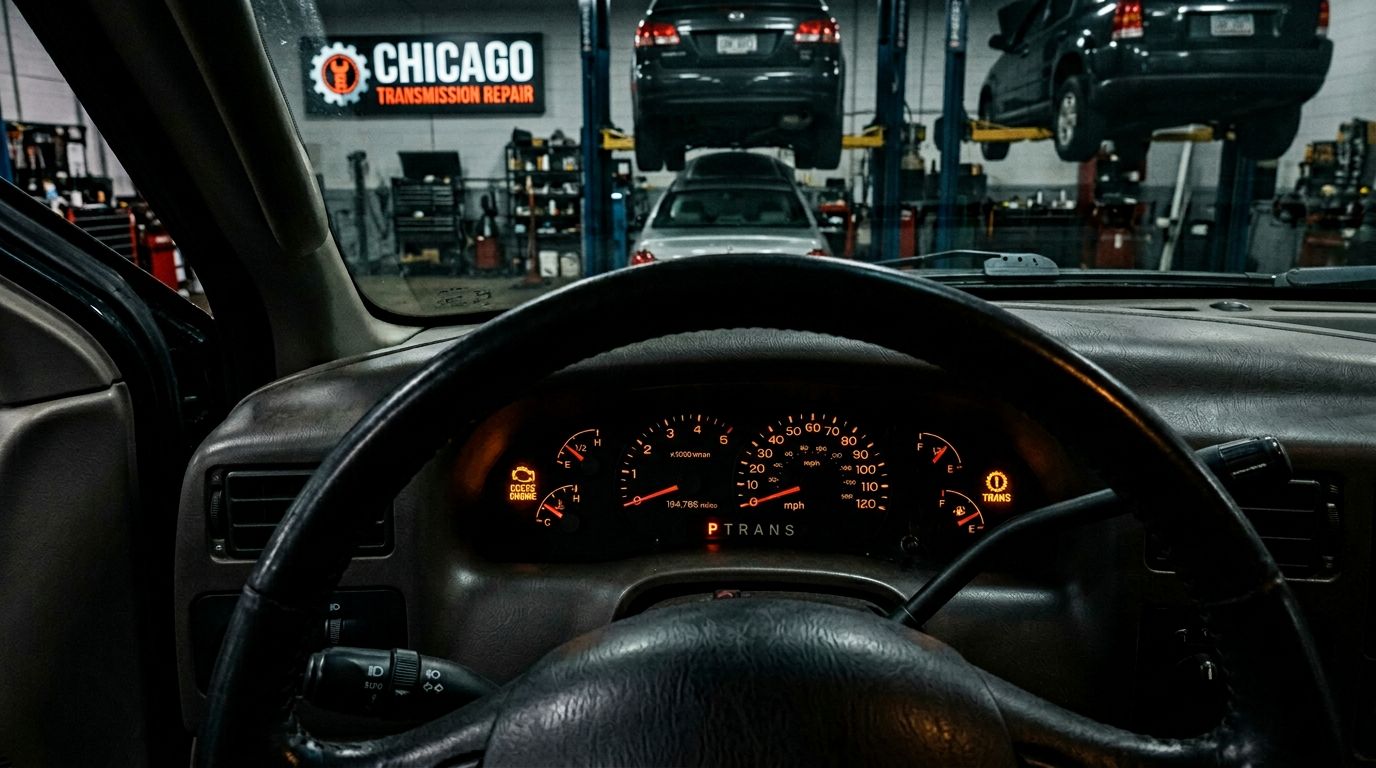
Some vehicles enter a reduced-power or limp-home mode after the PCM logs P0744 multiple times in a single drive cycle. Limp mode typically limits speed to 25 to 40 mph and locks the transmission in a single gear (often third or second) to prevent further damage. In Chicago's dense traffic, being limited to 25 mph on a 55-mph expressway is not merely inconvenient - it is a safety hazard.
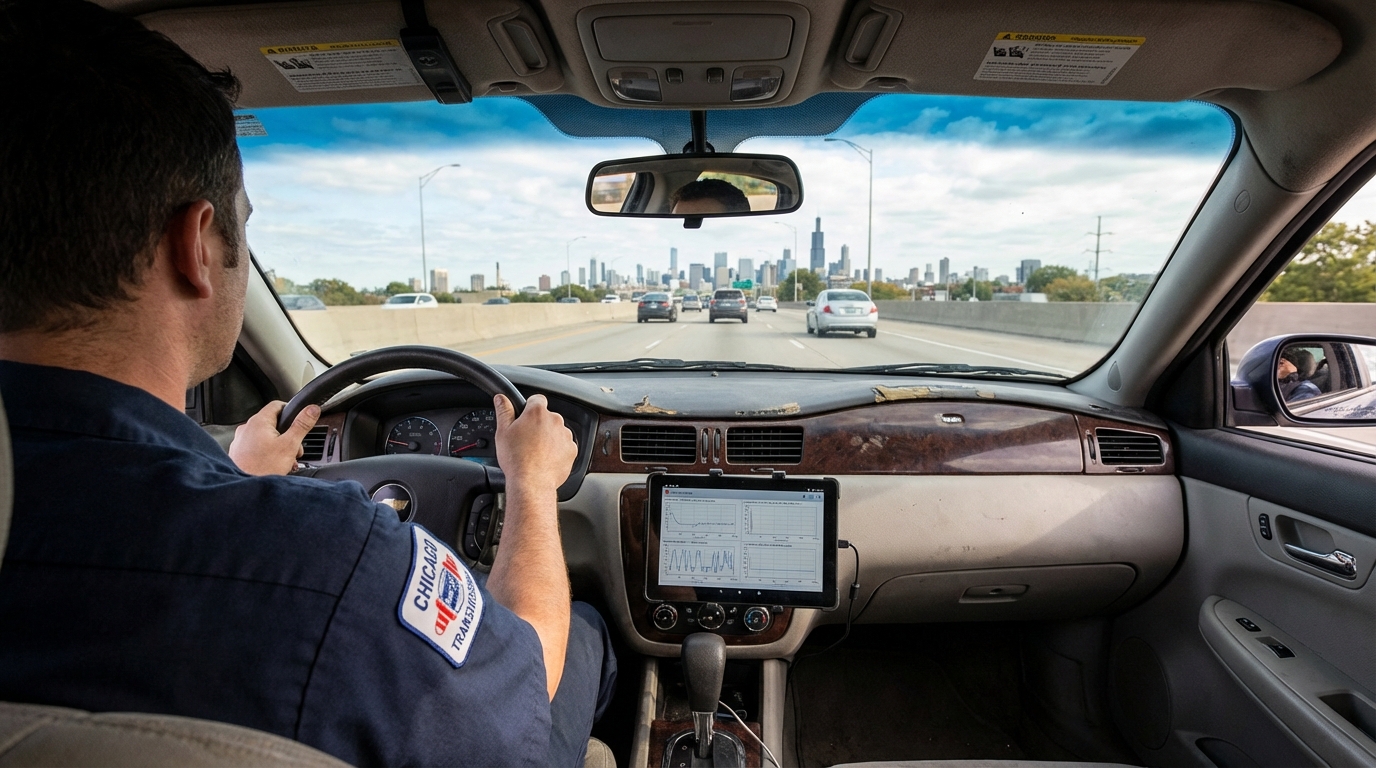
A check-engine light that illuminates on one trip and turns off on the next, then returns a few days later, is characteristic of an intermittent code. The PCM may require two or three consecutive failed drive cycles to turn on the MIL and two to three consecutive passed cycles to turn it off, so drivers often see a pattern of the light appearing during long highway drives and clearing after shorter city trips.
Elevated transmission fluid temperature is a less visible but equally important symptom. Each time the converter unlocks at highway speed, the resulting fluid coupling slip generates heat. Repeated locking and unlocking can push fluid temperatures above 220 degrees Fahrenheit, accelerating fluid degradation and shortening transmission life. During Chicago's summer months, when ambient temperatures already stress cooling systems, this additional thermal load is particularly damaging.
Can You Drive with P0744?
P0744 is generally classified as moderate in severity. Unlike a hard failure that eliminates lock-up entirely (P0741) or locks the converter permanently (P0742), the intermittent condition means the transmission often functions acceptably for short city trips where the TCC doesn't engage. Highway driving is where risk escalates: the repeated lock-unlock cycling generates excessive heat, accelerates friction-material wear in the converter, and can contaminate fluid with clutch debris that then damages valve-body bores and solenoids - a cascade that transforms a solenoid replacement into a rebuild.
The practical guidance for Chicago-area drivers is straightforward. If the shudder is occasional and mild, the vehicle can be driven cautiously to a qualified transmission shop, avoiding sustained highway speeds above 50 mph. If the vehicle enters limp mode, the safest option is a short, low-speed drive to the nearest shop or a tow. If the fluid on the dipstick is dark, smells burnt, or shows metallic flecks, a tow is strongly recommended to prevent further contamination of internal components.
Step-by-Step Diagnosis

Accurate diagnosis of P0744 requires patience and methodical testing because the intermittent nature of the fault means it may not be present at the time of inspection.
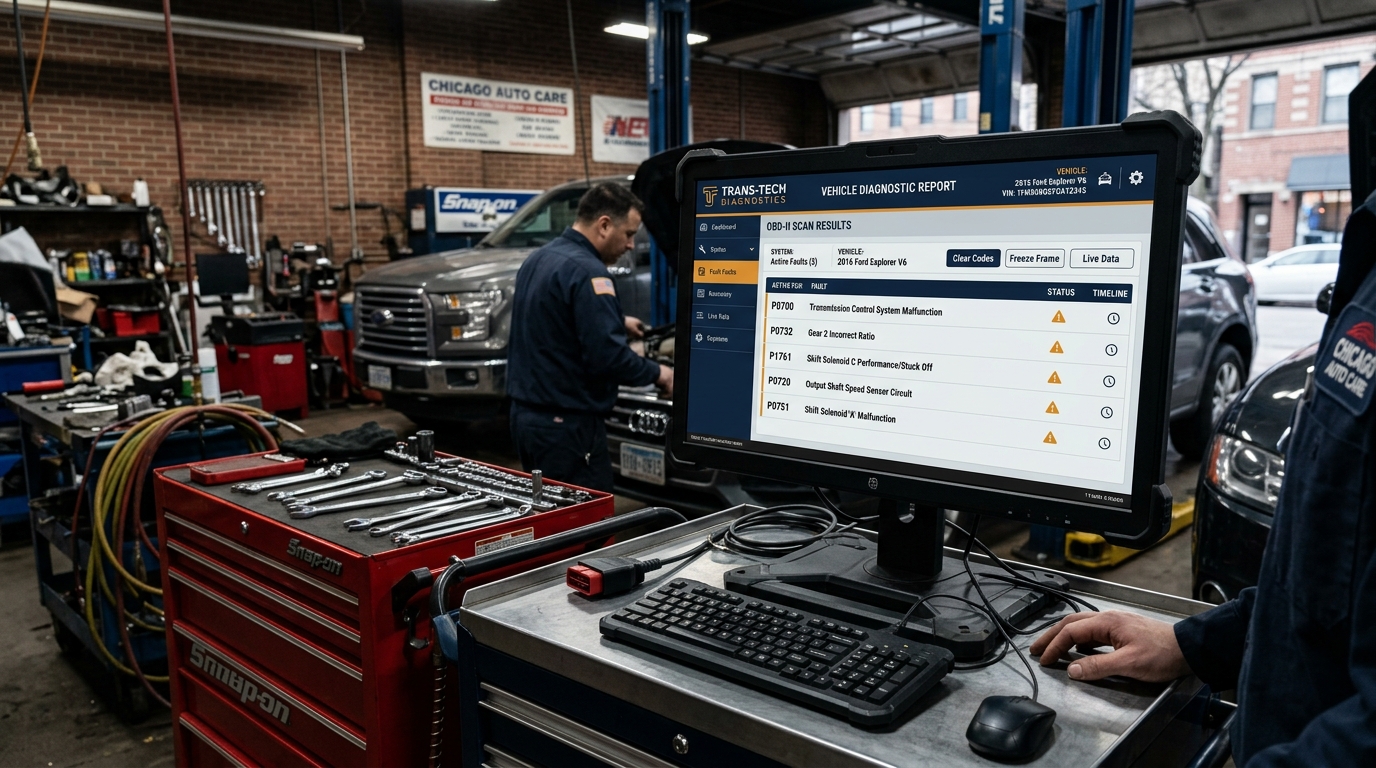
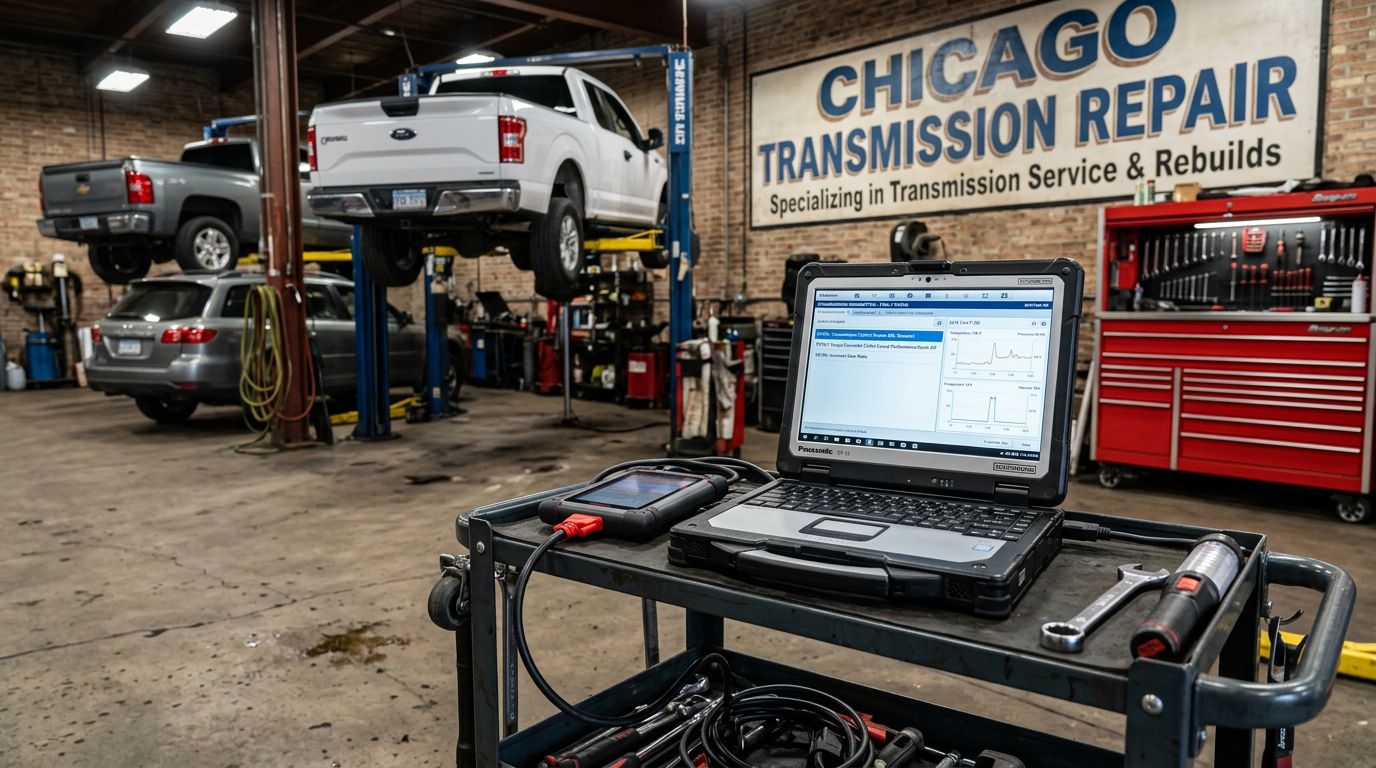
The first step is a comprehensive code scan using a professional-grade scanner capable of reading transmission-specific codes, freeze-frame data, and live sensor values. Record the freeze-frame conditions - engine RPM, vehicle speed, throttle position, transmission fluid temperature, and TCC command status - at the moment the fault was stored. These parameters reveal the operating window where the intermittent fault occurs.
Next, inspect the transmission fluid. Check the level (many modern vehicles require the engine running and transmission at operating temperature for an accurate reading). Evaluate color: healthy fluid is translucent red; degraded fluid ranges from dark amber to brown; burnt fluid is black or very dark brown with a sharp, acrid smell. Wipe the dipstick on a white paper towel and look for fine metallic particles, which indicate internal wear beyond what a fluid change can address.
With the fluid checked, move to the electrical circuit. Disconnect the transmission case connector and inspect each pin for corrosion, bent contacts, or evidence of moisture intrusion. Use a multimeter to measure the TCC solenoid's resistance through the harness - values should match the manufacturer's specification (10 to 40 ohms depending on the make). Then measure with the solenoid at operating temperature; a significant resistance shift (more than 20 percent change) when heated indicates a failing coil.

Using the scan tool's bidirectional controls, command the TCC solenoid on and off while monitoring current draw. A healthy solenoid will produce a consistent current signature each time it is actuated. Erratic current or a failure to actuate during some commands confirms an intermittent solenoid or circuit fault.
If electrical tests pass, perform a line-pressure test on the TCC apply circuit. Connect a gauge to the designated test port (location varies by transmission) and command lock-up at steady highway speed. Pressure should build smoothly and hold steady. Fluctuating pressure with a known-good solenoid suggests valve-body contamination, worn bore, or a leaking converter clutch piston seal.
Finally, if all external tests are inconclusive and the code persists, a pan drop and visual inspection may reveal clutch material, metal shavings, or varnish deposits that point to the specific internal component at fault.

Understanding Repair Scope
Repairs for this code range from straightforward electrical work - cleaning a connector or replacing a single solenoid - up to a valve body service or full rebuild in cases where internal damage is present. The diagnostic determines which repair is actually needed. Parts replaced based on a code alone (without inspecting the circuit) often result in money spent on the wrong fix.
Chicago Transmission offers a Diagnosis-first inspection that includes a full code scan, circuit inspection, and road test - so you know exactly what caused the code before authorizing anything. Start with a Diagnostic appointment ->
Transmission fluid and filter service depending on the transmission's fluid capacity (6 to 16 quarts) and the type of fluid required. Vehicles requiring Motorcraft MERCON ULV, Honda DW-1, or Nissan Matic S tend toward the higher end because of fluid cost.
TCC solenoid replacement should be quoted after diagnosis when the solenoid is individually accessible. When the solenoid is part of an integrated pack or TEHCM, the quote depends on module availability, programming requirements, and fluid condition.
Valve-body rebuild or replacement varies by scope. The wide spread reflects the difference between cleaning and re-boring a single circuit versus replacing the entire assembly.

Torque converter replacement, including removal and reinstallation of the transmission, in the Chicago area. If the converter failure has contaminated the fluid with debris, a concurrent valve-body cleaning and full fluid flush adds.
A full transmission rebuild prompted by P0744, typically when internal contamination has spread beyond the converter, ranges for common units like the GM 4L60E or Ford 6R80. More complex units such as the Nissan RE5R05A or Ford 10R80 can reach or more. A remanufactured replacement transmission installed typically depending on the unit, and comes with a warranty of 12 to 36 months or 12,000 to 100,000 miles.
TCM reflashing in labor. TCM replacement, if required, for the module plus for VIN-specific programming.

Vehicles Most Commonly Affected by P0744
P0744 appears across a wide range of makes and models, but certain transmission platforms see it more frequently than others.
GM vehicles equipped with the 4L60E and 4L80E transmissions - including the Chevrolet Silverado, Tahoe, Suburban, and GMC Sierra and Yukon from the late 1990s through the mid-2010s - are among the most commonly affected. The TCC solenoid in these units is a known wear item, and the case connector is exposed to significant road spray and salt in northern climates.
Nissan and Infiniti models with the RE5R05A five-speed automatic, found in the Pathfinder, Frontier, Xterra, Maxima, and various Infiniti sedans and SUVs from 2002 through 2019, are well documented for intermittent TCC faults. Forum discussions on ClubFrontier and Maxima.org describe P0744 appearing on cold mornings and clearing after the transmission reaches operating temperature - a pattern consistent with corroded connector pins and thermally sensitive solenoid coils.

Ford F-150 trucks and Mustangs with the 6R80 six-speed automatic, as well as Explorer and Ranger models with the 5R55 family, report P0744 with moderate frequency. The Ford platform's internal harness design routes the TCC solenoid circuit through multiple connectors, each representing a potential point of intermittent failure.
Honda Accord and Civic models from the early to mid-2000s, particularly those with the four- and five-speed automatics, appear in repair databases with P0744 alongside TCC shudder complaints. DriveAccord forum threads describe a characteristic shudder between 35 and 45 mph that intermittently triggers the code.
Chrysler, Dodge, and Jeep vehicles with the 62TE transaxle (Town & Country, Grand Caravan, Journey) and the 45RFE/545RFE (Ram 1500, Dakota, Durango) also appear in P0744 case studies, though less frequently than GM and Nissan platforms.

Toyota Camry and Corolla models equipped with the U151E and U250E transaxles occasionally set P0744, most often traced to connector corrosion or fluid-condition issues.
Chicago-Specific Factors That Contribute to P0744
Chicago's climate and driving conditions create an environment that accelerates many of the root causes behind P0744.

Cold-weather operation is perhaps the most significant local factor. When ambient temperatures drop below 20 degrees Fahrenheit - common from late November through early March - transmission fluid viscosity increases substantially. Thicker fluid slows solenoid response and reduces the precision of hydraulic pressure delivery to the torque converter clutch. The TCC may fail to lock cleanly on the first command, causing the TCM to see an intermittent response and log the code. This explains why many Chicago drivers first encounter P0744 during the winter months and find it clears temporarily in warmer weather.
Road salt and brine solutions applied to Chicago-area expressways and city streets create a highly corrosive environment for the transmission case connector. This connector, typically located on the lower side of the transmission case, is directly in the path of road spray from the front tires. Over several winters, the combination of salt, moisture, and thermal cycling can produce enough pin corrosion to create an intermittent connection. An annual inspection and application of dielectric grease to the case connector is one of the most effective preventive measures a Chicago vehicle owner can take.
Stop-and-go traffic on the Kennedy, Dan Ryan, Eisenhower, and Stevenson expressways produces a high number of TCC engagement and disengagement cycles per mile compared to steady-speed highway driving. Each cycle stresses the solenoid coil, the valve-body passages, and the converter clutch friction material. Vehicles driven primarily in Chicago traffic will accumulate TCC-related wear faster than identical vehicles in less congested markets.

Summer heat compounds the issue from the opposite direction. When ambient temperatures exceed 90 degrees Fahrenheit and vehicles idle in traffic with limited airflow through the transmission cooler, fluid temperatures can spike above 220 degrees Fahrenheit. At those temperatures, fluid oxidation accelerates dramatically - every 20-degree increase above 175 degrees Fahrenheit roughly halves the remaining fluid life. Degraded fluid produces varnish deposits that restrict solenoid movement and contaminate valve-body bores, setting the stage for P0744.
Prevention Tips for Chicago Vehicle Owners
Preventing P0744 - or catching it early before it escalates - requires a modest investment in maintenance that pays significant dividends in avoided repair costs.

Follow a severe-service fluid and filter change interval of every 25,000 to 35,000 miles rather than the "lifetime" or 100,000-mile intervals printed in some owner's manuals. Chicago's combination of cold starts, heavy traffic, and temperature extremes qualifies as severe service by virtually every manufacturer's definition. A fluid service performed every 30,000 miles is far less expensive than the rebuild that neglected fluid eventually necessitates.
Inspect and protect the transmission case connector annually, ideally during a fall service appointment before road-salt season begins. Disconnect the connector, spray both halves with electrical contact cleaner, allow them to dry, apply a thin layer of dielectric grease to each pin, and reconnect firmly until the locking tab clicks. This five-minute task addresses the single most common cause of P0744 in salt-belt vehicles.
Allow the transmission to warm up for 60 to 90 seconds after cold starts in temperatures below 30 degrees Fahrenheit. This lets the fluid circulate and thin slightly before the transmission is asked to perform demanding shifts. Avoid aggressive acceleration during the first few minutes of driving.
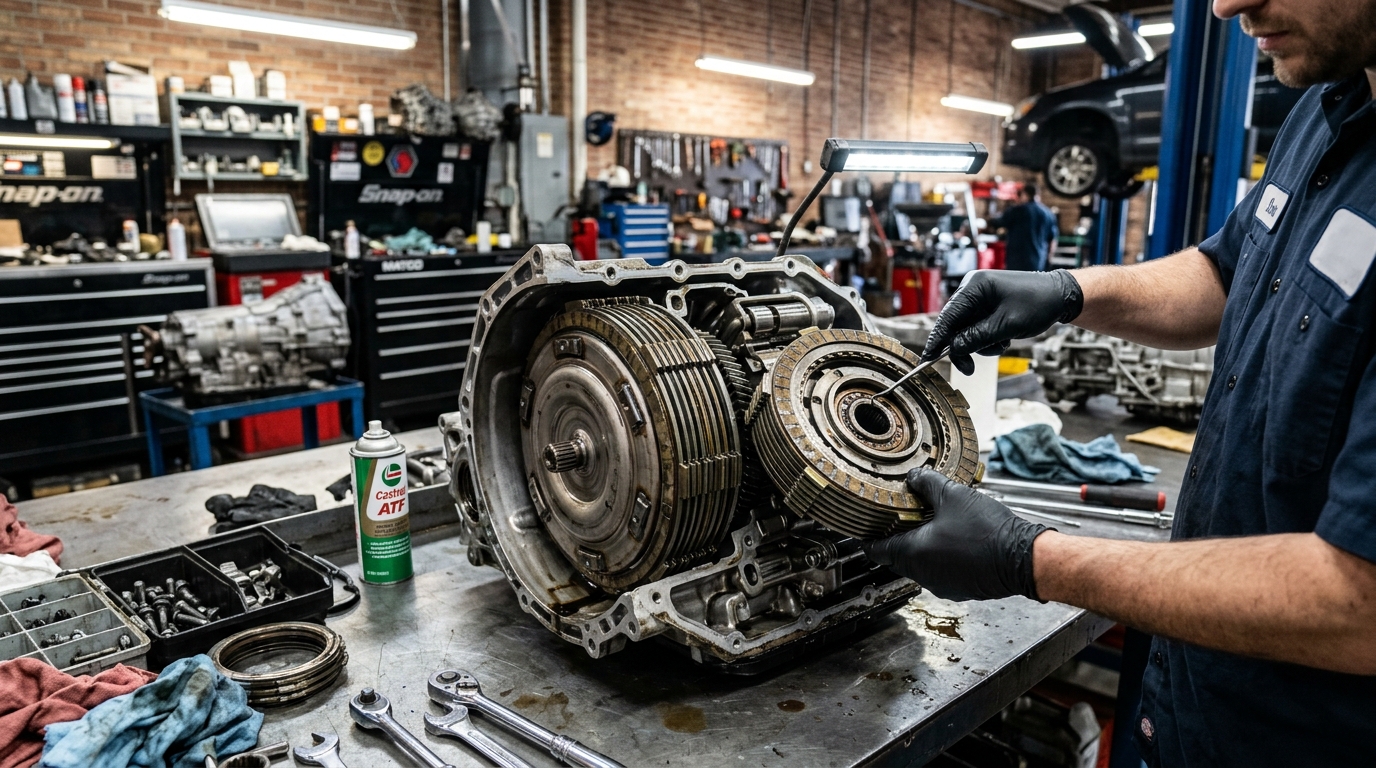
Monitor for early symptoms and act promptly. A subtle shudder at 40 to 50 mph, a brief RPM flicker on the highway, or a check-engine light that appears and then clears may seem minor, but each occurrence represents an event that stresses the converter clutch and solenoid. Addressing the cause when it first appears - often with a connector cleaning, fluid service, or solenoid replacement - prevents the progressive contamination cycle that leads to full rebuilds.
For vehicles known to be at elevated risk - particularly GM trucks and SUVs with the 4L60E, Nissan models with the RE5R05A, and any vehicle used for towing - consider installing an auxiliary transmission cooler. A quality aftermarket cooler and can reduce operating fluid temperatures by 20 to 40 degrees Fahrenheit, extending fluid life and reducing thermal stress on the TCC solenoid and converter clutch material.
Frequently Asked Questions

What does P0744 mean in plain language?
P0744 means the computer that controls your automatic transmission has detected an inconsistent electrical signal from the torque converter clutch solenoid - the component that locks the torque converter at highway speeds to improve fuel economy. The "intermittent" designation means the problem comes and goes rather than being constant.
How serious is P0744?
It is a moderate-severity code. The vehicle is usually drivable for short, low-speed trips, but sustained highway driving with an intermittent TCC can overheat the transmission fluid, damage the converter clutch, and contaminate internal components. What starts as a solenoid issue can escalate into a rebuild if ignored.
Can a simple fluid change fix P0744?
In approximately 15 to 25 percent of cases where the fluid is degraded but the transmission has not yet suffered hard-part damage, a complete fluid and filter service resolves the intermittent condition. If the fluid is dark or burnt and contains metallic particles, deeper internal work is likely needed, but the fluid service remains a worthwhile first step for diagnosis.
Why does P0744 appear only in cold weather?
Cold temperatures increase fluid viscosity, which slows solenoid response and reduces the precision of hydraulic clutch apply pressure. Additionally, metal connector pins contract slightly in the cold, which can increase resistance at corroded contact points just enough to create an intermittent open circuit. Both factors contribute to the classic winter-only P0744 pattern that many Chicago-area drivers experience.
What is the difference between P0740, P0741, P0742, P0743, and P0744?
P0740 is a general circuit malfunction. P0741 means the TCC is stuck off (no lock-up). P0742 means it is stuck on (may stall the engine at stops). P0743 indicates a definitive electrical fault like an open or short. P0744 specifically flags an intermittent condition - the circuit works sometimes and fails at other times, which can be the most challenging to diagnose.
Can I fix P0744 myself?
DIY-friendly repairs include checking and topping off transmission fluid, cleaning the case connector, and applying dielectric grease. Replacing an externally accessible TCC solenoid (common on GM 4L60E units) is within reach for experienced home mechanics with the correct fluid, gasket, and torque specifications. Valve-body work, torque converter replacement, and internal transmission repairs require professional tools, a lift, and specialized experience.
Which vehicles are most likely to get P0744?
GM trucks and SUVs with the 4L60E/4L80E (late 1990s through mid-2010s), Nissan/Infiniti models with the RE5R05A (2002 to 2019), Ford F-150/Mustang with the 6R80, Honda Accord/Civic (early to mid-2000s automatics), and Chrysler/Dodge minivans with the 62TE are the most frequently cited platforms.
How long does a P0744 repair take?
A connector cleaning and fluid service can be completed in one to two hours. Solenoid replacement requires two to four hours depending on accessibility. Valve-body work takes four to eight hours. Torque converter replacement typically involves removing the transmission and requires six to ten hours of labor, often translating to one to two business days at a Chicago-area shop.
Final Thoughts
P0744 occupies a middle ground that makes it both manageable and deceptively dangerous. Because the torque converter clutch circuit only fails intermittently, the vehicle often drives normally during city errands, and many owners postpone diagnosis. In a climate like Chicago's - where cold winters stress connectors and fluid viscosity, hot summers accelerate fluid breakdown, and congested expressways rack up thousands of TCC engagement cycles - postponing service allows a minor electrical or fluid issue to compound into mechanical damage. The most cost-effective approach is straightforward: maintain the fluid on a severe-service schedule, protect the connector from corrosion, and investigate the first occurrence of a highway shudder or flickering check-engine light before the fault cascades beyond the solenoid circuit and into the converter, valve body, and clutch packs.
Internal Link Targets: P0700 (transmission control system), P0715 (input speed sensor), P0720 (output speed sensor), P0740 (TCC circuit malfunction), P0741 (TCC stuck off), P0742 (TCC stuck on), P0743 (TCC electrical), P0750-P0756 (shift solenoid codes)
Schema Markup: FAQPage (8 Q&A pairs), HowTo (diagnostic steps), Article (main body)
Series Progress: 20 of 50 articles completed (40%). P0744 is now Done.
Have a Transmission Problem?
Get a Diagnosis-first inspection from Chicago transmission repair support.