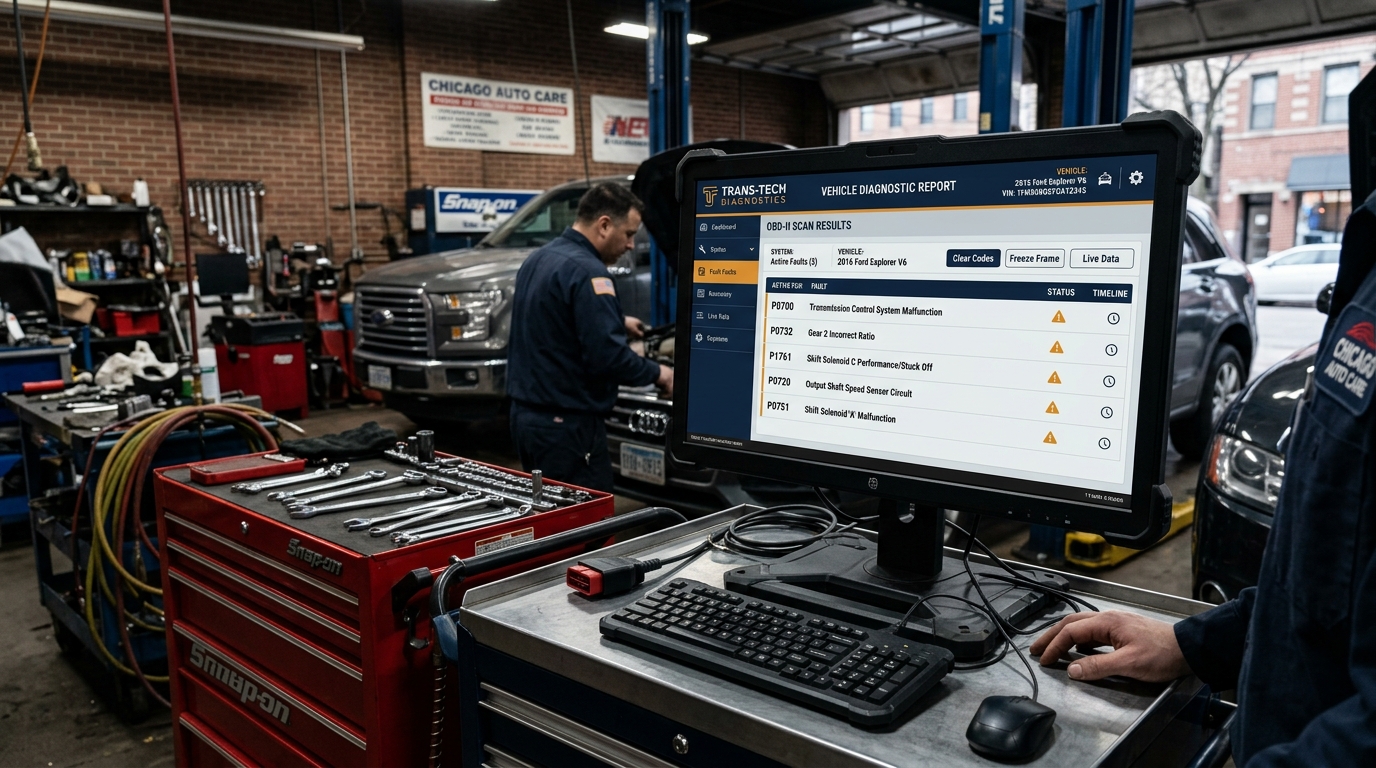
P0750 means your transmission's Shift Solenoid A has failed or its circuit is malfunctioning. Learn what causes it, how to diagnose it, and what Chicago drivers should do when this code appears.
Schema: FAQPage, HowTo, Article
What Does the P0750 Code Mean?
P0750 is a generic OBD-II diagnostic trouble code defined as "Shift Solenoid 'A' Malfunction." The powertrain control module (PCM) or transmission control module (TCM) sets this code when it detects that the Shift Solenoid A circuit is not functioning within expected parameters. This is not a performance code or an intermittent code - it is a general malfunction designation, meaning the PCM has identified a fault in the circuit that could be electrical (open, short, high resistance), mechanical (solenoid stuck open or closed), or hydraulic (restricted fluid flow through the solenoid valve).
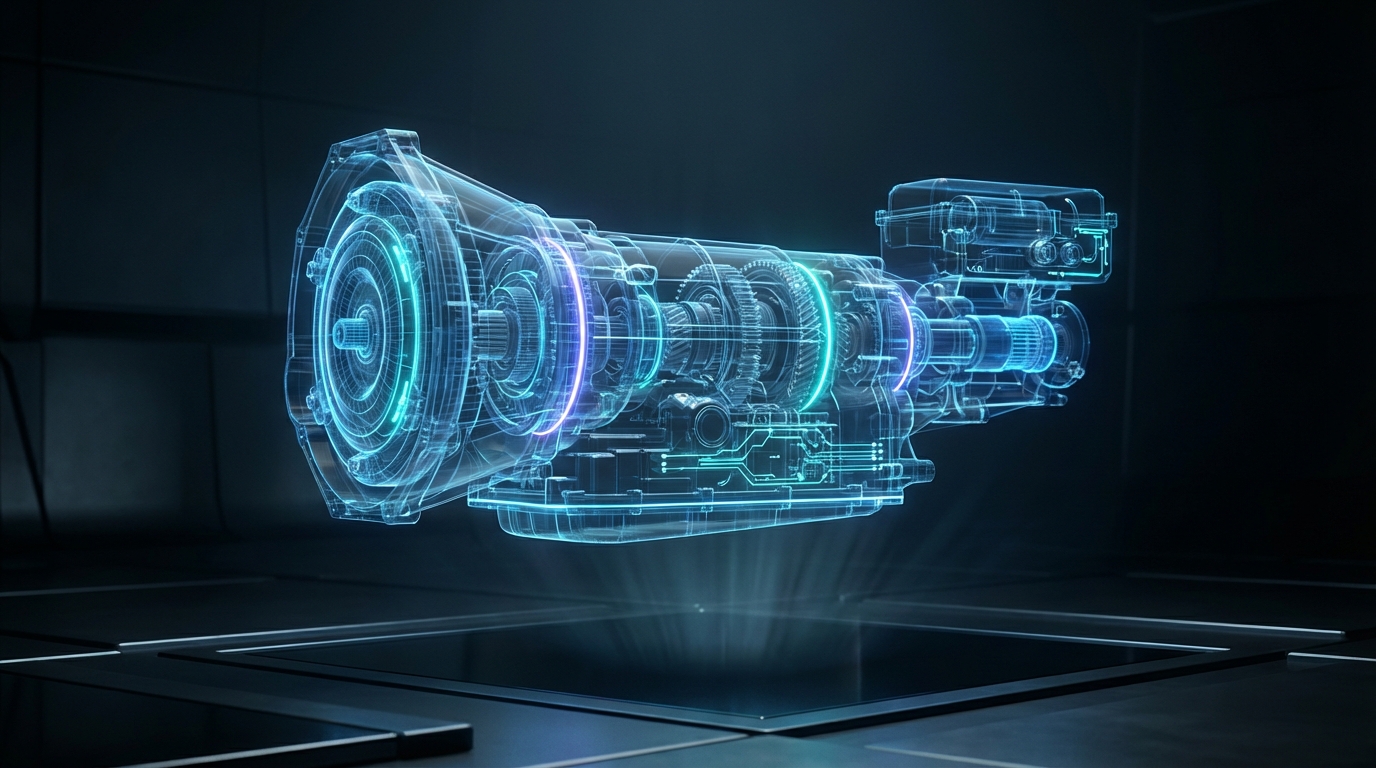
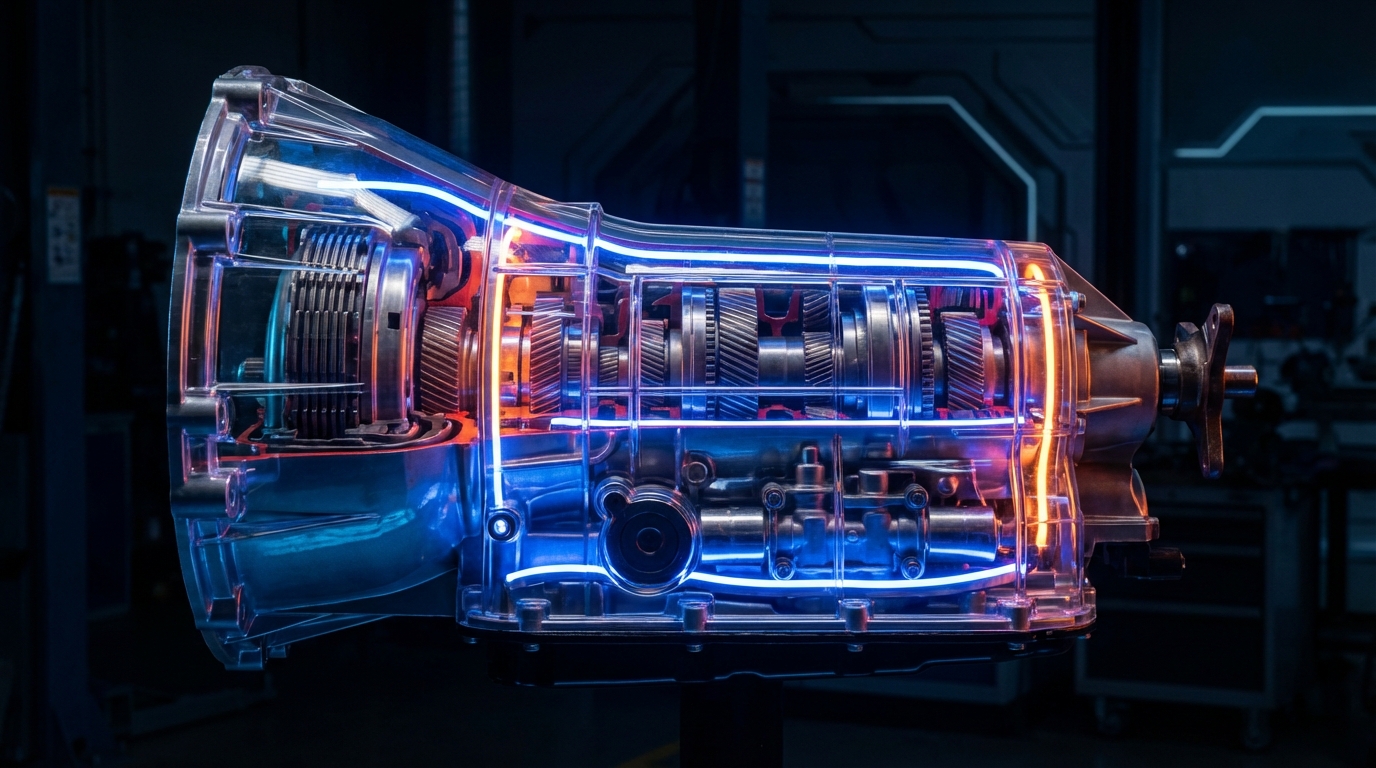
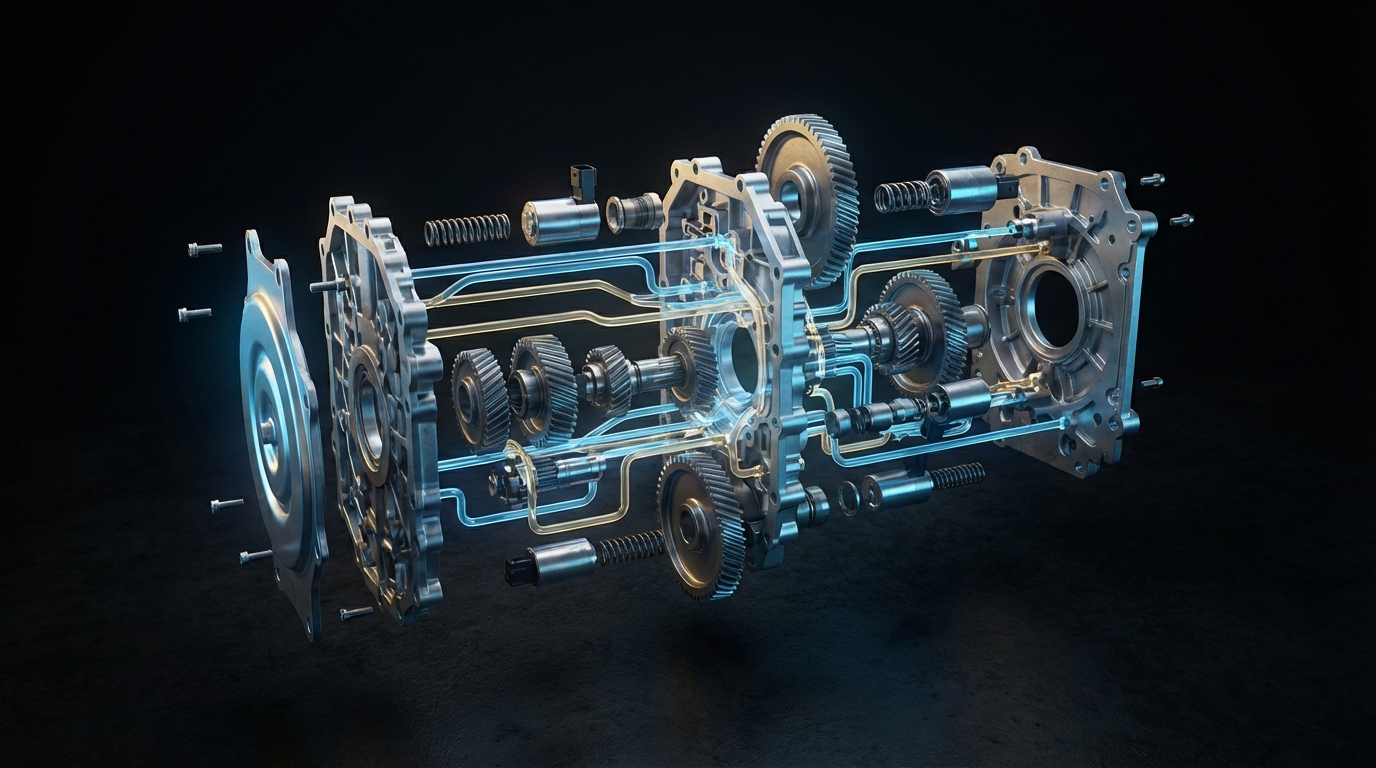
Shift Solenoid A is one of several electromechanical valves mounted inside the transmission, typically within or on the valve body. Its exact function varies by transmission platform, but it generally controls hydraulic fluid flow to the circuits responsible for engaging first and second gears - or, in some designs, the low-and-reverse clutch circuit. When the PCM commands Shift Solenoid A to open, it routes pressurized automatic transmission fluid (ATF) to the appropriate clutch pack or band, enabling the transmission to engage or disengage a specific gear. When the solenoid fails, the transmission loses its ability to control that gear change, and the result is almost always immediately noticeable to the driver.
The designation "Solenoid A" follows SAE J2012 naming conventions. Different manufacturers assign this label to different physical solenoids. In GM's 4L60E and 4L65E transmissions, Solenoid A corresponds to the 1-2 shift solenoid, controlling the upshift from first to second gear. In Chrysler's 45RFE, 545RFE, and 68RFE transmissions, Solenoid A maps to the Low/Reverse (L/R) solenoid, which controls the low-and-reverse clutch. In Ford's 5R55W and 5R55S transmissions, Shift Solenoid A is part of an integrated solenoid block that manages multiple shift events. This manufacturer-specific variation is essential to understand because it determines which gear or gears are affected and, consequently, which driving symptoms the owner will experience.
For Chicago-area drivers, P0750 often means the vehicle enters limp mode - also called failsafe mode - where the transmission locks into a single gear (typically third or fourth) and limits vehicle speed to 25 to 40 mph. On a congested Kennedy Expressway or during a Dan Ryan merge, limp mode transforms driving from inconvenient to genuinely hazardous, making prompt diagnosis and repair critical.
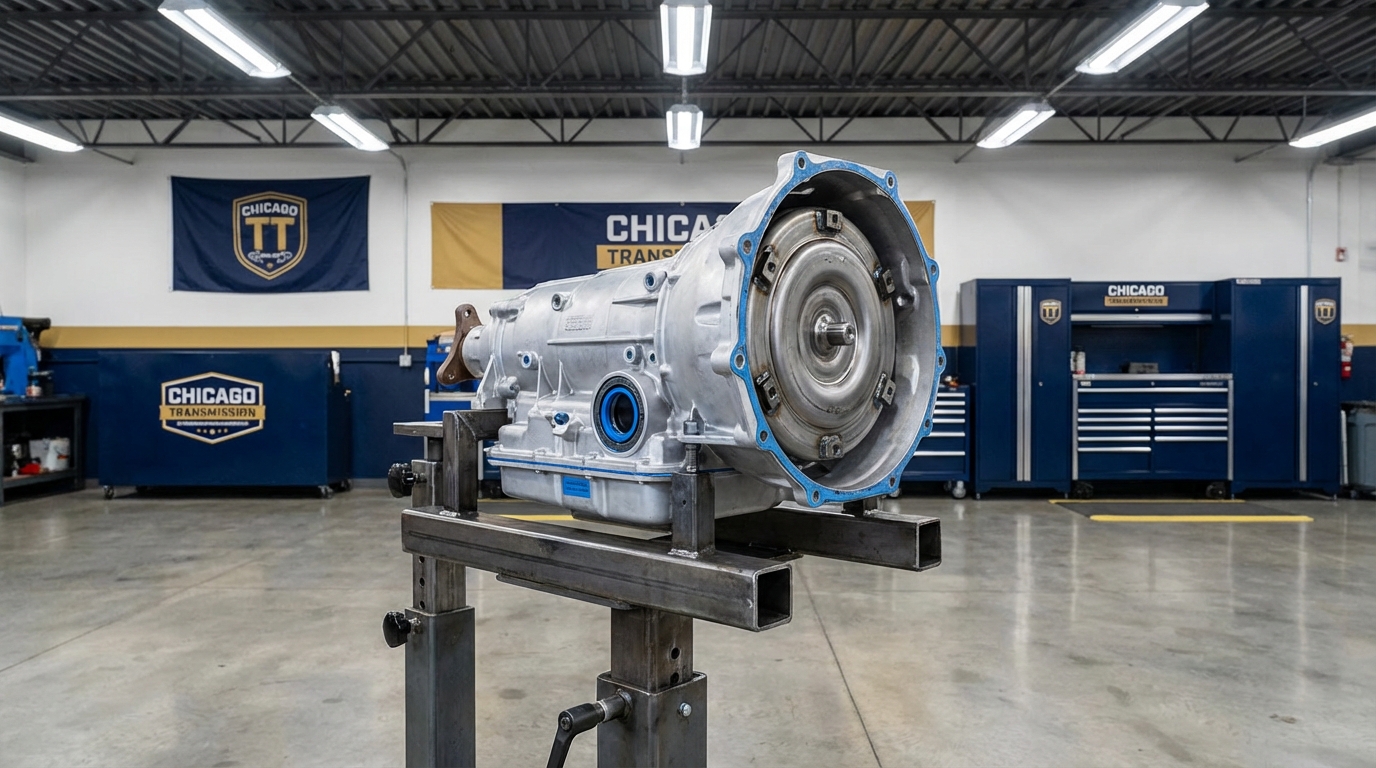
Where P0750 Fits in the Shift Solenoid Code Family
P0750 is the parent code for an entire sub-family of Shift Solenoid A trouble codes. Understanding the related codes helps technicians distinguish between a general circuit failure and a more specific fault condition, which in turn guides the diagnostic path.
P0751, "Shift Solenoid A Performance or Stuck Off," indicates that the solenoid is physically stuck in the closed (off) position. The PCM commands it to open, but the hydraulic result (as measured by input and output speed sensors) does not match expectations. This usually points to a mechanically stuck solenoid, varnish buildup, or a hydraulic blockage rather than an electrical fault. P0752, "Shift Solenoid A Stuck On," is the inverse: the solenoid remains open when commanded closed, allowing fluid to flow continuously into the circuit. This can cause the transmission to start in a higher gear or refuse to downshift. P0753, "Shift Solenoid A Electrical," narrows the fault specifically to the solenoid's electrical circuit - an open wire, a short to ground, a short to power, or excessive resistance. P0754, "Shift Solenoid A Intermittent," flags a connection that works sporadically, often due to a loose pin, corroded connector, or thermally sensitive coil winding.
P0750 itself is broader than any of these sub-codes. When the PCM stores P0750 rather than a more specific code, it typically means the initial fault detection did not cleanly fit one of the narrower categories, or the manufacturer's diagnostic software groups all Solenoid A faults under P0750 before further testing can differentiate the cause. In practice, the diagnostic approach for P0750 must cover the full spectrum - electrical integrity, mechanical function, and hydraulic performance.
When P0750 appears alongside P0700 (the generic transmission control code), P0755 (Shift Solenoid B), or P0760 (Shift Solenoid C), the probability shifts from an isolated solenoid failure toward a systemic issue: contaminated fluid clogging multiple solenoids, a failing solenoid pack or module that houses several solenoids in one assembly, or a wiring harness fault affecting multiple circuits. A Ford Trucks forum thread documents a case where P0743, P0750, P0755, P0760, and P0765 all appeared simultaneously on an F-250, and the root cause turned out to be a corroded transmission case connector - a single point of failure affecting every solenoid circuit.
How Shift Solenoid A Works
The operating principle of a transmission shift solenoid is straightforward. The solenoid consists of a coil of copper wire wound around a ferromagnetic core. When the PCM applies current to the coil, the resulting magnetic field pulls a plunger that opens a hydraulic valve. Pressurized ATF flows through the now-open valve and into the appropriate transmission circuit - a clutch pack apply passage, a band servo apply passage, or both. When the PCM removes current, a return spring pushes the plunger back, closing the valve and cutting off fluid flow to that circuit.
The PCM verifies solenoid operation in two primary ways. First, it monitors the electrical circuit by checking current draw when the solenoid is commanded on. A healthy solenoid draws a predictable current based on its coil resistance and the supply voltage. If current is too low (suggesting an open circuit) or too high (suggesting a short), the PCM logs a fault. Second, the PCM monitors the mechanical result of the solenoid's action by comparing input shaft speed (ISS) to output shaft speed (OSS). If Solenoid A is commanded to produce a 1-2 upshift and the speed-sensor ratio does not change accordingly within a calibrated time window, the PCM infers that the solenoid did not function correctly.
In the Chrysler 68RFE, the diagnostic routine is particularly sophisticated. The TCM periodically tests each of its six main solenoids (L/R, UD, OD, 2C, 4C, and MS) by briefly toggling them off and on - even during normal operation - and monitoring the voltage spike produced by the collapsing magnetic field when the solenoid is de-energized. If the TCM fails to detect this inductive spike after three consecutive test cycles, it sets the corresponding fault code: P0750 for the L/R solenoid. This means that on Chrysler platforms, P0750 is fundamentally an electrical fault, and the root cause must be in the solenoid coil, the wiring between the solenoid and the TCM, or the TCM's driver chip itself.
Solenoid coil resistance varies by manufacturer and application. GM 4L60E shift solenoids typically measure 20 to 40 ohms. Ford 5R55 solenoid packs have individual coil resistances of 11 to 15 ohms. Chrysler 68RFE solenoids measure approximately 1.8 ohms for the main clutch solenoids (low-resistance, high-current design). These values are measured at room temperature; as the solenoid heats during operation, resistance increases, and a marginally degraded coil may pass a cold bench test but fail under operating conditions.
Common Causes of P0750
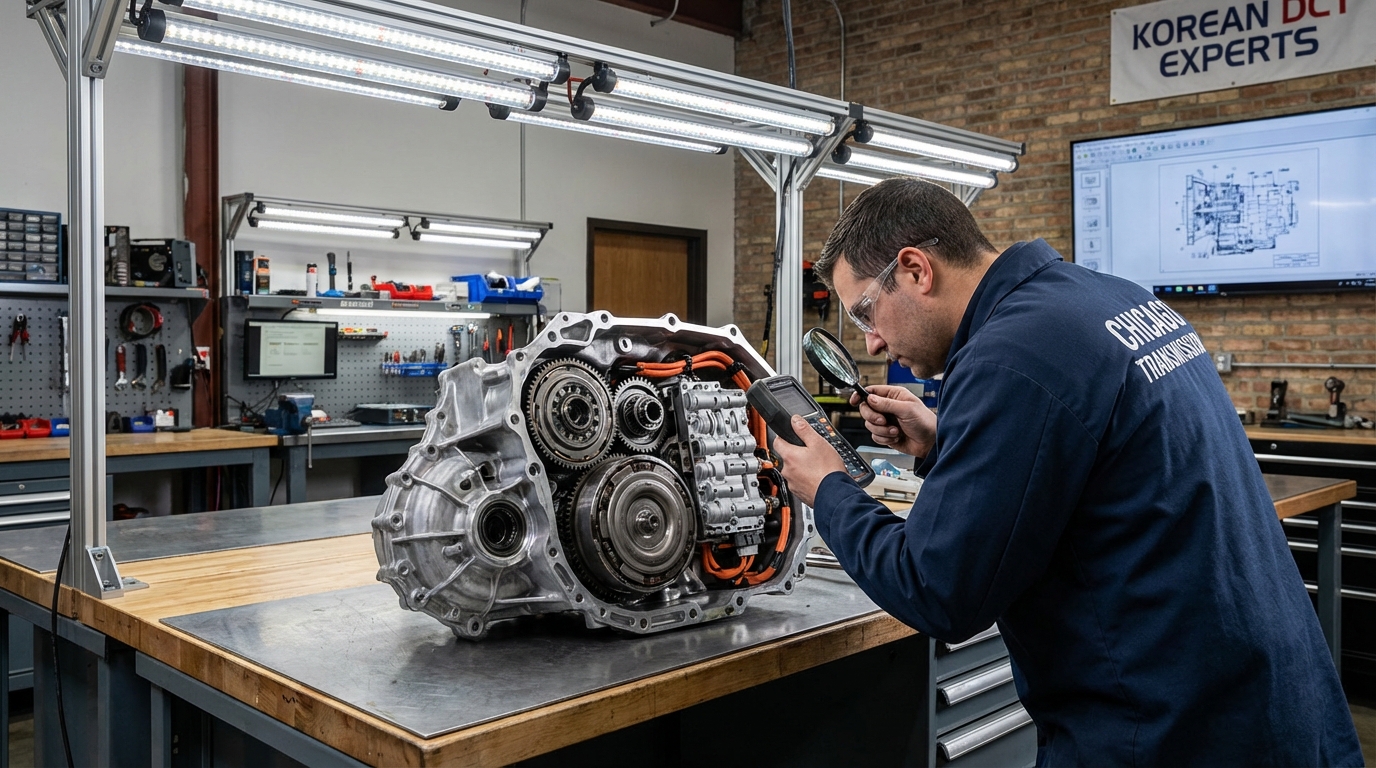
The causes of P0750 range from simple electrical issues to internal transmission damage - the diagnostic determines which applies.
Corroded or damaged wiring and connectors are responsible for an estimated 25 to 35 percent of P0750 occurrences. The transmission case connector - the multi-pin plug that bridges the external engine harness to the internal transmission wiring - is the most common failure point. It sits low on the transmission case, directly in the path of road spray, and in Chicago's salt-heavy winters, corrosion accumulates rapidly. A single corroded pin can introduce enough resistance to prevent the PCM from detecting the solenoid's inductive spike or to reduce current flow below the solenoid's operating threshold. Repair involves disconnecting the connector, cleaning all pins with electrical contact cleaner, inspecting for bent or backed-out pins, applying dielectric grease, and verifying secure engagement. If the connector housing is cracked or a pin is damaged beyond cleaning, a pigtail connector repair kit is available and takes one to two hours to splice in.
A faulty Shift Solenoid A accounts for roughly 25 to 30 percent of cases. Solenoids fail through coil degradation (insulation breakdown from heat and chemical exposure), plunger sticking (varnish deposits from degraded fluid), or mechanical wear of the valve seat. On GM 4L60E transmissions, the 1-2 shift solenoid is an individually replaceable component accessible by dropping the transmission pan. On Ford 5R55 transmissions, the solenoid is part of an integrated solenoid block assembly. On Chrysler 45RFE/545RFE/68RFE transmissions, the solenoid module is a sealed unit housing all shift solenoids.
Low or contaminated transmission fluid contributes to 15 to 25 percent of P0750 diagnoses. Fluid that is low reduces hydraulic pressure throughout the transmission, and the solenoid may fail to produce the expected gear change even though its electrical operation is normal - the PCM then misinterprets the hydraulic failure as a solenoid malfunction. Contaminated fluid - dark, burnt-smelling, or containing metallic particles - can clog the solenoid's valve or deposit varnish on the plunger, preventing it from moving freely. A fluid and filter service addresses this. If the pan inspection reveals significant metallic debris, the contamination has likely spread to internal hard parts, and the fluid service alone will not resolve the code.
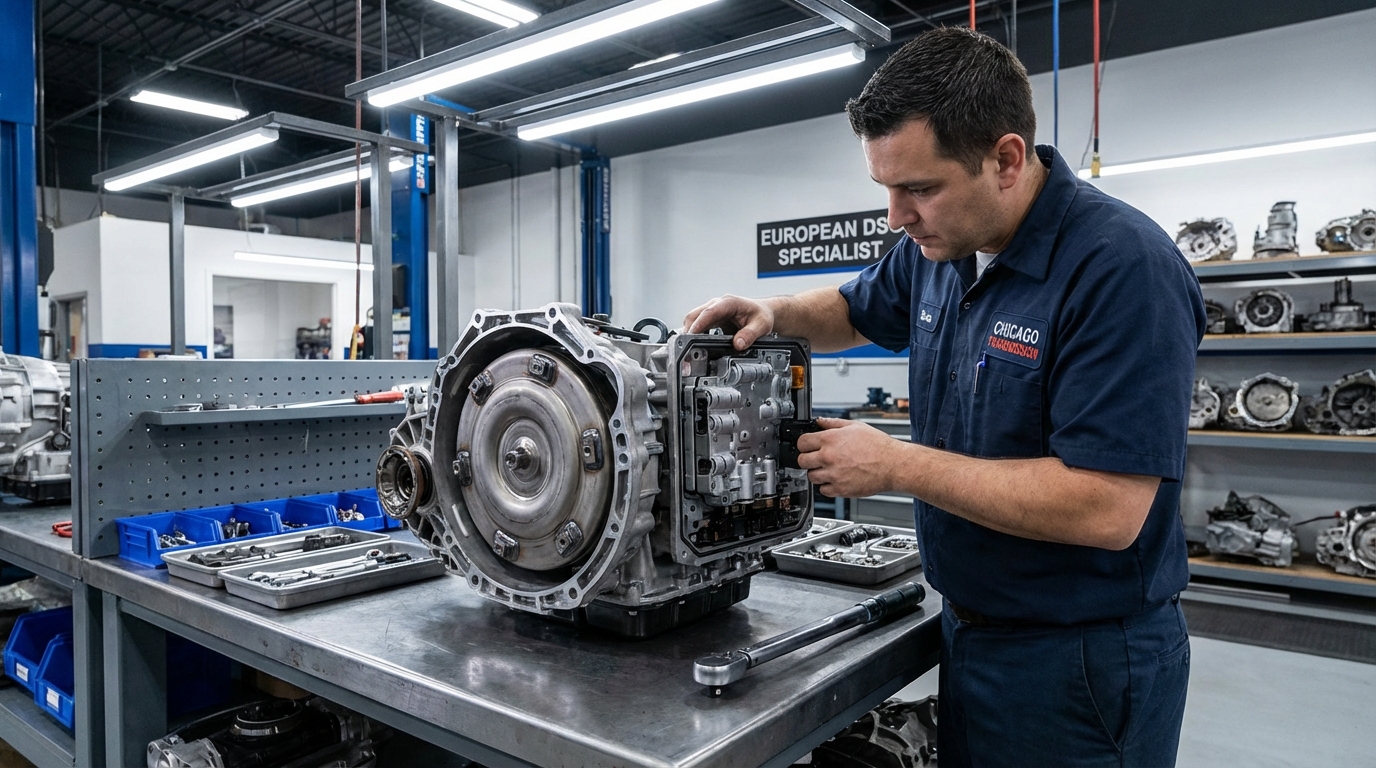
Valve-body wear or contamination is implicated in 10 to 15 percent of P0750 cases. The solenoid directs fluid into passages machined into the valve body, and if those passages are worn, scored, or blocked by debris, the solenoid can operate perfectly while the hydraulic result is incorrect. On Ford 5R55 transmissions, servo bore wear is a well-documented problem that causes P0750 and related codes even after solenoid pack replacement - multiple Explorer Forum members report replacing the solenoid block only to find the code returns because the servo bores are rounded out, allowing fluid to bypass the seals. Aftermarket servo kits with O-rings can provide a temporary fix, while re-sleeving the bores requires a full rebuild. Valve-body replacement or rebuild is the definitive fix for this failure mode.
A complete solenoid pack or TEHCM failure, where the entire multi-solenoid assembly fails, accounts for 5 to 10 percent of cases. This is most common on GM 6L80/6L90 transmissions (which use a Transmission Electro-Hydraulic Control Module combining solenoids and a control computer in one unit) and Chrysler RFE-family transmissions. TEHCM replacement on GM vehicles requires both a new module and VIN-specific programming; Chrysler solenoid module replacement is a similarly complete swap of the sealed unit.
Internal transmission mechanical failure is the most expensive cause and accounts for fewer than 10 percent of initial P0750 diagnoses, though it often becomes the final diagnosis after solenoid and wiring fixes fail. A worn clutch pack, broken band, or fractured sun shell prevents the gear from engaging regardless of solenoid function, and the PCM reads the speed-sensor mismatch as a solenoid fault. A rebuild or remanufactured replacement is the correct repair when internal damage is confirmed - not as a first response to a solenoid code alone.
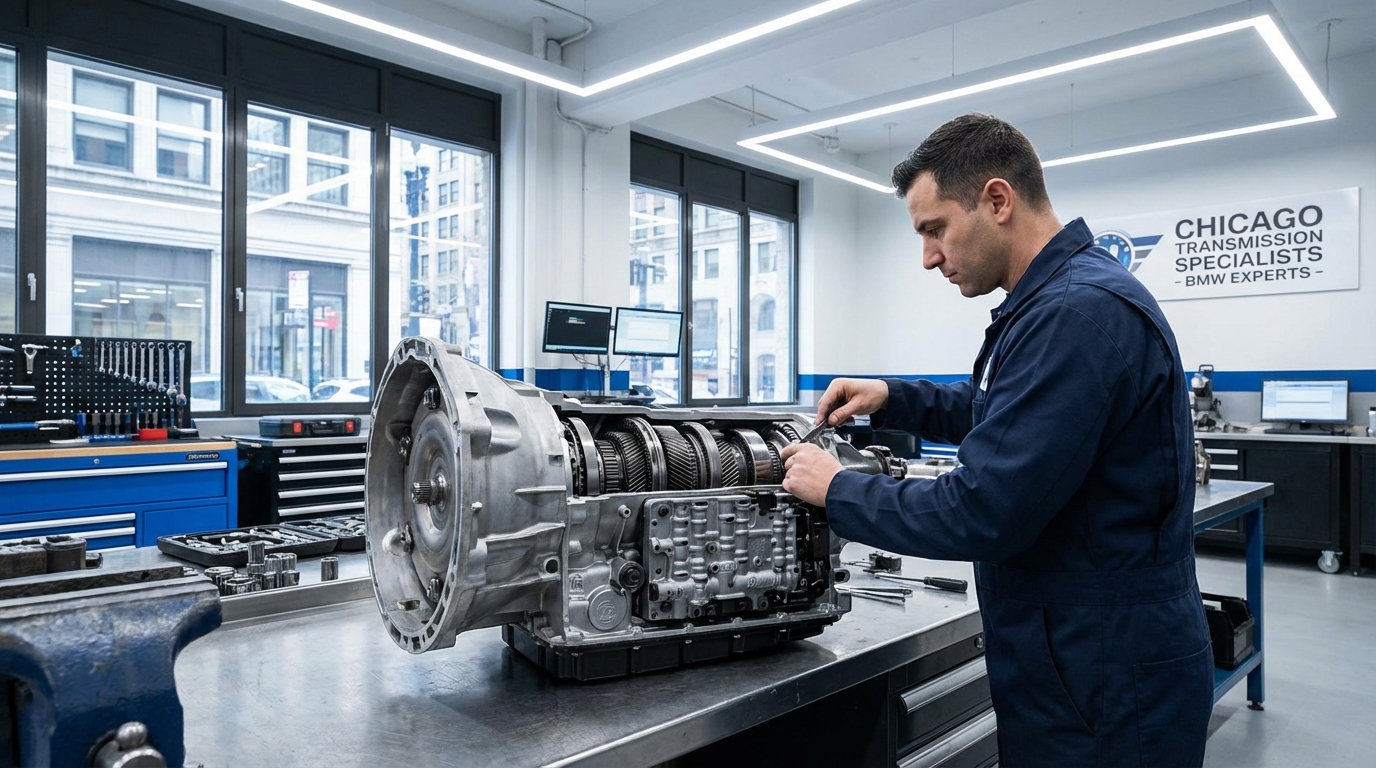
PCM or TCM failure is the least common cause, affecting fewer than 5 percent of cases. A failed solenoid driver chip inside the control module can prevent the module from properly commanding or monitoring the solenoid. A TCM or PCM reflash resolves a small subset of cases. If the module itself has failed, replacement with VIN-matched programming is required - the least common but most involved repair path for this code.
Symptoms Chicago Drivers Will Notice
The most dramatic and immediate symptom of P0750 is limp mode. When the PCM detects a Shift Solenoid A fault, it commands the transmission into a protective failsafe state - typically locking it in third gear (or fourth gear, depending on the transmission) - to prevent further damage. The vehicle can still move, but acceleration is severely limited and top speed may not exceed 25 to 40 mph. For a driver merging onto the Eisenhower Expressway or navigating Lake Shore Drive, limp mode is more than an inconvenience; it is a serious safety concern.
Beyond limp mode, the most common symptom is a failure to shift out of first gear or a harsh, delayed 1-2 upshift. On GM 4L60E-equipped vehicles, where Solenoid A controls the 1-2 shift, a failed solenoid means the transmission remains stuck in first gear until the PCM triggers limp mode. On Chrysler RFE transmissions, where Solenoid A controls the Low/Reverse clutch, the failure may manifest as the vehicle feeling like it starts in a higher gear - barely wanting to move forward from a stop - because the L/R clutch is not applying properly.
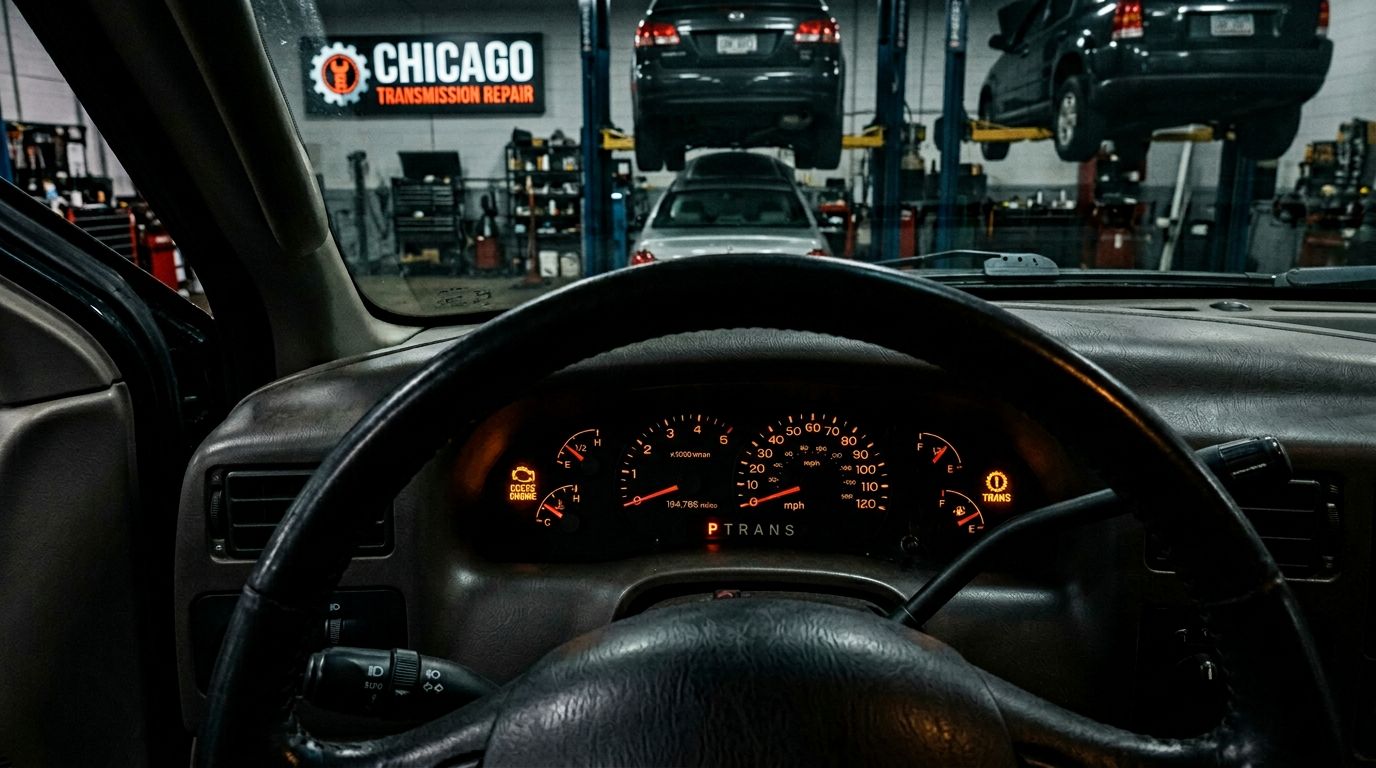
The check-engine light illuminates in virtually all P0750 cases. Many vehicles also activate a dedicated transmission warning indicator or flash the overdrive-off light. The MIL typically stays on as long as the fault is present and does not self-clear until the PCM passes multiple consecutive drive cycles without detecting the fault.
Reduced fuel economy accompanies any shift-related fault because the engine is forced to operate outside its optimal RPM range. A transmission stuck in third gear at highway speeds produces RPMs 30 to 50 percent higher than normal, consuming proportionally more fuel. Drivers may also notice unusual transmission noises - a buzzing from a stuck solenoid, a whine from low fluid pressure, or a clunk when a delayed gear engagement finally occurs.
A cold-weather pattern is commonly reported in Chicago-area vehicles. Multiple forum accounts describe P0750 appearing after the vehicle has sat for several days in sub-freezing temperatures. Cold-thickened fluid increases the force required to move the solenoid plunger, and contracted connector pins may lose contact at corroded points. The code may clear after the transmission reaches operating temperature, only to reappear on the next cold start. This intermittent cold-weather behavior delays diagnosis because the fault cannot be replicated in a warm shop.
Can You Drive with P0750?
P0750 is classified as a serious code. The transmission's ability to shift correctly is fundamentally compromised, and continued driving risks accelerated wear on clutch packs, bands, and the valve body. If the vehicle is in limp mode and locked in a single gear, it can be driven at low speed for a short distance - directly to a transmission shop - but should not be taken on highways or used for extended trips.
If the vehicle is not in limp mode but shows delayed or harsh shifts, it can be driven cautiously to a shop, avoiding heavy throttle and high-speed driving. Under no circumstances should the vehicle be used for towing while P0750 is active.
A tow is the safest option if fluid inspection reveals dark, burnt-smelling fluid with metallic particles, if the vehicle will not move forward from a stop, or if multiple solenoid codes are present simultaneously. The cost of a tow is trivial compared to the cost of a rebuild caused by driving on a known fault.
Step-by-Step Diagnosis of P0750
Diagnosis of P0750 must account for the manufacturer-specific definition of Shift Solenoid A and follow a logical sequence from least invasive (and least expensive) to most.
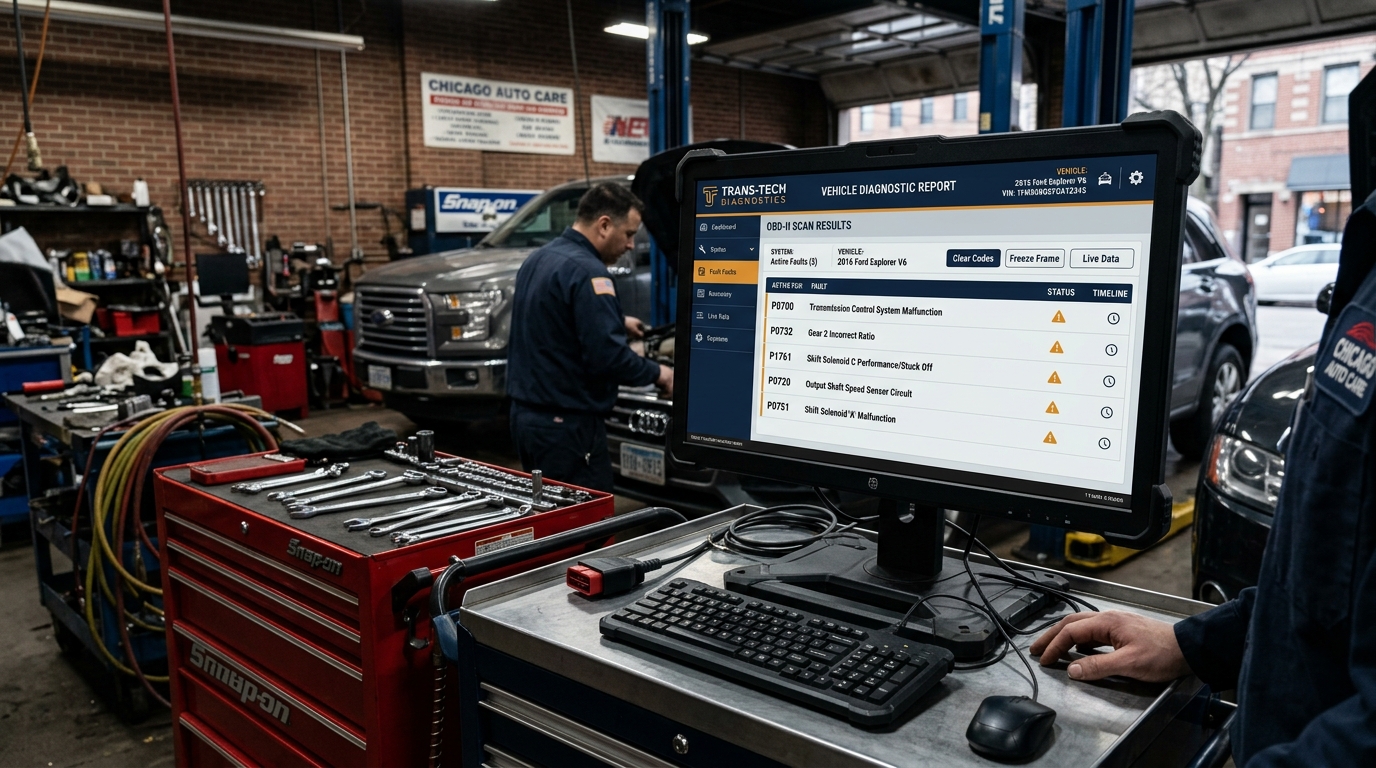
Begin with a comprehensive OBD-II scan using a professional-grade scanner capable of reading transmission-specific codes, freeze-frame data, and live sensor parameters. Record all stored and pending codes, paying particular attention to whether P0750 appears alone or alongside other solenoid codes (P0755, P0760), gear-ratio codes (P0731, P0732), or the generic transmission code P0700. Note the freeze-frame conditions: engine RPM, vehicle speed, throttle position, transmission fluid temperature, and the commanded state of Solenoid A at the moment the fault was stored.
Inspect the transmission fluid level and condition. Many modern vehicles require the engine running and the transmission at operating temperature (180 to 200 degrees Fahrenheit) for an accurate level check. Evaluate the fluid's color (healthy is translucent red; degraded is dark amber to brown; burnt is nearly black), smell (sharp or acrid indicates overheating), and particulate content (wipe the dipstick on a white paper towel and look for metallic flecks). If the fluid is severely degraded, the solenoid may be functioning correctly but unable to produce the expected gear change due to insufficient or contaminated hydraulic pressure.
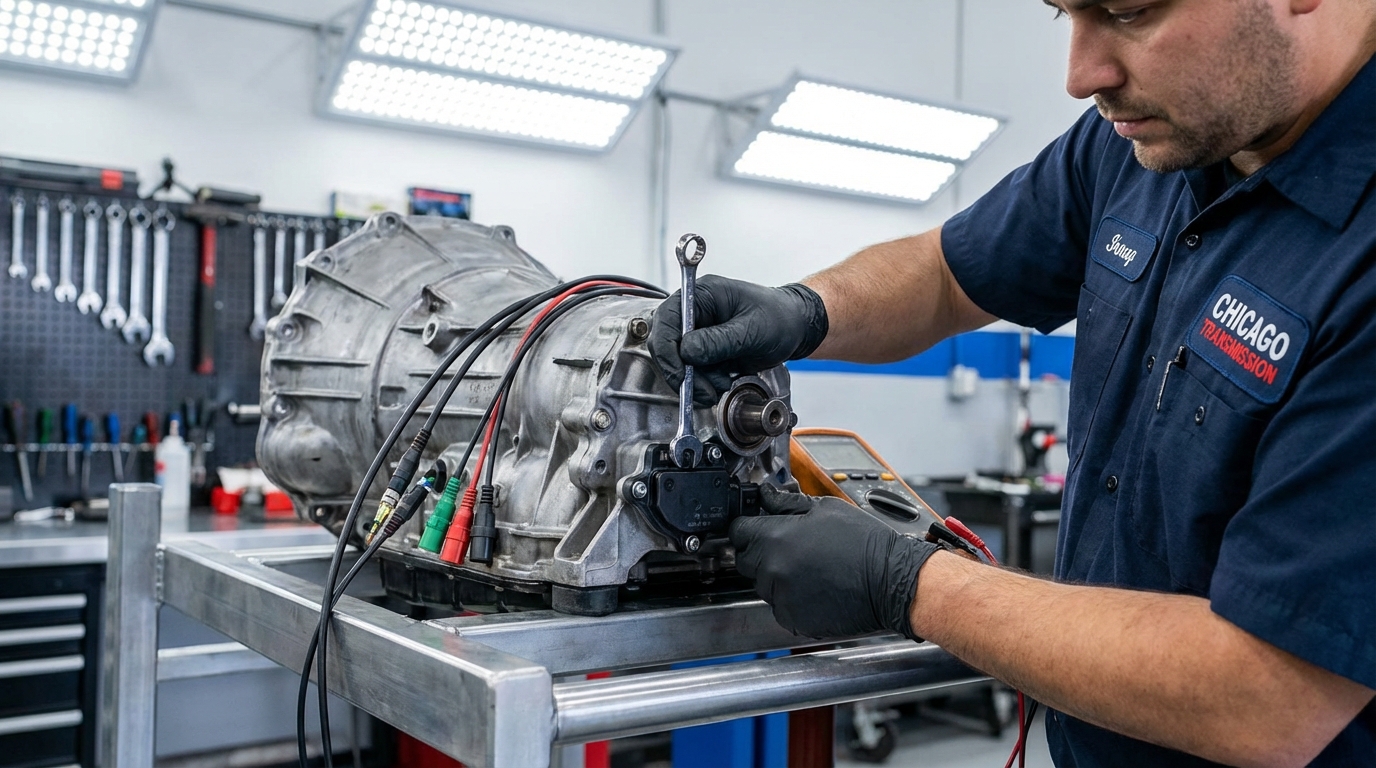
Move to the electrical circuit. Disconnect the transmission case connector and visually inspect every pin for corrosion, discoloration, moisture, or physical damage. Use a digital multimeter to measure the resistance of Shift Solenoid A through the harness - this tests the complete circuit from connector through internal harness to solenoid coil and back. Compare the reading to the manufacturer's specification: 20 to 40 ohms for GM 4L60E, 11 to 15 ohms for Ford 5R55, approximately 1.8 ohms for Chrysler 68RFE main clutch solenoids. An open-circuit reading (infinite resistance) confirms a broken coil or severed wire. A reading significantly below specification suggests a short. A reading within specification at room temperature should be followed by a heated test - use a heat gun to warm the connector area and recheck, as thermally sensitive failures may only appear at operating temperature.
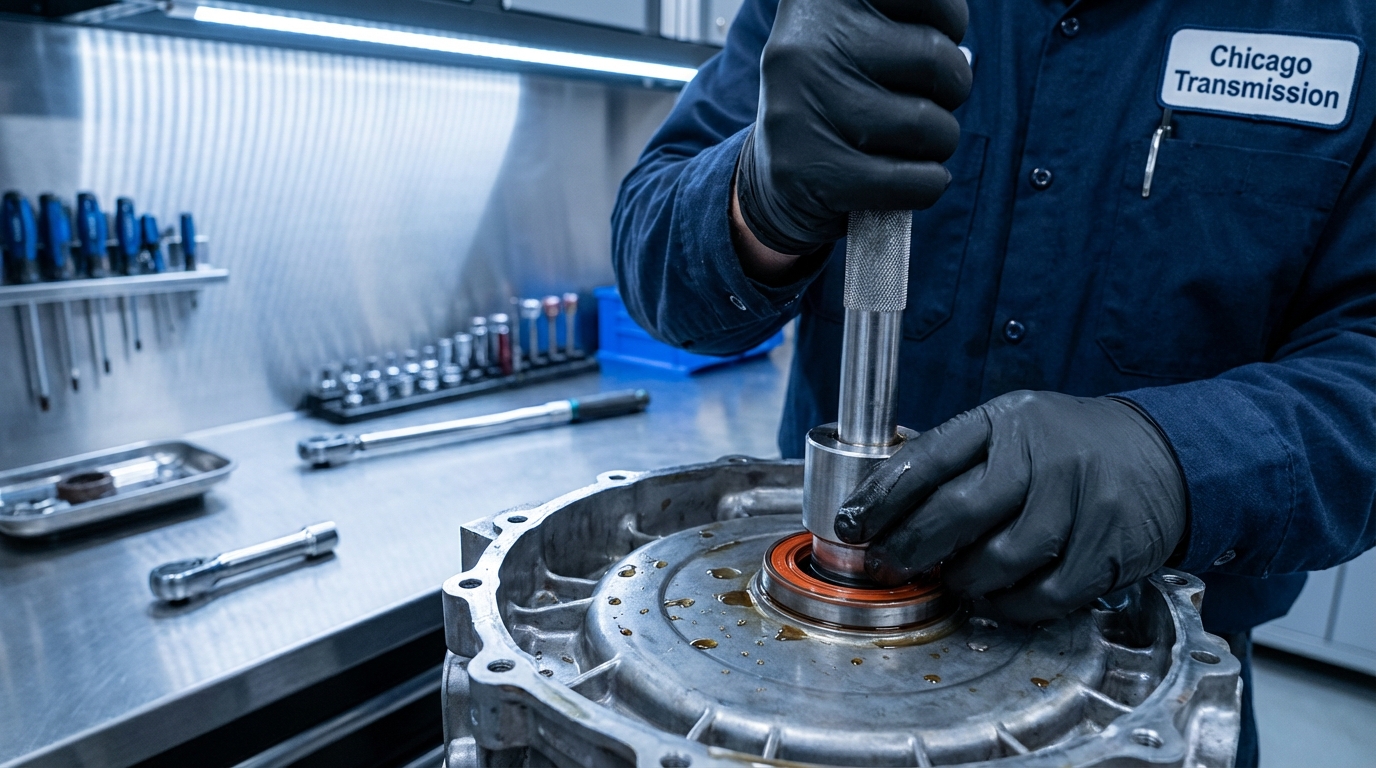
On Chrysler platforms, the wire-swap diagnostic technique described in the Cummins Forum is particularly effective for isolating whether the fault lies in the wiring harness, the solenoid module, or the TCM. Swap the wiring for Solenoid A with another solenoid circuit at both ends of the harness. If the fault code follows the wire (appears under the swapped solenoid's code), the wire is at fault. If it stays with Solenoid A's designation, the problem is the solenoid or the TCM driver chip. A further single-end swap (at the TCM connector only, with the engine idling in Park) can differentiate between a solenoid failure and a TCM failure.
Using the scan tool's bidirectional controls, command Solenoid A on and off while monitoring current draw. A healthy solenoid produces a consistent, repeatable current signature. Erratic current, a failure to draw current, or an inability to produce the expected gear change while current draw appears normal all provide diagnostic direction. If the solenoid draws current correctly but the gear does not engage, the issue is mechanical or hydraulic - solenoid plunger stuck, valve-body passage blocked, or internal hard-part failure.
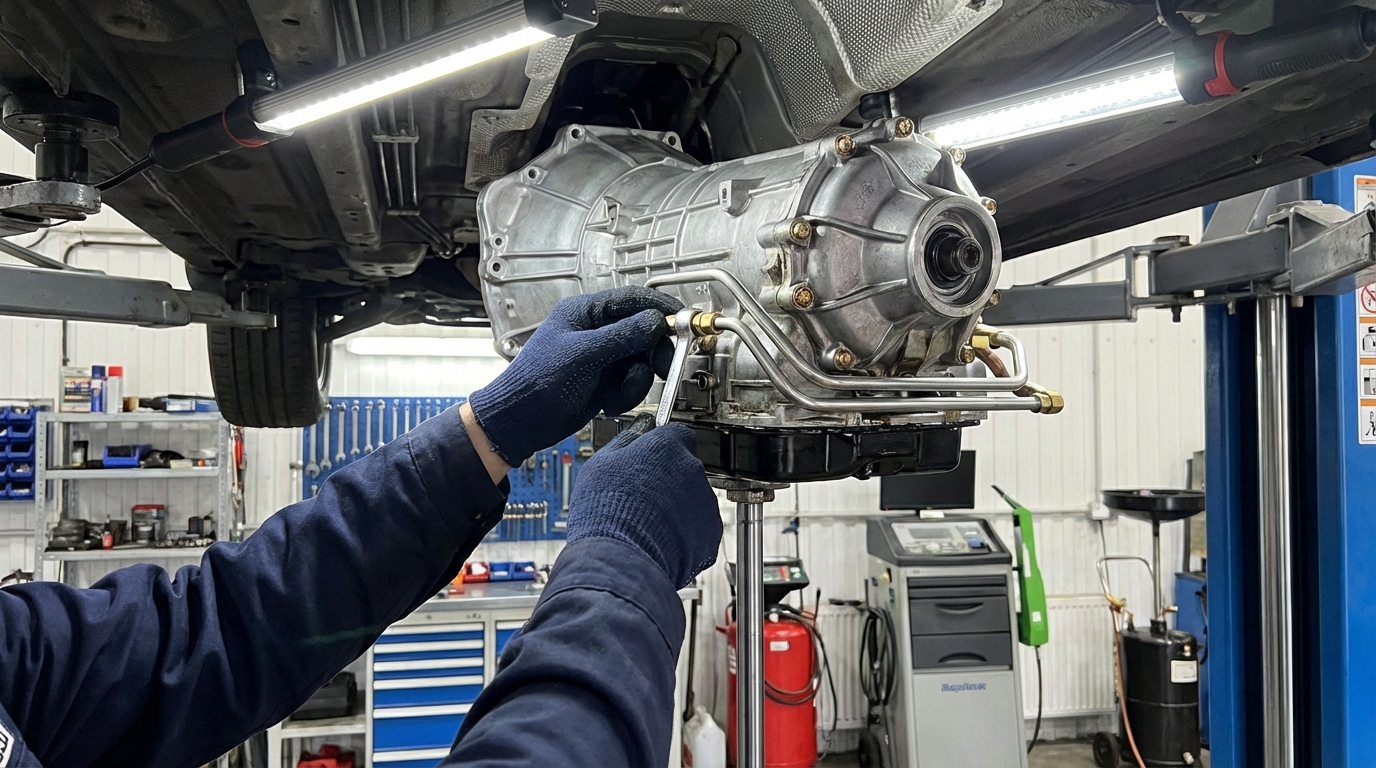
If electrical and actuation tests are inconclusive, drop the transmission pan and perform a visual inspection. Look for metallic particles (clutch material, band fragments, aluminum shavings from the case or valve body), varnish deposits on the solenoid screen, and any visible damage to the solenoid body. On Ford 5R55 transmissions, check the servo bores for signs of rounding or scoring - a common root cause that persists after solenoid replacement. On GM 4L60E transmissions, check for a cracked sun shell by looking for brass-colored metallic dust in the pan.
Understanding Repair Scope
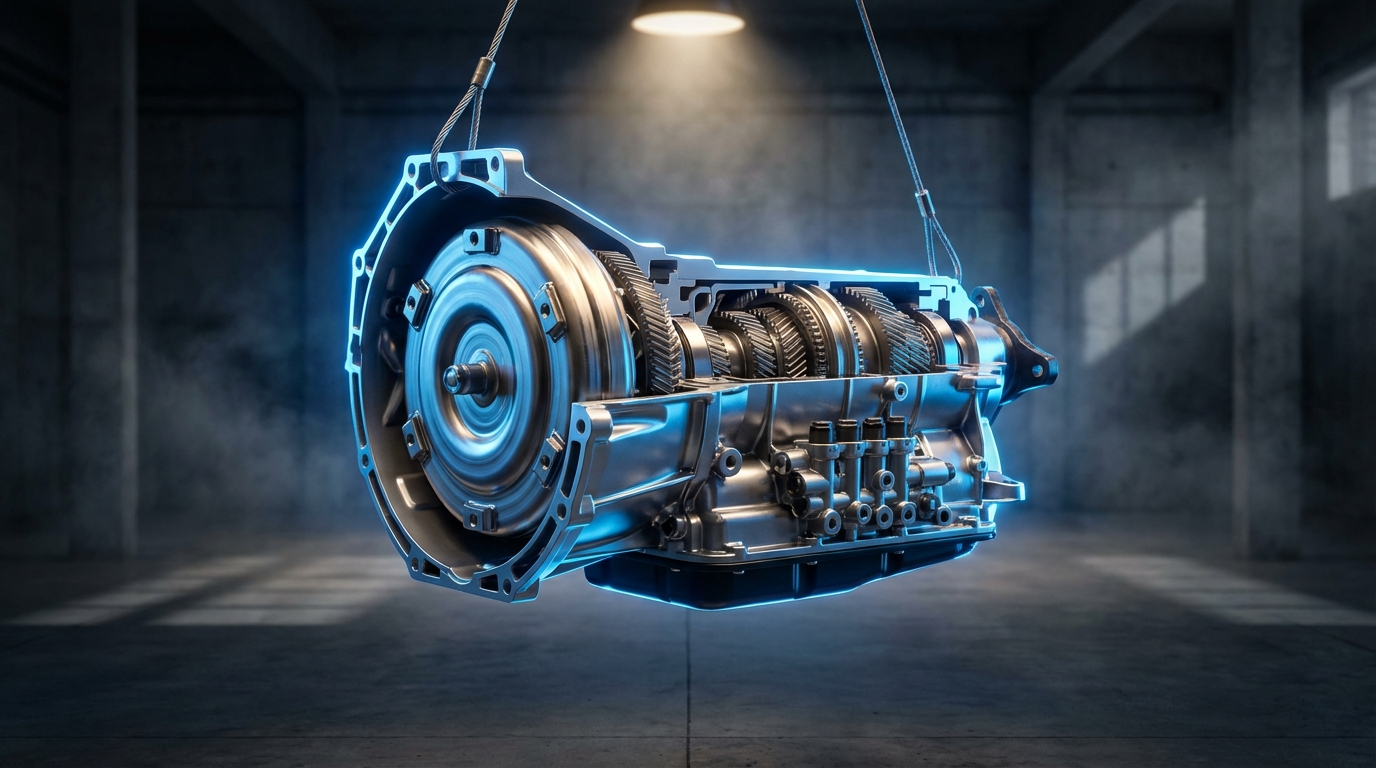
Repairs for this code range from straightforward electrical work - cleaning a connector or replacing a single solenoid - up to a valve body service or full rebuild in cases where internal damage is present. The diagnostic determines which repair is actually needed. Parts replaced based on a code alone (without inspecting the circuit) often result in money spent on the wrong fix.
Chicago Transmission offers a free computer diagnostic that includes a full code scan, circuit inspection, and road test - so you know exactly what caused the code before authorizing anything. Start with a free diagnostic ->



Vehicles Most Commonly Affected by P0750
P0750 appears across virtually every make equipped with an electronically controlled automatic transmission, but certain platforms dominate repair databases and forum discussions.
GM trucks and SUVs with the 4L60E and 4L65E (Chevrolet Silverado, Tahoe, Suburban, Avalanche, TrailBlazer; GMC Sierra, Yukon, Envoy; Cadillac Escalade) from the late 1990s through the mid-2010s are the single most commonly cited platform. The 1-2 shift solenoid is a known wear item, and the transmission case connector suffers from exposure to road spray and salt.
Chrysler, Dodge, and Ram vehicles with the 45RFE, 545RFE, and 68RFE (Ram 1500/2500/3500, Dakota, Durango, Jeep Grand Cherokee, Jeep Commander) from 1999 through the present are the second most common platform. The L/R solenoid module is an electrical-fault-sensitive assembly, and the detailed diagnostic approach - including the wire-swap procedure - is well documented in Cummins and Ram forums.
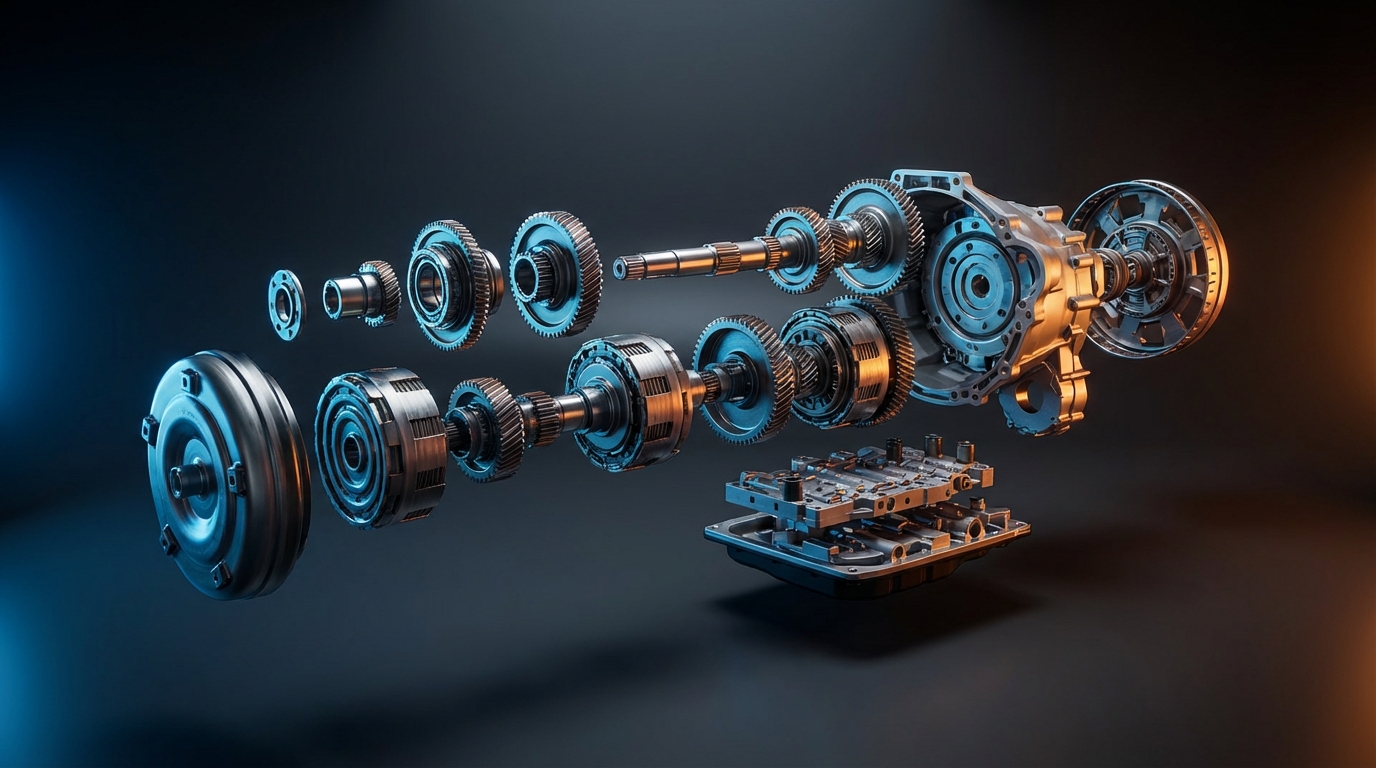
Ford Explorer, Ranger, and Mustang models with the 5R55W and 5R55S (2002 to 2011) are frequently affected. The integrated solenoid block and the well-known servo bore wear issue make these transmissions particularly prone to P0750 and related codes. The revised solenoid block part (9L2Z-7G391-A) and aftermarket servo O-ring kits are common repair items.
Honda Accord and Civic models from the early to mid-2000s, Toyota Camry and Corolla, Hyundai Elantra and Sonata, and Nissan Altima and Maxima all appear in P0750 case studies with moderate frequency, typically traced to solenoid wear or fluid contamination.
Chicago-Specific Factors That Contribute to P0750
Chicago's climate and driving environment accelerate several of the root causes behind P0750.
Winter road salt is the single most destructive local factor for the transmission case connector. The connector is mounted low on the transmission housing, directly in the splash zone of the front tires. Chicago's Department of Streets and Sanitation spreads hundreds of thousands of tons of salt and brine each winter, and the resulting corrosion attacks connector pins, wiring insulation, and ground terminals. An annual connector inspection and application of dielectric grease - ideally performed in October before the first salt application - is the most effective preventive measure.
Cold-soak conditions amplify solenoid vulnerability. When a vehicle sits overnight in single-digit temperatures, transmission fluid thickens substantially. ATF that flows freely at 180 degrees Fahrenheit becomes sluggish at zero degrees Fahrenheit, and the increased viscosity slows solenoid plunger movement and reduces hydraulic response precision. The PCM, expecting a crisp gear change within a calibrated time window, may interpret the sluggish response as a solenoid fault and store P0750. Allowing the vehicle to idle for 60 to 90 seconds before driving - and avoiding aggressive acceleration during the first several minutes - gives the fluid time to warm and thin, reducing false fault triggers.
Chicago's dense stop-and-go traffic produces a high number of shift cycles per mile. Each shift event stresses the solenoid coil, the valve-body passages, and the clutch or band being applied. Vehicles driven primarily in city traffic accumulate solenoid wear faster than those used predominantly on open highways.
Summer heat pushes fluid temperatures upward, accelerating the oxidation and varnish formation that clog solenoid plungers and valve bores. When ambient temperatures exceed 90 degrees and vehicles idle in traffic, fluid temperatures can exceed 220 degrees Fahrenheit. Each 20-degree increase above 175 degrees Fahrenheit roughly halves remaining fluid life. An auxiliary transmission cooler can reduce operating temperatures by 20 to 40 degrees and is a worthwhile investment for vehicles used in heavy traffic or towing.
Prevention Tips for Chicago Vehicle Owners
Preventing P0750 - or detecting it early before it escalates - centers on fluid maintenance, electrical protection, and attentive driving.
Follow a severe-service fluid and filter change interval of every 25,000 to 35,000 miles. Chicago's combination of cold starts, salt-laden road spray, heavy traffic, and summer heat qualifies as severe service by every manufacturer's criteria. A fluid service is a fraction of the cost of the repair that neglected fluid eventually produces.
Inspect and protect the transmission case connector annually, ideally during a fall service before road-salt season. Disconnect, spray with contact cleaner, dry, apply dielectric grease to each pin, and reconnect firmly. Check for cracked or brittle connector housing and replace if needed. This five-minute task addresses the single most common cause of P0750 in salt-belt vehicles.
Allow the transmission to warm for 60 to 90 seconds after cold starts when temperatures are below 30 degrees Fahrenheit. Shift gently through the first several minutes of driving. This reduces hydraulic shock to cold solenoids and lets the fluid reach a viscosity that permits accurate solenoid operation.
When replacing solenoids or solenoid packs, replace the transmission filter and fluid at the same time. The pan is already removed, and the marginal additional cost of a filter and fresh fluid provides insurance against recontamination of the new solenoid. On Ford 5R55 transmissions, inspect the servo bores during any solenoid block replacement - installing a new block without addressing worn bores is a well-documented path to a recurring code.
For GM 4L60E vehicles, consider replacing all shift solenoids and the TCC solenoid as a set during any solenoid service. The parts cost for a complete solenoid set is modest, and the additional labor is negligible when the pan is already down. This avoids a return visit when another aging solenoid fails months later.
For Chrysler 68RFE trucks used for towing, aftermarket upgraded valve bodies (BD Diesel, RevMax) paired with a new solenoid module and transmission tuning provide a comprehensive solution that many Ram forum members report resolving persistent P0750 issues for years of heavy-duty service.
Monitor for early warning signs: a single harsh shift, a momentary delay from a stop, or a check-engine light that appears and clears. Each occurrence represents a degradation event, and investigating promptly - often with nothing more than a connector cleaning or fluid service - prevents the fault from progressing to a hard failure requiring major repair.
Frequently Asked Questions
What does P0750 mean in plain language?
P0750 means the computer that controls your automatic transmission has detected a problem with Shift Solenoid A - one of the electromechanical valves inside the transmission that controls gear changes. The solenoid may have an electrical fault, may be physically stuck, or may be affected by low or dirty transmission fluid. The result is typically a failure to shift correctly, often accompanied by limp mode.
How serious is P0750?
P0750 is a serious code. Unlike some transmission codes that allow near-normal driving, P0750 frequently triggers limp mode, limiting speed to 25 to 40 mph and locking the transmission in a single gear. Even if limp mode does not engage, the inability to shift properly stresses internal components and can cause progressive damage. Prompt diagnosis is strongly recommended.
Can a fluid change fix P0750?
In approximately 15 to 25 percent of cases - specifically those where the fluid is degraded but the solenoid and internal components are still intact - a complete fluid and filter service resolves the code. If the fluid is dark and contains metallic particles, deeper damage is likely and the fluid service serves as a diagnostic step rather than a definitive fix.

Why does P0750 only appear when it's cold outside?
Cold temperatures thicken transmission fluid, slowing solenoid response. Cold also contracts metal connector pins, which can increase resistance at corroded contacts. Both effects are reversible as the transmission warms, which is why the code may appear on cold mornings and clear after driving - a classic pattern in Chicago-area vehicles.
What is the difference between P0750 and P0753?
P0750 is a general malfunction code for Shift Solenoid A - it could be electrical, mechanical, or hydraulic. P0753 specifically identifies an electrical fault in the solenoid circuit, such as an open wire, a short to ground, or a short to battery voltage. P0753 narrows the diagnostic focus to wiring, connectors, and the solenoid coil, while P0750 requires a broader investigation.
Can I replace Shift Solenoid A myself?
On GM 4L60E transmissions, replacing the 1-2 shift solenoid is a moderately accessible DIY job. It requires dropping the transmission pan, identifying the correct solenoid, unbolting it, installing the new one with the correct O-ring, and refilling the fluid to specification. On Ford 5R55 and Chrysler RFE transmissions, the solenoid is part of an integrated block or module that requires more precise handling and, in some cases, electrical re-initialization. If you lack transmission experience, professional installation is recommended to avoid improper sealing, incorrect orientation, or cross-threading that can lead to leaks or immediate re-failure.
Which vehicles get P0750 most often?
GM trucks and SUVs with the 4L60E/4L65E (late 1990s to mid-2010s), Chrysler/Dodge/Ram with the 45RFE/545RFE/68RFE (1999 to present), and Ford Explorer/Ranger/Mustang with the 5R55 (2002 to 2011) are the most frequently reported platforms. Honda, Toyota, Hyundai, and Nissan automatics also appear in repair databases with moderate frequency.

How long does a P0750 repair take?
A connector cleaning and fluid service takes one to two hours. Individual solenoid replacement (GM 4L60E) requires one to two hours. Solenoid pack or module replacement (Ford, Chrysler) takes two to four hours. Valve-body work takes four to eight hours. A full transmission rebuild requires eight to fifteen hours of labor, often translating to two to five business days at a Chicago-area shop.
Final Thoughts
P0750 is a code that demands respect. Unlike performance-related transmission codes that allow cautious continued driving, a Shift Solenoid A malfunction directly compromises the transmission's ability to shift, frequently triggering limp mode and creating an immediate drivability problem. In Chicago, where winter salt corrodes connectors, cold mornings thicken fluid, and stop-and-go traffic piles on shift cycles, the conditions that cause and aggravate P0750 are present for much of the year. The most cost-effective strategy is prevention: maintain the fluid on a severe-service schedule, protect the case connector from corrosion, and investigate the first sign of a shifting irregularity before a connector cleaning becomes a rebuild.
Internal Link Targets: P0700, P0715, P0720, P0730, P0740, P0741, P0742, P0743, P0744, P0751, P0752, P0753, P0754, P0755, P0760
Schema Markup: FAQPage (8 Q&A pairs), HowTo (diagnostic steps), Article (main body)
Series Progress: 21 of 50 articles completed (42%). P0750 is now Done.
Have a Transmission Problem?
Get a free computer diagnostic from Chicago transmission repair support.