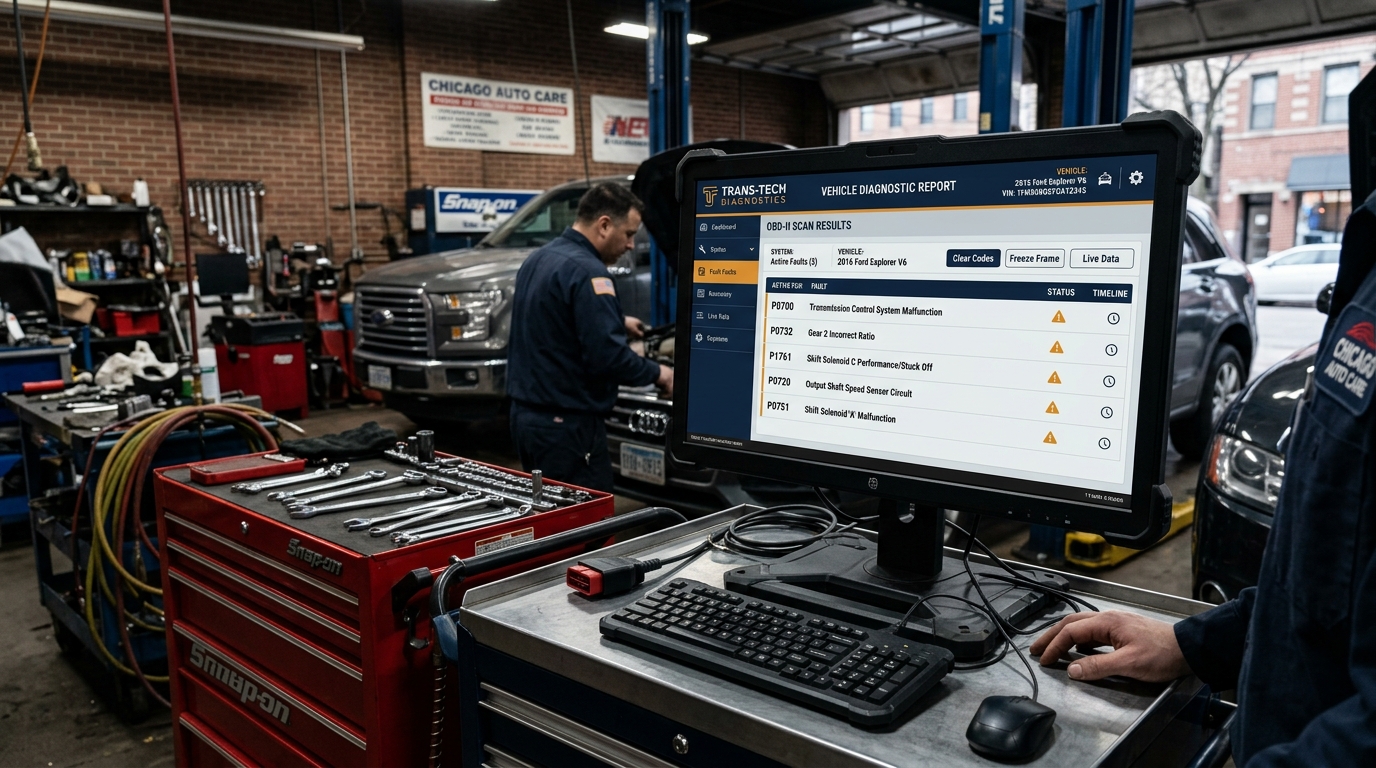
P0755 means your transmission's Shift Solenoid B has failed or its circuit is malfunctioning. Learn what causes it, how to diagnose it, and what Chicago drivers should do when this code appears.
Schema: FAQPage, HowTo, Article
What Does the P0755 Code Mean?
P0755 is a generic OBD-II diagnostic trouble code defined as "Shift Solenoid 'B' Malfunction." The powertrain control module (PCM) or transmission control module (TCM) stores this code when it identifies a fault in the electrical circuit or hydraulic performance of Shift Solenoid B - one of the electromechanical valves inside the automatic transmission responsible for directing pressurized transmission fluid to specific clutch packs and bands during gear changes.
Shift Solenoid B is the second in the alphabetically designated solenoid family. Its physical identity and function differ by manufacturer and transmission platform. In GM's widely used 4L60E and 4L65E transmissions, Solenoid B is the 2-3 shift solenoid, responsible for commanding the upshift from second to third gear. In Chrysler's 45RFE, 545RFE, and 68RFE transmissions, Solenoid B maps to the Underdrive (UD) solenoid, which controls the underdrive clutch circuit critical for first- and second-gear engagement. In Ford's 5R55W/S transmissions and many Toyota automatics, Shift Solenoid B is part of the solenoid pack that manages the 2-3 or 3-4 shift transition depending on the specific hydraulic design. This manufacturer-specific mapping is crucial because it determines which gears are affected, which symptoms the driver notices, and which internal components the technician must evaluate.
The code can reflect a purely electrical failure - an open or shorted solenoid coil, a corroded connector pin, or a damaged wire - or a mechanical failure where the solenoid plunger is stuck open or closed due to varnish, debris, or spring fatigue. It can also be triggered by hydraulic conditions beyond the solenoid's control: low fluid pressure, a clogged filter restricting flow, or a worn valve-body bore that leaks pressure even when the solenoid operates correctly. This breadth of potential causes is what makes P0755 a code that demands methodical diagnosis rather than reflexive parts replacement.
For Chicago-area drivers, P0755 often presents itself as a sudden loss of a critical gear, a jarring shift event, or the abrupt onset of limp mode during a commute. Whether the vehicle locks into third gear on the Stevenson Expressway or refuses to shift out of second on a congested stretch of Western Avenue, the impact on drivability is immediate and often alarming.
Where P0755 Fits in the Shift Solenoid Code Family
P0755 belongs to a sub-family of codes specific to Shift Solenoid B, mirroring the structure of the Solenoid A family documented under P0750. Understanding the sub-codes helps technicians determine whether the fault is electrical, mechanical, or performance-based.
P0756, "Shift Solenoid B Performance or Stuck Off," indicates that the solenoid is mechanically stuck in its closed position - it receives the correct electrical signal but does not produce the expected hydraulic result. The gear change does not occur, or it occurs with excessive delay and slip. This points to a physically stuck plunger, varnish buildup, or a blocked valve-body passage rather than a wiring problem. P0757, "Shift Solenoid B Stuck On," means the solenoid remains open when it should be closed, allowing continuous fluid flow into the circuit and potentially causing the transmission to skip gears, start in a higher gear, or refuse to downshift properly. P0758, "Shift Solenoid B Electrical," isolates the fault to the solenoid's electrical circuit - a definitive open, short to ground, or short to power in the wiring or coil. P0759, "Shift Solenoid B Intermittent," flags a connection that works sporadically, often due to a loose pin or thermally sensitive coil winding.
P0755 itself is broader than these sub-codes. When the PCM stores P0755 instead of a more specific code, it means the initial diagnostic routine detected a general solenoid circuit abnormality that did not cleanly match a narrower fault category, or the manufacturer's software groups all Solenoid B faults under the parent code before further testing differentiates the root cause.
When P0755 appears alongside P0750 (Solenoid A) and P0760 (Solenoid C), the likelihood of a systemic issue rises sharply. A Ford Trucks forum thread documents a case where P0750, P0755, and P0760 all stored simultaneously after a solenoid pack and filter change, and the root cause was found to be the transmission case connector - a single corroded plug affecting every solenoid circuit. Similarly, on Chrysler minivans with the 62TE transaxle, multiple solenoid codes appearing together almost always point to the solenoid pack assembly or its internal wiring rather than an individual solenoid failure.
How Shift Solenoid B Works
Shift Solenoid B operates on the same electromechanical principle as all transmission shift solenoids. A coil of copper wire is wound around a ferromagnetic core inside the solenoid housing. When the TCM applies current, the magnetic field generated by the coil moves a plunger against a return spring, opening a hydraulic valve. Pressurized automatic transmission fluid (ATF) flows through the open valve into the designated circuit - engaging the clutch pack or band required for the target gear. When the TCM removes current, the spring pushes the plunger back to its resting position, closing the valve and releasing or redirecting fluid flow.
In the GM 4L60E, the 2-3 shift solenoid (Solenoid B) is a normally-open design: it allows fluid to pass when de-energized and blocks flow when energized. The TCM energizes Solenoid B during first and second gears, then de-energizes it to allow the 2-3 upshift. This design means that a shorted or always-energized solenoid can prevent the transmission from ever reaching third gear, while an open-circuit or de-energized solenoid causes the transmission to skip second gear entirely and jump directly from first to third.
The TCM verifies solenoid operation through two feedback mechanisms. Electrically, it monitors current draw: a healthy GM 4L60E shift solenoid draws current consistent with its coil resistance of 20 to 40 ohms. Mechanically, it compares the input shaft speed (ISS) to the output shaft speed (OSS) to confirm that the expected gear ratio was achieved within a calibrated time window. If the current draw is abnormal, or if the speed-sensor ratio does not match the expected gear, the TCM logs the appropriate fault code.
Solenoid coil resistance specifications vary by platform. GM 4L60E/4L65E solenoids measure 20 to 40 ohms. Ford 5R55 solenoid packs have individual coil resistances of 11 to 15 ohms. Toyota shift solenoids typically measure 11 to 16 ohms. Chrysler RFE-family UD solenoids (low-resistance, high-current design) measure approximately 1.8 to 3 ohms. These values are measured at room temperature; resistance increases with temperature, and a marginally degraded coil may pass a cold bench test but fail at operating temperature - a classic trigger for intermittent P0755.
Common Causes of P0755
The root causes of P0755 span from inexpensive connector fixes to major internal transmission work, and their relative frequency helps guide an efficient diagnostic path.
Corroded, damaged, or loose wiring and connectors account for an estimated 25 to 35 percent of P0755 occurrences. The transmission case connector is the most frequent failure point, particularly in salt-belt environments like Chicago. Road spray laden with salt and brine attacks connector pins over successive winters, building up a resistive film that can disrupt the low-current signal to the solenoid. On Chrysler minivans (62TE), the Car Talk community forum specifically identifies bad connections in the transmission harness as a "KNOWN" cause of P0755, sometimes requiring nothing more than reseating and cleaning the connector to resolve the issue. Repair involves disconnecting the connector, cleaning all pins with electrical contact cleaner, inspecting for bent or backed-out pins, applying dielectric grease, and verifying secure engagement. If the housing is cracked or pins are damaged, a pigtail splice kit may be needed and should be quoted after connector inspection.
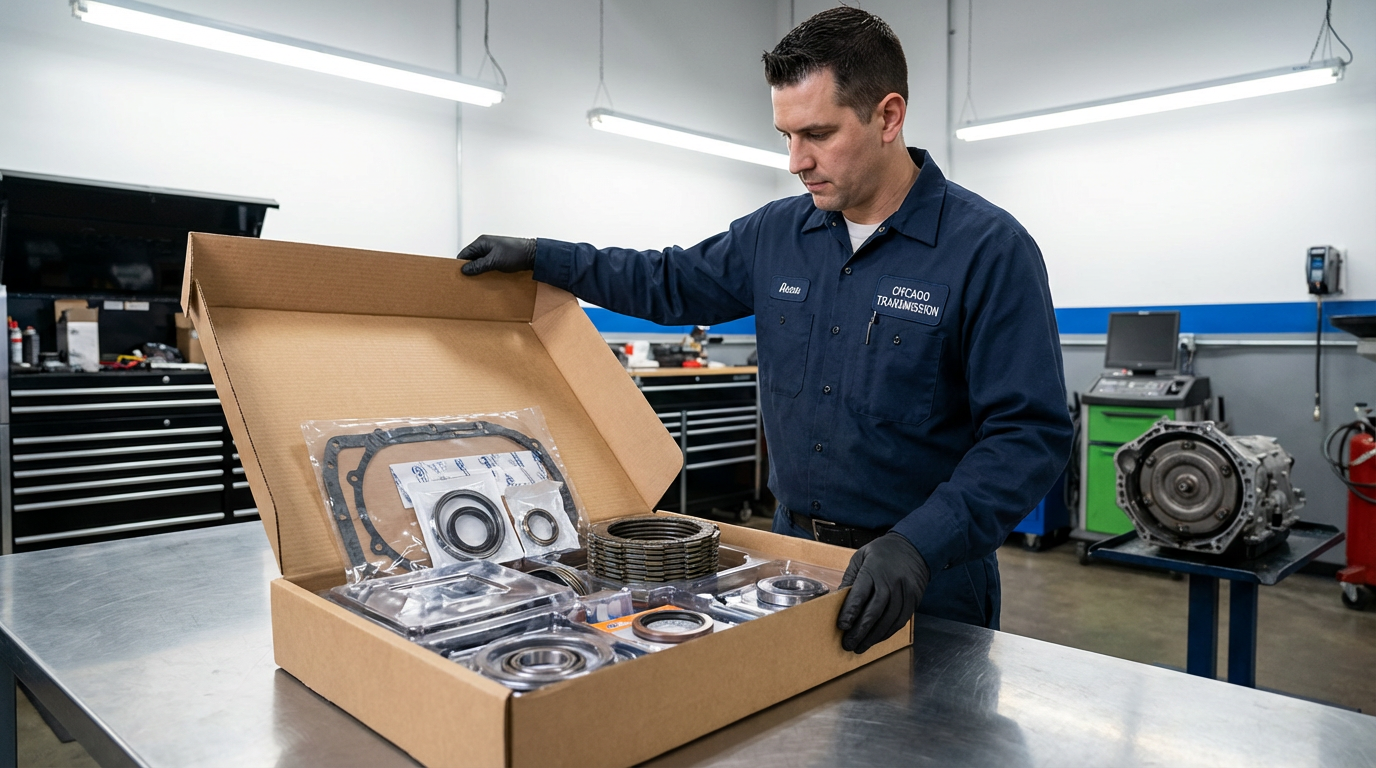
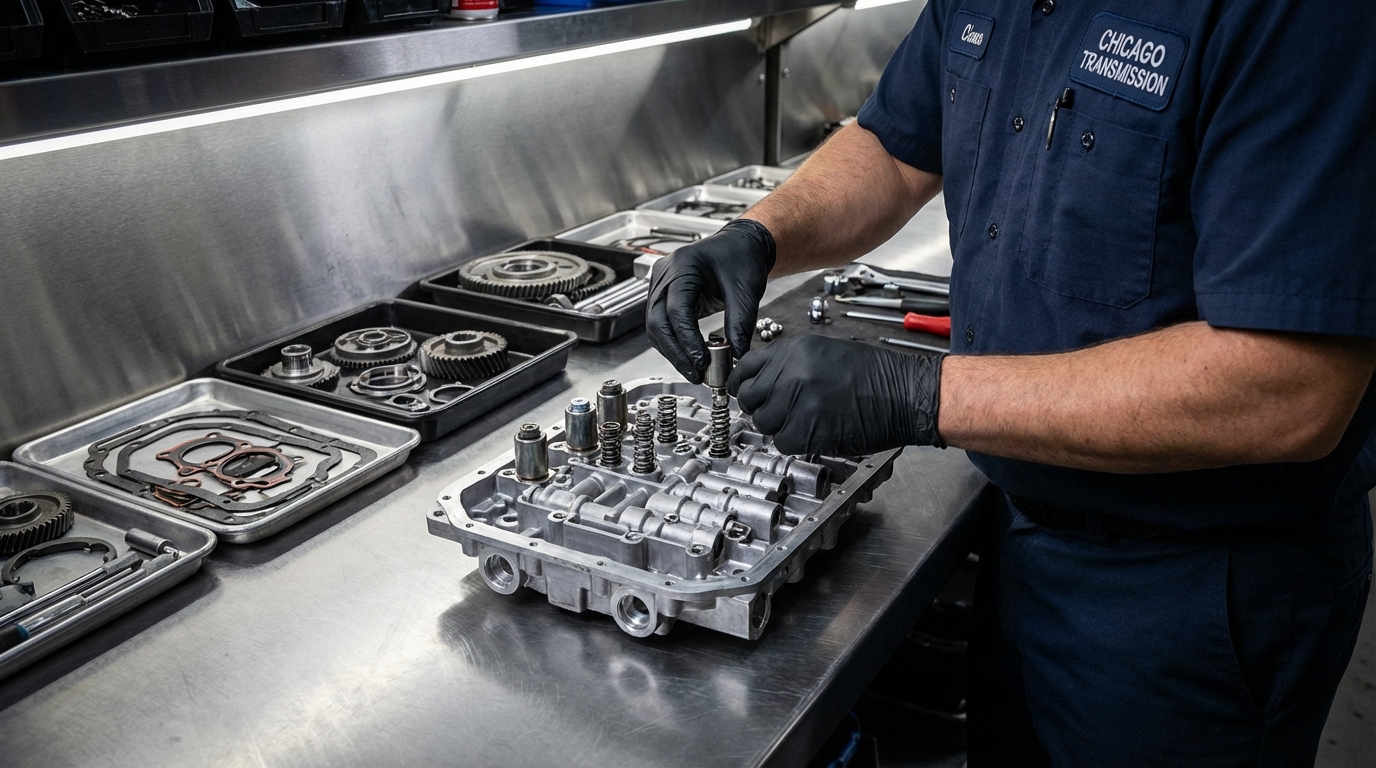
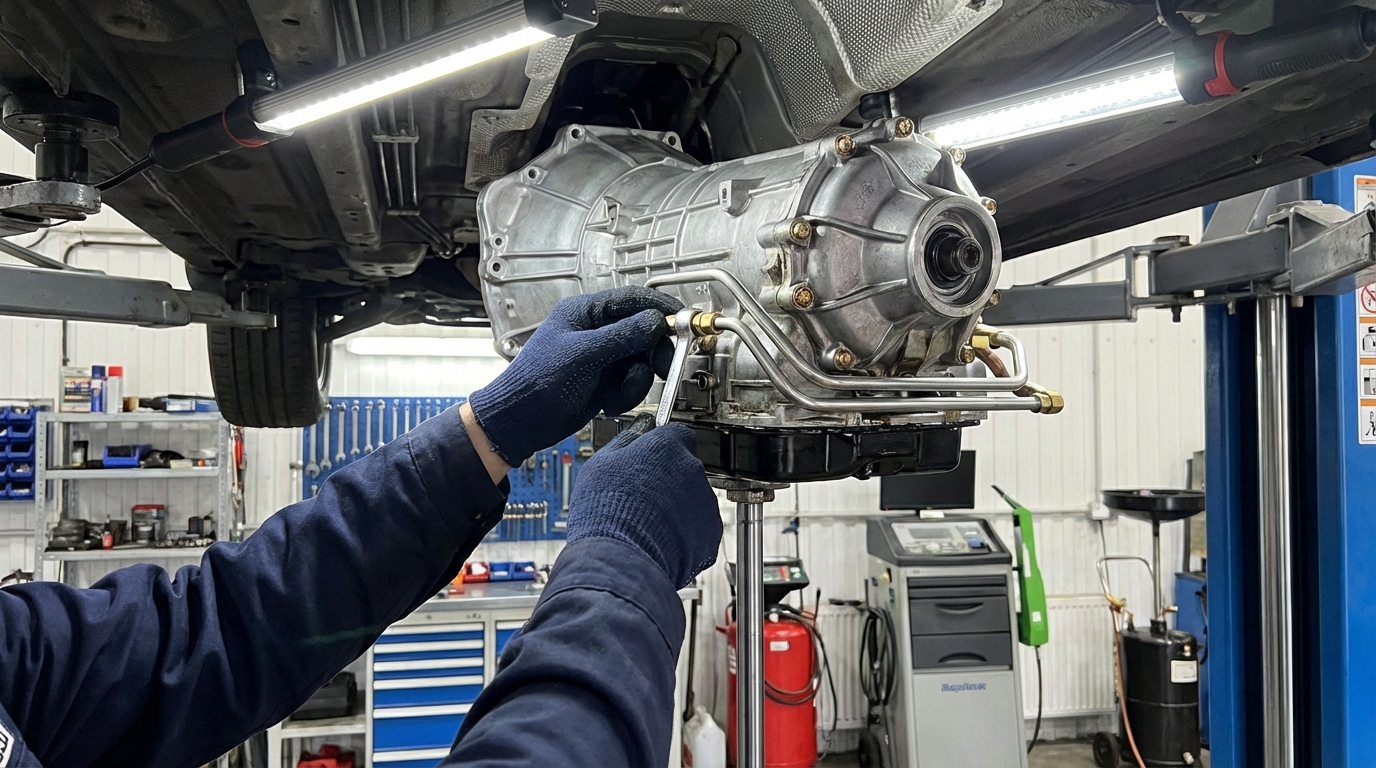
A defective or stuck Shift Solenoid B is responsible for approximately 25 to 30 percent of cases. Internal solenoid failures include coil degradation from heat and chemical exposure, plunger sticking from varnish or metallic debris, and spring fatigue preventing proper valve closure. On GM 4L60E transmissions, Solenoid B is individually replaceable by dropping the transmission pan; parts and labor is one to two hours. On Ford 5R55 transmissions, the solenoid is part of an integrated block (OEM revised part number 9L2Z-7G391-A), and labor is two to three hours. On Chrysler 62TE transaxles, the solenoid pack is a complete assembly; aftermarket and OEM options exist, and the right choice depends on vehicle condition and warranty goals. On Toyota models, individual solenoids (part number 35250-12030 and similar) require valve-body removal for access, with labor of two to four hours.
Low or contaminated transmission fluid contributes to 15 to 25 percent of P0755 diagnoses. Low fluid reduces system-wide hydraulic pressure, and the solenoid may fail to produce the expected gear change even when operating electrically within specification. Contaminated fluid - dark, burnt-smelling, or containing metallic particles - can clog the solenoid valve or deposit varnish on the plunger. A fluid and filter service addresses this. If the pan reveals heavy metallic debris, deeper internal damage is likely, and the fluid service becomes a diagnostic step rather than a standalone fix.
Valve-body wear or contamination is implicated in 10 to 15 percent of P0755 cases. The solenoid directs fluid into machined passages in the valve body, and if those passages are worn, scored, or blocked, the hydraulic result is incorrect regardless of solenoid function. On Ford 5R55 transmissions, worn servo bores are a well-documented cause of recurring solenoid codes even after pack replacement. Valve-body rebuild or replacement.
A failing solenoid pack or TEHCM accounts for 5 to 10 percent of cases. This is most common on GM 6L80/6L90 transmissions with their integrated TEHCM and on Chrysler RFE-family transmissions where the solenoid/TRS module is a sealed assembly.
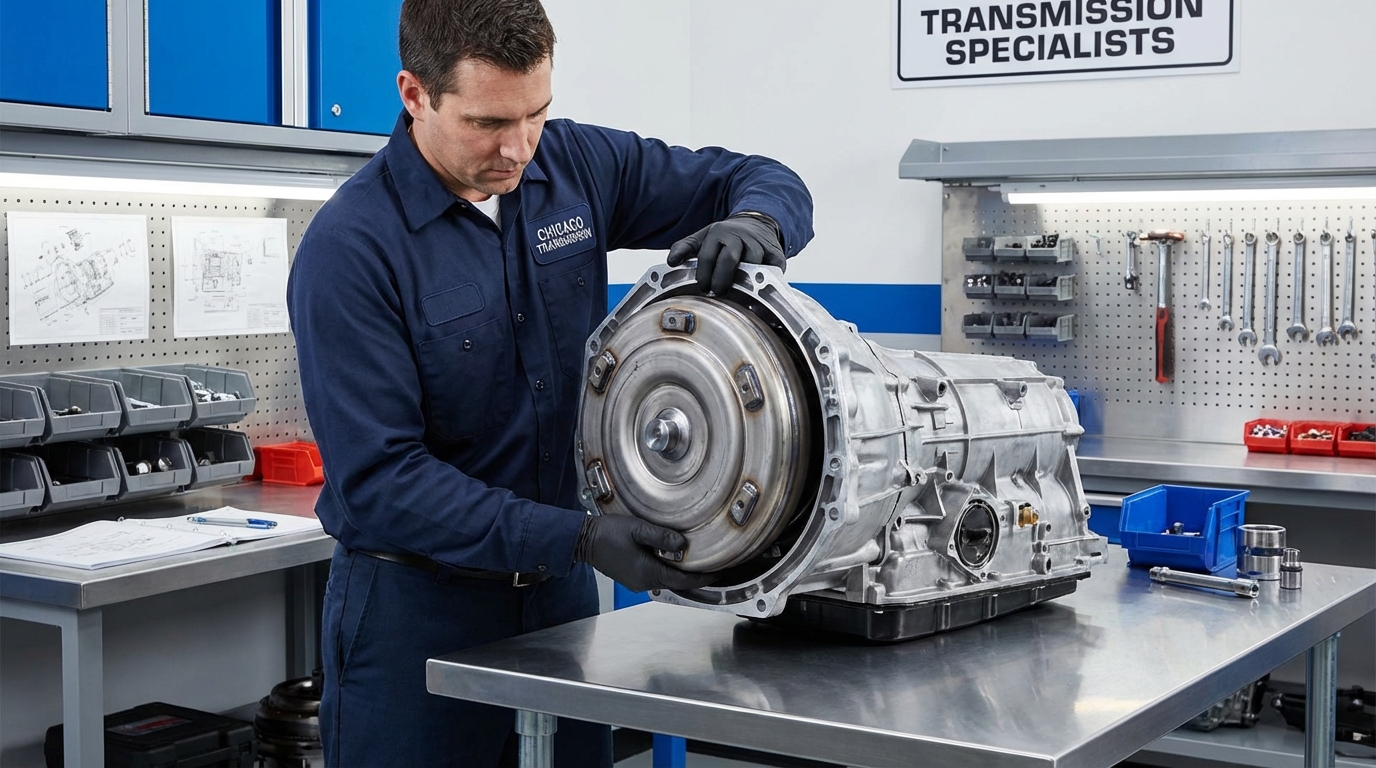
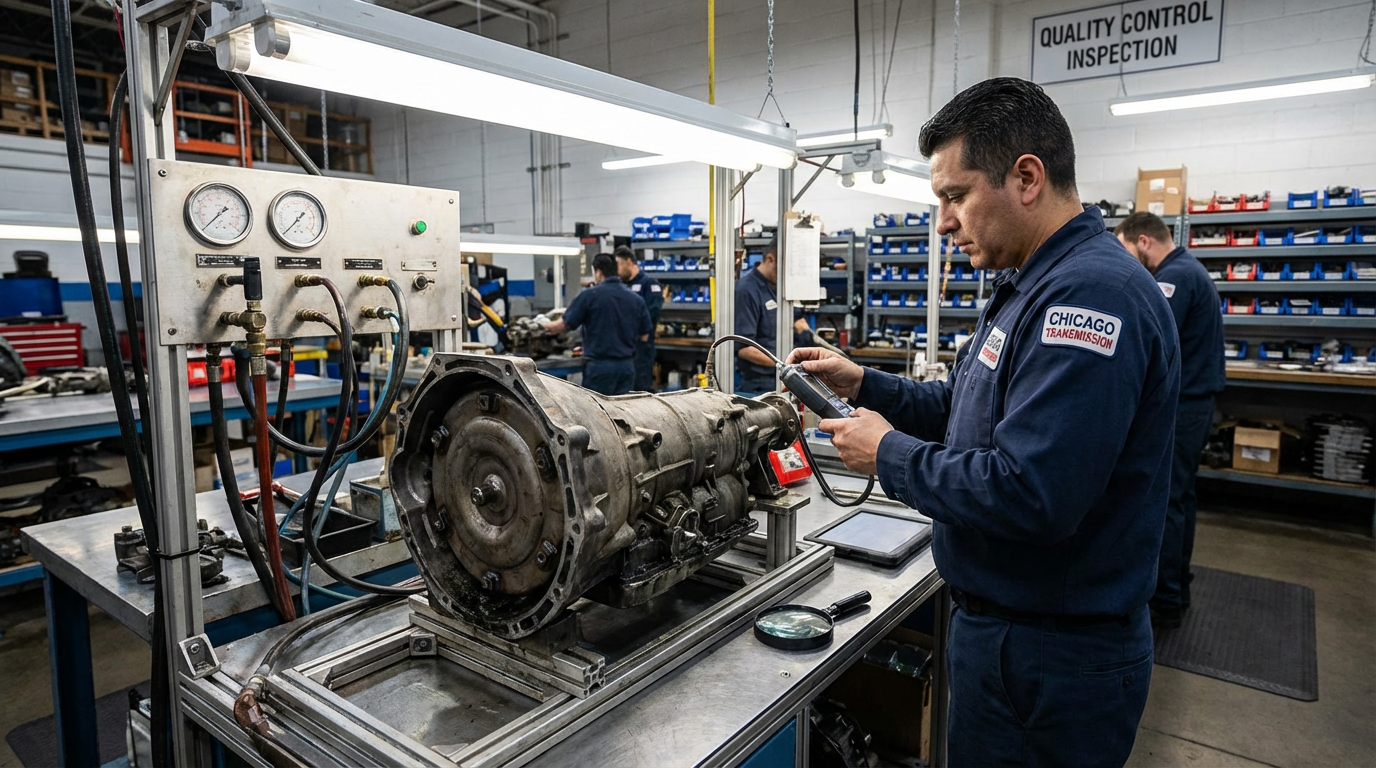
Internal transmission mechanical failure - worn clutch packs, broken bands, or fractured internal components - accounts for fewer than 10 percent of initial P0755 diagnoses but is sometimes the final verdict after solenoid and wiring repairs fail to resolve the code. On GM 4L60E transmissions, a worn 3-4 clutch pack or a cracked 2-4 band can prevent third gear from engaging, and the TCM interprets the resulting speed-sensor mismatch as a Solenoid B fault. Rebuilds and remanufactured replacement transmissions are the options when internal damage is confirmed.
PCM or TCM failure is the least common cause, affecting fewer than 5 percent of cases. A failed solenoid driver chip, corrupted shift tables, or CAN-bus communication errors can prevent the module from correctly commanding or monitoring the solenoid. A software reflash addresses minor control-module issues; hardware module replacement requires VIN-matched programming.
Symptoms Chicago Drivers Will Notice
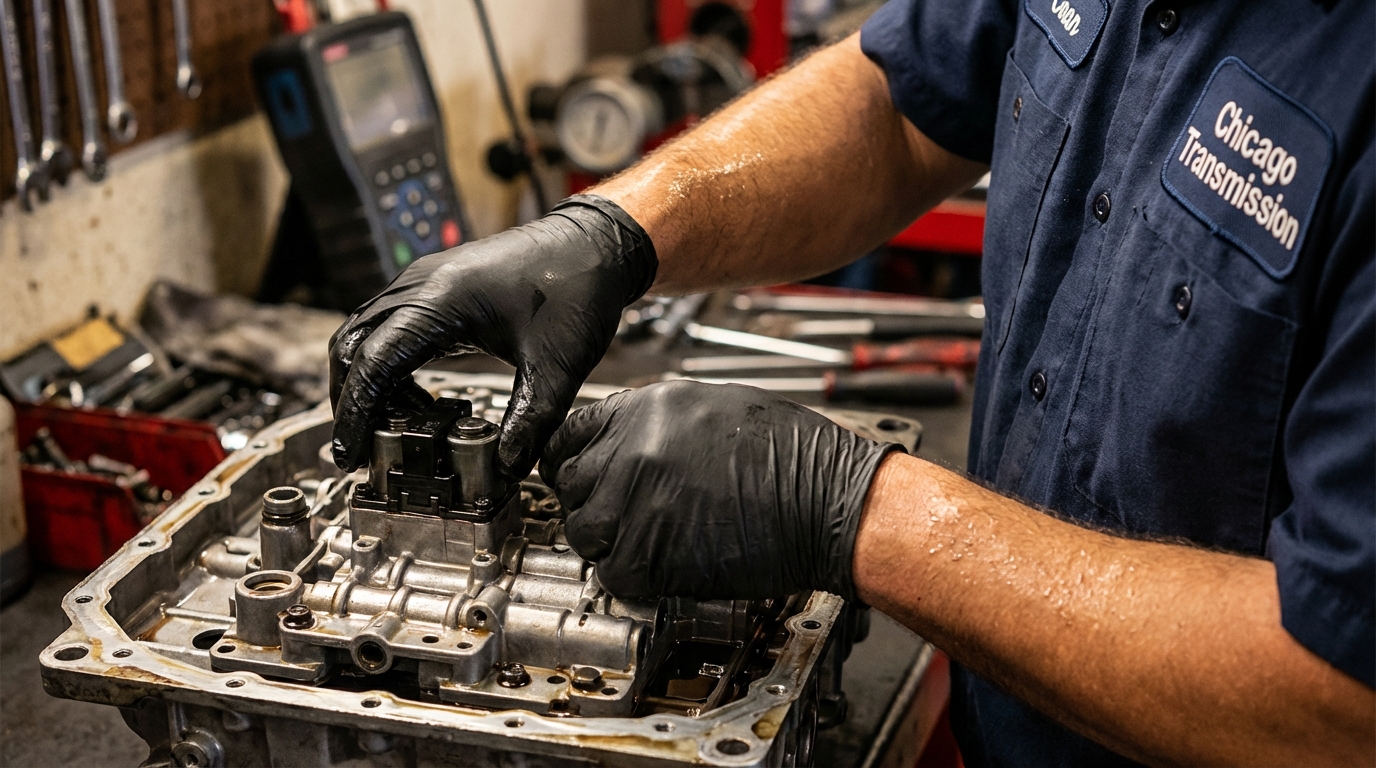
The most common and immediately alarming symptom of P0755 is the inability to shift into or through a specific gear. On GM 4L60E-equipped trucks and SUVs, where Solenoid B controls the 2-3 upshift, drivers report the transmission refusing to leave second gear or, conversely, jumping from first directly to third with a harsh clunk. On Chrysler vehicles with the 62TE, P0755 frequently triggers limp mode - a Dodge Caravan forum thread describes the transmission locking in second gear and limiting speed to approximately 35 mph, making highway driving impossible.
Harsh or jerky shifts are the second most prevalent symptom. When the solenoid operates intermittently - opening partially or with delay - the gear engagement is rough rather than smooth. Drivers describe it as a "kick" or "slam" that is felt throughout the vehicle, particularly during the 2-3 or 3-4 transition under moderate acceleration. This is especially noticeable during the accelerate-and-brake cycling typical of Chicago expressway traffic.
Limp mode is a protective measure the TCM activates when it detects a solenoid fault serious enough to risk transmission damage. The transmission locks into a single safe gear - typically second or third - and limits engine RPM to 2,500 to 3,000. In Chicago, where expressway speeds routinely exceed 55 mph, being locked at 35 mph creates a dangerous speed differential with surrounding traffic.
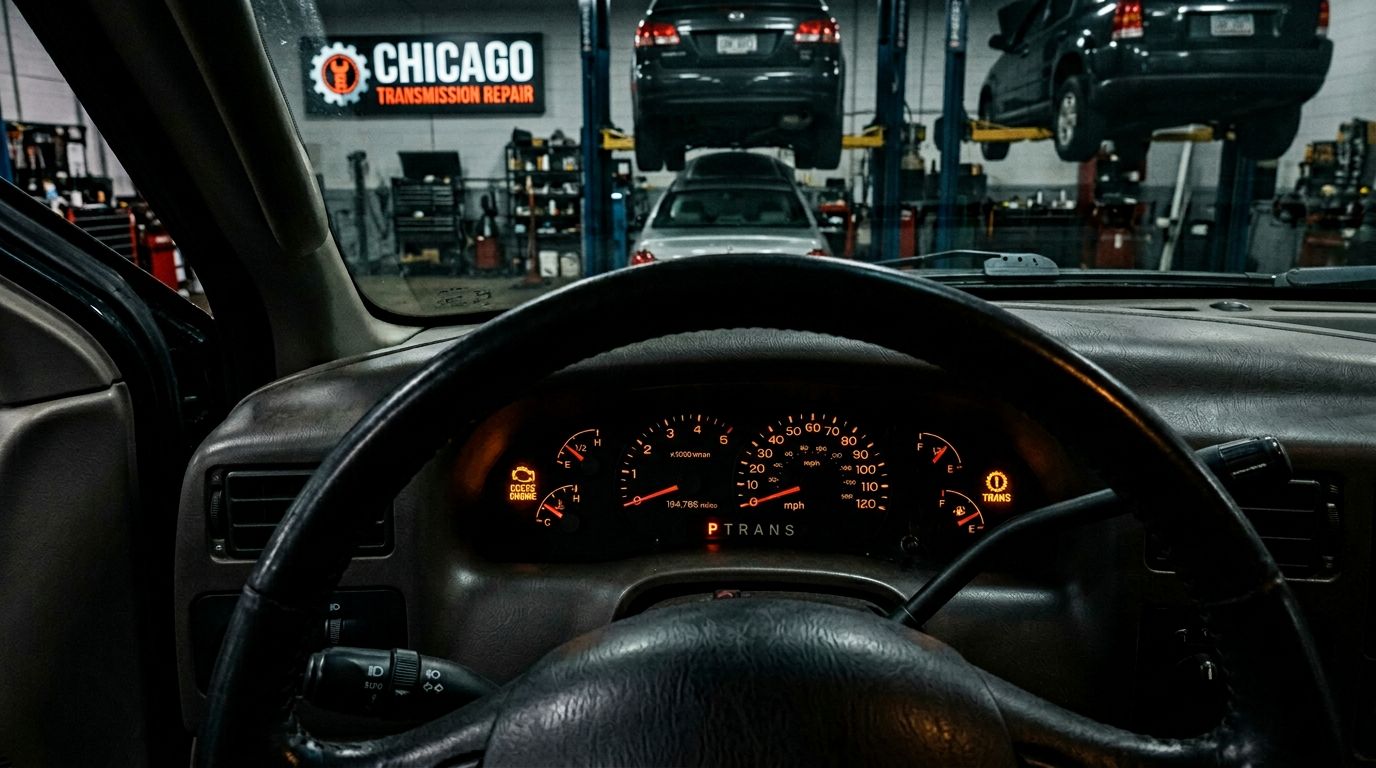
The check-engine light illuminates in virtually all P0755 cases, often accompanied by a dedicated transmission-service indicator or a flashing overdrive-off light. Some vehicles flash the MIL during the actual shift event and leave it solidly lit afterward.
Transmission slipping - a sensation of the engine revving without a corresponding increase in vehicle speed - accompanies cases where the solenoid opens partially or where reduced hydraulic pressure prevents full clutch engagement. Fuel economy drops accordingly, as the engine operates at higher RPMs than intended for the driving speed.
A cold-weather pattern is frequently reported in Chicago-area forums. Thickened fluid slows solenoid plunger response, and contracted connector pins can lose contact at corroded points. The code may appear on the first cold start of the day and clear once the transmission reaches operating temperature, only to return the next morning. This intermittent behavior complicates diagnosis because the fault may not be reproducible in a warm shop environment.
Can You Drive with P0755?
P0755 is a serious code. The transmission's ability to execute a specific gear change is compromised, and in many cases the vehicle enters limp mode immediately. Driving in limp mode is possible for short, low-speed trips directly to a repair facility, but sustained driving - especially on expressways - is unsafe due to the severe speed limitation and the risk of further internal damage.
If the vehicle is not in limp mode but exhibits harsh or delayed shifts, it can be driven cautiously to a shop. Avoid heavy throttle, high-speed highway driving, and towing. Each failed or delayed shift event stresses the clutch packs and bands that the solenoid is supposed to engage, accelerating wear on components that are expensive to rebuild.
A tow is recommended if the transmission will not engage a gear at all, if multiple solenoid codes are stored simultaneously, if the fluid is dark with metallic contamination, or if the vehicle stalls or loses forward motion. A tow within the Chicago metro area - a negligible expense compared to the cost of a rebuild that might have been avoided with prompt action.
Step-by-Step Diagnosis of P0755
Accurate diagnosis of P0755 follows a logical progression from the simplest, least expensive checks to the most complex.
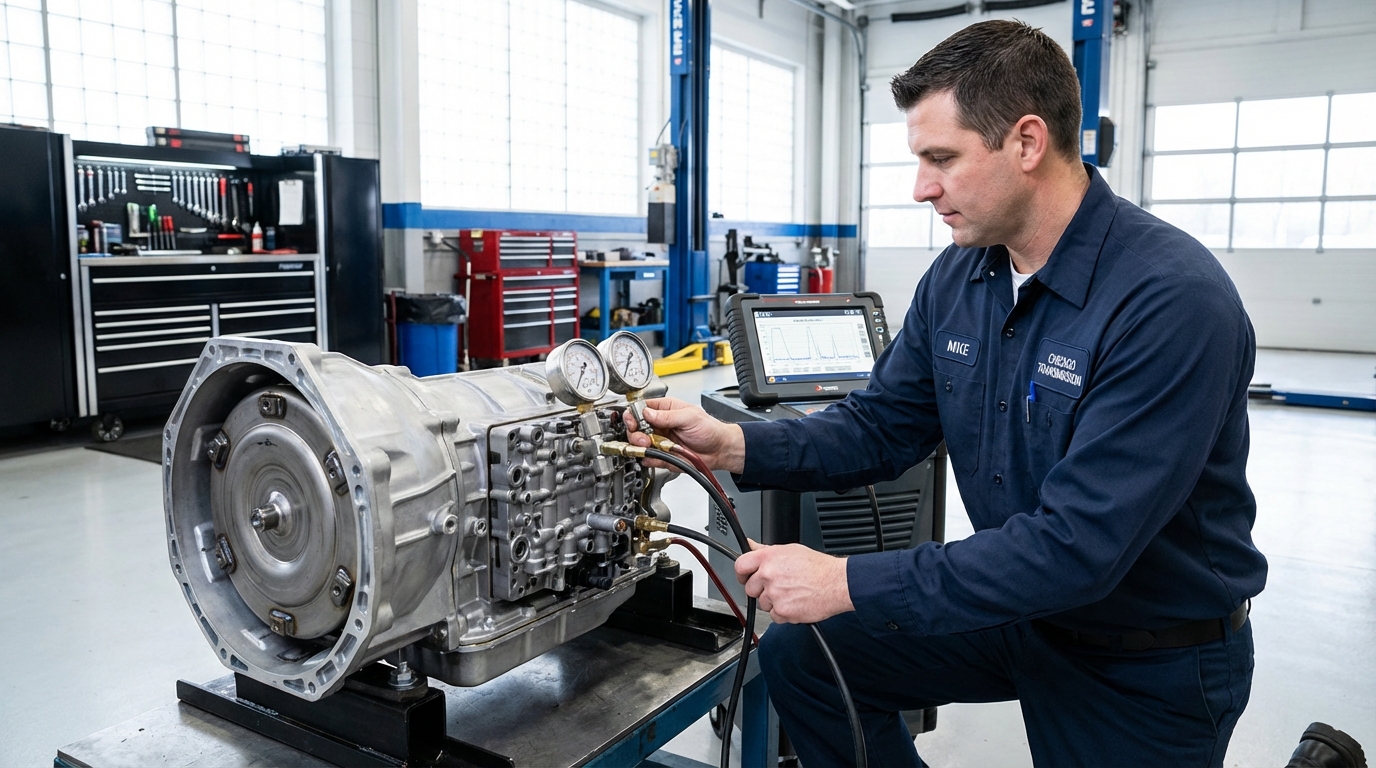
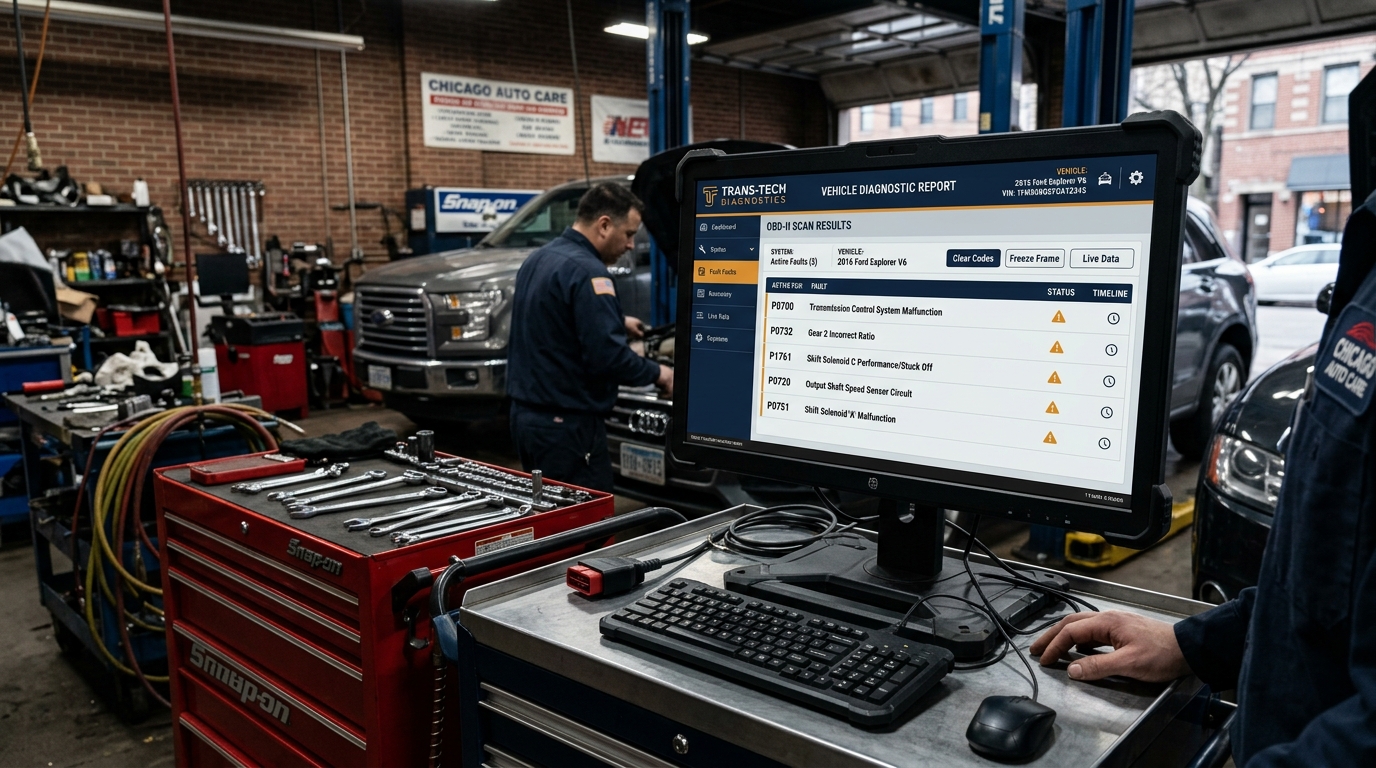
Begin with a comprehensive OBD-II scan using a professional-grade scanner that reads transmission-specific codes, freeze-frame data, and live sensor streams. Record all stored and pending codes, noting whether P0755 appears alone or with companion codes. If P0750, P0755, and P0760 are all present, the likely culprit is the transmission case connector or the solenoid pack rather than an individual solenoid. Note freeze-frame conditions: engine RPM, vehicle speed, throttle position, transmission fluid temperature, and Solenoid B command status at the time the fault stored.
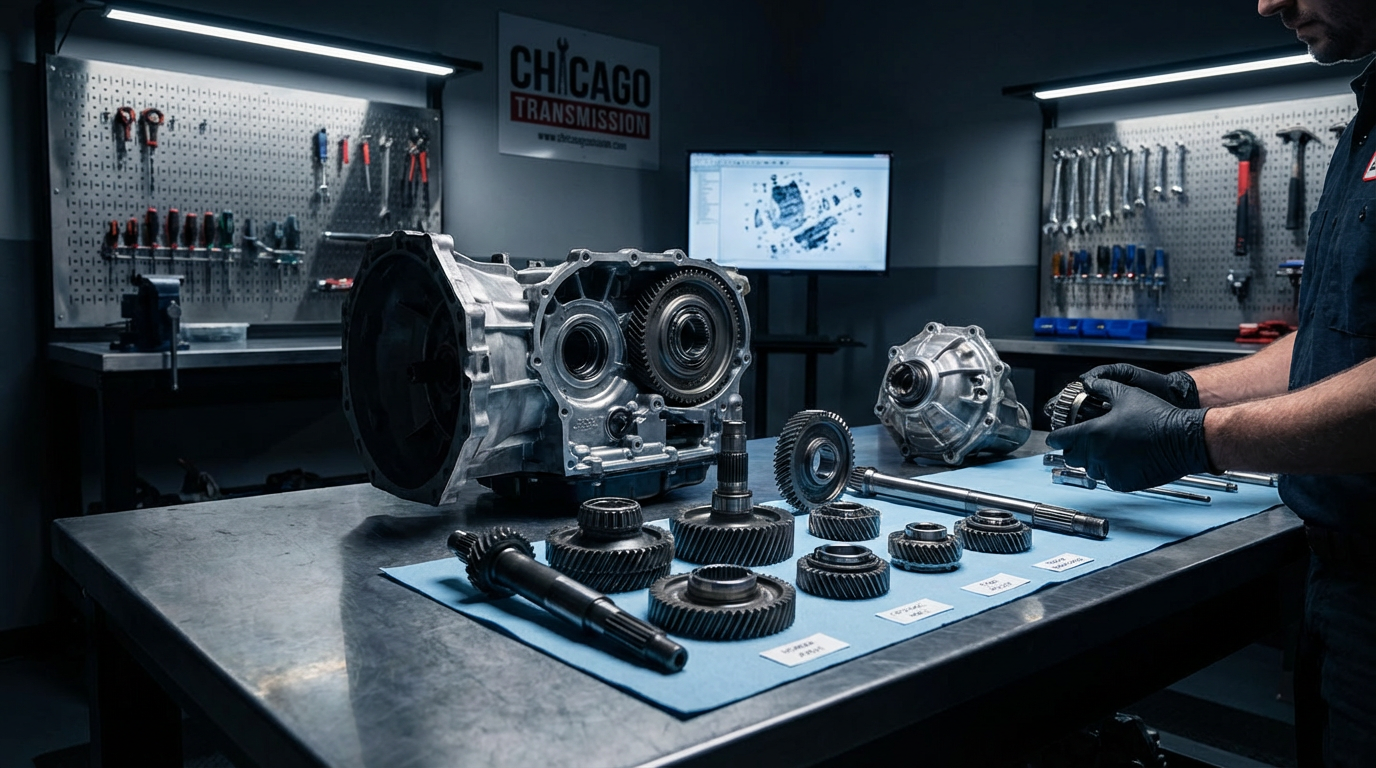
Inspect the transmission fluid level and condition. Many modern vehicles require the engine running, the transmission at operating temperature (180 to 200 degrees Fahrenheit), and a specific gear position (park or neutral, depending on manufacturer) for an accurate level reading. Evaluate color (translucent red is healthy; dark amber to brown indicates degradation; near-black with a sharp smell indicates overheating), and check for metallic particles by wiping the dipstick on a white paper towel. Severely degraded fluid suggests the solenoid is contaminated, and a fluid service should be performed before further electrical diagnosis.
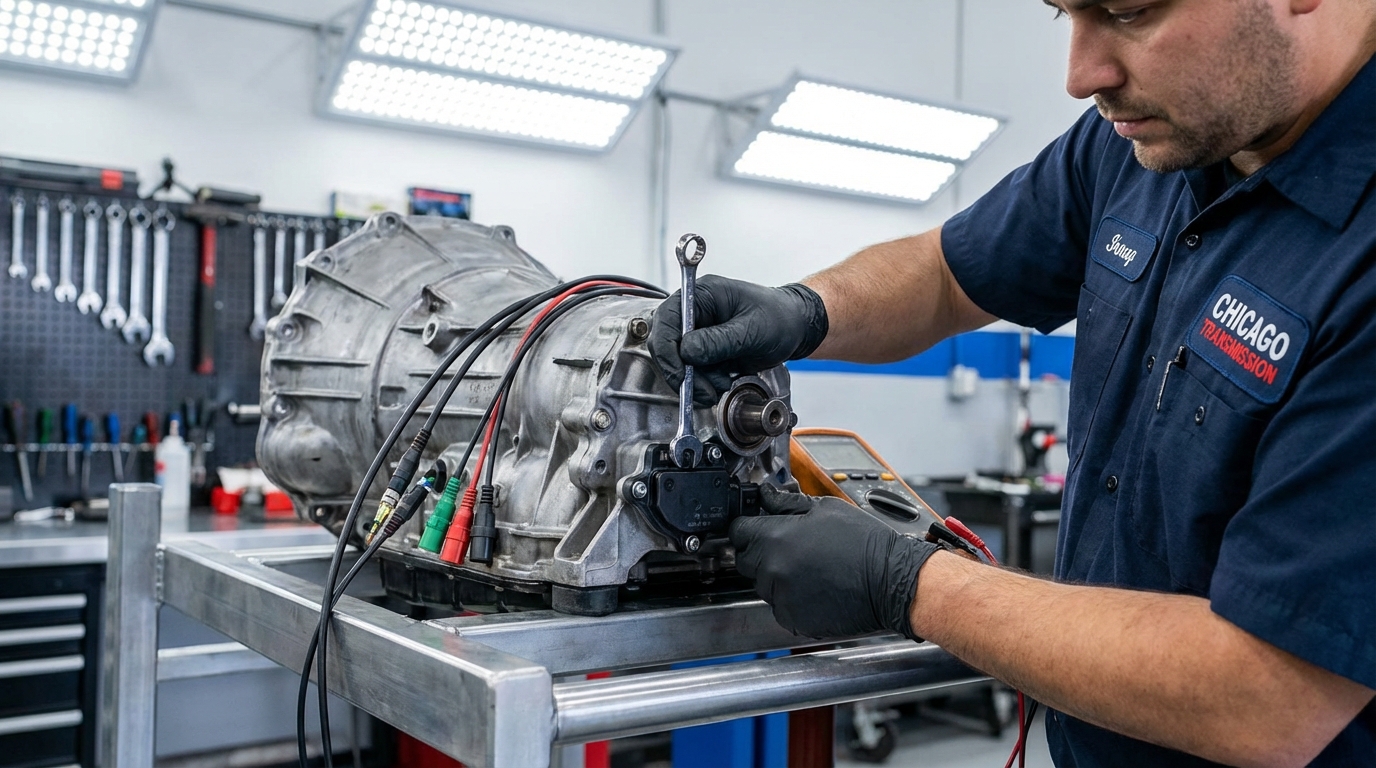
Move to the electrical circuit. Disconnect the transmission case connector and visually inspect each pin for corrosion, green or white oxidation, bent contacts, or evidence of moisture intrusion. On Chrysler 62TE transaxles, this step alone resolves a significant percentage of P0755 cases - simply reseating the connector and applying dielectric grease restores a clean circuit. Use a digital multimeter to measure Shift Solenoid B resistance through the harness, comparing the reading to manufacturer specifications: 20 to 40 ohms for GM 4L60E, 11 to 15 ohms for Ford 5R55, 11 to 16 ohms for Toyota, approximately 1.8 to 3 ohms for Chrysler RFE solenoids. An infinite reading confirms an open coil or broken wire. A reading well below specification suggests a shorted coil. A reading within specification at room temperature should be rechecked at operating temperature, as thermally sensitive failures manifest only when hot.
Using the scan tool's bidirectional controls, command Shift Solenoid B on and off while monitoring current draw. On GM 4L60E transmissions, a YouTube diagnostic walkthrough demonstrates measuring the solenoid's response using a test light connected between the solenoid feed wire and ground: the light should illuminate when the TCM commands the solenoid on and extinguish when it commands off. A solenoid that draws correct current but does not produce the expected gear change indicates a mechanical or hydraulic fault - a stuck plunger, blocked passage, or worn valve-body bore.
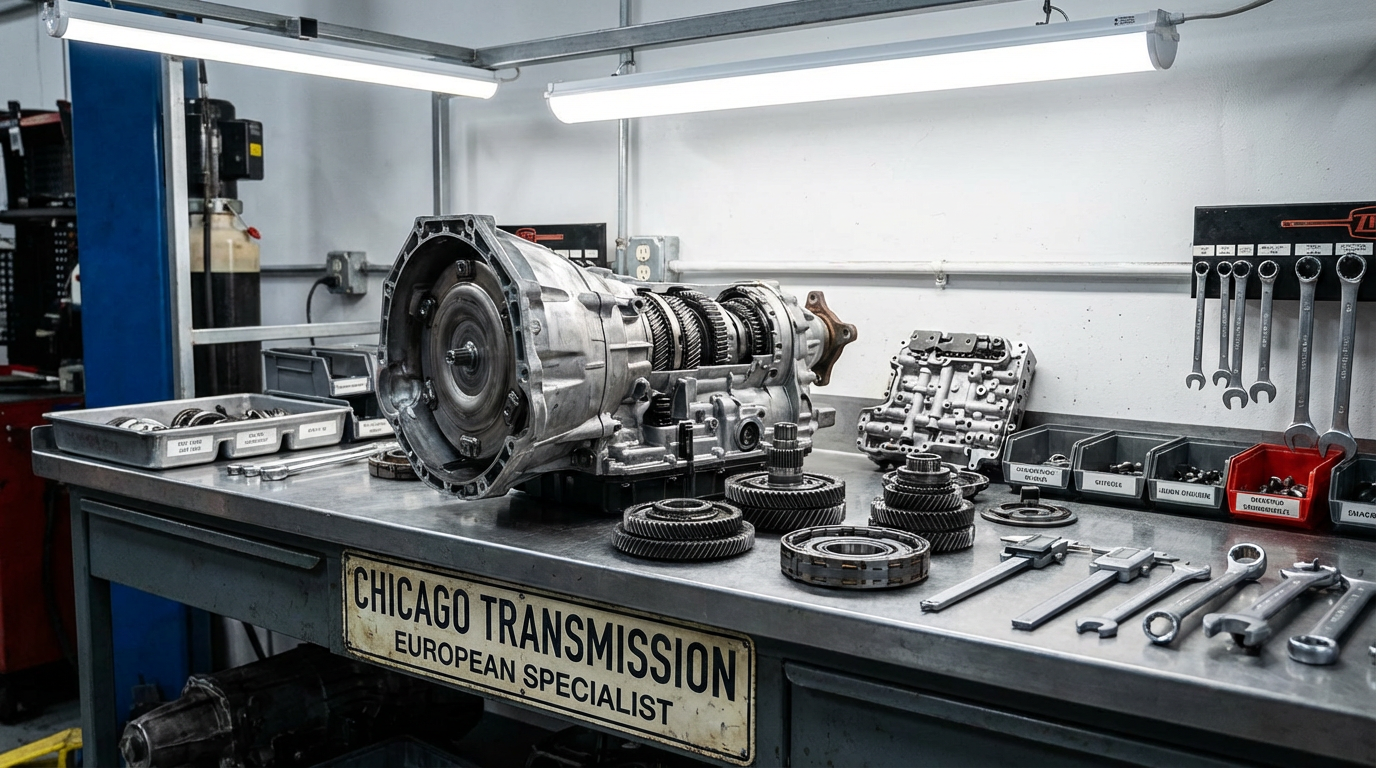
If electrical tests are inconclusive or the code persists after connector repair and fluid service, drop the transmission pan and perform a visual inspection. Look for metallic debris (clutch material, band fragments, aluminum shavings), varnish on the solenoid screen or valve bore, and any visible damage to the solenoid body. On GM 4L60E transmissions, check for evidence of a cracked sun shell (brass-colored metallic dust) or a worn 2-4 band (friction material in the pan). On Ford 5R55 transmissions, inspect servo bores for scoring or rounding.
If pan inspection reveals significant internal damage or if all external tests pass but the code persists, the transmission requires removal for internal inspection and likely a partial or full rebuild.
Repair Cost Summary for Chicago-Area Shops
Chicago-area labor rates vary by shop, vehicle access, and whether programming is required. The following repair paths should be quoted after diagnosis for the most common P0755 causes.
Wiring and connector repair - cleaning, re-pinning, or pigtail splice - and resolves roughly a quarter to a third of all P0755 cases. This is the least expensive repair and should always be evaluated first.
Transmission fluid and filter service depending on fluid type and capacity. This service both diagnoses and potentially resolves approximately 15 to 25 percent of cases where fluid degradation is the underlying issue.
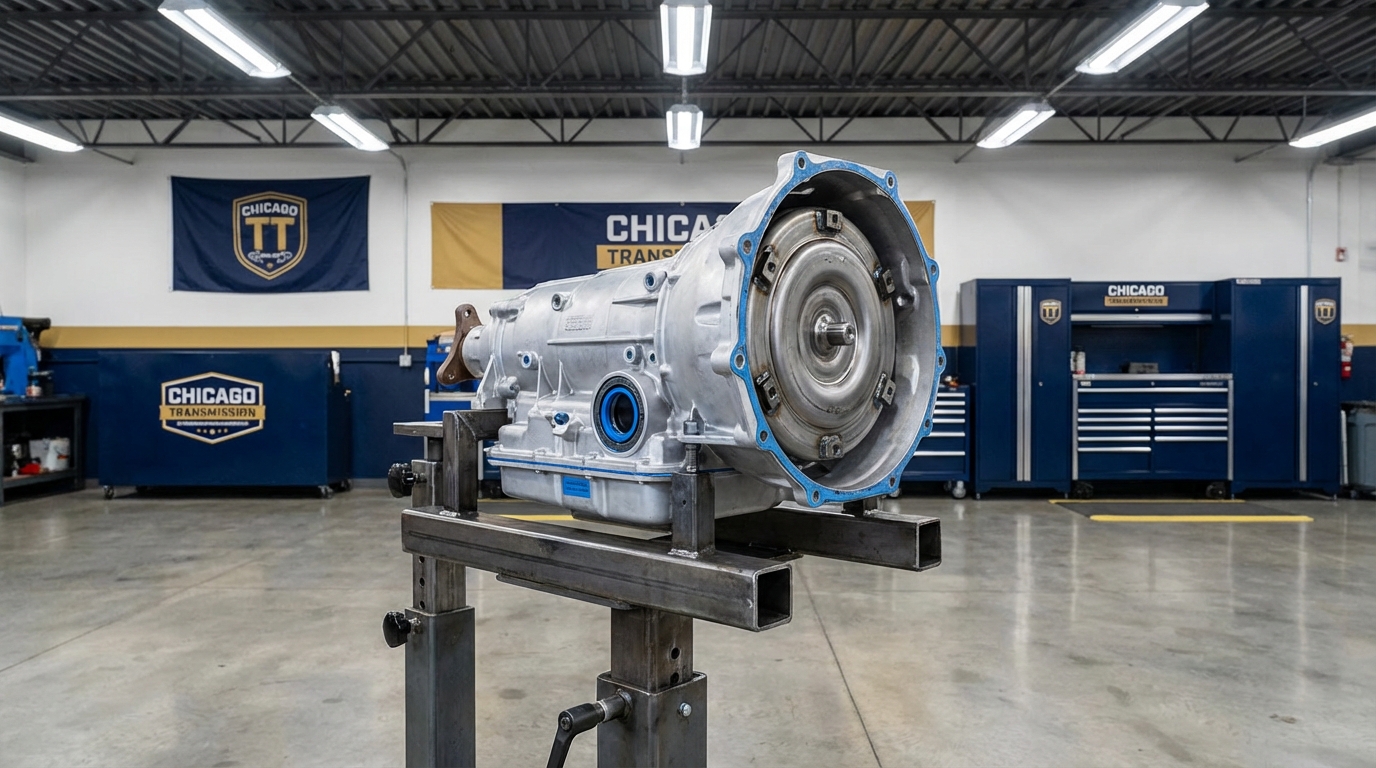
Vehicles Most Commonly Affected by P0755
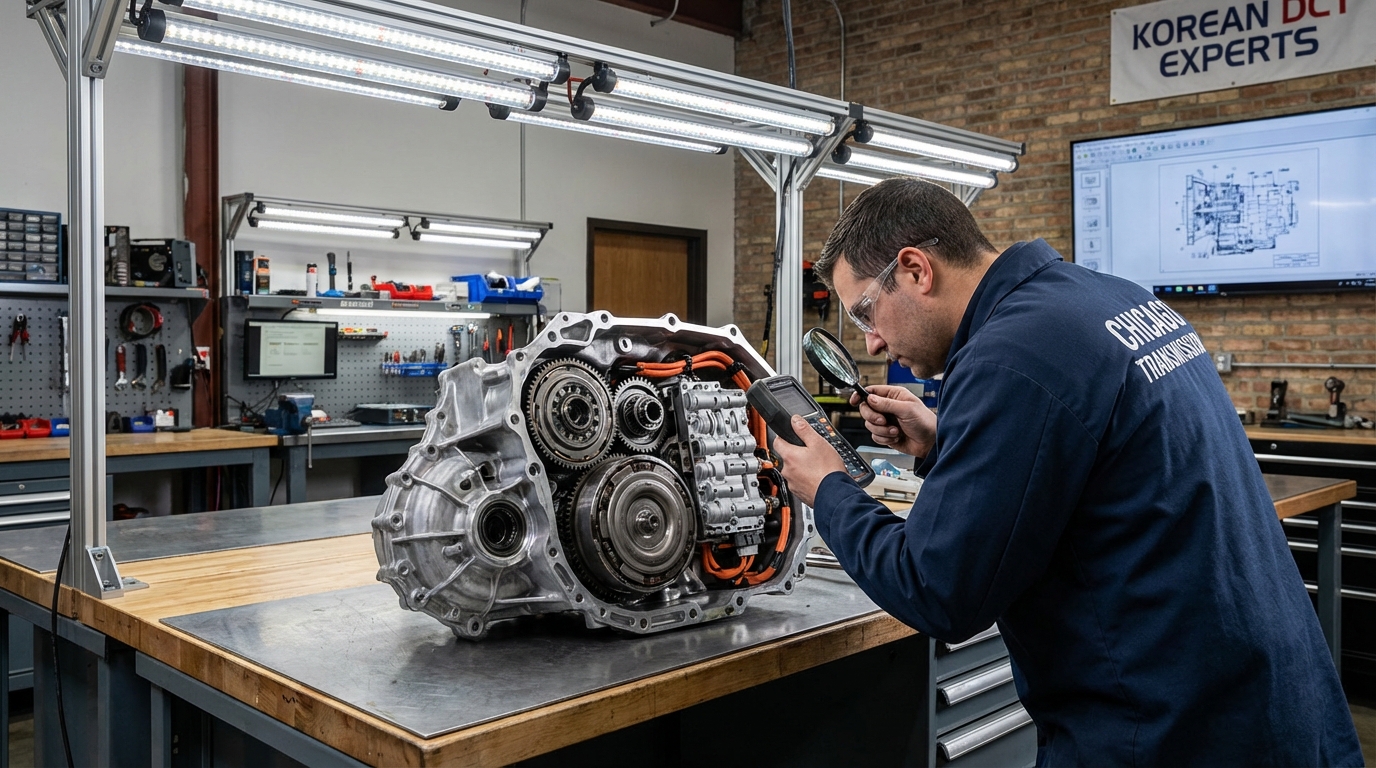
P0755 appears across virtually every make with an electronically controlled automatic transmission, but certain platforms appear in repair databases and forum discussions with higher frequency than others.
GM trucks and SUVs with the 4L60E and 4L65E - including the Chevrolet Silverado, Tahoe, Suburban, TrailBlazer, Impala, and Monte Carlo; GMC Sierra, Yukon, and Envoy; Pontiac GTO and Grand Prix; and Cadillac Escalade - are the most commonly cited platform. The 2-3 shift solenoid is a known wear item, and the case connector is highly susceptible to road-salt corrosion.
Chrysler, Dodge, and Plymouth minivans with the 62TE transaxle - including the Town & Country, Grand Caravan, Routan, and Pacifica - are the second most commonly cited platform. The solenoid pack design and the vehicle's exposure to road debris and moisture during everyday family use contribute to elevated P0755 rates. A Chrysler Minivan forum thread documents a 2010 Town & Country entering limp mode with P0755, with responders noting the Dorman solenoid pack as a common lower-cost replacement option.
Chrysler, Dodge, and Ram trucks with the 45RFE, 545RFE, and 68RFE - including Ram 1500/2500/3500, Dakota, Durango, and Jeep Grand Cherokee - report P0755 with moderate frequency. The Underdrive solenoid in the sealed solenoid/TRS module is an electrical-fault-sensitive component, and a Go-Parts guide for the 2019-2023 Ram 3500 details the diagnostic and repair process.
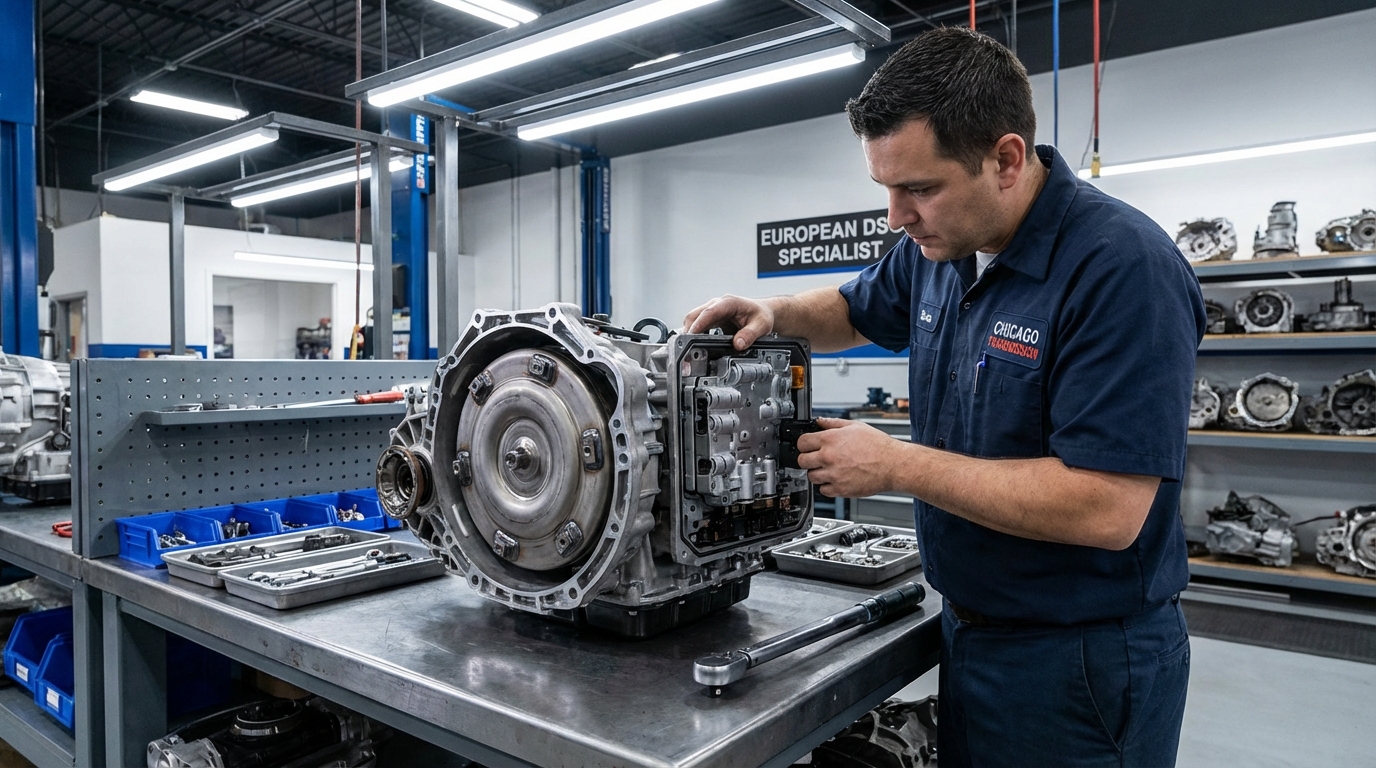
Ford Explorer, Ranger, and Mustang models with the 5R55W and 5R55S (2002 to 2011), as well as Ford F-150 and F-250 trucks, report P0755 in conjunction with the integrated solenoid block and the platform's known servo bore wear.
Toyota Camry, Corolla, and Tacoma models with various four- and five-speed automatics appear in repair databases with P0755 linked to individual solenoid failures, with replacement solenoids (such as part number 35250-12030) readily available. Toyota-specific solenoid resistance is typically 11 to 16 ohms.
Honda Accord and Civic models from the early to mid-2000s, Dodge Caravan (41TE/42LE-equipped models), Kia Optima and Forte, and Hyundai Elantra and Sonata are also represented in P0755 case reports, generally at lower frequency.
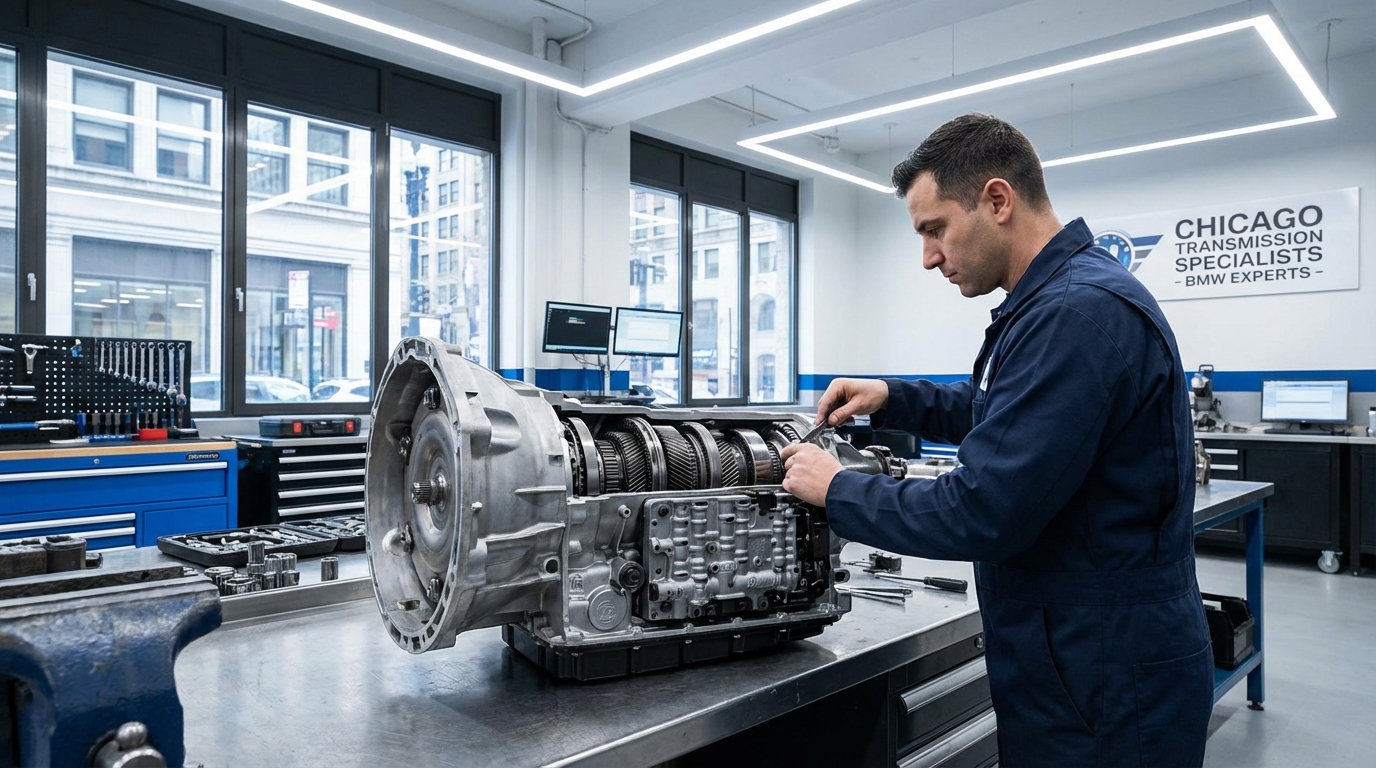
Chicago-Specific Factors That Contribute to P0755
Chicago's climate and driving conditions create an environment that accelerates many of the root causes behind P0755, in patterns identical to those affecting P0750 but with particular relevance to the gears Solenoid B controls.
Winter road salt is the single most destructive factor for the transmission case connector. The connector is mounted on the lower portion of the transmission housing, squarely in the path of salt-laden road spray from the front tires. Over successive winters, corrosion builds on pins and within the connector housing, creating the resistance that triggers P0755. An annual connector inspection and application of dielectric grease before the first November salt application is the most effective preventive measure available to Chicago vehicle owners.
Cold-soak conditions amplify solenoid vulnerability. When a vehicle sits overnight in single-digit temperatures, ATF viscosity increases dramatically. The thickened fluid slows plunger movement inside the solenoid, and the TCM may interpret the sluggish hydraulic response as a solenoid malfunction. On GM 4L60E transmissions, where Solenoid B is a normally-open valve, cold-thick fluid can delay the 2-3 shift enough to exceed the TCM's timing window and trigger P0755. Allowing the vehicle to idle for 60 to 90 seconds before driving - and avoiding aggressive acceleration during the first several minutes - reduces cold-start false triggers.
Stop-and-go traffic on Chicago's expressways produces a high density of shift events per mile. Each shift engages and disengages the solenoid, stressing the coil winding, the return spring, and the valve seat. Vehicles driven primarily in congested city traffic accumulate solenoid-related wear significantly faster than those driven on open highways.
Summer heat compounds the issue from the opposite direction. Fluid temperatures above 220 degrees Fahrenheit accelerate oxidation and varnish formation, clogging solenoid passages and valve-body bores. The combination of July temperatures exceeding 90 degrees and bumper-to-bumper traffic on the Dan Ryan or I-290 can push fluid into the damaging temperature range within a single commute.
Prevention Tips for Chicago Vehicle Owners
The preventive strategy for P0755 mirrors that for P0750 and reflects the shared vulnerability of all shift solenoids to the same environmental stressors.
Follow a severe-service fluid and filter change interval of every 25,000 to 35,000 miles. Chicago driving qualifies as severe service by every major manufacturer's definition. A fluid service is a fraction of the repair that neglected fluid eventually requires. Sun Transmissions recommends checking fluid level and condition every 12,000 miles, and this is sound advice for any high-stress driving environment.
Inspect and protect the transmission case connector annually. Disconnect, clean with electrical contact cleaner, allow to dry, apply dielectric grease to every pin, and reconnect until the locking tab engages with an audible click. Replace the housing if it is cracked or brittle. This single task addresses the most common cause of P0755 in salt-belt climates.
Allow the transmission to warm for 60 to 90 seconds after cold starts below 30 degrees Fahrenheit. Use gentle throttle during the first few minutes of driving to let the fluid reach a viscosity that permits precise solenoid operation.
When replacing solenoids or solenoid packs, always replace the transmission filter and fluid simultaneously. The pan is already off, and the marginal cost of a filter and fresh fluid prevents recontamination of the new solenoid. On GM 4L60E transmissions, replace both Solenoid A and Solenoid B at the same time when testing supports it; parts cost depends on supplier and availability, and the incremental labor is usually minimal. On Ford 5R55 transmissions, inspect servo bores during any solenoid block replacement - a new block installed over worn bores is a documented path to a recurring code.
For vehicles driven in heavy traffic or used for towing, consider an auxiliary transmission cooler. Reducing operating temperature by 20 to 40 degrees Fahrenheit extends fluid life, slows varnish formation, and reduces thermal stress on all solenoid coils.
Monitor for early warning signs: a single harsh 2-3 shift, a momentary delay, or a check-engine light that appears and clears. Each occurrence represents a degradation event that, if addressed promptly with a connector cleaning or fluid service, may prevent progression to a hard failure requiring major repair.
Frequently Asked Questions
What does P0755 mean in plain language?
P0755 means the computer controlling your automatic transmission has detected a problem with Shift Solenoid B - one of the internal valves that directs hydraulic fluid to engage specific gears. The solenoid may have an electrical fault, may be physically stuck, or may be affected by low or dirty transmission fluid. The result is typically a failure to shift correctly into or through a specific gear, often accompanied by limp mode.
How serious is P0755?
P0755 is a serious code. It frequently triggers limp mode, limiting your vehicle to one gear and a top speed of approximately 35 mph. Even when limp mode does not engage, the inability to shift properly stresses clutch packs and bands, causing progressive internal damage. Prompt diagnosis is strongly recommended.
Can a fluid change fix P0755?
In approximately 15 to 25 percent of cases - specifically those where the fluid is degraded but internal hard parts remain intact - a complete fluid and filter service resolves the code. If the fluid is dark, smells burnt, or contains metallic particles, deeper damage is likely, and the fluid service serves primarily as a diagnostic step.
Why does P0755 appear only when it's cold?
Cold temperatures increase transmission fluid viscosity, slowing solenoid plunger response. Metal connector pins also contract slightly in the cold, increasing resistance at corroded contact points. Both effects reverse as the transmission warms, producing the classic cold-morning-only code pattern that is especially common in Chicago-area vehicles.

What is the difference between P0750 and P0755?
Both indicate shift solenoid malfunctions, but P0750 refers to Shift Solenoid A and P0755 refers to Shift Solenoid B. They control different gears: on a GM 4L60E, Solenoid A manages the 1-2 shift while Solenoid B manages the 2-3 shift. On Chrysler RFE transmissions, Solenoid A is the Low/Reverse solenoid and Solenoid B is the Underdrive solenoid. The diagnostic approach is similar for both codes, but the affected gear and specific solenoid differ.
What if P0755 appears alongside P0750 and P0760?
Multiple solenoid codes stored simultaneously strongly suggest a systemic cause rather than a single solenoid failure. The most common culprits are a corroded transmission case connector affecting all solenoid circuits, a failing solenoid pack where the shared wiring or module has degraded, or severely contaminated fluid that has clogged multiple solenoids. Address the connector and fluid first before replacing individual solenoids.
Can I replace Shift Solenoid B myself?
On GM 4L60E transmissions, the 2-3 shift solenoid is accessible by removing the transmission pan, and the replacement is a moderately accessible DIY project requiring basic tools, a torque wrench, correct fluid, and a new pan gasket. On Ford 5R55, Chrysler 62TE, and Toyota transmissions where the solenoid is part of a pack or requires valve-body removal, the job is more complex and carries greater risk of improper installation. If you lack transmission experience, professional service is recommended.

How long does a P0755 repair take?
A connector cleaning and fluid service takes one to two hours. Individual solenoid replacement on a GM 4L60E requires one to two hours. Solenoid pack replacement on Ford 5R55 or Chrysler 62TE platforms takes two to four hours. Valve-body rebuild work takes four to eight hours. A full transmission rebuild requires eight to fifteen hours of labor, typically translating to two to five business days at a Chicago-area shop.
Final Thoughts
P0755 commands the same respect as its sibling code P0750. A Shift Solenoid B malfunction disrupts the transmission's ability to execute a critical gear change, frequently triggering limp mode and creating an immediate drivability problem that is both unsafe and costly to ignore. In Chicago, where road salt corrodes connectors, bitter winters thicken fluid, stop-and-go traffic multiplies shift cycles, and summer heat cooks fluid past its thermal limits, the conditions that cause and accelerate P0755 are present throughout the year. The most effective and least expensive approach is prevention: maintain fluid on a severe-service schedule, protect the case connector with annual cleaning and dielectric grease, and investigate the first sign of a harsh shift or flickering check-engine light before a connector repair becomes a rebuild.
Internal Link Targets: P0700, P0715, P0720, P0730, P0740, P0741, P0742, P0743, P0744, P0750, P0751, P0756, P0757, P0758, P0759, P0760

Schema Markup: FAQPage (8 Q&A pairs), HowTo (diagnostic steps), Article (main body)
Series Progress: 22 of 50 articles completed (44%). P0755 is now Done.
Have a Transmission Problem?
Get a Diagnosis-first inspection from Chicago transmission repair support.