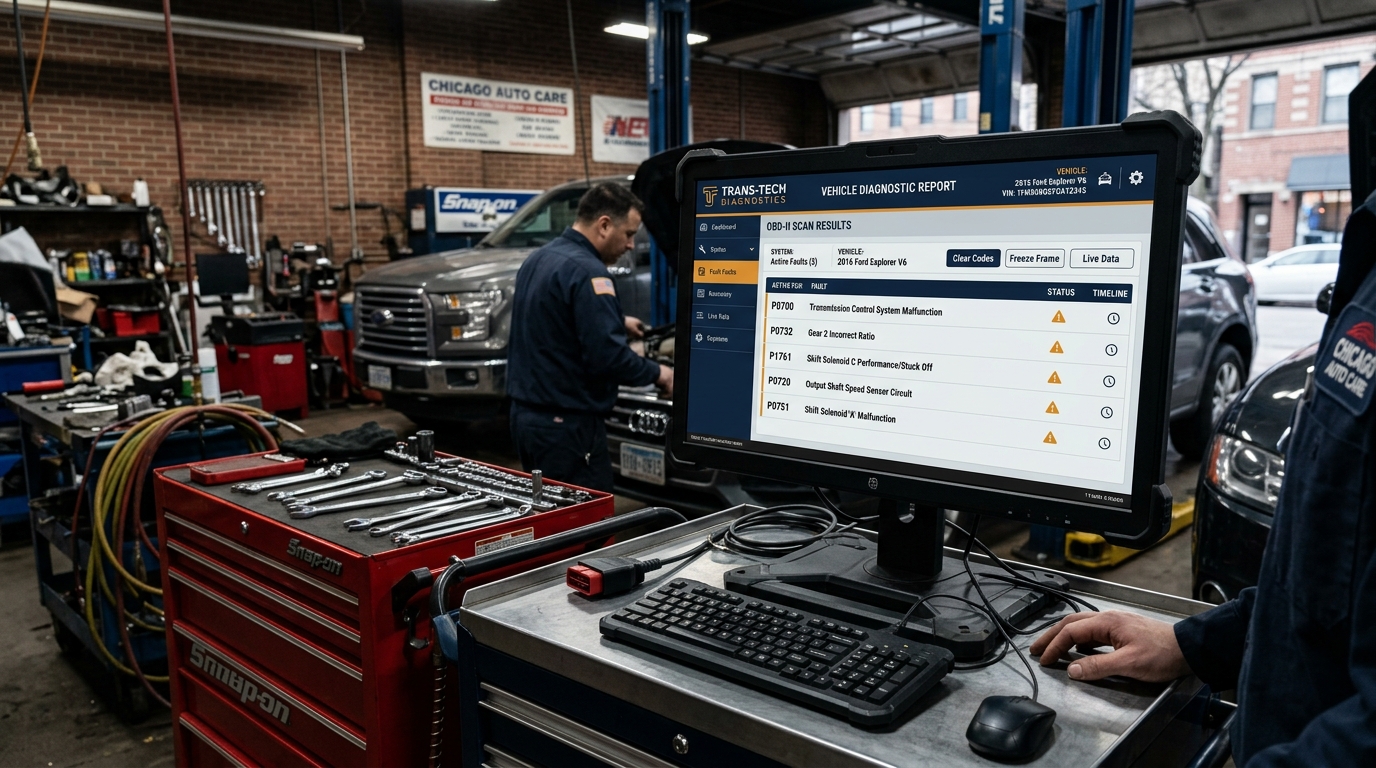
P0765 means your transmission's Shift Solenoid D has failed or its circuit is malfunctioning. Learn what causes it, how to diagnose it, and what Chicago drivers should do when this code appears.
Schema: FAQPage, HowTo, Article
What Does the P0765 Code Mean?
P0765 is a generic OBD-II diagnostic trouble code defined as "Shift Solenoid 'D' Malfunction." The transmission control module (TCM) or powertrain control module (PCM) stores this code when it detects a fault in the electrical circuit or functional performance of Shift Solenoid D - the fourth in the alphabetically designated series of electromechanical valves inside the automatic transmission that direct pressurized fluid to specific clutch packs and bands during gear changes.
Transmissions that carry four or more electronically controlled shift solenoids are the ones that use a Solenoid D designation. Not all automatic transmissions have a Solenoid D; simpler four-speed units with only two shift solenoids (like the GM 4L60E, which uses only A and B) will not generate this code. P0765 is most commonly encountered on transmissions with five or six shift solenoids - notably the Chrysler 45RFE, 545RFE, and 68RFE families, the Chrysler 62TE transaxle, various Toyota and Lexus automatics, Hyundai and Kia six-speed units (A6MF1/A6LF1), and certain Ford multi-speed platforms.
The manufacturer-specific identity of Solenoid D varies considerably. On the Chrysler 68RFE, a RamForumZ transmission engineer clarifies that P0765 corresponds to the Underdrive (UD) solenoid circuit - the valve controlling the underdrive clutch that is essential for first- and second-gear operation. Confusingly, the generic SAE description often labels it "Shift Solenoid D," but on the 68RFE the actual solenoid assignment is UD, not the fourth gear per se. On Toyota and Lexus platforms, Solenoid D typically controls the fourth-gear clutch or overdrive engagement. On Hyundai and Kia six-speed transmissions, it may correspond to the overdrive solenoid valve. On the Chrysler 62TE used in minivans and midsize sedans, Solenoid D is part of the integrated solenoid pack that manages the upper gear transitions.
This mapping discrepancy means that the driving symptoms of P0765 differ substantially by platform. On a Chrysler Ram truck, losing the UD solenoid means the vehicle enters full limp-in mode (locked in fourth gear), making low-speed acceleration agonizingly sluggish. On a Toyota RAV4, losing the fourth-gear solenoid means the vehicle cannot upshift past third gear, resulting in elevated highway RPMs and fuel waste. For Chicago commuters, either scenario creates an unsafe or impractical driving condition.
Where P0765 Fits in the Shift Solenoid Code Family
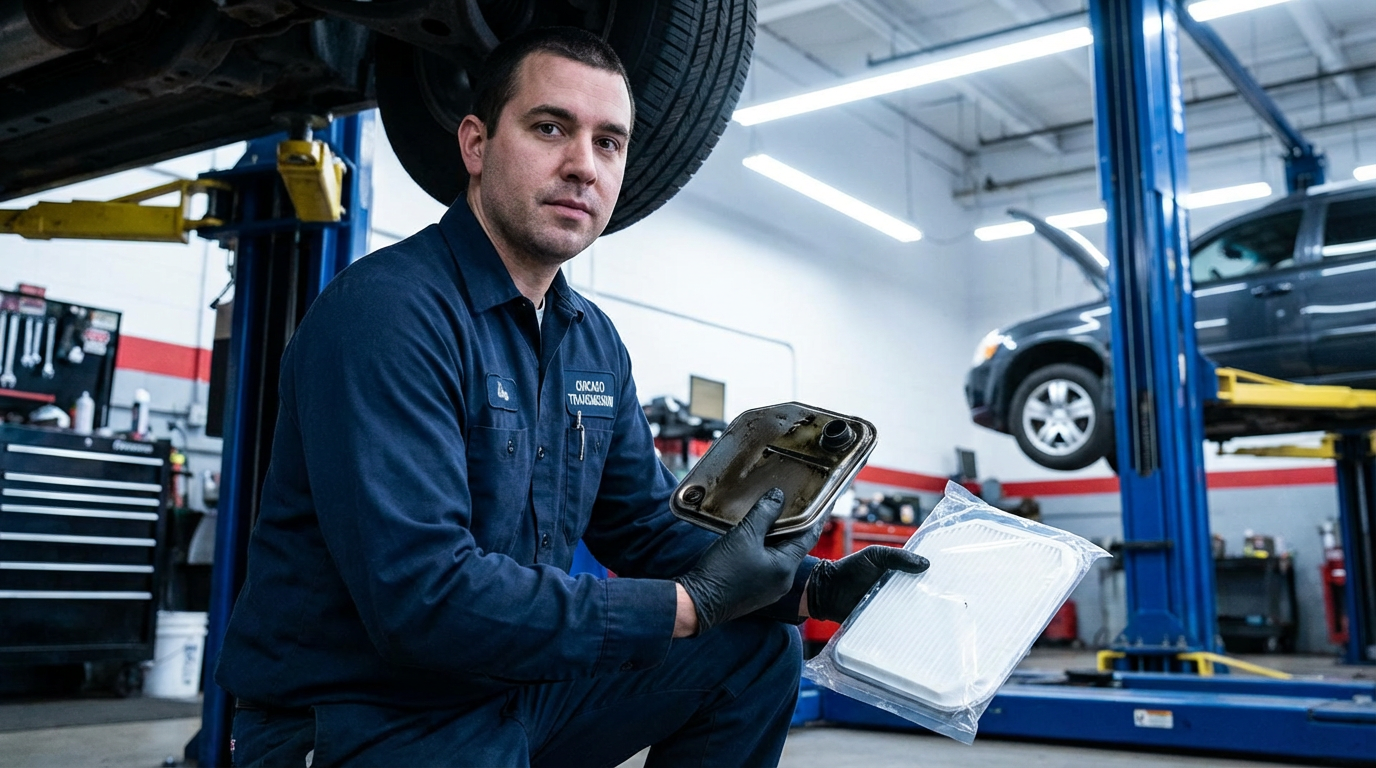
P0765 is the parent code for the Shift Solenoid D sub-family, following the same structure as Solenoids A through C (P0750, P0755, P0760).
P0766, "Shift Solenoid D Performance or Stuck Off," indicates the solenoid receives correct electrical commands but does not produce the expected hydraulic result - a stuck plunger, blocked passage, or insufficient pressure. P0767, "Shift Solenoid D Stuck On," means the solenoid remains open when commanded closed. P0768, "Shift Solenoid D Electrical," isolates the fault to a definitive open or short in the circuit. P0769, "Shift Solenoid D Intermittent," flags sporadic operation that works sometimes and fails at other times.
P0765 itself is the broadest designation and is stored when the PCM's initial fault detection does not precisely match a narrower sub-code, or when the manufacturer's diagnostic software groups all Solenoid D faults under the parent code. In practice, diagnosing P0765 requires covering the full spectrum: electrical integrity, mechanical function, and hydraulic performance.
When P0765 appears alongside other solenoid codes - particularly P0750, P0755, and P0760 - the probability of a systemic cause increases. As documented in a JustAnswer case involving a 2001 Hyundai with P0750, P0755, and P0765 all present simultaneously, the recommendation was to check transmission fluid level and condition first, then evaluate the solenoid pack and case connector rather than individual solenoids. Multiple solenoid codes almost always point to a shared failure: a corroded connector, a failing solenoid pack, severely contaminated fluid, or a TCM communication fault.
How Shift Solenoid D Works
Shift Solenoid D operates on the same electromechanical principle described in the preceding articles in this series. A copper coil generates a magnetic field when energized, pulling a plunger against a return spring to open a hydraulic valve. Pressurized ATF flows through the valve into the designated clutch or band circuit. When the TCM de-energizes the coil, the spring returns the plunger and closes the valve.
On Chrysler 68RFE transmissions, the diagnostic routine is identical to that described for P0750 (L/R solenoid) and P0760 (OD solenoid). The TCM tests the UD solenoid every ten seconds by briefly toggling it off and monitoring the inductive voltage spike from the collapsing magnetic field. Three consecutive failures to detect the spike set P0765 and engage limp-in mode. As the RamForumZ engineer explains, there are fundamentally three possible failure points: the solenoid coil (open or degraded winding), the wiring between the solenoid and the TCM (open, shorted, or intermittent), and the TCM's internal driver chip (unable to command the solenoid or recognize its feedback).
Solenoid D coil resistance varies by platform. Chrysler 68RFE solenoids measure approximately 1.8 ohms (low-resistance, high-current design). Toyota and Lexus Solenoid D coils typically measure 11 to 16 ohms. Hyundai and Kia A6MF1 solenoids generally measure 10 to 20 ohms. The Flagship One diagnostic guide states that on most platforms, the expected range is 2 to 10 ohms for the coil continuity check. These values are measured at room temperature; as the coil heats, resistance rises, and a marginally degraded winding may pass cold testing but fail at operating temperature.
Common Causes of P0765
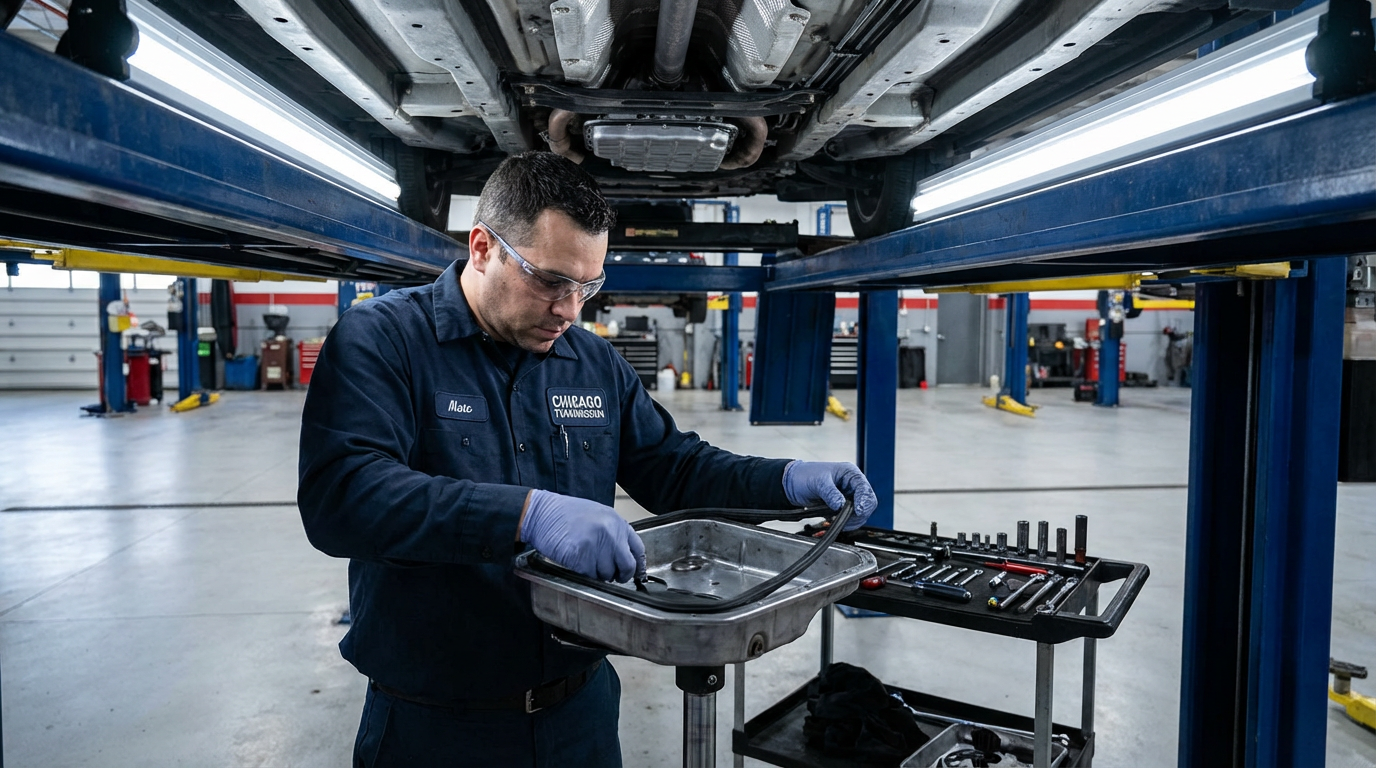
The cause distribution for P0765 closely parallels that of the other solenoid codes in this series, with several platform-specific nuances worth highlighting.
Corroded, damaged, or loose wiring and connectors account for an estimated 25 to 35 percent of P0765 occurrences. On Chrysler 68RFE trucks, the 23-pin transmission connector on the driver's side of the case is the primary suspect. The RamForumZ engineer's detailed instructions for disconnecting, inspecting, and reseating this connector - including the locking lever, secondary red latch, and individual wire-seal inspection - underscore how frequently connector issues cause solenoid circuit faults on this platform. A Chrysler Minivan Forum user with a 2010 Town & Country reporting P0765 describes the code persisting after a solenoid pack replacement and fluid service, suggesting a connector or internal wiring fault rather than a solenoid failure. Wiring repair should be quoted after pin inspection, continuity testing, and harness access are confirmed.
A defective Shift Solenoid D is responsible for approximately 25 to 30 percent of cases. Coil degradation, plunger sticking, and spring fatigue follow the same pattern as Solenoids A through C. On Chrysler platforms, the solenoid is often part of the sealed solenoid/TRS module, so the quote depends on module availability and two to four hours of access labor. On Toyota and Lexus platforms, individual solenoids may be serviceable, but pan and valve-body access still affect labor. On the Chrysler 62TE, the solenoid pack is accessible by removing the front transmission pan (the "upper" pan, not the traditional sump pan); aftermarket and OEM pack pricing varies by supplier. On a Dodge Avenger with the 62TE, an Avenger Forum user describes the code persisting after two solenoid pack replacements and wiring checks, eventually pointing toward a PCM fault.
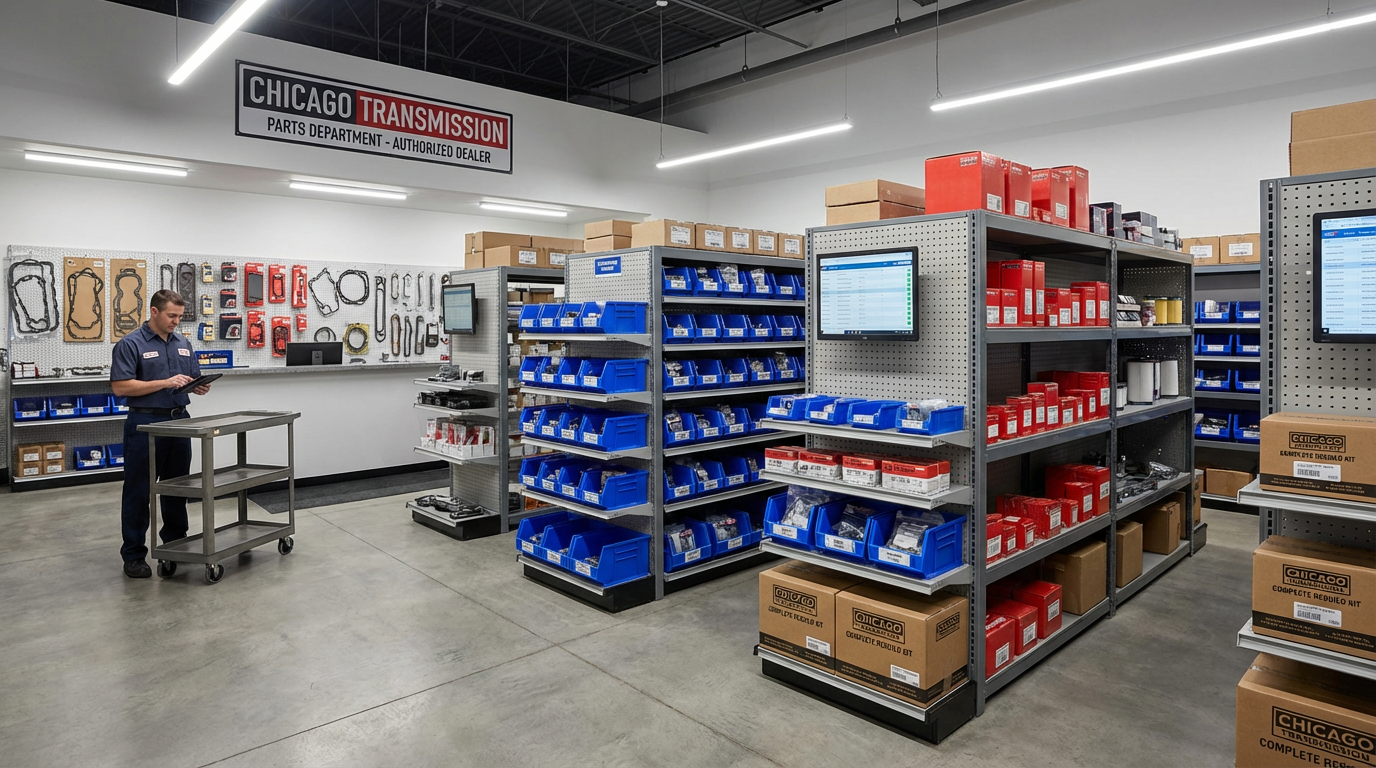
Low or contaminated transmission fluid contributes to 15 to 25 percent of P0765 diagnoses. A Chrysler Minivan Forum poster notes that changing the filter and 3.6 quarts of fluid "made things better for about a week" before P0765 returned, suggesting the fluid service partially restored hydraulic function but did not address an underlying electrical or mechanical issue. Fluid and filter service should be treated as a diagnostic-supported repair, not a guaranteed cure.
Valve-body wear or contamination accounts for 10 to 15 percent of cases. A Toyota RAV4 World discussion illustrates this: after an ECM replacement resolved an earlier shift issue, P0765 appeared 50,000 miles later, and the dealer quoted for a transmission teardown to diagnose the valve body. Valve-body rebuild or replacement should be quoted after fluid condition, scan data, and pan inspection support that path.
TCM or PCM failure is somewhat more common for P0765 than for Solenoids A through C, appearing in an estimated 5 to 10 percent of cases. Multiple forum discussions describe P0765 persisting after solenoid replacement and wiring repair, with the TCM or PCM as the final diagnosis. The Dodge Avenger Forum user's experience - two solenoid packs, verified wiring, code still present - points strongly toward a PCM driver-chip failure. On the Toyota RAV4, the independent mechanic's recommendation to replace the ECM first reflects the same diagnostic conclusion. TCM reflash may resolve software faults; full TCM replacement requires VIN-matched programming and should be quoted after module testing.

Internal transmission mechanical failure accounts for fewer than 10 percent of initial P0765 diagnoses. A worn clutch pack, broken band, or contaminated valve body prevents the target gear from engaging regardless of solenoid function, and the TCM interprets the result as a solenoid fault. A rebuild or remanufactured replacement may be needed if internal damage is confirmed.
Symptoms Chicago Drivers Will Notice
The symptoms of P0765 vary by platform but share a common thread: the transmission cannot correctly engage the gear controlled by Solenoid D, and the vehicle's drivability is significantly compromised.
On Chrysler Ram trucks with the 68RFE, P0765 triggers full limp-in mode. As the RamForumZ transmission engineer describes, the vehicle locks into fourth gear with no torque converter clutch engagement: "truck will feel really sluggish when you launch from a stop, and will have high RPMs at speed." Acceleration from a standstill requires substantial throttle input because fourth gear provides minimal torque multiplication, and the engine must rev considerably before the vehicle begins moving with any urgency. Highway RPMs run 500 to 1,000 above normal. The engineer explicitly warns: "Do not drive it for extended distances in limp-in; it is easy to overheat the trans if you run in limp-in." On Chicago expressways, where commutes routinely exceed 20 miles, this makes even a single trip to a repair shop potentially damaging.

On Chrysler 62TE-equipped minivans (Town & Country, Grand Caravan, Routan) and sedans (Avenger, Sebring), P0765 similarly triggers limp mode. A Chrysler Minivan Forum user describes the pattern: "It drives fine and shifts smooth but when coming to a complete stop, it has a delayed hard downshift which is followed by limp mode." The all-PRNDL-indicators-boxed display - where every gear position lights up simultaneously on the dashboard - is a distinctive visual symptom on Chrysler platforms that accompanies the limp-mode entry.
On Toyota and Lexus models, P0765 typically manifests as an inability to shift into fourth gear. The vehicle shifts normally through first, second, and third gears but refuses to upshift further. Highway driving at 60 mph in third gear produces RPMs in the 3,500 to 4,500 range depending on the engine, generating substantial noise and fuel waste.
On Hyundai and Kia models, a YouTube diagnostic video describes P0765 as an "Overdrive Solenoid Valve System" fault, with symptoms including lack of overdrive engagement, harsh shifts in the upper gears, and the check-engine light.
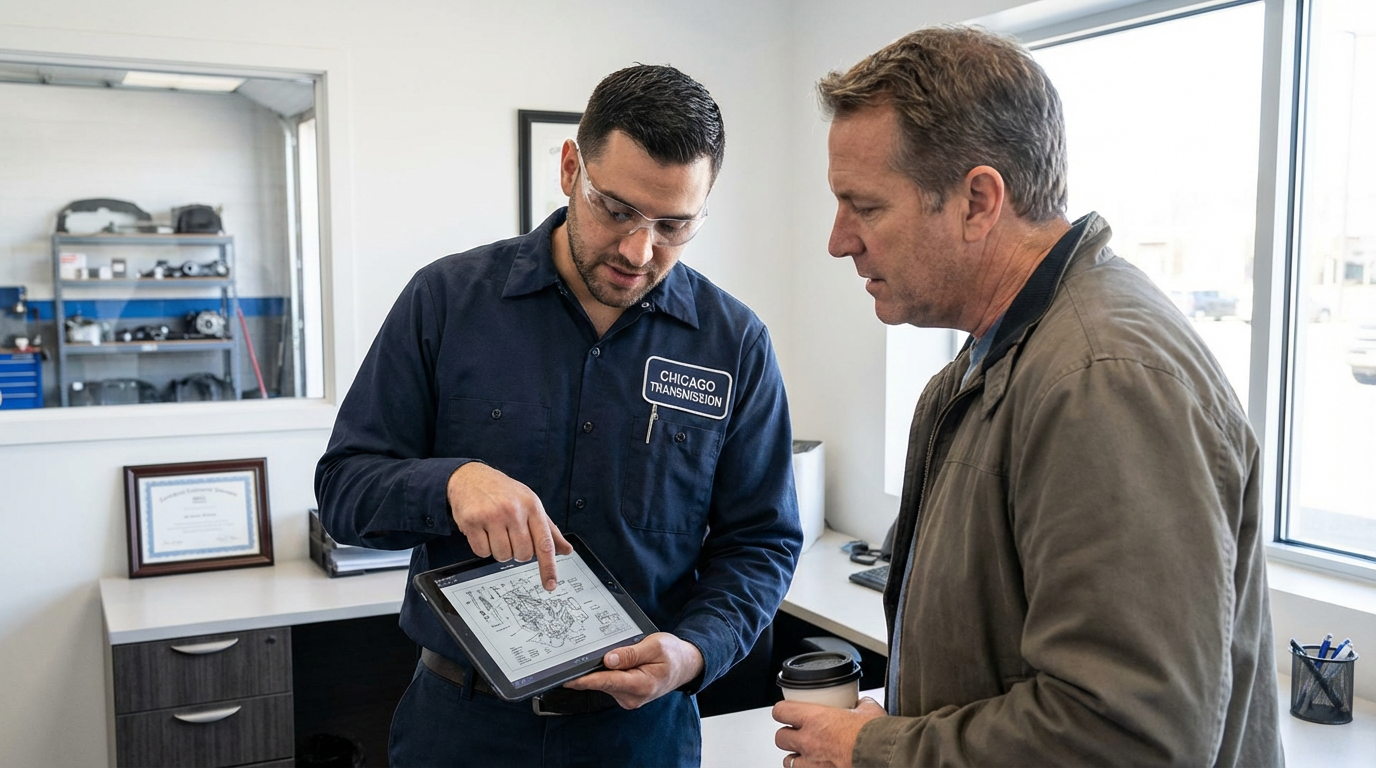
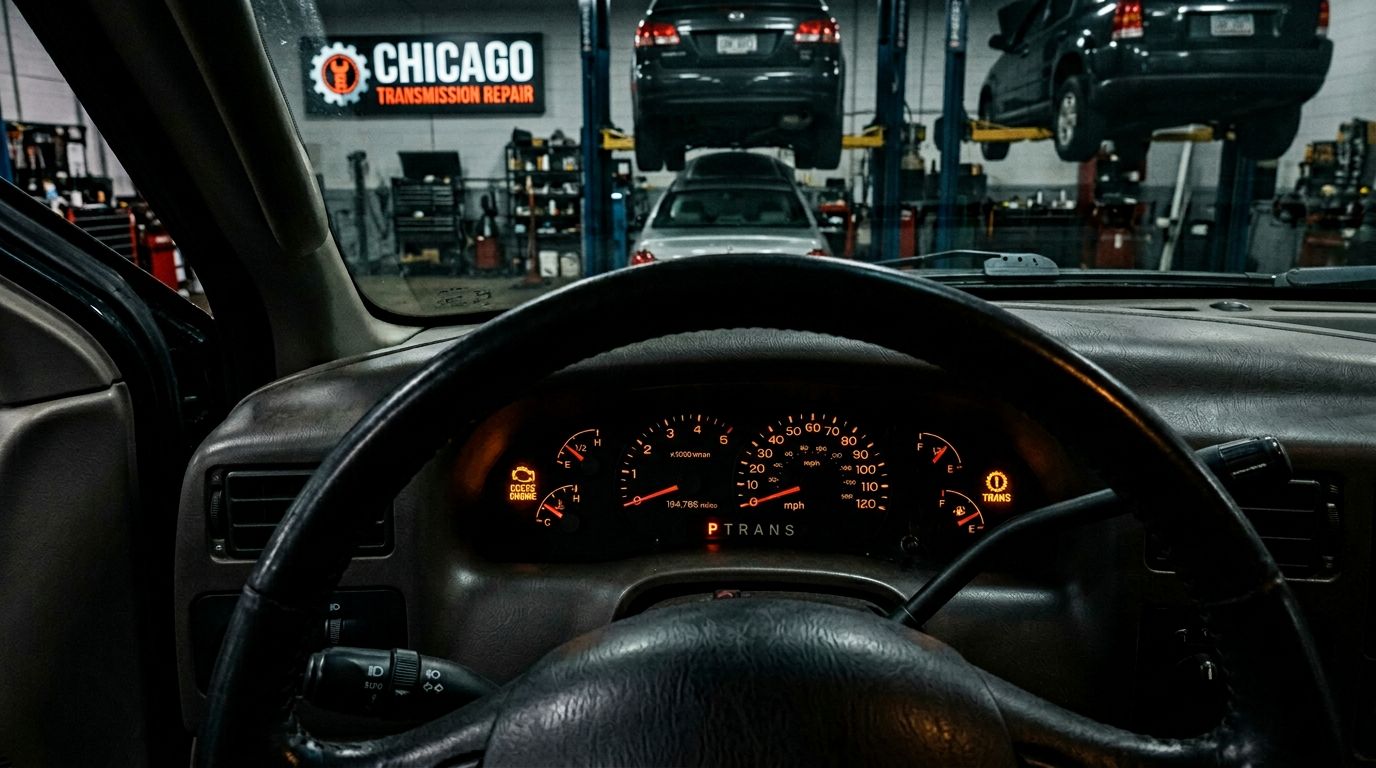
The check-engine light or transmission-service indicator illuminates in virtually all P0765 cases. Fuel economy drops 15 to 25 percent due to the inability to reach the optimal cruising gear. Transmission fluid temperature rises from the increased internal slip and higher RPM operation, accelerating fluid degradation - a compounding problem that makes prompt repair essential.
Can You Drive with P0765?
P0765 is a serious code. On Chrysler platforms, the immediate entry into limp-in mode makes extended driving risky: the transmission is locked in a gear that was not designed for low-speed operation, and the resulting heat buildup can damage clutch packs, seals, and the torque converter within a single long drive. Restarting the engine may temporarily clear limp mode (the TCM resets), but the fault will typically return within minutes of driving.
Short, low-speed drives directly to a repair facility are acceptable. Highway driving in limp mode is both unsafe (due to severely limited acceleration and top speed) and mechanically damaging. On non-Chrysler platforms where the vehicle retains lower gears but loses fourth gear or overdrive, cautious city driving is possible, but sustained highway use at elevated RPMs will overheat the transmission.
A tow is recommended if the code reappears immediately after clearing, if multiple solenoid codes are stored, if the fluid is dark with metallic particles, or if the vehicle struggles to move from a stop. A Chicago-area tow.
Step-by-Step Diagnosis of P0765
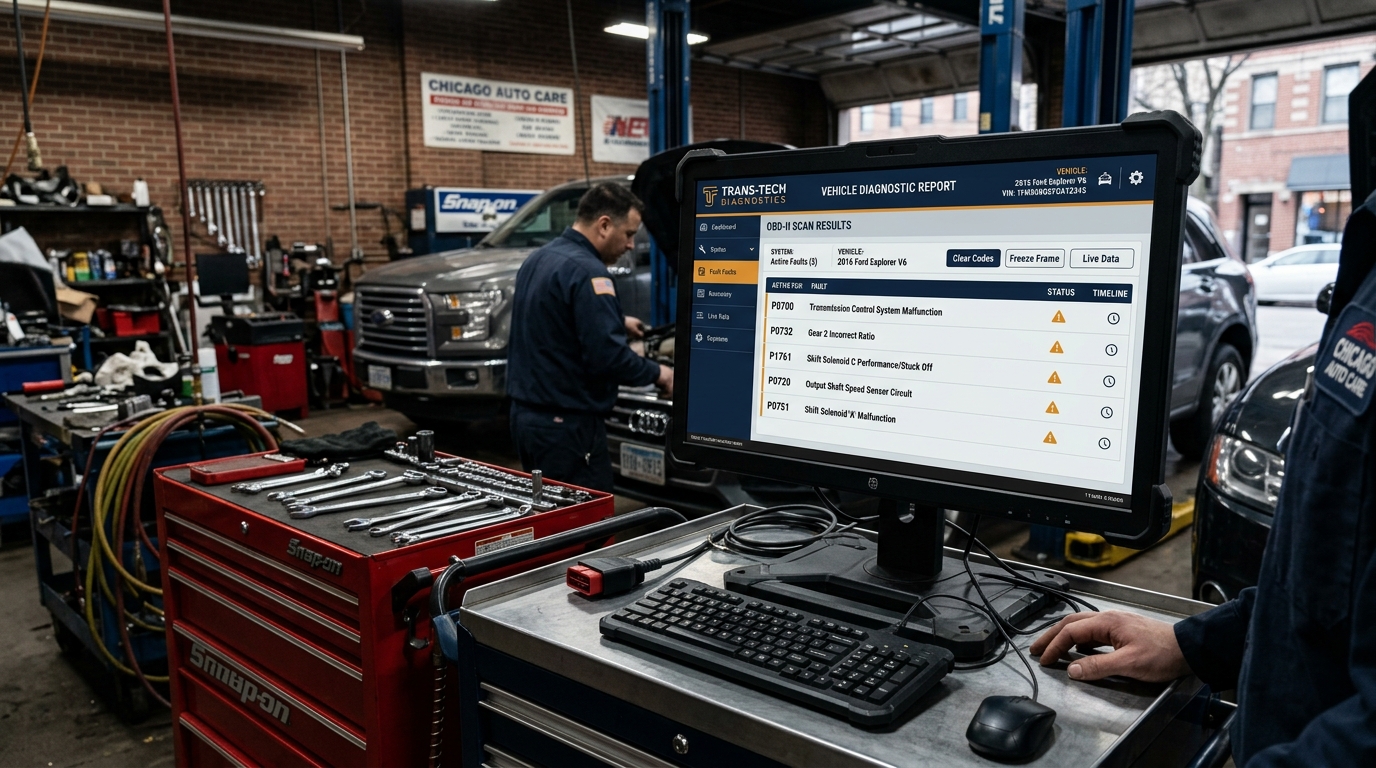
Begin with a comprehensive OBD-II scan using a professional-grade scanner. Record all stored and pending codes, freeze-frame data (engine RPM, vehicle speed, throttle position, transmission fluid temperature, Solenoid D command status), and any companion codes. Multiple solenoid codes (P0750, P0755, P0760, P0765) appearing together redirect diagnosis from an individual solenoid to the connector, solenoid pack, or TCM.
Inspect transmission fluid level and condition. Many Chrysler 68RFE trucks require the engine running and transmission at operating temperature for an accurate level check. Evaluate color, smell, and particulate content. A Chrysler Minivan Forum poster notes that a fluid-and-filter service temporarily resolved P0765 for about a week, indicating that fluid condition was a contributing factor but not the sole cause.
Move to the electrical circuit. On Chrysler 68RFE trucks, disconnect the 23-pin transmission harness connector on the driver's side. The RamForumZ engineer provides detailed instructions: release the secondary red lock, release the locking lever latch by pushing the latch toward the transmission, rotate the lever down, and lift the harness off. Inspect each pin with a small mirror (the connector points upward). Look for corrosion, moisture, and pins pushed back into the housing. Clean with electrical contact cleaner, blow dry with compressed air, apply dielectric grease, and reseat. On 62TE platforms, the connector is similarly accessible. On Toyota and Lexus models, the valve-body connector is accessible after dropping the transmission pan.
Measure Solenoid D resistance with a digital multimeter. Compare to manufacturer specifications: approximately 1.8 ohms for Chrysler 68RFE, 11 to 16 ohms for Toyota/Lexus, 10 to 20 ohms for Hyundai/Kia. The Chrysler Minivan Forum user reports that "all pins show correct resistance" on the solenoid block, yet the code persists - this scenario points to the wiring harness or TCM rather than the solenoid itself.
On Chrysler platforms, the wire-swap diagnostic technique is highly effective. Swap the UD solenoid circuit wires with another solenoid circuit at both ends of the harness. If the fault follows the wire (a different solenoid code appears), the wire is at fault. If P0765 remains, the problem is the solenoid coil or the TCM driver chip. A further single-end swap at the TCM connector (engine idling in Park) differentiates between the solenoid and the TCM.
Using the scan tool's bidirectional controls, command Solenoid D on and off while monitoring current draw and voltage. If the solenoid clicks and draws correct current but the TCM still logs P0765, the TCM's driver chip or feedback-detection circuit may be faulty. A TCM reflash with the latest calibration should be attempted before committing to module replacement.
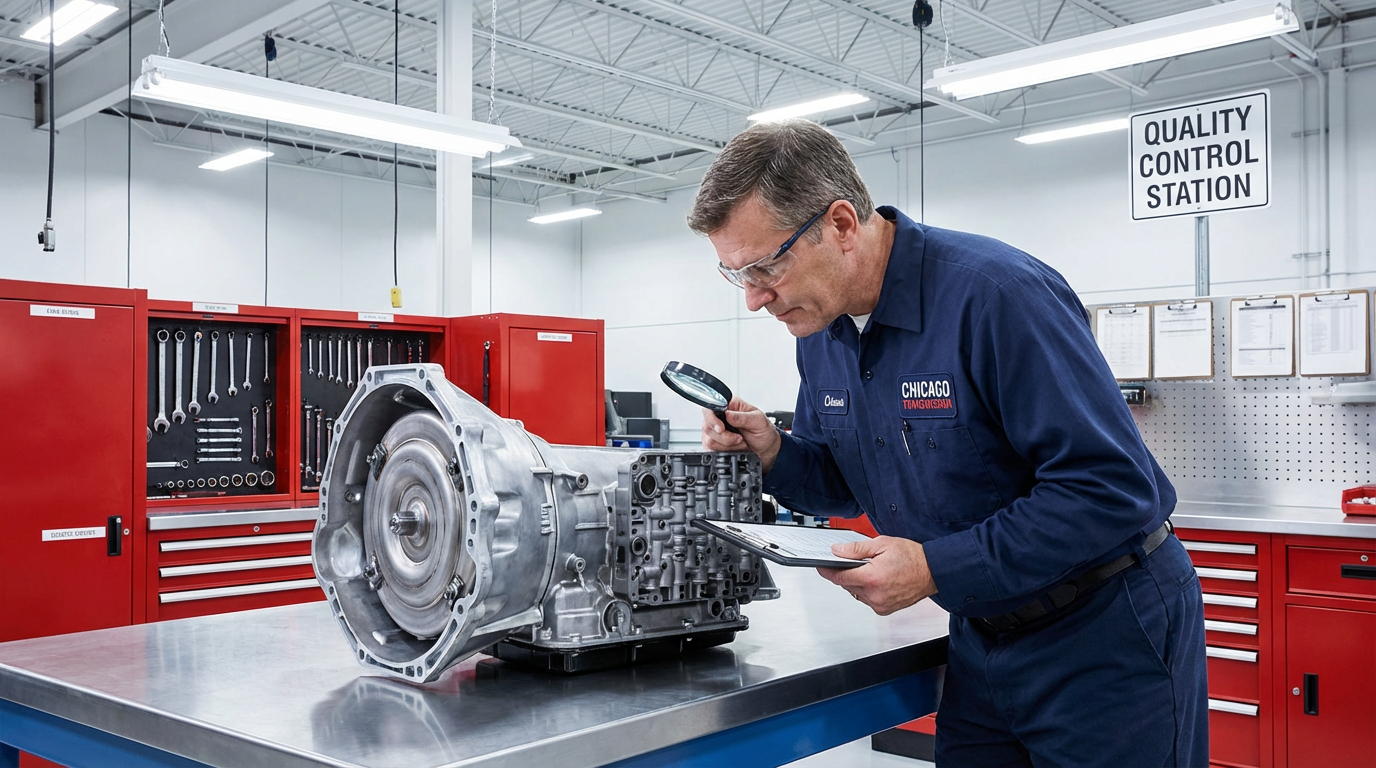
If all electrical tests pass, drop the transmission pan and visually inspect for metallic debris, clutch material, and varnish deposits. On the 62TE, the solenoid pack is accessible from the front (upper) pan. On the 68RFE, the solenoid module is accessible through the standard sump pan.
Understanding Repair Scope
Repairs for this code range from straightforward electrical work - cleaning a connector or replacing a single solenoid - up to a valve body service or full rebuild in cases where internal damage is present. The diagnostic determines which repair is actually needed. Parts replaced based on a code alone (without inspecting the circuit) often result in money spent on the wrong fix.
Chicago Transmission offers a Diagnosis-first inspection that includes a full code scan, circuit inspection, and road test - so you know exactly what caused the code before authorizing anything. Start with a Diagnostic appointment ->
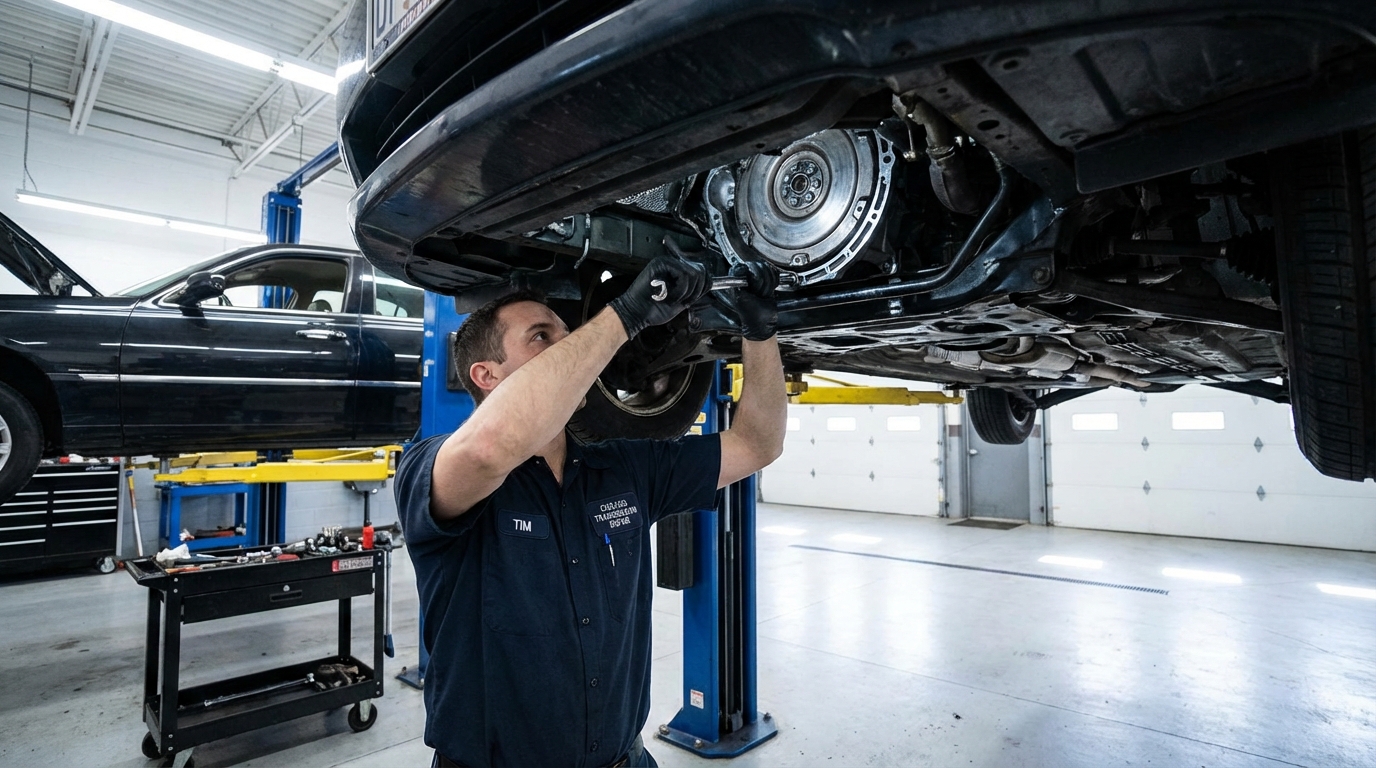
Wiring and connector repair and resolves approximately 25 to 35 percent of P0765 cases. This is the lowest-cost repair and should always be evaluated first.
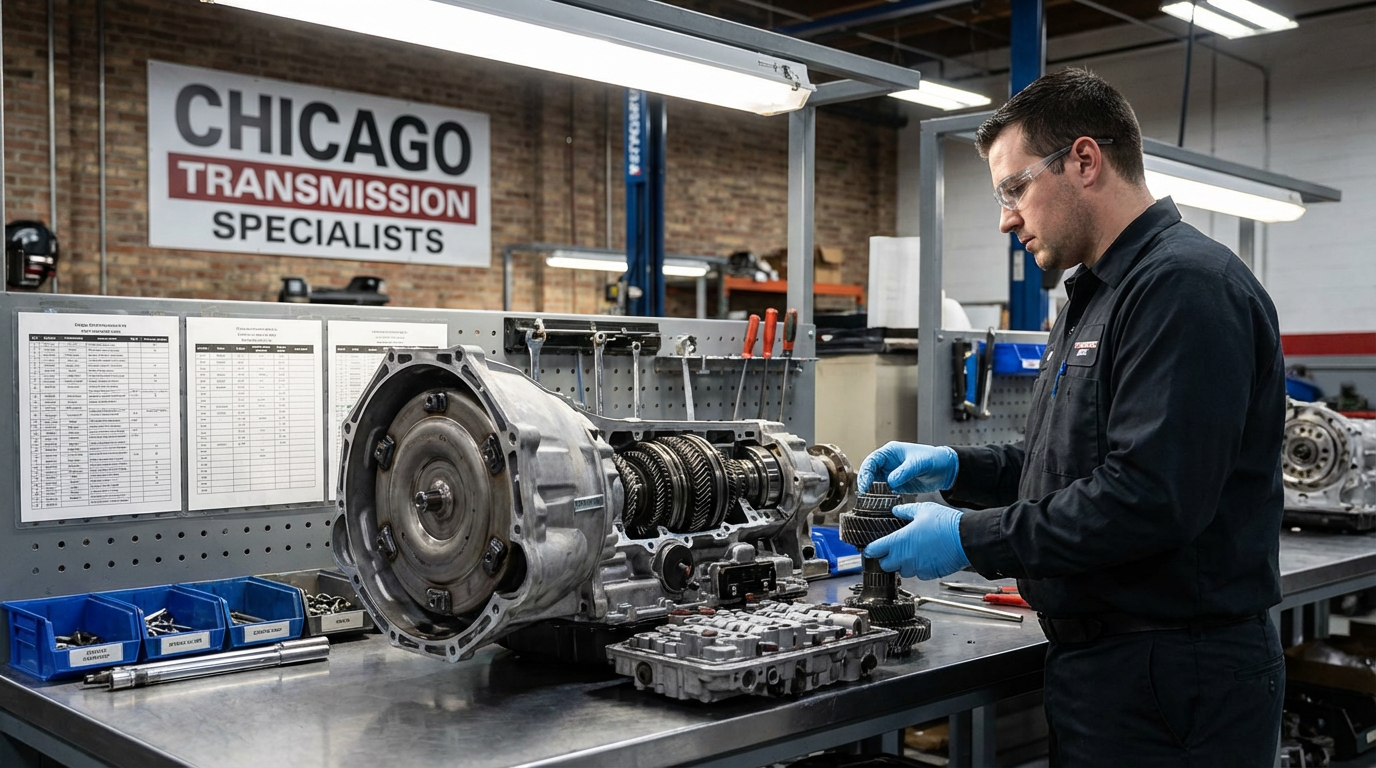
Full transmission rebuild scope depends on the vehicle and damage found during teardown. Remanufactured replacement transmissions may be an option, with warranty terms varying by supplier.
Vehicles Most Commonly Affected by P0765
Chrysler, Dodge, and Ram vehicles with the 45RFE, 545RFE, and 68RFE transmissions dominate P0765 repair databases. These include Ram 1500, 2500, and 3500 trucks (particularly 6.7L Cummins diesel models), Dodge Dakota and Durango, and Jeep Grand Cherokee and Commander. The UD solenoid within the sealed solenoid/TRS module is the component at fault. A YouTube video specifically addressing "P0765 Error Code 68RFE Stuck in 4th Gear | 3rd Gen Cummins" demonstrates the diagnostic and repair process for this common scenario.
Chrysler, Dodge, and Plymouth minivans and sedans with the 62TE transaxle - including the Town & Country, Grand Caravan, Routan, Avenger, Sebring, and Journey - are the second most commonly cited platform. The integrated solenoid pack is a well-known service item, and YouTube step-by-step guides for 62TE solenoid pack replacement have hundreds of thousands of views.
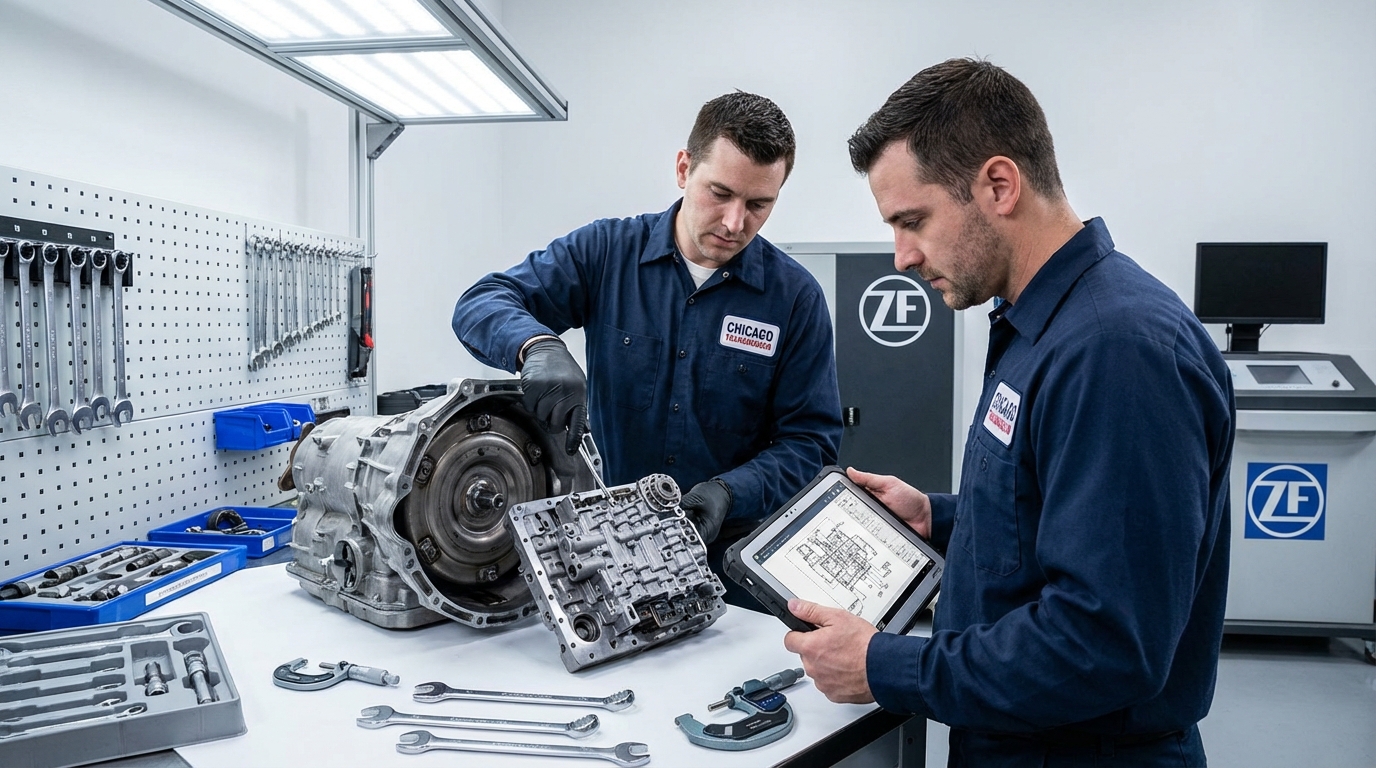
Toyota and Lexus models - including the RAV4, Camry, Corolla, ES300, and RX330 - appear in P0765 case studies with moderate frequency. A RAV4 World thread discusses the ECM-vs-transmission dilemma that many Toyota owners face when P0765 appears, noting that Toyota had a recall/TSB campaign for faulty ECMs on certain early-2000s models that caused transmission shift codes including P0765.
Hyundai and Kia models with the A6MF1 and A6LF1 six-speed automatics - including the Sonata, Optima, Elantra, Forte, Tucson, and Sportage - report P0765 alongside P0760 in some cases, pointing to solenoid pack or wiring issues. A JustAnswer case discusses P0760 and P0765 appearing together on a Hyundai, with the recommendation to check fluid condition and solenoid resistance before pursuing more invasive repairs.
Ford Fusion, Explorer, and F-150 models with various multi-speed transmissions also appear in P0765 case reports. A JustAnswer discussion for a 2018 Ford Fusion details P0765 troubleshooting for Solenoid D, noting that the solenoid is located on the valve body inside the transmission.
Chicago-Specific Factors That Contribute to P0765
The environmental stressors that accelerate P0765 in Chicago are the same ones documented for P0750, P0755, and P0760, and their cumulative impact across the entire solenoid family compounds with each additional solenoid in the system. A six-solenoid transmission like the Chrysler 68RFE has six potential failure points, and each shares the same vulnerability to salt corrosion, cold-thickened fluid, heat degradation, and high shift-cycle frequency.
Winter road salt corrodes the transmission case connector. On the 68RFE, the connector's upward-facing orientation provides some protection, but moisture and salt solution still intrude through capillary action and condensation cycles. The Chrysler Minivan Forum 62TE discussions emphasize the role of connector corrosion in persistent solenoid codes. Annual disconnection, cleaning, and dielectric grease application is critical.
Cold-soak conditions are particularly impactful on the 68RFE's low-resistance solenoids. At 1.8 ohms, even small amounts of additional resistance from a corroded pin or cold-contracted connector can reduce current below the TCM's detection threshold. A Facebook post about a 6.7L Cummins truck with P0765 describes the classic cold-weather pattern: "Starts and idles fine, drives normal at low speed, around 20 mph under load goes into limp mode."

Dense Chicago traffic generates a high number of shift events per mile, stressing all solenoid coils, springs, and plungers. The cumulative fatigue effect is distributed across all solenoids in the pack, meaning that when one solenoid fails, the others may be approaching failure as well - a strong argument for replacing the entire solenoid pack rather than an individual solenoid whenever possible.
Summer heat pushes fluid temperatures into the damaging range above 220 degrees Fahrenheit during slow traffic, accelerating oxidation and varnish formation throughout the valve body.
Prevention Tips for Chicago Vehicle Owners

The preventive strategy for P0765 is consistent with the approach established across the entire solenoid code series, with one additional emphasis.
Follow a severe-service fluid and filter change interval of every 25,000 to 35,000 miles. This is the single most effective preventive measure for all solenoid codes.
Inspect and protect the transmission case connector annually before road-salt season. On Chrysler 68RFE trucks, use a mirror to inspect the upward-facing connector, clean with electrical spray, dry with compressed air, check individual wire seals for cracking, apply dielectric grease, and verify the secondary lock and locking lever are fully engaged.
When one solenoid code has been diagnosed, consider replacing the entire solenoid pack rather than a single solenoid. On Chrysler 62TE and RFE platforms, the solenoid pack is a sealed assembly that typically degrades as a unit. A Chrysler Minivan Forum user's experience - P0765 returning one week after a fluid service despite correct solenoid resistance readings - illustrates how an aging solenoid pack can produce intermittent faults that individual testing cannot always detect. Replacing the pack as a unit eliminates the risk of chasing individual solenoid codes one after another as each coil ages out.
Allow the transmission to warm for 60 to 90 seconds after cold starts below 30 degrees Fahrenheit. On the 68RFE's low-resistance solenoids, cold-start current delivery is critical, and the warm-up period lets the fluid thin and the connector metals expand to their normal contact dimensions.

For Chrysler Ram trucks used for towing - a common use case for the 68RFE - consider an aftermarket upgraded valve body (BD Diesel, RevMax) and transmission tuning to improve shift quality and solenoid longevity under heavy load.
Monitor for early symptoms and act promptly: a single delayed shift, a momentary limp-mode entry that clears on restart, or a flickering transmission-service lamp. Each event represents a solenoid circuit operating at the margin of failure.
Frequently Asked Questions
What does P0765 mean in plain language?
P0765 means the computer controlling your automatic transmission has detected a problem with Shift Solenoid D - one of the internal valves that directs hydraulic fluid to engage specific gears. On Chrysler Ram trucks, this is the Underdrive solenoid. On Toyota and Lexus models, it typically controls fourth gear. The result is usually a loss of a gear, harsh shifting, or limp mode.
How serious is P0765?
P0765 is a serious code. On Chrysler platforms, it immediately triggers limp-in mode, locking the transmission in fourth gear and making normal driving impossible. On other platforms, the loss of a specific gear forces the engine to run at elevated RPMs, generating excess heat and accelerating wear. Prompt diagnosis is strongly recommended.
Can a fluid change fix P0765?
In approximately 15 to 25 percent of cases where the fluid is degraded but internal components remain intact, a fluid and filter service resolves or significantly improves the condition. Forum experience shows that fluid service may provide temporary relief (days to weeks) before the code returns, indicating that an underlying electrical or mechanical issue also needs attention.
Why does P0765 keep coming back after I replaced the solenoid pack?
If P0765 persists after a verified solenoid pack replacement and fluid service, the fault is most likely in the wiring harness (corroded pin, broken wire, water intrusion), the transmission case connector, or the TCM/PCM driver chip. The wire-swap diagnostic technique can isolate which of these is the root cause. Multiple Dodge Avenger and Chrysler minivan forum discussions describe exactly this scenario, with the PCM eventually identified as the culprit.
What is the difference between P0760 and P0765?
P0760 refers to Shift Solenoid C and P0765 refers to Shift Solenoid D. They control different gears or clutch circuits depending on the transmission. On the Chrysler 68RFE, P0760 is the Overdrive solenoid and P0765 is the Underdrive solenoid. On Toyota models, they may control different gear transitions. The diagnostic approach is similar, but the affected gear, symptoms, and physical solenoid differ.
Is this code more likely to be a TCM/PCM problem than other solenoid codes?
Forum evidence suggests P0765 has a somewhat higher rate of TCM-related root causes compared to Solenoids A through C. Multiple cases in Dodge Avenger, Toyota RAV4, and Chrysler minivan forums describe the code persisting through two or more solenoid pack replacements and thorough wiring checks, with the TCM/PCM eventually identified as the failing component. Toyota issued a recall-era TSB for faulty ECMs that caused shift solenoid codes including P0765 on certain early-2000s models.
Can I replace Shift Solenoid D myself?
On Chrysler 62TE platforms, the solenoid pack is accessible through the front (upper) transmission pan, and YouTube walkthroughs provide detailed step-by-step guidance. The job is intermediate difficulty. On Chrysler 68RFE platforms, the solenoid module is accessible through the standard sump pan with valve-body removal - more complex but well-documented. On Toyota and Lexus models, accessing individual solenoids requires dropping the pan, removing the filter, and partially loosening the valve body. If you lack transmission experience, professional service is recommended.
How long does a P0765 repair take?
A connector cleaning and fluid service takes one to two hours. Solenoid pack replacement on the 62TE takes two to four hours. Solenoid module replacement on the 68RFE takes three to five hours. Valve-body work takes four to eight hours. TCM replacement and programming takes two to four hours. A full transmission rebuild requires eight to fifteen hours, typically translating to two to five business days at a Chicago-area shop.
Final Thoughts

P0765 extends the shift solenoid narrative to the fourth valve in the series, and with it comes a notable increase in the probability that the root cause lies not in the solenoid itself but in the TCM or PCM. This distinction is critical for avoiding the expensive cycle of repeatedly replacing solenoid packs that test within specification while the actual failed component - a driver chip inside the control module - goes unaddressed. In Chicago, where road salt, winter cold, summer heat, and dense traffic collectively attack every electrical connection and fluid-filled passage in the transmission, the comprehensive preventive approach is more important than ever: maintain fluid on a severe-service schedule, protect the case connector from corrosion, replace the entire solenoid pack rather than chasing individual solenoids, and investigate the first sign of a shifting irregularity before a connector cleaning or a solenoid pack becomes a TCM replacement or a rebuild.
Internal Link Targets: P0700, P0715, P0720, P0730, P0740, P0741, P0742, P0743, P0744, P0750, P0755, P0760, P0766, P0767, P0768, P0769, P0770
Schema Markup: FAQPage (8 Q&A pairs), HowTo (diagnostic steps), Article (main body)
Series Progress: 24 of 50 articles completed (48%). P0765 is now Done.
Have a Transmission Problem?
Get a Diagnosis-first inspection from Chicago transmission repair support.