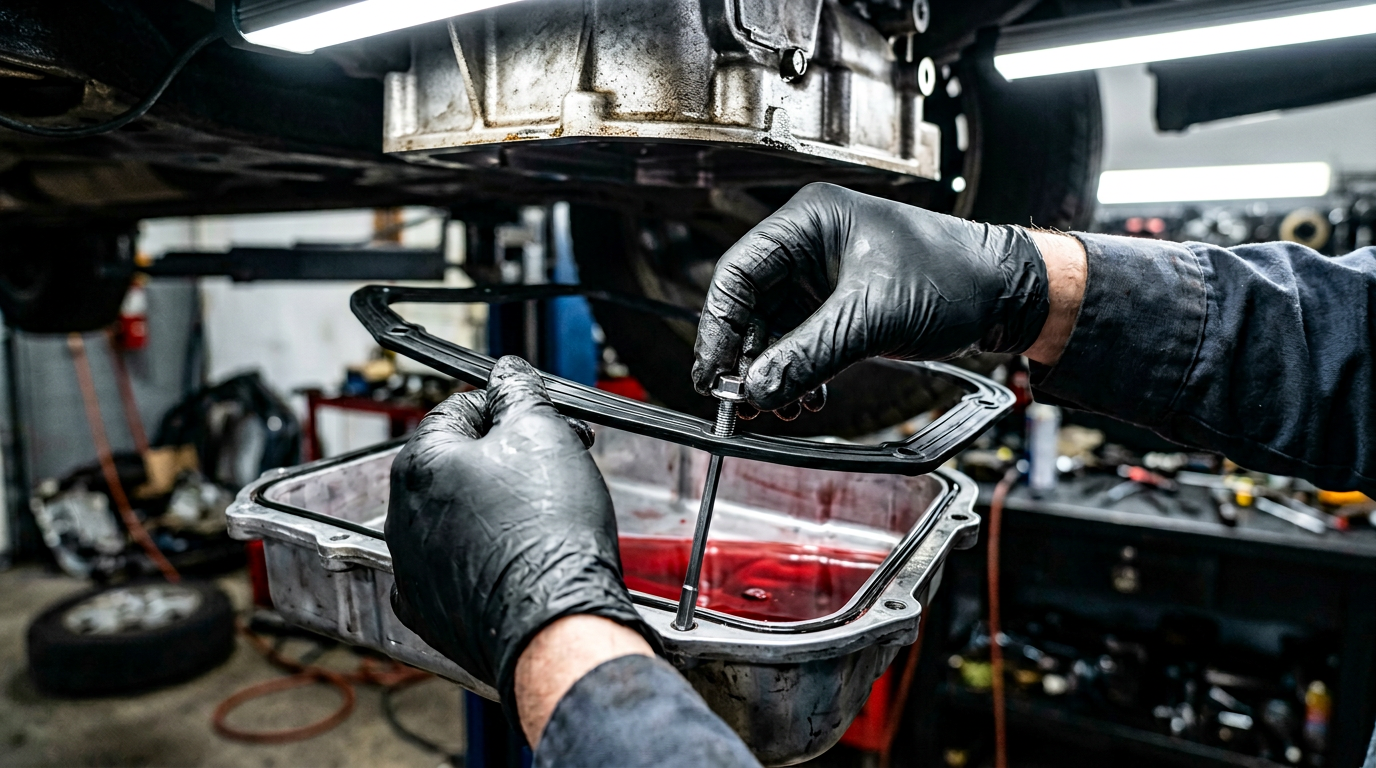
P0770 falls into the moderate-to-serious severity range, and the answer depends on which symptom profile you have.
SEO Metadata
| Field | Value |
|---|---|
| Title Tag | P0770 Code: Shift Solenoid "E" Malfunction - Causes, Fixes & Chicago Repair Costs |
| H2 Sections | 12 |
| Schema | FAQPage, HowTo, Article |
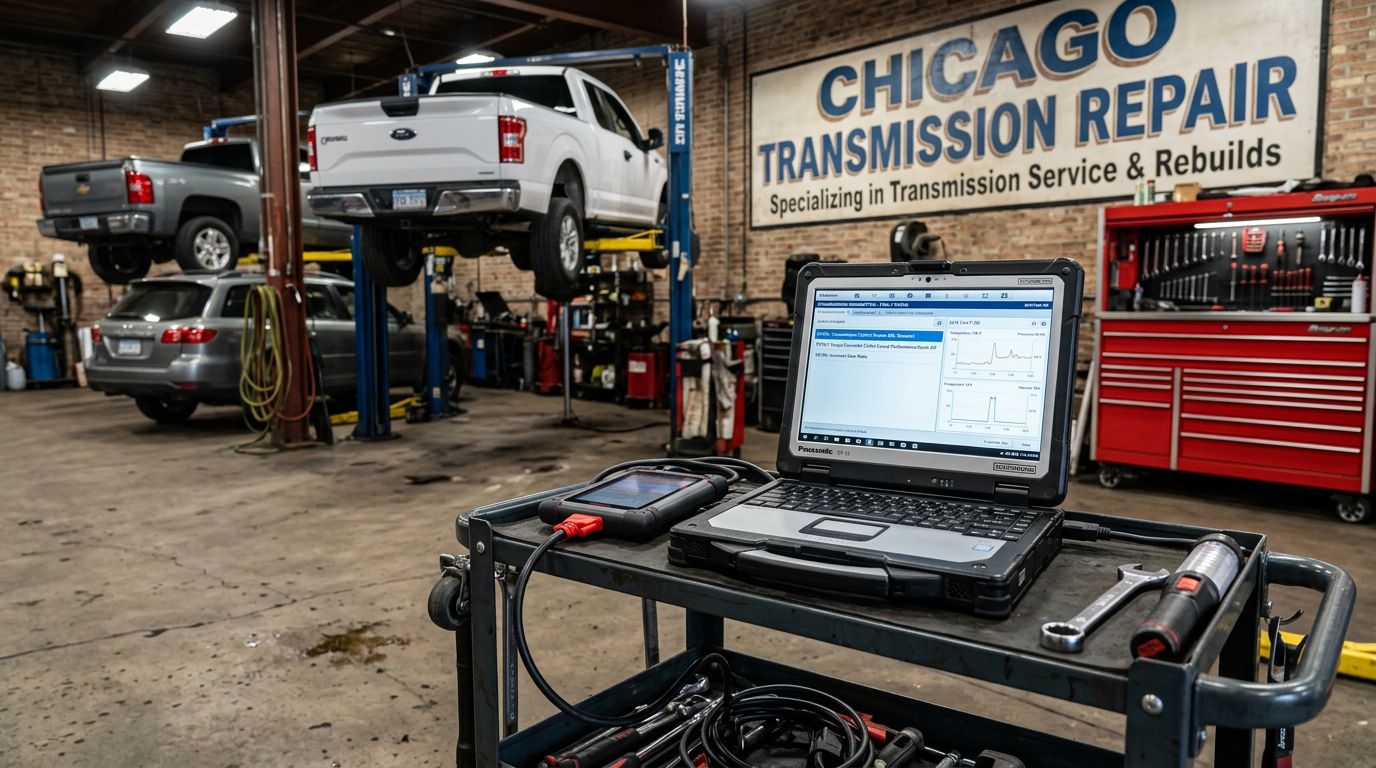
H2 local - What Does the P0770 Code Mean?
Diagnostic trouble code P0770 is a generic OBD-II transmission code defined as "Shift Solenoid 'E' Malfunction." It is stored when the powertrain control module (PCM) or transmission control module (TCM) detects that the electrical circuit or hydraulic performance of the solenoid designated "E" has deviated from expected parameters. The solenoid may fail to energize, fail to de-energize, draw abnormal current, or produce a gear-ratio change that does not match the commanded shift event.
The letter designation "E" does not correspond to a universal gear or clutch. Different manufacturers map solenoid letters to different transmission functions. On Toyota and Lexus automatic transaxles (such as the A541E and U151E), Solenoid E is the torque-converter-clutch lock-up solenoid, controlling overdrive lock-up for fuel economy on the highway. On Chrysler/Dodge/Ram platforms using the 45RFE, 545RFE, or 68RFE, "Solenoid E" typically corresponds to the fourth-clutch (4C) or overdrive-clutch solenoid, depending on how the manufacturer's scan tool labels the circuits. On some Ford and GM transmissions, the "E" designation may refer to a pressure-control solenoid rather than a simple on/off shift solenoid, making the diagnostic approach subtly different.
What unites every P0770 occurrence across platforms is this: the PCM has determined that something is electrically or hydraulically wrong with the solenoid assigned to the "E" position, and the transmission cannot reliably complete the shift or lock-up event that solenoid controls. The distinction between P0770 (general malfunction) and its sub-codes - P0771 (performance/stuck off), P0772 (stuck on), P0773 (electrical), P0774 (intermittent) - matters for diagnosis. P0770 alone usually means the PCM detected a broad fault and has not yet narrowed it to a specific failure mode, or the manufacturer's calibration does not subdivide the code further.
For Chicago-area drivers, P0770 most commonly surfaces during sustained highway driving on the Eisenhower, Dan Ryan, or Kennedy expressways, where the transmission repeatedly attempts to engage the torque-converter clutch or overdrive gear. Cold-start conditions in a Chicago winter can push the code to set even sooner, because thickened fluid increases the force required to move the solenoid plunger.
H2 #2 - How Shift Solenoid E Works Inside Your Transmission
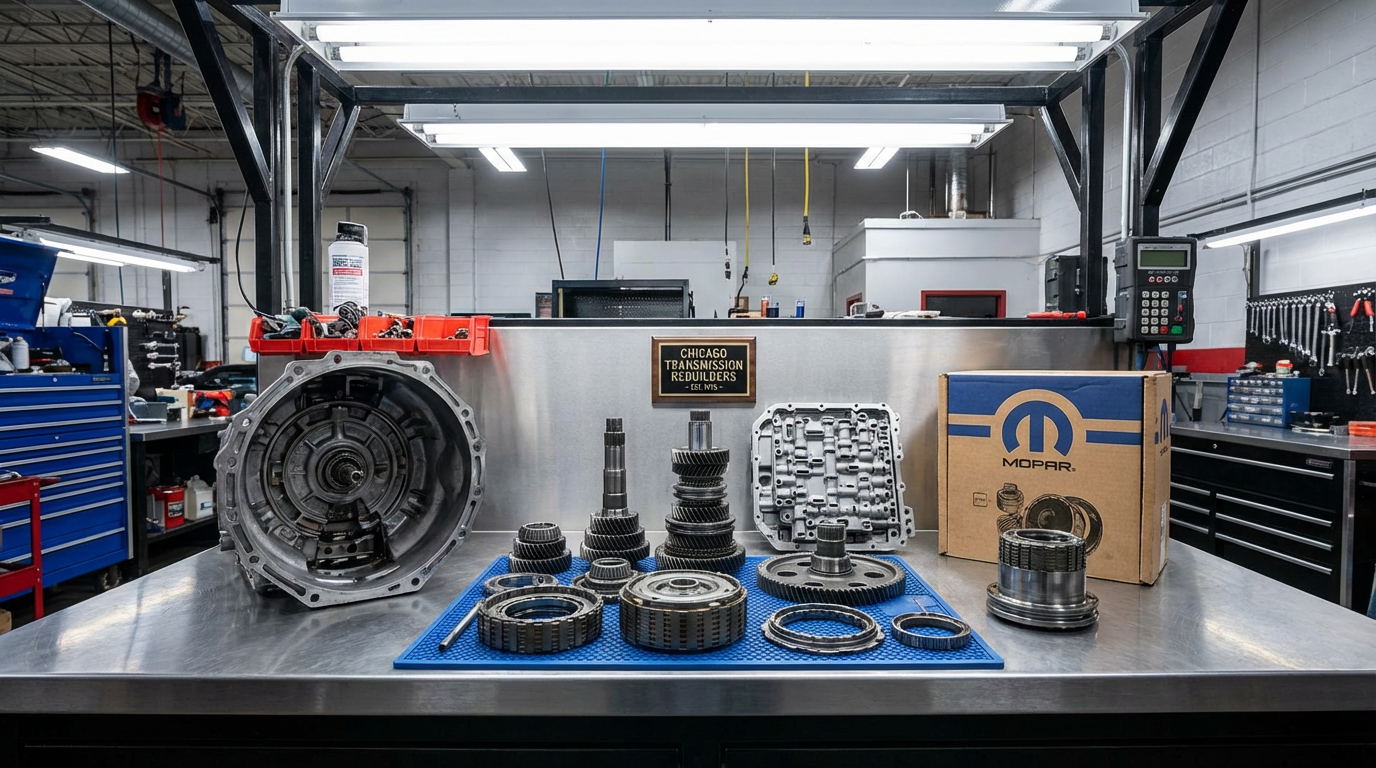
Every automatic transmission uses a set of electro-hydraulic solenoids, mounted on or within the valve body, to direct pressurized transmission fluid to clutch packs, bands, and the torque converter. Solenoid E is one member of this family. It consists of a wire coil wound around a bobbin, a spring-loaded steel plunger, and a hydraulic valve seat with inlet and outlet ports. When the PCM sends voltage (typically battery voltage regulated through a driver circuit), the coil generates a magnetic field that pulls the plunger against its spring, opening or closing a fluid passage.
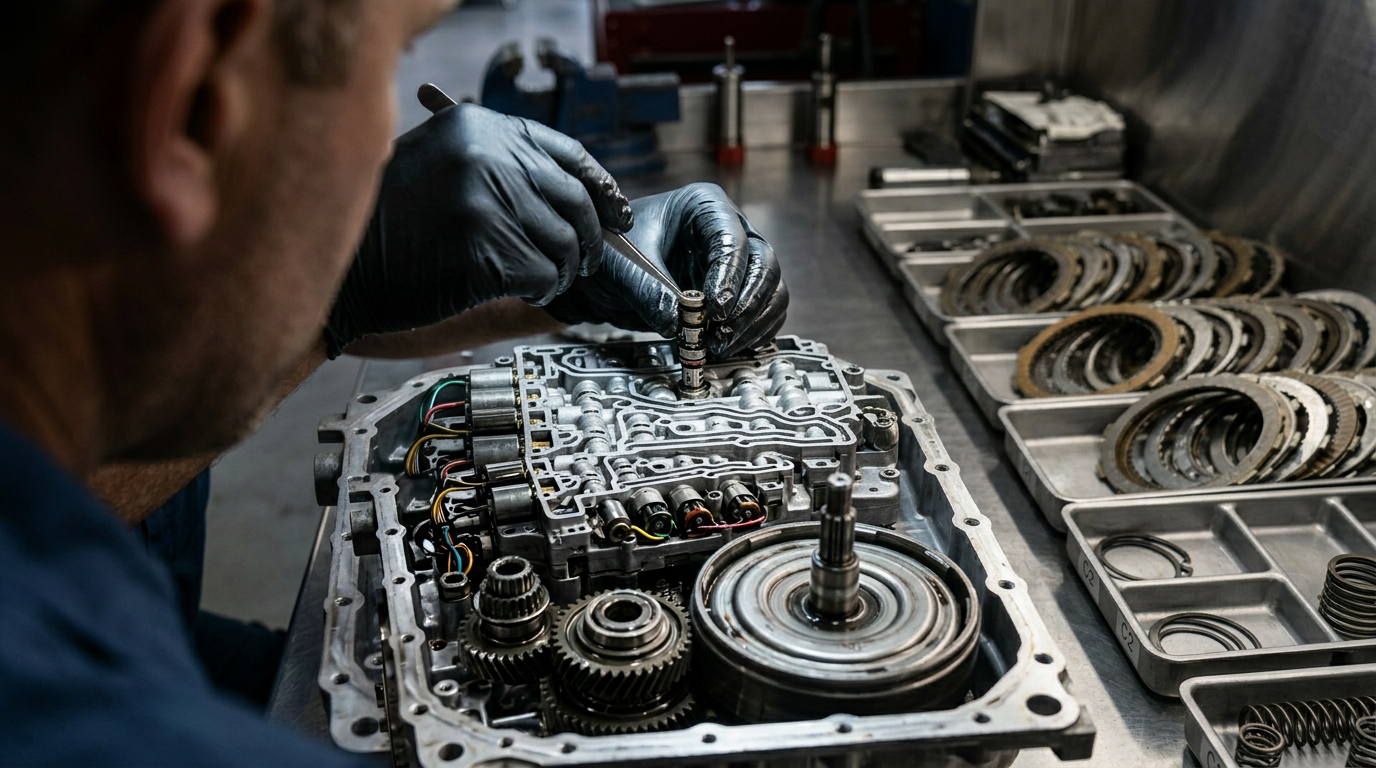
On Toyota platforms where Solenoid E is the lock-up solenoid (often labeled "SL" in factory service manuals), the solenoid modulates or switches fluid to the torque-converter clutch apply circuit. When it energizes correctly, the converter locks up at cruise speed, eliminating the 100-300 RPM slip between engine and transmission input shaft and improving highway fuel economy by roughly eight to twelve percent. When it fails, the converter either never locks (causing higher RPM at cruise, excess heat, and worse mileage) or locks erratically (causing a shudder or stall-like sensation).
On Chrysler 45RFE/545RFE/68RFE platforms, Solenoid E may map to the 4C pressure solenoid or the overdrive clutch circuit. A malfunction here prevents the transmission from reliably entering or holding overdrive, which manifests as a refusal to shift past third gear or a slam into and out of fourth gear under load.
The PCM monitors solenoid health in two primary ways. First, it measures the current flowing through the solenoid coil against expected values. A short circuit produces abnormally high current, an open circuit produces zero current, and a degraded coil produces current that drifts as temperature changes. Second, the PCM compares the actual gear ratio - calculated from the input (turbine) speed sensor and output speed sensor - against the ratio it expects for the commanded gear. If the solenoid is energized but the gear ratio does not change within a calibration window (usually one to three seconds), the PCM flags a performance fault.
Typical coil resistance specifications for Solenoid E include Toyota lock-up solenoid at 11 to 16 ohms, Chrysler low-side-driven solenoids at approximately 1.5 to 3 ohms, and Ford variable-force solenoids at 3 to 6 ohms. Measuring resistance cold versus hot (after heating the coil with a heat gun to around 150 degrees F) can reveal a thermal-sensitive open that only appears at operating temperature - a common root cause of intermittent P0770.
H2 #3 - Common Causes of P0770 (Ranked by Frequency)
Corroded or damaged wiring and connectors (25-35 percent of cases). The transmission case connector sits in one of the most hostile environments under the vehicle - exposed to road spray, salt, mud, and heat. Over time, pins corrode, seals crack, and the internal harness that runs from the case connector to the valve-body solenoids can chafe against sheet metal or develop brittle insulation. A grounding issue is a particularly common and under-diagnosed variant: on Toyota trucks (Tundra, Tacoma, 4Runner), forum owners have reported that simply cleaning the transmission ground strap with sandpaper - even when it looks visually clean - eliminated P0770 permanently. The ground completes the solenoid circuit, and even a thin oxide film can raise circuit resistance enough to trigger the code.
Defective solenoid (20-30 percent). The solenoid coil itself can open, short between windings, or short to the housing. Mechanical failure is also possible: the plunger may stick from varnish buildup, or the return spring may weaken. On Toyota A-series and U-series transaxles, there are typically three shift solenoids accessible from the valve body without removing the transmission, and OEM-quality replacements (AISIN or Denso) each. Using aftermarket electrical solenoids of unknown quality is specifically cautioned against in Tundra and Camry owner communities, because poor-quality units can fail within weeks.
Low, contaminated, or incorrect transmission fluid (15-25 percent). Fluid that is low by even half a quart can starve the solenoid circuit of the pressure needed to complete a shift. Contaminated fluid - dark, burnt-smelling, or carrying metallic debris - can clog the tiny orifices inside the solenoid or the valve body. On 2000-era Toyota trucks, the correct fluid is Dexron III (not Toyota T-IV or WS, which are specified for later models). Using the wrong viscosity changes hydraulic behavior and can directly cause solenoid-related codes. Coolant contamination from a failed internal transmission cooler (the "pink milkshake" condition in Toyota trucks where ATF mixes with coolant through the radiator) is a catastrophic variant that destroys solenoids, clutches, and bearings simultaneously.

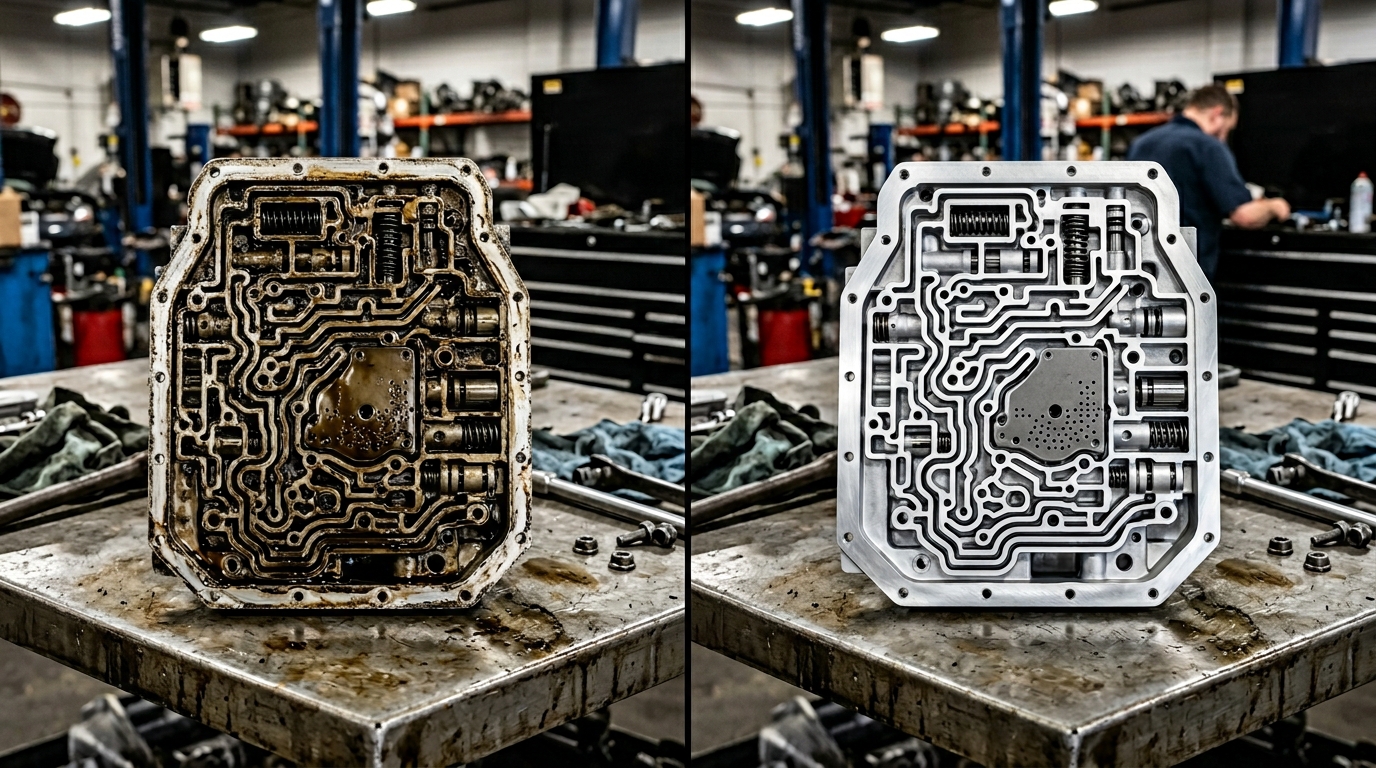
Valve-body wear or contamination (10-15 percent). Even if the solenoid functions perfectly, a worn bore in the valve body or a stuck check ball can prevent proper fluid routing. Debris from clutch-pack wear migrates through the fluid and lodges in the narrow passages near the solenoid seat. On Ford 5R55 transmissions, servo-bore wear can mimic solenoid failure, and replacing the solenoid pack alone may not resolve the issue.
Torque-converter internal failure (5-10 percent). When Solenoid E controls the TCC lock-up circuit, a worn lock-up clutch inside the converter can prevent proper engagement even with a healthy solenoid. The PCM sees the expected ratio change never happen and flags P0770. This is the most expensive possibility in the differential: a torque-converter replacement requires removing the transmission and typically in Chicago, including the converter, gaskets, fluid, and labor.
PCM or TCM failure (less than 5 percent). A failed solenoid driver transistor inside the control module can produce identical symptoms to a wiring fault. On some Chrysler platforms, the solenoid pack plugs directly into the PCM through an internal harness, and a single corroded pin on the PCM connector can set P0770. Reflashing the module resolves software-based faults; full module replacement is required for hardware failures.
H2 #4 - Symptoms Chicago Drivers Will Notice
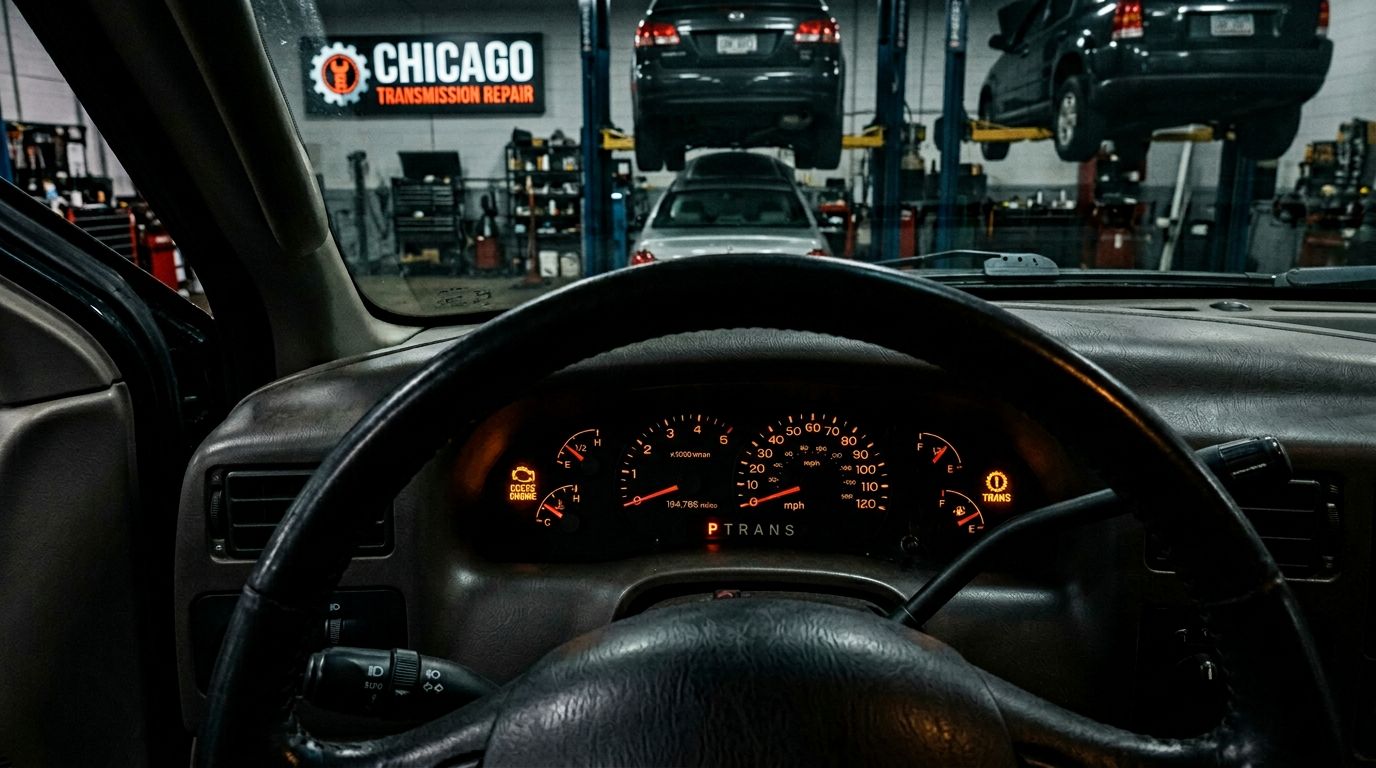
The most common presentation on Toyota and Lexus vehicles - where Solenoid E controls TCC lock-up - is a persistent check-engine light accompanied by higher-than-normal RPM at highway cruise. Instead of settling at 1,800 to 2,000 RPM at 65 mph with the converter locked, the tachometer reads 2,400 to 2,800 RPM, indicating the converter is not locking. Fuel economy drops by ten to twenty percent, and the driver may feel a slight vibration or hear increased engine noise. In some cases the car drives otherwise normally, and owners report living with the code for months or even years (as noted in the Tundra community where one owner's truck carried the code without shifting issues). However, this is a gamble: the unlocked converter generates excess heat that accelerates fluid degradation and can eventually damage hard parts.
On Chrysler/Dodge/Ram trucks where Solenoid E maps to a shift circuit, symptoms are more acute. The transmission may refuse to shift into overdrive, produce a harsh slam when attempting the 3-4 shift, or enter limp mode (locked in third gear with no TCC, limiting speed to 25-40 mph). Limp mode is especially dangerous on Chicago's expressways, where maintaining at least 45 mph is effectively required for safety.
Additional symptoms across all platforms include erratic or slipping shifts, a transmission-temperature warning, reduced towing capacity, a fuel-economy drop noticeable at the pump, and - in severe cases - engine stalling when the converter locks up unexpectedly and the engine cannot maintain the load (particularly at low speed in a parking lot or drive-through).
Cold-weather-specific symptoms in Chicago include a code that sets only on the first cold start of the day and clears after the transmission warms up, a delayed first-to-second shift that is jolty when the fluid is thick but smooths out after five to ten minutes of driving, and a converter that fails to lock until the fluid reaches operating temperature (190 degrees F), meaning the first twenty minutes of a winter commute are spent at elevated RPM.

H2 #5 - Is P0770 Serious? Can You Keep Driving?
If the only noticeable effect is higher cruise RPM and a check-engine light (the Toyota TCC lock-up scenario), you can continue driving in the short term, but the unlocked converter is generating excess heat. Every ten-degree increase in fluid temperature above 200 degrees F roughly halves the remaining life of the fluid. Over weeks and months, this accelerated degradation leads to varnish on solenoids, clogged filter passages, and eventually hard-part damage. Treat it as a "fix within the next two to four weeks" situation.
If the transmission is in limp mode, will not shift past a certain gear, or is slamming into gears, the situation is more urgent. Driving in limp mode stresses second- and third-gear components beyond their design duty cycle, and a sudden loss of the gear you are in could leave you stranded in traffic. In this scenario, limit driving to short, low-speed trips to a repair shop and avoid the expressway. Tow the vehicle if multiple transmission codes are present, if the fluid smells burnt, or if you see metallic debris on the dipstick.
For Chicago drivers specifically, remember that the city's emissions and safety inspection requirements (where applicable) will fail a vehicle with an illuminated MIL, so the code must be resolved regardless of drivability impact.
H2 #6 - Step-by-Step Diagnosis of P0770
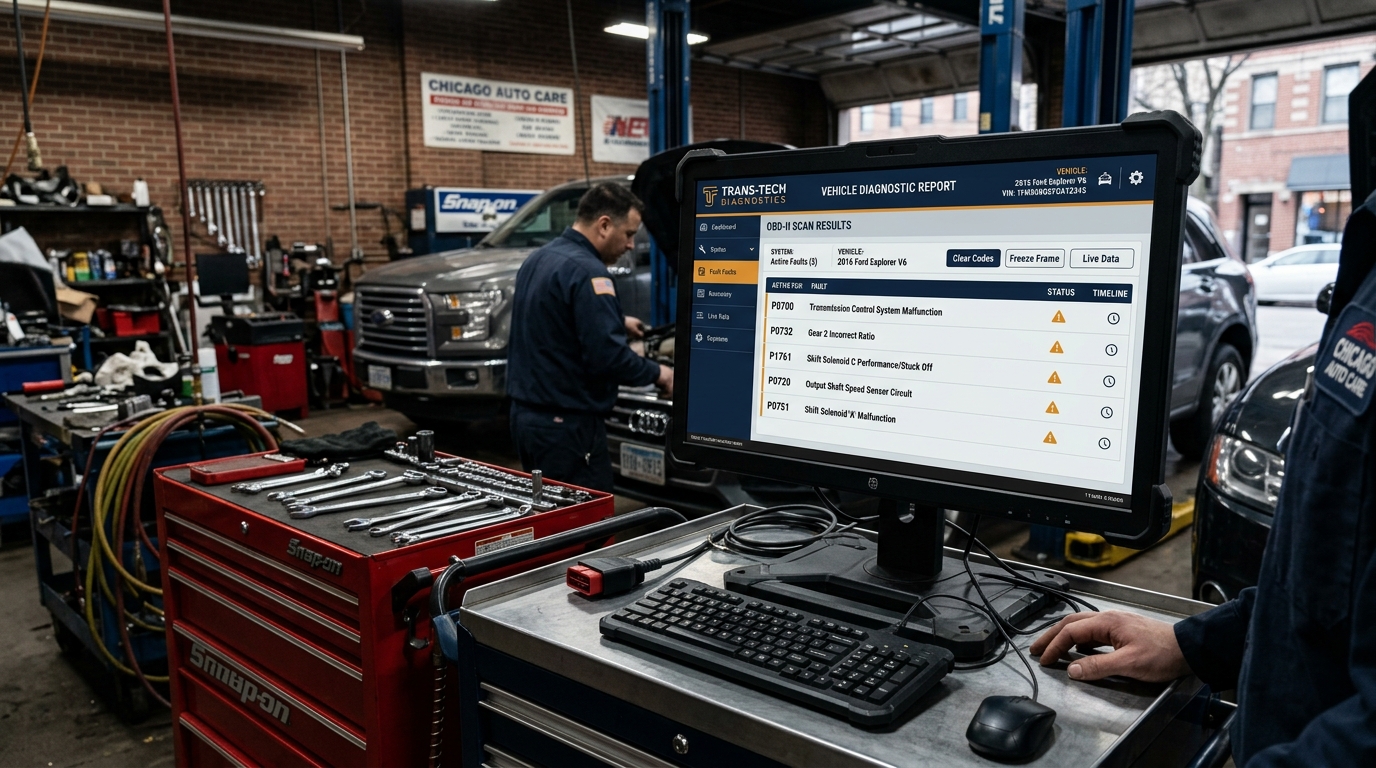
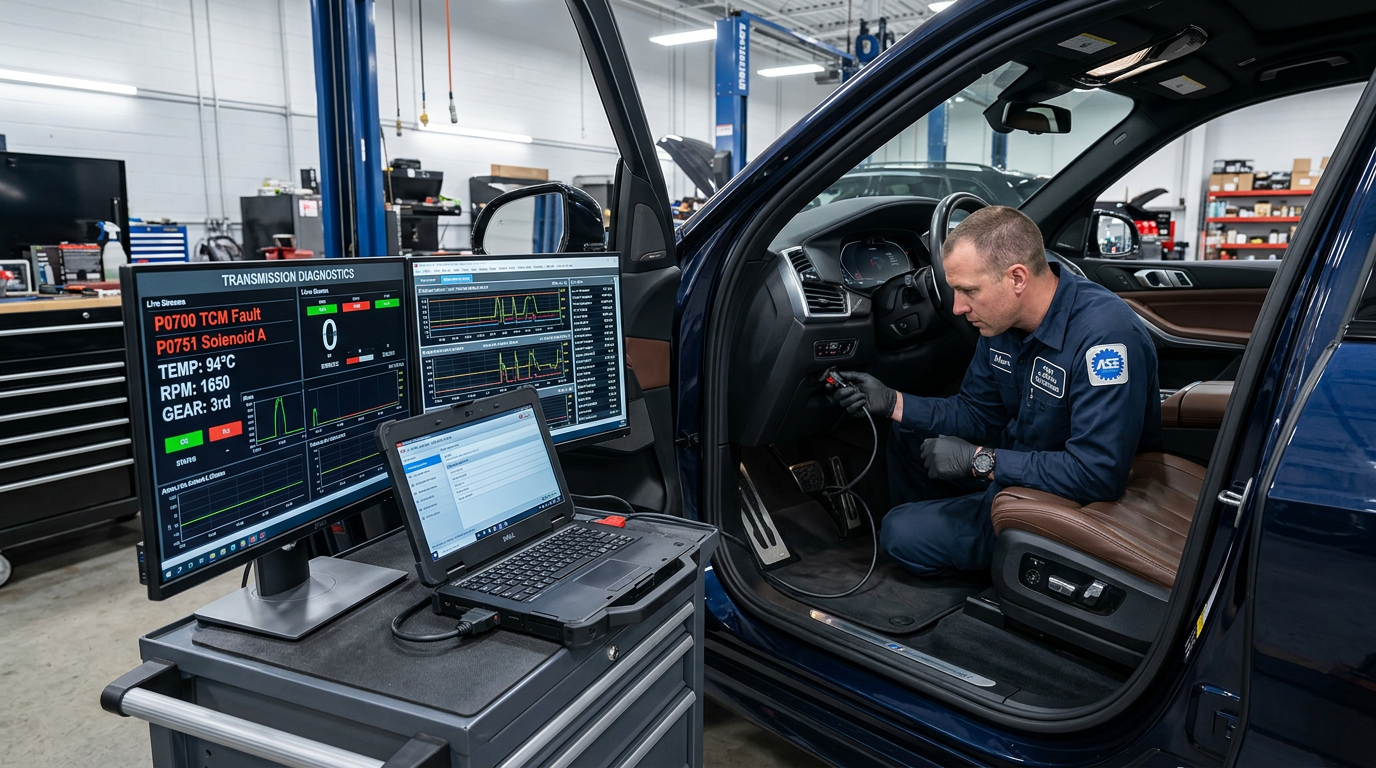
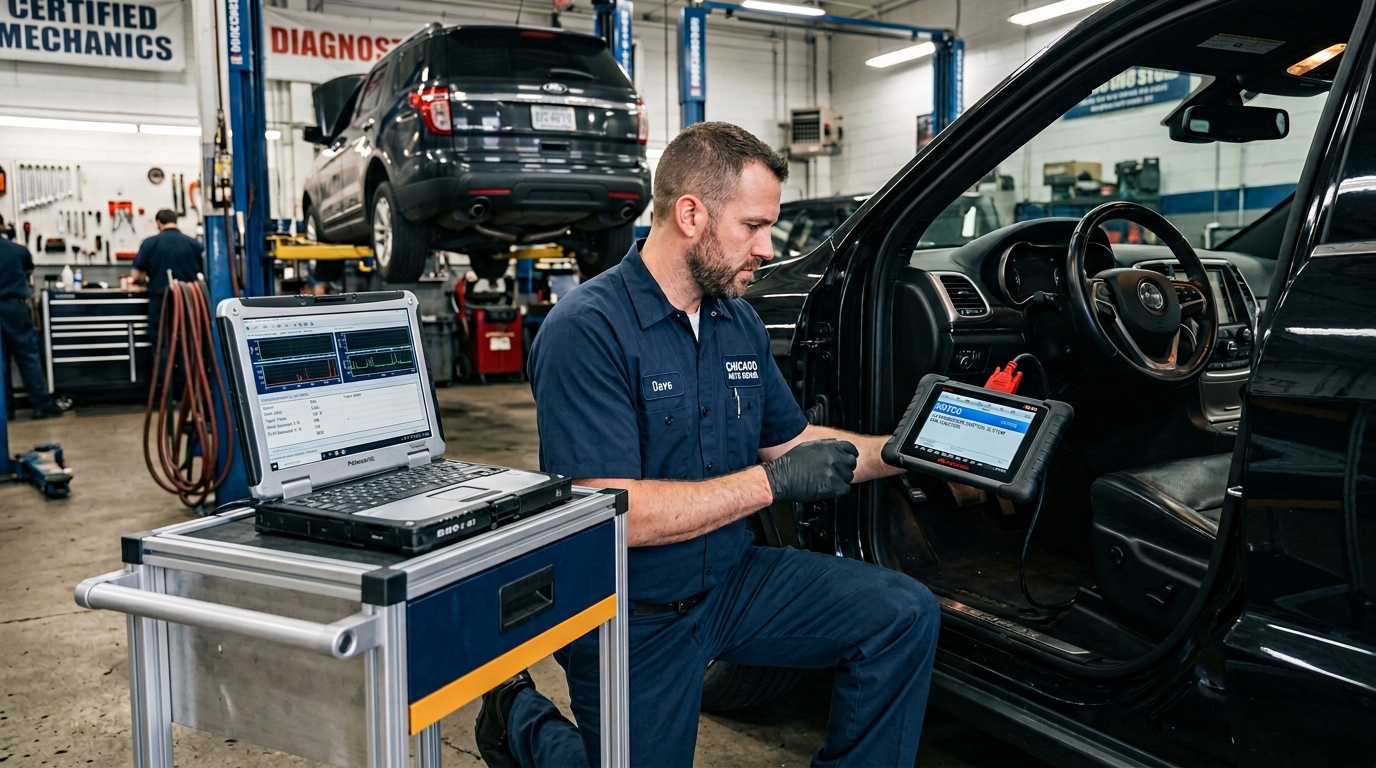
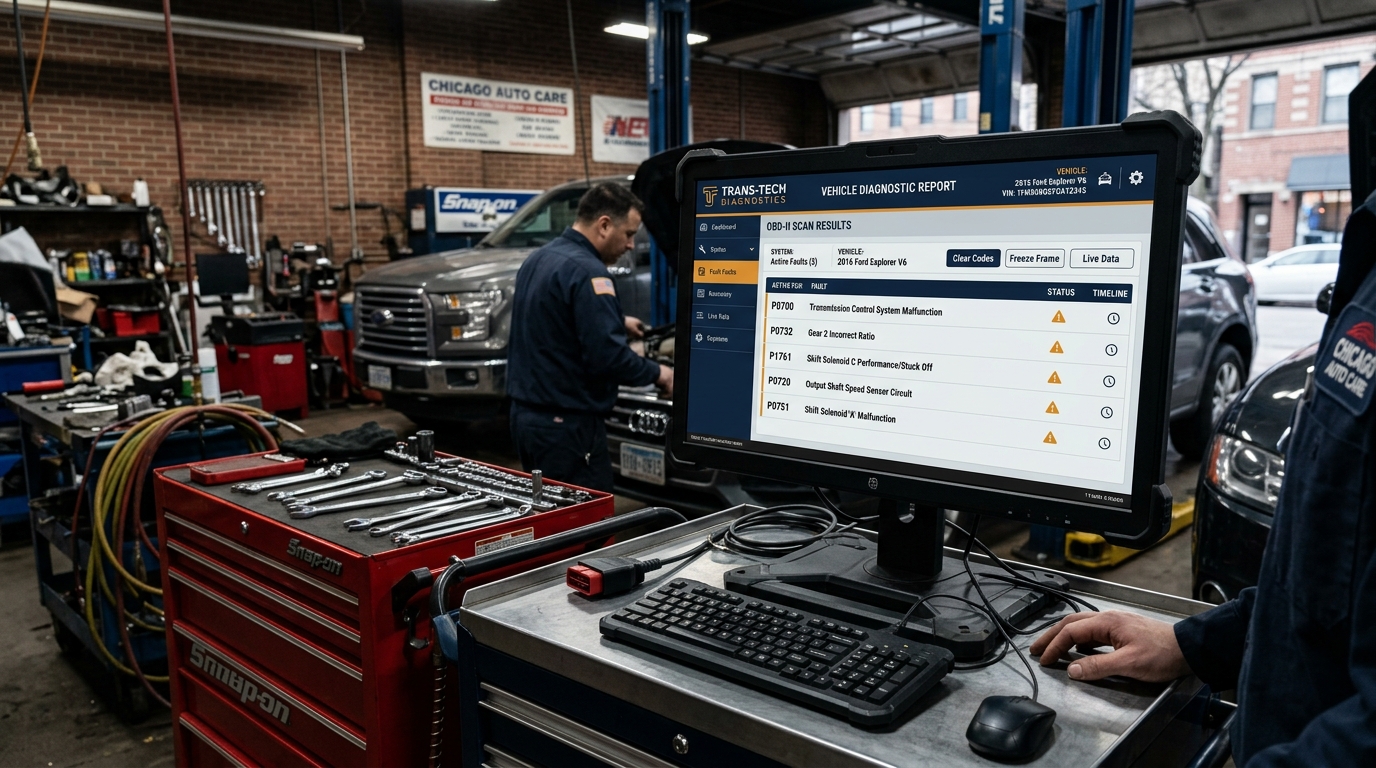
Step 1 - Full OBD-II scan and freeze-frame review. Use a scan tool that reads transmission-specific codes and provides freeze-frame data. Record every code present (especially P0700, P0715, P0720, P0750-P0774, and any manufacturer-specific codes). Note the freeze-frame parameters: vehicle speed, engine RPM, transmission fluid temperature, throttle position, and commanded gear. If the code set at 65 mph and 2,500 RPM with a commanded gear of fourth or overdrive, the lock-up solenoid or converter is the likely suspect. If it set at 20 mph during a 1-2 shift, the issue is more likely in the shift circuit.
Step 2 - Transmission fluid inspection. With the engine warm and idling in park, check the dipstick (or use the fill-plug method on sealed transmissions). Healthy fluid is pink to light red and translucent. Dark brown or black fluid with a burnt odor indicates severe degradation. Milky or frothy fluid suggests coolant contamination - stop driving immediately and inspect the radiator's internal cooler. Check for metallic particles on the dipstick or magnet: fine gray paste indicates normal wear, while visible flakes or chunks indicate hard-part failure. Confirm the correct fluid type for your vehicle (Dexron III for older Toyotas, T-IV or WS for newer ones, ATF+4 for Chrysler, Mercon V or Mercon LV for Ford).
Step 3 - Inspect and clean the transmission case connector and ground. Unplug the main transmission electrical connector (typically on the driver's side of the case, a few inches above the oil-pan rail). Inspect every pin for green corrosion, bent contacts, partial retraction, or moisture. On Chrysler platforms with a 23-pin connector, release the red secondary lock before the main locking lever. Clean pins with electrical contact cleaner and apply dielectric grease before reconnecting. On Toyota trucks, also locate the transmission ground strap (follows the negative battery cable to a bolt on the transmission housing), remove the bolt, sand both the ring terminal and the housing surface until shiny, reinstall, and torque to specification.
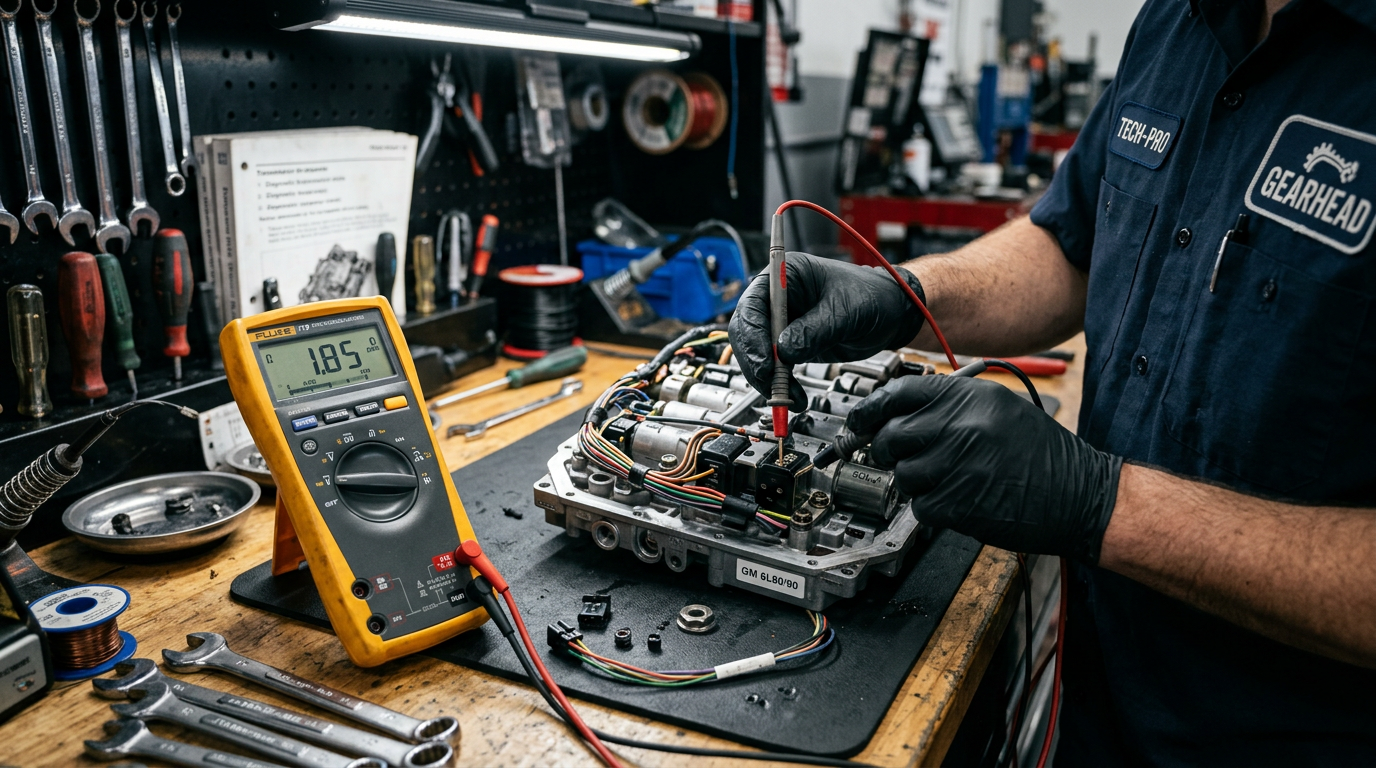
Step 4 - Measure solenoid resistance. With the connector unplugged, use a digital multimeter to measure resistance across the Solenoid E pins at the transmission-side connector. Compare to manufacturer specifications (Toyota SL solenoid: 11-16 Ω; Chrysler: 1.5-3 Ω; Ford VFS: 3-6 Ω). If resistance is out of range, the solenoid coil is likely failed. If resistance is in range cold, heat the connector area with a heat gun to 150 degrees F and recheck - a thermal-sensitive open will show a sudden jump to infinity ohms.
Step 5 - Bidirectional solenoid activation test. Using a scan tool with bidirectional capability, command Solenoid E on and off while monitoring current draw. A healthy solenoid should draw its rated amperage (typically 0.5 to 2.0 A depending on type) and you should hear or feel a click at the valve body. No click and no current draw indicates an open circuit. Current draw with no audible click suggests a mechanical stuck condition.
Step 6 - Monitor gear-ratio data. With the scan tool connected, road-test the vehicle and watch the calculated gear ratio compared to the commanded gear. If the PCM commands overdrive or TCC lock-up and the ratio never changes (or changes intermittently), the fault is confirmed in the Solenoid E circuit. If the ratio tracks the command perfectly yet the code persists, suspect a PCM driver-circuit fault.
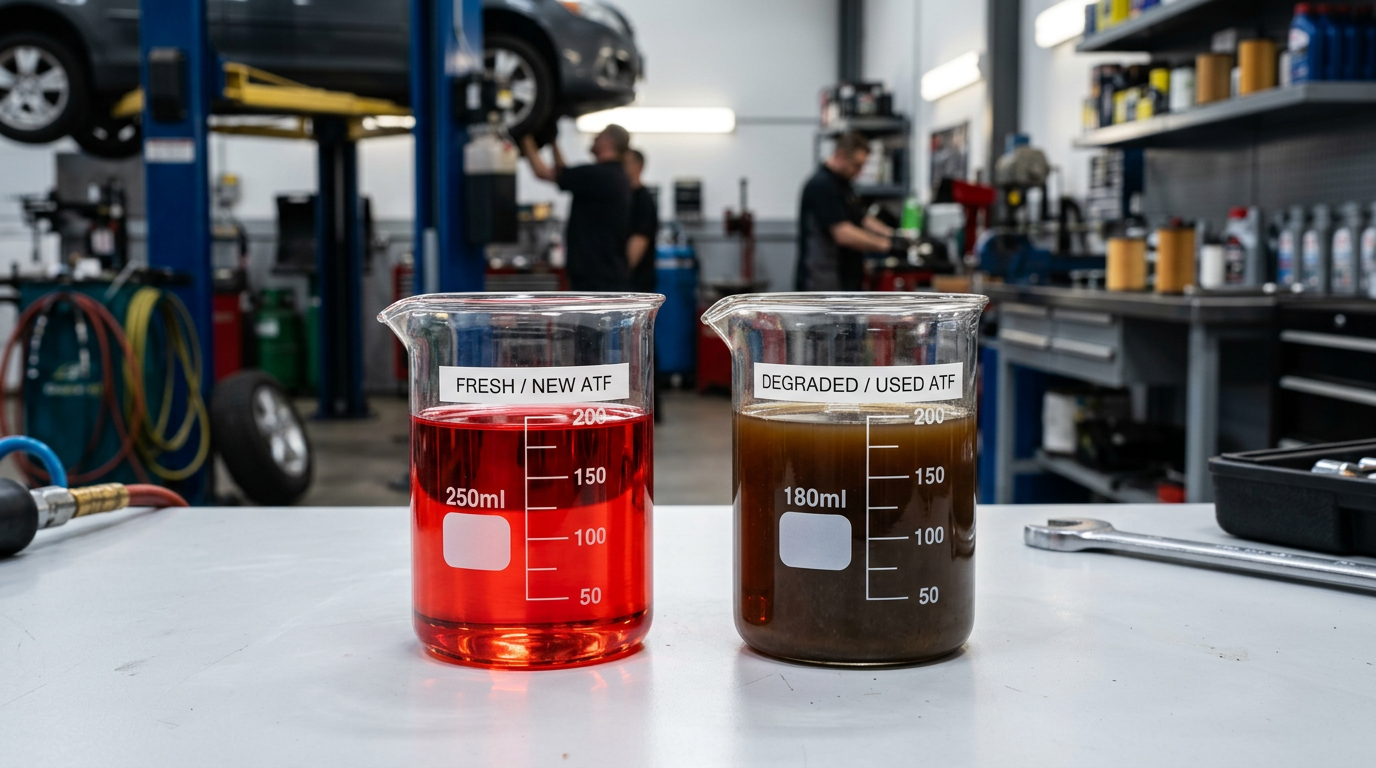
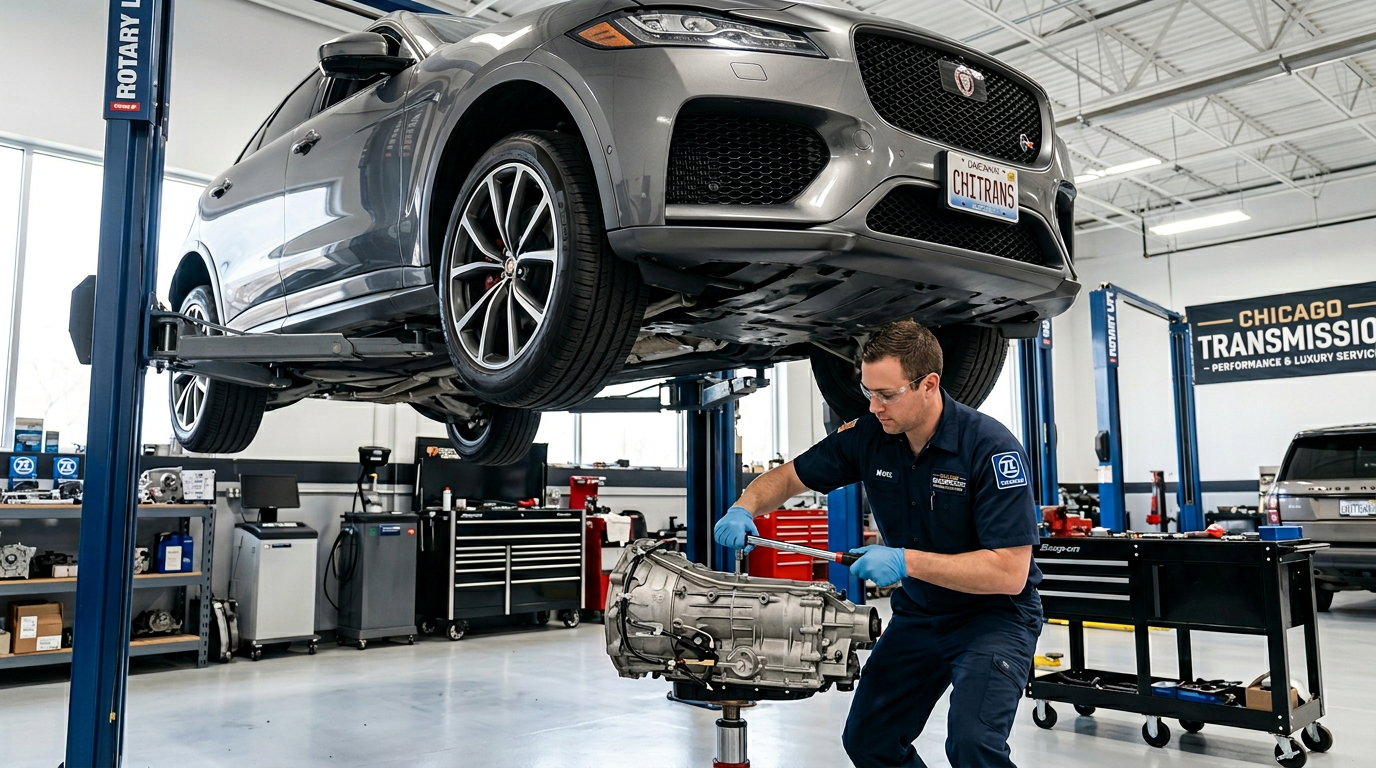
Step 7 - Pan drop and visual inspection (if needed). If electrical tests are inconclusive, drop the transmission pan and inspect the filter, magnet, and valve-body face. Heavy debris on the magnet suggests internal wear. Remove the solenoid (typically held by one or two bolts and an O-ring) and inspect for varnish, scoring, or a stuck plunger. On Toyota transaxles there are three solenoids accessible from the pan side; on Chrysler units the entire solenoid pack lifts out as a module.
Step 8 - Torque-converter evaluation (if solenoid and wiring pass all tests). If the solenoid, wiring, fluid, and valve body all check out, the torque converter itself may be the root cause. A stall-speed test and a TCC slip-rate measurement (comparing input and output speed at steady cruise) can confirm converter-clutch wear. Replacement requires transmission removal.
H2 #7 - Repair Options and Chicago Cost Summary
Costs in the Chicago metropolitan area vary by vehicle, access, fluid condition, and whether programming is required. A written quote should follow diagnosis rather than a generic labor-rate assumption.
Connector and ground-strap cleaning: Parts (contact cleaner, sandpaper, dielectric grease). Labor is 0.5 to 1 hour. Total:. This is the single best first step because it is cheap and frequently resolves the code entirely - forum owners on both Toyota Nation and Tundras.com have reported permanent fixes from ground-strap cleaning alone.
Transmission fluid and filter service: A drain-and-fill with the correct OEM-spec fluid and a new filter. A full flush (which exchanges nearly all fluid). If fluid was the root cause (low level, wrong type, or moderate contamination), this may resolve the code and should be done regardless as part of the diagnostic process.
Individual solenoid replacement (Toyota, GM individual-solenoid designs): OEM or AISIN/Denso solenoid:. Labor: 1 to 2 hours (pan drop, solenoid swap, refill). Total:. Use only OEM-quality parts - cheap aftermarket solenoids have a high early-failure rate.
Valve-body repair or replacement: Parts (rebuilt valve body or rebuild kit with springs, check balls, and gaskets):. Labor: 3 to 6 hours. Total:. On Ford 5R55 transmissions, servo-bore repair kits may be needed in addition to the solenoid pack.
Torque-converter replacement: Converter: (aftermarket) or (OEM). Labor: 6 to 10 hours (requires transmission removal and reinstallation). Total:.
Full transmission rebuild: Labor and parts: at a quality Chicago transmission shop. A remanufactured transmission swap depending on platform and warranty coverage.
PCM/TCM reflash: (requires dealer-level or J2534-compatible tool with the latest calibration files).
PCM/TCM replacement: Module:. Programming:. Total:.
H2 #8 - Vehicles Most Commonly Affected by P0770
Toyota and Lexus (A-series and U-series transaxles). The 2000-2006 Camry, 2001-2007 Highlander, 2000-2006 Tundra, and corresponding Lexus ES and RX models are the most frequently reported P0770 vehicles. On these platforms, Solenoid E is the TCC lock-up solenoid. The code is common enough that Toyota Nation and Tundras.com have dedicated troubleshooting threads spanning over fifteen years.
Chrysler, Dodge, and Ram (45RFE, 545RFE, 68RFE). Ram 1500/2500/3500 trucks and Jeep Grand Cherokee models with these transmissions see P0770 alongside other solenoid codes. The 68RFE in Cummins-diesel Rams is particularly susceptible under heavy-towing conditions.
Ford (5R55W, 5R55S, 6R80). Explorer, Mountaineer, Mustang, and F-150 models with these transmissions report P0770, often alongside P0760 and P0775 in a pattern that points to the solenoid block or valve body rather than a single solenoid.
Hyundai and Kia (A6MF1/A6LF1/A6GF1 six-speed). Sonata, Optima, Tucson, and Sportage models from the 2011-2018 era report P0770 in conjunction with harsh shifting and torque-converter shudder.
General Motors (6L80, 6L90). Silverado, Sierra, Tahoe, Suburban, and Escalade models with the six-speed automatic occasionally set P0770, though GM more commonly uses manufacturer-specific codes for the same solenoid faults.
H2 #9 - Chicago-Specific Factors That Accelerate P0770 Failures
Road salt is the primary environmental accelerant. The transmission case connector, ground straps, and external wiring harness sit in the direct splash zone of salted slush from October through April. Chloride ions penetrate connector seals and accelerate pin corrosion at a rate far higher than in dry-climate regions. Annual cleaning and re-greasing of every accessible transmission connector before winter is the single most cost-effective preventive measure for Chicago vehicles.
Cold-soak viscosity effects compound the salt problem. When overnight temperatures drop below 20 degrees F, transmission fluid viscosity increases dramatically, even with modern synthetic ATF. The solenoid plunger must overcome both its return spring and the increased fluid resistance to move. A solenoid that is marginal at 70 degrees F - perhaps with a few corroded pins adding a fraction of an ohm to the circuit - may fail outright at 0 degrees F. This is why P0770 codes in Chicago disproportionately appear on the first cold start of the day and may not recur once the fluid warms up. Freeze-frame data showing a low transmission-fluid temperature at the time the code set is a strong indicator of a cold-related intermittent failure.
Stop-and-go traffic on the Kennedy, Eisenhower, and Lake Shore Drive causes the transmission to cycle through gears hundreds of extra times per commute compared to a suburban highway drive. Each cycle actuates the solenoids, wearing the plunger seats and fatiguing the coil winding insulation incrementally faster. Chicago drivers who commute more than thirty minutes each way should consider the severe-service maintenance interval - fluid and filter every 25,000 to 35,000 miles rather than the normal 60,000-mile schedule.
Summer heat is the other extreme. Sustained city driving in July and August, particularly in slow expressway traffic with the air conditioning at full load, can push transmission-fluid temperatures above 220 degrees F. At these temperatures, conventional ATF begins to oxidize rapidly, forming varnish that coats solenoid plungers and valve-body passages. An auxiliary transmission cooler is a worthwhile investment for any Chicago vehicle used for towing or extended stop-and-go commuting.
H2 local0 - Prevention and Maintenance Tips
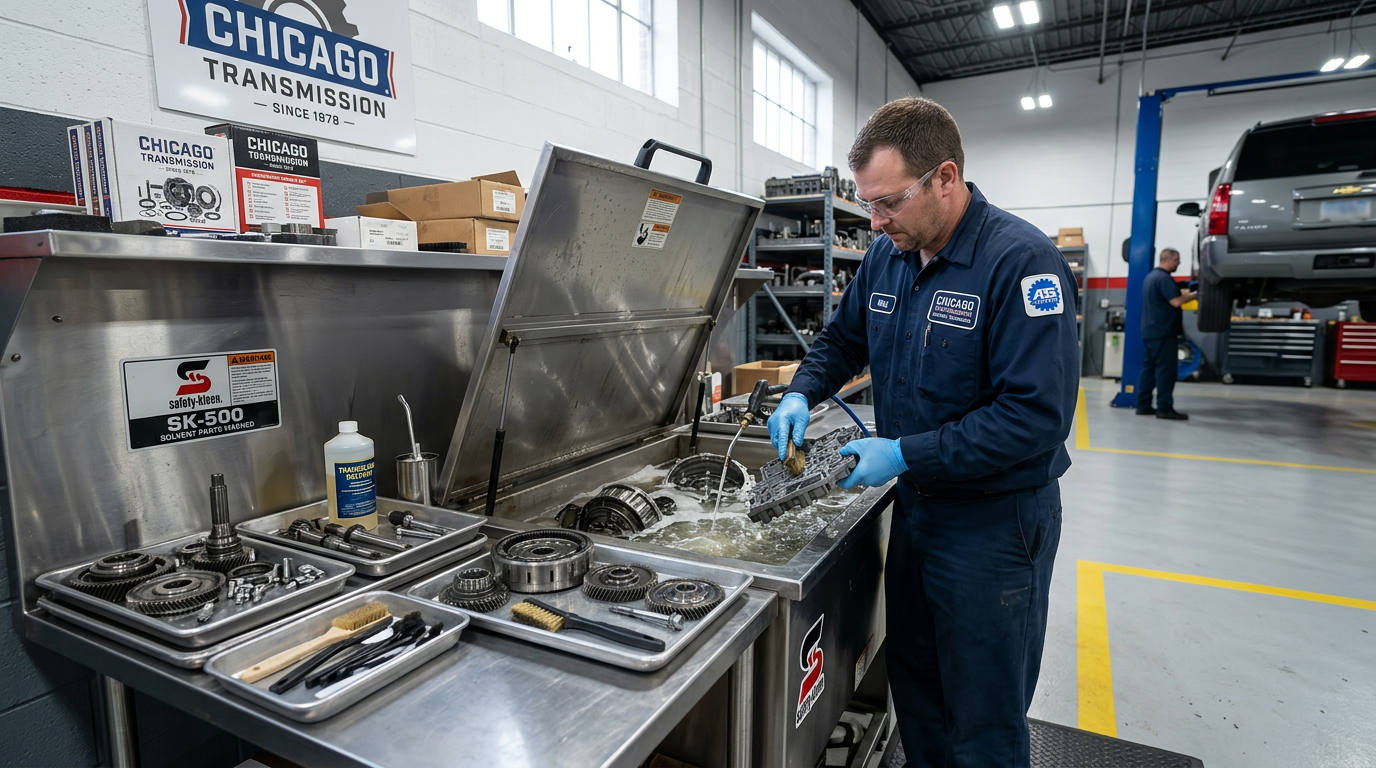
Maintain the fluid. A drain-and-fill at the severe-service interval (25,000-35,000 miles) with the manufacturer-specified ATF keeps the solenoids, clutches, and valve body clean. Always replace the filter at the same time. If the vehicle has more than 100,000 miles and the fluid has never been changed, proceed cautiously: a full flush on a heavily contaminated transmission can dislodge debris that then clogs solenoid orifices. In that scenario, a series of two or three drain-and-fill cycles spaced 5,000 miles apart is gentler.
Protect the electrical connections. Before each Chicago winter, unplug the transmission case connector, spray with electrical contact cleaner, dry with compressed air, apply a thin coat of dielectric grease to every pin, and reseat the connector firmly. Do the same for the ground strap. This ten-minute task can prevent hundreds of dollars in diagnostic and repair costs.
Warm the transmission before driving hard. In sub-30 degrees F weather, allow the engine to idle for 60 to 90 seconds with the transmission in park, then drive gently for the first five minutes. This gives the ATF time to circulate and warm, reducing the viscosity load on solenoids and clutch packs.
Use OEM-quality solenoids when replacing. The price difference between a no-name solenoid and a AISIN or Denso unit is trivial compared to the labor cost of doing the job twice. Cheap solenoids may have incorrect resistance, weak springs, or poor plating on the plunger.
Replace the full solenoid set when one fails. If Solenoid E has failed at 150,000 miles, Solenoids A through D have the same mileage and similar wear. Replacing all solenoids at once during a single pan-drop saves the incremental labor cost of returning for the next failure six months later.
Consider an auxiliary transmission cooler for high-stress use. Towing a boat to Lake Michigan, hauling construction materials, or sitting in bumper-to-bumper traffic on the Dan Ryan in August all push fluid temperatures into the danger zone. A quality cooler with a thermostat bypass keeps fluid in the 180-200 degrees F sweet spot and helps prevent heat-related solenoid and clutch wear.
H2 local1 - P0770 vs. Related Codes: Quick-Reference Guide
P0770 (Shift Solenoid E - Malfunction): general fault, could be electrical or hydraulic. P0771 (Shift Solenoid E - Performance / Stuck Off): the PCM commands the solenoid on, but the expected gear change never occurs; suspect a stuck plunger, low pressure, or valve-body blockage. P0772 (Shift Solenoid E - Stuck On): the gear controlled by Solenoid E engages when it should not; suspect a solenoid that will not de-energize, a short in the driver circuit, or a stuck valve-body spool. P0773 (Shift Solenoid E - Electrical): the PCM detects an open or short in the solenoid coil circuit specifically; focus diagnosis on wiring, connector, and coil resistance. P0774 (Shift Solenoid E - Intermittent): the fault comes and goes; look for thermal-sensitive coil opens, loose pins, and cold-weather viscosity effects.
If P0770 appears alongside P0750 (Solenoid A), P0755 (Solenoid B), P0760 (Solenoid C), or P0765 (Solenoid D), the problem is likely systemic - contaminated fluid, a failing solenoid pack, or a harness/connector issue affecting multiple circuits - rather than an isolated Solenoid E failure.
H2 local2 - Frequently Asked Questions
What does P0770 mean in plain language? Your transmission's computer detected a problem with the solenoid labeled "E." Depending on your vehicle, this solenoid controls torque-converter lock-up (Toyota/Lexus), overdrive engagement (Chrysler/Dodge), or a high-gear shift (Ford/Hyundai). The result is typically higher RPM at highway speed, a refusal to shift into the highest gear, or limp mode.
How serious is P0770? Moderately serious. If the only symptom is higher cruise RPM and a check-engine light, you have a few weeks to schedule a repair. If the transmission is in limp mode or slamming into gears, get it diagnosed within days and avoid highway driving.
Can a transmission fluid change fix P0770? In roughly 15 to 25 percent of cases - those caused by low fluid, contaminated fluid, or wrong-spec fluid - a proper fluid and filter service resolves the code. It is always worth performing as the first repair step because it is relatively inexpensive and addresses a prerequisite for accurate further diagnosis.
Why does my P0770 code only appear in winter? Cold fluid is thicker and harder for the solenoid plunger to push through. A marginally weak solenoid or a slightly corroded connector that works fine at 70 degrees F may fail at 10 degrees F. Cleaning the connector, refreshing dielectric grease, and using a full-synthetic ATF rated for cold climates can eliminate the winter-only pattern.
What is the difference between P0770 and P0740? P0740 refers to the Torque Converter Clutch (TCC) circuit in general, while P0770 refers specifically to Shift Solenoid E. On some Toyota platforms these may overlap because Solenoid E is the TCC solenoid, but on other makes they are entirely different circuits. Check your manufacturer's wiring diagram to confirm.
Can I fix P0770 myself? A connector cleaning and ground-strap refresh are solidly DIY-accessible (basic hand tools, contact cleaner, sandpaper). A fluid-and-filter service is intermediate-level. Solenoid replacement (pan drop, swap, refill) is achievable for a mechanically confident DIYer with a service manual, but requires precision with torque specs and the correct OEM parts. Valve-body or torque-converter work is professional territory. The CarParts.com guide explicitly advises against DIY for P0770 beyond basic checks, noting that "transmission work is typically done by specialty technicians."
How long does the repair take? Connector cleaning and fluid service: 1 to 2 hours. Individual solenoid replacement: 1.5 to 3 hours. Solenoid pack replacement: 2 to 4 hours. Valve-body rebuild: 4 to 8 hours. Torque-converter replacement: 6 to 10 hours. Full transmission rebuild: 1 to 2 days in a busy Chicago shop.
Which vehicles get P0770 most often? Toyota Camry, Highlander, and Tundra (2000-2007 era); Chrysler/Dodge/Ram trucks with 45RFE/545RFE/68RFE; Ford Explorer and F-150 with 5R55 or 6R80; and Hyundai/Kia models with the A6MF family six-speed.
Final Takeaway
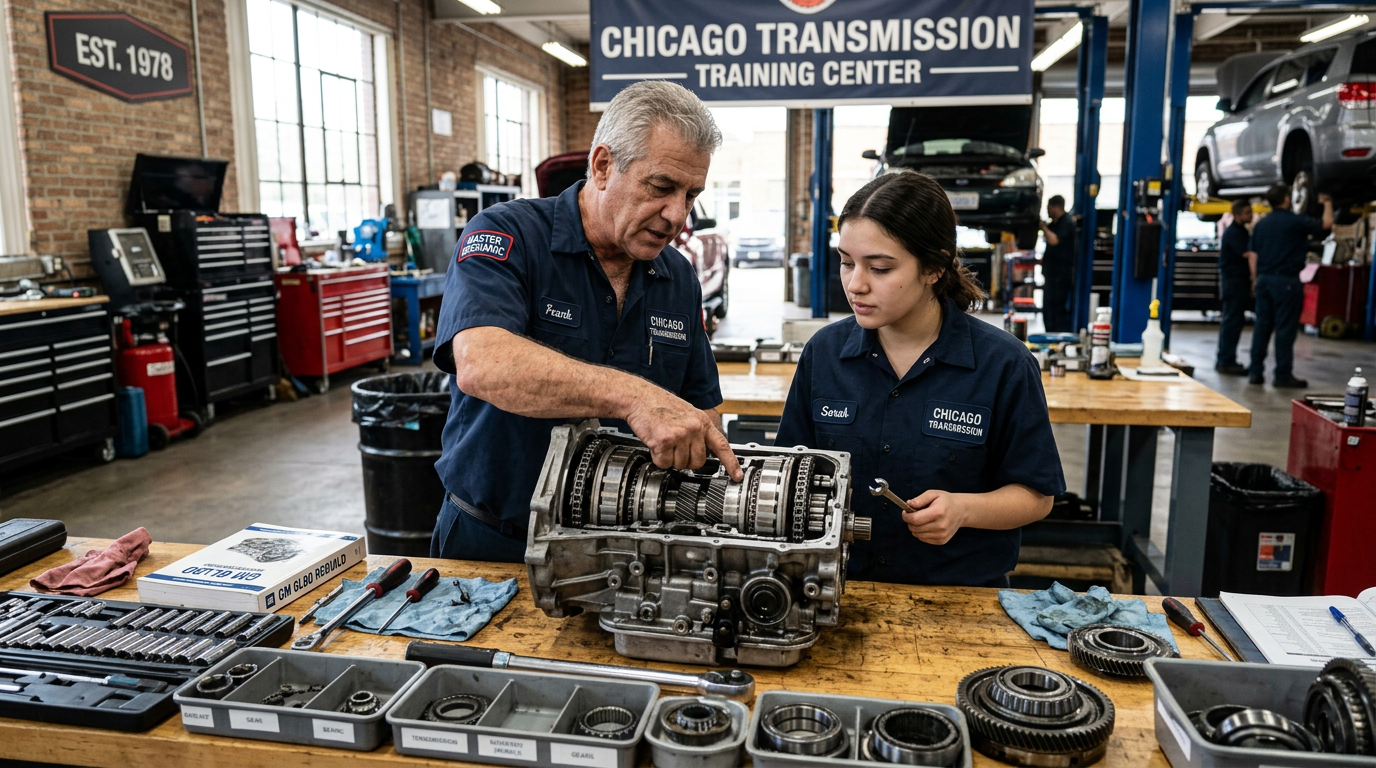
P0770 spans a wide range of severity - from a simple ground-strap oxide film that in sandpaper and ten minutes of labor, to a torque-converter replacement that runs over. The key to keeping costs low is systematic diagnosis: start with the cheapest, most common fixes (connector, ground, fluid) and work inward toward the more expensive possibilities (solenoid, valve body, converter, rebuild) only when earlier steps fail. Chicago's salt, cold, heat, and traffic make every transmission work harder, so proactive fluid maintenance and annual connector care pay for themselves many times over.
Series Progress: 25 of 50 articles completed (50% milestone). P0770 - Done.
Have a Transmission Problem?
Get a Diagnosis-first inspection from Chicago transmission repair support.