P0780 is a serious code. YourMechanic rates it as such even when drivability symptoms have not yet appeared, because the underlying cause - whatever it is
SEO Metadata
| Field | Value |
|---|---|
| Title Tag | P0780 Code: Shift Malfunction - Causes, Fixes & Chicago Repair Costs |
| H2 Sections | 12 |
| Schema | FAQPage, HowTo, Article |
H2 local - What Does the P0780 Code Mean?
Diagnostic trouble code P0780 is a generic OBD-II transmission code defined as "Shift Malfunction." It is one of the broadest transmission codes in the OBD-II catalog. Where the shift-solenoid codes covered earlier in this series (P0750 through P0770) each point to a specific solenoid circuit, and the pressure-control codes (P0775 and its relatives) point to a specific pressure-regulation solenoid, P0780 simply tells you that the PCM or TCM detected an abnormality during a shift event - without telling you which solenoid, which gear, or which circuit failed. It is a catch-all code, a flag that the computed gear ratio did not match the commanded gear ratio at some point during a shift, and the module determined that the transmission did not complete the gear change as expected.
The code is triggered when the PCM compares data from the input (turbine) speed sensor and the output speed sensor during a shift event and finds that the resulting gear ratio does not align with the ratio the module commanded. The variance can be caused by an electrical fault (bad solenoid, broken wire, corroded connector), a hydraulic fault (low fluid, clogged filter, worn valve body, failing pump), a mechanical fault (burnt clutch lining, worn band, damaged planetary gear), or a control-module fault (corrupted firmware, failed driver transistor, faulty sensor input). Because P0780 does not specify the failure mode, diagnosis requires working through a broader tree than for a single-solenoid code.
On Honda and Acura platforms - where P0780 is especially prevalent - the code's factory definition is "Mechanical Problem in Hydraulic Control System." Honda's diagnostic flowchart instructs the technician to replace Shift Solenoid Valve A and Pressure Control Solenoids A and B as a first step if the code is the only one present. This reflects Honda's engineering knowledge that the torque-converter-clutch solenoid screen and the linear solenoid screens clog with clutch debris over time, restricting fluid flow and causing the shift anomaly. The Honda Odyssey, Accord V6, and Pilot are the vehicles most commonly associated with P0780 in repair forums, and the code is frequently accompanied by P0730 (Incorrect Gear Ratio) on these platforms.
On Nissan and Infiniti platforms, P0780 is defined as "Shift Control System Fault" and is associated with Shift Solenoid C malfunction in some calibrations. On Mazda, the code's detection strategy specifically checks for "gear ratio malfunction or clutch slip" while the vehicle is in any forward gear. On Ford, GM, Chrysler, and Toyota, P0780 is less commonly reported as the primary code - those manufacturers tend to set more specific solenoid or pressure codes - but it can appear as a secondary code alongside others.
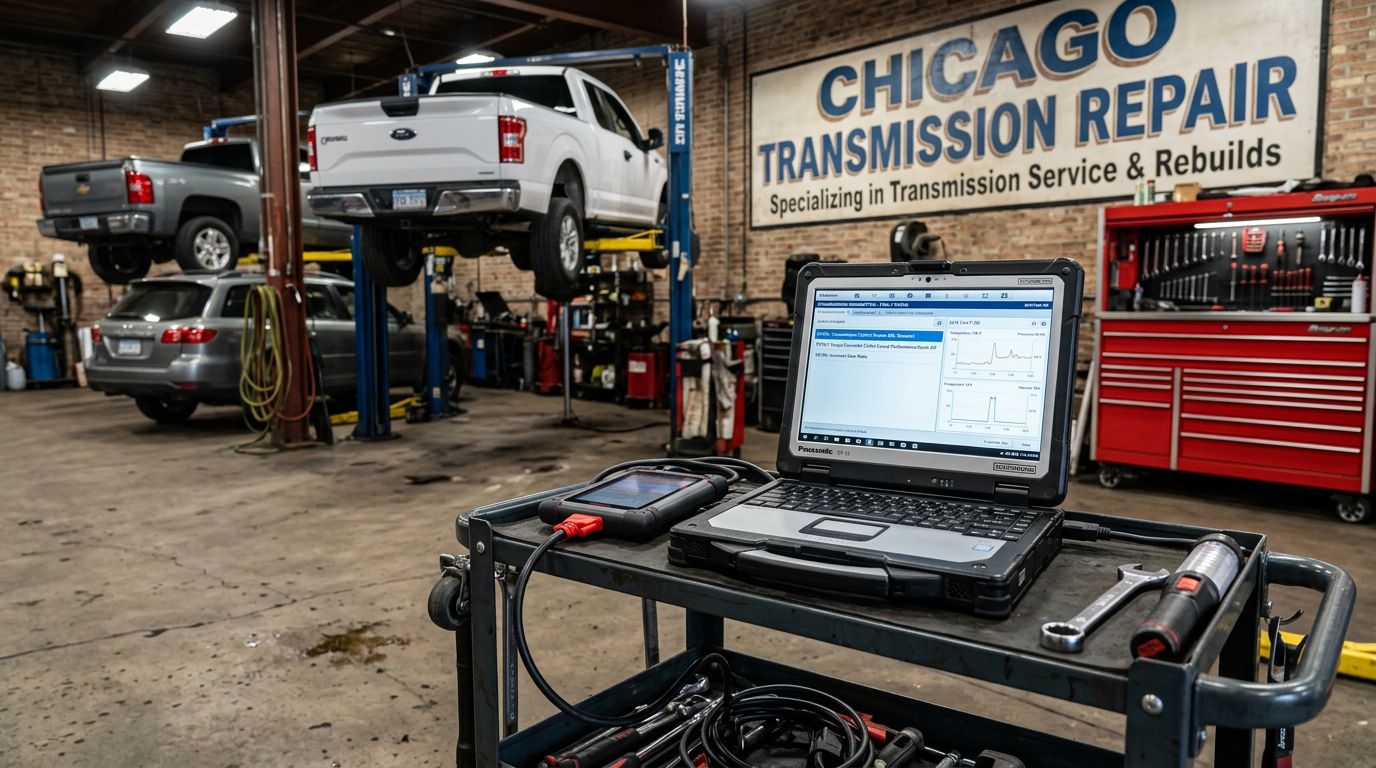
For Chicago drivers, P0780 surfaces most during the kind of driving the city demands: cold-start acceleration onto expressway on-ramps (where the 1-2 and 2-3 shifts are heavily loaded), sustained stop-and-go commuting (where every shift cycle tests the hydraulic system), and winter mornings when thickened fluid magnifies any marginal weakness in the solenoid or clutch-apply circuit.
H2 #2 - How the Transmission Shift System Works (and How It Fails)
An automatic transmission shifts gears by applying and releasing clutch packs and bands that hold or drive different elements of planetary gear sets. The hydraulic pressure that engages these clutch packs comes from the transmission pump, is regulated by pressure-control solenoids, and is routed to the correct clutch circuit by shift solenoids. The entire sequence is orchestrated by the TCM (or the PCM on vehicles where transmission control is integrated), which calculates the optimal shift point based on engine speed, throttle position, vehicle speed, transmission fluid temperature, and driver-demand signals.
When everything works correctly, a shift happens in a fraction of a second: the TCM commands the outgoing clutch to release and the incoming clutch to apply, modulating the overlap so that the driver feels only a gentle nudge. When something goes wrong - a solenoid sticks, fluid pressure drops, a clutch pack's friction lining has worn thin, or a sensor sends incorrect data - the actual gear ratio drifts away from the commanded ratio, the TCM detects the mismatch, and P0780 is stored.
The critical distinction between P0780 and the individual solenoid codes is that P0780 can be set by any failure in this chain, not just a solenoid failure. A burnt clutch pack, for example, cannot hold its gear even if the solenoid and fluid pressure are perfect. A worn pump cannot generate enough pressure even if every solenoid is new. A faulty input speed sensor can report the wrong ratio even if the transmission is shifting perfectly. This is why P0780 demands a more comprehensive diagnostic approach.
On Honda platforms specifically, the torque-converter-clutch solenoid and the linear solenoid have internal screens that clog with friction-material debris from the clutch packs. As the screens restrict flow, the solenoids cannot deliver the commanded pressure on time, and the shift either delays, slips, or slams. Honda Odyssey owners on OdyClub have documented this with photographs of severely clogged screens, and report that replacing both solenoids (Part # 28020-P7X-305, approximately for the set) and their gaskets resolves P0780 in many cases - but not all. When the clutch lining itself is already worn beyond its engagement threshold, the solenoid replacement provides only a temporary fix, and a rebuild becomes necessary.
H2 #3 - Common Causes of P0780 (Ranked by Frequency)
Low, contaminated, or burnt transmission fluid (25-35 percent of cases). This is the most common and most easily correctable cause. Low fluid reduces pump output pressure, which means every clutch-apply event receives less force than commanded. Contaminated fluid carries debris that clogs solenoid screens, valve-body passages, and the filter. Burnt fluid (dark brown or black with a sharp, acrid odor) has lost its friction-modifier chemistry, which changes the way clutch packs engage - even at correct pressure, the clutch may slip because the fluid can no longer create the designed coefficient of friction.
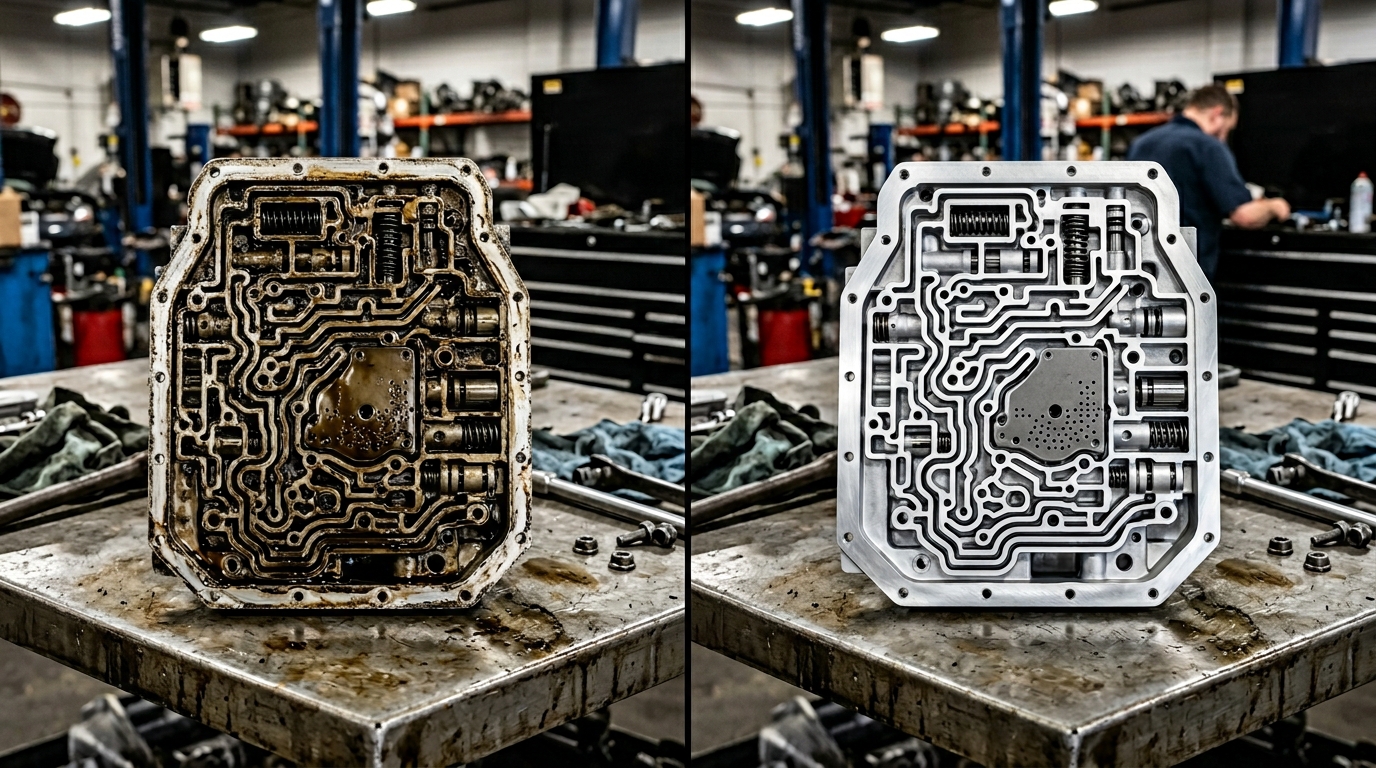
Clogged solenoid screens or filter (15-25 percent). On Honda and Acura transmissions, clogged internal solenoid screens are the signature root cause of P0780. The torque-converter-clutch solenoid screen and the linear solenoid's four-tube screen assembly collect clutch debris over time. A clogged external filter has the same net effect: reduced fluid volume reaching the pump, which reduces system pressure. On vehicles where the filter has never been changed (common with "lifetime fluid" transmissions), this cause is particularly likely.
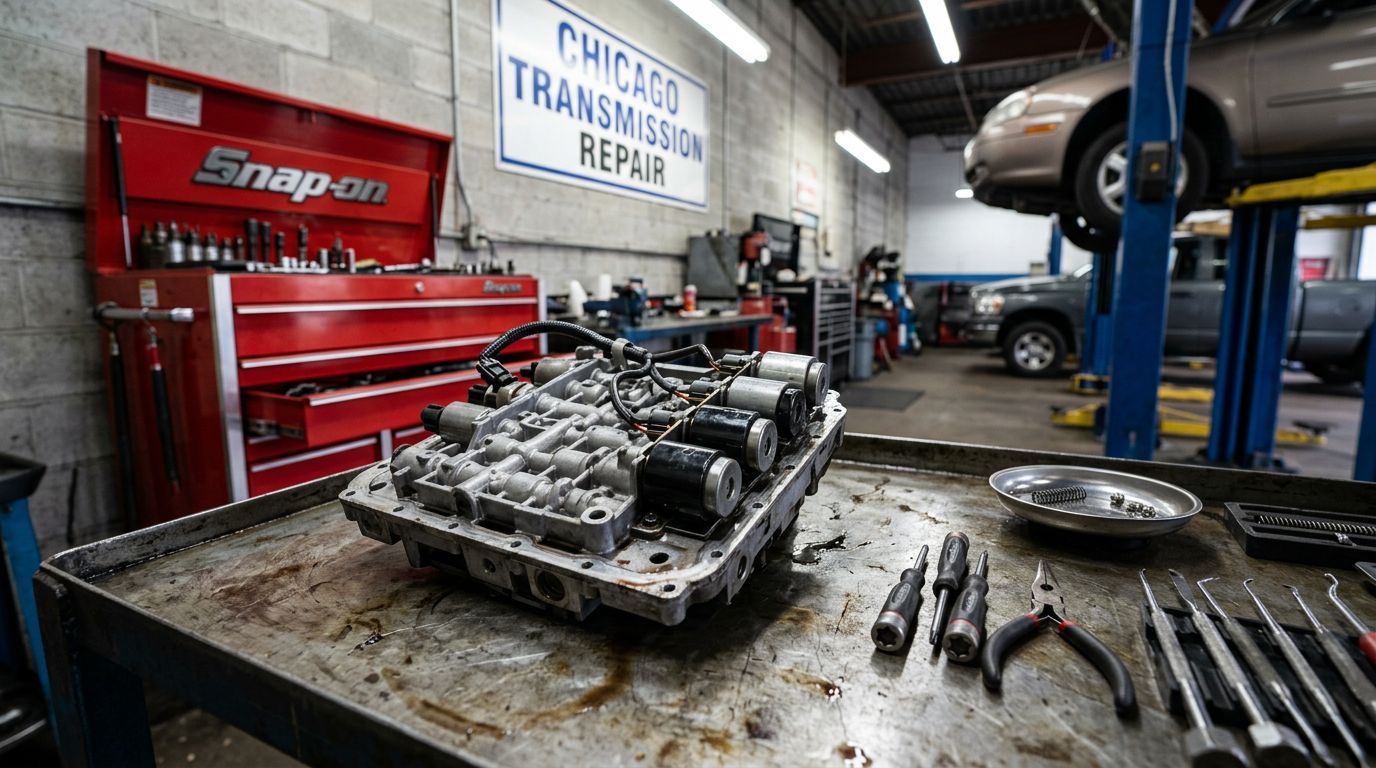
Faulty shift solenoid or solenoid pack (15-25 percent). A solenoid with a weak coil, stuck plunger, or eroded valve seat cannot route fluid correctly. On Honda, the shift solenoid valve A and pressure control solenoids A and B are the first-line replacement per the factory diagnostic flowchart. On Nissan, Shift Solenoid C is the most common culprit. On Ford 5R55 transmissions, the integrated solenoid block is replaced as a unit.
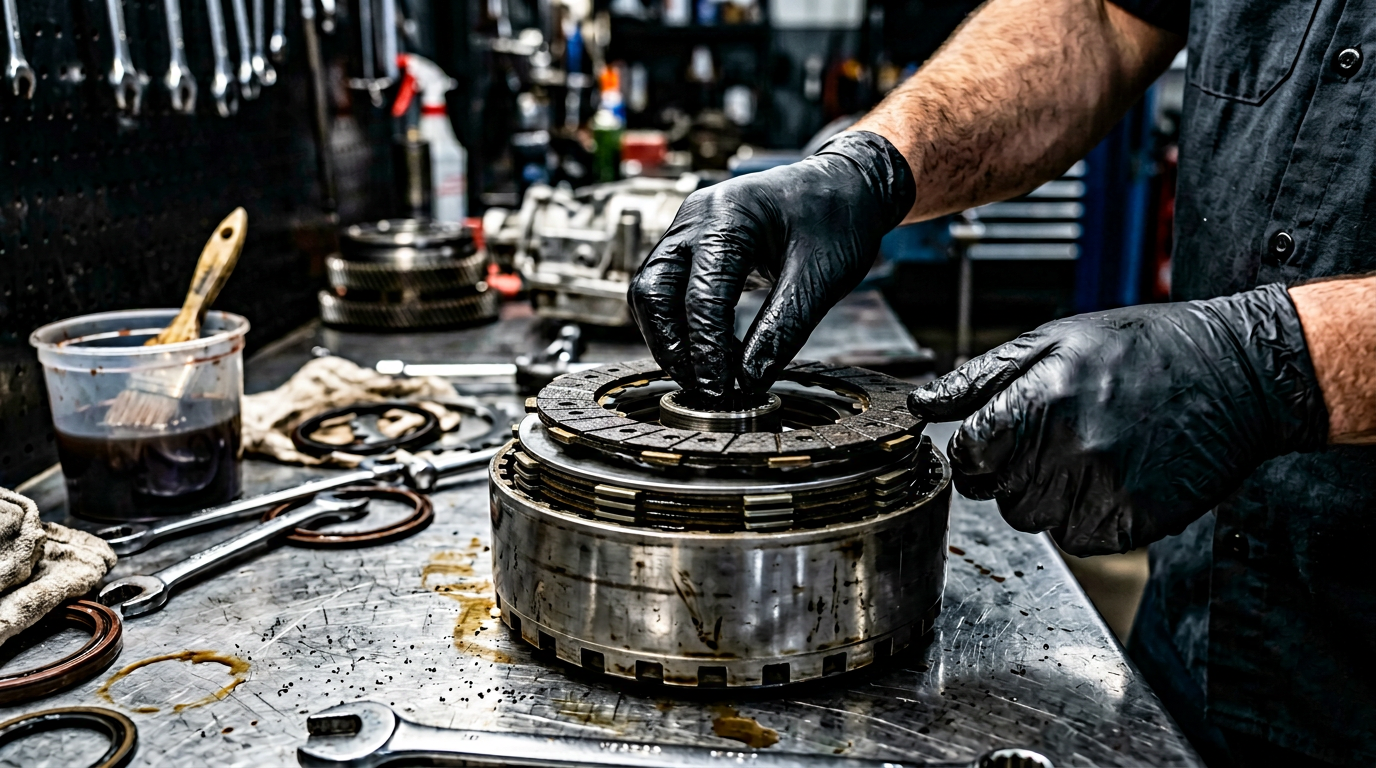
Worn clutch packs or bands (10-20 percent). This is the cause that separates P0780 from the individual solenoid codes. When the friction lining on a clutch pack has worn to the backing plate, no amount of hydraulic pressure will make it hold. The gear ratio slips during the shift, and P0780 is stored. On Honda Odyssey transmissions, clutch-pack failure is well-documented and is the "root cause of transmission failure" discussed in the extensive OdyClub master thread. On Mazda 6 models (2014-2017), internal oil-pressure switch contamination leads to clutch slip, and the primary fix is a transmission fluid flush or valve-body cleaning.
Corroded or damaged wiring and connectors (10-15 percent). The transmission case connector, the TCM harness, and the speed-sensor wiring are all potential failure points. Corrosion increases resistance, which causes the TCM to receive noisy or attenuated signals from sensors and to deliver reduced current to solenoids.
Faulty input or output speed sensor (5-10 percent). If the input (turbine) speed sensor or the output speed sensor sends erratic or incorrect pulses, the TCM calculates a gear ratio that does not match reality. The TCM interprets this as a shift malfunction and stores P0780 even though the transmission may be shifting normally. Speed-sensor failures are common on high-mileage vehicles and are relatively inexpensive to replace (quoted after diagnosis).
Transmission pump wear (5-10 percent). A worn pump cannot maintain the baseline pressure the entire system depends on. Pump wear typically presents with multiple codes simultaneously (P0780, P0730, P0775, etc.) and is accompanied by a whining noise that varies with engine RPM.
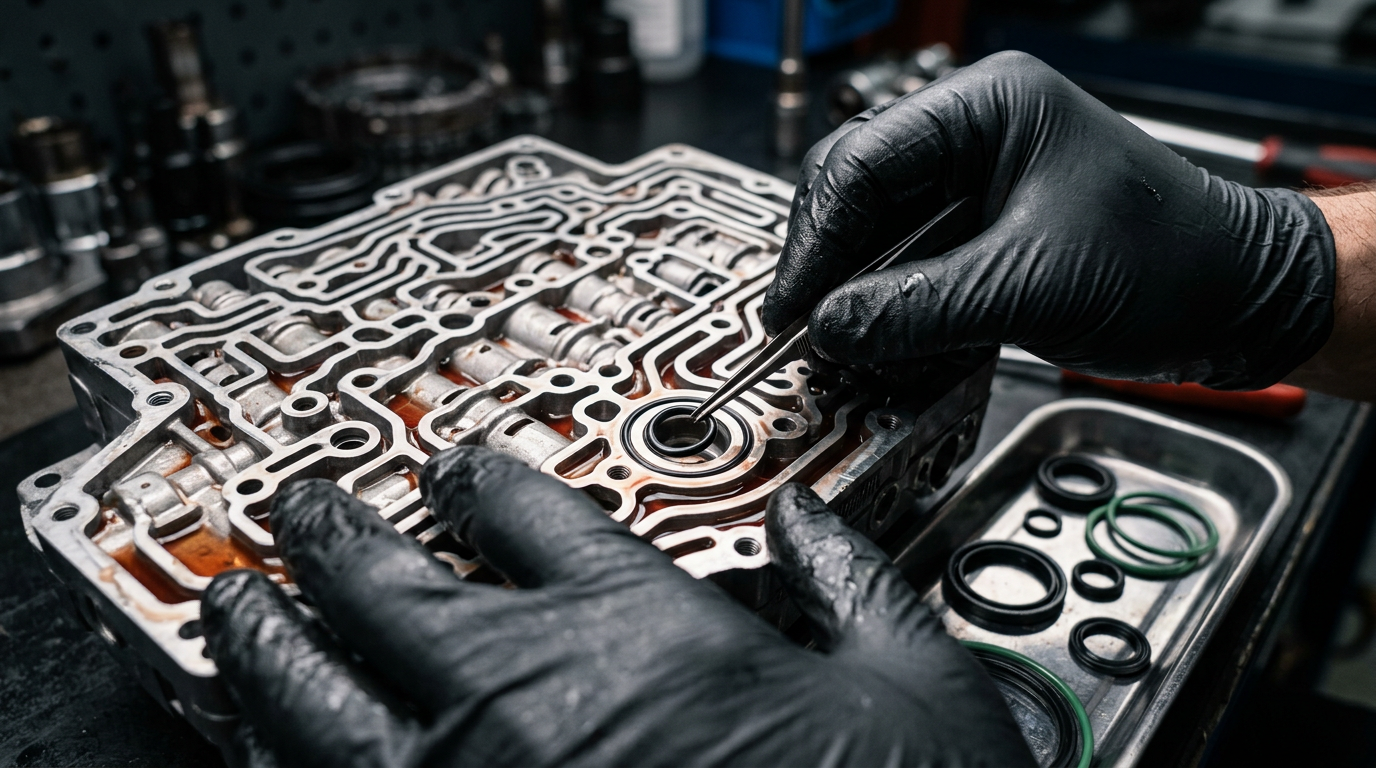
Valve-body wear or contamination (5-10 percent). Worn bores, stuck spool valves, and debris in the valve body prevent correct fluid routing even when solenoids are healthy.
TCM or PCM failure (less than 5 percent). A failed solenoid-driver transistor, corrupted firmware, or a power-supply issue inside the module can generate incorrect shift commands or misinterpret sensor data. TCM reflash resolves software issues; hardware failure requires module replacement.
H2 #4 - Symptoms Chicago Drivers Will Notice
The most commonly reported symptom of P0780 is a harsh, jarring shift - typically on the 1-2 upshift, though any gear change can be affected. Honda Odyssey owners describe a "delayed rev then slam to gear" pattern, especially when the fluid is cold. The shift engages, but with a noticeable clunk that can be felt through the seat and heard throughout the cabin. This harshness occurs because the TCM defaults to maximum line pressure when it detects a shift anomaly, sacrificing comfort to prevent clutch slippage - a protective strategy that trades NVH (noise, vibration, harshness) for clutch longevity.
The opposite symptom - slipping - also appears frequently. The engine RPM rises during a shift while the vehicle does not accelerate proportionally. This indicates the clutch pack is not fully engaging, either because pressure is too low (solenoid or pump issue) or because the clutch lining is worn (mechanical failure). Slipping under load - particularly when accelerating onto the Kennedy or merging on the Dan Ryan - is a clear indicator that the clutch is at or near its engagement limit.
Limp mode is triggered when the TCM determines that continued normal shifting would risk damage. The transmission locks into a single gear (usually second or third on most platforms, or a fixed ratio on CVTs), limiting speed to 25-40 mph. On the Honda Odyssey, the D4 light flashes, and the TCS and CEL lights illuminate simultaneously. The vehicle can sometimes be reset by cycling the ignition, but the code typically returns within minutes to hours.
Delayed shifting - a noticeable pause of 0.5 to 2 seconds between the throttle input and the gear engagement - occurs when the solenoid or valve body cannot route fluid quickly enough. This delay is especially pronounced in cold weather, when thickened fluid moves slower through the system.
Additional symptoms include a whining noise from the transmission (indicative of pump wear or cavitation from low fluid), decreased fuel efficiency (the transmission cannot hold an efficient ratio), transmission overheating (slipping clutches generate friction heat), and erratic gear hunting (the transmission shifts up and down repeatedly, unable to settle on a ratio).
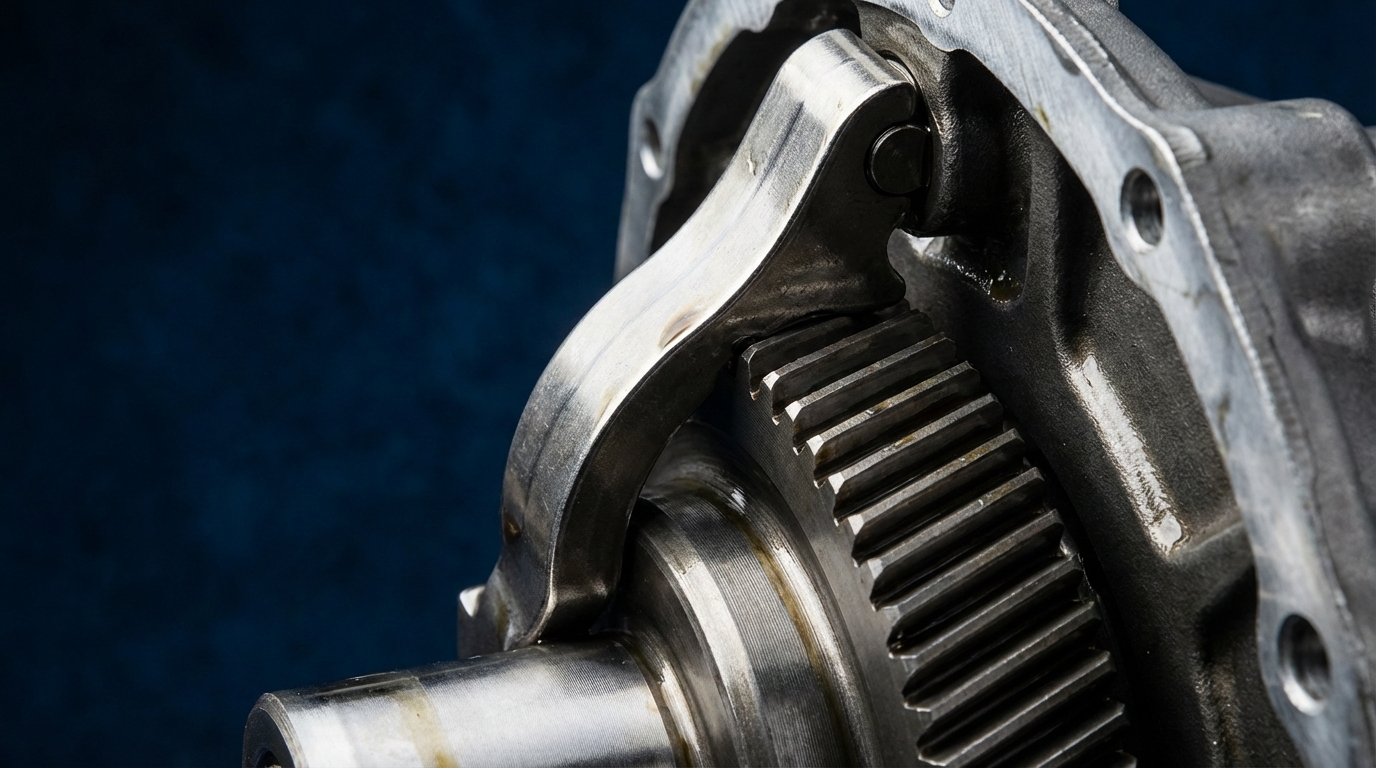
Cold-weather symptoms in Chicago are a defining feature of P0780 on Honda platforms. OdyClub members report that the code sets exclusively on the first cold start of the day, particularly when the driver accelerates away without allowing the fluid to warm. The 1-2 shift is the most affected because it occurs at the lowest fluid temperature during the drive cycle. A five-minute warm-up period or gentle driving for the first few minutes often prevents the cold-start trigger, but the underlying cause still needs repair.
H2 #5 - Is P0780 Serious? Can You Keep Driving?
If the only symptom is a check-engine light with mild harshness on cold starts, schedule a diagnosis within one to two weeks. If the transmission is slipping under load, limit driving to essential low-speed trips and schedule a diagnosis within days. If the vehicle is in limp mode, drive only to the nearest safe location or shop (low speed, no highway); tow the vehicle if limp mode recurs after an ignition cycle, if the fluid smells burnt, or if multiple transmission codes are present.
For Chicago drivers, the urgency is heightened by the fact that P0780 on Honda/Acura platforms is often a precursor to complete transmission failure - a well-documented failure pattern on the Odyssey and Accord V6 where clogged solenoid screens lead to clutch slip, which leads to clutch lining degradation, which leads to a cascade of hard-part damage. Catching the code early and replacing the solenoids (with screen cleaning) can buy tens of thousands of additional miles; ignoring it typically leads to a - rebuild or replacement.
H2 #6 - Step-by-Step Diagnosis of P0780
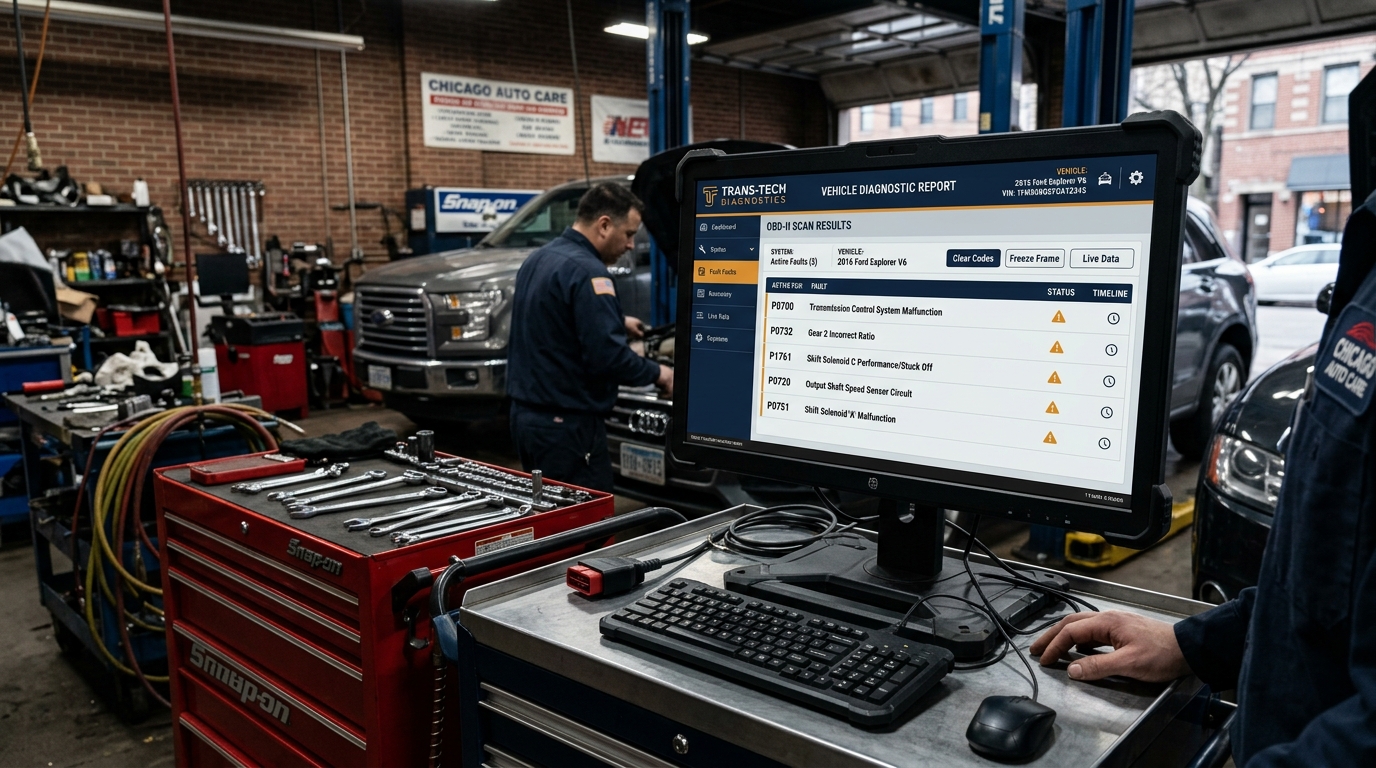
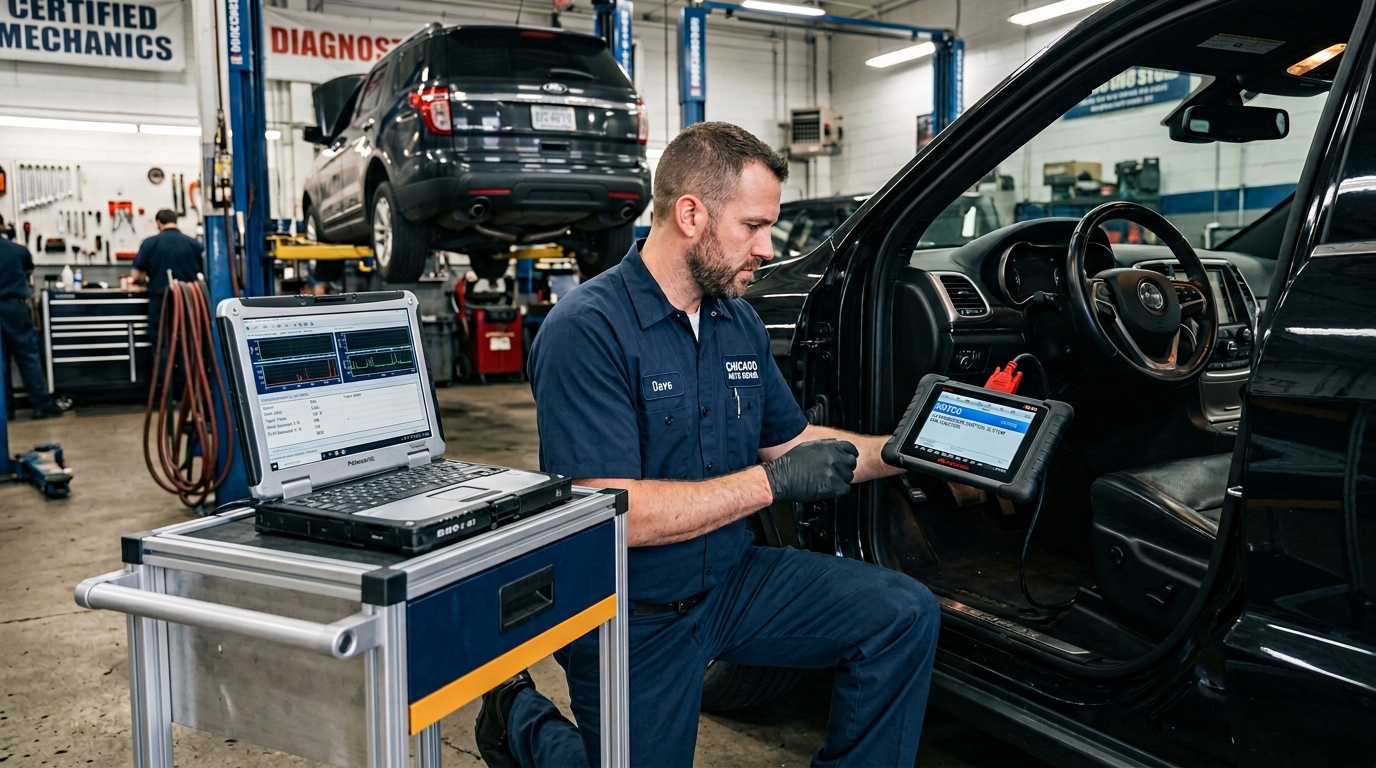
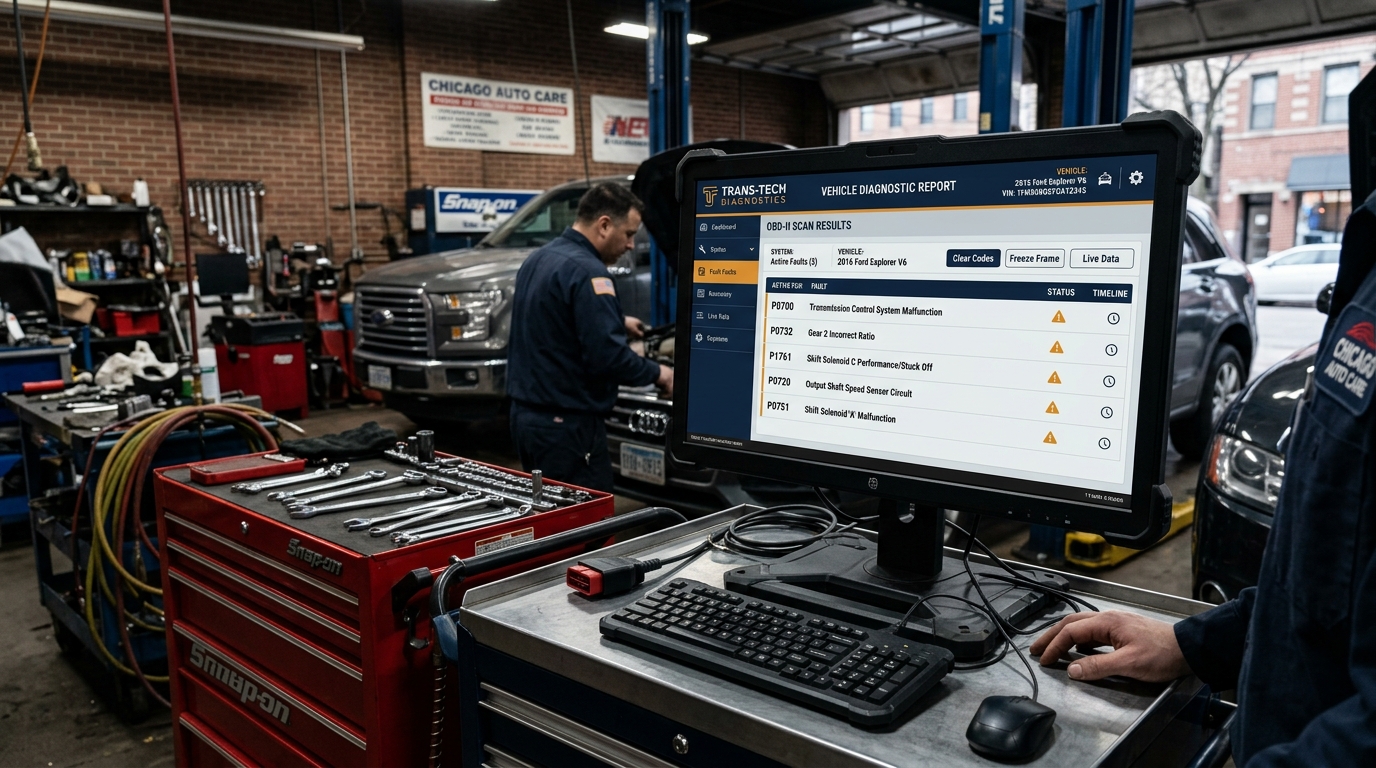
Step 1 - Full OBD-II scan with freeze-frame and live data. Record every code present. P0780 rarely appears alone - companion codes narrow the diagnosis. P0780 + P0730 (Incorrect Gear Ratio) on Honda points to clutch slip or solenoid screens. P0780 + P0755 (Shift Solenoid B) on Nissan or Ford points to a specific solenoid circuit. P0780 + P0775 (Pressure Control Solenoid B) points to a pressure-regulation issue. P0780 as the sole code points to a broad hydraulic or mechanical fault. Note freeze-frame parameters: vehicle speed, engine RPM, transmission fluid temperature, throttle position, and the gear in which the code set.
Step 2 - Transmission fluid inspection. Check level (warm, engine idling, per manufacturer procedure), color, odor, and debris content. If the fluid is low, top up and retest. If the fluid is dark, smells burnt, or contains metallic debris, perform a drain-and-fill with the correct manufacturer-specified fluid and a new filter. On Honda, use only Honda DW-1 ATF (or the predecessor Honda ATF-Z1 on older models). On Nissan, use Nissan Matic S or equivalent. On Mazda, use Mazda FZ ATF. Incorrect fluid specification is a documented cause of P0780 on multiple platforms.
Step 3 - Clear codes, warm the transmission to operating temperature, and road-test. Drive through all gears and monitor the scan tool's live data: input speed, output speed, calculated gear ratio, commanded gear, line pressure (if available), and fluid temperature. If the code returns immediately on a specific shift (e.g. 1-2), note the exact conditions. If the code does not return after 50+ miles of mixed driving post-fluid service, the fluid was likely the root cause.
Step 4 - Inspect and clean the transmission case connector and ground straps. Unplug the connector, inspect for corrosion, clean, apply dielectric grease, reseat. Clean all ground straps with sandpaper.
Step 5 - Test input and output speed sensors. Measure the AC voltage output of each sensor while rotating the tone wheel (back-probe the connector with the transmission in gear on a lift, or use scan-tool live data to compare sensor readings to expected values). Erratic, dropped, or absent signals indicate a failed sensor. Replace as needed (quoted after diagnosis).
Step 6 - Measure shift-solenoid and pressure-control-solenoid resistance. With the connector unplugged, measure coil resistance at the transmission-side connector for each solenoid. Compare to manufacturer specifications. On Honda, the torque-converter-clutch solenoid and linear solenoid are the primary suspects; resistance should be within the range specified in the factory service manual (typically 12-25 ohms for shift solenoids, varies by model). Out-of-range resistance indicates coil failure.
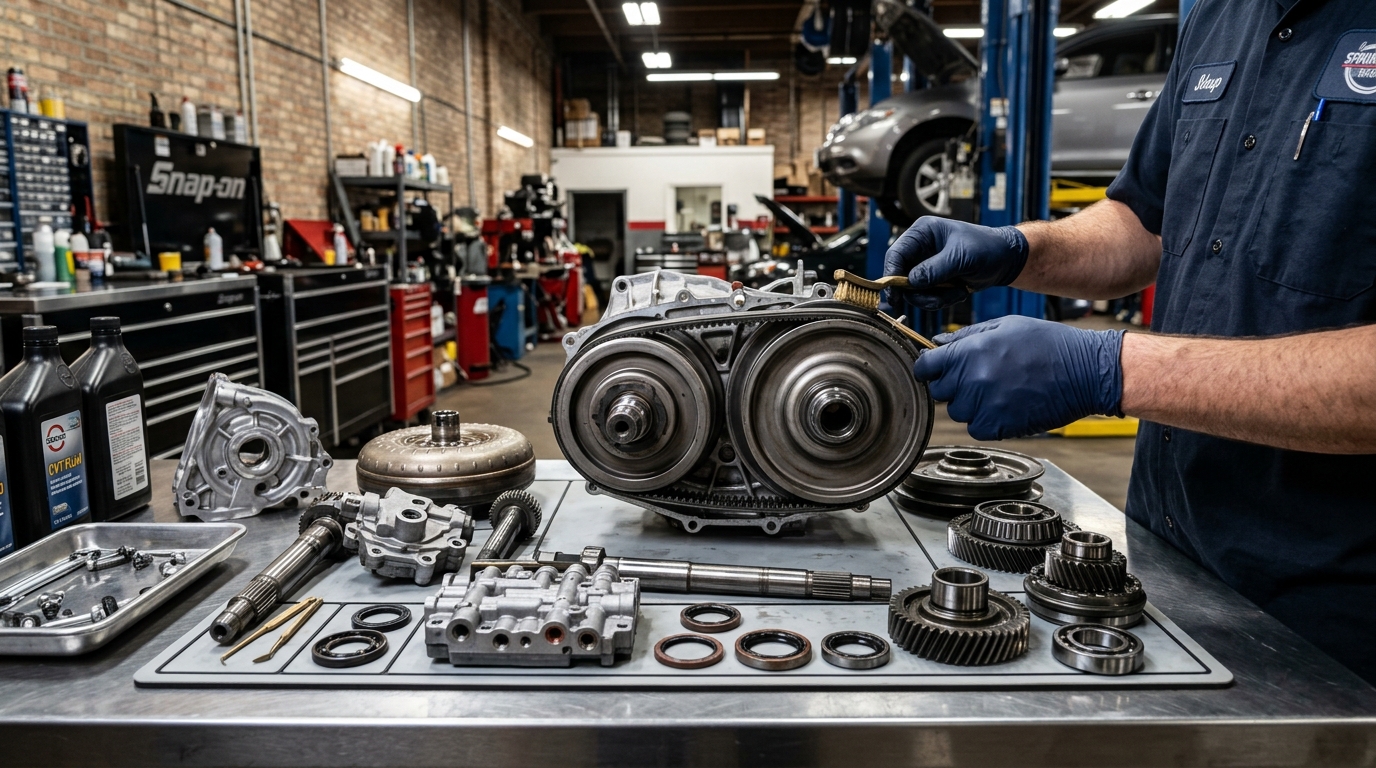
Step 7 - Bidirectional solenoid command test. Command each solenoid on and off using the scan tool while monitoring current draw and (where possible) line pressure. A solenoid that does not respond or produces no pressure change is faulty or has a clogged screen.
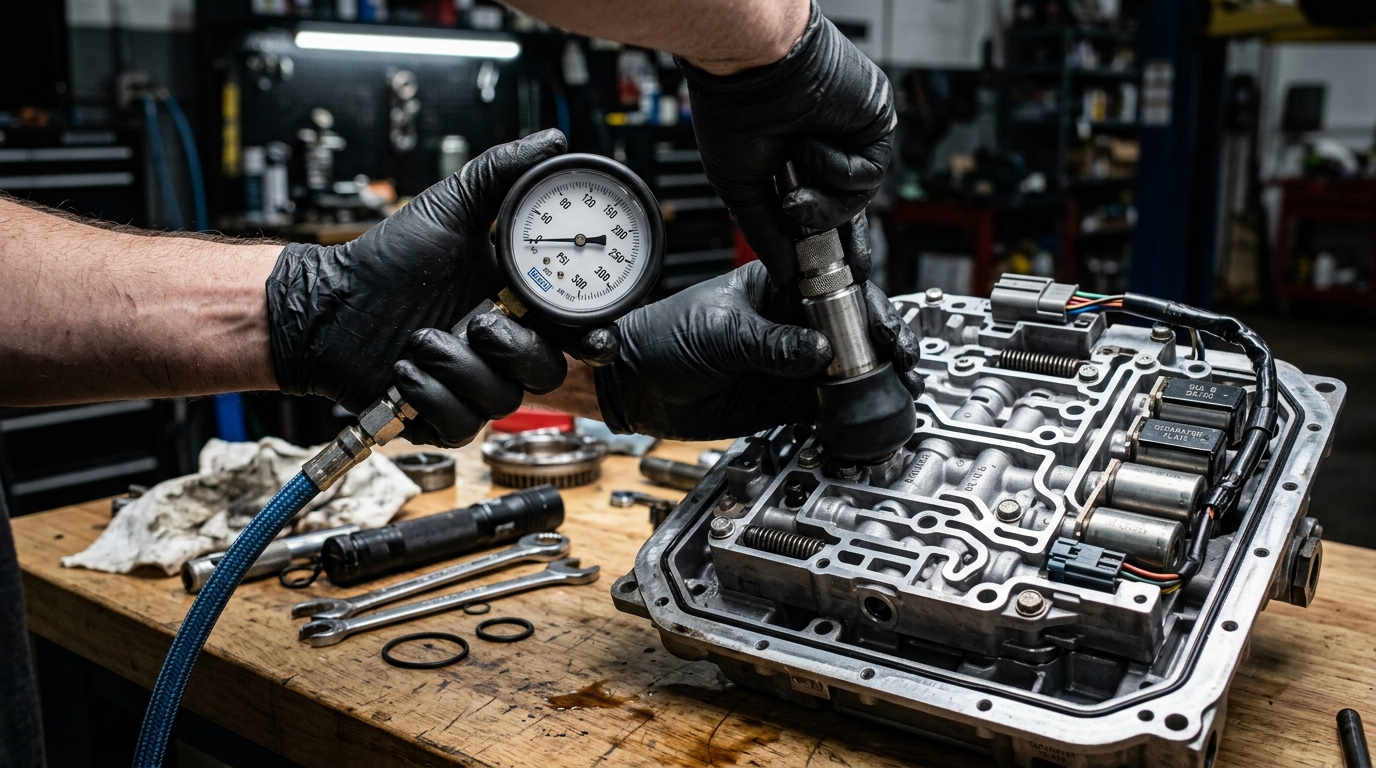
Step 8 - Line-pressure test. Connect a calibrated pressure gauge to the line-pressure test port. Compare idle and stall pressures to specifications. Low pressure across all circuits indicates pump wear; low pressure in a specific circuit indicates a solenoid, valve-body, or servo issue.
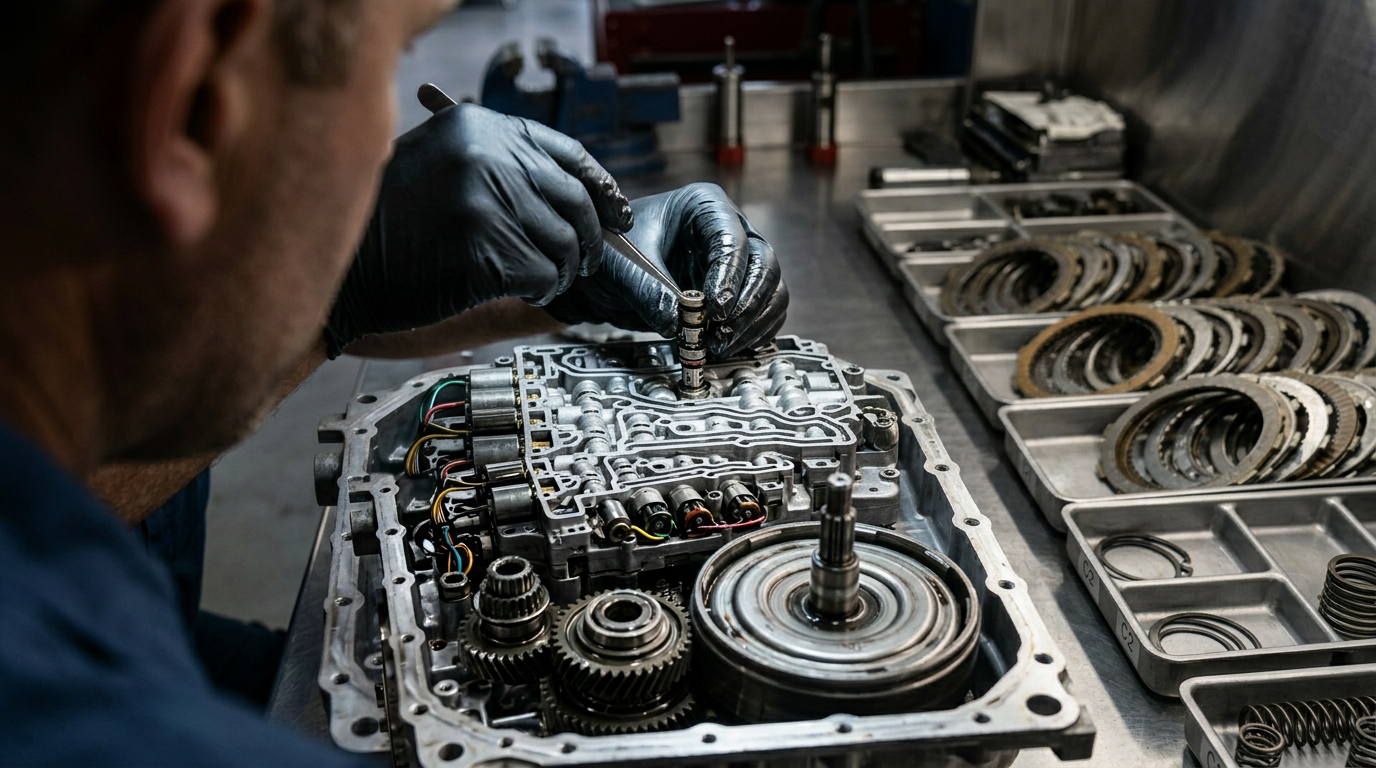
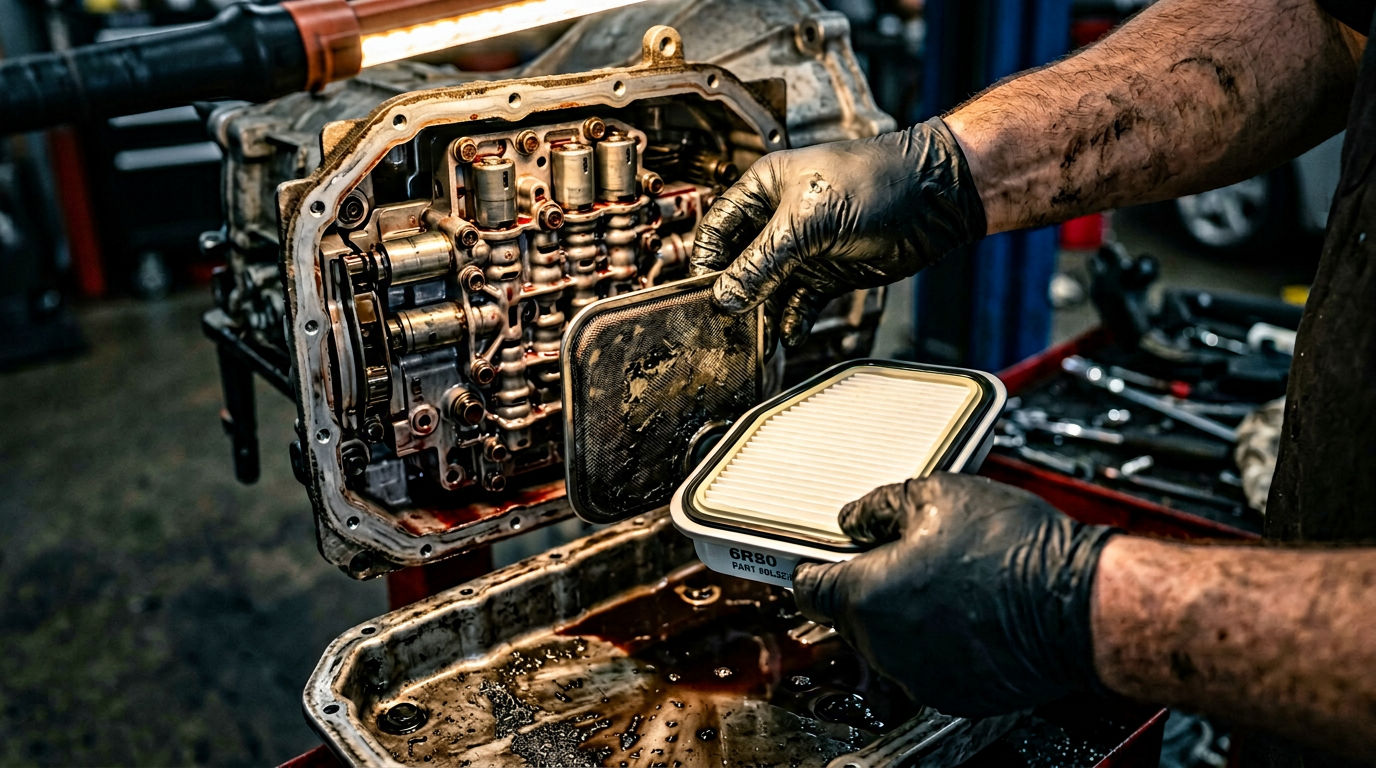
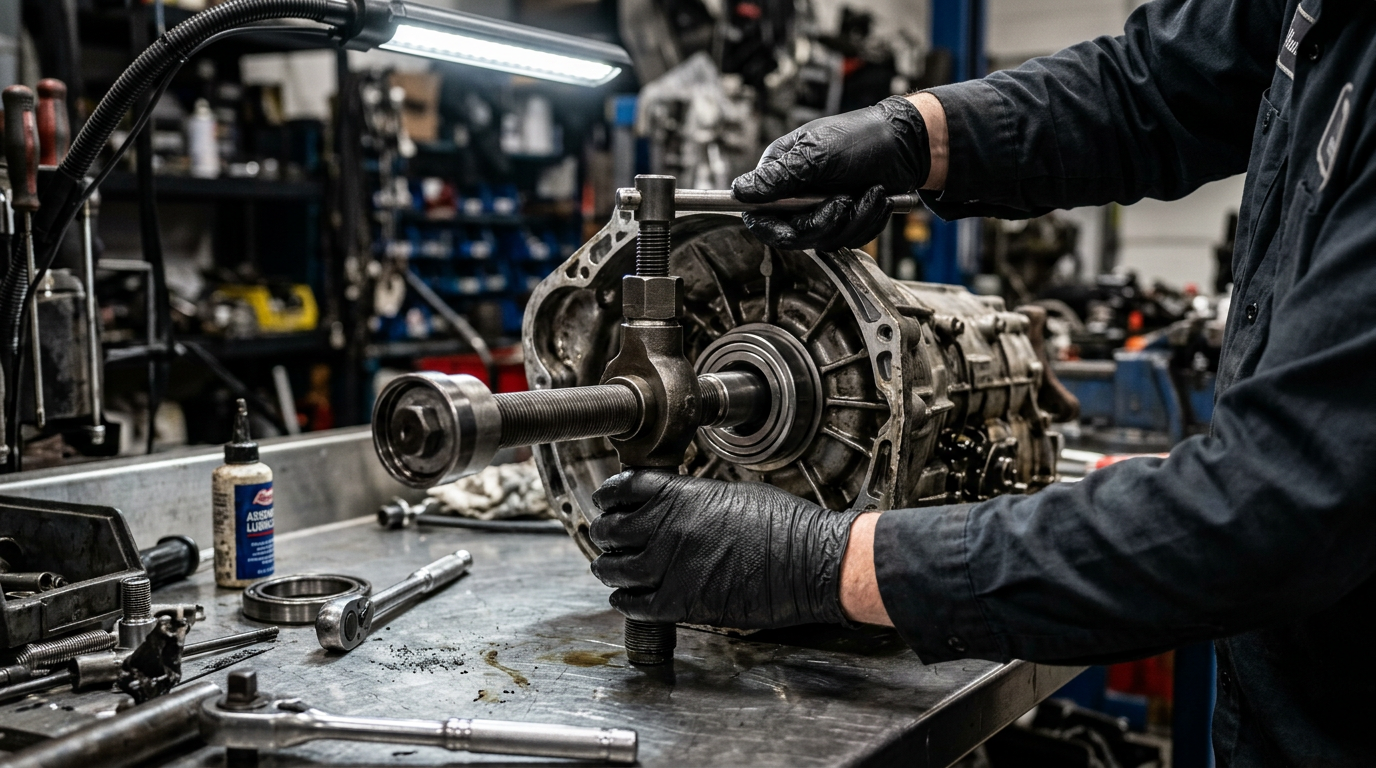
Step 9 - Pan drop and internal inspection (if earlier steps are inconclusive or point to internal wear). Drop the pan and inspect the filter, magnet, and valve-body face. On Honda, remove the torque-converter-clutch solenoid and linear solenoid and inspect the screens - heavy debris indicates clutch wear. If the screens are clear and all solenoids test good, the clutch packs themselves are the suspect, and a rebuild or replacement is likely needed.
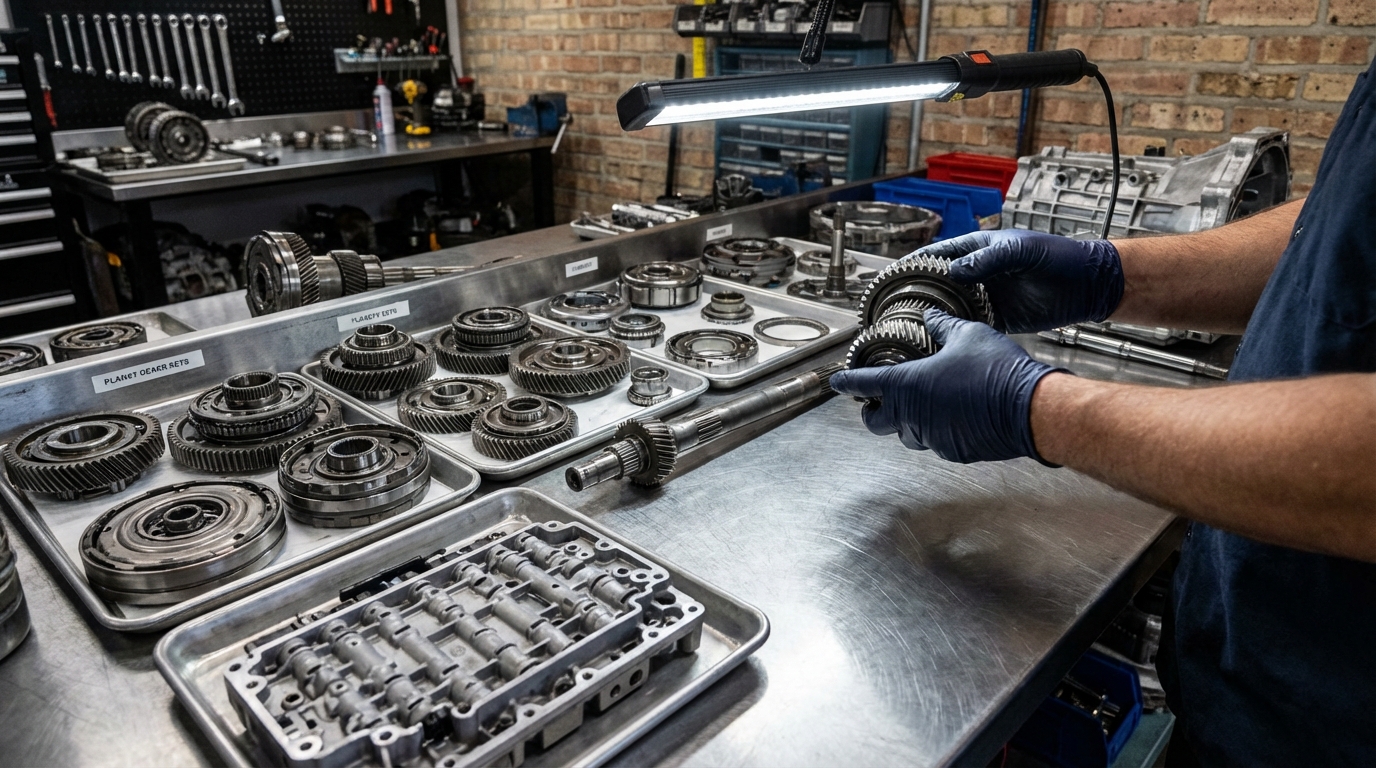
Step 10 - Evaluate for rebuild or replacement. If the fluid contains heavy metallic debris, if the pan magnet is saturated with material, or if clutch-pack slippage is confirmed through stall-speed testing and ratio analysis, the transmission requires a rebuild or remanufactured replacement.
H2 #7 - Repair Options and Chicago Cost Summary
Costs in the Chicago metropolitan area vary by vehicle, access, fluid condition, and whether programming is required. A written quote should follow diagnosis rather than a generic labor-rate assumption.
Transmission fluid and filter service is usually the first step and resolves the code in an estimated 15 to 25 percent of cases where low or contaminated fluid was the direct cause.
Connector and ground-strap cleaning: (parts - labor 0.5-1 hour).
Input or output speed sensor replacement: Parts: per sensor. Labor: 0.5 to 1 hour. Total:. A commonly overlooked, inexpensive fix when the sensor is the root cause.
Shift solenoid and pressure-control solenoid replacement (Honda-specific approach): Honda solenoid set (TCC solenoid + linear solenoid, Part # 28020-P7X-305 or equivalent for model year): approximately. Gaskets:. Labor: 2 to 3 hours. Total:. This is the Honda factory-recommended first-line repair for P0780 when the code is the only fault present.
Individual solenoid replacement (other platforms): Parts: per solenoid. Labor: 1 to 3 hours. Total:.
Solenoid pack or block replacement (Ford, Chrysler, Nissan): Parts:. Labor: 2 to 4 hours. Total:.
Valve-body rebuild or replacement: Parts:. Labor: 3 to 6 hours. Total:.
Transmission pump replacement or repair: Parts:. Labor: 4 to 8 hours (often bundled with rebuild). Total:.
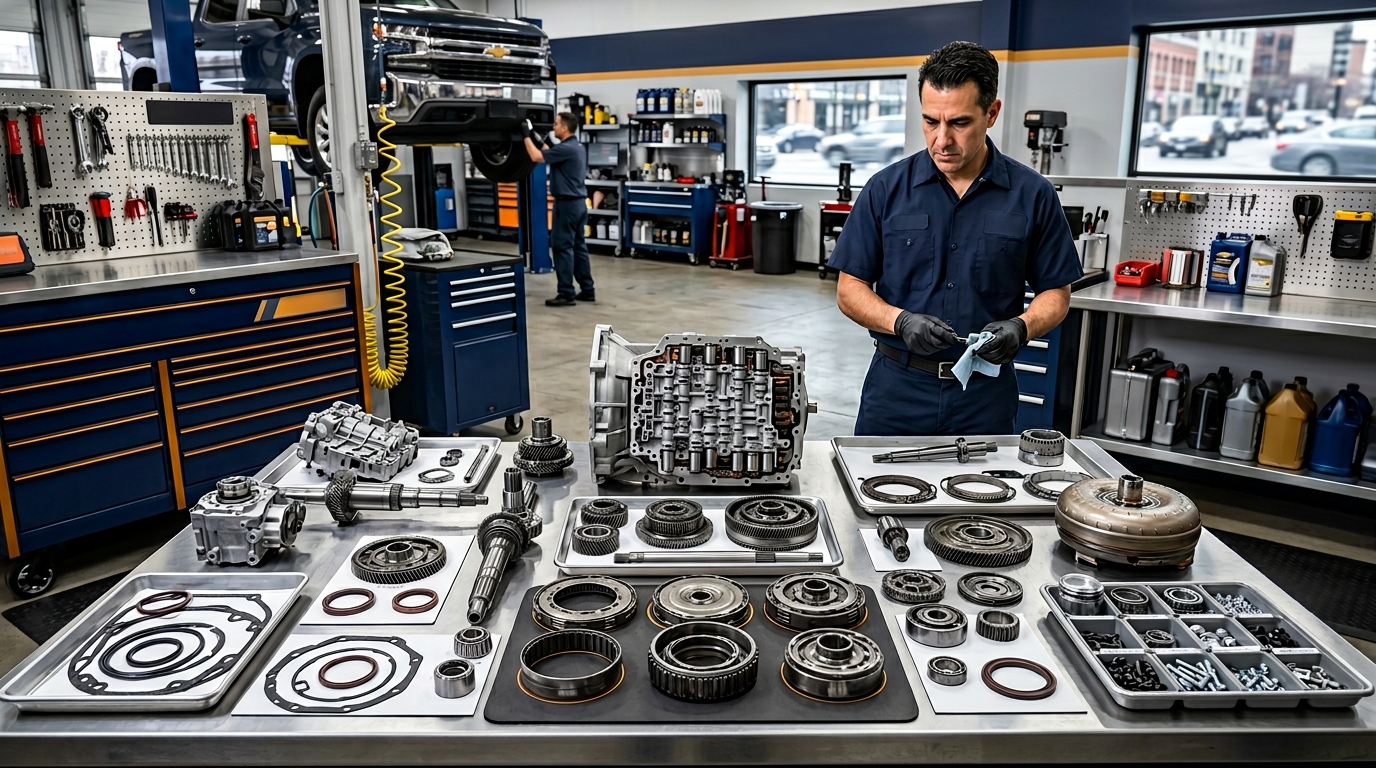
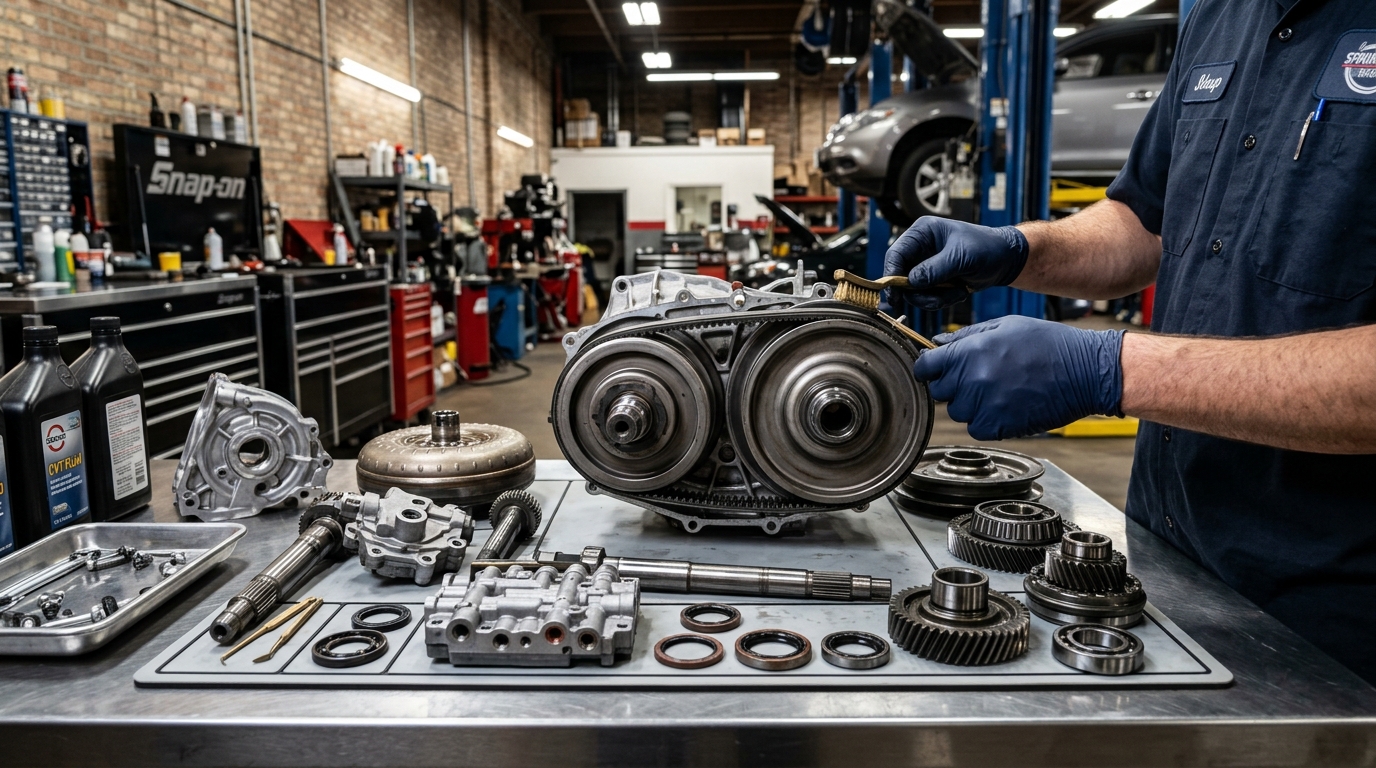
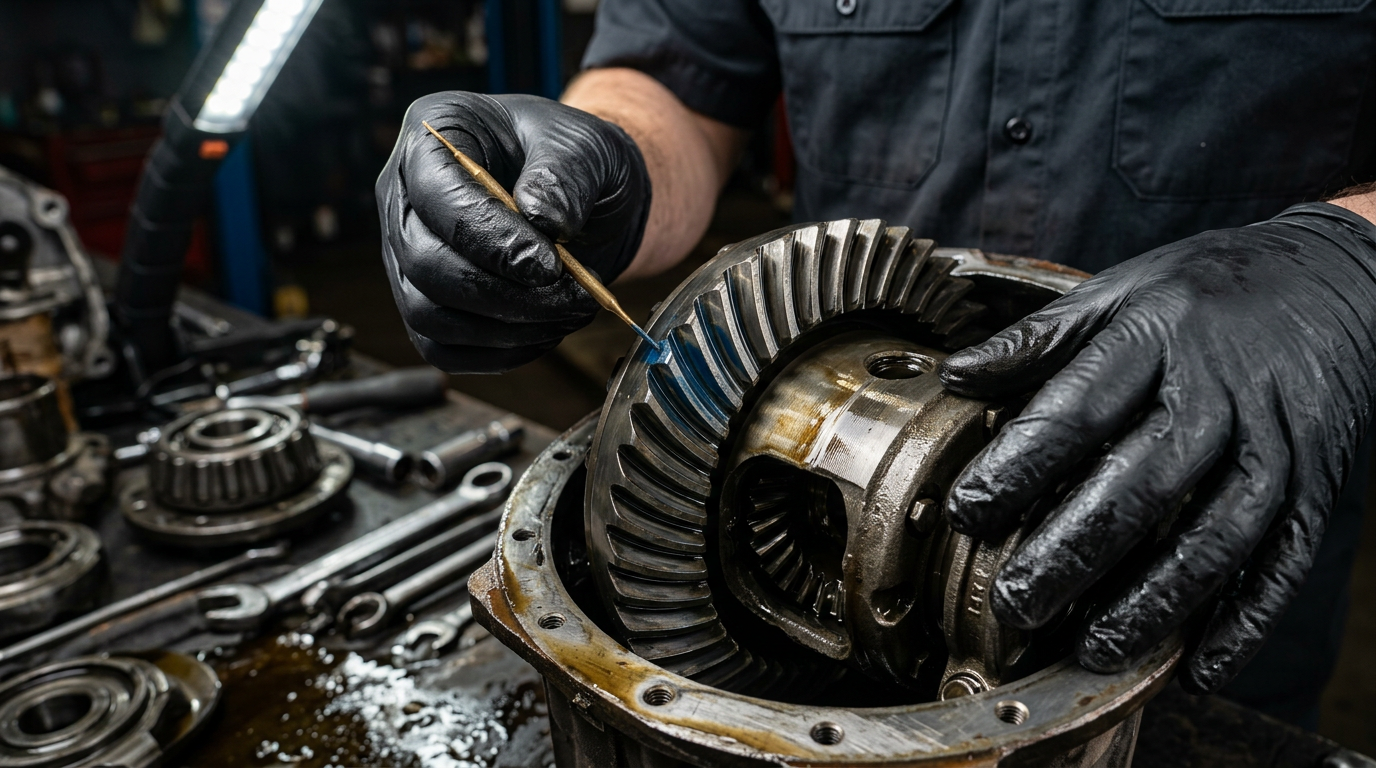
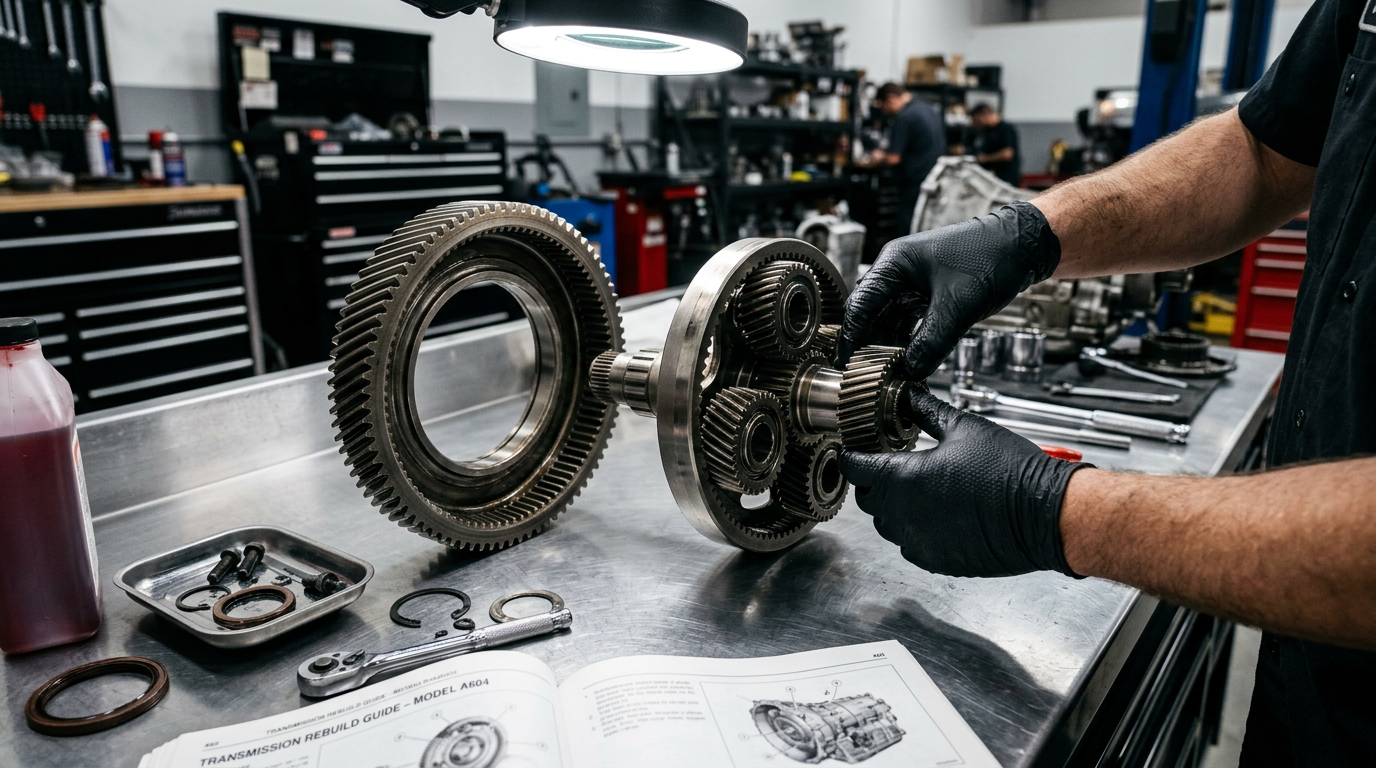
Full transmission rebuild: at a quality Chicago transmission shop. Honda Odyssey and Accord V6 rebuilds typically fall in the range at independent shops, versus at the dealer. The rebuild includes new clutch packs, bands, seals, gaskets, solenoids, filter, and fluid.
Remanufactured transmission swap: depending on platform, warranty, and whether the torque converter is included.
TCM reflash:.
TCM replacement: Module:. Programming:. Total:.
H2 #8 - Vehicles Most Commonly Affected by P0780
Honda Odyssey (1999-2004, BYBA/B7TA transmissions). This is the single most heavily represented vehicle in P0780 discussions. The Odyssey's automatic transmission is notorious for clutch-pack failure, solenoid-screen clogging, and eventual P0780/P0730 code pairs. The OdyClub "Root Cause of Transmission Failure" thread spans hundreds of pages and documents the failure pattern exhaustively.

Honda Accord V6 (1998-2007). The V6 Accord shares much of the same transmission architecture as the Odyssey and exhibits the same solenoid-screen and clutch-wear pattern. The four-cylinder Accord uses a different, more robust transmission and is less affected.
Honda Pilot and Acura TL/MDX (2001-2006). Same transmission family, same failure mode.
Nissan Titan, Frontier, and Pathfinder. P0780 on Nissan platforms is defined as "Shift Control System Fault" and is commonly associated with Shift Solenoid C and valve-body issues on the RE5R05A five-speed automatic.
Ford Explorer and Mountaineer (5R55W/5R55S). P0780 appears as a secondary code alongside P0775 or P0755, typically pointing to the solenoid block or servo-bore issue.
Mazda 6 (2014-2017). Internal oil-pressure switch contamination causes clutch slip, triggering P0780. The primary fix is a transmission fluid flush or valve-body cleaning.
Chrysler, Dodge, and Jeep (42RLE, NAG1). P0780 is reported on Wrangler, Liberty, and 300/Charger models with these transmissions.
GM vehicles (4T65E, 4L60E). P0780 appears occasionally on Impala, Monte Carlo, and truck platforms, usually alongside other solenoid or pressure codes.
H2 #9 - Chicago-Specific Factors
Road salt accelerates corrosion of the transmission case connector, external harness, and ground straps. On Honda vehicles where the battery-tray mounting bolts and the transmission ground share proximity, salt intrusion creates high-resistance ground paths that directly affect solenoid current delivery.
Cold-soak viscosity is the defining Chicago factor for P0780 on Honda platforms. The OdyClub post that launched the "Mechanical Problem in Hydraulic Shift Control" thread explicitly identified cold weather as the trigger: "starting last winter, on a cold morning with no warmup, I would get a P0780 code on the 1st to 2nd shift." Thickened fluid cannot flow through partially clogged solenoid screens at the rate the TCM expects, and the resulting delayed clutch engagement registers as a shift malfunction. This pattern repeats across Honda, Nissan, and Mazda owners in cold-climate regions.
Stop-and-go traffic generates high shift-cycle counts that accelerate clutch-pack wear, which produces the debris that clogs solenoid screens, which restricts flow, which causes shift anomalies, which triggers P0780. It is a self-reinforcing cycle that progresses faster in Chicago's dense urban traffic than in suburban or rural driving.
Summer heat pushes fluid temperatures above 220 degrees F during extended stop-and-go commutes with air conditioning at full load. At elevated temperatures, ATF oxidizes, forming varnish that coats solenoid plungers and clogs valve-body passages. The combination of winter cold-start stress and summer heat degradation means Chicago transmissions face the worst of both extremes in a single calendar year.
H2 local0 - Prevention and Maintenance Tips
Maintain the fluid on a severe-service schedule. For Chicago vehicles - particularly Honda, Acura, and Nissan models that are P0780-prone - change the transmission fluid and filter every 25,000 to 30,000 miles. On Honda vehicles, a drain-and-fill replaces only about 40 percent of the total fluid volume; performing three drain-and-fill cycles spaced 5,000 miles apart exchanges nearly all the fluid without the risk of a full flush on a high-mileage transmission.
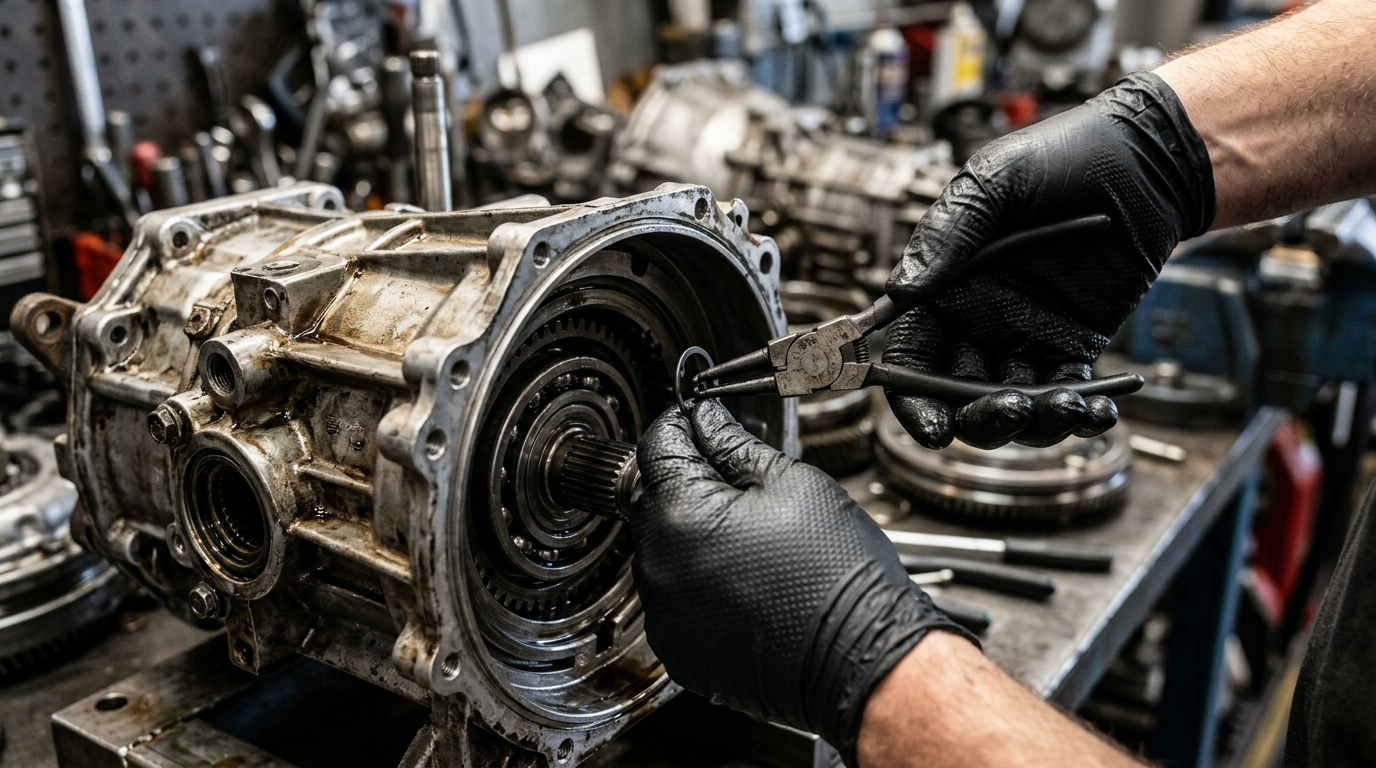
Use only the manufacturer-specified fluid. Honda DW-1, Nissan Matic S, Mazda FZ, Ford Mercon V/LV, GM Dexron VI - there is no universal substitute that matches the friction-modifier chemistry these transmissions require. Using the wrong fluid changes the clutch-engagement characteristics and can directly cause P0780.
Protect the electrical connections. Annual cleaning and re-greasing of the transmission case connector and ground straps before winter costs almost nothing and prevents the corrosion-induced resistance that degrades solenoid performance.
Warm the transmission before demanding performance. In sub-30 degrees F weather, idle for 60 to 90 seconds with the transmission in park, then drive gently for the first five minutes. This allows ATF to circulate through the solenoid screens and warm enough to flow at the rate the TCM expects.
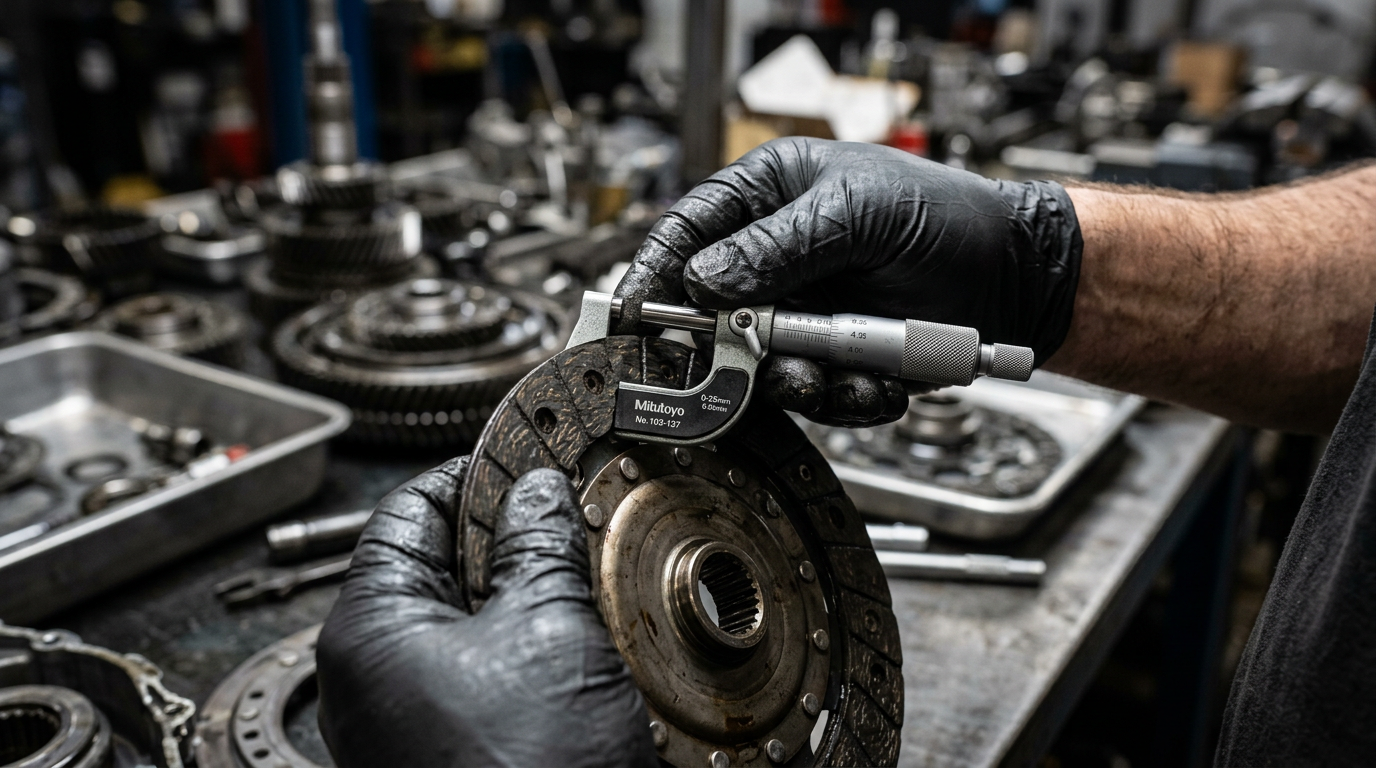
Replace solenoid screens or solenoids proactively on known-failure platforms. On Honda Odyssey and Accord V6 transmissions, replacing the TCC solenoid and linear solenoid (with their screens) at 80,000 to 100,000 miles - before the code appears - is a cost-effective preventive measure that can extend transmission life by 50,000+ miles.
Consider an auxiliary transmission cooler for vehicles used in stop-and-go commuting or towing. Keeping fluid temperatures in the 180-200 degrees F range prevents the oxidation and varnish that degrade solenoid and clutch-pack performance.
H2 local1 - P0780 vs. Related Codes: Quick-Reference Guide
P0780 (Shift Malfunction): broad code indicating any shift anomaly detected through speed-sensor ratio comparison. Does not specify which solenoid, which gear, or whether the fault is electrical, hydraulic, or mechanical. Requires wide-scope diagnosis.
P0700 (Transmission Control System Malfunction): an informational code that tells the engine-side module the transmission-side module has stored a fault. It always appears alongside one or more specific transmission codes and is not diagnostic on its own.
P0730 (Incorrect Gear Ratio): closely related to P0780 and frequently appears as a companion code on Honda platforms. P0730 specifically means the calculated gear ratio does not match the expected ratio, while P0780 means the shift event itself did not complete as commanded. The two codes together strongly suggest clutch slip or solenoid restriction.
P0750-P0770 (Shift Solenoid A-E Malfunction): each points to a specific solenoid circuit. If one of these codes appears alongside P0780, it narrows the diagnosis to that solenoid's circuit.
P0775-P0779 (Pressure Control Solenoid B): points to the pressure-regulation circuit. If P0775 appears with P0780, the pressure side is the likely root cause.
H2 local2 - Frequently Asked Questions
What does P0780 mean in plain language? Your transmission's computer detected that a gear shift did not happen correctly. It does not tell you which part failed - only that the expected gear change did not match what actually happened. The cause could be anything from low fluid to a worn clutch pack.
How serious is P0780? Serious. Even if the car drives "almost normally," the underlying fault is stressing the transmission with every shift. On Honda platforms, P0780 is a known precursor to complete transmission failure if ignored.
Can a fluid change fix P0780? In roughly 15 to 25 percent of cases - where low, dirty, or wrong-spec fluid is the direct cause - a proper fluid and filter service resolves the code. It should always be the first repair attempted.
Why does P0780 appear only on cold mornings? Cold fluid is thicker and cannot flow through partially clogged solenoid screens at the rate the TCM expects. The resulting delayed clutch engagement registers as a shift malfunction. Replacing the solenoids (with new screens) and using full-synthetic ATF rated for cold climates typically eliminates the pattern.
My Honda dealer says I need a new transmission for P0780. Is that true? Not necessarily. Honda's factory flowchart says to replace the TCC solenoid and linear solenoid first if P0780 is the only code. Many Honda owners have resolved the issue with a - solenoid replacement rather than a - transmission. However, if the fluid contains heavy metallic debris or the clutch packs have already failed, a rebuild or replacement may indeed be the only option.
What is the difference between P0780 and P0730? P0730 means the actual gear ratio does not match the expected ratio (measured continuously). P0780 means the shift event itself did not complete as commanded (detected during the transition between gears). They often appear together on Honda platforms and point to the same root cause: clutch slip or solenoid restriction.
Can I fix P0780 myself? Fluid and filter service, connector cleaning, and speed-sensor replacement are DIY-accessible. Solenoid replacement on Honda (accessing the TCC and linear solenoids atop the transmission) is intermediate-level but achievable with a factory service manual and patience - though OdyClub members note the tight access around the battery tray makes it a 3-4 hour job. Valve-body work, pump repair, and rebuilds are professional territory.
How long does the repair take? Fluid and filter service: 1 to 2 hours. Speed sensor replacement: 0.5 to 1 hour. Solenoid replacement (Honda): 2 to 3 hours (dealer), 3 to 4 hours (DIY). Solenoid pack replacement (Ford, Nissan): 2 to 4 hours. Valve-body rebuild: 4 to 8 hours. Full rebuild: 1 to 2 days.
Final Takeaway
P0780 is the transmission's broadest cry for help - it knows something went wrong during a shift, but it does not know exactly what. The diagnostic approach must therefore be broader than for a specific solenoid code: start with the cheapest, most common fixes (fluid level and condition, connector cleaning, speed sensors), then move to solenoid testing and replacement, then to valve-body and pump evaluation, and finally to clutch-pack inspection and the rebuild-or-replace decision. For Honda and Acura owners, the solenoid-screen clogging pattern is so well documented that proactive solenoid replacement at 80,000-100,000 miles is a legitimate maintenance strategy - one that can prevent a rebuild for the cost of a few hundred dollars in parts and a couple hours of labor. Chicago's cold winters, salt-soaked roads, and heavy stop-and-go traffic accelerate every failure mode in the P0780 spectrum, making severe-service fluid maintenance and annual connector care essential.
Series Progress: 27 of 50 articles completed (54%). P0780 - Done.
Have a Transmission Problem?
Get a Diagnosis-first inspection from Chicago transmission repair support.