The short answer is yes: transmission cooler lines can be repaired or replaced. The important part is not waiting. These lines carry automatic transmission fluid between the transmission and the radiator or auxiliary cooler, and a leak can quickly leave the unit low on fluid.
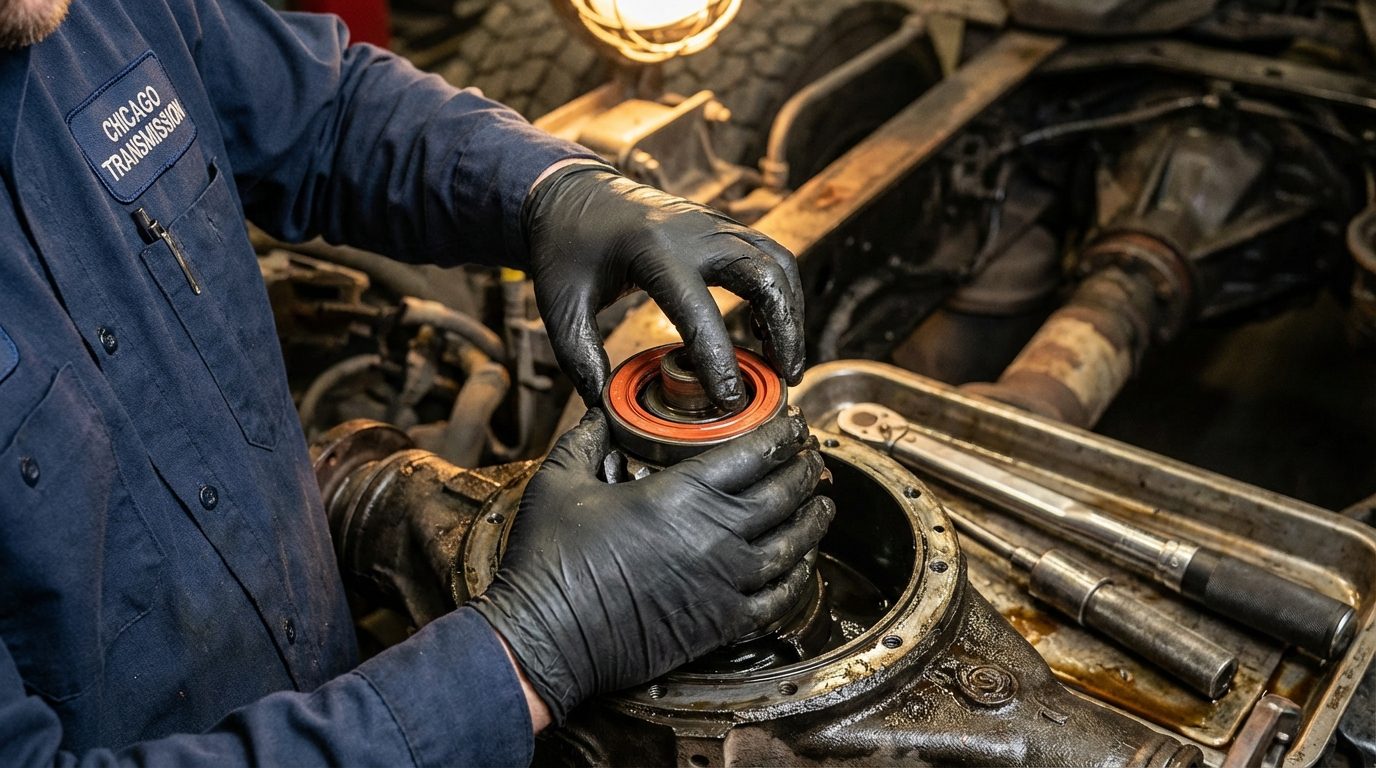
The short answer: yes, and you should not wait
Transmission cooler lines can absolutely be repaired. In many cases, replacing the full line assembly is the better long-term repair because the line failed from age, rust, hardened rubber, or weakened fittings rather than one isolated spot.
The line repair itself is usually straightforward compared with internal transmission work. The expensive part comes from ignoring it. Low ATF can cause overheating, slipping, delayed engagement, clutch damage, and a full rebuild or replacement that could have been avoided.
What transmission cooler lines actually do
Automatic transmission fluid does more than lubricate. It applies clutch packs, controls hydraulic pressure, transfers power, and carries heat away from the transmission. Cooler lines are the path that lets hot ATF leave the transmission, pass through the radiator or external cooler, and return at a lower temperature.
Most automatic transmissions are happiest around normal operating temperature, but Chicago stop-and-go traffic, summer heat, towing, delivery driving, and heavy loads can raise fluid temperature quickly. When the cooling circuit is leaking or restricted, the fluid breaks down faster and internal parts lose protection.
Signs your transmission cooler lines need repair
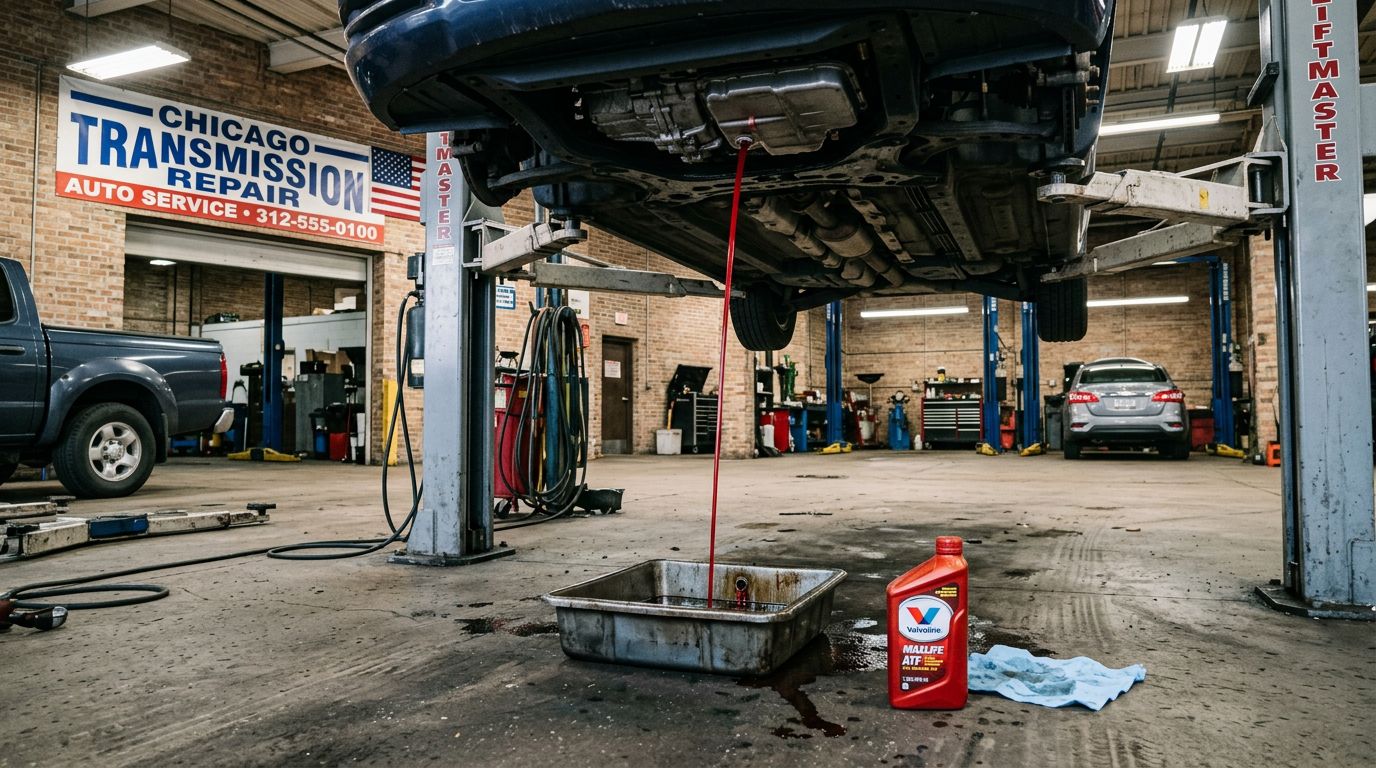
Red or reddish-brown fluid under the vehicle is the most obvious sign. The leak may appear near the front of the car, under the radiator area, along the line routing, or near the transmission case where the fittings connect.
Low transmission fluid, a burning smell, slipping gears, delayed engagement, hard shifts, whining, grinding, or wet fittings are also warning signs. If ATF leaks onto hot engine or exhaust parts, the smell can be sharp and burnt. If the transmission runs low, shift quality can change fast.
Why cooler lines fail in Chicago
Corrosion is the biggest local issue. Road salt, brine, moisture, and winter grime attack steel cooler lines underneath the vehicle. Over time, the metal pits, thins, and develops pinhole leaks or cracks.
Heat cycling also damages rubber sections and crimped connections. Factory cooler lines often combine metal tubing with rubber hose. Years of expansion, contraction, vibration, and pressure can harden the rubber or loosen the crimp. Quick-connect O-rings can also harden and seep.
Repair versus replacement
A minor fitting leak may only need an O-ring, reseated fitting, or corrected connection. A single damaged hose section may sometimes be spliced with rated transmission hose and proper clamps. That can be acceptable in the right situation, but it is not always the best answer for a vehicle you plan to keep.
Full line replacement is usually the stronger recommendation when the failure comes from corrosion, age, brittle rubber, or repeated seepage. If one section has rusted through, the rest of the line may not be far behind. On tow vehicles or hard-use vehicles, upgraded lines and better fittings may also make sense.
What transmission cooler line repair costs
Professional cooler-line repair or replacement commonly falls around the low hundreds, with vehicle access and parts availability driving the range. Some vehicles are simple; others require shields, brackets, airbox parts, splash panels, or other components to come off before the lines can be routed correctly.
The comparison that matters is the downside risk. A cooler-line leak that causes chronic low fluid or overheating can create internal damage that costs far more than the external line repair. This is one of the repairs where early diagnosis usually protects the budget.
Can you drive with a leaking transmission cooler line?
You should not keep driving with a known cooler-line leak. Even a small leak means fluid is leaving the system, and the leak rate can increase under pressure at highway speed or under load.
If the vehicle is slipping, smelling burnt, leaving a visible trail, showing a transmission temperature warning, or not engaging normally, stop driving and arrange a tow. A tow is cheaper than running the transmission low enough to damage clutches, seals, bearings, or the pump.
Why a transmission specialist should handle it
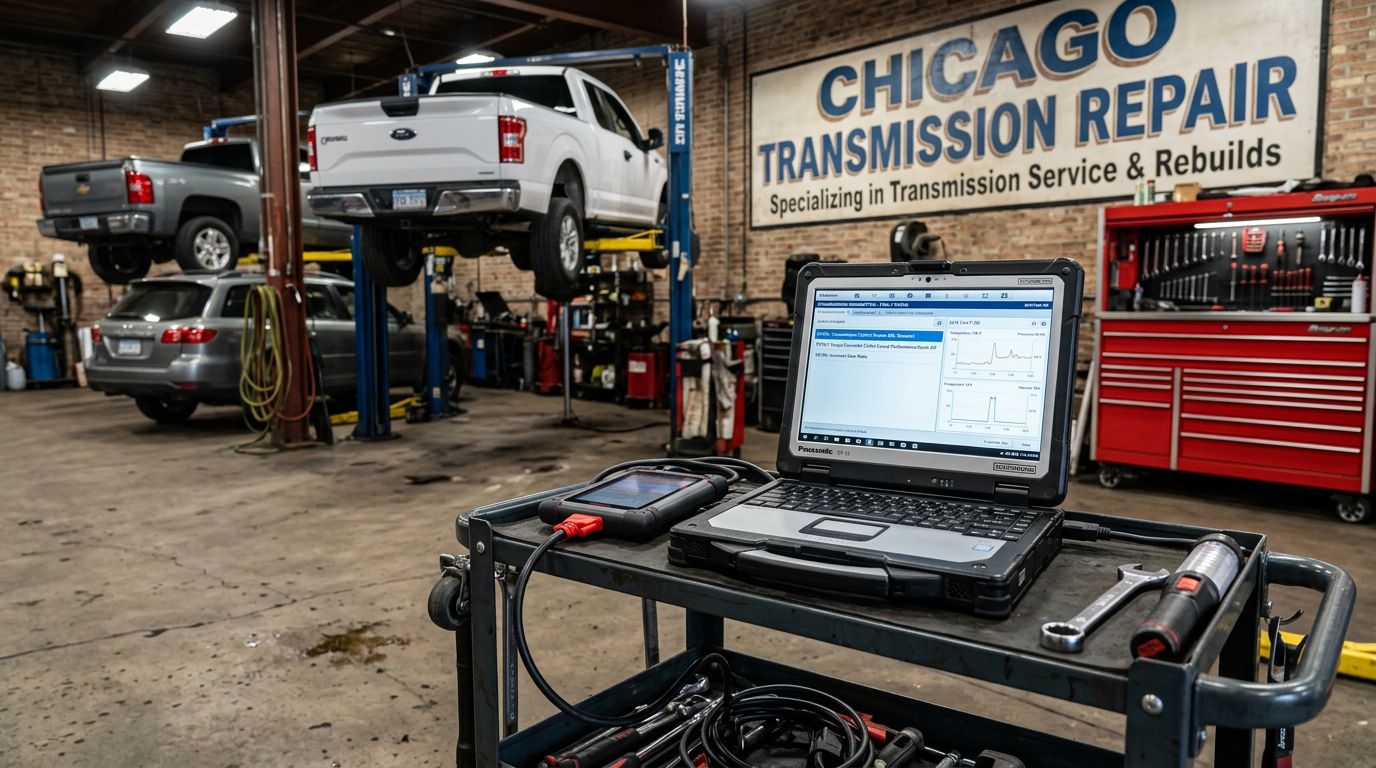
A good cooler-line repair is not just replacing the wet tube. The shop should check fluid level and condition, inspect the line routing, verify the cooler and fittings, check for restricted flow, and look for evidence that the transmission has already overheated.
A transmission specialist will also watch for related failures, including radiator-integrated cooler problems that can let coolant and ATF mix. That contamination can destroy a transmission quickly, so the whole cooling circuit matters.
Prevent cooler-line problems before they start
Check transmission fluid regularly if your vehicle has a dipstick, and pay attention to drips after parking. A slow seep is easier to deal with than a pressure leak that opens up during a commute.
Keep up with correct-spec transmission fluid service, avoid ignoring burning smells, and have rusty or wet cooler lines inspected before winter corrosion makes the repair more urgent.
Get your cooler lines inspected
If you suspect a transmission cooler line leak, Chicago Transmission can inspect the lines, check fluid level and condition, scan for transmission codes, and explain whether the line can be repaired or should be replaced.
Call or text (312) 626-8759 to schedule a Diagnostic appointment. We have helped Chicago drivers with transmission problems Serving Chicago drivers, and repair recommendations are written clearly before work begins.
Transmission Cooler Line Repair Photos
Transmission Cooler Line FAQ
Can you repair transmission cooler lines?
Yes. Transmission cooler lines can be repaired by replacing a failed fitting, splicing a damaged section in limited cases, or replacing the line assembly. Full replacement is usually recommended when the leak is caused by corrosion, age, or widespread deterioration.
What are the signs of a transmission cooler line leak?
Common signs include red or reddish-brown fluid under the vehicle, low transmission fluid, a burning smell, slipping or delayed engagement, hard shifts, and wet or corroded cooler-line fittings.
Can you drive with a leaking transmission cooler line?
It is not recommended. A leaking cooler line causes ongoing fluid loss, which can lead to overheating, slipping, internal damage, and complete transmission failure.
How much does it cost to fix a transmission cooler line?
Professional transmission cooler line repair or replacement often falls in the low hundreds, depending on the vehicle, line routing, parts, and labor required. Ignoring the leak can lead to much more expensive internal transmission damage.
What causes transmission cooler lines to fail?
Common causes include road-salt corrosion, heat cycling, hardened rubber sections, weakened crimps, vibration, abrasion, aging O-rings, and high mileage.