Transmission slipping means your engine revs normally but the car doesn't accelerate the way it should - as if the power isn't making it to the wheels. It can feel like the transmission is "hunting" for a gear, or like you're driving on ice. Here's what causes it and how serious it is.
What Does Slipping Feel Like?
The most common descriptions from drivers:
- Engine RPM rises, but the car doesn't speed up proportionally
- A brief "flare" when the transmission shifts - RPMs spike then settle
- The car hesitates or lurches during acceleration
- Sudden downshift for no apparent reason
- Delayed engagement when shifting from Park to Drive or Reverse
These are all versions of the same problem: the transmission is failing to maintain a firm mechanical connection between the engine and the drivetrain.
Common Causes of Transmission Slipping
Low or Burned Transmission Fluid
This is the most common cause, and the easiest to check. Low fluid reduces hydraulic pressure, which is what holds clutch packs together. Burned fluid (dark brown or black, with a burnt smell) has lost its friction properties and causes the clutches to slip even when fluid level is correct.
If slipping just started: check your fluid level now. If it's low, you have a leak. Find the leak before adding more fluid.
Worn Clutch Packs
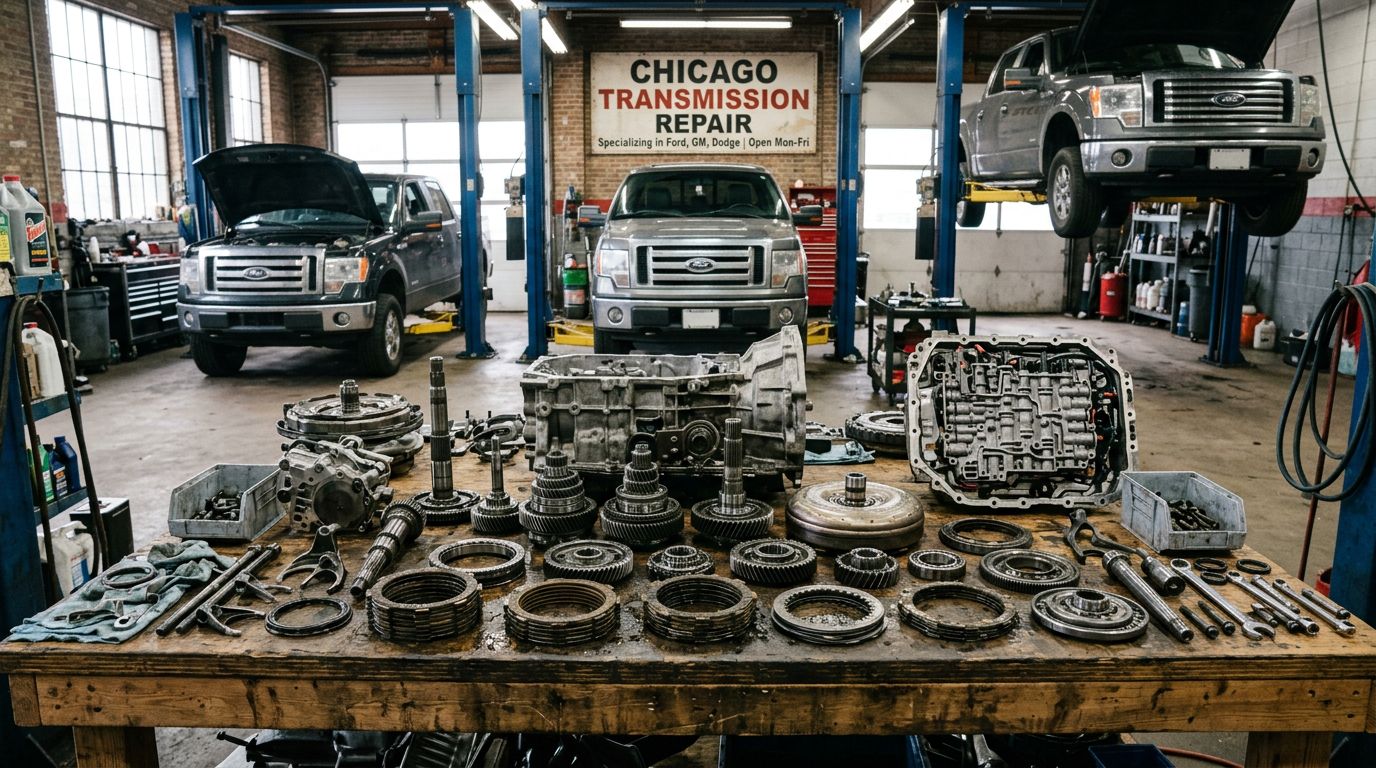
Clutch packs are friction discs inside the transmission that engage and disengage to change gears. They wear down over time - especially in vehicles with heavy towing history, lots of city stop-and-go driving, or infrequent fluid changes. When a clutch pack slips, you feel it as an RPM flare or hesitation on the specific gear that clutch controls.
Bad Torque Converter
The torque converter connects the engine to the transmission. A worn or failing torque converter clutch (TCC) causes shudder and slipping - especially at steady highway speeds between 30 - 50 mph. This is particularly common on Ford 10R80 and GM 8L90 transmissions.
Faulty Transmission Solenoids
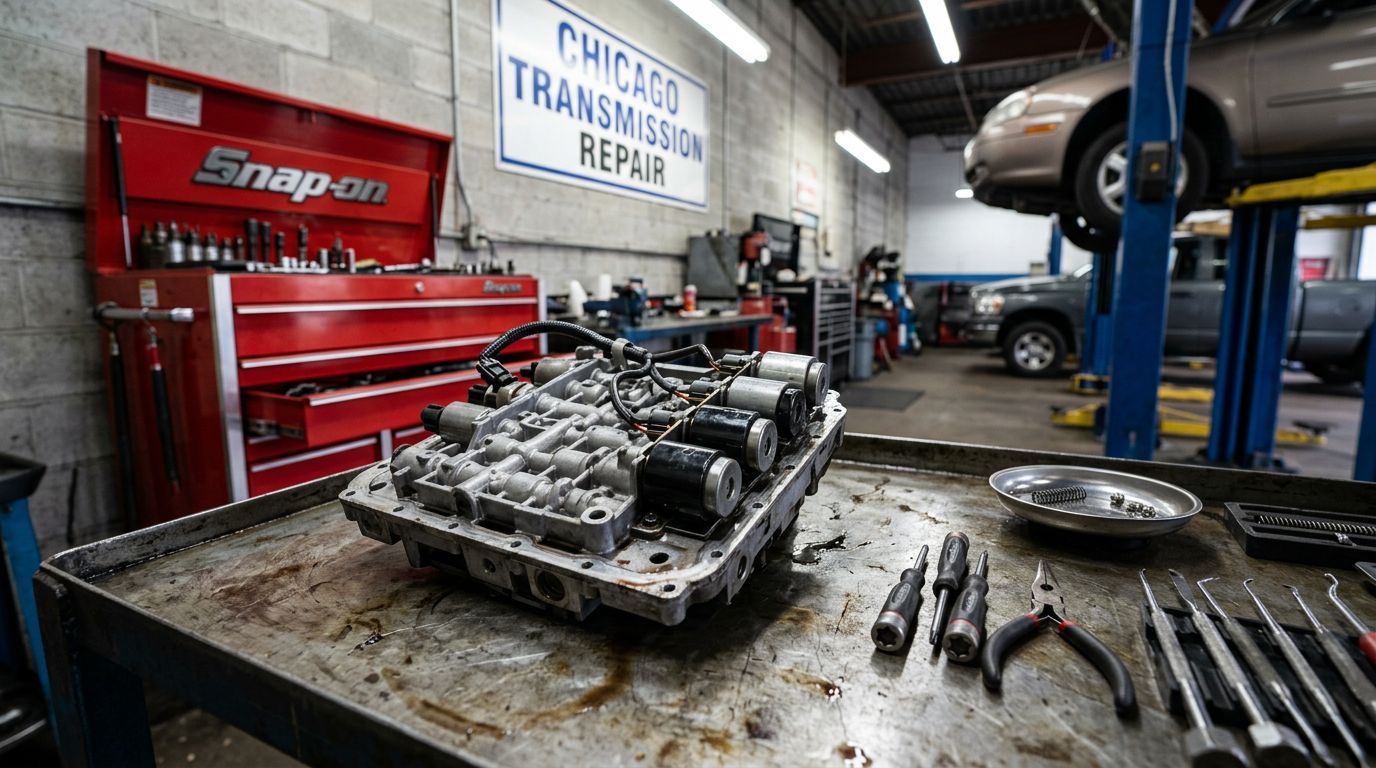
Solenoids are electrically controlled valves that direct fluid flow within the transmission. A failing solenoid causes erratic shifts, slipping on specific gears, or a P0750 - P0780 code. Solenoid replacement is a targeted repair that doesn't require a full rebuild.
Valve Body Wear
The valve body is the hydraulic brain of the transmission. Worn valve body bores allow fluid to bypass channels - reducing pressure and causing slipping. This often requires valve body replacement or rebuild.
Is It Safe to Drive With a Slipping Transmission?
Short answer: No. A slipping transmission is not just an inconvenience - it's an active failure. Every time the clutch slips, it generates heat and metallic debris. That debris circulates through the fluid, damaging solenoids, valve body passages, and other clutch packs. A solenoid fix can become a rebuild if you keep driving on a slipping transmission.
If slipping is severe (you can't accelerate normally, or the car won't move), have it towed. Don't risk the freeway.
What Does It Cost to Fix a Slipping Transmission in Chicago?
- Fluid change (if low/burned fluid is the cause): quoted after diagnosis, access check, and parts availability.
- Leak repair (if fluid is low): depending on location of leak
- Solenoid replacement: quoted after diagnosis, access check, and parts availability.
- Torque converter replacement: quoted after diagnosis, access check, and parts availability.
- Valve body repair/replacement: quoted after diagnosis, access check, and parts availability.
- Full rebuild (widespread clutch wear): quoted after diagnosis, access check, and parts availability.
The diagnosis determines which repair applies - which is why a Diagnostic appointment is the right starting point. We won't recommend a rebuild if a solenoid swap fixes it.
What to Do Right Now
- Check your transmission fluid level and color (owner's manual shows the dipstick location - many newer vehicles have no dipstick and require shop inspection)
- Note when the slipping happens: specific gear? Highway speed only? Cold starts?
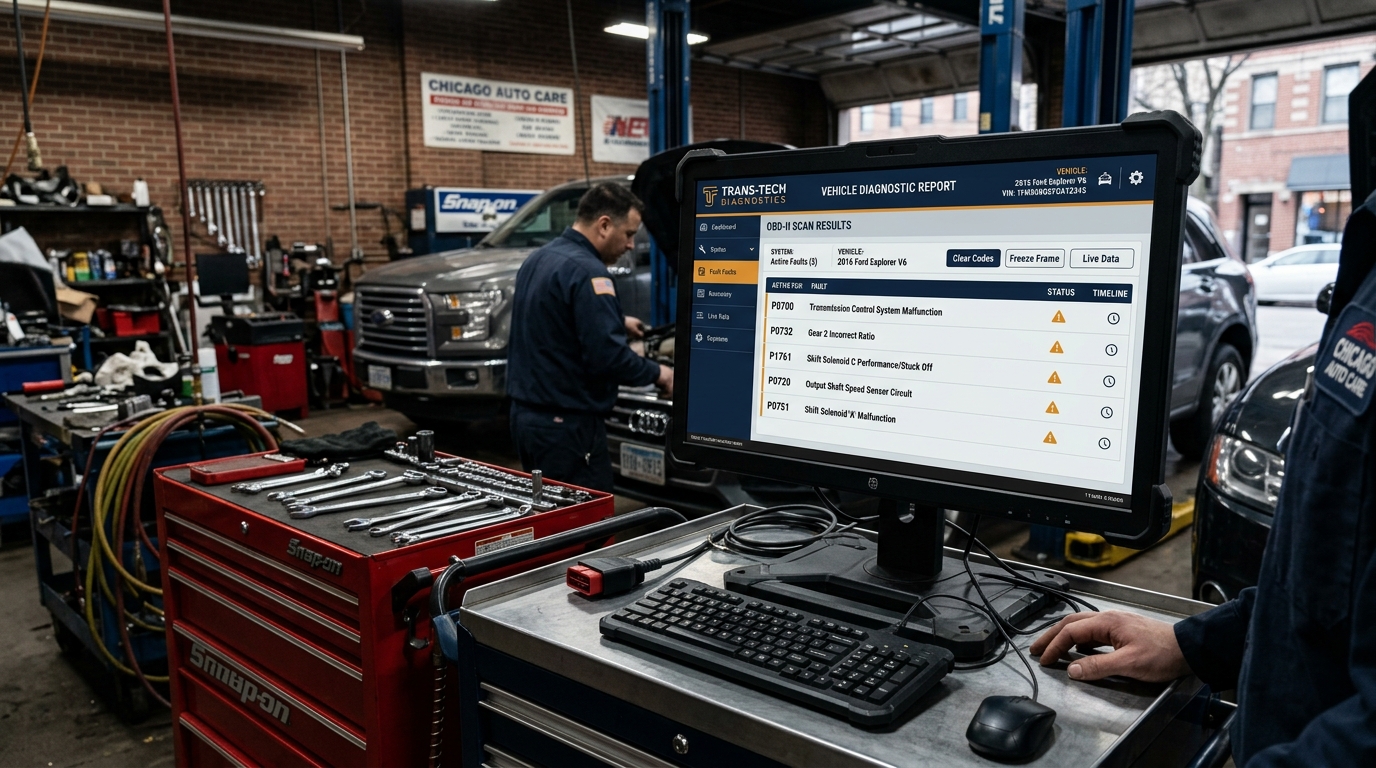
- Check for warning lights - P0700, P0740, P0750, or other codes
- Call us: (312) 626-8759. We're at shop options near Southwest Chicago, open Mon-Fri 8:00 AM-5:30 PM | Sat 8:00 AM-1:00 PM | Sun Closed
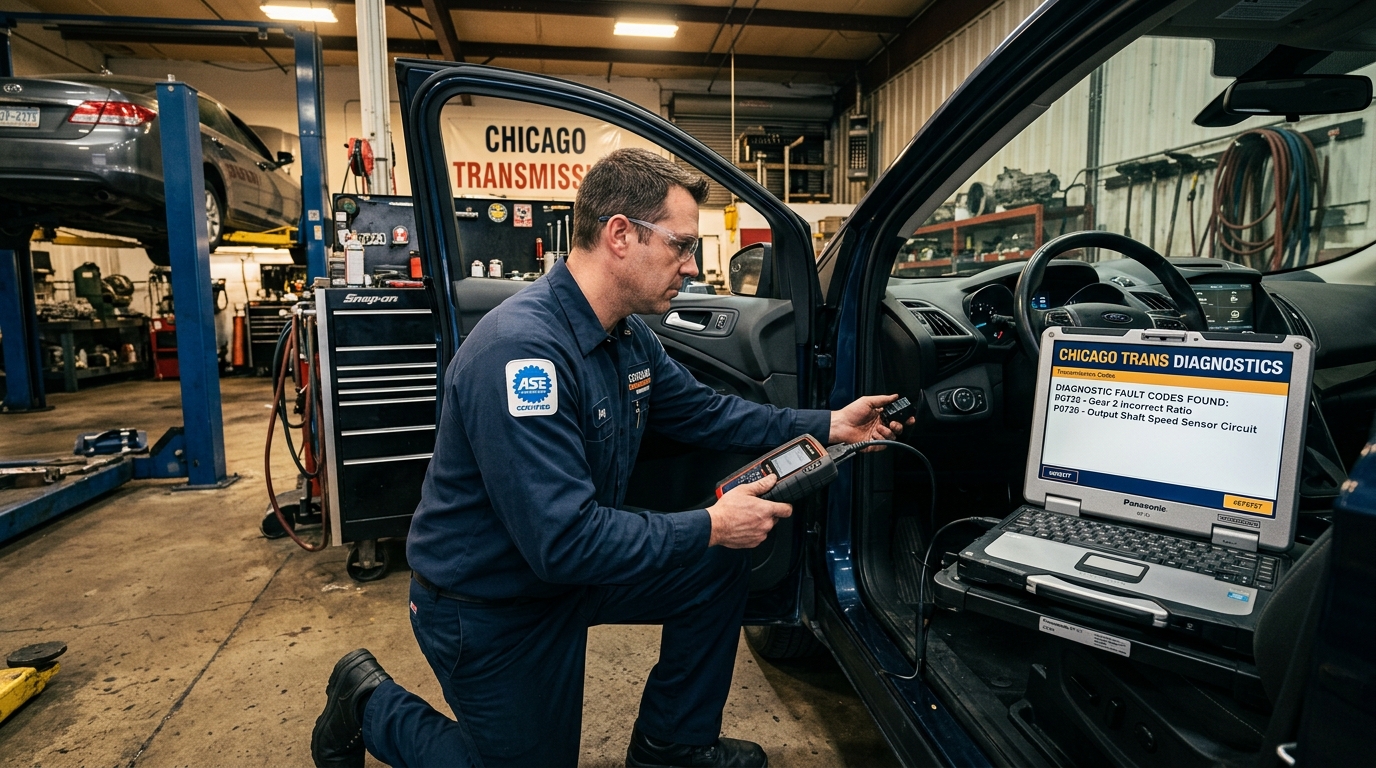
Diagnosis-first inspection. We'll scan the codes, road test the vehicle, and give you a straight answer about what's wrong and what it costs to fix.