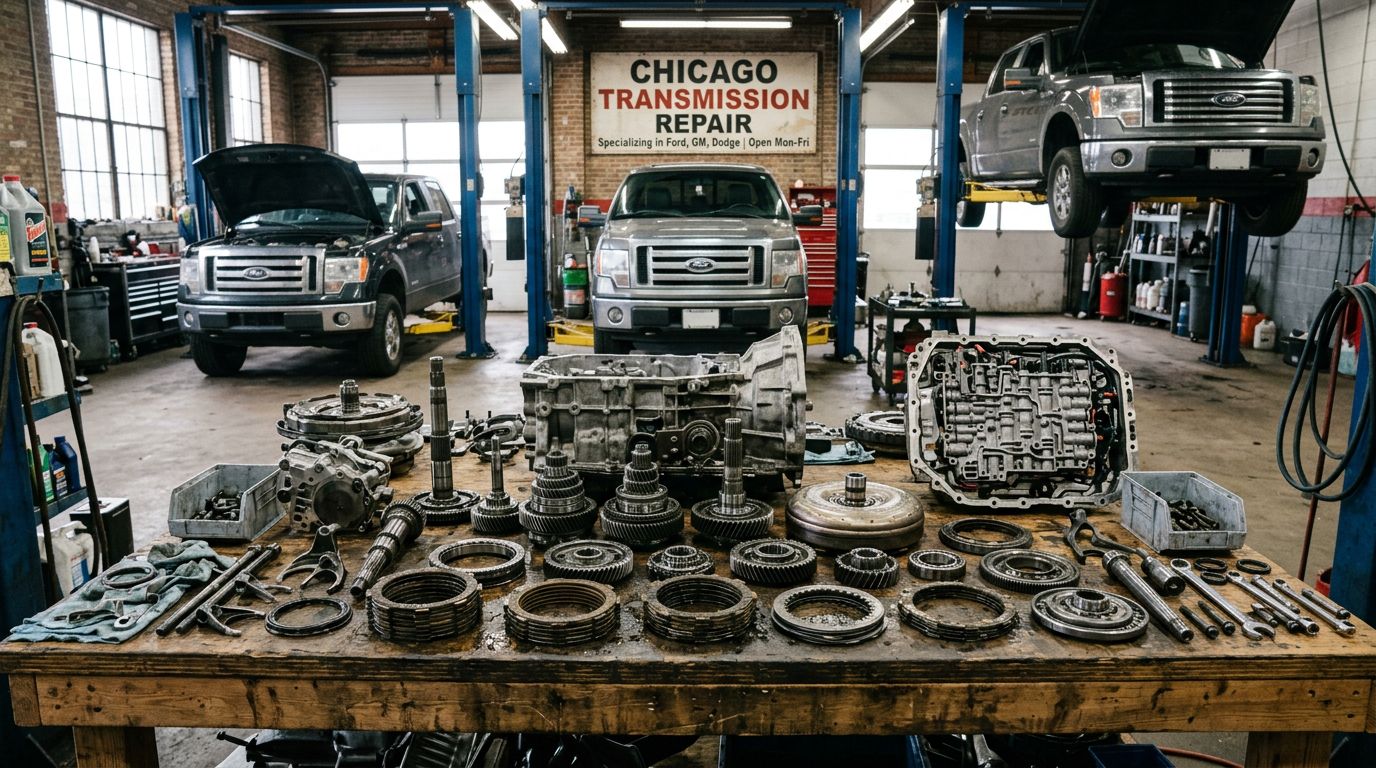
A shudder or vibration that appears between 40 - 55 mph and often disappears above 60 mph is one of the most recognizable transmission symptoms - and one of the most misdiagnosed. In the majority of cases, it's caused by the torque converter clutch (TCC) slipping rather than engaging cleanly. Here's how to tell what you have and what it costs to fix.
What Causes Transmission Shudder
Torque Converter Clutch (TCC) Slip - Most Common
At highway cruising speed, the transmission's torque converter clutch locks up to eliminate slip and improve fuel economy. When the TCC friction material is worn or the hydraulic apply pressure is incorrect, the clutch partially engages and slips - creating a rapid vibration that feels exactly like driving over rumble strips. It typically appears at a specific speed (usually 40 - 55 mph) and goes away when you accelerate past it or decelerate below it.
This is the cause on the majority of shudder complaints on GM, Ford, and Honda vehicles with higher mileage.
Degraded Transmission Fluid
TCC shudder is heavily fluid-dependent. Modern automatic transmissions use specific fluid formulations (GM Dexron VI, Ford Mercon LV, Honda DW-1, etc.) that contain friction modifiers tuned to the TCC friction material. When fluid ages and oxidizes, it loses these modifiers, and TCC shudder results even on a mechanically healthy transmission.
Wrong Fluid Type
Using a universal ATF instead of the OEM-specified fluid is a common cause of shudder, especially after a fluid change at an oil change shop that uses a generic fluid. Always verify the fluid spec for your vehicle.
TCC Solenoid Failure
If the solenoid that controls TCC apply pressure fails, it can cause inconsistent clutch engagement that produces shudder. Unlike fluid-related shudder, solenoid-related shudder doesn't respond to fluid changes.
Internal Converter Damage
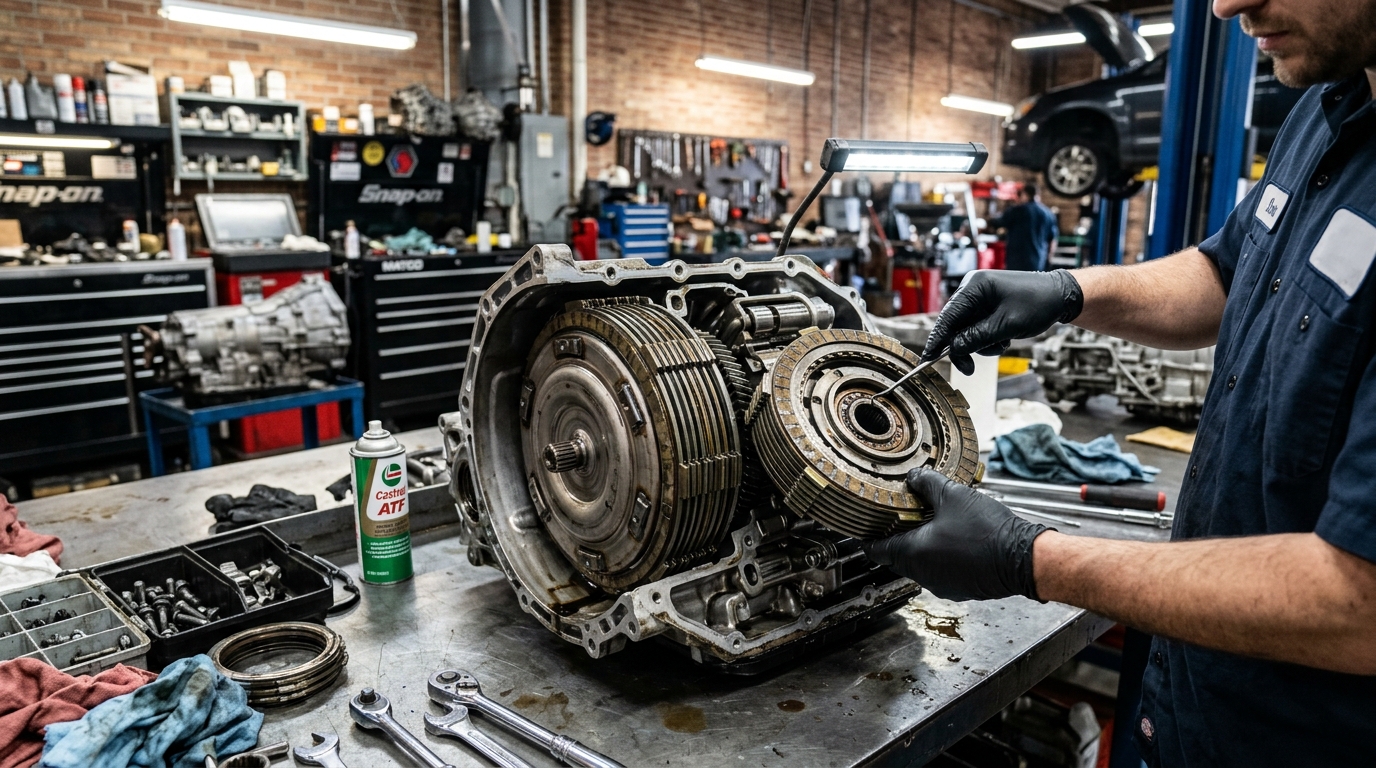
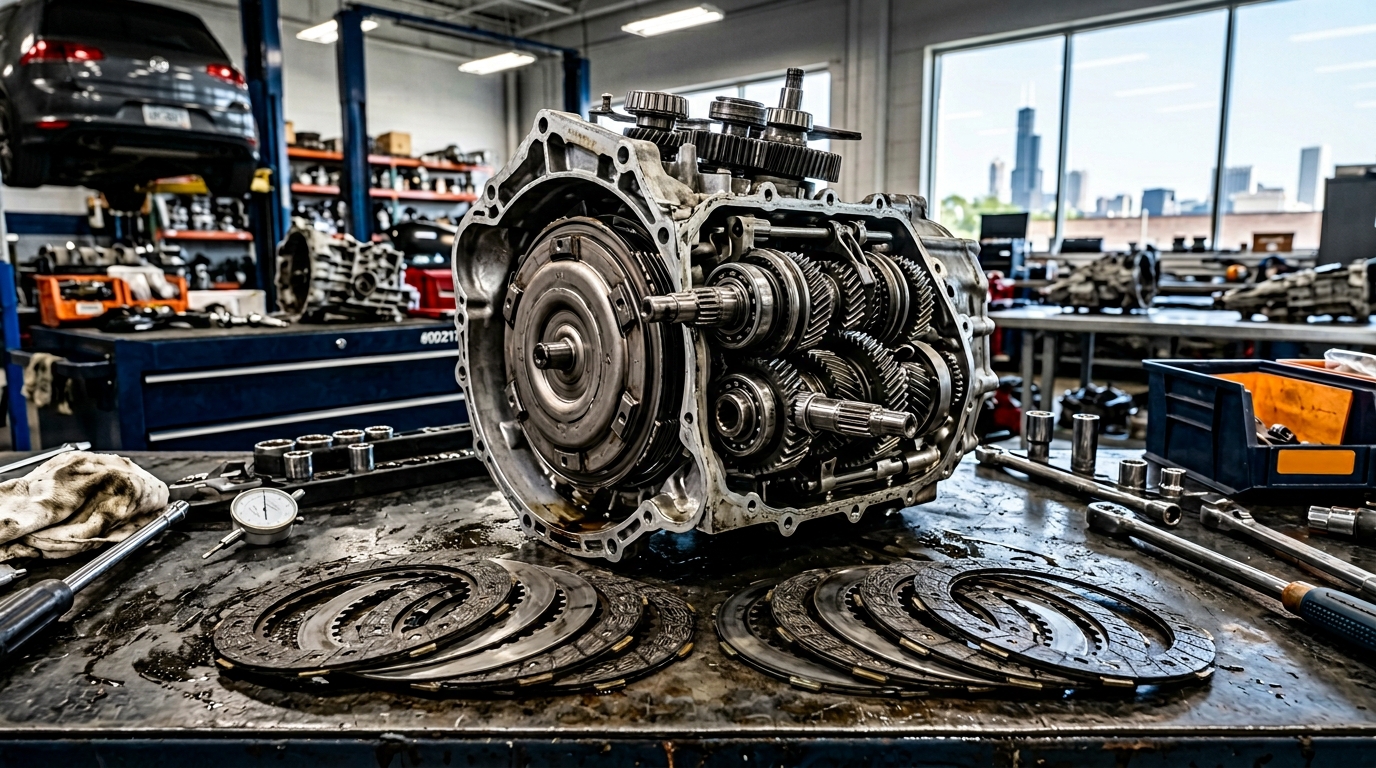
In severe cases, the TCC friction disc is completely worn or the converter's internal damper springs are broken. This produces a rougher, more pronounced shudder that fluid changes won't help.
Do Fluid Additives Work?
Shudder Stop and similar friction modifier additives work on mild, fluid-related TCC shudder - often within 200 miles of driving after adding. They restore the friction characteristics the fluid has lost. However, they're a temporary fix if the underlying cause is degraded fluid; the correct fix is a complete fluid exchange with OEM-spec fluid.
Additives do not work on mechanical causes (worn TCC, broken damper springs, failed solenoid). If the shudder doesn't improve after a fluid change and additive, the TCC itself needs attention.
Chicago Repair Costs for Transmission Shudder
- Transmission fluid exchange with OEM-spec fluid: fixes a large percentage of fluid-related shudder cases
- Shudder Stop additive (if needed): typically added at time of fluid service
- TCC solenoid replacement: quoted after diagnosis, access check, and parts availability.
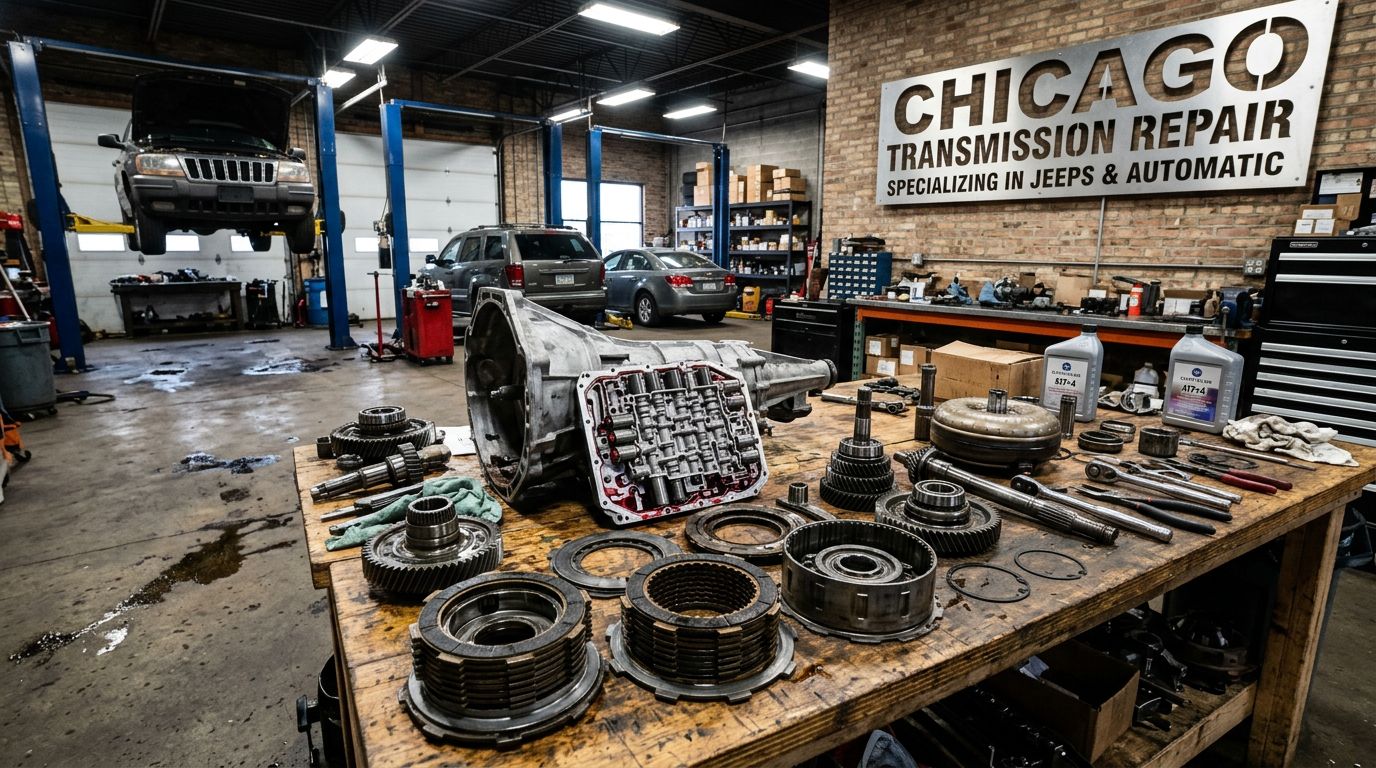
- Torque converter replacement: required when TCC friction is worn beyond service limit
- Valve body service (if pressure regulation is causing inconsistent TCC apply): quoted after diagnosis, access check, and parts availability.
Diagnosis determines which repair you actually need - we start with fluid inspection and a test drive before recommending any parts. Diagnostic appointment at shop options near Southwest Chicago. Call (312) 626-8759 - Mon-Fri 8:00 AM-5:30 PM | Sat 8:00 AM-1:00 PM | Sun Closed.