The right diagnostic does not start with a sales pitch. It starts with the complaint, confirms what the vehicle is doing, and gives you a plain-English reason for the next step.
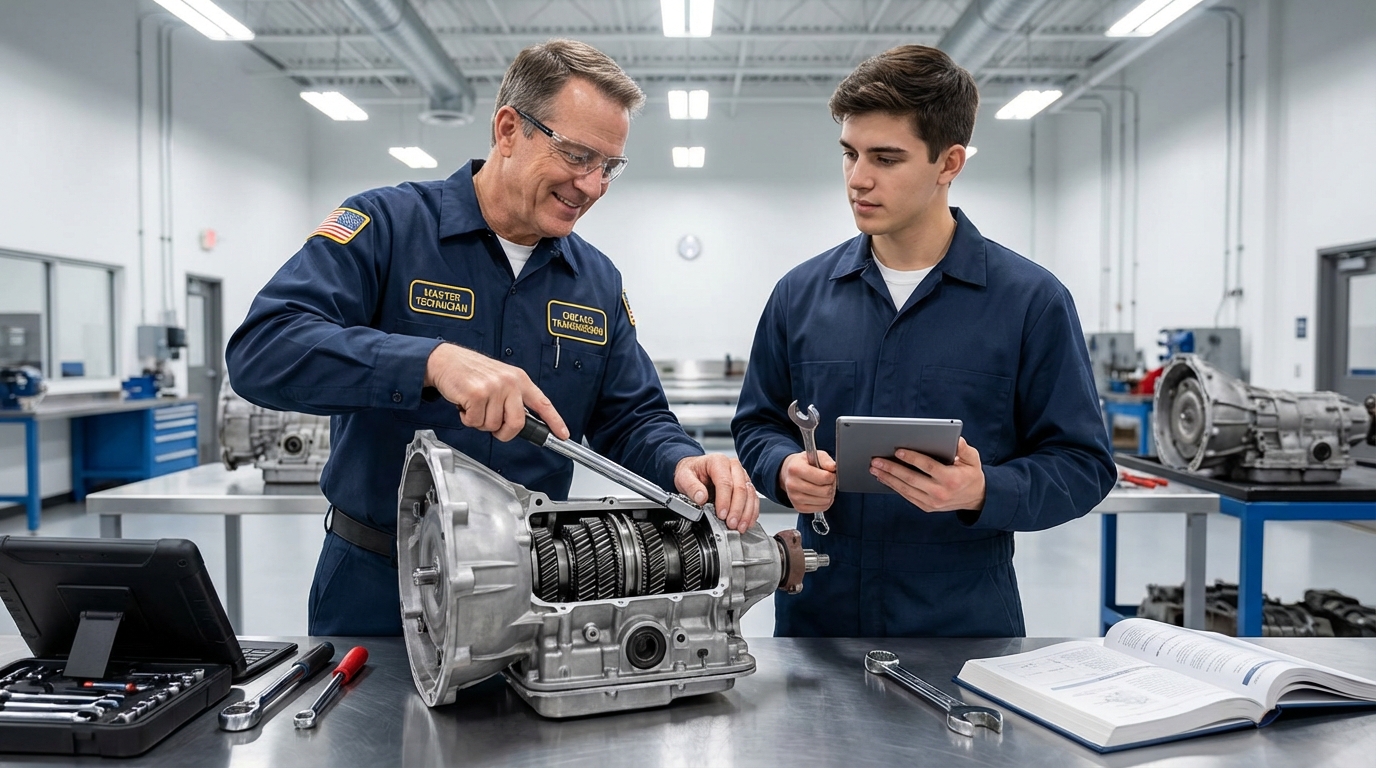
It starts with the complaint
The technician should ask what you feel, when it happens, how long it has been going on, and whether anything changed recently. A slip after warmup is different from a delayed cold engagement. A shudder at 45 mph is different from a clunk into reverse.
Those details guide the inspection and keep the diagnosis from becoming a generic guess.
The scan should go beyond a basic parts-store read
A basic scan can be useful, but transmission diagnostics often need module-specific codes, live data, freeze-frame information, adaptation values, temperature history, and road-test behavior.
The point is to compare what the computer reports with what the vehicle actually does.
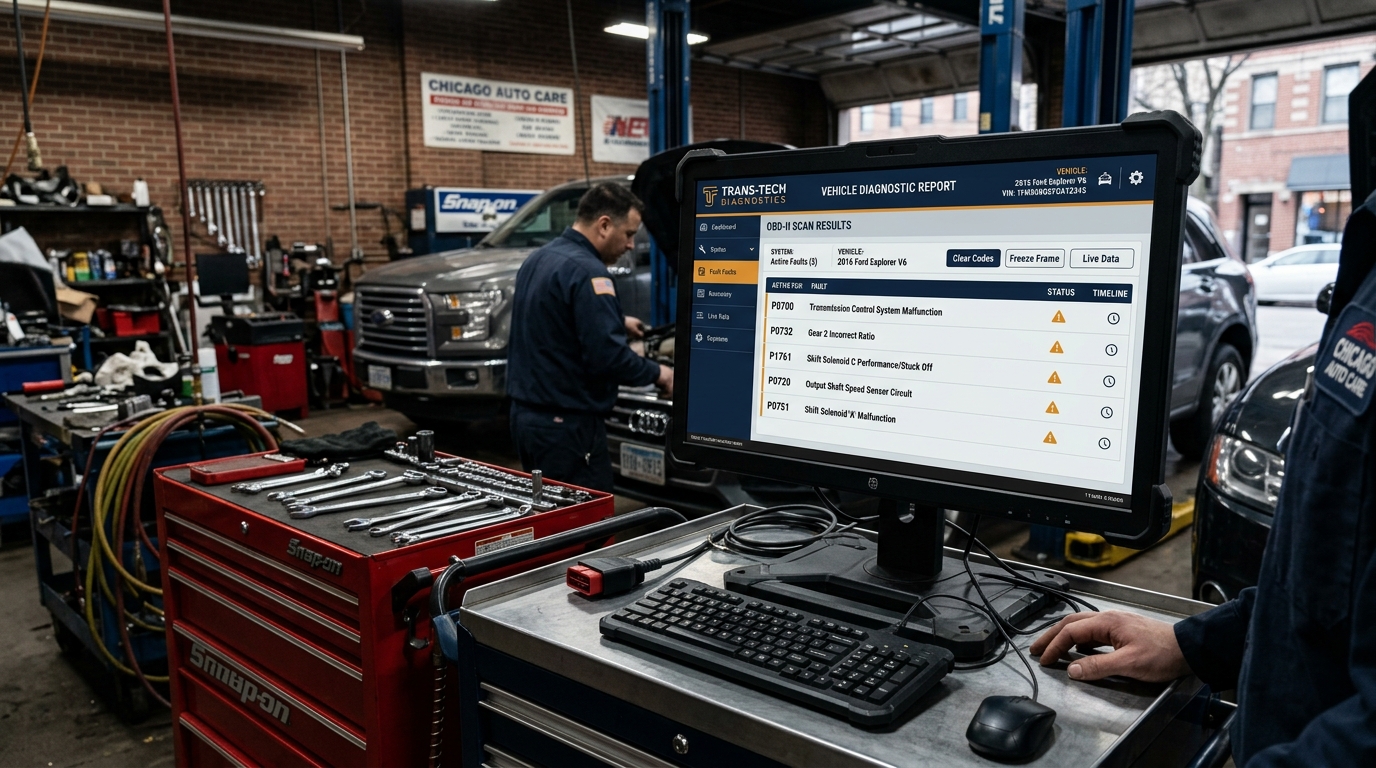
Fluid, leaks, mounts, and related systems matter
A transmission complaint can come from low fluid, overheated fluid, cooler-line problems, a failed mount, axle issues, wiring concerns, or a control fault. A good inspection checks the surrounding systems before calling for major work.
That is especially important on vehicles used for city commuting, rideshare driving, delivery routes, towing, or frequent short trips.
You should leave with a plain-English next step
After the diagnostic, you should understand whether the vehicle needs maintenance, an external repair, deeper teardown, replacement options, or monitoring. You should also know whether it is safe to keep driving.
The useful outcome is not pressure. It is clarity.

What a vague diagnostic misses
A vague answer such as 'needs a transmission' skips the useful middle ground: fluid evidence, code history, pressure behavior, road-test notes, leak location, and whether a related system is causing the complaint.
A clear inspection does not promise the smallest repair. It explains why the recommended next step makes sense for that specific vehicle.
What the road test adds
A road test can reveal shift timing, converter clutch shudder, coast-down bumps, delayed engagement after a stop, and temperature-related changes that a parked scan cannot show.
The road test should be done safely and only when the vehicle can be driven without risking more damage. If it cannot be road tested, that limitation should be part of the explanation.
Why related systems are checked
Engine misfire, throttle data, wheel-speed input, axle vibration, mount movement, cooler restriction, and wiring issues can all feel like transmission trouble from the driver's seat.
Checking related systems is not a delay. It protects the customer from approving transmission work when a different system is creating the symptom.
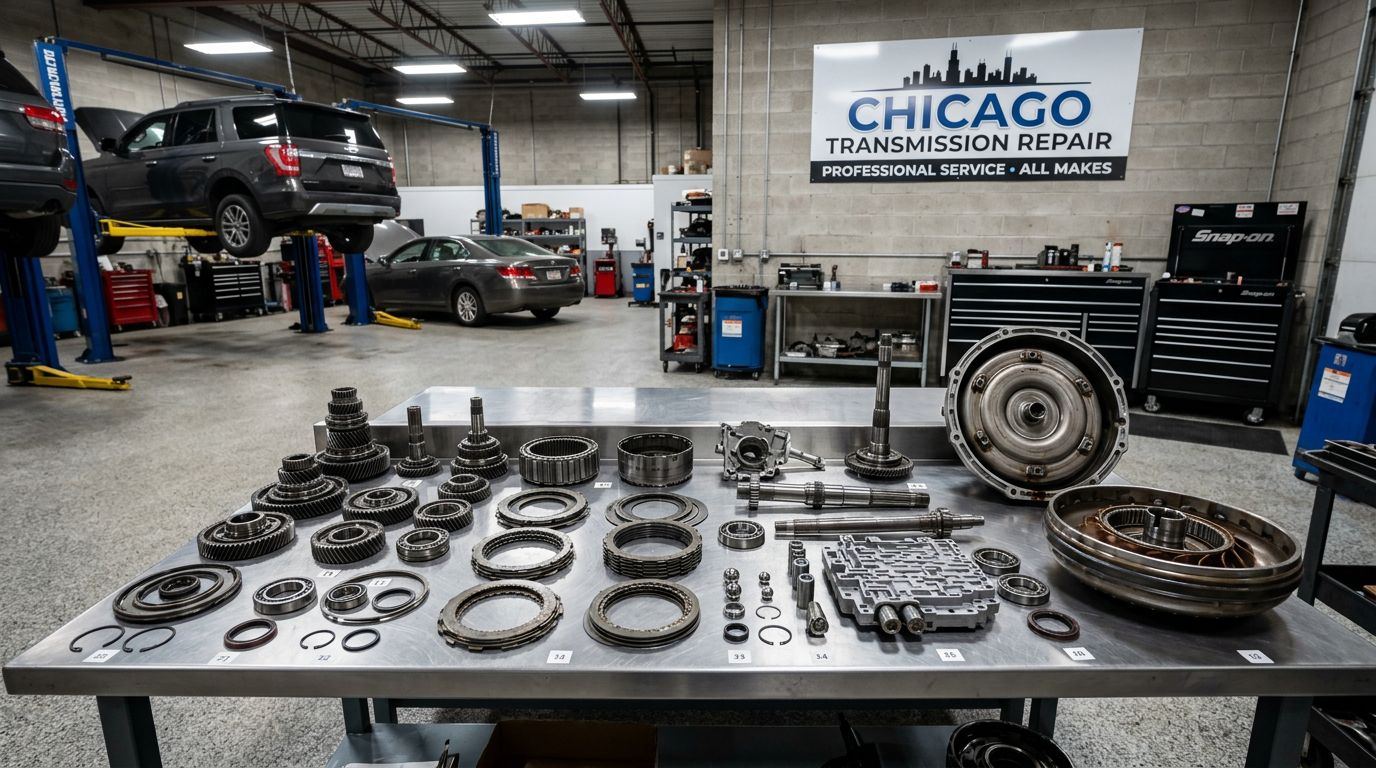
What a clear estimate should include
After diagnosis, the estimate should identify the symptom, the evidence found, the recommended repair path, warranty coverage, parts availability, and whether any uncertainty remains.
A good explanation helps you compare options without pressure. You should know what is urgent, what can wait, and what would make the vehicle unsafe to keep driving.
Photos That Match This Repair Question