Before you choose a transmission specialist

Finding a transmission specialist Chicago drivers can trust starts with asking the right questions before approving repairs. You need to understand what is wrong with your vehicle, how the shop reached its diagnosis, and exactly what you are paying to have fixed.
Maybe your car hesitates when you shift into Drive. Perhaps you have noticed rough shifting, or another mechanic has already recommended replacing the transmission. Whatever brought you here, you do not need to become a transmission expert to make an informed decision.
You do, however, need more than a price quoted over the phone.
A useful conversation with a repair shop should leave you understanding the next step—not feeling pressured to authorize work you cannot explain. These seven questions will help you compare Chicago transmission shops, evaluate a repair recommendation, and avoid misunderstandings before leaving your vehicle.
Start by comparing how shops answer your questions, not simply which one offers the lowest initial number. Ask each shop about the same vehicle, the same symptoms, and the same proposed work. Otherwise, you may end up comparing very different services.
Keep the answers in your phone or request them by email. Having a written record makes it easier to revisit the details when you are deciding where to book.
1. Do you regularly work on the transmission in my vehicle?
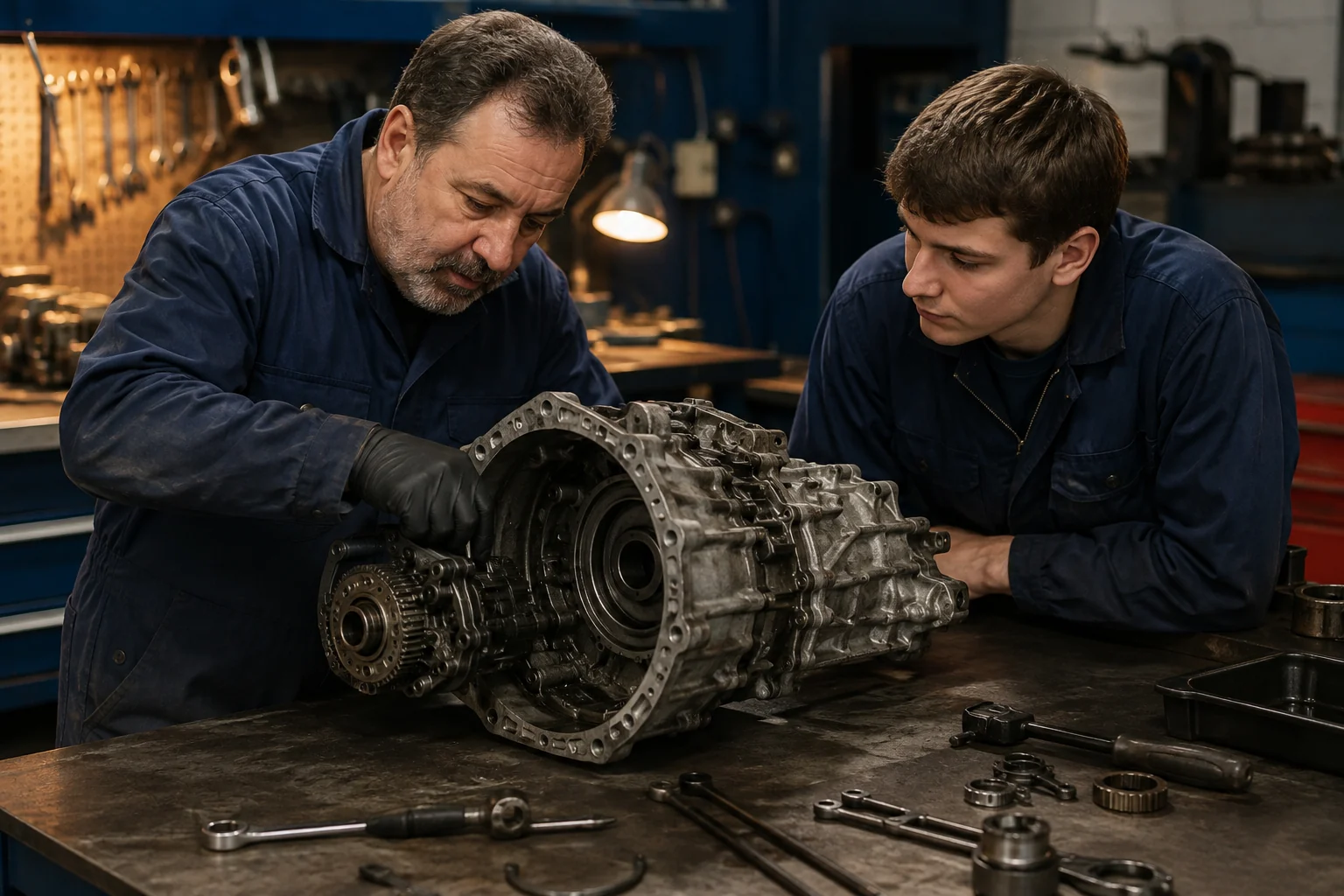
Begin with your vehicle’s year, make, model, and mileage. Provide the engine size and transmission type when you know them, but do not worry about identifying every technical detail yourself.
Ask a direct question:
“Do you regularly diagnose and repair the transmission used in my vehicle?”
Follow that with questions about the technician who would perform the work. Ask about relevant training and current certifications. For example, ASE offers an A2 certification covering automatic transmissions and transaxles, as well as an A3 certification covering manual drivetrains and axles.
Rather than stopping at “we work on everything,” ask the shop to explain its experience with vehicles like yours. You are looking for a specific, understandable answer.
Also ask whether the shop handles the proposed repair itself or refers that type of work elsewhere. Establishing this before booking gives you a clearer picture of who will be responsible for your vehicle.
2. What testing supports your diagnosis?
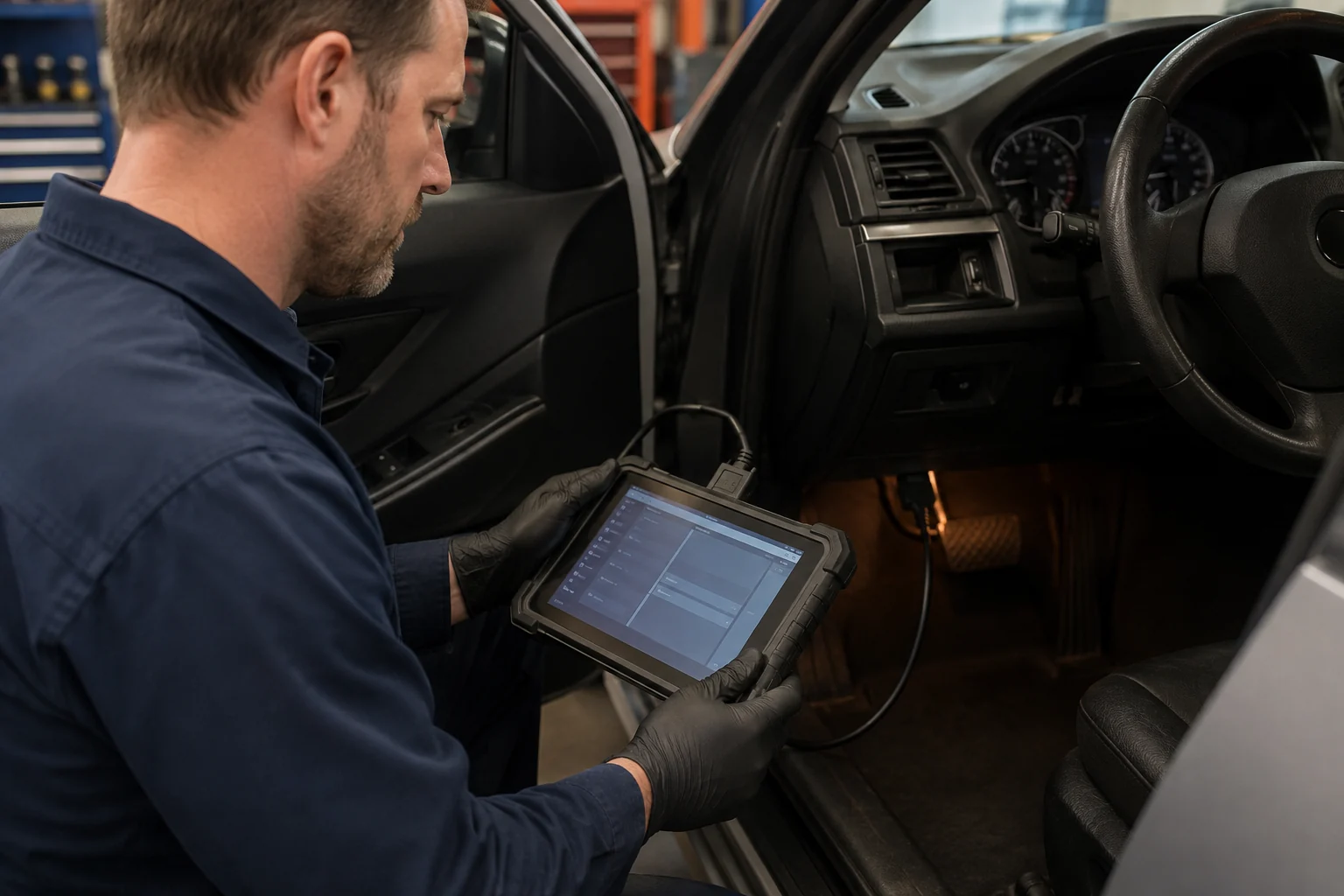
Ask what the shop will do before recommending a repair.
A transmission evaluation can involve reviewing the symptoms, checking fluid condition and leaks, retrieving diagnostic codes, inspecting wiring and external components, and performing a road test when appropriate. Further testing may be needed to distinguish an electronic or external problem from an internal transmission fault.
The important distinction is that reading a trouble code is not the same as identifying the failed component. A code helps direct testing, but it does not automatically prove that the transmission needs replacement.
Ask:
“What did you find, and what testing supports that conclusion?”
Request an explanation in everyday language. For example, you should be able to understand whether the shop has confirmed a problem or is recommending additional testing to narrow it down.
Before authorizing the evaluation, confirm the diagnostic charge and whether it remains payable if you decline repairs. Shops may charge for diagnostic time even when you have the repair completed elsewhere.
3. Why do you recommend a repair, rebuild, or replacement?
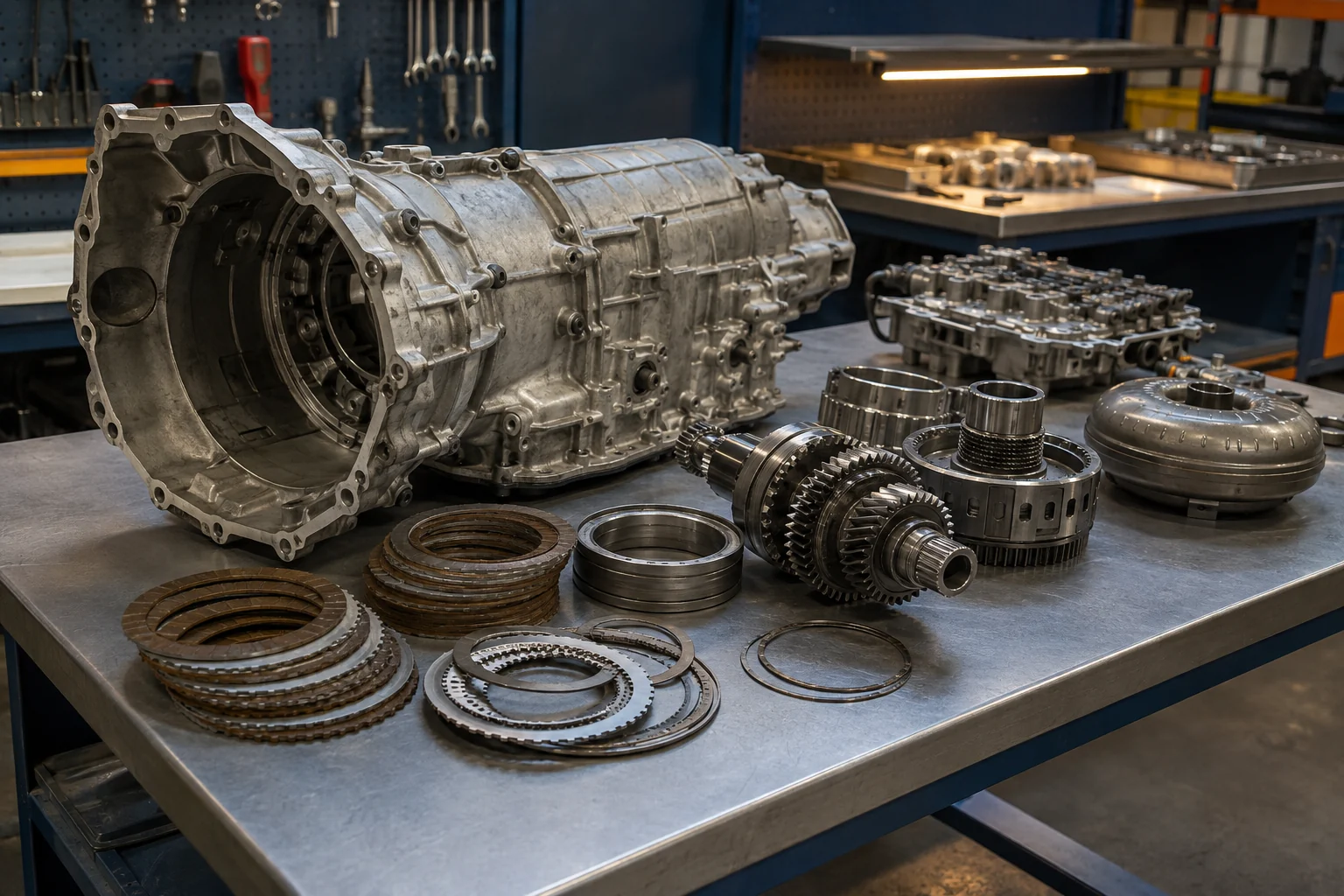
Do not assume that every transmission concern requires the same solution. Transmission services can range from correcting a fluid-retention problem to performing a rebuild or installing an exchange unit. The appropriate recommendation depends on what the inspection establishes.
Ask the specialist to explain the proposed scope:
Targeted repair: What specific problem would the shop address, and why does it believe that repair is sufficient?
Rebuild: What would be inspected, replaced, or reused? What findings could change the price after disassembly?
Replacement: What unit would be installed, where would it come from, and what condition is it in?
Pay particular attention to parts descriptions. A used salvage component is not the same as a rebuilt or remanufactured component that has been restored to working condition. Have the shop identify what it is quoting rather than relying on the broad word “replacement.”
Then ask the most useful follow-up:
“Why do you recommend this option for my vehicle instead of the alternatives?”
Your goal is not to talk the shop into the smallest possible repair. It is to understand why its recommendation fits the evidence.
4. What exactly does the written estimate include?

Before comparing prices, compare what each estimate actually covers.
Ask for a written breakdown identifying the proposed work, parts, labor, and diagnostic charges. Illinois Attorney General guidance identifies these as important repair-estimate disclosures, along with whether parts are new or used and whether the recommended repairs are required or suggested.
For transmission work, ask the shop to clarify three areas:
The complete scope: Does the quoted total include removal and installation, fluid, applicable programming, and any related work the shop recommends?
Potential additional charges: What remains uncertain, and what would require a revised estimate or additional authorization?
The cost of declining further work: What would you owe if you authorize additional inspection but decide not to proceed with the repair?
If disassembly is necessary to prepare an estimate, Illinois law addresses disclosure of disassembly and reassembly charges when the customer elects not to continue. Clarify those amounts before authorizing teardown.
Do not let a conversation end with “it should be around this much.” Ask what is included, what is excluded, and when the shop will contact you again.
5. What does the warranty cover?

A warranty deserves the same attention as the repair price.
There is no universal standard warranty for auto repairs. Coverage can include restrictions involving time, mileage, deductibles, approved repair facilities, and procedures for obtaining service. Get the terms in writing before making your decision.
Start with one practical question:
“If the same problem returns after the repair, what exactly would I need to do?”
Then ask whether coverage includes both parts and labor. Confirm who handles the claim, where the vehicle must go, and whether you need approval before another shop examines it.
For a Chicago driver who travels outside the area, ask how a breakdown away from home would be handled. Do not assume that a warranty described as “nationwide” means you can authorize repairs anywhere.
Consider a hypothetical comparison: one quote offers a lower price but leaves you unclear about labor coverage. Another costs more but explains the claim process and covered work precisely. Before choosing, ask the first shop to resolve the uncertainty. Compare the written terms, not just the warranty headline.
6. Where will the work happen, and when?

Before arranging transportation or a tow, confirm where your vehicle will be inspected and repaired.
Ask whether the shop will rebuild your existing transmission on-site, send it to another facility, or install a unit supplied by a separate company. Do not treat any one arrangement as automatically better. Instead, establish who is responsible for communication, quality concerns, and warranty support.
Next, separate three different dates: when you can drop off the car, when diagnosis can begin, and when the proposed repair might be completed.
Ask:
“Is that an inspection appointment, or do you expect to begin repairs that day?”
Also confirm who will update you and how. A useful agreement might be that the shop will call after diagnosis, request approval before additional work, and notify you if its expected completion date changes.
For anyone coordinating work, childcare, or a shared family vehicle, those details belong in the booking conversation—not in a follow-up call after the car has been dropped off.
7. How will you verify the repair worked?

Before approving work, ask how the shop plans to verify the result.
Make the question specific to your complaint. If you reported a hesitation after the vehicle warms up, ask how that condition will be evaluated after the repair. If you reported a problem that happens intermittently, discuss what the shop can reasonably confirm before returning the vehicle.
The goal is to agree on what a successful repair should address.
At pickup, request an explanation of the completed work and keep the final paperwork. Illinois Attorney General guidance says repair invoices should include itemized parts and labor costs, the odometer reading, warranties where applicable, and the total price.
Before leaving, ask who to contact if the original symptom returns. Save that contact information with your estimate, invoice, and warranty.
When should you get a second opinion?

A second opinion is worth considering when the proposed repair is expensive, complicated, or not clearly explained. The Federal Trade Commission specifically recommends considering another opinion in those circumstances.
Ask the first shop for its findings and written estimate so you can explain what has already been checked. Tell the second shop whether any work or disassembly has been authorized.
A second opinion is not simply a search for someone willing to quote a lower number. Ask whether both shops have identified the same problem and whether their proposed repairs cover the same work.
One useful comparison question is:
“Are you recommending a different repair because your diagnosis is different, or because your replacement option is different?”
That distinction can help you understand why two estimates do not match. It also keeps the conversation focused on evidence rather than assumptions about either shop.
What to prepare before you call

Prepare a short description of the problem before you call. Include your vehicle’s year, make, model, approximate mileage, and any recent repairs or transmission service.
Describe what you experience rather than trying to name a failed part.
For example:
“My car hesitates after I shift into Drive, mainly when I first start it in the morning.”
That is more specific than saying, “The transmission is bad.”
Mention warning lights, unusual sounds, visible leaks, and when the symptoms occur. Explain whether the problem happens during acceleration, while shifting, after the vehicle warms up, or only occasionally. You do not need to recreate a potentially unsafe condition to gather more information.
Confirm the shop’s exact address and appointment arrangements before traveling. If you are unsure whether the vehicle is safe to drive, ask about towing rather than attempting the trip simply to reach the appointment.
Choose your next step with clear information

Choosing a transmission specialist should leave you with a clear understanding of the diagnosis, proposed repair, estimated cost, and warranty—not just a promise that everything will be handled.
Use these seven questions to guide the conversation. Ask for explanations when something is unclear, compare equivalent repair options, and keep the written details together.
Need help with a transmission problem in Chicago? Submit your vehicle’s year, make, model, mileage, and a description of the symptoms through our contact form. Mention whether the vehicle is currently drivable and whether you already have a diagnosis or repair estimate.
Start with the information you have. The next step is to determine what needs inspection—not to assume you already need a replacement transmission.