Slipping or Delayed Movement
Engine speed rises without matching acceleration, drive or reverse takes time to engage, or the vehicle loses movement after warming up. Continued driving can add heat and internal damage.
Chicago Transmission serves Chicago-area drivers through the current Burbank service location at our partner shop, Nick's Precision Transmission & Complete Auto Repair, 4810 W 87th St, Burbank, IL 60459, near 87th Street and Cicero Avenue.
Send the year, make, model, symptoms, and whether the vehicle still drives safely.
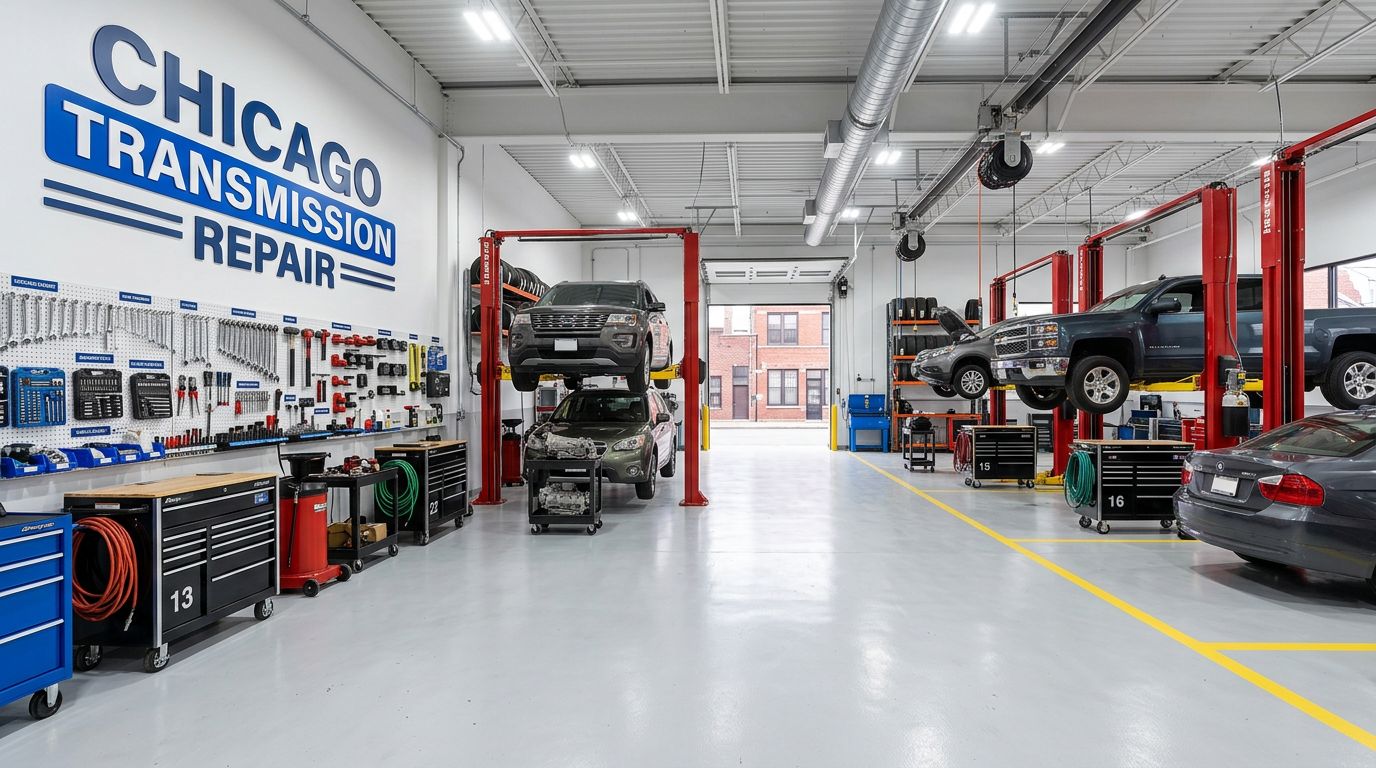
The current physical service destination is in Burbank, not Cicero, Lincoln Park, Lakeview, or another neighborhood page on this site. Those pages describe areas served. Appointments are directed to the partner shop at 4810 W 87th St, Burbank, IL 60459, close to the 87th Street and Cicero Avenue corridors and convenient to southwest Chicago and nearby suburbs.
Nick's Precision Transmission & Complete Auto Repair is the fulfillment partner at this address. Chicago Transmission is the Chicago-area lead and service resource that connects drivers with the location. This wording matters: it gives drivers a real destination without inventing branches or suggesting that every community page represents a storefront.
Published hours are Mon-Fri 8:00 AM-5:30 PM | Sat 8:00 AM-1:00 PM | Sun Closed. Call or text before driving over to confirm an appointment and explain whether the vehicle is safe to drive.
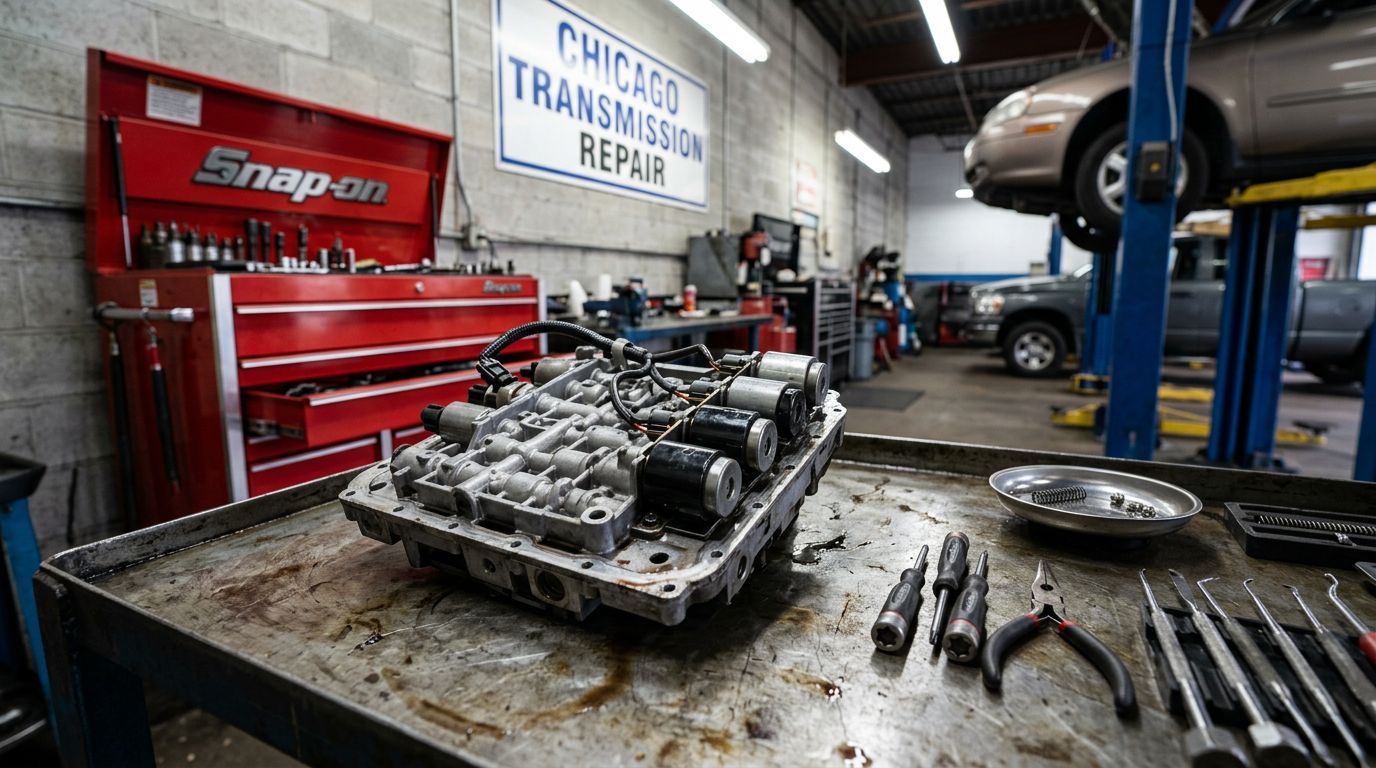
The Burbank service location can evaluate automatic transmission repair, transmission rebuild questions, CVT repair, Torque Converter Repair, fluid leaks, valve body concerns, solenoid faults, cooling problems, transfer cases, and related driveline issues. Diagnosis comes first because a warning light or harsh shift does not identify the failed part by itself.
Some vehicles need an electrical repair, updated fluid service, leak repair, mount, sensor, or valve body. Others have internal clutch, bearing, pump, chain, belt, gear, or converter damage. The goal is to separate those paths before expensive work is approved.
Describe what happens, when it happens, and whether the vehicle still moves safely. That detail helps set the right diagnostic starting point.
Engine speed rises without matching acceleration, drive or reverse takes time to engage, or the vehicle loses movement after warming up. Continued driving can add heat and internal damage.
Clunks, flare shifts, converter shudder, whining, grinding, or vibration can come from the transmission or a related axle, mount, differential, or transfer-case problem.
Red or brown fluid, a burnt smell, overheating, limp mode, and transmission or check-engine warnings need inspection. Save the codes and do not clear them before diagnosis.
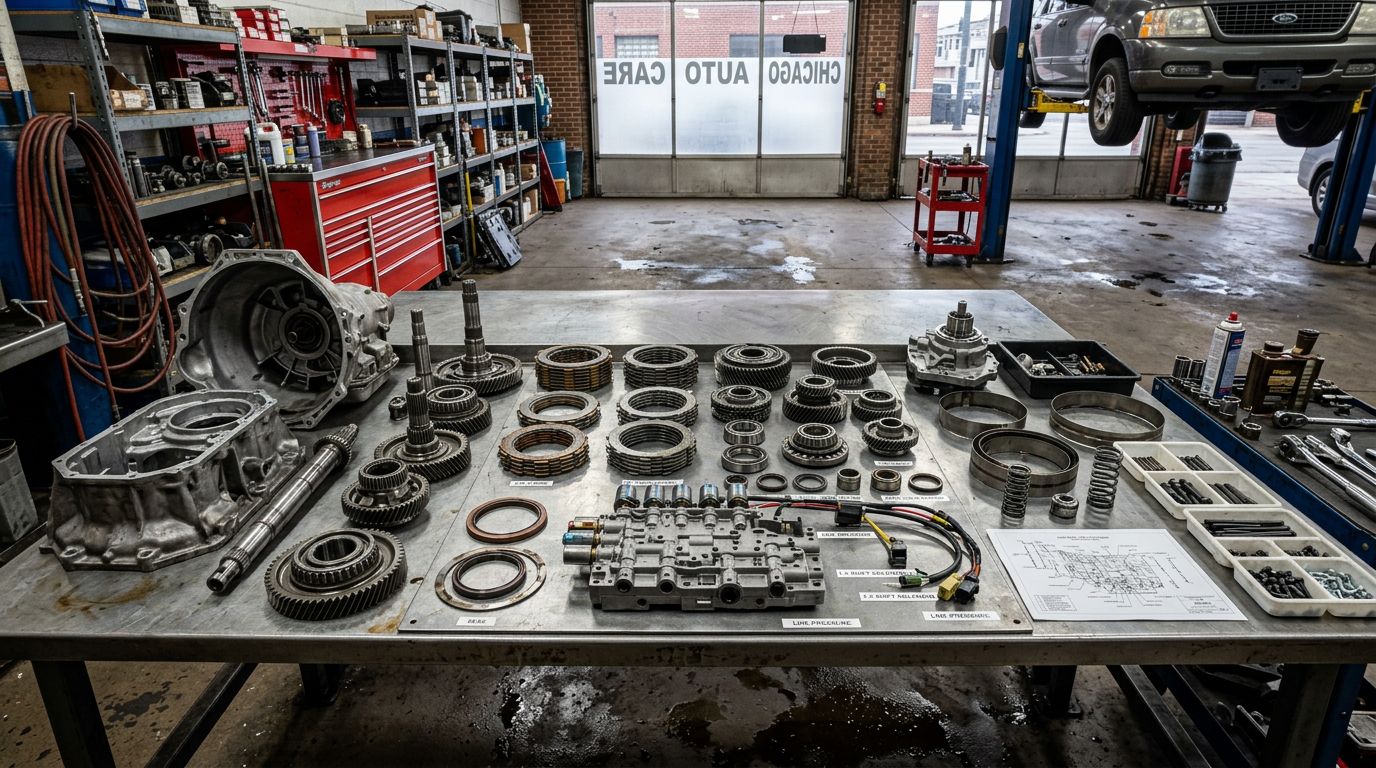
A repair addresses a confirmed component or external cause: a cooler line, seal, sensor, solenoid, valve body, control issue, mount, or torque converter. A rebuild becomes relevant when inspection or teardown confirms broad internal wear or damage across clutches, steels, seals, bushings, bearings, pumps, gears, chains, or drums.
Replacement may be considered when a suitable remanufactured or used unit provides a clearer parts-and-time path than rebuilding the original. No one should choose between these options from a code alone. Ask for the failed system, the parts and labor included, fluid and programming requirements, and written warranty terms before approving work.
The written estimate should also explain related work that may be necessary, such as cooler flushing or replacement, programming, relearn procedures, mounts, axles, or leak repairs. That makes estimates easier to compare on scope rather than headline price.
Use the make and transmission-type guides to organize known symptoms before calling. The vehicle still needs diagnosis; these pages help you ask better questions.
Call or text with the vehicle, symptoms, and whether it is safe to drive. Start with diagnosis, then compare the written repair path.