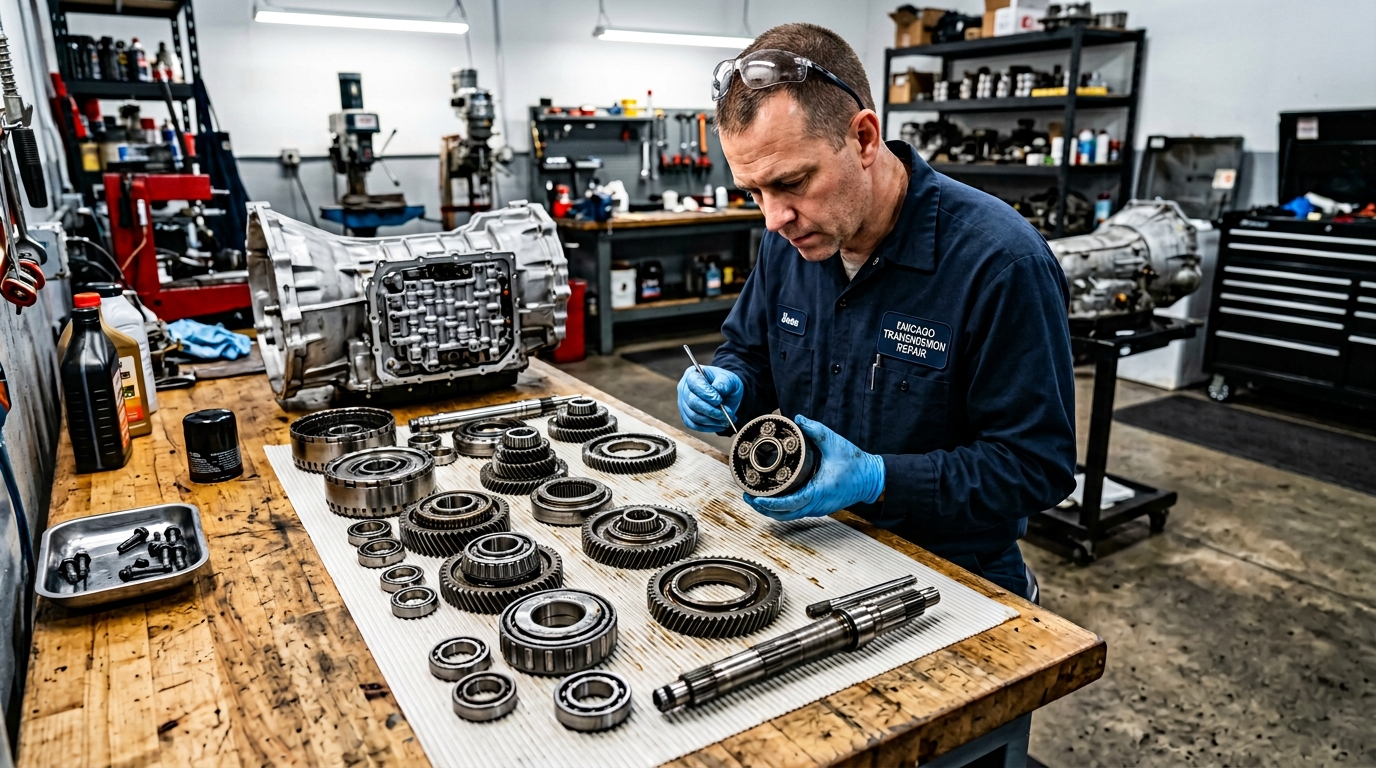
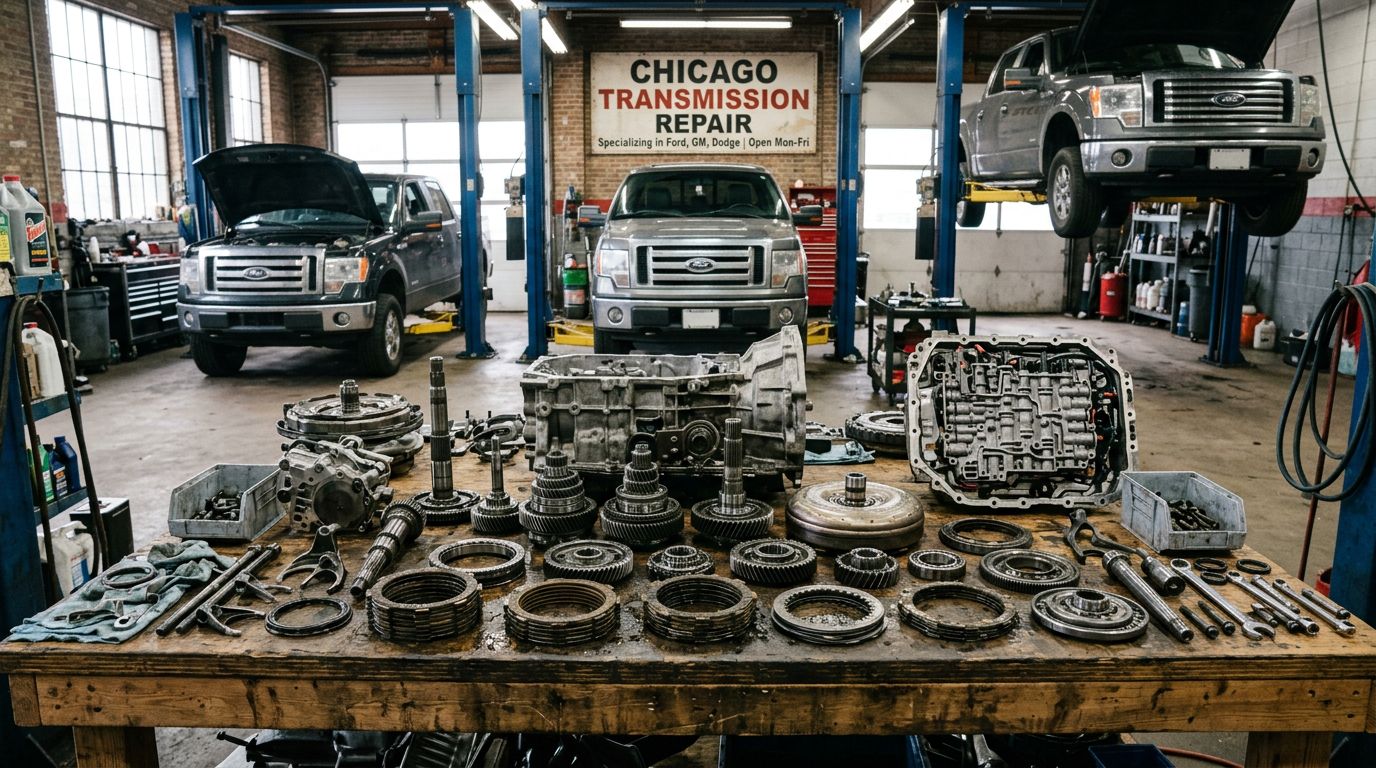
Transmission repair in Chicago spans a wide range depending on what's actually wrong. A fluid service, a solenoid swap, and a full rebuild are three completely different jobs - and the pricing reflects that difference in scope. Here's what separates each repair type, and what to know before you authorize anything.
Transmission Repair Cost by Service Type
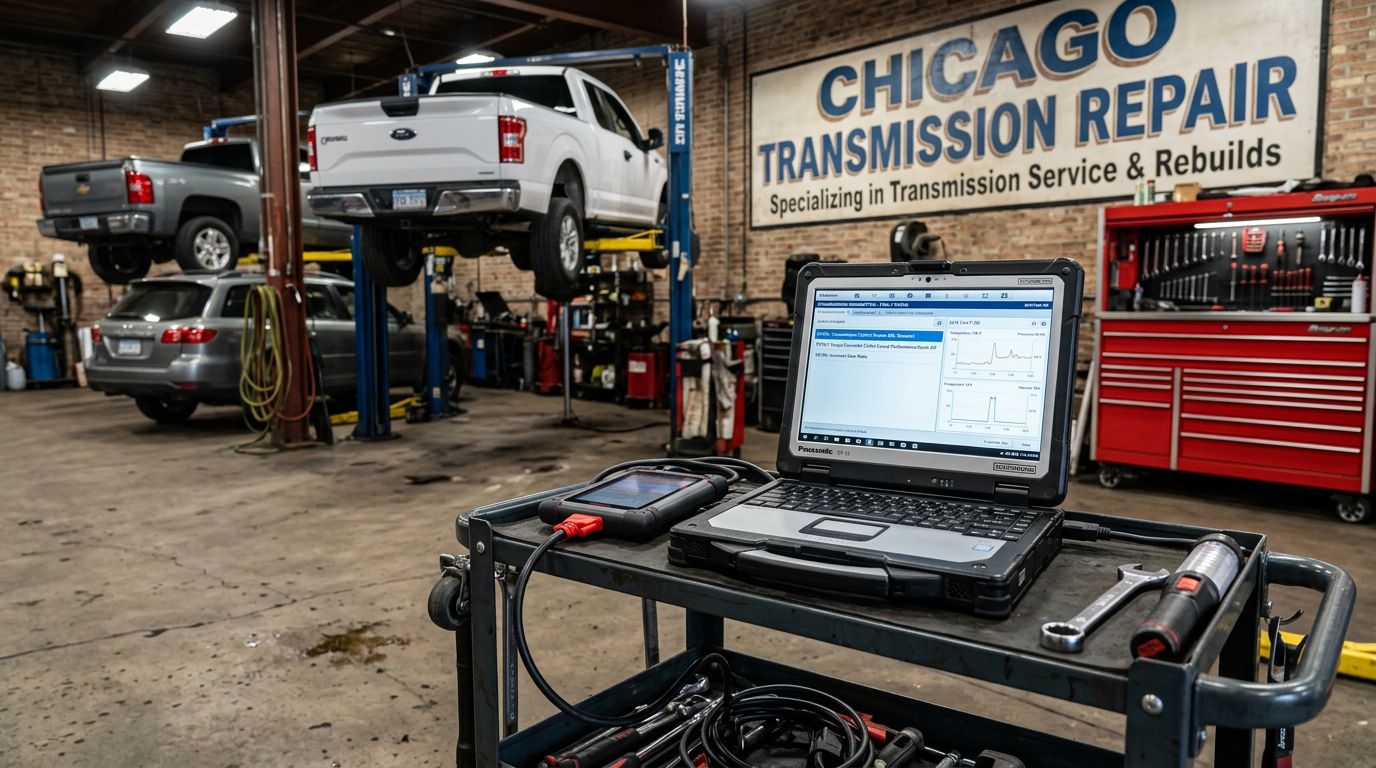
Transmission Problem? Start With Diagnosis
The most basic transmission service. The old fluid is drained, the filter replaced (on most vehicles), and fresh OEM-spec ATF installed. This is preventive maintenance - it extends transmission life significantly when done on schedule (every 30,000 - 50,000 miles). Our fluid change special includes a pan inspection for metal debris and a visual fluid check on the freshly installed fluid.
Solenoid Replacement
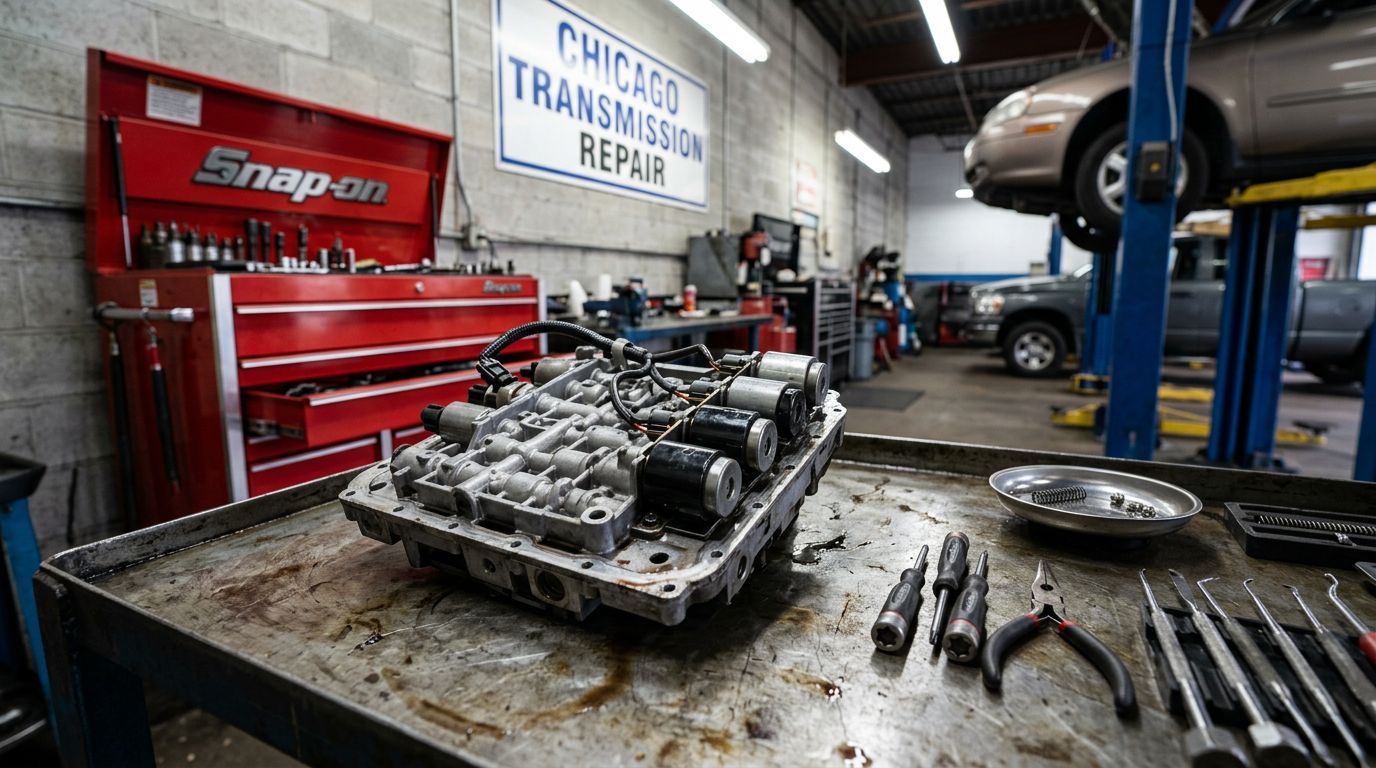
Shift solenoids are electro-hydraulic valves that control fluid flow inside the transmission. When one fails, the transmission may get stuck in a gear, shift harshly at one specific point, or throw codes like P0750 - P0770. Solenoid replacement is one of the most cost-effective repairs - you're replacing an inexpensive part without touching the mechanical internals. Labor runs 2 - 4 hours depending on how deep the solenoid sits in the valve body.
Speed Sensor Replacement
Input and output speed sensors are common wear items that cause erratic shifting, speedometer issues, and P0715/P0720 codes. Often replaceable without removing the transmission from the vehicle.
Valve Body Service or Replacement
The valve body is the hydraulic control center of the transmission - a complex block of channels, valves, and solenoids. When it's worn or sticking, shifting becomes unpredictable. A valve body service involves removal, cleaning, and inspection. A full replacement depending on vehicle and whether you use OEM or remanufactured.
Transmission Flush
A flush exchanges more fluid than a standard drain-and-fill by running new fluid through the cooler lines while the old fluid is being expelled. Recommended when fluid is dark or the vehicle has high mileage with no service history. Note: a flush on a transmission with significant internal wear can sometimes dislodge debris and accelerate problems - proper diagnosis first.
Torque Converter Replacement
The torque converter is a sealed unit between the engine and transmission. When the internal clutch wears out, you get shudder at 40 - 55 mph, especially on the highway. Replacement requires dropping the transmission, so labor is significant. The converter itself depending on the application.
Full Transmission Rebuild
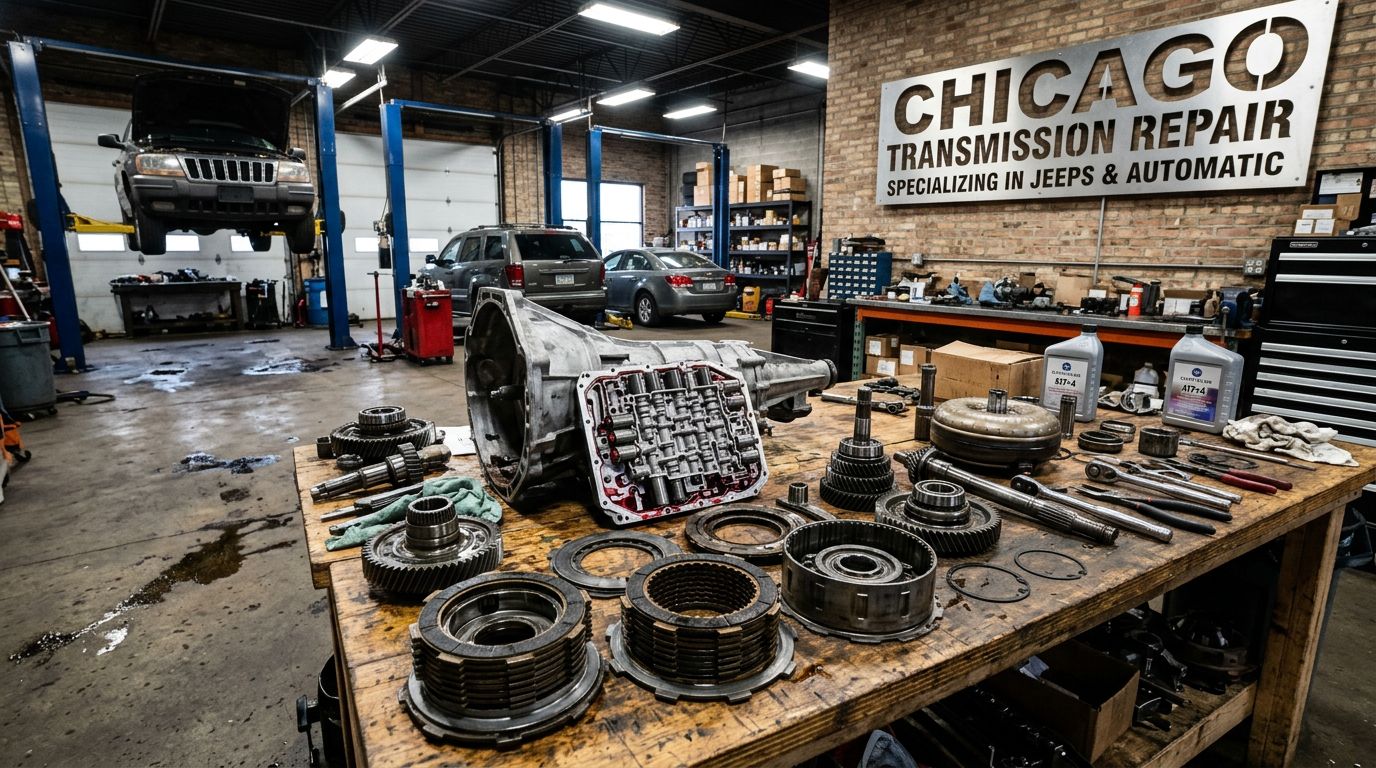
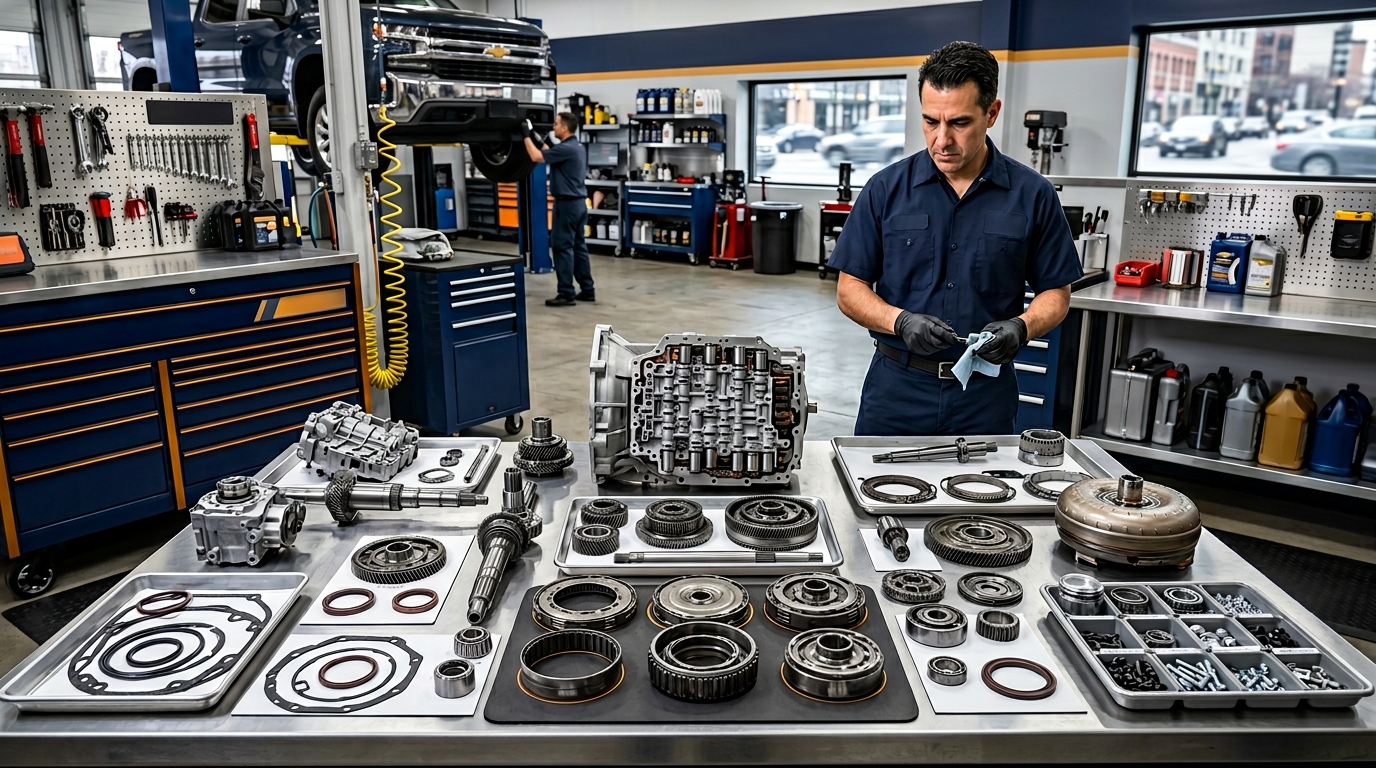
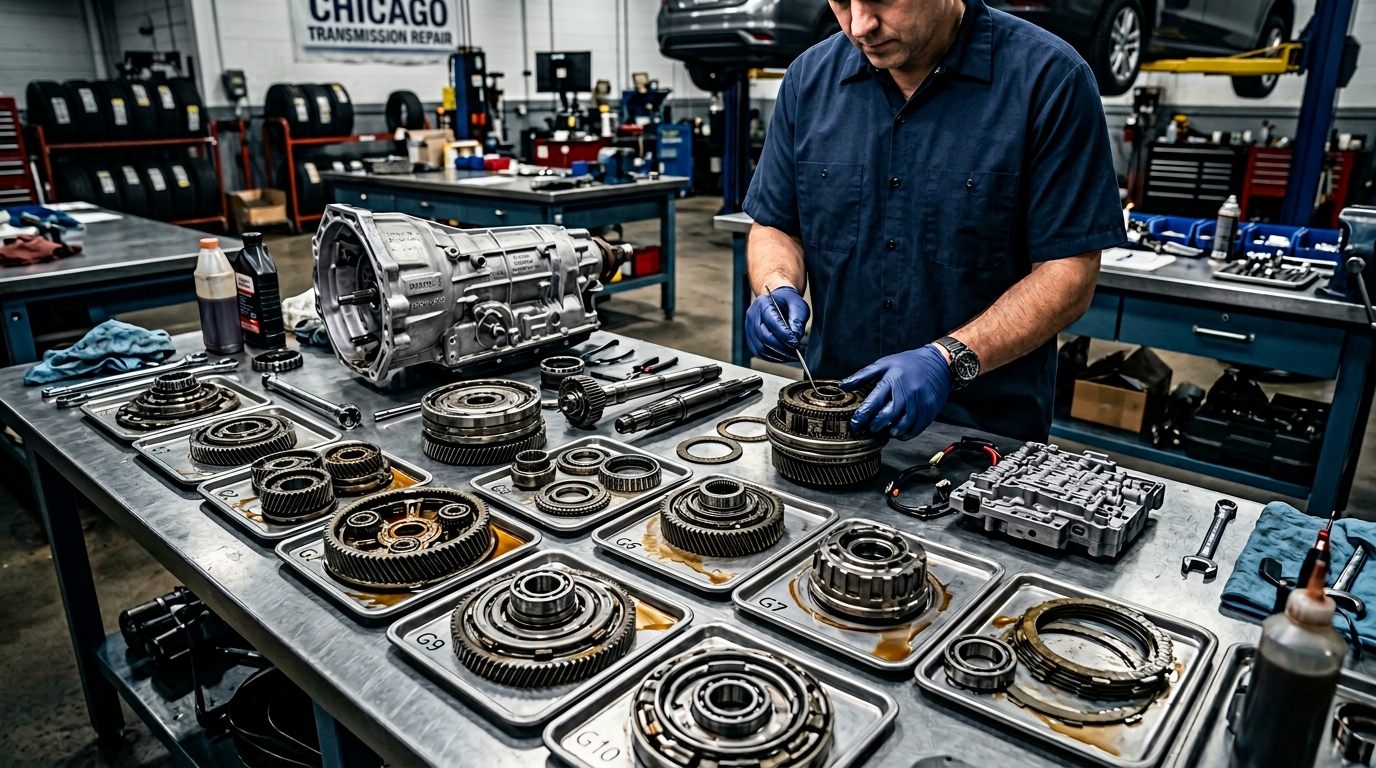
Complete removal, disassembly, and rebuilding of the transmission. All wear items replaced: clutch packs, friction discs, seals, gaskets, O-rings. Solenoids inspected and replaced if worn. Valve body serviced. Torque converter replaced or rebuilt. Road-tested after reinstallation. This is the top-end repair that restores the transmission to like-new condition. Our rebuilds carry a Written warranty terms on parts and labor.
Remanufactured Transmission (Swap)
A remanufactured unit built offsite by a specialist is installed in place of your damaged transmission. The advantage is speed - your car can be ready in 1 - 2 days instead of 3 - 5. The cost is often comparable to an in-house rebuild. Reman units carry a separate manufacturer warranty (typically 3 years/100,000 miles), which we honor in addition to our workmanship warranty.
Chicago Independent Shops vs. Dealers
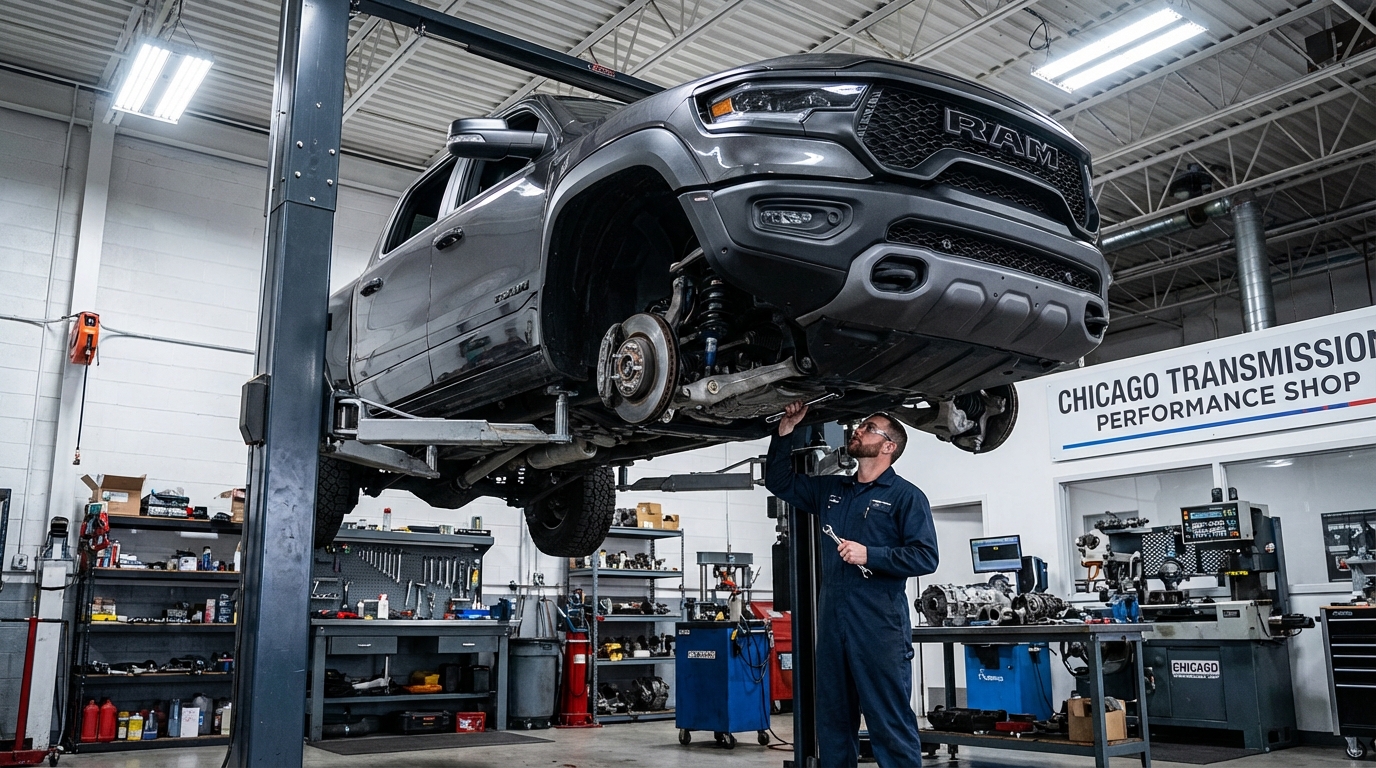
The biggest pricing factor is where you take it. Dealer service departments charge significantly higher hourly rates than independent transmission specialists - not because the work is better, but because their overhead is higher. For transmission work specifically (where the difference in quality between a good independent shop and a dealer is zero for most repairs), the independent shop is usually the right call.
The Question Behind the Question
Most people searching for transmission repair cost are really asking: "Is this worth fixing, or should I get a different car?" That's a fair question. We can help you think through it honestly once we know what's actually wrong. The Diagnostic appointment is the starting point - it tells you the real number before you have to make any decision.