A transmission rebuild is one of the more involved repairs in automotive service - a complete teardown and reassembly of a precision hydraulic machine with hundreds of components. Most customers have no idea what actually happens during those 3 - 4 days. Here's a step-by-step look at what a proper rebuild involves.
Step 1: Diagnosis and Disassembly from the Vehicle
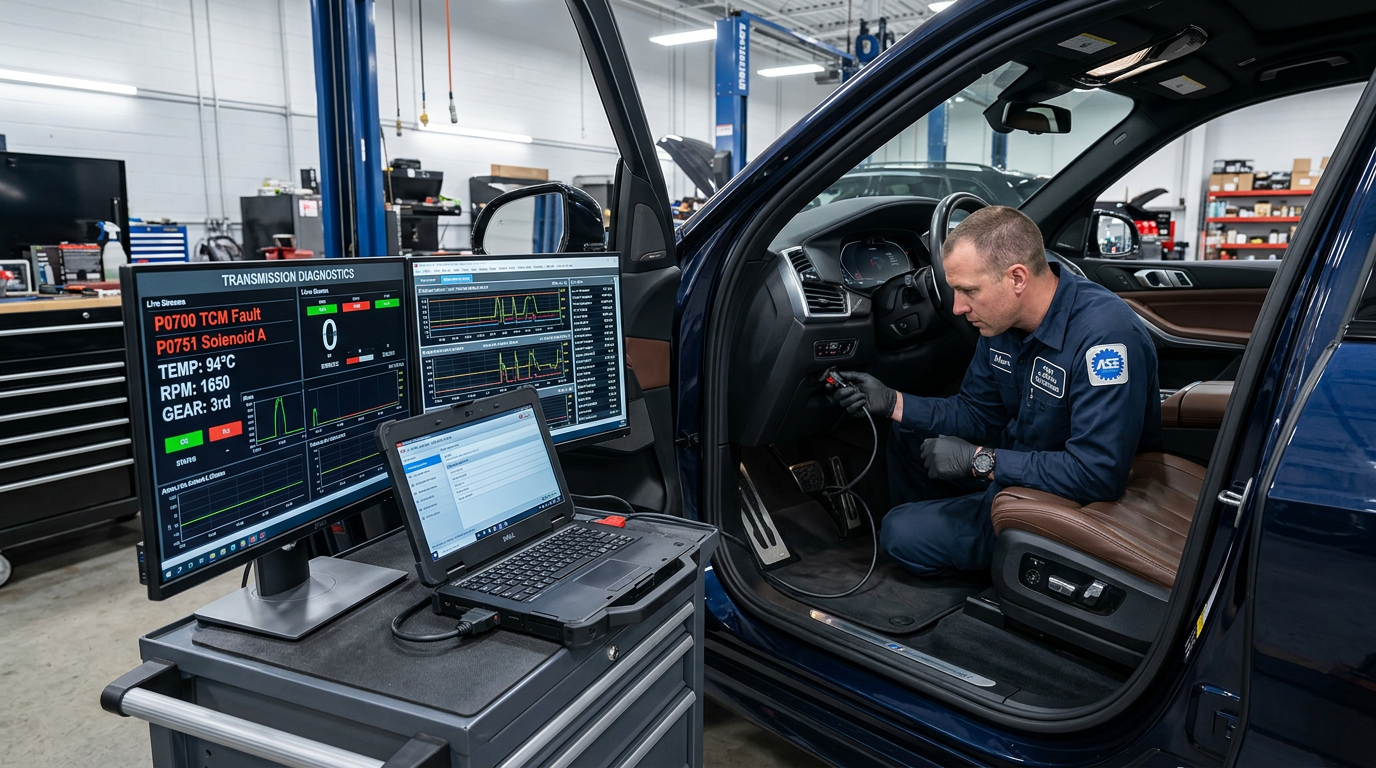
Before the transmission is removed, we complete a full diagnostic: TCM code scan, fluid inspection, road test, and hydraulic pressure test if accessible. This confirms that a rebuild is warranted and identifies any companion issues (failed torque converter, damaged flexplate, worn engine mounts that need attention while the transmission is out).
Removing the transmission from the vehicle takes 2 - 5 hours depending on the make and drivetrain. On a 4WD truck, the transfer case comes out first, adding 1 - 2 hours. On FWD transaxles, both CV axles disconnect, adding complexity.
Step 2: Teardown and Initial Inspection
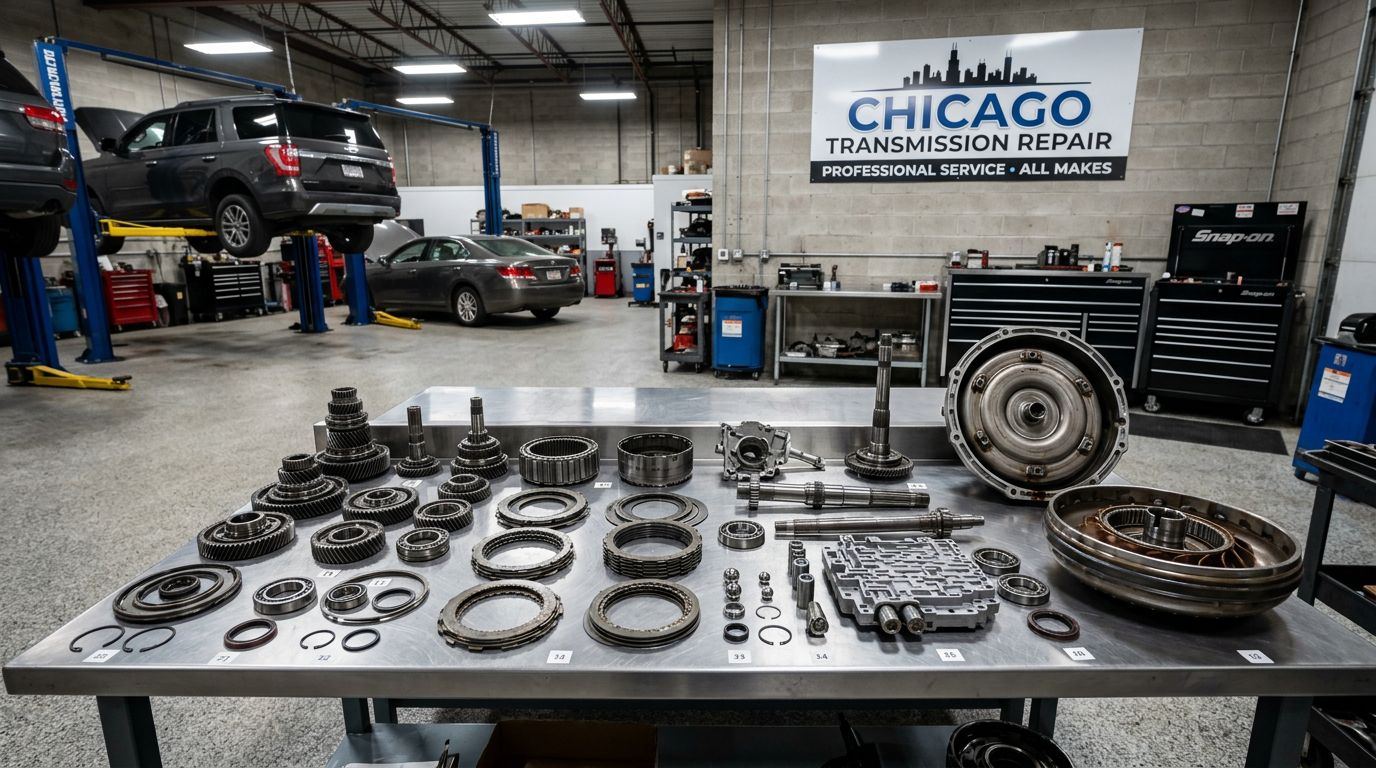
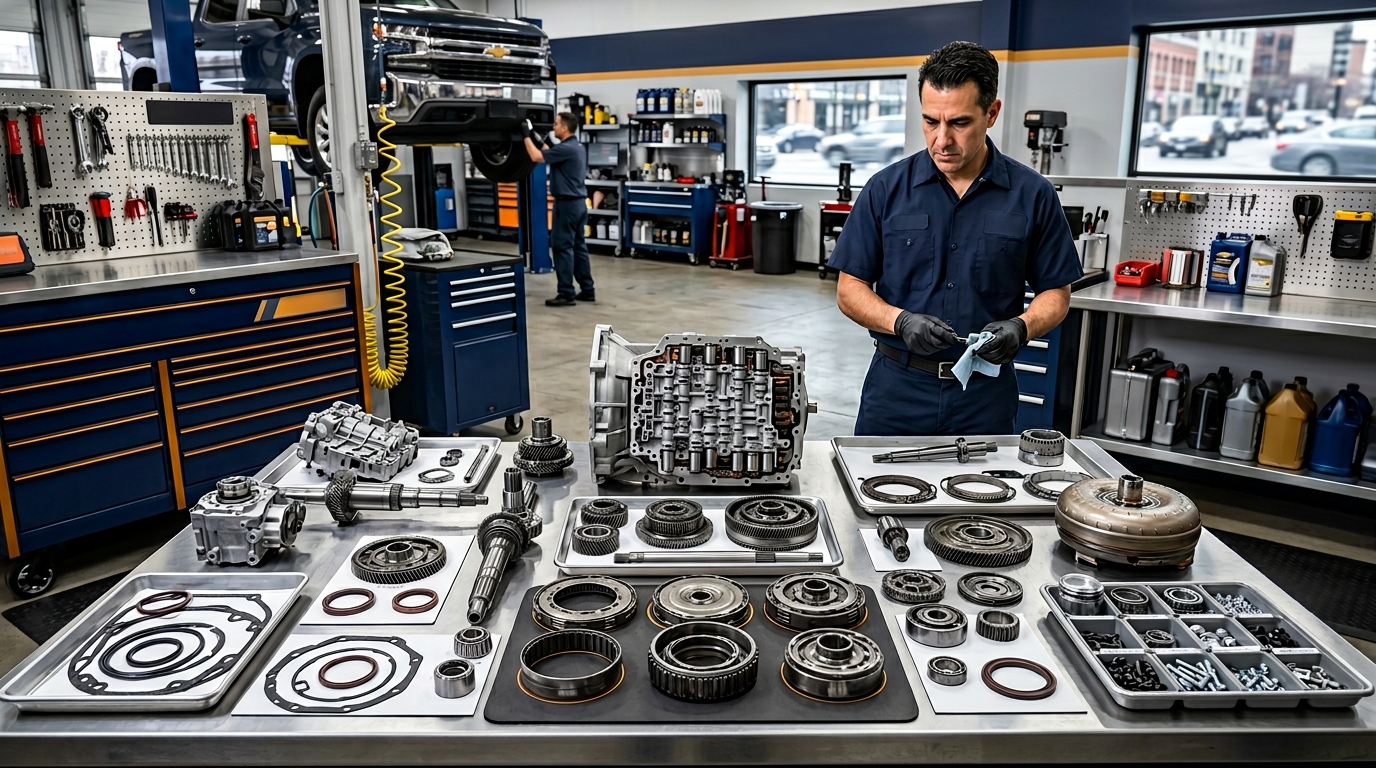
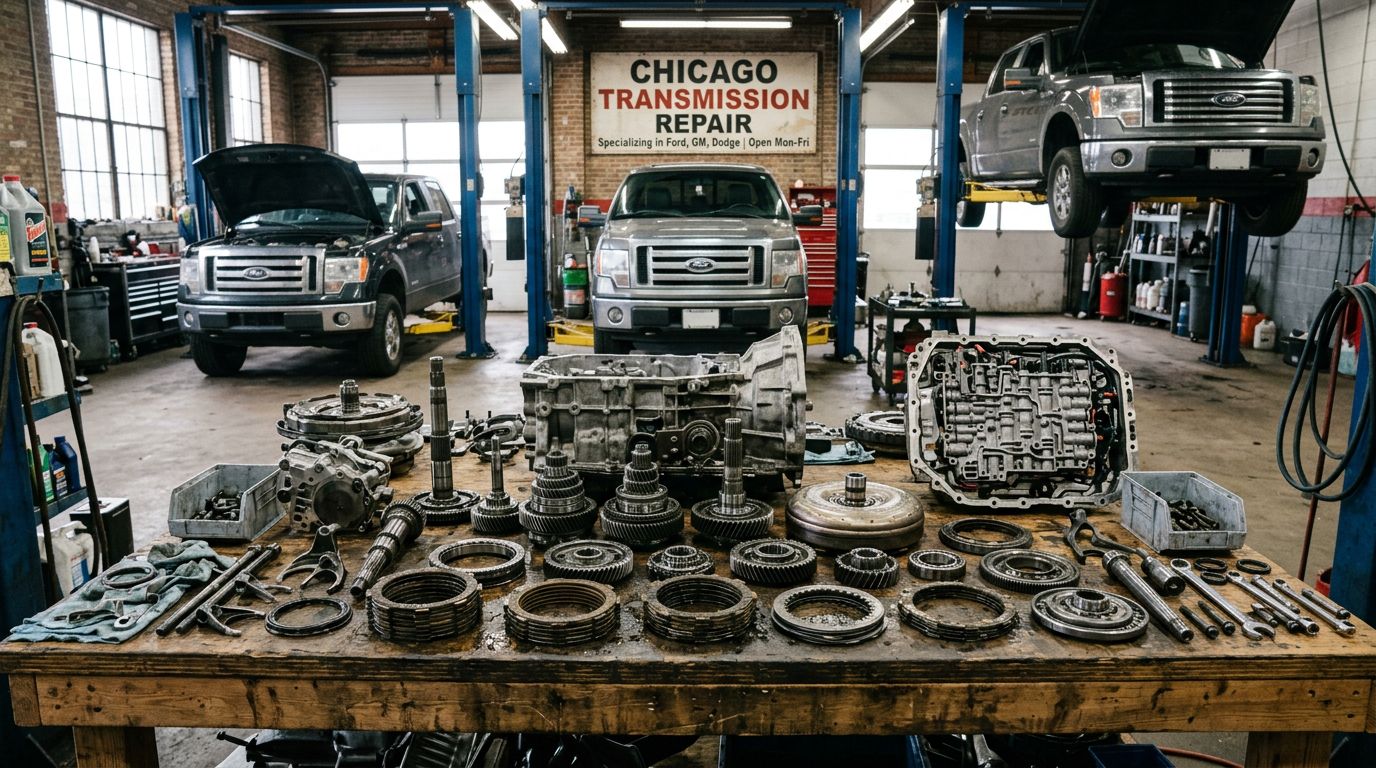
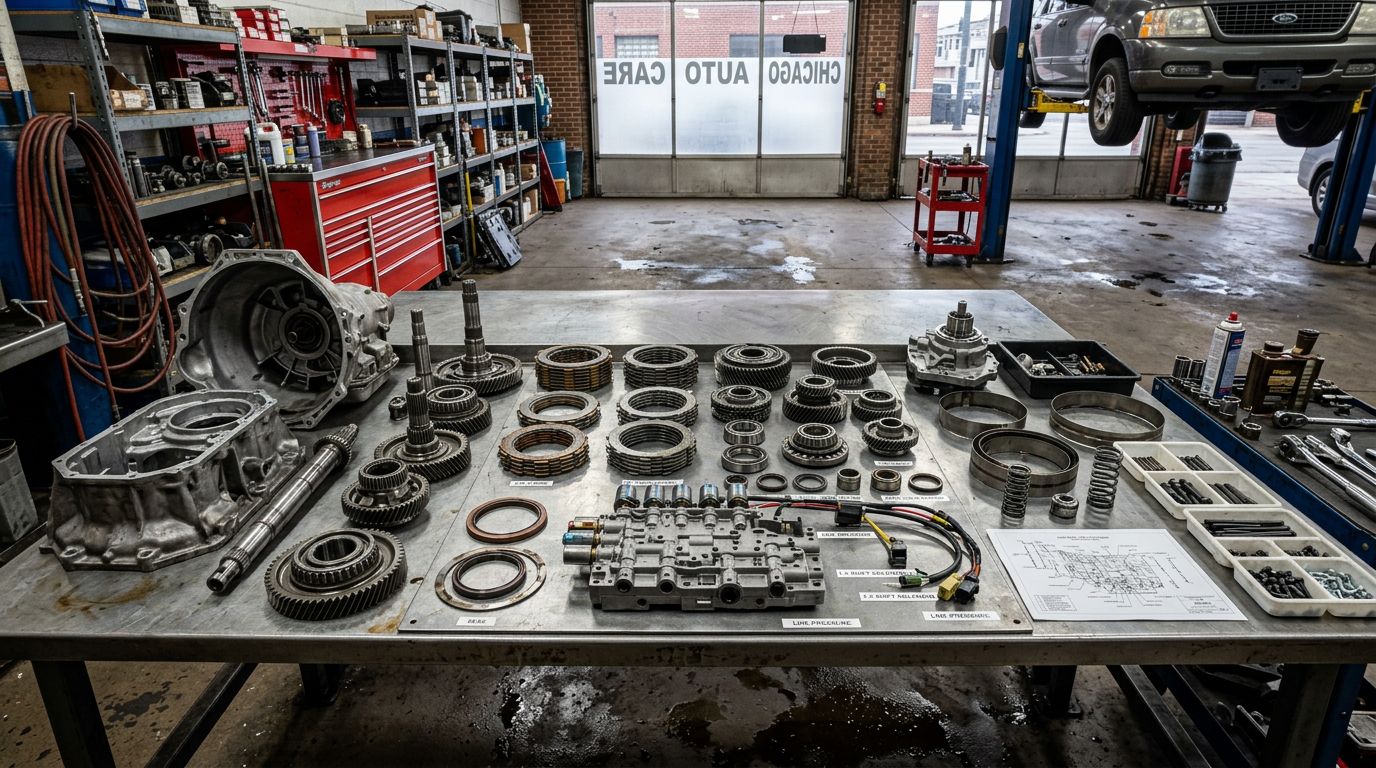
Once on the bench, the transmission is completely disassembled. Every component is separated: valve body, solenoids, clutch packs, bands, planetary gear sets, bearings, seals, and the pump. This takes 2 - 4 hours for a standard unit.
During teardown, we're looking for:
- Which clutch packs are burnt (the friction material is charred or missing)
- Wear patterns on thrust washers and bearings
- Scoring or damage on planetary gear sets
- Condition of the pump - worn pump gears reduce line pressure
- Debris in the fluid - metal particles indicate hard-parts damage beyond just friction wear
- Solenoid condition - we test each solenoid electrically and check for varnish
Step 3: Cleaning
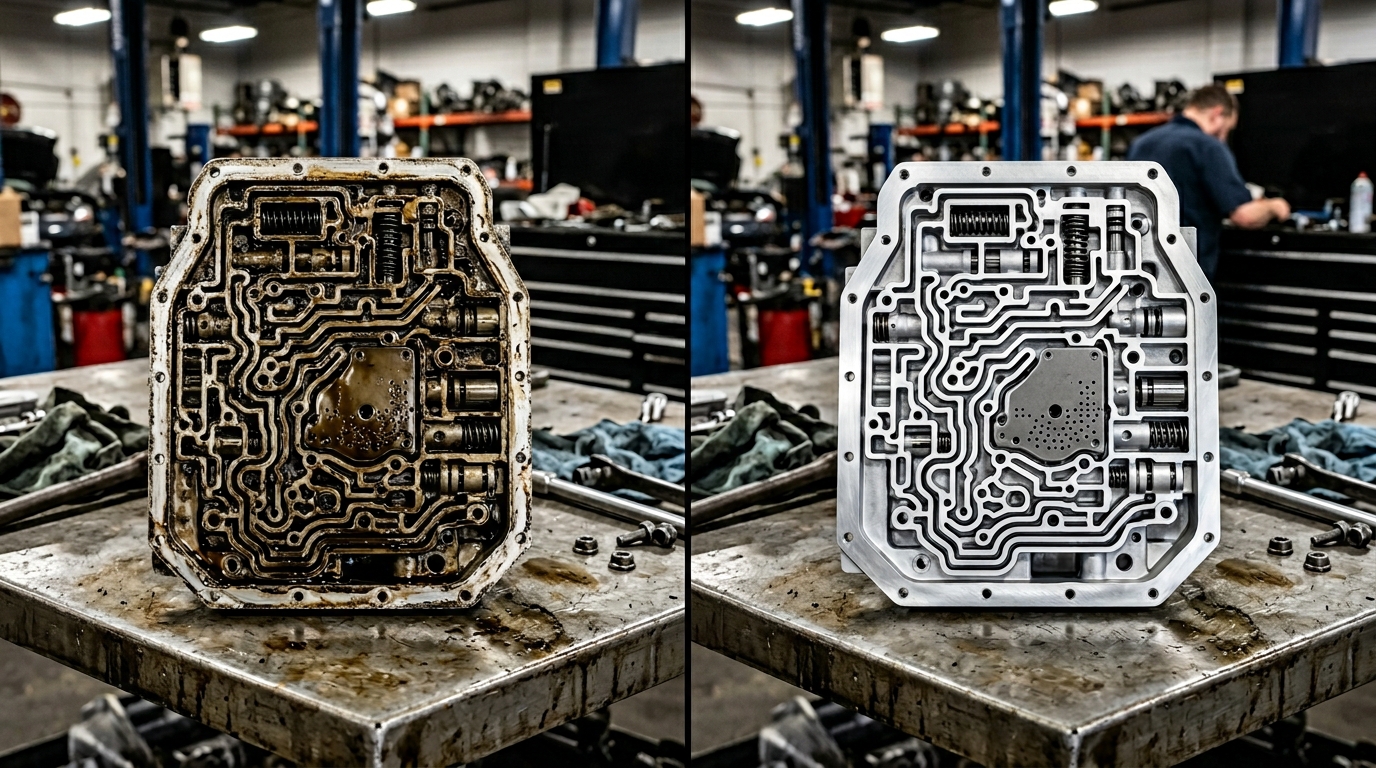
Every metal component is cleaned in a parts washer, then often ultrasonically cleaned to remove varnish deposits from small passages. The valve body gets particular attention - its internal passages and check ball seats are inspected under magnification for wear. Any blockage in valve body passages affects shift quality even with new solenoids.
Step 4: Replacement of Wear Items
A proper rebuild replaces all wear items regardless of visual condition - not just the parts that look obviously bad. This is what differentiates a rebuild from a "repair." Standard replacement items include:
- All clutch packs: New friction discs and steel separator plates throughout
- All bands: Replaced or adjusted to spec
- All seals and O-rings: Every rubber seal in the transmission - lip seals, piston seals, case seals, and servo seals
- Filter: New transmission filter
- Thrust washers and bushings: New throughout
- Solenoids: Replaced if worn or tested below spec (included in most rebuild kits)
- Pump: Rebuilt or replaced if worn beyond tolerance
Hard parts (planetary gears, drums, ring gears) are reused if undamaged. If metal debris was found in the fluid, hard parts get more careful inspection - cracks in drums or carrier damage from metallic debris require hard part replacement.
Step 5: Assembly
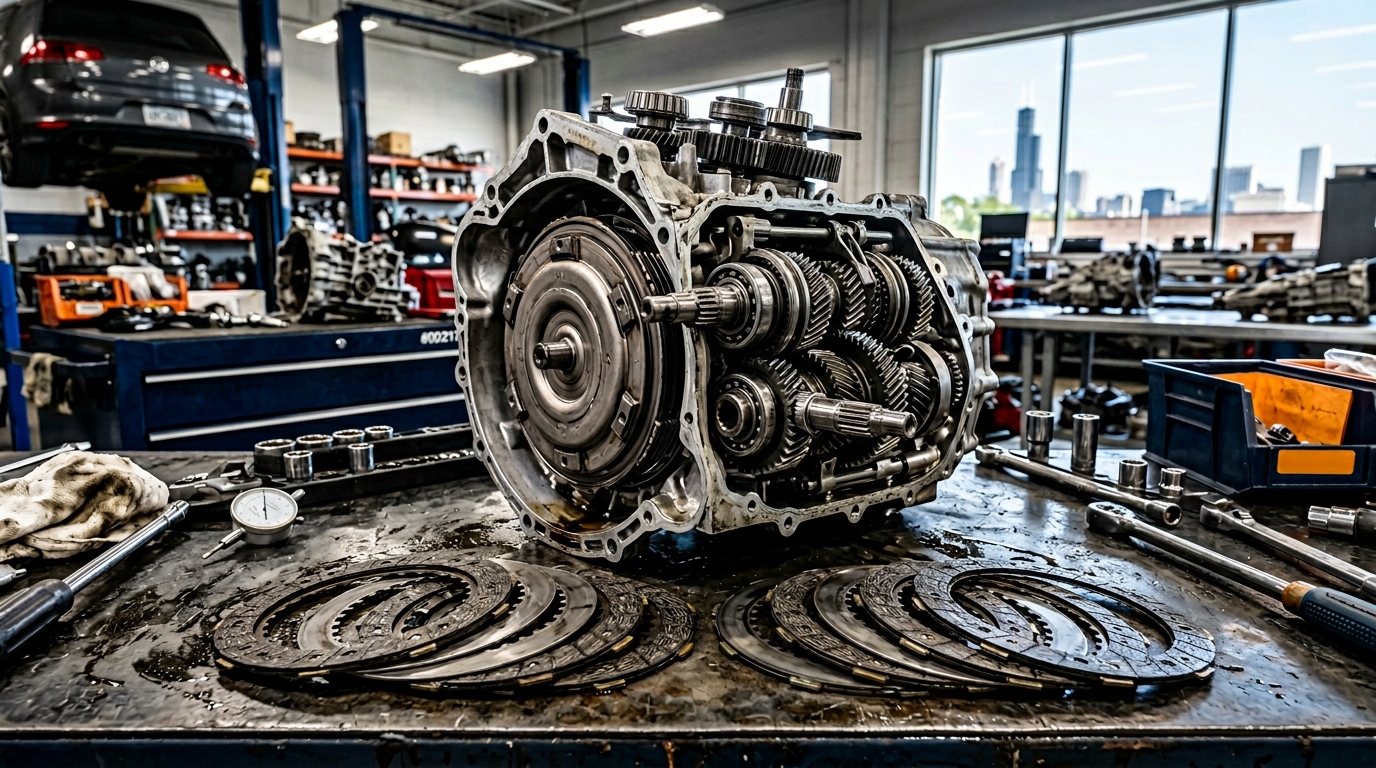
Reassembly is precision work. Clutch clearances are measured with feeler gauges and adjusted with selective snap rings. Band adjustments are set to spec. Planetary end-play is measured and corrected with thrust washers. Each piston is air-tested to verify the seals are holding before the case is closed.
This is where rebuilder experience matters. The correct clutch clearances determine how smoothly each gear engages. Too tight and the clutch drags; too loose and it slips. On some transmissions, acceptable tolerances are measured in hundredths of an inch.
Step 6: Reinstallation and Fluid Fill
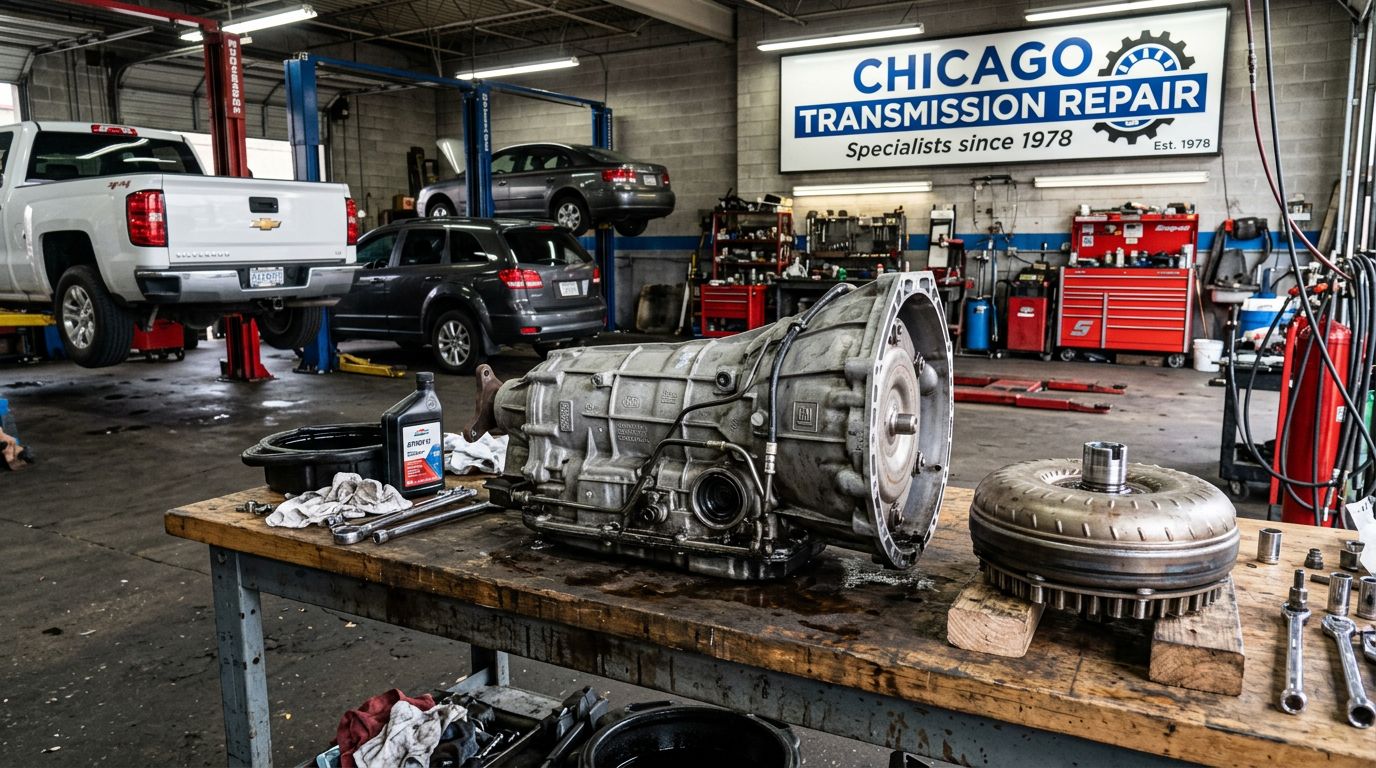
The rebuilt transmission goes back into the vehicle. New fluid (OEM-specified), new filter, torque converter fill, and a double-check of all fasteners and connections. On vehicles with adaptive transmission control, the TCM's learned shift parameters may need to be reset to allow the adaptive system to re-learn with the fresh clutch clearances.
Step 7: Road Test and Quality Check
A minimum 15-mile road test covering all gear ranges, TCC engagement, kick-down behavior, and cold-to-warm shift quality. We check for any codes set during the test drive, verify fluid level when hot, and inspect underneath for leaks. The vehicle isn't delivered until it passes all checks.
Chicago Transmission has been doing transmissions Serving Chicago drivers. Every rebuild carries a Written warranty terms. Diagnostic appointment at shop options near Southwest Chicago - call (312) 626-8759, Mon-Fri 8:00 AM-5:30 PM | Sat 8:00 AM-1:00 PM | Sun Closed.