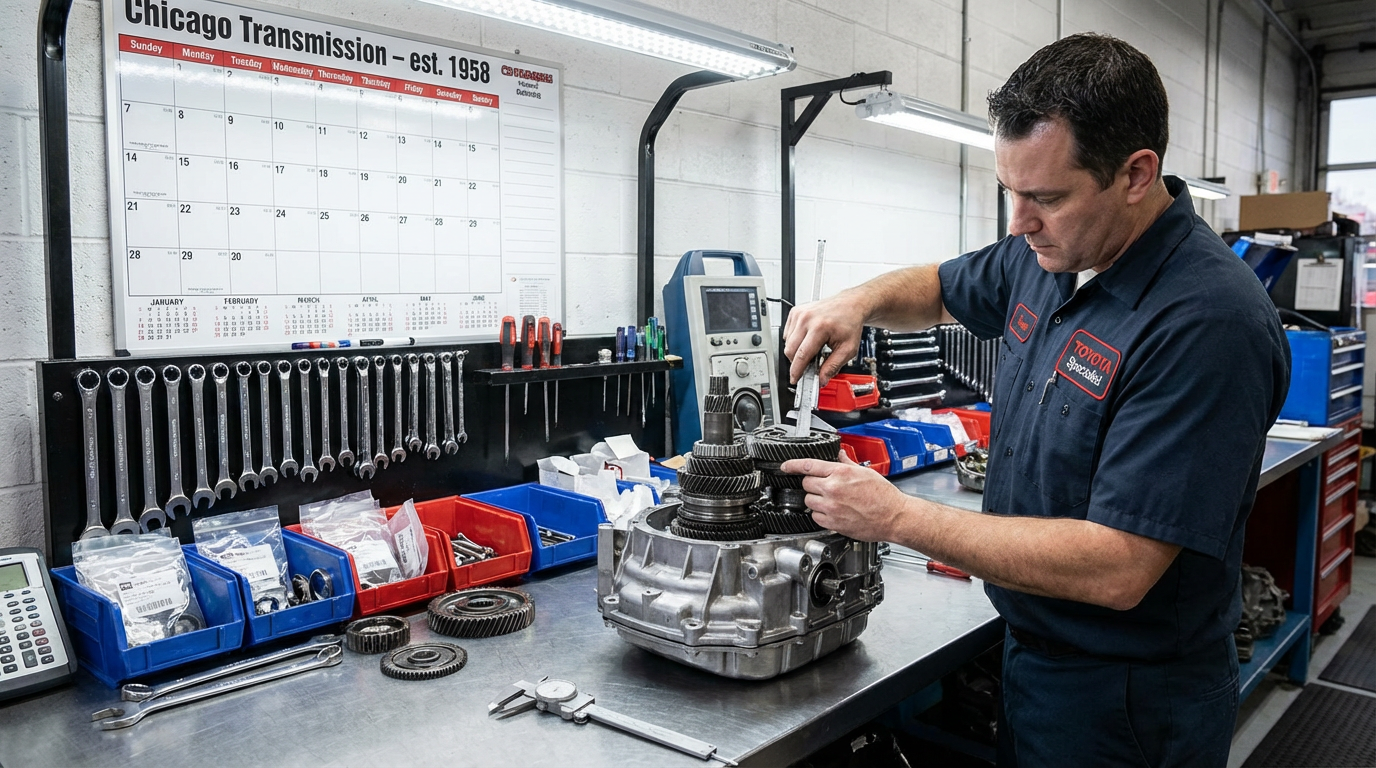
The 2020 Toyota Camry earns its reputation for reliability - and the U760E 8-speed automatic transmission is a significant part of that story. Toyota's transmission engineering philosophy prioritizes durability over complexity, and the Camry's U760E reflects that: it's a robust, well-designed unit that responds well to maintenance and fails less often than many competitors. That said, things do go wrong, and here's what Chicago Camry owners need to know.
The U760E: Toyota's 8-Speed Platform
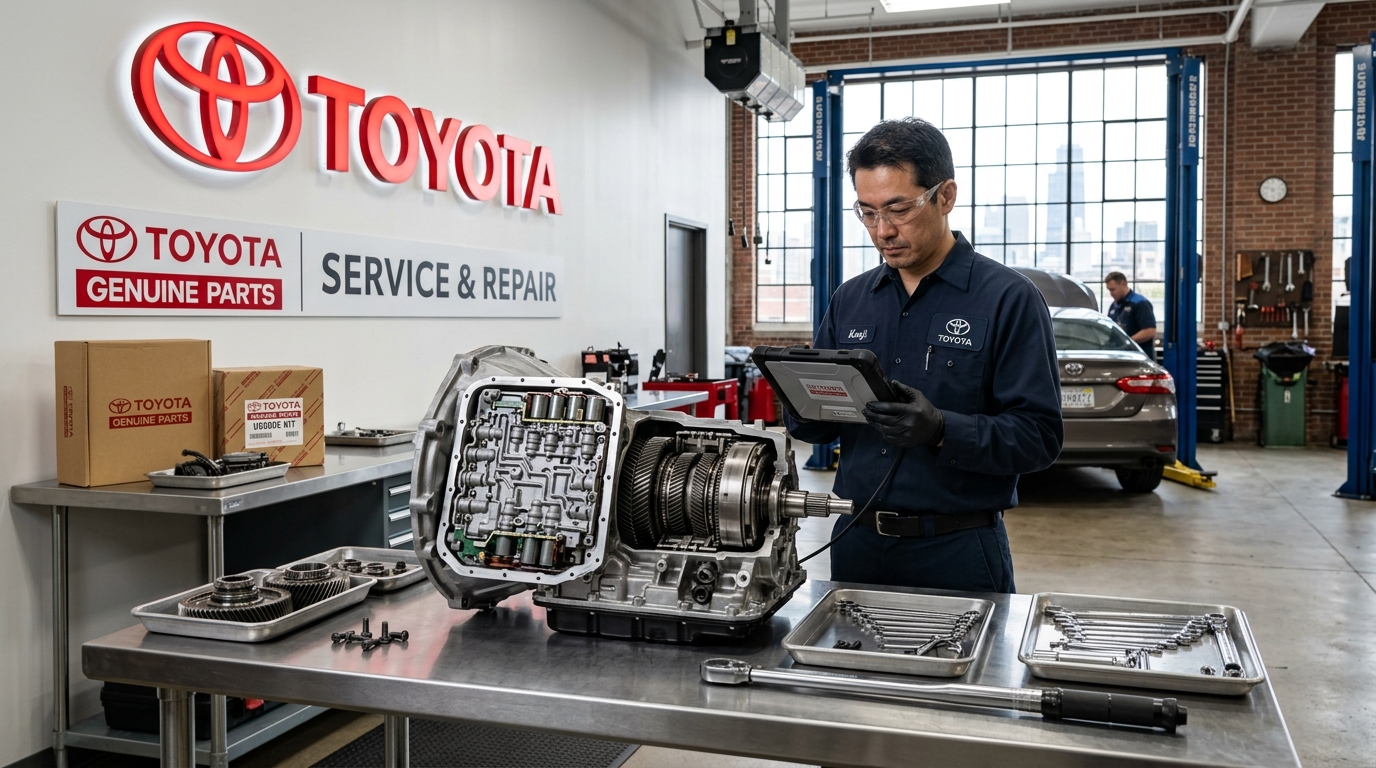
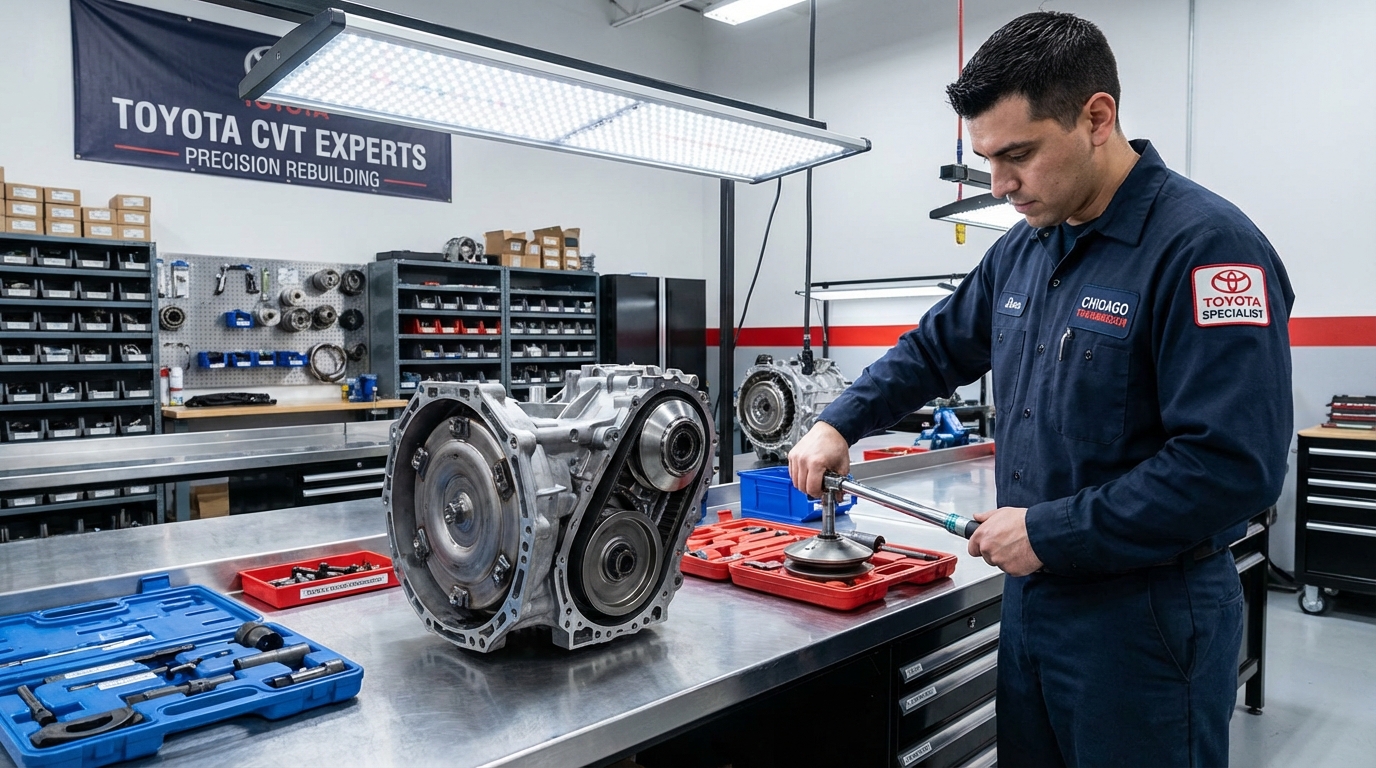
The U760E debuted in the 2018 Camry refresh and is used across multiple Toyota applications. It's a conventionally designed 8-speed automatic with torque converter and traditional clutch packs - no dual-clutch complexity, no CVT belt-and-pulley system. This simplicity is a feature: the repair path for a U760E is well-established and parts are readily available.
The engine/transmission combination in the 2020 Camry (2.5L Dynamic Force engine) is a complete system co-designed by Toyota, which means the transmission calibration is tightly matched to the engine's combustion profile. Transmission programming is more stable than in vehicles where transmission and engine are from different engineering teams.
What 2020 Camry Owners Report
Slight Hesitation from a Cold Start
A very small number of 2020 Camry owners report a brief hesitation when first engaging drive after a cold start in very cold weather (below 10 degrees F). This is within normal Toyota parameters - the transmission control module intentionally applies a gentler engagement until the fluid reaches operating temperature. It resolves completely within 2 - 3 minutes of driving.
Subtle Shudder at Highway Cruise
Some Camry owners at 60,000 - 80,000 miles report a mild TCC shudder at 45 - 55 mph under light throttle - the same symptom as many other modern automatics. The U760E's TCC is robust, and early-stage shudder on a Camry often responds completely to a fluid change with Toyota WS ATF. If it doesn't resolve after a fluid change, TCC solenoid inspection is the next step.
High-Mileage Solenoid Wear (100,000+ Miles)
Beyond 100,000 miles, shift solenoid wear becomes more common in any 8-speed automatic. Symptoms: slightly delayed upshifts, occasional harsh downshift, or a stored P0750-range code. Solenoid replacement on the U760E is straightforward - the solenoids are accessible without full transmission removal on most Camry applications.
Repair Cost Breakdown for 2020 Camry in Chicago
- Toyota WS fluid service: (use Toyota WS only - spec fluid for the U760E)
- Shift solenoid replacement: quoted after diagnosis, access check, and parts availability.
- TCC solenoid or pressure control solenoid: quoted after diagnosis, access check, and parts availability.
- Valve body service: quoted after diagnosis, access check, and parts availability.
- Full U760E rebuild: (competitively priced vs. many European 8-speeds)
- Remanufactured U760E swap: quoted after diagnosis, access check, and parts availability.
The Most Important Maintenance Step
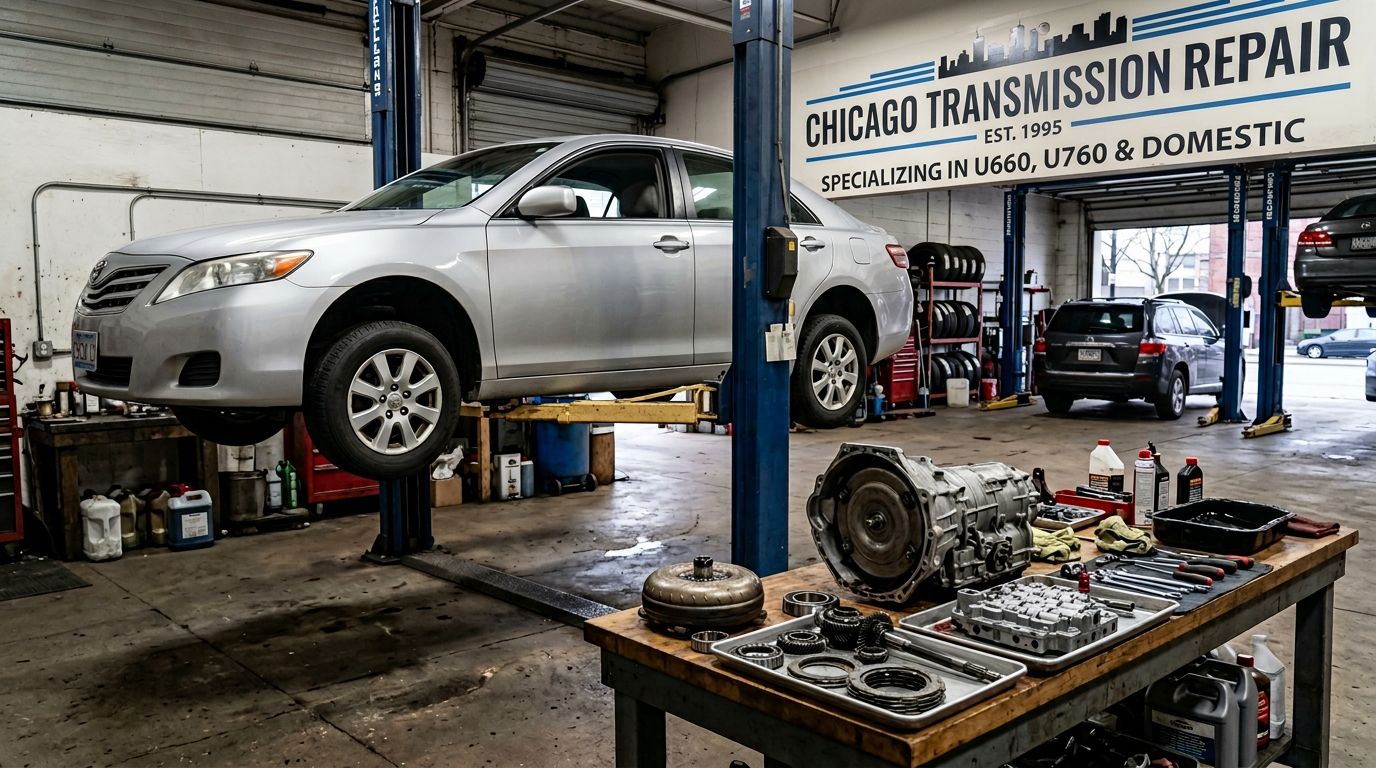
Toyota specifies no fluid change interval for the U760E in "normal" driving - they consider it a "lifetime fill." This is a cost-minimization claim, not an engineering truth. Toyota's own "severe duty" schedule (which includes Chicago winters, stop-and-go traffic, and occasional towing) recommends fluid changes every 30,000 miles.
We've never seen a high-mileage Toyota transmission fail early because the fluid was changed too often. We have seen plenty fail early because the fluid was never changed. A fluid service is the single best investment a 2020 Camry owner can make.
Chicago's Winter Effect on the Camry Transmission
Chicago temperatures regularly drop to -10 to -20 degrees F in January and February. Cold ATF is significantly more viscous - it flows slower and provides less immediate hydraulic pressure during cold engagement. The U760E handles this well, but extended cold-start driving in very cold weather (repeated short trips where the transmission never fully warms up) does accelerate fluid degradation. If you're parking outside all winter, consider a fluid interval on the shorter end of the range.