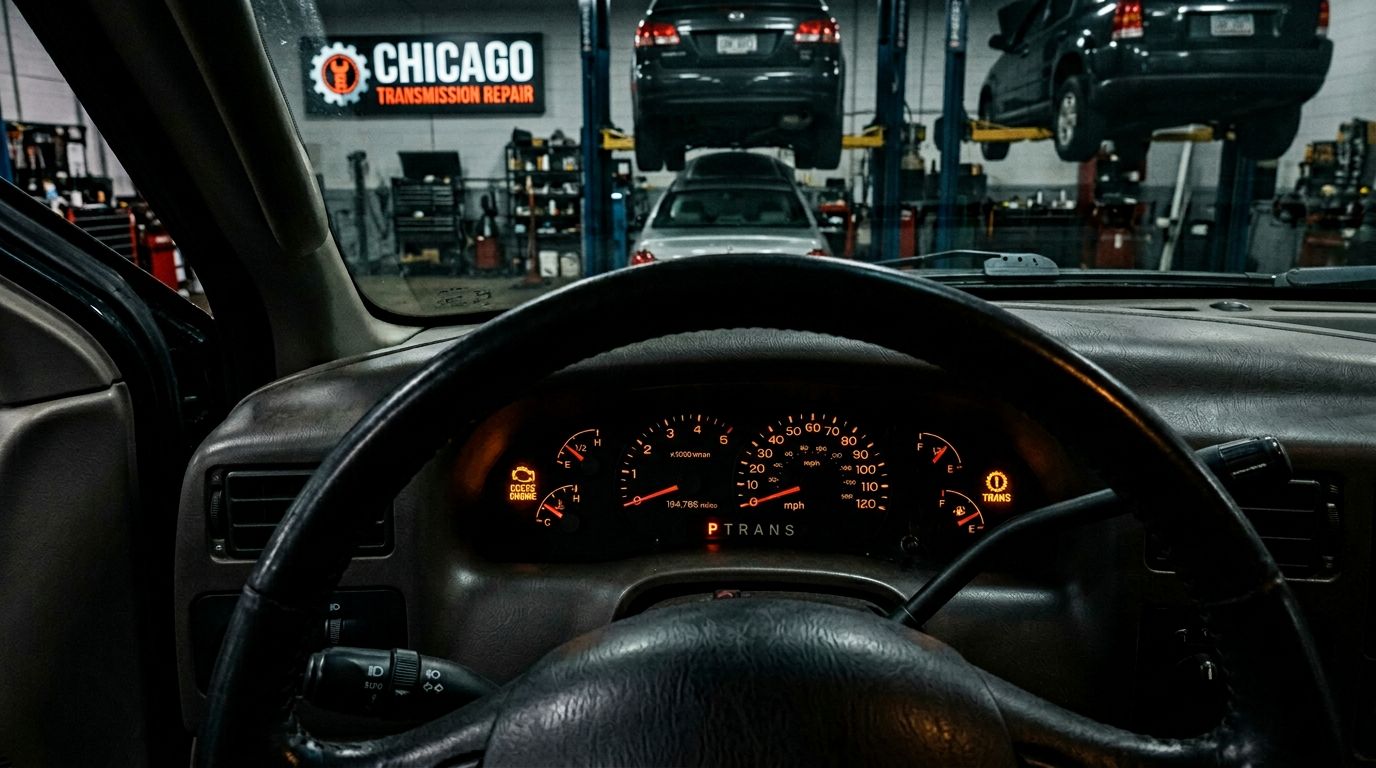
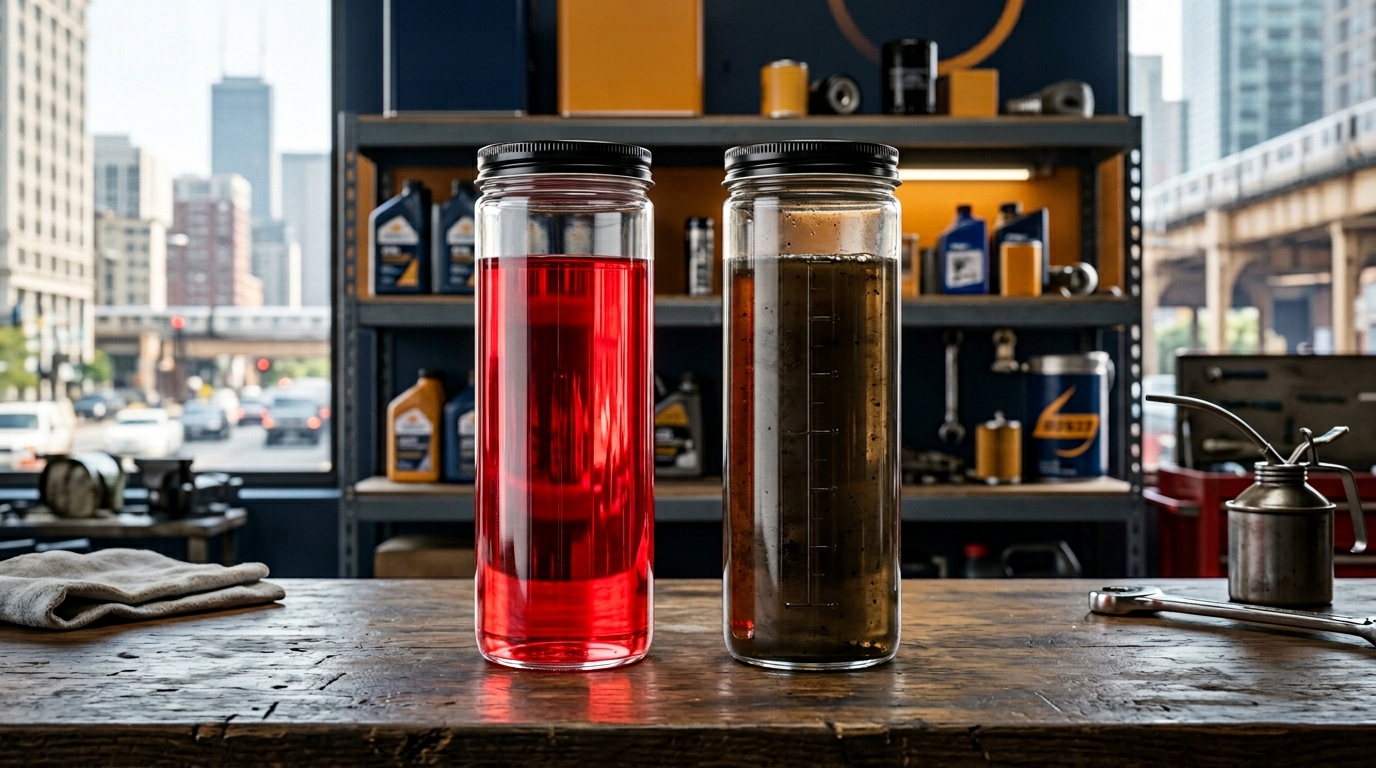
Burnt transmission fluid is one of those warnings you do not want to ignore. Fresh automatic transmission fluid is usually red or amber depending on the specification. Burnt fluid often looks dark brown, smells sharp or cooked, and may carry fine debris from overheated clutches or internal wear.
The hard part is knowing whether a fluid service can still help. Sometimes the fluid is simply old and overdue. Sometimes it is burnt because the transmission has been slipping, overheating, or running with low pressure. Changing the fluid does not fix a failing clutch pack, worn valve body, restricted cooler, or weak pump.
What Burnt Transmission Fluid Usually Smells Like
Drivers describe it as hot oil, scorched plastic, burnt toast, or a sharp chemical smell after driving. If the smell is coming from the dipstick or fluid sample, it points toward overheated ATF. If the smell is outside the car, it may also be leaking fluid dripping onto exhaust.
What the Color Can Tell You
- Bright red or clean amber: usually healthy, depending on fluid type.
- Darker red or light brown: often aged but not automatically catastrophic.
- Dark brown with a burnt odor: heat damage is likely.
- Black fluid with metal or clutch material: internal wear may already be advanced.
- Pink or milky fluid: possible coolant contamination, which is urgent.
Why Fluid Burns
Transmission fluid burns when heat overwhelms the fluid's ability to protect the unit. Chicago stop-and-go traffic, towing, delivery driving, low fluid, restricted coolers, slipping clutches, and wrong fluid type can all push temperatures too high.
When a Fluid Change May Help
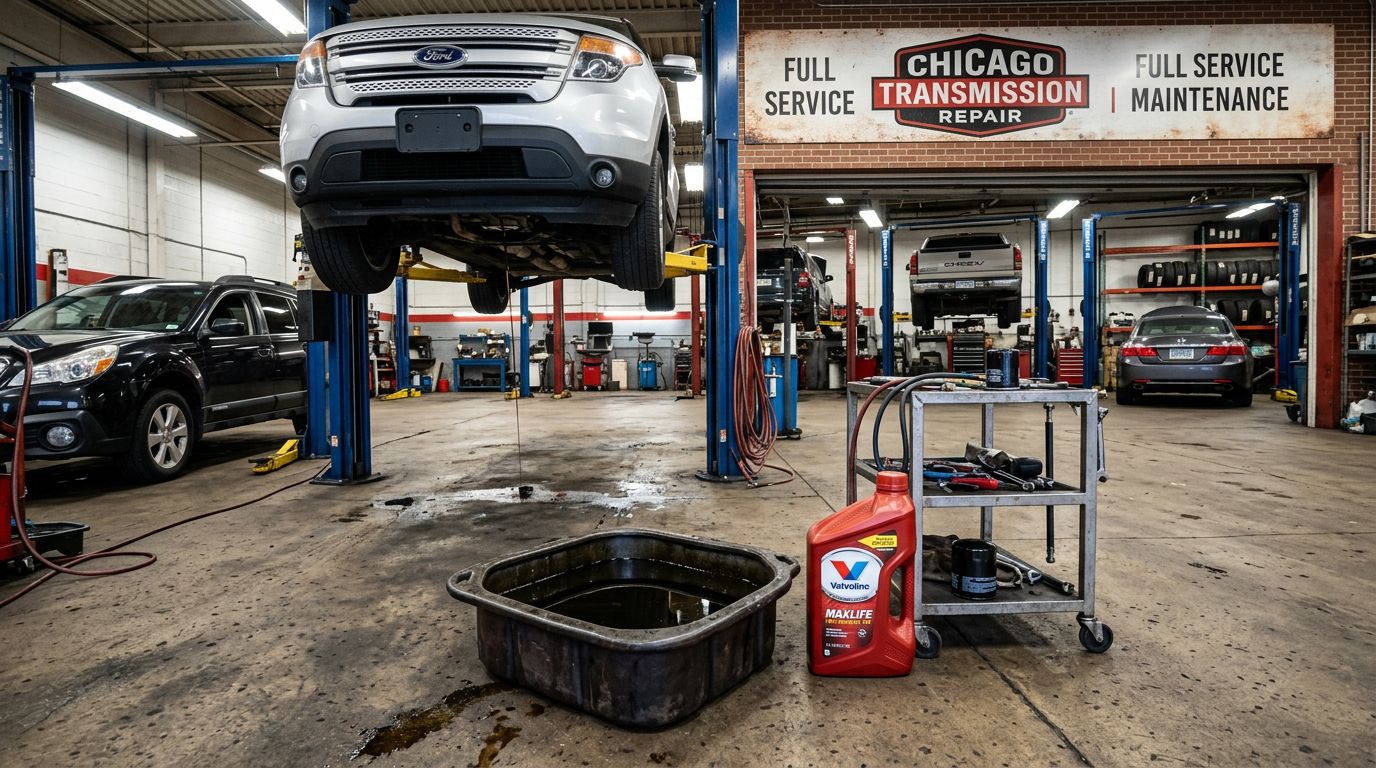
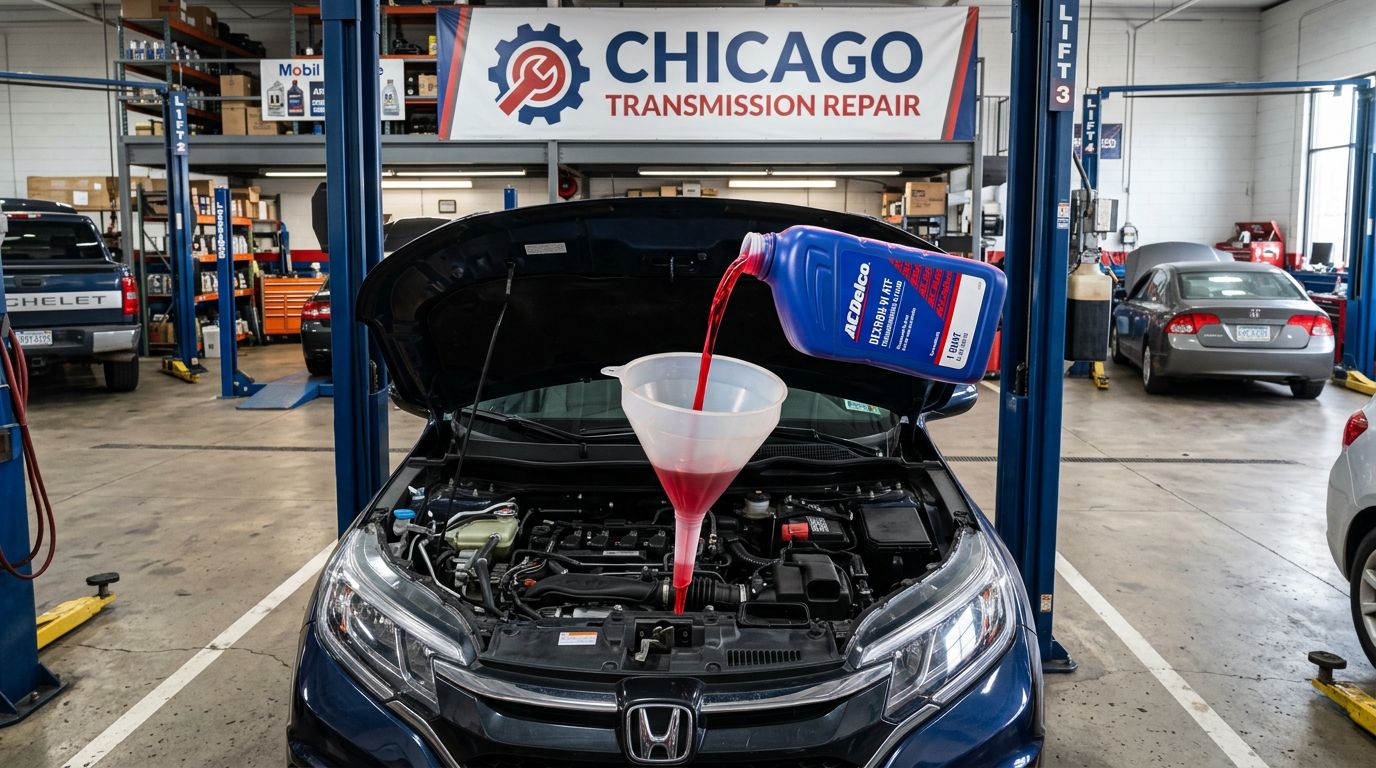
A fluid service may help when the fluid is old but the transmission still shifts normally, has no major codes, has no heavy debris in the pan, and does not slip under load. The goal is to replace worn fluid before heat damage becomes a mechanical failure.
When a Fluid Change Is Too Late
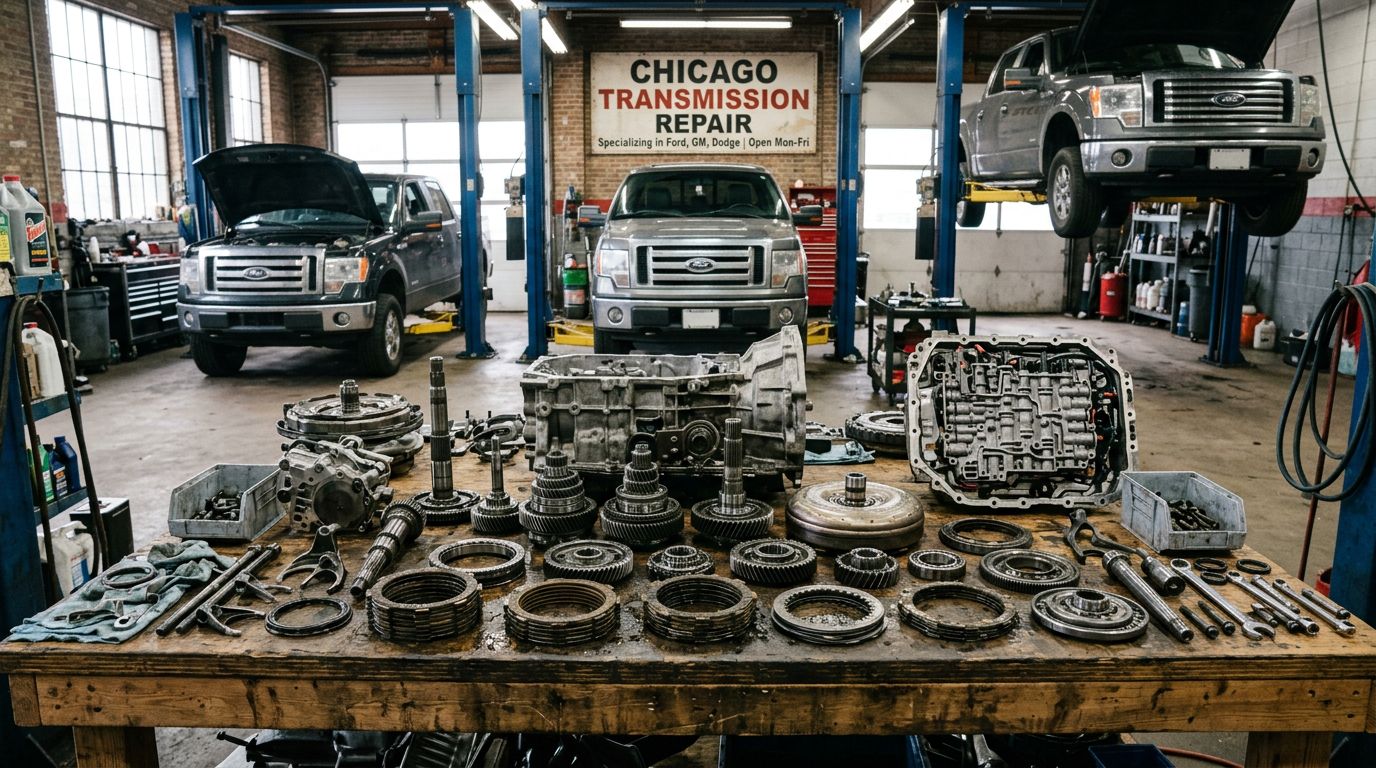
If the vehicle is already slipping, flaring between gears, banging into gear, setting pressure or gear-ratio codes, or leaving heavy debris in the pan, a fluid change may not solve the root problem. In that case, the fluid is evidence, not the whole repair.
What We Check Before Recommending Service
- Fluid level, color, smell, and debris.
- Pan condition when inspection is appropriate.
- Transmission temperature and cooler operation.
- Stored codes and live pressure/speed data.
- Road-test behavior under light and moderate load.
If your fluid smells burnt, bring it in before the symptoms get worse. We will inspect the fluid, scan the vehicle, and explain whether you are looking at maintenance, a cooler issue, a targeted repair, or internal damage.