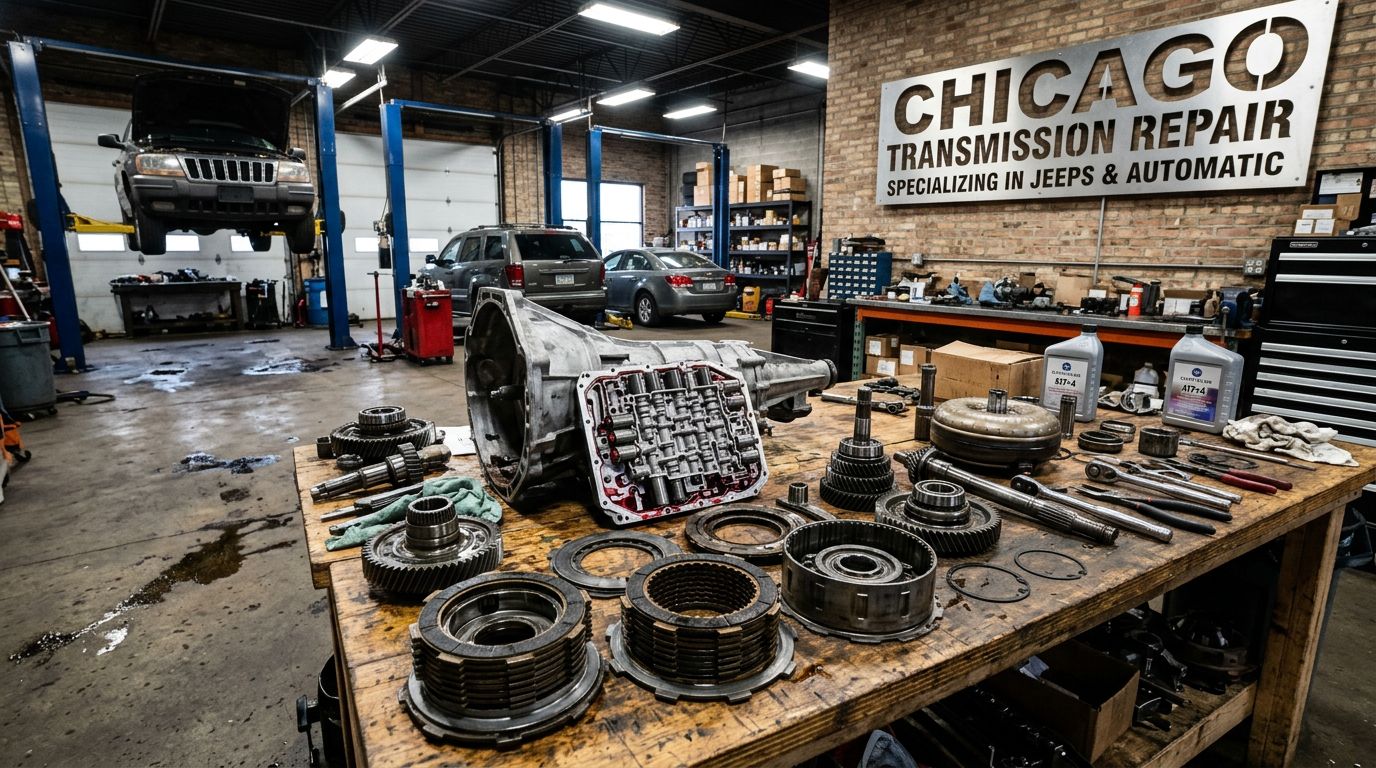
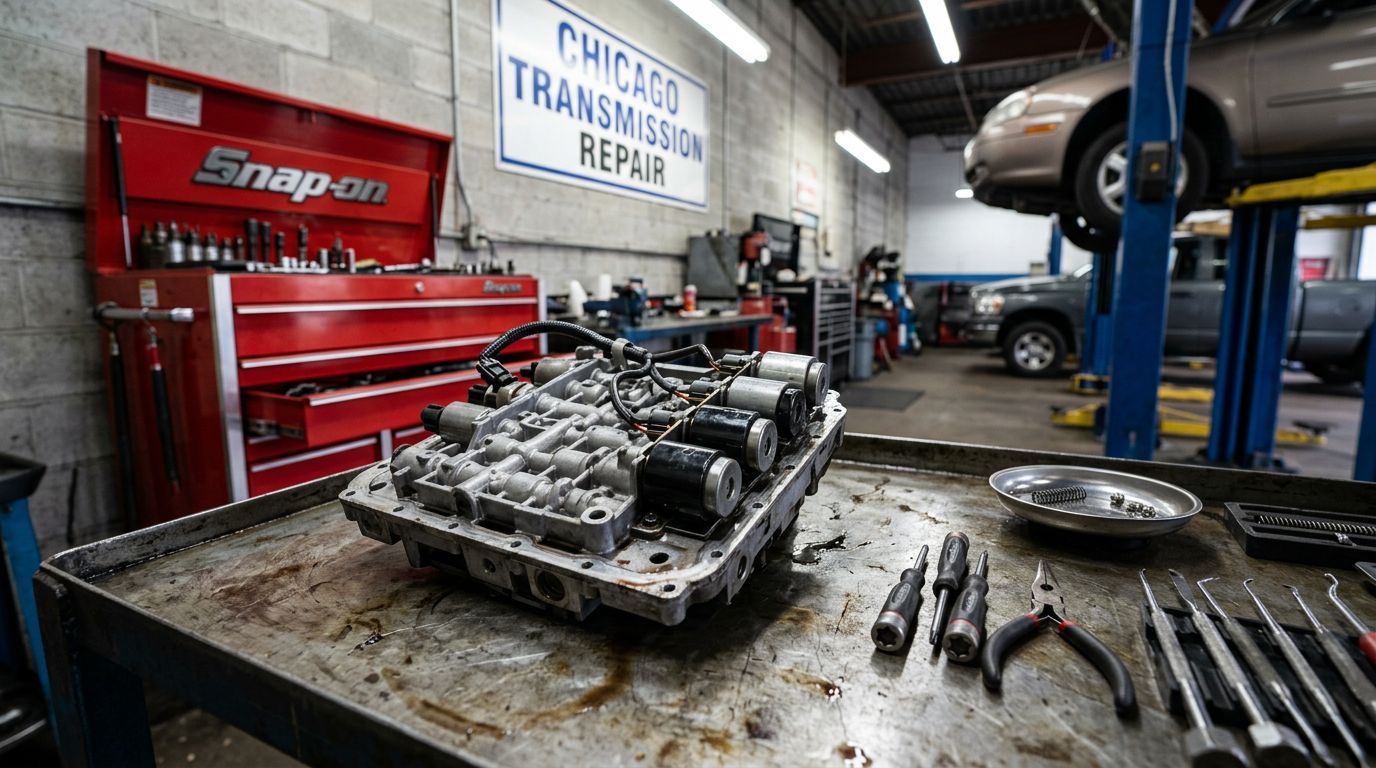
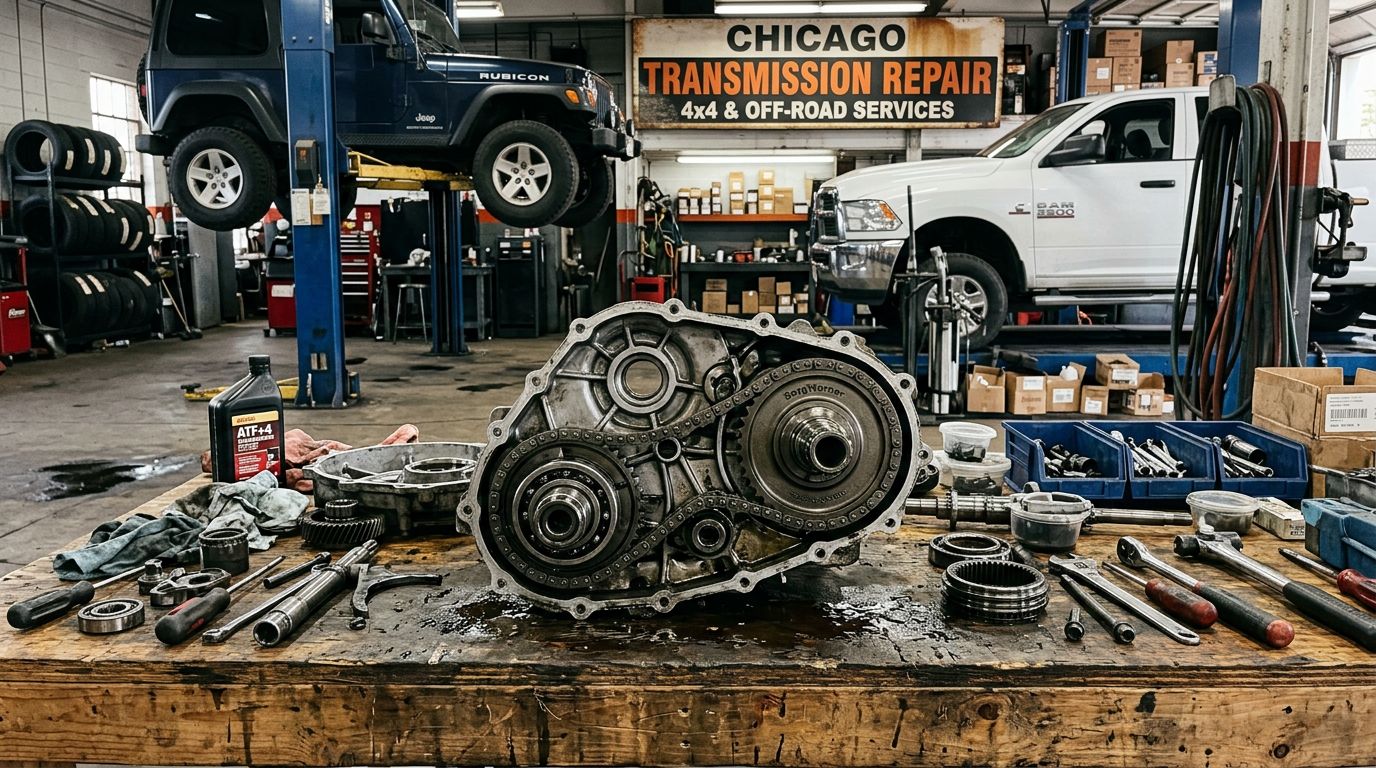
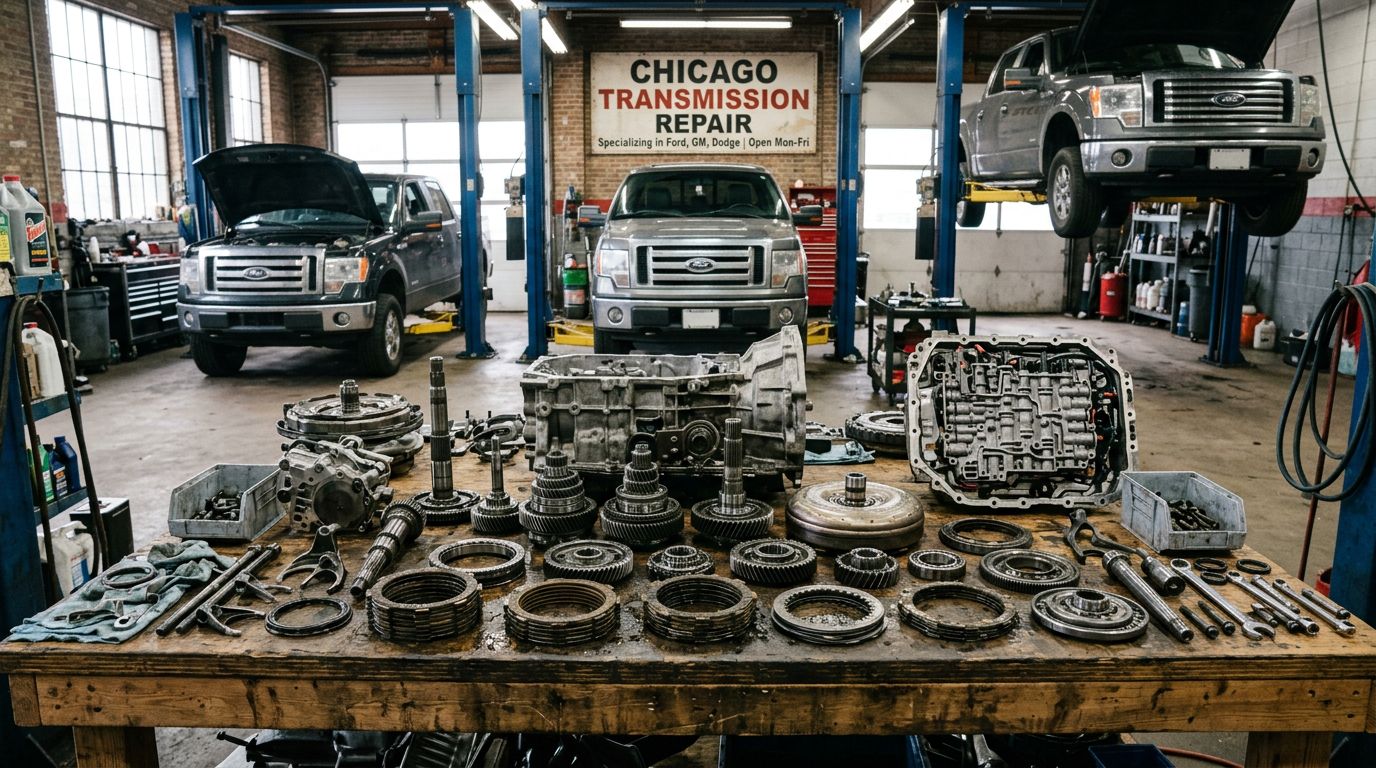
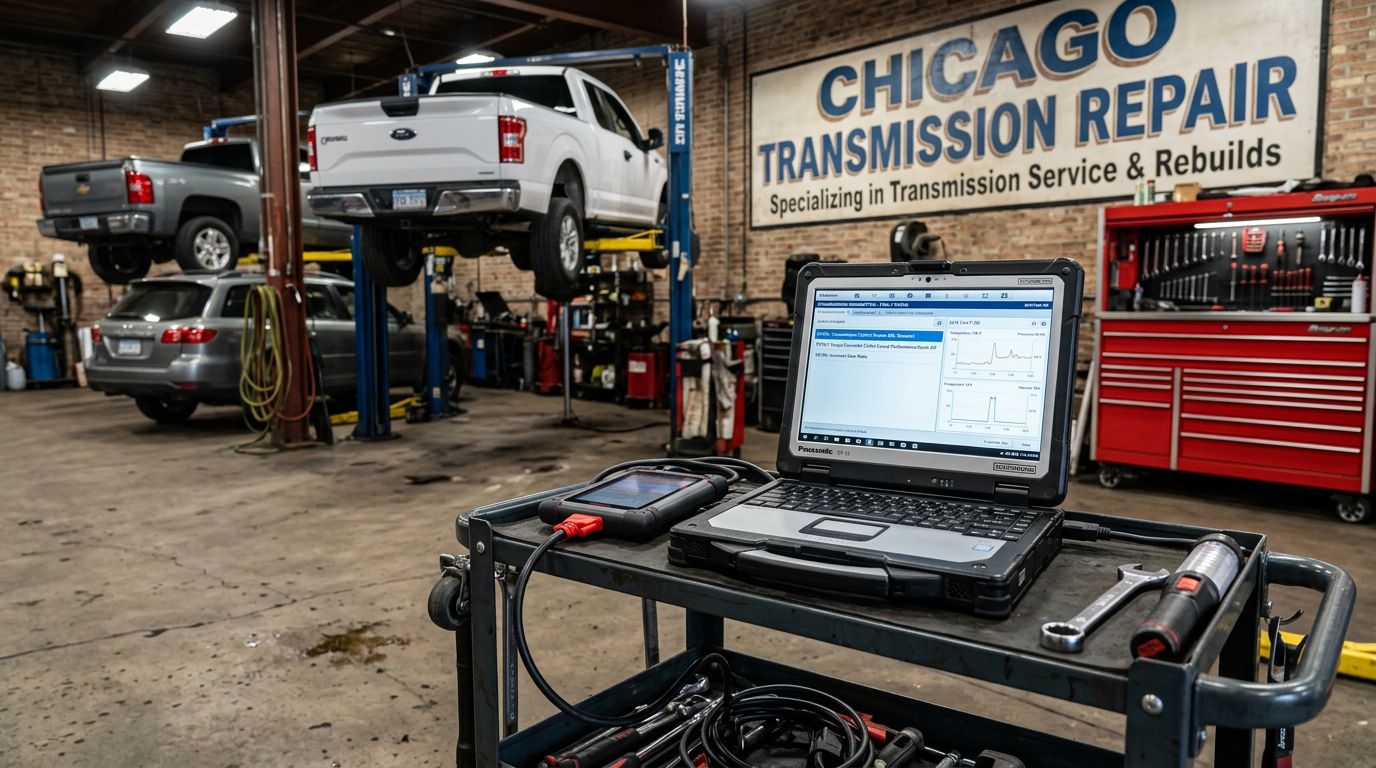
Transmission fluid begins breaking down above 250 degrees F. Above 300 degrees F, damage accumulates rapidly - clutch material burns, seals harden, and varnish coats solenoid passages. Normal operating temperature is 170 - 200 degrees F. Chicago driving - stop-and-go traffic in summer, highway towing, aggressive acceleration - pushes transmissions harder than most other markets.
Warning Signs of Transmission Overheating
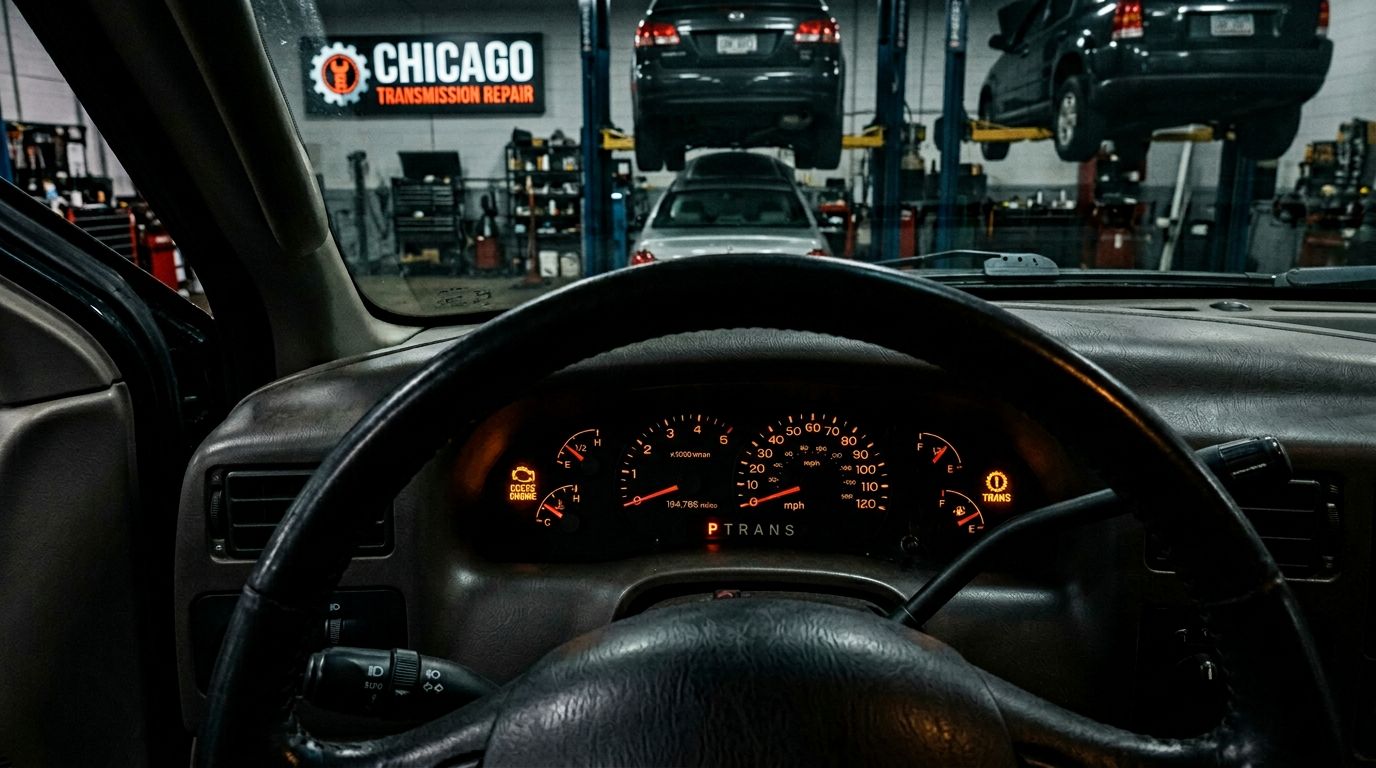
- Transmission temperature warning light - many newer vehicles have a dedicated transmission temperature gauge or warning light. If it illuminates, pull over.
- Check engine light with P0218 - the transmission over-temperature DTC. See our P0218 code guide.
- Burnt smell from under the hood or floor - overheated ATF has a sharp, acrid smell distinct from engine oil or coolant
- Slipping or delayed gear engagement - hot, thinned-out fluid can't maintain hydraulic pressure
- Transmission entering limp mode - the TCM locks into a single gear to reduce load and prevent further damage
- Fluid that looks dark or smells burnt - even without active symptoms, burnt fluid on the dipstick means the transmission has been hot
Common Causes in Chicago
Towing and Hauling
Towing in stop-and-go traffic - common on Chicago-area expressways during summer - is the highest-stress scenario for a transmission. The torque converter is slipping constantly at low speeds (generating heat), the fluid isn't circulating fast enough to cool efficiently, and the added load keeps the engine working harder. An auxiliary transmission cooler is essential for regular towing.
Low Fluid Level
Low fluid reduces the thermal mass available to absorb heat and the volume circulating through the cooler. A transmission 1 - 2 quarts low can overheat under conditions that a properly filled unit would handle fine.
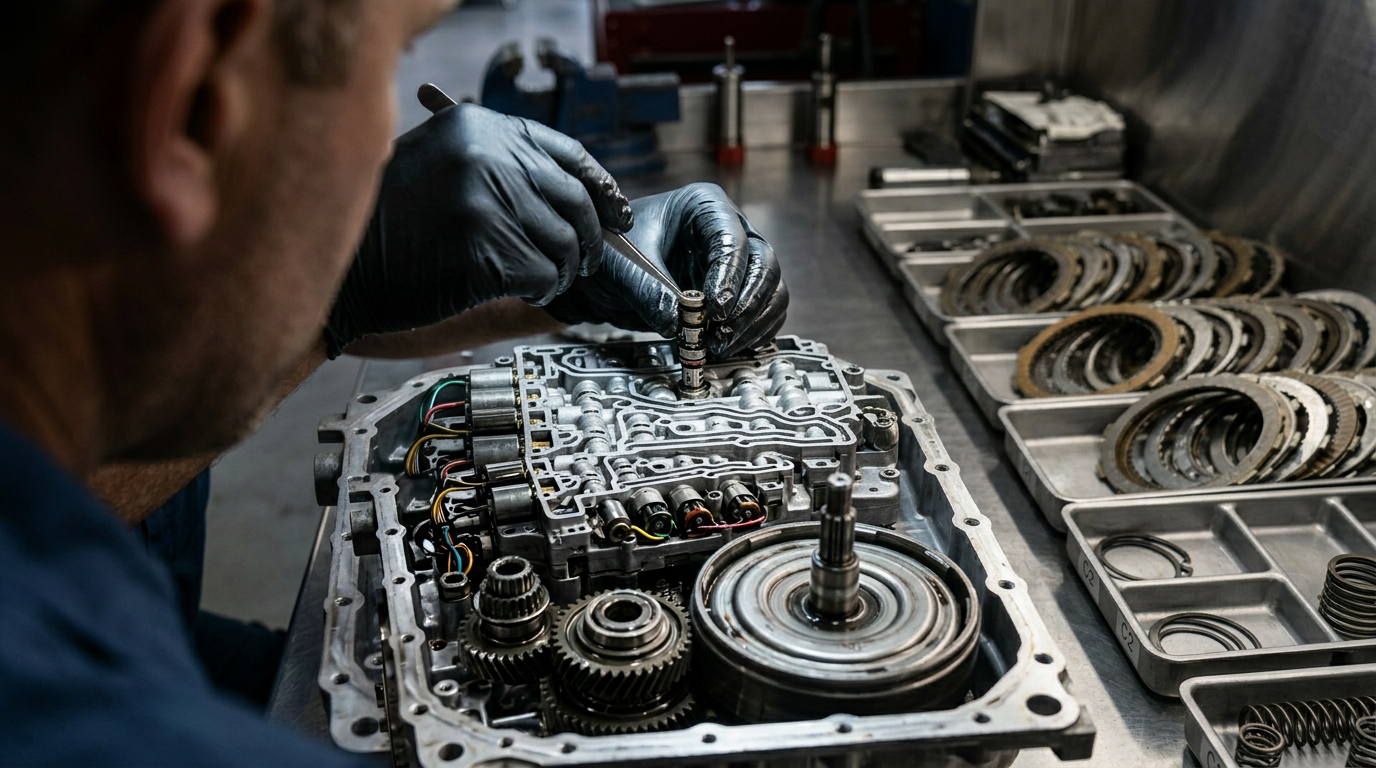
Clogged or Failing Cooler
The transmission cooler (built into the radiator or as a standalone unit) removes heat from the fluid circuit. A clogged radiator, blocked cooler lines, or a cooling fan that only works at highway speed all reduce cooling capacity. City driving - common in Chicago - relies heavily on the electric cooling fan, which may fail without obvious symptoms.
Slipping Torque Converter Clutch (TCC)
When the TCC doesn't lock up properly, it converts kinetic energy to heat instead of mechanical rotation. A slipping TCC can raise transmission temperature by 30 - 50 degrees F at steady highway cruising - enough to push a marginal cooling system into overheating territory.
Degraded Fluid
Old, oxidized ATF has reduced thermal stability and lower viscosity at temperature. This creates a cascading effect: degraded fluid gets hotter, which degrades it faster, which reduces its ability to cool - a downward spiral.
What to Do Immediately
- Pull over and stop - continued driving at overtemperature causes irreversible damage
- Shift to Park, leave the engine running for 2 - 3 minutes - the cooling fan continues to run and helps bring temperature down
- Then shut off the engine and let it cool for at least 30 minutes before driving
- Do not top off the fluid until cooled - hot ATF gives a false dipstick reading
- Do not continue towing if the overheating occurred while towing
Repair Costs
- Transmission fluid exchange (degraded/burnt fluid): quoted after diagnosis, access check, and parts availability.
- Auxiliary cooler installation: highly recommended for any towing application
- Cooler line repair: quoted after diagnosis, access check, and parts availability.
- TCC solenoid replacement: quoted after diagnosis, access check, and parts availability.
- Torque converter replacement: quoted after diagnosis, access check, and parts availability.
- Rebuild (if heat damage is extensive): quoted after diagnosis, access check, and parts availability.
A fluid inspection tells us how much damage has already occurred. Burnt, dark fluid with carbon particles means the clutches have been slipping hot. Call (312) 626-8759 - shop options near Southwest Chicago, Mon-Fri 8:00 AM-5:30 PM | Sat 8:00 AM-1:00 PM | Sun Closed.