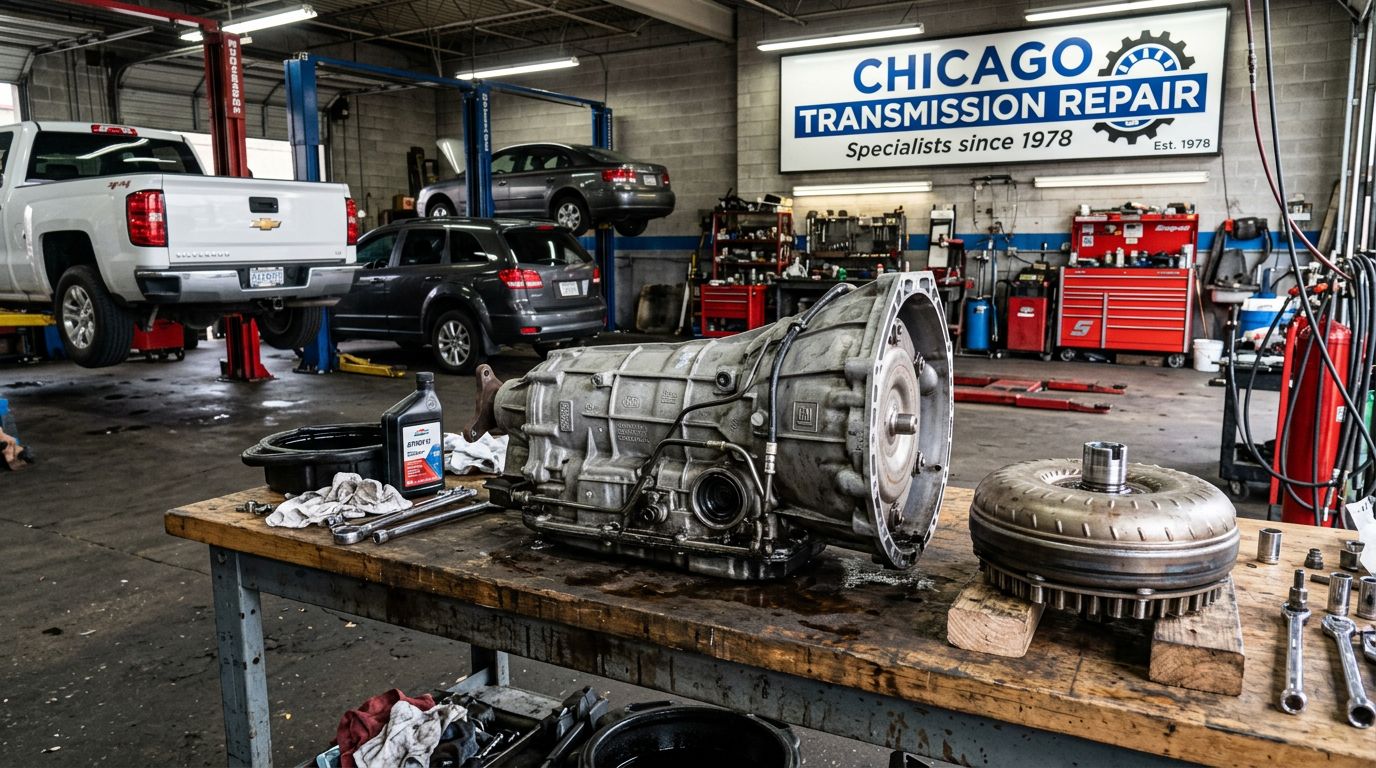
Chicago gives transmissions both ends of the problem: cold mornings that make old fluid thick and summer traffic that cooks fluid until it smells burnt. That fire-and-ice cycle is one reason a transmission can feel fine one week and suddenly start slipping, shuddering, or setting codes the next.
Weather does not usually break a healthy transmission by itself. It exposes weak spots: low fluid, aging seals, worn pressure-control circuits, restricted coolers, old ATF, and clutch packs that are already losing grip.
What Cold Weather Does
Cold fluid flows slower. If the fluid is old, contaminated, or low, the transmission may take longer to build hydraulic pressure on the first start of the day. That can show up as delayed Drive or Reverse, a flare on the first shift, or a slip that improves after the vehicle warms up.
What Hot Weather and Traffic Do
Heat thins fluid and breaks down its additives. Stop-and-go traffic, long idle time, towing, and hard acceleration all add heat. Once ATF overheats, it can varnish valves, contaminate solenoids, and reduce clutch holding power.
Symptoms That Show Up in Winter
- Delayed engagement on the first start.
- Slipping or flaring until warm.
- Harsh first shifts.
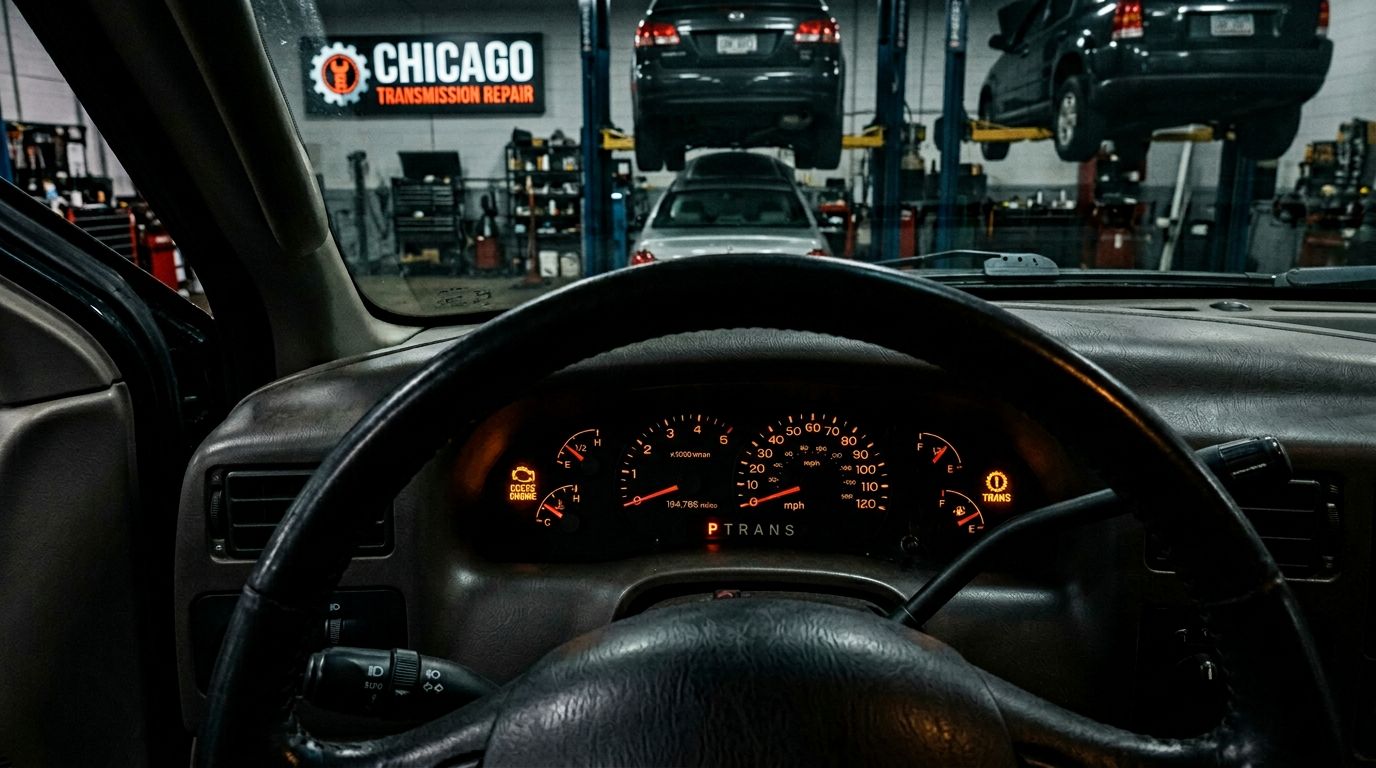
- Cold-start warning lights.
- Leaks from seals that shrink or harden.
Symptoms That Show Up in Summer
- Burnt fluid smell after traffic.
- Shudder around light throttle.
- Temperature warnings.
- Slipping after the vehicle is hot.
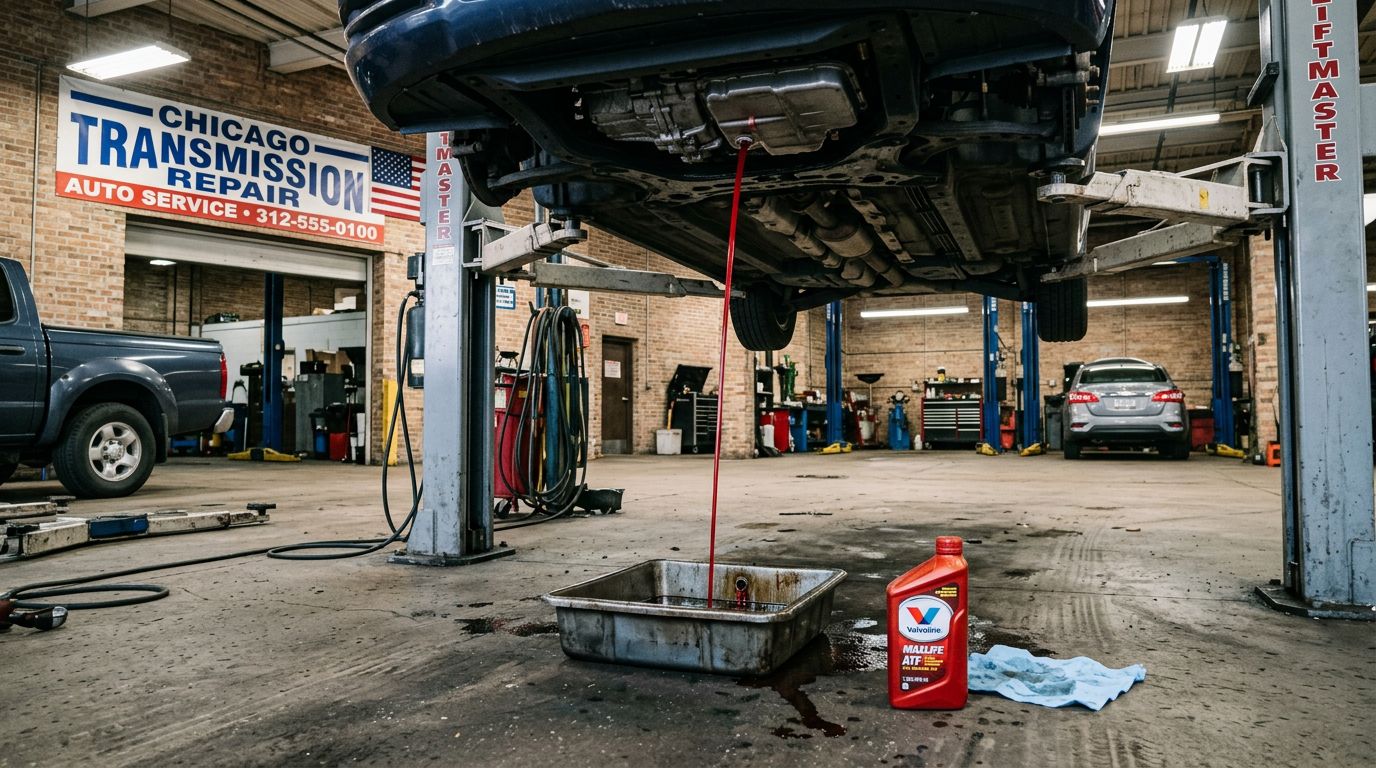
- Dark fluid or debris in the pan.
How to Protect the Transmission
Use the correct fluid, service it before it is cooked, repair leaks early, keep the cooling system healthy, and do not ignore early cold slipping. For work trucks and towing vehicles, a cooler inspection or auxiliary cooler may be part of the answer, but only after the transmission is checked for internal causes of heat.
If your vehicle acts different in cold weather than it does in summer traffic, write down when it happens, how long it lasts, and whether the RPM rises without speed. That pattern helps us separate fluid behavior from a mechanical failure.