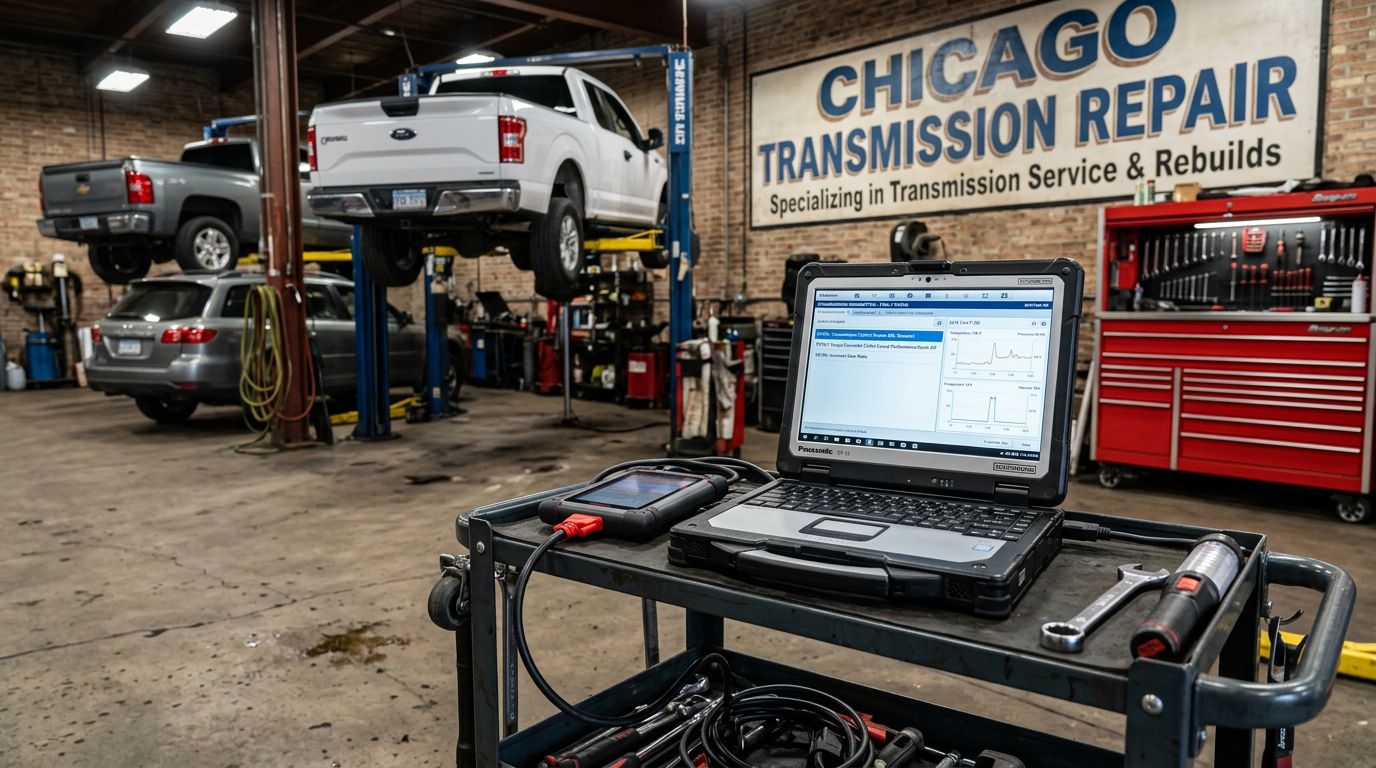
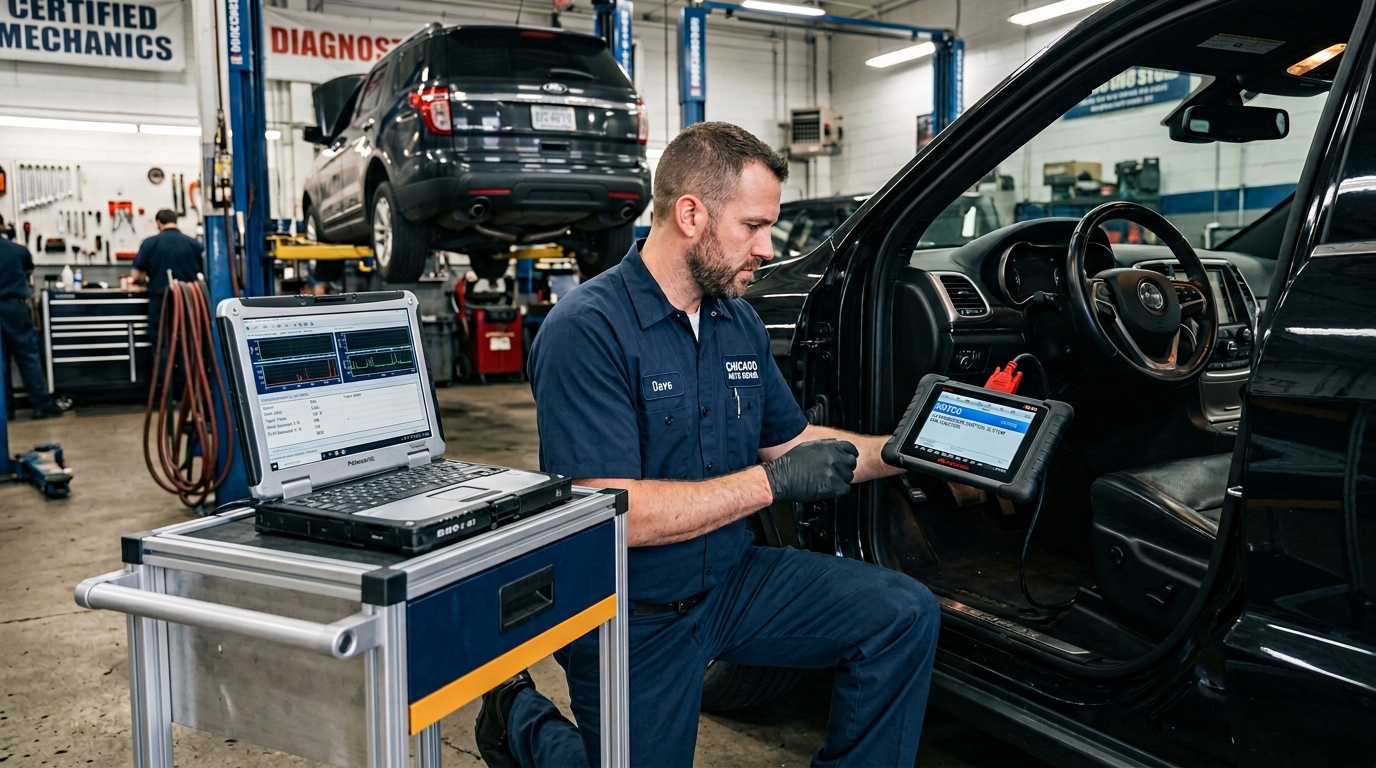
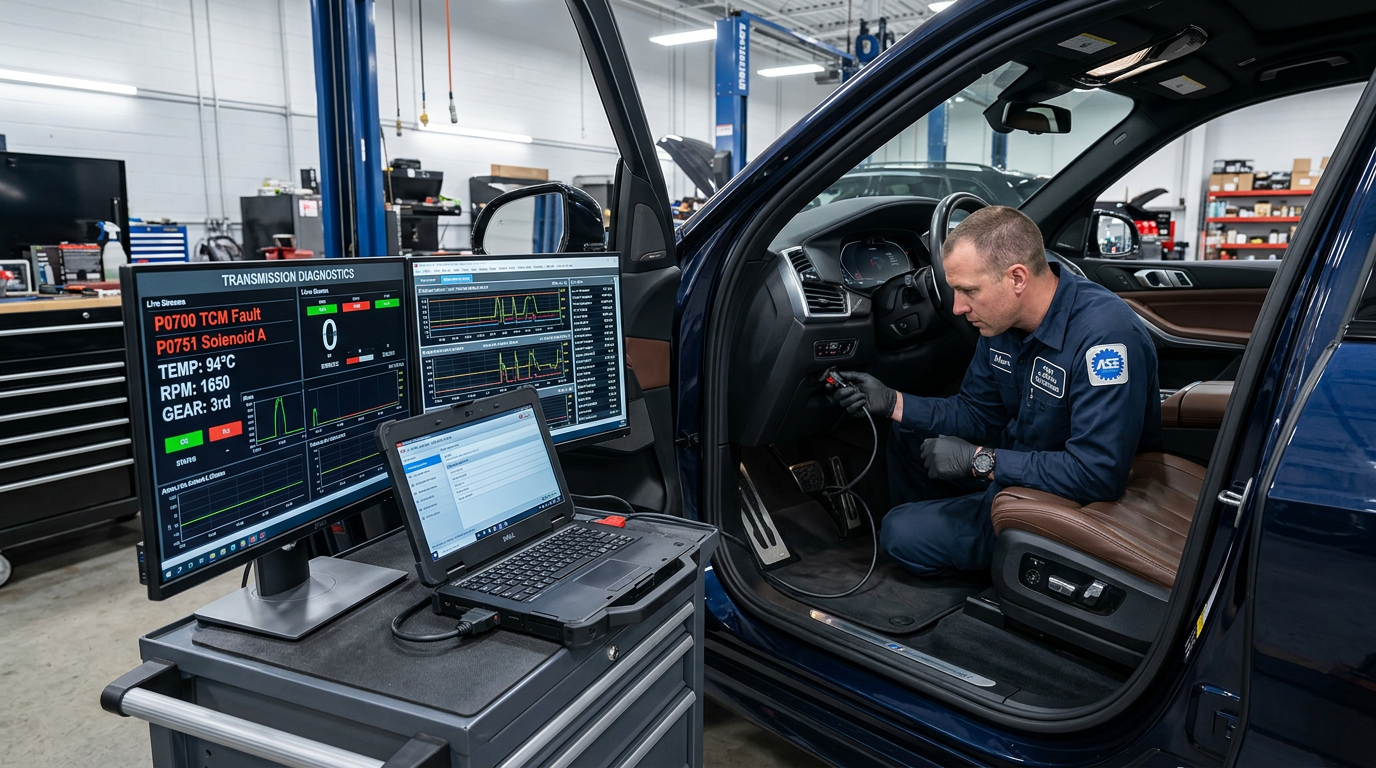
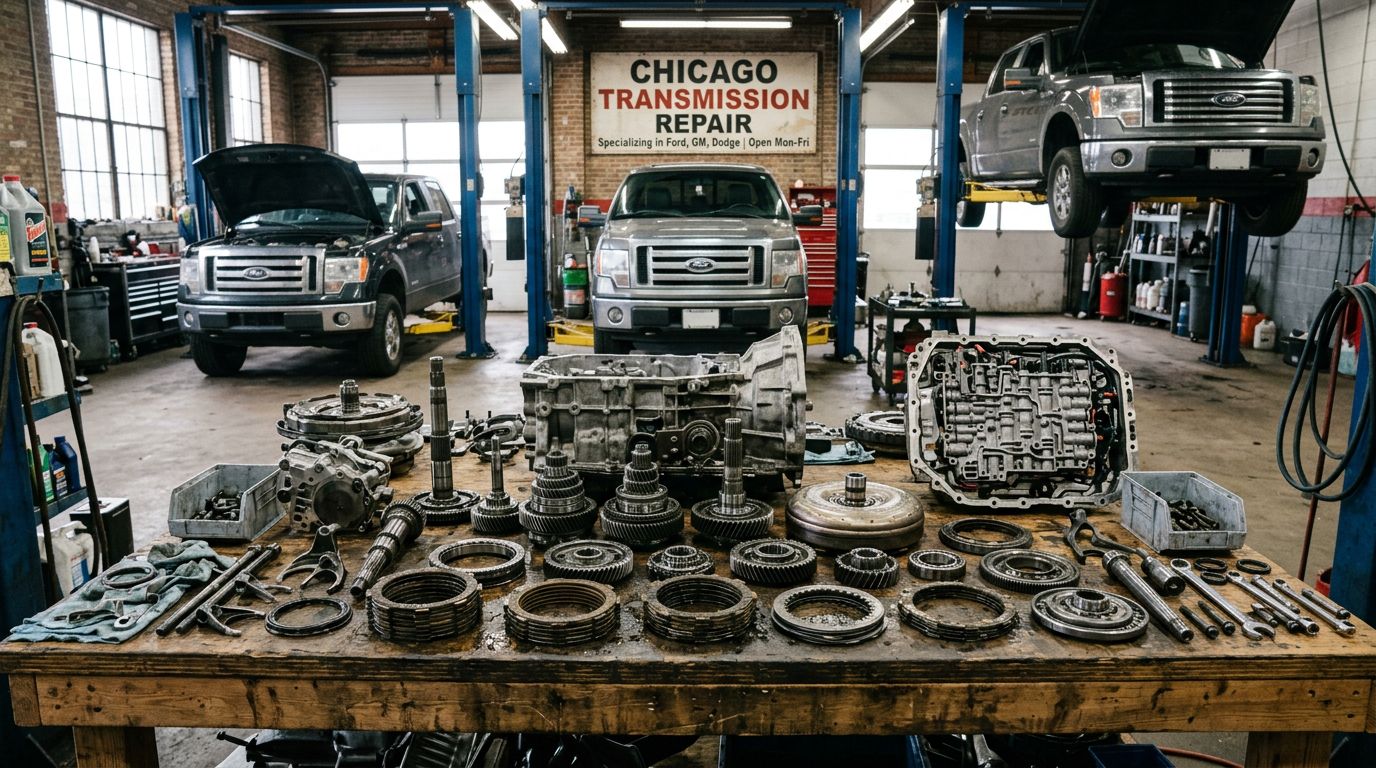
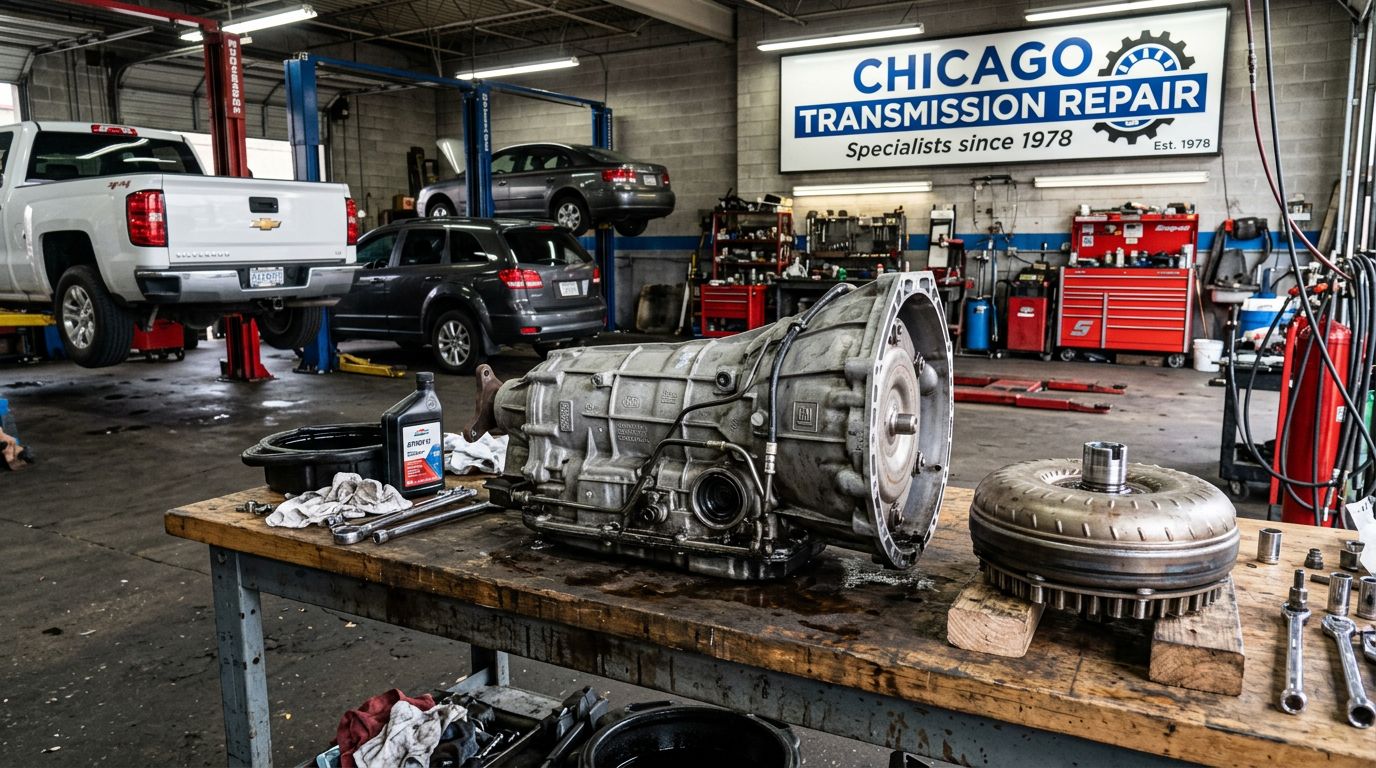
Most drivers see one transmission code and hope it tells the whole story. In real life, the first code is usually just the door into the problem. P0700 may only mean the transmission control module has asked the engine computer to turn the light on. The useful part is what appears with it: speed sensor codes, solenoid codes, pressure codes, gear-ratio codes, overheating codes, or torque-converter clutch codes.
Think of this as a plain-English code matrix. It will not replace a scan, road test, fluid inspection, and live-data check, but it can help you understand why a shop may say, "We need to see the full code list before we can tell you how serious it is." A single P-code can mean a wiring issue, a sensor, a valve body problem, low fluid pressure, or internal wear depending on the pattern around it.
Start Here: What P0700 Actually Means
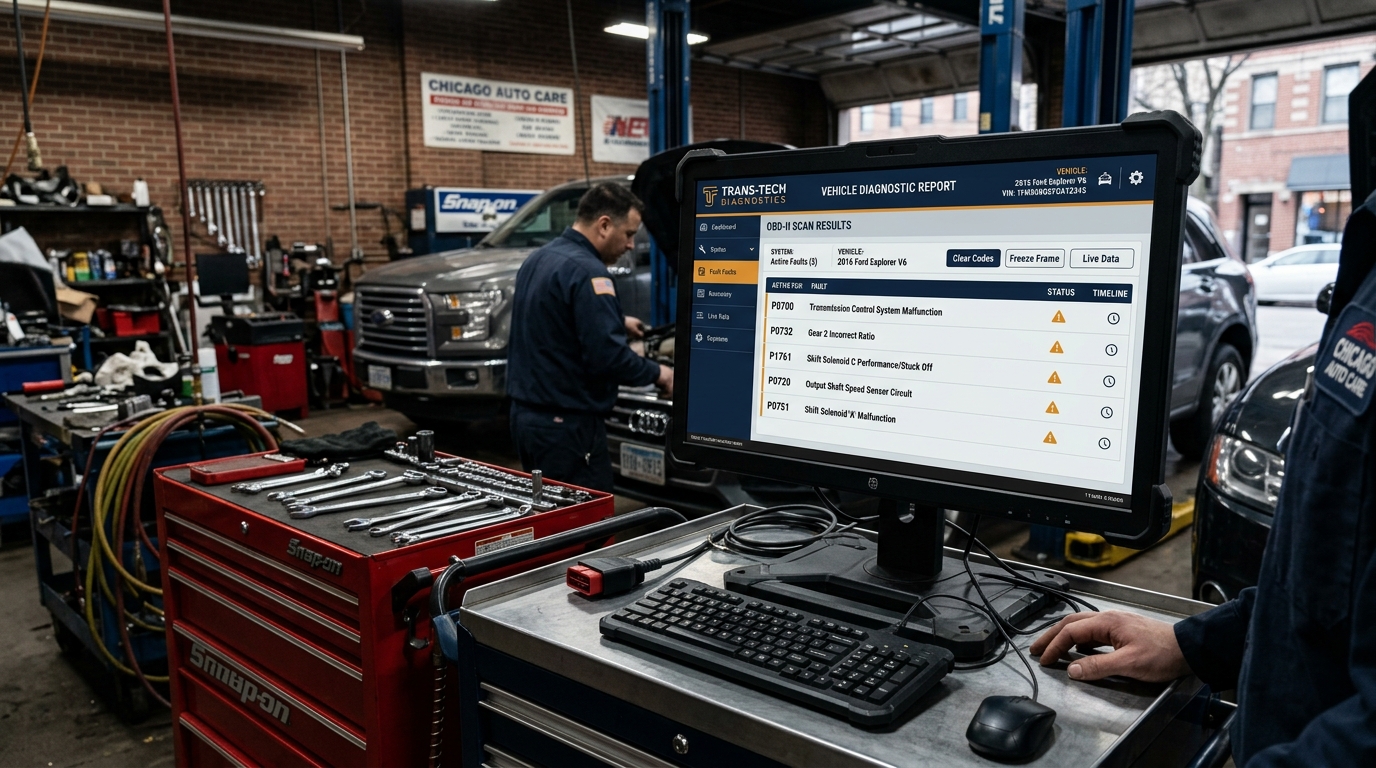
P0700 is a communication flag. It usually means the transmission computer has stored one or more transmission-specific faults. By itself, P0700 does not tell you which part failed. It tells you to look deeper. That is why a generic parts-store scan can leave a driver frustrated: the reader may show P0700, but not the transmission module detail that explains the real failure path.
The Top Transmission Code Groups in Plain English
The exact code list changes by make and transmission type, but most high-intent transmission code searches fall into these buckets.
| Code | Plain-English Meaning | What It Usually Points Toward |
|---|---|---|
| P0700 | Transmission control system requested the warning light | There are deeper transmission codes to scan |
| P0705 | Range sensor / gear position signal problem | Neutral safety switch, range sensor, wiring, adjustment |
| P0711 | Transmission fluid temperature sensor range problem | Bad temp signal, wiring, overheating, fluid condition |
| P0715 | Input/turbine speed sensor circuit problem | Speed sensor, wiring, internal speed mismatch |
| P0716 | Input speed sensor performance problem | Sensor signal dropping out or not matching expected speed |
| P0720 | Output speed sensor circuit problem | Output speed sensor, wiring, signal loss |
| P0730 | Incorrect gear ratio | Slipping clutch pack, low pressure, valve body, wrong gear command |
| P0731-P0734 | Incorrect ratio in a specific gear | Gear-specific clutch wear, solenoid issue, hydraulic leak |
| P0740 | Torque converter clutch circuit problem | Converter clutch, solenoid, wiring, valve body |
| P0741 | Torque converter clutch stuck off / performance | Converter slip, worn lockup clutch, valve body, fluid issue |
| P0742 | Torque converter clutch stuck on | Converter clutch or control valve sticking |
| P0750 | Shift solenoid A malfunction | Solenoid, wiring, valve body contamination |
| P0755 | Shift solenoid B malfunction | Solenoid, wiring, valve body, pressure control issue |
| P0760 | Shift solenoid C malfunction | Solenoid circuit or hydraulic control fault |
| P0770 | Shift solenoid E malfunction | Solenoid command mismatch, wiring, valve body |
| P0775 | Pressure control solenoid B malfunction | Line pressure control, solenoid, valve body wear |
| P0796 | Pressure control solenoid C performance / stuck off | Pressure-control fault, debris, worn valve body |
| P0841 | Transmission fluid pressure sensor range problem | Pressure sensor, wiring, actual low pressure |
| P0868 | Low transmission fluid pressure | Low fluid, pump, internal leak, clutch wear |
| P0218 | Transmission over-temperature condition | Overheating, cooler restriction, burnt fluid, heavy load |
Why Code Combinations Matter More Than One Code
One code can be misleading. A speed sensor code with no symptoms may be electrical. A speed sensor code plus gear-ratio codes and slipping can point to a real hydraulic or internal problem. A torque-converter code plus shudder at 40-55 mph tells a different story than the same code with no driveability complaint.
That is why we look for patterns. A solenoid code next to dirty fluid may mean debris is sticking a valve. A pressure code next to delayed engagement may mean the pump or internal seals cannot build pressure fast enough. An overheating code next to burnt fluid means the fluid has already been cooked and the cooler system needs attention.
When a Code Is Less Urgent
It may be less urgent if the vehicle shifts normally, the code does not return after clearing, fluid is clean and full, and there are no slipping, delay, harsh engagement, overheating, or shudder symptoms. Even then, keep the code number and freeze-frame information if you have it. Intermittent transmission faults are easier to diagnose when the shop knows when the code set.
When to Stop Driving
Stop driving and get the vehicle checked if the transmission slips, bangs into gear, will not move in Drive or Reverse, overheats, smells burnt, or sets pressure and gear-ratio codes together. Those combinations can turn a smaller repair into a rebuild because slipping creates heat, heat breaks down fluid, and damaged fluid carries debris through the valve body and solenoids.
What Chicago Transmission Checks During a Diagnostic
- Full module scan, not just a generic engine-code pull.
- Freeze-frame data to see when the code happened.
- Live data for input speed, output speed, gear command, slip speed, temperature, and pressure signals.
- Fluid level, color, smell, and contamination check.
- Road test when the vehicle is safe to drive.
- Written estimate before any repair is approved.
If your scanner shows P0700 or a transmission code you do not understand, start with a Diagnostic appointment. We will read the full code set, check the fluid, road test it when appropriate, and explain what the code pattern actually means before you approve anything.