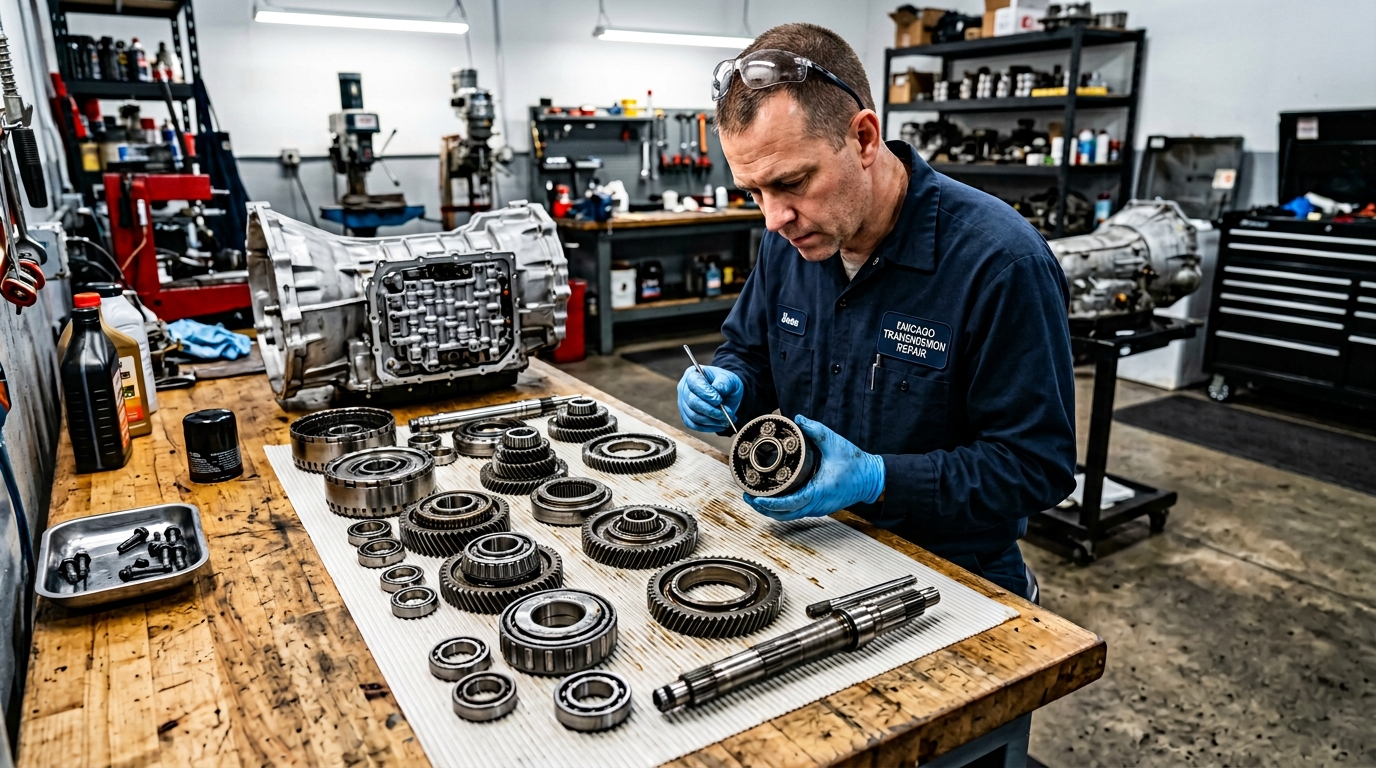
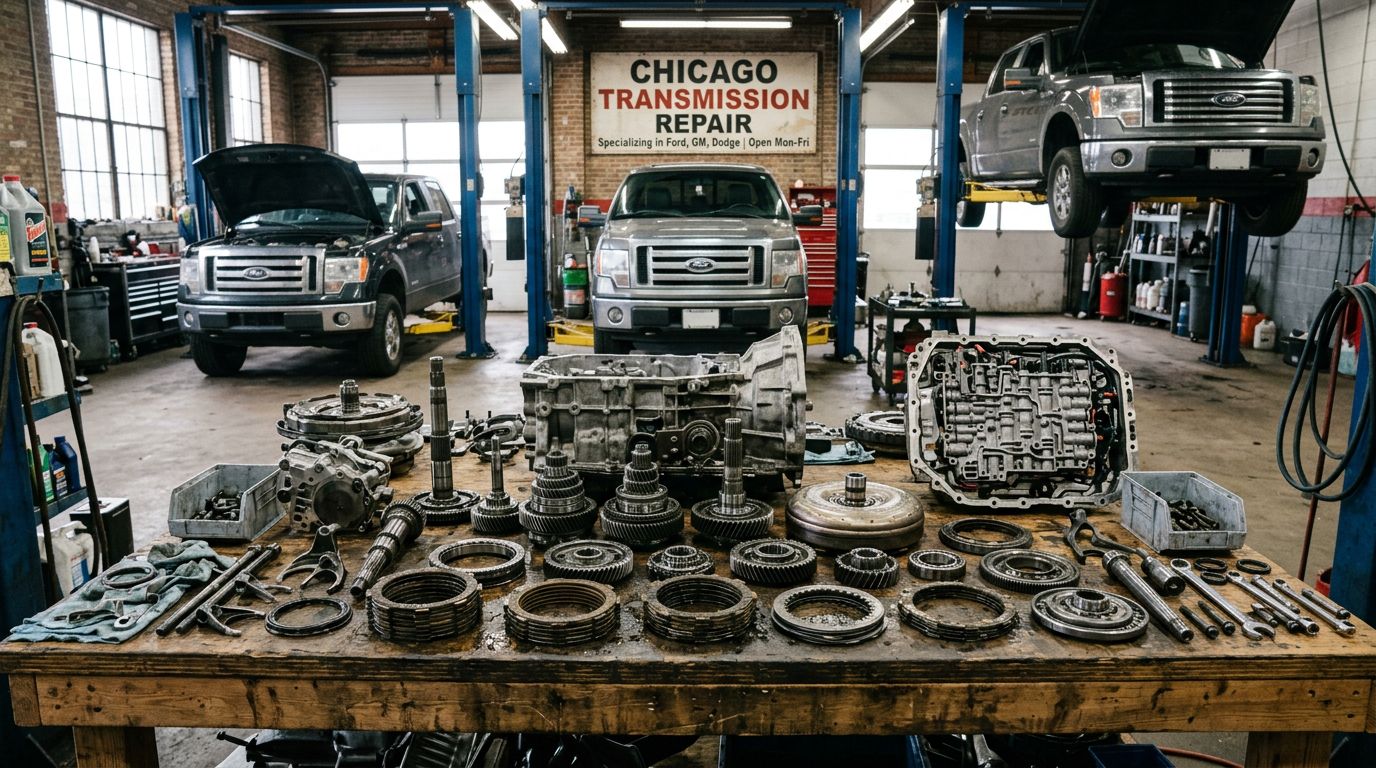
The type of noise a transmission makes tells you a lot about what's failing. Whining is different from clunking is different from grinding - each sound pattern points to a different failure mechanism. Here's how to interpret what you're hearing.
Whining or Humming Noise from the Transmission
Steady Whine That Changes with Speed
A steady whine that rises and falls with vehicle speed (not engine RPM) usually indicates a bearing failure - either in the transmission itself or in the differential. This sound is particularly common on rear-wheel-drive trucks.
If the whine increases when turning (left OR right), it's more likely a wheel bearing than a transmission bearing. If the whine stays consistent regardless of steering input, the transmission or differential is more likely.
Whine in Specific Gears Only
Whining that only occurs in 3rd gear, or only in reverse, indicates a specific gear set is worn. Helical gears are normally quiet; when tooth wear becomes significant, they produce a characteristic whine under load in specific ratios.
Whine During Deceleration
A whine that occurs mainly when you lift off the throttle at highway speed is often the torque converter or the transmission pump. The pump runs whenever the engine is running - if pump wear is producing the noise, you'll hear it any time the vehicle is in Drive at speed.
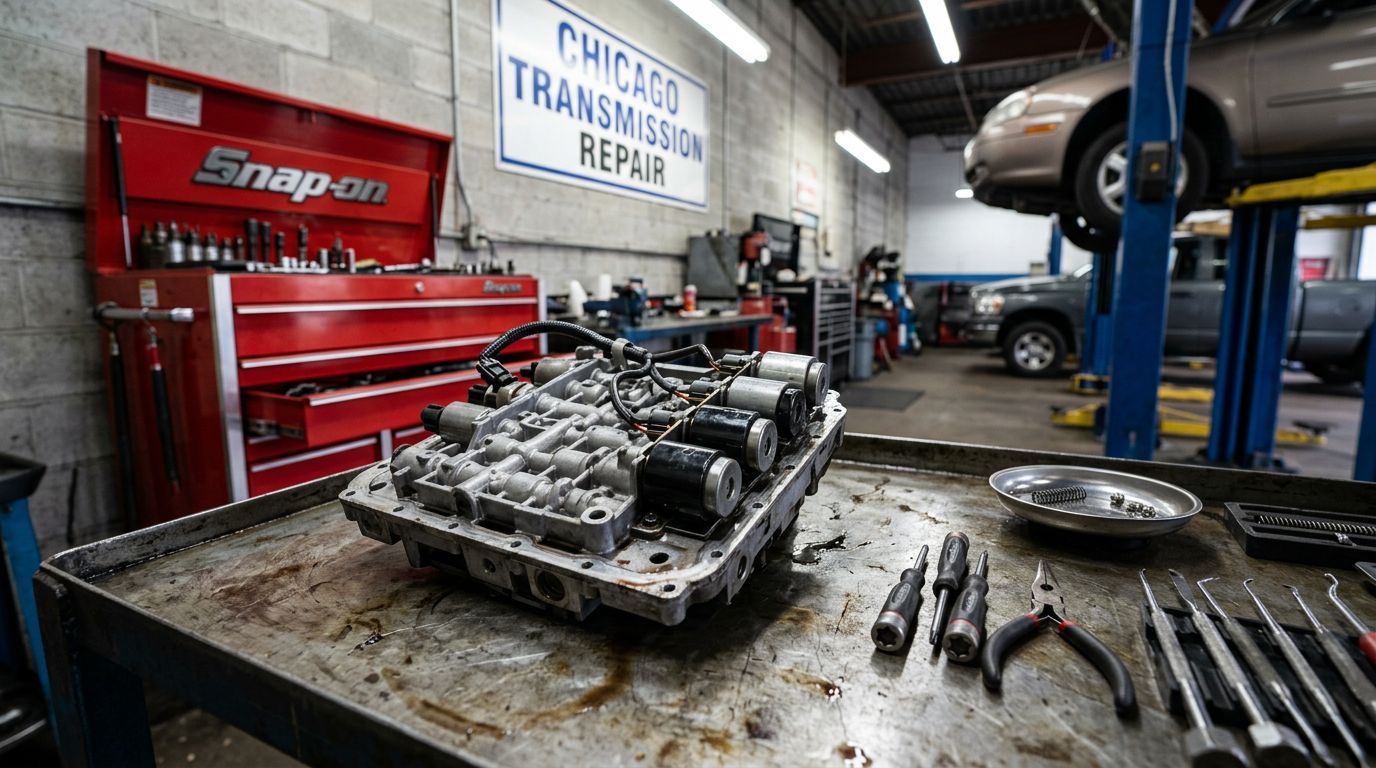
Clunking or Thunking Noise
Clunk When Shifting from Park to Drive (or Reverse)
A noticeable thunk when engaging Drive or Reverse is often caused by excessive driveline lash - worn U-joints, a worn output shaft, or loose drivetrain mounts allowing the drivetrain to "take up slack" suddenly. This is more of a driveline issue than a transmission issue, but the transmission enables the movement.
A soft thunk is often just normal engagement feel on a high-mileage vehicle. A loud clunk that shakes the vehicle is not normal.
Clunk During Acceleration or Deceleration
A clunk felt through the floor during acceleration or when lifting off the throttle (particularly on rear-wheel-drive vehicles) is almost always a U-joint or CV joint issue, not an internal transmission failure. The transmission is just the mechanism that reveals the play.
Intermittent Clunk While Driving
Random clunking at highway speed - not related to shifts - can indicate a planetary gear issue inside the transmission. Broken planet carrier pins, damaged pinion gears, or loose components create impact noises as the drivetrain loads and unloads. This is a serious symptom that warrants immediate diagnosis.
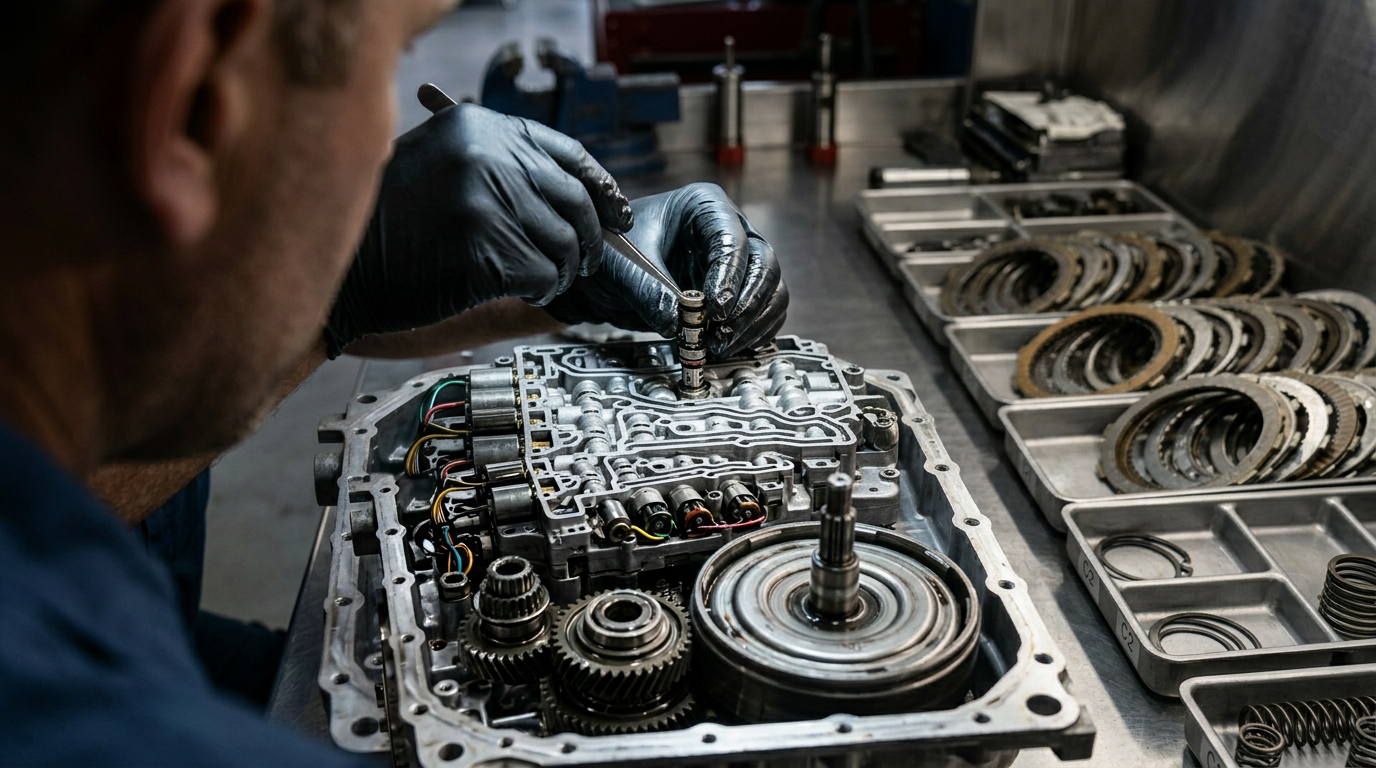
Grinding Noise
Grinding During Shifts (Automatic Transmission)
An automatic transmission should never grind during a shift. Grinding means metal-on-metal contact - clutch material has worn through, a gear set is damaged, or a bearing has failed catastrophically. This is an emergency: continued driving will cause rapid, expensive damage.
If you hear grinding during shifts on an automatic transmission, stop driving and have it towed. A grinding automatic usually needs a full rebuild.
Grinding on Manual Transmissions
Manual transmissions grind when shifts are rushed before the synchros can match gear speeds, or when synchros wear out. Grinding on every downshift into a specific gear (like 3rd) is a sign the synchro for that gear is worn. This is a targeted repair - not necessarily a full rebuild.
Buzzing or Rattling
A buzzing or vibrating sound from the transmission area (especially at idle or low speed) is often a torque converter problem. The torque converter's internal springs can crack or break, creating a buzz at idle that disappears at higher RPMs. This is common on high-mileage Ford, GM, and Chrysler trucks.
When to Call Chicago Transmission
- Grinding during shifts: Stop driving immediately. Tow it in.
- Metallic clattering or rattling: Have it diagnosed within a day or two.
- Whining that changes character or volume over time: Diagnose within a week.
- Clunking on engagement or deceleration: Diagnose within a couple weeks - often a driveline issue rather than transmission.
Call (312) 626-8759 or stop by shop options near Southwest Chicago. Diagnosis-first inspection - we road test the vehicle, listen for the noise, and tell you exactly what's making it and what it costs to fix. Mon-Fri 8:00 AM-5:30 PM | Sat 8:00 AM-1:00 PM | Sun Closed.